Volume: 11 Issue: 6 December 2013
FULL TEXT
We report a case of malignant hyperthermialike syndrome in a living-donor liver transplant recipient with no familial history of malignant hyperthermia or exposure to known triggering drugs. The patient showed many features of a typical malignant hyperthermia episode, and The Clinical Grading Scale defined this case as almost certain to be an episode of malignant hyperthermia (rank 5). However, the diagnosis was questionable. The intraoperative and perioperative periods during liver transplant can involve drastic alterations of physiological parameters, which can make malignant hyperthermia difficult to diagnosis. The data we obtained using a pulmonary artery catheter suggest an intraoperative increase in systemic oxygen consumption.
Key words : Living-donor liver transplant, Malignant hyperthermia
Introduction
Malignant hyperthermia is a life-threatening condition involving sustained muscle contracture with hypercatabolic reactions and elevated body temperature. This condition can be triggered by commonly used inhalational anesthetics and depolarizing muscle relaxants. In humans, the trait for malignant hyperthermia is inherited in an autosomal dominant manner.1
Liver transplant may be the best chance for a cure for a liver tumor and the underlying cirrhosis. During the intraoperative and perioperative periods of liver transplant, which usually are performed for end-stage liver disease,2 drastic alterations in physiological parameters, including tachycardia, metabolic or respiratory acidosis, hyperkalemia, and arrhythmias are often seen.3,4 These also are the typical features of malignant hyperthermia.
Case Reports
A 51-year-old man who was receiving a living-donor liver transplant secondary to hepatitis C-induced liver cirrhosis and hepatocellular carcinoma, developed a malignant hyperthermialike reaction without exposure to any known triggering drugs and without a familial history of malignant hyperthermia. Except for liver dysfunction, the patient's history was not significant, especially for muscle disease, and was the father of 2 healthy children. He had not taken any neuroleptic drugs.
Anesthesia was induced and maintained with fentanyl and propofol, and tracheal intubation was facilitated with vecuronium, without complication. Total intravenous anesthesia with propofol was maintained according to Kyoto University Hospital protocol for liver transplant surgery. The patient was mechanically ventilated and received a pulmonary artery catheter, placed via the right internal jugular vein. Prophylactic cefotaxime sodium and ampicillin sodium were administered before surgery, and these drugs also were administered every 4 hours during the operation.
The operation proceeded uneventfully until approximately 2.5 hours after anesthesia induction, when tachycardia and arterial hypertension were observed, despite administering high-dose propofol (6-10 mg/kg/h) and fentanyl (5 μg/kg/h). The patient’s end-tidal carbon dioxide (CO) levels gradually rose, despite checking the anesthesia circuit and elevating the minute volume. His core body temperature also rose and exceeded 38.0°C, necessitating surface cooling. Arterial blood gas analysis revealed metabolic acidosis, despite administering sodium bicarbonate. Cardiac output exceeded 13 L/min/m2, which was higher than the cardiac output at the beginning of surgery (6.2 L/min/m2), and oxygen consumption (VO2), calculated via cardiac output, and mixed venous oxygen saturation (SvO2) also increased. Although arrhythmia and electrolyte abnormalities were not seen and the color of the patient’s urine was normal, these observations were similar to those malignant hyperthermia.
The surgical staff considered aborting the surgery, but at the time, resection of the donor liver graft was almost complete, and the patient’s symptoms were not definitive for malignant hyperthermia. In particular, the patient did not demonstrate excessively elevated creatine phosphokinase or myoglobinuria; the elevated creatine phosphokinase, in conjunction with elevated levels of other liver enzymes, might have been related to muscle damage from surgery.
The patient was transferred to the intensive care unit, postoperatively; where he was infused with propofol and fentanyl for sedation and pain management. His body temperature was maintained at 38.0°C to 39.0°C with surface and body-cavity cooling procedures. Laboratory analyses showed that his serum creatine phosphokinase and myoglobin concentrations were elevated, and myoglobinuria also was seen. Arterial hypotension was not detected in the patient, even without administering vasoconstrictors or catecholamines. The patient’s white blood cell counts ranged from 5200 to 9500/10-9m3, and his C-reactive protein ranged from 4 to 10 10-1 g/10-9 m3, levels often seen during the postoperative courses of massive surgeries. Cefotaxime sodium (1 g) and ampicillin sodium (1 g) were given to the patient every 12 hours postoperatively, but sepsis was ruled out. Therefore, dantrolene (2.5 mg/kg) was given under a presumptive diagnosis of malignant hyperthermia. After administering dantrolene, the patient’s body temperature normalized (36°C to 36.7°C), as did his serum creatine phosphokinase and myoglobin concentrations; the myoglobinuria also disappeared. Three days after surgery, the patient was extubated; he was normothermic, and showed no signs of recurrent malignant hyperthermia. Negative blood culture results were repeatedly obtained. His white blood cell count and C-reactive protein levels went back to within normal ranges, and his vital signs were stable. The coadministration of cefotaxime sodium (1 g) with ampicillin sodium (1 g) was changed to the sole administration cefmetazole (1 g). To definitively diagnose a case of malignant hyperthermia, the Ca2+-induced Ca2+-release test using skinned fibers from skeletal muscle is performed.5 However, as informed consent for the Ca2+-induced Ca2+-release test could not be obtained from the patient, a sample of the patient’s blood was examined for mutations in the ryanodine receptor 1 gene (RyR1), which has been reported to be expressed in human peripheral B cells.6 A glycine-to-adenosine substitution at Leu197 in the RyR1 gene was found.
Discussion
In this case, many features of typical malignant hyperthermia were present. In fact, the clinical grading scale7 defined this case as almost certainly an episode of malignant hyperthermia. However, a definitive diagnosis of malignant hyperthermia was not obtained because the Ca2+-induced Ca2+-release test, using skinned fibers from skeletal muscles, could not be performed. An examination of the patient’s peripheral B cells revealed a glycine-to-adenosine substitution at Leu197, in the RyR1 gene, which may have been a coincidental polymorphism, leading to malignant hyperthermia susceptibility. However, this mutation does not result in an amino acid residue substitution; and therefore, does not directly affect functioning of RyR1. The patient had not taken any neuroleptic drugs and did not have a history of muscle disease. Therefore, this episode was not likely due to neuroleptic malignant syndrome or muscle disease.
Consequences of liver transplant, which are similar to malignant hyperthermia symptoms and include tachycardia, drastic changes in body temperature, and metabolic acidosis, can be observed2 during the perioperative period. Because the cooling procedures were effective, and because the clinical signs were not regarded as being conclusive for malignant hyperthermia, dantrolene was not given until approximately 13 hours postoperatively. The patient exhibited rhabdomyolysis, regarded as a late sign8 of malignant hyperthermia, which cannot be prevented by any supportive treatment, but is effectively treated by dantrolene. For this patient, dantrolene administration decreased his body temperature, serum creatine phosphokinase concentration, and myoglobin. However, the reversal of the symptoms, after dantrolene administration, was not rapid. Instead, it took about 2 days for his clinical signs to normalize, which is uncharacteristic of malignant hyperthermia.
In this case, the clinical presentation of symptoms similar to malignant hyperthermia are noteworthy because they emerged when we administered drugs unlikely to trigger malignant hyperthermia.9 There is both clinical9 and in vitro10 evidence that the propofol dosage used in clinical settings does not trigger malignant hyperthermia. Long-term, continuous infusion of high-dose propofol can induce propofol-infusion syndrome,11 characterized by severe lactic acidosis, which, in this case, actually develops during the anhepatic stage and during reperfusion of the allograft. Extensive histologic examination of the pretransplant native liver did not show lipid deposition, suggesting that the observed lactic acidosis might be attributable to underuse and overproduction of lactate, previously reported during liver transplant.12
Data obtained via the pulmonary artery catheter was useful for the pathophysiological analysis of the malignant hyperthermialike episode in the present case. Mixed venous oxygen saturation, an indirect indicator of systemic blood flow, was determined by the following formula: SvO2 = SaO2(%) – [VO2(mL/min)/(CO(L/min) × 13.4 × Hb(g/dL))] [SaO2, oxygen saturation in arterial blood, Hb, hemoglobin concentration]. If oxygen consumption is constant, an increase in cardiac output results in a decrease in O2 extraction from the capillaries, leading to increased SvO2.13 In this case, cardiac output increased, which was partially due to end-tidal carbon dioxide elevation (cerebral blood flow is dependent upon PaCO2), but SvO2 was stable or slightly decreased, which means that the oxygen consumption also was elevated intraoperatively.
These changes, which disappeared on the second postoperative day, are consistent with the pathophysiological features of malignant hyperthermia by which heat production, accompanied by increased oxygen consumption, is elevated in systemic skeletal muscle. Similar changes in cardiac output and SvO2 can be seen in sepsis,14 which is accompanied by features similar to those in the present case. However, repeated negative blood culture results and the lack of sustained perioperative hypotension, in the absence of administration of vasoconstrictors or catecholamines, ruled out sepsis in this patient.
In conclusion, this malignant hyperthermialike episode occurred early during the intraoperative course of a living-donor liver transplant. Although malignant hyperthermia was tentatively diagnosed using the clinical grading scale,7 and the data obtained by the pulmonary artery catheter were consistent with the pathophysiological features of malignant hyperthermia. There also can be many mimics of malignant hyperthermia relevant to the physical parameters in a patient undergoing a liver transplant or other surgeries known to create massive physiologic aberrations.
References:
- Nelson TE. Malignant hyperthermia: a pharmacogenetic disease of Ca++
regulating proteins. Curr Mol Med. 2002;2(4):347-369.
CrossRef - PubMed - Todo S, Furukawa H; Japanese Study Group on Organ Transplantation. Living
donor liver transplantation for adult patients with hepatocellular
carcinoma: experience in Japan. Ann Surg. 2004;240(3):451-459; discussion
459-461.
CrossRef - PubMed - Kobayashi T, Sato Y, Yamamoto S, et al. Temporary cardiac pacing for
fatal arrhythmia in living-donor liver transplantation: three case reports.
Transplant Proc. 2008;40(8):2818-2820. doi:
10.1016/j.transproceed.2008.07.018.
CrossRef - PubMed - Biancofiore G, Critchley LA, Lee A, et al. Evaluation of an uncalibrated
arterial pulse contour cardiac output monitoring system in cirrhotic
patients undergoing liver surgery. Br J Anaesth. 2009;102(1):47-54. doi:
10.1093/bja/aen343.
CrossRef - PubMed - Larach MG, Localio AR, Allen GC, et al. A clinical grading scale to
predict malignant hyperthermia susceptibility. Anesthesiology.
1994;80(4):771-779.
CrossRef - PubMed - Endo MY, Ishizuka S, Horiuti T, Koga K, Amaha KY. Changes in the ca-induced Ca release mechanism in the sarcoplasmic reticulum of the muscle from a patient with malignant hyperthermia. Biomed Res. 1983;4:83-92.
- Sei Y, Brandom BW, Bina S, et al. Patients with malignant hyperthermia
demonstrate an altered calcium control mechanism in B lymphocytes.
Anesthesiology. 2002;97(5):1052-1058.
CrossRef - PubMed - Rosenberg H, Davis M, James D, Pollock N, Stowell K. Malignant
hyperthermia. Orphanet J Rare Dis. 2007;2:21.
CrossRef - PubMed - Cruz JI, Burzaco O, Campoy L, Ruiz J, Escartin A, García-Gil FA.
Intravenous anesthesia with propofol for liver transplantation in pigs.
Transplant Proc. 1999;31(6):2404.
CrossRef - PubMed - Migita T, Mukaida K, Kawamoto M, Kobayashi M, Nishino I, Yuget O.
Propofol-induced changes in myoplasmic calcium concentrations in cultured
human skeletal muscles from RYR1 mutation carriers. Anaesth Intensive Care.
2007;35(6):894-898.
PubMed - Cremer OL, Moons KG, Bouman EA, Kruijswijk JE, de Smet AM, Kalkman CJ.
Long-term propofol infusion and cardiac failure in adult head-injured
patients. Lancet. 2001;357(9250):117-118.
CrossRef - PubMed - Tallgren M, Mäkisalo H, Höckerstedt K, Lindgren L. Hepatic and
splanchnic oxygenation during liver transplantation. Crit Care Med.
1999;27(11):2383-2388.
CrossRef - PubMed - Stucchi R, Poli G, Fumagalli R. Hemodynamic monitoring in ICU. Minerva
Anestesiol. 2006;72(6):483-487.
PubMed - Hirschl RB, Heiss KF, Cilley RE, Hultquist KA, Housner J, Bartlett RH.
Oxygen kinetics in experimental sepsis. Surgery. 1992;112(1):37-44.
PubMed

Volume : 11
Issue : 6
Pages : 569 - 572
DOI : 10.6002/ect.2012.0261
From the Departments of 1Critical Care Medicine, 2Anesthesia,
Kyoto University Hospital, Kyoto 606-8507, Japan, and 3the
Uji-Tokushukai Medical Center, Kyoto 611-0042, Japan
Acknowledgements: This study received no funding, and the authors report
no conflicts of interest.
Corresponding author: Hiroshi Tsujikawa, MD, PhD, Department of
Anesthesia, Uji-Tokushukai Medical Center, 86 Kasugamori, Ogura-cho, Uji-city,
Kyoto 611-0042, Japan
Phone: +81 774 20 1111
Fax: +81 774 20 2336
E-mail:
klotho@kuhp.kyoto-u.ac.jp
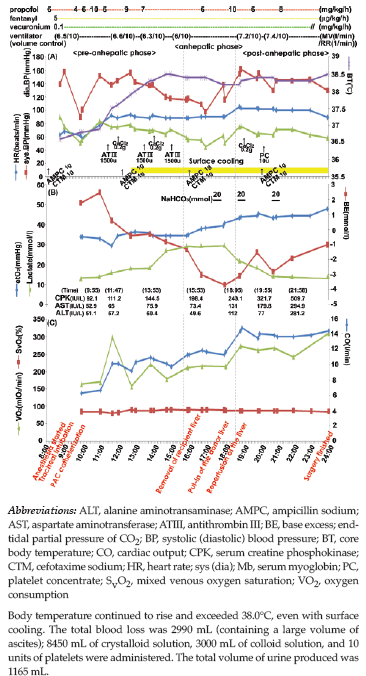
Figure 1. (A), (B), (C) Intraoperative Changes in Respiratory and Hemodynamic Parameters Are Shown in Conjunction With Changes in Body Temperature