Volume: 11 Issue: 6 December 2013
FULL TEXT
Objectives: We evaluated dobutamine stress echocardiography as an initial screening test for a cardiac evaluation before a liver transplant.
Materials and Methods: We retrospectively examined 111 liver transplant candidates who had undergone previous cardiac evaluation; 30 of whom had undergone a liver transplant.
Results: Eighty patients (72.1%) completed a dobutamine stress echocardiography (41 chronotropically competent, 39 incompetent), while 31 patients (27.9%) required us to terminate early. Overall, 68 patients (61%) were on β-blockers (21 required early dobutamine stress echocardiography termination, 30 chronotropically incompetent, and 17 competent). Patient results were normal. Thirty patients underwent a liver transplant. Among candidates requiring termination of early dobutamine stress echocardiography, posttransplant cardiac events included 1 fatal acute myocardial infarction, 1 nonfatal acute myocardial infarction, and 1 idiopathic cardiomyopathy. Among chronotropically incompetent patients, 2 patients had transient bradycardia, and among those who were chronotropically competent, 1 had refractory atrial fibrillation, and 1 had transient bradycardia.
Conclusions: Nearly 50% of patients with end-stage liver disease may not reach the target heart rate. Early termination of dobutamine stress echocardiography because of cardiac symptoms or significant echocardiographic changes have more effect in predicting postoperative cardiac events, but further evaluation is required even if their target heart rate is close to that desired. Lower target heart rate may be acceptable in chronotropically incompetent individuals provided they are asymptomatic, have no echocardiographic changes, or cardiovascular risk factors, especially if they are on β-blockers.
Key words : Cardiac, Stress, β-blocker, Cirrhosis
Introduction
Over the last decades, a liver transplant (LT) has emerged as a the treatment of choice for patients with end-stage liver disease (ESLD). Better surgical techniques, advances in immunosuppression, and donor organ management have significantly improved patient survival. However, while long-term patient survival has increased, cardiac complications have become a more common cause of early morbidly and mortality. Studies report a high incidence of posttransplant cardiovascular complications, with arrhythmias and overt congestive heart failure in as many as 25% and 56% of all transplant recipients.1-3
Patients with ESLD are at increased risk of acute coronary occlusion, myocardial failure, arrhythmia, and complete cardiovascular collapse after a transplant compared with other major surgical procedures. This is partly because there has been an increase in the number of patients older than 60 years undergoing an LT, which shows that these patients have more cardiovascular risk factors, then do young persons.4 Secondly, despite improvements in surgical techniques, the heart must respond to major hemodynamic/metabolic stressors intraoperatively including major and rapid blood loss, massive fluid shifts, and caval cross-clamping. However, there is no effective way to detect cardiovascular disease in asymptomatic patients before an LT, or determining the risk an LT candidate with heart disease has of a perioperative adverse cardiac event.
The American College of Cardiology/American Heart Association has guidelines that suggest that routine angiography is not indicated in LT candidates, unless noninvasive testing reveals a high-risk of adverse outcomes.5,6 Exercise stress testing is the noninvasive method of choice. The inherent debilitated state of most ESLD patients presents them from undertaking the physical challenge required of an exercise stress test. This limitation has led dobutamine stress echocardiography (DSE) to become the screening technique of choice at many transplant centers. Although various studies have produced conflicting results about the predictive value of DSE in these patients.7-11
This study sought to determine the prevalence and causes of chronotropic incompetence in patients with ESLD, and to examine the adequacy of our current DSE protocol in predicting cardiac events after an LT.
Materials and Methods
This study retrospectively evaluated 111 patients with decompensated ESLD who had undergone a DSE at our institution as part of their pre-LT cardiac evaluation between March 2009 and September 2010. The study was approved by the institutional review board. All protocols conformed with the ethical guidelines of the 1975 Helsinki Declaration.
All patients underwent a complete cardiac evaluation including a detailed clinical history and physical examination to identify symptoms and risk factors associated with coronary artery disease. These included age, sex, diabetes mellitus and its management (diet-controlled, oral hypoglycemic, or insulin-dependent), hypertension (defined as systolic blood pressure of >140 mm Hg and/or diastolic blood pressure of > 90 mm Hg) requiring antihypertensive medications, hypercholesterolemia (defined as total cholesterol of > 5.18 mmol/L, obesity (defined as body mass index of > 30), and smoking (including ex-smokers if smoking was discontinued in the 10 years before the study). A family history was considered positive if a first-generation relative had been diagnosed with coronary artery disease before the age of 60. Medication history was noted including the use of β-blockers for treatment of portal hypertension. A standard 12-lead electrocardiogram (ECG) and a 2-dimensional echocardiography preceded the DSE in all patients.
Dobutamine stress test and additional cardiac testing
Dobutamine stress testing was performed according to a standard protocol
using increasing dosages of dobutamine given at 3-minute intervals. Intravenous
dobutamine was infused incrementally from a starting dose of 5 μg/kg/min to a
maximum dosage of 40 μg/kg/min, or by the time the study endpoint had been
achieved. The endpoints terminating dobutamine infusion included developing a
new wall motion or ECG abnormalities, containing 85% of the age-predicted
maximal heart rate (HR), or developing significant adverse effects related to
the dobutamine. Patients not achieving 85% of age-predicted maximal HR at the
maximum dobutamine dose were given atropine (up to 2 mg) as per the
cardiologist.
Continuous cardiac monitoring was done throughout the test, while blood pressures were measured at rest, every 3 minutes during the study, and at maximal stress. The results were reviewed and interpreted by senior cardiologists. Similar to the definition of exercise-induced cardiac stress testing, chronotropic incompetence was defined as the inability to reach 85% of the predicted maximal HR for age and sex at the maximum dosage of dobutamine (40 μg/kg/min).8 Ischemic endpoints including chest pain, segment depression > 2 mm, new or worsened wall-motion abnormalities, dysrhythmias, significant blood pressure changes (blood pressure > 240/120 mm Hg or decline in systolic blood pressure > 40 mm Hg), or any intolerable symptoms led to early termination of the stress test. We did not compare the clinical and hemodynamic characteristics among patients who achieved their target heart rate (THR) with those who did not.
At our institution, additional cardiac testing includes a dipyridamole-thallium scan12 and cardiac catheterization in patients who failed to achieve their THR, failed to complete a DSE, or were considered a high risk for coronary artery disease (eg, [i] age ≥ 55 y for men and ≥ 65 y for women, [ii] ≥ 2 cardiovascular risk factors, [iii] echocardiographic evidence of ventricular enlargement or dysfunction, [iv] symptoms suggestive of coronary artery disease including dyspnea or angina) despite the results of a DSE being negative for ischemia.
Follow-up
Follow-up data were obtained regarding additional testing done after
chronotropic incompetence on a DSE, or early termination of protocol, and
cardiac events immediately after surgery.
Statistical analyses
Statistical analyses were performed with SPSS software (SPSS: An IBM
Company, version 18.0, IBM Corporation, Armonk, NY, USA). Results are expressed
as means ± standard deviation (SD) for normal distributions and median (first
and third quartiles) for nonnormal distributions. Comparisons were made using
chi-square tests for categorical variables. The unpaired t test was used
to compare the means of continuous variables with a normal distribution. The
nonparametric Mann-Whitney U test was used to compare means of continuous
variables with nonnormal distributions. Differences were considered
statistically significant when the value for P was < .05.
Results
Baseline characteristics
Table 1 shows the patients’ baseline characteristics. The mean age of the
patients was 55.1 ± 8.4 years (median, 54; range, 22-77 y); 77 of whom were men
(69.3%). The mean body mass index was 28.6 ± 6.7 kg/m2 (mean, 27.2;
range, 17-61 kg/m2). Viral hepatitis was the most common cause of
ESLD involving 70 patients (63.1%), followed by alcoholic cirrhosis in 25
patients (22.5%). Seventy-five patients (67.5%) had a MELD score < 15, and 9
patients (8.2%) had a MELD score > 25 at evaluation.
Dobutamine stress echocardiography
Dobutamine stress echocardiography was terminated early in 31 patients
(27.9%), and 21 of them were on β-blockers. Dysrhythmias (n=10) were the most
common reason for early termination of DSE. Others reasons included hypotension
(n=6), hypertension (n=6), chest pain (n=4), palpitations (n=2), headache (n=2),
dyspnea (n=2), nonspecific sinus tachycardia abnormality (n=4), and sinus
tachycardia depression (n=2). Seven patients had multiple symptoms and/or ECG
changes. Based on their cardiac history and/or symptoms during the DSE, 4
patients underwent a conventional coronary angiography and were found to have
normal coronary arteries and 9 underwent dipyridamole-thallium scanning; all
results were normal.
Forty-one patients (51.2%) achieved the age-predicted THR (mean dobutamine dosage, 34.4 ± 8.1 μg). Thirty-nine patients (48.8%) failed to achieve the THR (mean dobutamine dosage, 39.7 ± 6.3 μg) including 12 patients who received atropine (mean atropine dosage, 0.44 ± 0.12 μg; 8 on β-blockers). Table 2 shows that the mean resting HR was not significantly different between chronotropically competent and incompetent individuals. As expected, at maximum dobutamine dosage, the chronotropically incompetent individuals had a statistically significant lower peak HR (P < .05), lower average HR increment, and lower rate-pressure product (Table 2). The blood pressures at rest and at maximal stress were comparable. There was no difference in resting left ventricular ejection fractions and right ventricular systolic pressures. The left ventricular (LV) mass was calculated using the American Society of Echocardiography formula.13 The LV mass index also was not statistically different.
Symptoms in patients who completed a DSE were deemed to be tolerable and comparable between the 2 groups, except for chest pain (Table 3). The most common symptom in both groups was palpitation, followed by chest pain, headache, hypertension, and dyspnea. Premature ventricular contraction was the most-common dysrhythmia in both groups. Some patients had multiple symptoms. Nonspecific sinus tachycardia changes were noted in 9 patients chronotropically incompetent (23.4%) and 2 chronotropically competent patients (4.8%; P < .05).
Beta-blocker use
At our institution, withholding β-blockers for any length of time before the
DSE is not practiced because most patients received β-blockers for a history of
gastrointestinal bleeding. Of the 80 patients who completed the stress protocol,
47 patients (58.7%) were on β-blockers. Among these 47 patients, 30 patients
(63.9%) could not achieve the THR, compared with 9 out of 33 patients (27.3%)
who were not on β-blockers (chi-square test; P < .05) (Table 4). In
addition, 21 patients (67.7%) were using β-blockers out of the 31 in whom DSE
was terminated early. Mean percentages of maximal HR achieved among those with
and without β-blocker were 73.8 ± 14.6 and 84.5 ± 5.7.
Effect of model of end-stage liver disease score
Fifty-six patients (70%) with MELD score < 15 and 24 patients (30%) with
MELD score > 15 completed the stress protocol. There was no significant
difference for not achieving the THR based on MELD score (< 15, 26/56 vs > 15,
13/24). Further, a comparable number of patients who did not achieve the THR
were on β-blockers (MELD score < 15, 22/26 vs MELD score > 15, 11/13). A
subanalysis of patients with a MELD score > 15 showed that 8 of 14 patients
(57.1%) who were taking β-blockers did not achieve the THR compared with 3 of 10
patients (30%) who were not taking β-blockers (P < .05).
Additional testing
In patients with early termination of DSE, 4 underwent coronary angiography, and
all were found to have normal coronary arteries. Nine patients undertook
dipyridamole-thallium scanning, and all the test results were normal. In the
chronotropically incompetent group, 5 patients underwent right and left heart
catheterization, and in 2 of them, significant pulmonary hypertension was noted
(pulmonary arterial pressure of 80/30 mm Hg and 72/14 mm Hg). Six patients
underwent dipyridamole-thallium scanning, and none showed any evidence of heart
disease.
Posttransplant outcomes
During the study, 30 patients underwent an LT including 7 patients with early
termination of the DSE, 12 chronotropically incompetent, and 11 chronotropically
competent. Overall, 4 major postoperative cardiac events were noted as described
below, although 1 was after a retransplant for primary graft nonfunction.
Dobutamine stress echocardiography terminated
Three of the 7 patients in this group experienced cardiac events.
Case No. 103: A 53-year-old nondiabetic hypertensive hyperlipidemic white man experienced atypical chest pain on postoperative day 6. Two-dimensional echocardiography showed global hypokinesia, which was suggestive of idiopathic cardiomyopathy. Pretransplant DSE was terminated in this patient because of hypotension.
Case No. 108: A 56-year-old diabetic, hyperlipidemic African-American woman developed hypotension 2 days after surgery. A 2-dimensional echocardiography showed global hypokinesia, troponin I was raised (1.2 ng/mL). The patient died 6 days after surgery, and an autopsy showed a myocardial infarction and critical stenosis in the left anterior descending and right coronary arteries. Dobutamine stress echocardiography was terminated in this patient because of left ventricular cavity obliteration at maximal dosage of dobutamine, although she was asymptomatic. Eighty-three percent of the THR was achieved by this patient.
Case No. 111: A 47-year-old diabetic and hypertensive white woman had hypotension and chest pain on postoperative day 2. Regional wall motion abnormality with a decrease in ejection fraction to 30% (60% preoperatively) on 2-dimensional echocardiography and raised troponin I (1.4 ng/mL) was demonstrated. However, the patient recovered from this event with β-blocker and nitrates. Dobutamine stress echocardiography was terminated in this case because of palpitations leading to a panic attack. The patient achieved 82% of her THR.
In all 3 of the above cases, additional testing was not done because they achieved > 80% of the predicted THR.
Of the remaining 4 patients who received a transplant and did not have posttransplant cardiac events, in 2 cases, the achieved HR was 60% of their THR. They underwent dipyridamole-thallium scans, the results of which were normal. Two patients had achieved a HR of 70% and 75% of predicted maximum and did not require any additional testing.
Chronotropically incompetent
Among the chronotropically incompetent patients, 2 of 12 (case Nos. 50 and
81) who underwent an LT experienced self-limited, transient, asymptomatic
bradycardia on postoperative days 1 and 2. Case No. 81 was taking β-blockers
before the transplant, but No. 50 was not. Considering the benign and
self-limited nature of these events, we did not consider them in the final
analyses.
Among the remaining 10 chronotropically incompetent patients who received a transplant but did not have posttransplant cardiac events, 3 patients had achieved a HR of 50%, 60%, and 64% of maximum. They underwent dipyridamole-thallium scans, and all the results were normal. The remaining 7 had achieved HR of 71% to 80% (mean, 75 ± 3.3), and therefore did not undergo any additional testing.
Chronotropically competent
One of the 11 cases in this group experienced a cardiac event after the LT.
Case No. 28: A 64-year-old white man with diabetes, hypertension, hyperlipidemia, and ischemic heart disease, had primary nonfunction and received a second transplant, and had a complicated postoperative course. On postoperative day 2, after the second transplant, refractory atrial fibrillation with recurrent supraventricular tachycardia presented as hypotension and was treated with antiarrhythmic medications and ablation.
Case No. 39: A 59-year-old white woman with diabetes and hyperlipidemia, experienced self-limiting, transient, asymptomatic bradycardia on postoperative day 2. She was taking β-blockers before the transplant and because the condition was benign and self-limiting, it was not considered a significant cardiac event.
Discussion
Significance of chronotropic incompetence
In our study, chronotropically incompetent patients had significantly lower
resting HRs and demonstrated smaller rise in their HRs with dobutamine. These
observations were attributed to a systemic hyperdynamic state, resulting from an
accumulation of endogenous vasodilators like nitric oxide leading to vascular
hyporesponsiveness,14-16 reduced HR variability because of developing
an autonomic neuropathy,6,17,18 and using β-blockers.19
Cirrhotic patients exhibit a blunted response to physiologic and pharmacologic β-receptor stimulation because of a reduction in the number of cell membrane β-receptors and multiple downstream defects in β-receptor signaling pathways.20-22 Chronotropic incompetence predicts a poor prognosis and mortality in patients with liver disease.23
Daly and associates showed that in patients who lack an adequate HR during the early stages of DSE (eg, an infusion up to 20 μg/kg/min); the administration of atropine rather than progressively higher amounts of dobutamine might provide a more effective strategy to achieve the THR.24 However, in our study, only 2 of 14 patients (14.2%) who received atropine during the DSE achieved the THR and notably, both were not taking β-blockers. While studies have reported improved DSE sensitivity by increasing the HR response by adding atropine,24 it must be kept in mind that these studies were performed in the non-ESLD cardiac population, excluding patients taking β-blockers, which is in contrast to most of our patients.
Model of end-stage liver disease score and chronotropic incompetence
In our study, 73% of the patients who achieved the THR had MELD score < 15.
One may argue that as liver disease progresses, systemic circulation become
increasingly hyperdynamic and/or these patients are more likely to be taking
β-blockers. However, this was not the case because a comparable number of
patients with MELD score < 15 (22/26, 84.6%) and > 15 (11/13, 84.6%) were taking
β-blockers, and did not achieve their THR. These findings suggest that the
hyperdynamic state is significant, even when the MELD score is low and becomes
more pronounced, proportionally, with the severity of the liver disease.
In our study, cardiac symptoms and ECG changes appearing during the DSE may be more important for directing additional testing in the DSE-terminated category, even if high percentages of THRs are achieved.
Interpretation of dobutamine stress echocardiography in preliver
transplant cardiac evaluation
With the objective of selecting appropriate patients for further testing, we
proposed using lower cutoffs for percentages of predicted maximal heart rate
achieved (Table 4), and wanted to focus on cardiac symptoms or significant ECG
changes during the DSE. For example, Table 4 shows with 80% of the predicted
maximal heart rate being the cutoff, overall, 49 patients (61.3%) were
chronotropically competent. Among them, 22 patients (46.8%) were taking
β-blockers, and 27 patients (81.8%) were not taking β-blockers. Hypothetically,
if progressively decreasing the THRs is accepted, then the proportion of
chronotropic competency will increase (at cutoff of 70% predicted maximal heart
rate), 81.3% (70.2% were taking β-blockers and 97% were not taking β-blockers)
would be chronotropically competent; thus, avoiding the requirement of
additionally testing these patients without any cardiac symptoms or ECG changes.20-22
Earlier studies evaluating the DSE as a screening technique for obstructive coronary artery disease in ESLD patients have yielded conflicting results.7-11 Plotkin and associates concluded that the DSE has sensitivity, specificity, and positive and negative predictive values of 100%9; however, Harinstein and associates reported that the DSE has a poor sensitivity as a screening test for obstructive coronary artery disease in LT candidates and recommend alternate or additional methods for adequate cardiac risk stratification.2,8
Limitations
This is a retrospective study based on chart reviews and has a low event rate;
therefore, drawing statistical conclusions may be difficult.
Conclusions
Overall, nearly 50% patients with ESLD may not reach the THR and even more if
they are taking β-blockers. Early termination of any DSE because of cardiac
symptoms or significant changes in an ECG have more effect in predicting
postoperative cardiac events and should be further evaluated if close to the
THR. Lower THR may be acceptable in chronotropically incompetent, provided they
are asymptomatic, have no ECG changes, or cardiovascular risk factors,
especially if they are taking β-blockers, although this should be further
substantiated in larger, preferably prospective, studies.
References:
- Johnston SD, Morris JK, Cramb R, Gunson BK, Neuberger J. Cardiovascular
morbidity and mortality after orthotopic liver transplantation.
Transplantation. 2002;73(6):901-906.
CrossRef - PubMed - Plotkin JS, Scott VL, Pinna A, Dobsch BP, De Wolf AM, Kang Y. Morbidity
and mortality in patients with coronary artery disease undergoing orthotopic
liver transplantation. Liver Transpl Surg. 1996;2(6):426-430.
CrossRef - PubMed - Therapondos G, Flapan AD, Plevris JN, Hayes PC. Cardiac morbidity and
mortality related to orthotopic liver transplantation. Liver Transpl.
2004;10(12):1441-1453.
CrossRef - PubMed - Carey WD, Dumot JA, Pimentel RR, et al. The prevalence of coronary
artery disease in liver transplant candidates over age 50. Transplantation.
1995;59(6):859-864.
CrossRef - PubMed - Fleisher LA, Beckman JA, Brown KA, et al. ACC/AHA 2007 Guidelines on
Perioperative Cardiovascular Evaluation and Care for Noncardiac Surgery:
Executive Summary: A Report of the American College of Cardiology/American
Heart Association Task Force on Practice Guidelines (Writing Committee to
Revise the 2002 Guidelines on Perioperative Cardiovascular Evaluation for
Noncardiac Surgery) Developed in Collaboration With the American Society of
Echocardiography, American Society of Nuclear Cardiology, Heart Rhythm
Society, Society of Cardiovascular Anesthesiologists, Society for
Cardiovascular Angiography and Interventions, Society for Vascular Medicine
and Biology, and Society for Vascular Surgery. J Am Coll Cardiol.
2007;50(17):1707-1732. Erratum in: J Am Coll Cardiol. 2008;52(9):794-797.
Chaikof, Elliott [corrected to Chaikof, Elliott L].
CrossRef - PubMed - Fleisher LA, Fleckenstein JF, Frank SM, Thuluvath PJ. Heart rate
variability as a predictor of autonomic dysfunction in patients awaiting
liver transplantation. Dig Dis Sci. 2000;45(2):340-344.
CrossRef - PubMed - Donovan CL, Marcovitz PA, Punch JD, et al. Two-dimensional and
dobutamine stress echocardiography in the preoperative assessment of
patients with end-stage liver disease prior to orthotopic liver
transplantation. Transplantation. 1996;61(8):1180-1188.
CrossRef - PubMed - Harinstein ME, Flaherty JD, Ansari AH, et al. Predictive value of
dobutamine stress echocardiography for coronary artery disease detection in
liver transplant candidates. Am J Transplant. 2008;8(7):1523-1528. doi:
10.1111/j.1600-6143.2008.02276.x.
CrossRef - PubMed - Plotkin JS, Benitez RM, Kuo PC, et al. Dobutamine stress
echocardiography for preoperative cardiac risk stratification in patients
undergoing orthotopic liver transplantation. Liver Transpl Surg.
1998;4(4):253-257.
CrossRef - PubMed - Umphrey LG, Hurst RT, Eleid MF, et al. Preoperative dobutamine stress
echocardiographic findings and subsequent short-term adverse cardiac events
after orthotopic liver transplantation. Liver Transpl. 2008;14(6):886-892.
doi: 10.1002/lt.21495.
CrossRef - PubMed - Williams K, Lewis JF, Davis G, Geiser EA. Dobutamine stress
echocardiography in patients undergoing liver transplantation evaluation.
Transplantation. 2000;69(11):2354-2356.
CrossRef - PubMed - Bradley SM, Soine LA, Caldwell JH, Goldberg SL. Screening stress
myocardial perfusion imaging and eligibility for liver transplantation. Am J
Cardiol. 2010;105(7):1010-1013. doi: 10.1016/j.amjcard.2009.11.023.
CrossRef - PubMed - Lang RM, Bierig M, Devereux RB, et al. Recommendations for chamber
quantification: a report from the American Society of Echocardiography's
Guidelines and Standards Committee and the Chamber Quantification Writing
Group, developed in conjunction with the European Association of
Echocardiography, a branch of the European Society of Cardiology. J Am Soc
Echocardiogr. 2005;18(12):1440-1463.
CrossRef - PubMed - Blendis L, Wong F. The hyperdynamic circulation in cirrhosis: an
overview. Pharmacol Ther. 2001;89(3):221-231.
CrossRef - PubMed - Campillo B, Chabrier PE, Pelle G, et al. Inhibition of nitric oxide
synthesis in the forearm arterial bed of patients with advanced cirrhosis.
Hepatology. 1995;22(5):1423-1429.
CrossRef - PubMed - Tsai MH. Splanchnic and systemic vasodilatation: the patient. J Clin
Gastroenterol. 2007;41(suppl 3):S266-S271. Erratum in: J Clin Gastroenterol.
2008;42(5):table of contents.
CrossRef - PubMed - Ates F, Topal E, Kosar F, et al. The relationship of heart rate
variability with severity and prognosis of cirrhosis. Dig Dis Sci.
2006;51(9):1614-1618.
CrossRef - PubMed - Trevisani F, Sica G, Mainquà P, et al. Autonomic dysfunction and
hyperdynamic circulation in cirrhosis with ascites. Hepatology.
1999;30(6):1387-1392.
CrossRef - PubMed - Krenning BJ, Geleijnse ML, Poldermans D, Roelandt JR. Methodological
analysis of diagnostic dobutamine stress echocardiography studies.
Echocardiography. 2004;21(8):725-736.
CrossRef - PubMed - Grose RD, Nolan J, Dillon JF, et al. Exercise-induced left ventricular
dysfunction in alcoholic and non-alcoholic cirrhosis. J Hepatol.
1995;22(3):326-332.
CrossRef - PubMed - Laffi G, Lagi A, Cipriani M, et al. Impaired cardiovascular autonomic
response to passive tilting in cirrhosis with ascites. Hepatology.
1996;24(5):1063-1067.
CrossRef - PubMed - Ma Z, Lee SS. Cirrhotic cardiomyopathy: getting to the heart of the
matter. Hepatology. 1996;24(2):451-459.
CrossRef - PubMed - Daly AL, Linares OA, Smith MJ, Starling MR, Supiano MA. Dobutamine
pharmacokinetics during dobutamine stress echocardiography. Am J Cardiol.
1997;79(10):1381-1386.
CrossRef - PubMed - Lentine KL, Costa SP, Weir MR, et al. Cardiac disease evaluation and
management among kidney and liver transplantation candidates: a scientific
statement from the American Heart Association and the American College of
Cardiology Foundation: endorsed by the American Society of Transplant
Surgeons, American Society of Transplantation, and National Kidney
Foundation. Circulation. 2012;126(5):617-663.
CrossRef - PubMed

Volume : 11
Issue : 6
Pages : 546 - 553
DOI : 10.6002/ect.2012.0295
From the 1Division of Abdominal Organ Transplantation, Department
of Surgery; the 2Division of Cardiology, Department of Medicine; the
3Department of Anesthesiology; and the 4Division of Trauma
and Critical Care, Department of Surgery, Temple University Hospital, 3400 N.
Broad Street Philadelphia, PA 19140 USA
Acknowledgements: This data was presented as an oral presentation and
was awarded a travel grant at the 15th European Society of Organ Transplantation
Congress, September 4-7, 2011, Glasgow, Scotland. Transplant Intl.
2011;24(s2):27,O # 097.
Ashish Singhal was responsible for the research design, performance of research, data analyses, and writing of paper; Andreas Karachristos and Athanasios Thomaides performed the research; Amar Nath Mukerji was responsible for the data analyses and editing; Manoj Maloo, Benjamin Sanchez, Michael Keresztury, and Thomas A. Santora performed the research and edited the manuscript; and Ashokkumar Jain was responsible for the research design, editing of the manuscript, performing the research, and analyzing the data.
The authors thank Khushbo Majmundar for her technical support with the data analyses.
The authors have no conflicts of interest and received no funding for this study.
Corresponding author: Dr. Ashokkumar Jain, MD, FACS, Division of
Abdominal Organ Transplantation, Department of Surgery, Temple University
Hospital, 3401 North Broad Street
Parkinson Pavilion, 6th Floor, Suite C640, Philadelphia, PA 19140, USA
Phone: +1 215 707 8538
Fax: +1 215 707 4673
E-mail:
ashokkumar.jain@tuhs.temple.edu
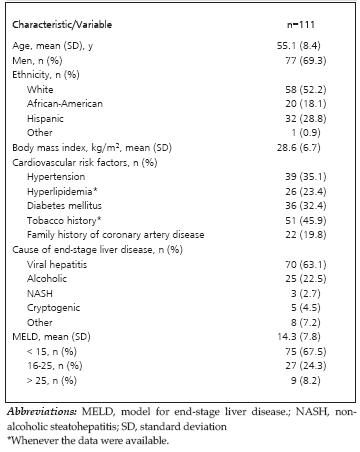
Table 1. Baseline Patient Characteristics (All Patients)
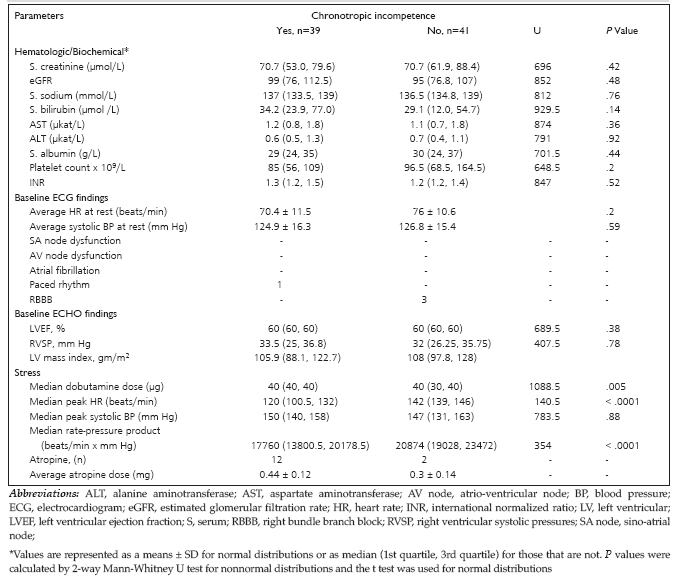
Table 2. Laboratory Data and Cardiac Characteristics (Completed Dobutamine Stress Echocardiagraphy, n=80)
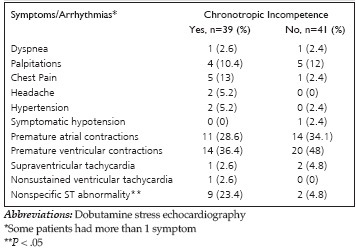
Table 3. Symptoms/Arrhythmias During Stress Test (Completed DSE,n=80)
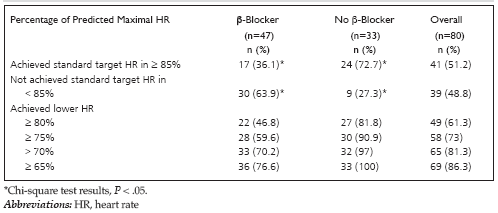
Table 4. Percentage of Predicted Maximal Heart Rate Versus β-blocker. (Completed Dobutamine Stress Echocardiography, n=80)
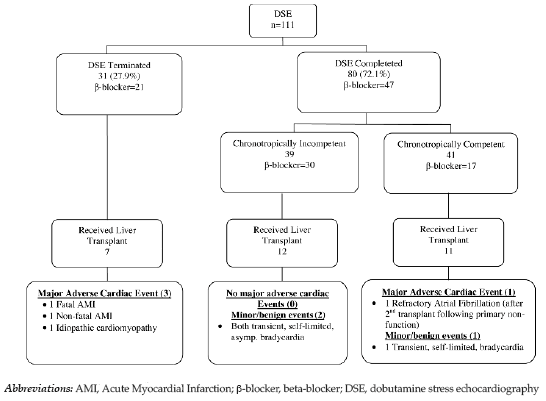
Figure 1. Patient Outcomes.