Volume: 11 Issue: 3 June 2013
FULL TEXT
Hepatic artery thrombosis represents a potentially deadly complication after a liver transplant. Portal vein arterialization recently has been proposed as a bridge approach in patients with hepatic artery thrombosis needing a retransplant.
We report the case of a 53-year-old man treated with a liver transplant for a cryptogenetic cirrhosis. One month after a liver transplant, a hepatic artery thrombosis was documented, and a portal vein arterialization as bridge therapy for another liver transplant was performed. After surgery, improvement in the patient’s liver functioning was seen. No signs of portal hypertension or hepatic abscesses were documented. Unfortunately, 8 months after the liver transplant, the patient experienced a severe urinary infection caused by a multidrug-resistant Klebsiella and died.
An increase in the oxygen supply to the liver parenchyma after portal vein arterialization represents rationale use for managing hepatic artery thromboses. Several cases of treating post-liver transplant hepatic artery thromboses have been reported in the literature. Portal vein arterialization can be used as bridge therapy in well-selected situations of post-liver transplant hepatic artery thromboses. Strict surveillance should be used to prevent the onset of complications that can exclude a patient from a transplant. The correct timing for retransplant is not fully known, but we think the shorter the time to retransplant, the better is the patient survival.
Key words : Hepatic artery thrombosis, Portal hypertension, Patient survival, Retransplant, Fulminant hepatic failure
Introduction
After a liver transplant (LT), the entire arterial supply of the graft is supplied exclusively by the hepatic artery. Consequently, the appearance of a hepatic artery thrombosis (HAT) represents a potentially deadly complication. Hepatic artery thrombosis is seen more frequently after pediatric LTs and complex vascular reconstructions, complicating 4% to 10% of LTs.1
Urgent retransplant represents a unique therapy for treating early HAT (< 10 days). However, in cases in which HAT occurs > 10 days after surgery, when it is not possible to request an emergent liver transplant, any strategy should be considered for managing patients waiting for a retransplant. Portal vein arterialization (PVA) represents a recently proposed bridge for patients with HAT needing a retransplant.2,3 We report the case of a patient who underwent an LT complicated by an HAT, treated with a PVA as bridge therapy for retransplant.
Case Report
In January 2011, a 53-year-old man underwent an LT for cryptogenetic cirrhosis from a 52-year-old deceased donor. His postsurgical course was uneventful, and he was discharged 14 days after the LT. One month later, increases in his levels of serum transaminases, bilirubin, and international normalized ratio led to a readmission at the hospital. A partial thrombosis of the hepatic artery and a biopsy-proven ischemic cholangiopathy were documented. Endovascular stenting of the hepatic artery was performed; however, after the procedure, a complete thrombosis occurred (Figure 1). The patient was scheduled for a retransplant.
As a bridging procedure, we performed a PVA with an end-to-end anastomosis between the inferior mesenteric artery and the inferior mesenteric vein. We used a running suture with 6-0 polypropylene (Figure 2A). After surgery, the patient was discharged in good clinical condition with improved values on his liver function tests (normalization of transaminases and international normalized ratio and reduction of his total bilirubin from 171 μmol/L to 86 μmol/L). The patient was closely monitored using echo-Doppler ultrasonography and abdominal computed tomography scans. No signs of portal hypertension or hepatic abscesses were documented. The anastomosis continued to have normal flow parameters (Figure 2B). However, in July 2011, the patient was urgently readmitted to our department owing to a sudden deterioration in his clinical conditions. A severe urinary infection caused by a multidrug-resistant Klebsiella was found. Consequently, the patient was deemed not appropriate for an urgent retransplant. Despite adequate antibacterial therapy, the patient died from multiple organ failure 8 months after the LT.
Discussion
The hepatic artery plays a vital role after an LT, providing blood for both the liver parenchyma and the bile duct system. An HAT is an insidious vascular complication that affects graft and patient survival. Increasing the oxygen supply to the liver parenchyma after a PVA represents rationale use for managing an HAT.2,3
Portal vein arterialization has been used historically in portal hypertension surgery in conjunction with end-to-side portacaval shunting to preserve liver perfusion and reduce the risk of hepatic failure and encephalopathy. However, because of its high complication rate, this surgic approach has been dropped in favor of radiological therapies (ie, transjugular intrahepatic portosystemic shunts) and LT.4 A PVA also has been indicated for preventing an HAT after oncologic liver surgery and to reduce toxins in cases of fulminant hepatic failure.5
In the transplant domain, apart from post-LT HAT, current indications for a PVA include pretransplant or post-LT extended splanchnic vein thromboses, pretransplant low portal flow, and anatomic variations (ie, absence of portal and mesenteric veins).2,3
Several cases for treating post-LT HAT have been reported in literature. In 2001, Cavallari and associates2 reported a case of a patient with an HAT and massive hepatic necrosis, treated with a PVA between the hepatic artery and the portal vein as a bridge to elective retransplant, which was performed 4 months later. In 2004, Shimizu and associates3 reported a case of a preoperative HAT in a living-donor LT candidate. Although an arterial reanastomosis was not possible, a PVA was performed through the mesenteric vascular branches.
In the present case, a PVA was performed as bridge therapy for a retransplant, with the intent of avoiding complications of the graft ischemic injury. Our reconstruction (ie, an end-to-end anastomosis between the inferior mesenteric artery and the inferior mesenteric vein) is described for the first time in literature. The patient’s conditions remained stable for 6 months after the LT, but clinical worsening and intractable infections did not allow for a retransplant. Given the shortage of clinical cases reported and the short follow-up, there is no clear agreement on the timing for a retransplant. Moreover, the long-term consequences of a PVA are not fully known, mainly from a hemodynamic point of view. We postulate that despite its possible use, a PVA does not represent an alternative to retransplant (which must be performed as soon as possible) according to the patient’s conditions and organ availability.
Finally, an HAT, especially when it develops late, is typically well tolerated because of neoangiogenesis. In our case, the histologic damage was already present after its development. A possible explanation for such evidence could be related to the absence of a collateral neoarterial vascularization. However, being that a collateral neoarterial vascularization is not fully understood, we cannot explain the fast and irreversible cholangiopathy observed.
In conclusion, a PVA is a procedure that may be used as a bridge therapy in well-selected situations of post-LT HAT. Strict surveillance is useful in preventing complications that exclude the patient from a transplant opportunity. The correct timing for retransplant is not fully known, but we think the shorter the time for retransplant, the better is the patient's survival.
References:
- Panaro F, Gallix B, Bouyabrine H, et al. Liver transplantation and
spontaneous neovascularization after arterial thrombosis: “the
neovascularized liver”. Transpl Int. 2011;24(9):949-957.
CrossRef - PubMed - Cavallari A, Nardo B, Caraceni P. Arterialization of the portal vein in
a patient with a dearterialized liver graft and massive necrosis. N Engl J
Med. 2001;345(18):1352-1353.
CrossRef - PubMed - Shimizu K, Tani T, Takamura H, et al. Partial portal arterialization in
living-donor liver transplantation for hepatic artery occlusion.
Transplantation. 2004;77(6):954-955.
CrossRef - PubMed - Otte JB, Reynaert M, De Hemptinne B, et al J. Arterialization of the
portal vein in conjunction with a therapeutic portacaval shunt. Hemodynamic
investigations and results in 75 patients. Ann Surg. 1982;196(6):656-663.
CrossRef - PubMed - Nardo B, Caraceni P, Montalti R, et al. Portal vein arterialization: a
new surgical option against acute liver failure? Transplant Proc.
2005;37(6):2544-2546.
CrossRef - PubMed

Volume : 11
Issue : 3
Pages : 287 - 289
DOI : 10.6002/ect.2012.0172
From the Department of General Surgery and Organ Transplantation, Sapienza
University, Umberto I Hospital, Rome, Italy
Corresponding author: Fabio Melandro, MD, Department of General Surgery
and Organ Transplantation, Sapienza University, Umberto I Hospital, Viale del
Policlinico 155, Rome 00161, Italy
Phone: +39 064 997 0453
Fax: +39 064 997 0401
E-mail: fabmelan@yahoo.it
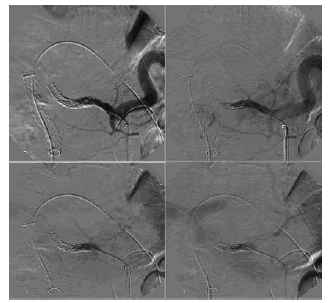
Figure 1. Arterial Thrombosis Occurring After Stent Placement
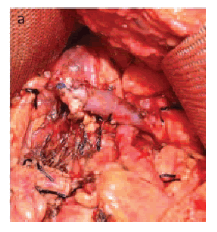
Figure 2A. Intraoperative Image of the PVA Created Between Inferior Mesenteric Vein and Artery
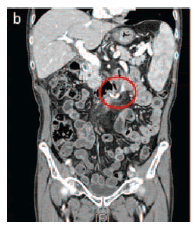
Figure 2B. A CT Scan Performed 3 Months After the Procedure Shows the Patency of the Fistula, Without Signs of Portal Hypertension