Volume: 11 Issue: 3 June 2013
FULL TEXT
Objectives: Genes encoding histocompatibility leukocyte antigen (HLA) and proinflammatory cytokines are involved in rejection after organ transplant. The authors explored the association between HLA alleles and the tumor necrosis factor (TNF)-α-308 G/A promoter region in lung transplant recipients of Han nationality from East China. They also evaluated the correlation between TNF-α-308 G/A and the onset of acute rejection after lung transplant.
Materials and Methods: All lung transplant recipients of Han nationality who were admitted into our hospital between August 2004 and July 2011 were included. Patients were divided into 2 groups according to the presence or absence of acute rejection episodes. Genotypes of HLA and single nucleotide polymorphisms of TNF-α-308 G/A were determined using polymerase chain reaction-single specific primer kits.
Results: A total of 106 lung transplant recipients were investigated. HLA-A*2 allele was in linkage disequilibrium with TNF-α-308 G allele. HLA-A*33, -B*58 and -DRB1*03 alleles were in linkage disequilibrium with TNF-α-308 A allele. Notably, TNF-α-308 A allele was in complete linkage disequilibrium with HLA-B*58 allele. Furthermore, TNF-α-308 A allele was in linkage disequilibrium with the HLA-A*33-DRB1*03 and HLA-B*58-DRB1*03 haplotypes. Clinical analysis indicated that TNF-α-308 G/A was not associated with onset of acute rejection after lung transplant.
Conclusions: TNF-α-308 G/A polymorphism was strongly associated with HLA-A*2, -A*33, -B*58, and -DRB1*03 alleles in our population. HLA genotyping can identify lung transplant recipients carrying the highly productive phenotype of TNF-α-308 A allele, which may provide information on rejection after transplant. However, the authors found that TNF-α-308 A subtype has no correlation with acute rejection after lung transplant.
Key words : Linkage disequilibrium, HLA, TNF-α, Lung transplant, Rejection
Introduction
Lung transplant is the only available treatment for patients with various end-stage lung diseases. However, rejection is a common complication faced by the lung transplant recipient (LTR) and a major impediment to long-term survival.1, 2 Proinflammatory cytokines play an important role in the pathogenesis of rejection.3 In the context of transplant, the proinflammatory cytokine tumor necrosis factor (TNF)-α is involved in acute graft rejection. The production of TNF-α from the activity of macrophages, natural killer cells, and T cells in the microenvironment of the graft is mainly regulated by single nucleotide polymorphisms (SNPs) in promoter regions at gene level.4 Many studies have demonstrated an association between SNP of TNF-α-308 G/A and transplant rejection.5-7
The major histocompatibility complex (MHC) is a genetic system of more than 70 known genes on the short arm of chromosome.6 Typing of class I and class II MHC genes has been used to define the genetic basis of immune responses, such as rejection.8 Large studies have indicated that donor-recipient matching at the HLA-A, -B and -DRB1 alleles offers the highest likelihood of survival.9
Linkage disequilibrium (LD), the association in populations between genes at linked loci, has achieved a high degree of prominence in recent years, mainly because of its use in identifying and cloning genes of medical importance.10 Many studies have shown that TNF-α was associated with conserved MHC haplotypes in European, Asian, and Australian aboriginal donors.11-13 In other races and geographically distinct populations, these associations are different. For example, Chinese people in Taiwan with the TNF-α-308 A allele have been shown to have high antigen frequency of HLA-A*33 and -B*58.14 However, few studies have reported on the association between TNF-α-308 G/A and the HLA-A, -B, and -DRB1 loci in mainland China.
In the present study, we examined the linkage disequilibrium between TNF-a-308 G/A and HLA alleles in LTRs of the Han nationality from East China. We also evaluated the correlation between TNF-α-308 G/A and the onset of acute rejection after lung allograft transplant.
Materials and Methods
Patients
All lung transplant recipients of Han nationality who were admitted into our
hospital between August 2004 and July 2011 were included in the present study.
According to the presence or absence of acute rejection (AR) episodes, the
patients were divided into 2 groups: an AR group and a non-AR group. Acute
rejection was defined as a biopsy indicative of rejection within the first 4 to
6 weeks after lung transplant, according to International Society for Heart and
Lung Transplantation (ISHLT) criteria.15 All protocols were approved by the
ethics committee of the institution before the study began, and the protocols
conformed with the ethical guidelines of the 1975 Helsinki Declaration. Written,
informed consent was obtained from all patients.
Isolation of DNA
Peripheral blood samples were collected from the patients in tubes containing
EDTA-K2 as an anticoagulant. Patients’ DNA was extracted with Wizard genomic DNA
purification kit (USA Promega Corporation, Madison, WI, USA) following
manufacturer instructions.
Human leukocyte antigen allele genotyping
The HLA-A, -B, and -DRB1 alleles of
the LTRs were examined by the polymerase chain reaction-sequence specific primer
(PCR-SSP) technique with PROTRANS HLA- A*/B*/DRB1* kit (ProTrans International,
Indianapolis, IN, USA) following the manufacturer’s instructions. In summary, a
280 µL buffer D, 560
µL buffer Y, 200
µL genomic
DNA (75 ng/µL), and 32.5 U Taq DNA polymerase were mixed in a 1.5 mL centrifuge
tube.
This DNA Master mix was dispensed into 96-well trays prealiquoted with primers and amplified in a thermocycler (9600 Thermal Cycler; Perkin-Elmer, Waltham, MA, USA). Thermocycling conditions were as follows: 1 cycle at 96°C for 130 seconds and 63°C for 60 seconds; then 9 cycles at 96°C for 10 seconds and 63°C for 60 seconds; followed by 20 cycles at 96°C for 10 seconds, 59°C for 50 seconds, and 72°C for 30 seconds. The amplified product was electrophoresed on a 2% agarose gel.
Results were interpreted on the basis of a positive amplification band. Each tube had an internal positive control band to check the integrity of the polymerase chain reaction.
Tumor necrosis factor-α-308 G/A polymorphism genotyping
The SNPs of TNF-α-308
were examined by the PCR-SSP method, using the Cytokine Genotyping Primer Pack (One
Lambda, Inc, Canoga Park, CA, USA). To summarize this method, 19
µL genomic DNA
(50-100 ng/µL) was mixed with 140
µL buffer D and 5 U Taq DNA polymerase.
As with the HLA DNA mixture, the TNF-α-308 DNA Master mix was dispensed into 96-well trays prealiquoted with primers and amplified in a Perkin-Elmer 9600 Thermal Cycler. Thermocycling conditions were as follows: 10 cycles at 94°C for 10 seconds and 65°C for 60 seconds, followed by 20 cycles at 94°C for 10 seconds, 61°C for 50 seconds, and 72°C for 30 seconds. The amplified products were electrophoresed on 2% agarose gel, and the typing results were interpreted using the worksheet provide with the product.
Statistical analyses
Statistical analyses were performed with SPSS software (SPSS: An IBM Company,
version 15.0, IBM Corporation, Armonk, New York, USA). Deviation of the TNF-α
gene from Hardy-Weinberg equilibrium was evaluated using the chi-square test.
Allele and genotype frequencies were calculated in patients by direct gene
counting. Possible association of TNF-α-308 G/A alleles with HLA-A, -B, and
-DRB1 alleles was assessed by the chi-square test or the Fisher exact test. The
frequencies of genotypes and alleles in the AR and non-AR group also were
compared by the chi-square test or the Fisher exact test.
The d is an LD measure, if the d differs significantly from zero, LD is said to exist. The haplotype frequency (pab) was calculated using the following formula: pab = number of observed haplotypes/2N(n, the number of samples). The d value was calculated as dab = pab - pa × pb, where pab is the observed haplotype frequency of alleles a and b at 2 linked loci, pa is the gene frequency of the concerned allele at 1 locus, and pb is the gene frequency of the associated allele at the other locus. The d can be scaled as d’= d/dmax, with its maximum value given by dmax = min (pa1pb2, pa2pb1). Three-locus LD was calculated by the following formulas: dabc = pabc - papbc - pbpac - pcpab + 2papbpc.
Results
A total of 106 LTRs were included in the present study. The patients consisted of 26 females and 80 males, with an age range from 17 to 73 years. The number of patients in the AR and non-AR groups were 15 and 76 respectively after excluding missing information.
Single nucleotide polymorphisms of tumor necrosis factor-α-308 and human
leukocyte antigen -A, B, DRB1
Among the 106 LTRs, 80 (75.5%) patients had the G/G
genotype, 25 (23.6%) had the G/A genotype, and 1 (0.9%) had the A/A genotype.
The genotype distribution of TNF-α-308 A/G was in Hardy-Weinberg
equilibrium in the LTRs
(chi square = 0.3952, P = .53). The allele frequencies of HLA-A*2, -A*33, -B*58,
and -DRB1*03 were 32.55% (28/212), 13.21% (69/212), 12.74% (27/212), and 8.96%
(19/212).
Linkage disequilibrium between tumor necrosis factor-α-308 G/A and human
leukocyte
antigen-A* alleles
The frequency of the HLA-A*33 allele in the 106 LTRs was
13.21% (28/212). Among the LTRs, 77.78% (21/27) had the TNF-a-308 A
allele, and 3.78% (7/185) had the TNF-α-308 G allele, associated with HLA-A*33—a
difference that is statistically significant (P < .01; Table 1). Analysis showed
a positive LD between HLA-A*33 and TNF-α-308 A (d’=0.7443; Table 2).
Similarly, 98.55% (67/68) of LTRs with HLA-A*2 had TNF-α-308 G, and only
1.45% (1/68) of LTRs with HLA-A*2 LTRs had TNF-α-308 A. Analysis showed a
positive LD between HLA-A*2 and TNF-α-308 G (d’=0.8874; Table 2).
Linkage disequilibrium between tumor necrosis factor-α-308 G/A and human
leukocyte
antigen -B* alleles
As shown in Table 1, the TNF-α-308 A allele was associated with HLA-B*58 in
all of the LTRs, and the TNF-α-308 G allele was associated with HLA-B*58 in
none of the LTRs—a difference that is statistically significant (P < .01). In 1
LTR with TNF-α-308 A/A, his HLA-B*58 allele was homozygous. Analysis showed
that TNF-α-308 A was in complete LD with HLA-B*58, with a d’ value of 1.000
(Table 2).
Linkage disequilibrium between tumor necrosis factor-α-308 G/A and human
leukocyte antigen-DRB1* alleles
In 59.26% (16/27) of LTRs with the
TNF-α-308 A allele—and in 1.62% (3/185) of LTRs with the TNF-α-308 G
allele—these alleles were associated with HLA-DRB1*03. This difference was
statistically significant (P < .01; Table 1). Analysis showed that
TNF-α-308 A was in LD with HLA-DRB1*03, with a d’ value of 0.8199 (Table
2).
Linkage disequilibrium between tumor necrosis factor-α-308 G/A and human
leukocyte antigen haplotypes
Table 3 shows the LD analysis of the association of
the TNF-α-308 A/G alleles with the HLA-A-B-DRB1 haplotypes in LTRs. The
HLA-A*33-DRB1*03 haplotype was in LD with the TNF-α-308 A allele
(d=0.0373). Most of the LTRs with the
HLA-A*33-DRB1*03 haplotype had the TNF-α-308 A allele, and only 8.33%
(1/12) of the LTRs had the TNF-α-308 G allele. Human leukocyte
antigen-B*58-DRB1*03 haplotype also is in LD with TNF-α-308 A (d=0.0478). All the LTRs with HLA-B*58-DRB1*03 haplotype have TNF-α-308 A allele.
Correlation between tumor necrosis factor-α-308-A subtype and acute
rejection
The differences of TNF-α-308 genotype within and between the AR and non-AR
groups were further analyzed in 91 of the 106 LTRs. The results are shown in
Table 4. Genotype distribution of TNF-α-308 G/A was in Hardy-Weinberg
equilibrium in both the AR group (chi-square=0.9735, P = .33) and the non-AR
group (chi-square=1.21, P = .27). The overall incidence of acute rejection in
both groups was 16.48% (15/91). Differences in TNF-α-308 genotype and
allele distribution between the AR and non-AR group did not reach significance.
Discussion
The TNF-α gene is located on chromosome 6p21.3 within the group of class III genes of the MHC.16, 17 Strong LD between the HLA alleles and the TNF-α-308 G/A region has been identified by studying autoimmune associated diseases, such as systemic lupus erythematosus, rheumatoid arthritis, and insulin-dependent diabetes mellitus.18, 19 However, variations in the associations between HLA alleles and the TNF-α-308 G/A region have been confirmed among different races and populations.
In white populations, the TNF-α-308 A allele is associated with the ancestral HLA-A1-B8-DR3 haplotype, which confers susceptibility to many autoimmune diseases.20, 21 In Gambian populations, TNF-α-308 A is carried without HLA-B*8, -B*58, or -DRB1*03.22 In many Indian donors, TNF-α-308 A is associated with the Asian diabetogenic 58.1AH (HLA-A*33-B*58-DRB1*03). However, another Indian haplotype, characterized by HLA-B*8 and -DRB1*03, does not include TNF-α-308 A.23 In Chinese from Taiwan, TNF-α-308A is associated with the haplotype of HLA-A*33-B*58-Cw*10.14 In African-Americans from the Southeastern United States and in Mexican Mestizo, the TNF-α-308 A allele is not in LD with any HLA-DR alleles.24, 25
Our data show that the HLA-A*33, -B*58, and -DRB1*03 alleles were in LD with TNF-α-308 A (d’ = 0.7443, 1.000, 0.8199), and the HLA-A*2 allele was in LD with TNF-α-308 G (d’ = 0.8874). Our data also showed that the HLA-A*33-DRB1*03 and HLA-B*58-DRB1*03 haplotypes were in LD with TNF-α-308 A—91.67% LTRs with the HLA-A*33-DRB1*03 haplotype, and all LTRs with the HLA-B*58-DRB1*03 haplotype, had the TNF-α-308 A allele. In light of these data, it is clear that the TNF-α-308 A allele was in complete LD with HLA-B*58 in our Han population.
TNF-α-308 A is a rare allele. In African-Americans from the Southeastern United States, the frequency of this allele is 14.4%, and in individuals of African-Caribbean descent living in Boston, its frequency is 13%.24, 26 These TNF-α-308 A frequencies are similar to those reported in Africans from Gambia (16%, 17%),27, 28 Malawi (12%, 11%),26, 28 and Nigeria (13%).26 By contrast, a study based on the largely white Western Australian Bone Marrow donor registry showed the frequency of individuals with TNF-α-308 A reached 34%.29 Our data show the frequency of TNF-α-308 A in the Han nationality to be 12.74%. Because TNF-α-308 A was in complete LD with the HLA-B*58 allele in our population, the frequency of HLA-B*58 from 498 individuals which have been typed for HLA was substituted for the accurate frequency of TNF-α-308A, which was 7.33% (73/996). The frequency of the TNF-α-308 A allele in our Han population was similar to that reported from Tanzania (9%) (chi-square = 1.65, P > .05).30
TNF-α-308 G/A is the binding site of activating protein-2 transcription factors. Compared to TNF-α-308 G, the TNF-α-308 A allele has been shown to increase the plasma cytokine level and to correlate with high in vitro TNF-α gene transcription and expression.31-33 It also has been demonstrated that the TNF-α-308 A allele could increase the risk of acute rejection.5, 34-37
Interestingly, HLA-matched allogeneic donor-recipient pairs often are mismatched for microsatellite markers in the class III region, leading to complications after allogeneic hematopoietic stem cell transplants.38, 39 These findings suggest that there are genes in the MHC other than HLA, such as TNF-α, that affect transplant outcome. Therefore, SNPs of TNF-α-308 might be important biomarkers for the prognosis or prediction of therapy response after transplant.40 However, we did not reach such a conclusion in our study. Because of the small sample size of LTRs with TNF-α-308 A and the retrospective nature and short follow-up of our study, it would be necessary to enlarge the LTR sample size for further analysis of this matter.
In summary, our study showed that the TNF-α-308 G/A polymorphism was strongly associated with the HLA-A*2, -A*33, -B*58, and -DRB1*03 alleles in LTRs of the Han nationality from East China. Notably, the TNF-α-308 A allele was in complete LD with the HLA-B*58 allele. Genotyping of HLA can help to identify individuals carrying the “high-inflammatory” TNF-α-308 A allele, which may be beneficial for reducing or preventing the development of rejection after lung transplant. However,in our study, the TNF-α-308 A subtype likely had no correlation with the onset of acute rejection after lung transplant. The clinical relevance of the TNF-α-308 G/A polymorphism requires further research with larger sample sizes.
References:
- Wohlschläger J, Sommerwerck U, Jonigk D, Rische J, Baba HA, Müller KM. Lung
transplantation and rejection. Basic principles, clinical aspects and
histomorphology [article in German]. Pathologe. 2011;32(2):104-112.
CrossRef - PubMed - Gomez C, Reynaud-Gaubert M. Long-term outcome of lung transplantation
[article in French]. Rev Pneumol Clin. 2010;67(1):64-73.
CrossRef - PubMed - Mathur A, Baz M, Staples ED, et al. Cytokine profile after lung
transplantation: correlation with allograft injury. Ann Thorac Surg.
2006;81(5):1844-1849; discussion 1849-1850.
CrossRef - PubMed - Pu J, Zeng WY. Relationship among TNF-alpha gene promoter -308 site
polymorphism, the levels of maternal serum TNF-alpha, and the mRNA expression
placental TNF-alpha in preterm labor [article in Chinese]. Sichuan Da Xue Xue
Bao Yi Xue Ban. 2009;40(1):77-80.
PubMed - Tinckam K, Rush D, Hutchinson I, et al. The relative importance of cytokine
gene polymorphisms in the development of early and late acute rejection and
six-month renal allograft pathology. Transplantation. 2005;79(7):836-841.
CrossRef - PubMed - Azzawi M, Hasleton PS, Turner DM, et al. Tumor necrosis factor-alpha gene
polymorphism and death due to acute cellular rejection in a subgroup of heart
transplant recipients. Hum Immunol. 2001;62(2):140-142.
CrossRef - PubMed - Ternstrom L, Jeppsson A, Ricksten A, Nilsson F. Tumor necrosis factor gene
polymorphism and cardiac allograft vasculopathy. J Heart Lung Transplant.
2005;24(4):433-438.
CrossRef - PubMed - Colvin RB. Cellular and molecular mechanisms of allograft rejection. Annu Rev
Med. 1990;41:361-375.
CrossRef - PubMed - Opelz G, Döhler B. Pediatric kidney transplantation: analysis of donor age,
HLA match, and posttransplant non-Hodgkin lymphoma: a collaborative transplant
study report. Transplantation. 2010;90(3):292-297.
CrossRef - PubMed - Slatkin M. Linkage disequilibrium--understanding the evolutionary past and
mapping the medical future. Nat Rev Genet. 2008;9(6):477-485.
CrossRef - PubMed - Valente FP, Tan C, Phipps M, et al. TNF block haplotypes associated with
conserved MHC haplotypes in European, Asian and Australian Aboriginal donors.
Tissue Antigens. 2009;74(1):57-61.
CrossRef - PubMed - Ovsyannikova IG, Vierkant RA, Pankratz VS, Jacobson RM, Poland GA. Extended
LTA, TNF, LST1 and HLA gene haplotypes and their association with rubella
vaccine-induced immunity. PLoS One. 2010;5(7):e11806.
CrossRef - PubMed - Kumar R, Goswami R, Agarwal S, Israni N, Singh SK, Rani R. Association and
interaction of the TNF-alpha gene with other pro- and anti-inflammatory cytokine
genes and HLA genes in patients with type 1 diabetes from North India. Tissue
Antigens. 2007;69(6):557-567.
CrossRef - PubMed - Lu MC, Yang KL, Tung CH, et al. Higher LPS-stimulated TNF-alpha mRNA levels
in peripheral blood mononuclear cells from Chinese ankylosing spondylitis
patients with -308G/A polymorphism in promoter region of tumor necrosis factor:
association with distinct A33/B58/Cw10 haplotypes. Rheumatol Int.
2008;29(2):189-195.
CrossRef - PubMed - Stewart S, Fishbein MC, Snell GI, et al. Revision of the 1996 working
formulation for the standardization of nomenclature in the diagnosis of lung
rejection. J Heart Lung Transplant. 2007;26(12):1229-1242.
CrossRef - PubMed - Chen Y, Cicciarelli J, Pravica V, Hutchinson IV. Long-range linkage on
chromosome 6p of VEGF, FKBP5, HLA and TNF alleles associated with transplant
rejection. Mol Immunol. 2009;47(1):96-100.
CrossRef - PubMed - Magalhães RF, Biral AC, Pancoto JA, et al. Human leukocyte antigen (HLA) and
single nucleotide polymorphisms (SNPs) tumor necrosis factor (TNF)-alpha -238
and -308 as genetic markers of susceptibility to psoriasis and severity of the
disease in a long-term follow-up Brazilian study. Int J Dermatol.
2010;49(10):1133-1140.
CrossRef - PubMed - Hajeer AH, Hutchinson IV. Influence of TNFalpha gene polymorphisms on
TNFalpha production and disease. Hum Immunol. 2001;62(11):1191-1199.
CrossRef - PubMed - Schotte H, Willeke P, Tidow N, et al. Extended haplotype analysis reveals an
association of TNF polymorphisms with susceptibility to systemic lupus
erythematosus beyond HLA-DR3. Scand J Rheumatol. 2005;34(2):114-121.
CrossRef - PubMed - Medcraft J, Hitman GA, Sachs JA, Whichelow CE, Raafat I, Moore RH.
Autoimmune renal disease and tumour necrosis factor beta gene polymorphism. Clin
Nephrol. 1993;40(2):63-68.
PubMed - Wilson AG, de Vries N, Pociot F, di Giovine FS, van der Putte LB, Duff GW.
An allelic polymorphism within the human tumor necrosis factor alpha promoter
region is strongly associated with HLA A1, B8, and DR3 alleles. J Exp Med.
1993;177(2):557-560.
CrossRef - PubMed - Price P, Bolitho P, Jaye A, et al. A Gambian TNF haplotype matches the
European HLA-A1,B8,DR3 and Chinese HLA-A33,B58,DR3 haplotypes. Tissue Antigens.
2003;62(1):72-75.
CrossRef - PubMed - Witt CS, Price P, Kaur G, et al. Common HLA-B8-DR3 haplotype in Northern
India is different from that found in Europe. Tissue Antigens.
2002;60(6):474-480.
CrossRef - PubMed - Kuffner T, Whitworth W, Jairam M, McNicholl J. HLA class II and TNF genes in
African Americans from the Southeastern United States: regional differences in
allele frequencies. Hum Immunol. 2003;64(6):639-647.
CrossRef - PubMed - Yamamoto-Furusho JK, Uscanga LF, Vargas-Alarcón G, Rodríguez-Pérez JM,
Zuñiga J, Granados J. Polymorphisms in the promoter region of tumor necrosis
factor alpha (TNF-alpha) and the HLA-DRB1 locus in Mexican mestizo patients with
ulcerative colitis. Immunol Lett. 2004;95(1):31-35.
CrossRef - PubMed - Baena A, Leung JY, Sullivan AD, et al. TNF-alpha promoter single nucleotide
polymorphisms are markers of human ancestry. Genes Immun. 2002;3(8):482-487.
CrossRef - PubMed - McGuire W, Hill AV, Allsopp CE, Greenwood BM, Kwiatkowski D. Variation in
the TNF-alpha promoter region associated with susceptibility to cerebral
malaria. Nature. 1994;371(6497):508-510.
CrossRef - PubMed - Richardson A, Sisay-Joof F, Ackerman H, et al. Nucleotide diversity of the
TNF gene region in an African village. Genes Immun. 2001;2(6):343-348.
CrossRef - PubMed - Cheong KY, Allcock RJ, Eerligh P, et al. Localization of central MHC genes
influencing type I diabetes. Hum Immunol. 2001;62(12):1363-1370.
CrossRef - PubMed - Stirnadel HA, Stöckle M, Felger I, Smith T, Tanner M, Beck HP. Malaria
infection and morbidity in infants in relation to genetic polymorphisms in
Tanzania. Trop Med Int Health. 1999;4(3):187-193.
CrossRef - PubMed - Louis E, Franchimont D, Piron A, et al. Tumour necrosis factor (TNF) gene
polymorphism influences TNF-alpha production in lipopolysaccharide
(LPS)-stimulated whole blood cell culture in healthy humans. Clin Exp Immunol.
1998;113(3):401-406.
CrossRef - PubMed - Bittar MN, Carey JA, Barnard JB, et al. Tumor necrosis factor alpha
influences the inflammatory response after coronary surgery. Ann Thorac Surg.
2006;81(1):132-137.
CrossRef - PubMed - Wilson AG, Symons JA, McDowell TL, McDevitt HO, Duff GW. Effects of a
polymorphism in the human tumor necrosis factor alpha promoter on
transcriptional activation. Proc Natl Acad Sci U S A. 1997;94(7):3195-3199.
CrossRef - PubMed - Alakulppi NS, Kyllönen LE, Jäntti VT, et al. Cytokine gene polymorphisms and
risks of acute rejection and delayed graft function after kidney
transplantation. Transplantation. 2004;78(10):1422-1428.
CrossRef - PubMed - Pawlik A, Domanski L, Rozanski J, et al. IL-2 and TNF-alpha promoter
polymorphisms in patients with acute kidney graft rejection. Transplant Proc.
2005;37(5):2041-2043.
CrossRef - PubMed - Kocierz M, Siekiera U, Kolonko A, et al. -174G/C interleukin-6 gene
polymorphism and the risk of transplanted kidney failure or graft loss during a
5-year follow-up period. Tissue Antigens. 2011;77(4):283-290.
CrossRef - PubMed - Omrani MD, Mokhtari MR, Bagheri M, Ahmadpoor P. Association of
interleukin-10, interferon-gamma, transforming growth factor-beta, and tumor
necrosis factor-alpha gene polymorphisms with long-term kidney allograft
survival. Iran J Kidney Dis. 2010;4(2):141-146.
PubMed - Malkki M, Gooley TA, Horowitz MM, et al; International Histocompatibility
Working Group in Transplantation. Mapping MHC-resident transplantation
determinants. Biol Blood Marrow Transplant. 2007;13(8):986-995.
CrossRef - PubMed - Malkki M, Gooley T, Horowitz M, Petersdorf EW; IHWG HCT Component. MHC class
I, II, and III microsatellite marker matching and survival in unrelated donor
hematopoietic cell transplantation. Tissue Antigens. 2007;69 (suppl 1):46-49.
CrossRef - PubMed - de Vlam K, Gottlieb AB, Fitzgerald O. Biological biomarkers in psoriatic
disease. A review. J Rheumatol. 2008;35(7):1443-1448.
PubMed

Volume : 11
Issue : 3
Pages : 264 - 269
DOI : 10.6002/ect.2012.0099
From the 1Department of Clinical Laboratory Science and the
2Department of Lung
Transplantation, Wuxi People’s Hospital of Nanjing Medical University, Wuxi,
Jiangsu Province, China 214023
Acknowledgements: This project was funded by a grant from Wuxi Administration of
Science and Technology (No. CES00908), Ministry of Science and Technology,
Government of China. The authors declare that they have no competing interests.
Corresponding author: Mu Huijun, MD, Department of Clinical Laboratory Science,
Wuxi People’s Hospital of Nanjing Medical University, NO 299, Qing yang Rd, Wuxi,
Jiangsu Province, China 214023
Phone: +86 051 0853 50356
Cell: +86 139 1412 9397
E-mail:
wxmuhj@yahoo.com.cn
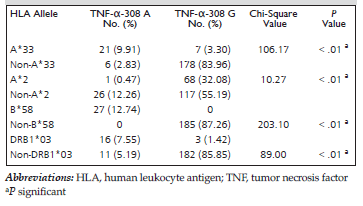
Table 1. Association Between HLA-A*2, -A*33, -B*58, and -DRB1*03 Alleles and TNF-α-308 A/G (n=212)
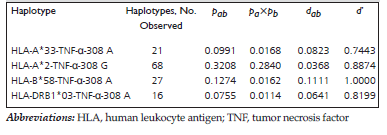
Table 2. Linkage Disequilibrium Between HLA-A*2, -A*33, -B*58, and -DRB1*03 Alleles and TNF-α-308 G/A
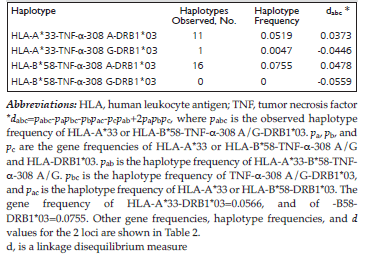
Table 3. Linkage Disequilibrium Analysis of HLA-A-TNF-α-308-DRB1 and HLA-B-TNF-α-308-DRB1 Haplotypes in Lung Transplant Recipients (n=106)

Table 4. Distribution of TNF-α-308 Genotype and Allele in Lung Transplant Recipients, According to Group (n=91)