Volume: 11 Issue: 3 June 2013
FULL TEXT
Objectives: Treatment for patients with biliary atresia is a Kasai hepatic portoenterostomy; however, the efficacy of repeat Kasai hepatic portoenterostomy is unclear. This study sought to examine the effect of a prior Kasai hepatic portoenterostomy, especially a repeat Kasai hepatic portoenterostomy, on the outcomes of living-donor liver transplant.
Materials and Methods: One hundred twenty-six of 170 children that underwent a living-donor liver transplant between May 2001, and March 2010, received a living-donor liver transplant for biliary atresia. These patients were divided into 2 groups according to the number of previous portoenterostomies: 1 (group A, n=100) or 2 or more Kasai hepatic portoenterostomies (group B, n=26). Portoenterostomy was performed twice in 24 patients in group B, 3 times in 1, and 4 times in 1. Preoperative, operative factors, mortality, morbidity, and survival rates were examined and compared between groups.
Results: The surgical factors such as operative time, blood loss per weight, cold ischemia time, and weight of the native liver were significantly greater in group B than they were in group A. The patient survival rates were comparable in the 2 groups (94.5% in group A and 93.3% in group B), and the difference was not statistically significant. No statistically significant difference was observed between the groups with regard to vascular complications, biliary complications, and other factors including postoperative variables. Bowel perforation requiring surgical repair was more frequent in group B than it was in group A.
Conclusions: Repeat Kasai hepatic portoenterostomy might have a negative effect on patients who undergo living-donor liver transplant for biliary atresia patients with potential lethal complications such as bowel perforation. More biliary atresia patients could have a liver transplant, with improved survival and better life expectancy, if they have inadequate biliary drainage after the initial Kasai hepatic portoenterostomy.
Key words : Biliary atresia, Kasai hepatic portoenterostomy, Repeat hepatic portoenterostomy, Pediatric living-donor liver transplant
Introduction
The standard first choice treatment for patients with biliary atresia (BA) is the Kasai hepatic portoenterostomy (HPE).1-5 Despite technical refinement in the HPE technique since the induction of this procedure in the 1950s, only 15% to 20% of patients can achieve long-term survival after HPE.5-10 Subsequent liver transplant (LT) is required if the patients fail to achieve adequate long-term biliary decompression after the initial HPE or if they develop progressive liver failure despite a functioning HPE.7-14 Primary LT without the Kasai procedure is one of the therapeutic options for BA, but is controversial owing to a shortage of organs for children, higher morbidities compared to adult cases, and the necessity for long-term immunosuppressive treatment. Therefore, HPE can provide potential palliation to avoid a subsequent LT.7-11 However, even patients who achieve long-term biliary drainage may have progressive portal hypertension and liver failure, because BA has potential pathogenesis for liver failure with a progressive panhepatic inflammatory process of the biliary ducts despite an initially successful HPE.8-14
The efficacy of repeat HPE for BA after an unsuccessful initial HPE is unclear. Although previous reports note that a repeat HPE is not generally accepted3-12,15-19; it accounts for 30% of the patients who undergo HPE in Japan.13,20,21 Some articles20,21 have shown that multiple previous HPEs might have a negative short-term effect in patients who undergo LDLT for BA patients, but further investigation is required. This study examined the effect of prior HPE, especially repeat HPE on the outcome of LDLT.
Materials and Methods
One hundred and seventy children underwent an LDLT at Jichi Medical University Hospital during the 10 years from January 2001 to March 2010. One hundred twenty-six of those patients (74.1%) received an LDLT for BA. Left lateral segmentectomy for living-donor graft was the most usual procedure (n=95, 75.4%), followed by a left lobectomy (n=25, 19.8%), and extended left lobectomy (n=6, 4.8%). Donor hepatectomy and the recipient’s operation were performed as based on previous reports.22 The patients were divided into 2 groups according to the number of previous portoenterostomies: 1 (group A, n=100) and 2 or more HPEs (group B, n=26). Portoenterostomy was performed twice in 24 patients in group B and 3 times in 1 and 4 times in 1.
The most common procedure in the primary portoenterostomy involved a long Roux-en-Y limb (35 to 40 cm length, original Kasai procedure) in 100 patients, followed by external diversion of the Roux-en-Y limb (Suruga procedure, n=9). Seven of the patients who underwent the original Kasai procedure received a nipple valve in the Roux-en-Y loop in an attempt to prevent reflux and postoperative cholangitis. Preoperative status, surgical factors, mortality, morbidity, hospital duration, and survival rate were examined and compared between the groups. Fibrosis of the explanted native liver at LDLT was graded based on the METAVIR scoring systems: F0 (no fibrosis), F1 (portal fibrosis without septa), F2 (portal fibrosis with rare septa), F3 (numerous septa without cirrhosis), and F4 (cirrhosis).23
Categoric variables were compared using the chi-square test or the Fisher exact test. Continuous variables were expressed as means ± standard deviation and compared using the t test. When a normal distribution was not present, they were expressed as the median and range, and compared using the Mann-Whitney U test. The patient and graft survival rates were estimated using the Kaplan-Meier method and log rank test was used compare survival. Differences of P < .05 were considered to be statistically significant. All protocols were approved by the ethics committee of the institution before the study began, and the protocols conformed with the ethical guidelines of the 1975 Helsinki Declaration.
Results
The perioperative factors, postoperative complications, and outcomes of the cases are summarized in Tables 1, 2, 3, and Figure 1. There were no significant differences between the groups in age, sex, body weight, total bilirubin, albumin, prothrombin, international normalized ratio, serum creatinine, or pediatric model for end-stage liver disease score (Table 1). However, some surgical factors such as operative time (P = .012), blood loss per weight (P = .026), cold ischemia time (P = .015), and weight of the native liver (P = .032) were significantly greater in group B than in group A (Table 2). There was no significant difference in the patient and graft survival rates at 5 years after LDLT in the groups: 94.5% and 92.1% in group A and 93.3% and 90.3% in group B (P = .442, P = .394; Figures 1 and 2 ). In addition, there was no significant difference in vascular complications, such as hepatic arterial thrombosis, portal venous thrombosis, hepatic vein stenosis, and biliary complications such as bile leakage and bile duct stenosis (P = .05). Other factors including postoperative status such as acute rejection, overall relaparotomy rate, retransplant rate, and duration of hospital stay were not significantly different between the groups. However, bowel perforation that required surgical repair was more frequent in group B (11.5%) than it was in group A (1.0%; P = .035) (Table 3).
Discussion
The basic purpose of HPE for BA is to make fistulas of small bile ducts at the hepatic hilum to the intestinal lumen.1-6 Kasai hepatic portoenterostomy is the treatment of choice for BA patients; however, refractory cholangitis can easily occur owing to obstruction of this fistula, because BA has potential pathogenesis for liver failure because of progressive panhepatic inflammatory process of the biliary ducts, despite an initially successful HPE.7-15 A previous report noted that if BA patients with obvious cirrhosis, portal hypertension, and refractory cholangitis at the time of the initial HPE, they should be referred for LT.7-15 On the other hand, some reports described the effectiveness of repeated HPE to avoid LT. The aim of repeated HPE is an extensive and sufficient resection to achieve reopening of the small bile ducts on hepatic hilum, but it is unclear whether repeat HPE should be performed for BA patients after an unsuccessful initial HPE.3-13,16-21 The current study investigated whether repeated HPE increased the morbidity and mortality or both at the time of LDLT.
Many authors recommend that HPE should continue to be the initial surgical procedure performed. Although 70% to 80% will fail, HPE allows a period of growth for small, malnourished BA patients, but it seems necessary to consider HPE as serving only as bridging surgery until LT can be performed.7-14,18-20,22-25 Published reports of the results after PE reflect a wide spectrum of results, largely reflecting significantly shorter transplant-free survival in the United States16 and Europe14 compared with Japan.13,14 Despite the persistent optimism in some Japanese centers that HPE might lead to a “cure rate of approximately 70% to 80%” with further technical refinements,13 most institutions have achieved only approximately 15% to 20% long-term survival without transplant.5-10,14 Although centralization to high-volume centers can improve outcomes,6 transplant-free survival after HPE ranges from just 30% to 50% at 5 years in western countries.26 In fact, the majority of long-term survivors (more than 10 years) after HPE will go on to require LT.3 There is accumulating evidence that BA is panhepatic inflammatory process.8-14 Because extrahepatic bile duct obstruction is only a portion of the problem, the disease typically progresses despite surgical restoration of bile flow. Cholangitis also appears to have a detrimental effect on the maintenance of long-term liver function. Efforts to predict which patients will respond well to HPE have been disappointing.
Patients who never achieve adequate biliary drainage after the initial HPE are unlikely to improve with a reoperation, and these patients should be referred for LT.3-12,18,19 A repeat HPE has a low chance of yielding sufficient amounts of bile in cases of poor bile drainage. However, good candidates for repeat HPE are cases where active bile flow is achieved in the first HPE and only those patients who experience adequate biliary drainage and have a sudden decrease or cessation of bile flow will benefit from a re-exploration of their HPE.13,20,21 These criteria are obscure and lack a persuasive background to indicate whether repeated HPE should be performed for each case.3-12,18 The presence of adequate biliary drainage does not ensure long-term success, and these patients must be closely monitored for developing chronic liver failure at which time they should receive an LT. Whether the degree of native liver fibrosis as a predictor for the timing of LT remains controversial, it has been reported by some authors. In this study, there was no significant difference between single and repeated HPE groups on METAVIR scoring systems at LDLT. It may indicate that patients with BA already had damaged native livers because of congenital and/or acquired progressive panhepatic inflammatory changes, despite the repeated surgical attempts of biliary decompression.27-29
Multiple laparotomies for revision of the HPE can cause intestinal complications because of extensive dissection of the tenacious adhesions between the intestine, native liver, and the abdominal wall.7-14,18-21 As noted in previous reports,18 there was a significant difference in the incidence of bowel perforation between single and multiple previous HPE in the current series. Bowel perforation after LT is a potentially fatal complication with a high mortality rate of 30% to 50%, and the duration of the operative procedure (including adhesiolysis) is independent risk factor for bowel perforation.22-25 Careful and gentle adhesiolysis is required to prevent bowel perforation in an LT for BA patients after HPE, but previous repeat HPE can cause a high rate of bowel perforation and lethal postoperative complications. Therefore, repeat HPE should be avoided even in patients who experience long-term biliary drainage after initial HPE followed by progressive portal hypertension, retractable cholangitis, and liver failure.12,19-21
Previous articles have shown that repeat HPE can be a negative factor in an LT in addition to operative time, intraoperative estimated blood loss, and postoperative complications.18,19 They recommend that repeating HPE more than 2 times should be avoided, if possible. Current results show that repeat HPEs increase morbidity, but not mortality associated with LDLT in pediatric recipients. Therefore, technical refinements and perioperative management strategies can help to overcome lethal complications, although even experienced transplant teams may still have patients who experience severe intra-abdominal adhesions. However, BA patients who fail to achieve adequate biliary decompression after the initial HPE should be referred for an LT to avoid increased morbidity and potential mortality.
In conclusion, repeat HPE might have negative effects in patients who undergo LDLT for BA patients with potential lethal complications such as a bowel perforation. More BA patients are likely to need an LT with an improving survival and better life expectancy if they have inadequate biliary drainage following the initial HPE.
References:
- Crombleholme TM, Harrison MR, Langer JC, Longaker MT. Biliary
appendico-duodenostomy: a nonrefluxing conduit for biliary reconstruction. J
Pediatr Surg. 1989;24(7):665-667.
CrossRef - PubMed - Kasai M, Suzuki H, Ohashi E, Ohi R, Chiba T, Okamoto A. Technique and
results of operative management of biliary atresia. World J Surg.
1978;2(5):571-579.
CrossRef - PubMed - Laurent J, Gauthier F, Bernard O, et al. Long-term outcome after surgery
for biliary atresia. Study of 40 patients surviving for more than 10 years.
Gastroenterology. 1990;99(6):1793-1797.
PubMed - Carceller A, Blanchard H, Alvarez F, St-Vil D, Bensoussan AL, Di Lorenzo
M. Past and future of biliary atresia. J Pediatr Surg. 2000;35(5):717-720.
CrossRef - PubMed - McKiernan PJ, Baker AJ, Kelly DA. The frequency and outcome of biliary
atresia in the UK and Ireland. Lancet. 2000;355(9197):25-29.
CrossRef PubMed - Sandler AD, Azarow KS, Superina RA. The impact of a previous Kasai
procedure on liver transplantation for biliary atresia. J Pediatr Surg.
1997;32(3):416-419.
CrossRef - PubMed - Visser BC, Suh I, Hirose S, et al. The influence of portoenterostomy on
transplantation for biliary atresia. Liver Transpl. 2004;10(10):1279-1286.
CrossRef - PubMed - Wood RP, Langnas AN, Stratta RJ, et al. Optimal therapy for patients
with biliary atresia: portoenterostomy ("Kasai" procedures) versus primary
transplantation. J Pediatr Surg. 1990;25(1):153-160; discussion 160-162.
CrossRef - PubMed - Meister RK, Esquivel CO, Cox KL, et al. The influence of
portoenterostomy with stoma on morbidity in pediatric patients with biliary
atresia undergoing orthotopic liver transplantation. J Pediatr Surg.
1993;28(3):387-390.
CrossRef - PubMed - Ryckman F, Fisher R, Pedersen S, et al. Improved survival in biliary
atresia patients in the present era of liver transplantation. J Pediatr
Surg. 1993;28(3):382-385; discussion 386.
CrossRef - PubMed - Goss JA, Shackleton CR, Swenson K, et al. Orthotopic liver
transplantation for congenital biliary atresia. An 11-year, single-center
experience. Ann Surg. 1996;224(3):276-284; discussion 284-287.
CrossRef - PubMed - Ohi R. Surgical treatment of biliary atresia in the liver
transplantation era. Surg Today. 1998;28(12):1229-1232.
CrossRef - PubMed - Chardot C, Carton M, Spire-Bendelac N, Le Pommelet C, Golmard JL, Auvert
B. Prognosis of biliary atresia in the era of liver transplantation: French
national study from 1986 to 1996. Hepatology. 1999;30(3):606-611.
CrossRef - PubMed - Lykavieris P, Chardot C, Sokhn M, Gauthier F, Valayer J, Bernard O.
Outcome in adulthood of biliary atresia: a study of 63 patients who survived
for over 20 years with their native liver. Hepatology. 2005;41(2):366-371.
CrossRef - PubMed - Altman RP. Results of re-operations for correction of extrahepatic
biliary atresia. J Pediatr Surg. 1979;14(3):305-309.
CrossRef - PubMed - Freitas L, Gauthier F, Valayer J. Second operation for repair of biliary
atresia. J Pediatr Surg. 1987;22(9):857-860.
CrossRef - PubMed - Inomata Y, Oike F, Okamoto S, et al. Impact of the development of a
liver transplant program on the treatment of biliary atresia in an
institution in Japan. J Pediatr Surg. 1997;32(8):1201-1205.
CrossRef - PubMed - Sugawara Y, Makuuchi M, Kaneko J, Ohkubo T, Mizuta K, Kawarasaki H.
Impact of previous multiple portoenterostomies on living donor liver
transplantation for biliary atresia. Hepatogastroenterology.
2004;51(55):192-194.
PubMed - Ohi R, Hanamatsu M, Mochizuki I, Ohkohchi N, Kasai M. Reoperation in
patients with biliary atresia. J Pediatr Surg. 1985;20(3):256-259.
CrossRef - PubMed - Hasegawa T, Kimura T, Sasaki T, Okada A, Mushiake S. Indication for redo
hepatic portoenterostomy for insufficient bile drainage in biliary atresia:
re-evaluation in the era of liver transplantation. Pediatr Surg Int.
2003;19(4):256-259.
CrossRef - PubMed - Sanada Y, Mizuta K, Wakiya T, et al. Bowel perforation after pediatric
living donor liver transplantation. Pediatr Surg Int. 2011;27(1):23-27.
CrossRef - PubMed - Bedossa P, Poynard T. An algorithm for the grading of activity in
chronic hepatitis C. The METAVIR Cooperative Study Group. Hepatology.
1996;24(2):289-293.
CrossRef - PubMed - Uchida Y, Kasahara M, Egawa H, et al. Long-term outcome of
adult-to-adult living donor liver transplantation for post-Kasai biliary
atresia. Am J Transplant. 2006;6(10):2443-2448.
CrossRef - PubMed - Tannuri AC, Gibelli NE, Ricardi LR, et al. Orthotopic liver
transplantation in biliary atresia: a single-center experience. Transplant
Proc. 2011;43(1):181-183.
CrossRef - PubMed - Davenport M, De Ville de Goyet J, Stringer MD, et al. Seamless
management of biliary atresia in England and Wales (1999-2002). Lancet.
2004;363(9418):1354-1357.
CrossRef - PubMed - Dehghani SM, Nikeghbalian S, Kazemi K, et al. Outcome of bowel
perforation after pediatric liver transplantation. Pediatr Transplant.
2008;12(2):146-149.
CrossRef - PubMed - Altman RP, Lilly JR, Greenfeld J, Weinberg A, van Leeuwen K, Flanigan L.
A multivariable risk factor analysis of the portoenterostomy (Kasai)
procedure for biliary atresia: twenty-five years of experience from two
centers. Ann Surg. 1997;226(3):348-353; discussion 353-355.
CrossRef - PubMed - Pape L, Olsson K, Petersen C, von Wasilewski R, Melter M. Prognostic
value of computerized quantification of liver fibrosis in children with
biliary atresia. Liver Transpl. 2009;15(8):876-882.
CrossRef - PubMed

Volume : 11
Issue : 3
Pages : 259 - 263
DOI : 10.6002/ect.2012.0188
From the Department of Transplant Surgery, Jichi Medical University,
Yakushiji, Shimotsuke-shi, Tochigi, Japan
Acknowledgements: The authors declare no conflicts of interest. There was
no direct funding for this study.
Corresponding author: Taizen Urahashi, MD, PhD, Department of Transplant
Surgery, Jichi Medical University 3311-1 Yakushiji, Shimotsuke-shi, Tochigi,
329-0498 Japan
Phone/Fax: +81 285 58 7069
E-mail: turahashi@jichi.ac.jp
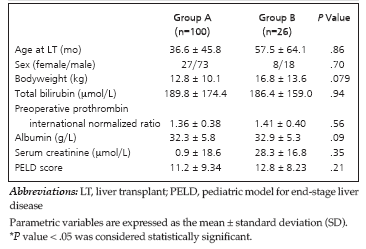
Table 1. Preoperative Characteristics of Recipients With a Single Hepatic Portoenterostomy (Group A) and a Repeat Hepatic Portoenterostomy (Group B) Before Living-Donor Liver Transplant
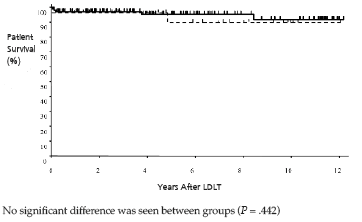
Figure 1. Comparison of Survival Rates Between Groups A and B
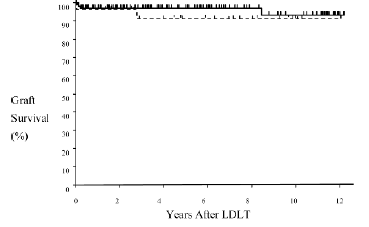
Figure 2. Graft Survival Following Group A Compared to Graft Survival Following Group B (P = .394)
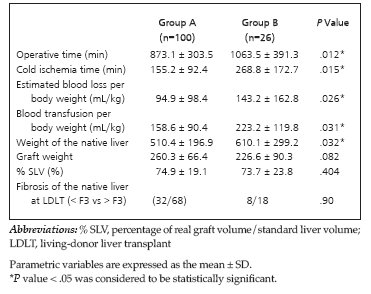
Table 2. Operative Characteristics for Recipients With a Single Hepatic Portoenterostomy (Group A) and a Repeat Hepatic Portoenterostomy (Group B) Before Living-Donor Liver Transplant
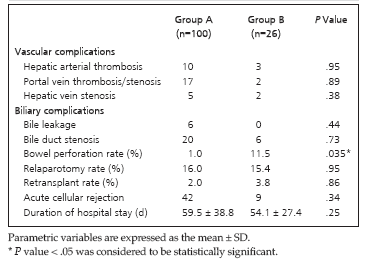
Table 3. Postoperative Characteristics for Recipients With Single Hepatic Portoenterostomy (Group A) and Repeated Hepatic Portoenterostomy (Group B) Before Living-Donor Liver Transplant