Volume: 11 Issue: 3 June 2013
FULL TEXT
Objectives: Scarce data exist regarding the effect of acute graft pyelonephritis on kidney histology after a kidney transplant. This study sought to assess the kidney histology at 1 month, and kidney function at 1 year, after acute graft pyelonephritis in kidney transplant patients.
Materials and Methods: All kidney transplant patients with acute graft pyelonephritis between October 2006, and December 2008, underwent a kidney biopsy 1 month later (n=28). Histologic findings were compared with those observed in a control group (n=28) who underwent a protocol kidney biopsy at 1 year posttransplant and did not present with acute graft pyelonephritis. Patients were matched according to age, sex, and immunosuppressive regimen.
Results: Kidney function was impaired by the acute graft pyelonephritis episodes at the time of biopsy. In 40% of patients, the estimated glomerular filtration rate did not return to baseline by 1 month after acute graft pyelonephritis and remained impaired thereafter. Three patients had features of acute rejection. Tubulitis was seen more frequently in the acute graft pyelonephritis group, especially in patients in whom estimated glomerular filtration rate did not completely recover by 1 month after acute graft pyelonephritis. Patients with acute graft pyelonephritis who had inflammatory infiltrate of > 20% 1 month after acute graft pyelonephritis had worse kidney function 1 year later.
Conclusions: After transplant, when kidney function remains impaired 1 month after acute graft pyelonephritis, kidney biopsies allowed graft rejection diagnosis and predicted kidney function recovery.
Key words : Kidney transplant, Pyelonephritis, Tubulitis, Acute rejection, Kidney function
Introduction
Urinary tract infection is a common complication observed after kidney transplant. Its incidence ranges from 17% to 80%.1,2 Acute graft pyelonephritis (AGPN) occurs in 8.8% to 26% of patients after a kidney transplant.3,4 Lower and upper urinary tract infections are related to bacterial exposure, surgical procedure, previous asymptomatic bacteriuria, and immunosuppressive therapy.5,6
The effect of posttransplant pyelonephritis on the kidney allograft’s long-term function and survival remains controversial. Abbott and associates have shown that urinary tract infection occurring late after a kidney transplant is associated with increased morbidity and mortality.7 Giral and associates identified early acute pyelonephritis as an independent risk factor for renal allograft loss.8 Similarly, Pellé and associates found that AGPN occurring within the first 3 months after a kidney transplant has a detrimental effect on graft function.4 Finally, Fiorante and associates recently found that AGPN did not impair long-term kidney allograft function.6 Ozdemir and associates suggested that tubulointerstitial nephritis may induce kidney-allograft rejection.9 Similarly, Audard and associates found that acute rejection episodes may occur soon after AGPN.10 After infection of the kidney, the immunostimulatory response may induce acute rejection that could be subclinical.11
This study sought to assess the kidney histology at 1 month after AGPN in 28 kidney transplant patients. The histologic findings were compared with those observed in a control group of kidney recipients who had undergone protocol kidney allograft biopsies, and who did not present with AGPN within the 6 months before the biopsy.
Materials and Methods
Patients
All kidney transplant patients attending the Department of Nephrology and
Organ Transplantation, who presented with AGPN between October 2006, to
December 2008, were included in the study (n=28) (AGPN group). The clinical
trial was approved by the ethics committee of the hospital before the study
began, and the protocol conformed with the ethical guidelines of the 1975
Helsinki Declaration. After having given their written, informed consent, all
patients underwent a kidney allograft biopsy 1 month after the AGPN whatever the
renal function was. The median time between kidney transplant and the kidney
allograft biopsy episode was 11.5 months (range, 2 to 205 mo). Histologic
findings were compared with those observed in a control group who underwent a
protocol kidney biopsy at 1 year after the transplant, and who did not present
with AGPN within the 6 months before the biopsy (n=28). Both groups were matched
according to age, sex, and immunosuppressive regimen (induction therapy and main
immunosuppressant, ie, cyclosporine, tacrolimus, or belatacept). In all
patients, a double-J ureteric stent inserted during the kidney transplant was
removed 6 weeks after the transplant. In all patients, Pneumocystis jiroveci
prophylaxis based on trimethoprim-sulfamethoxazole was implemented for 6 months.
Diagnosis of acute graft pyelonephritis episodes
The diagnosis of AGPN was based on fever and a urinary basis count of more
than 105 colony-forming units (cfu)/mL combined with a urinary
leukocyte count of more than 104/mL, or a single urinary count of
more than 106 cfu/mL. All patients with AGPN were hospitalized and
received antimicrobial agents against urinary bacteria, first intravenously
until apyrexia was achieved, and then orally for 2 to 3 weeks.
Pathologic analysis
For light microscopy examination, biopsy specimens were fixed in Bouin
solution, embedded in paraffin, cut into 2-μm thick sections, and stained with
light-green trichrome, periodic acid-Schiff, and hematoxylin and eosin stains.
All biopsies had more than 10 glomeruli, and at least 2 arterial sections. All
biopsies were scored according to the 2007 Banff classification.12
Routine immunofluorescence studies used polyclonal antibodies to C3,
immunoglobulins (Ig)A, IgG, and IgM. C4d immunostaining also was performed.
Inflammatory infiltrate was considered to be significant if it involved ≥ 5% of
the kidney biopsy. In case of significant inflammatory infiltrate
(semiquantitative analysis), anti-CD3, and anti-CD20 staining was performed.
Parameters studied
We collected the following parameters in patients: age at transplant, sex,
the number of kidney transplants, the cause of end-stage kidney disease,
panel-reactive antibodies at transplant, use of induction therapy after
transplant, immunosuppressive regimen immediately after transplant, and the
time of AGPN in the AGPN group, and the time of kidney biopsy in both groups. We
also assessed the number of acute-rejection episodes, and their type (ie,
steroid-sensitive, steroid-resistant, or antibody-mediated rejection). Kidney
function was formula13 at 6, 3, and 1 month before the biopsy, at the
time of a pyelonephritis episode (in the AGPN group only), at the time of the
kidney biopsy, and at 3, 6, and 12 months after the biopsy.
Statistical analyses
Data are presented as means ± standard deviations or medians (ranges).
Quantitative parameters were compared using the Fisher exact test. Qualitative
parameters were compared using the Friedman test for repeated measurements, the
Wilcoxon test, and the Mann-Whitney U test. P values below .05
were considered statistically significant.
Results
Patient characteristics
The patient characteristics did not differ between groups (Table 1). Before
the AGPN, 5 patients in each group experienced a steroid-sensitive acute
rejection episode. There were no significant differences in immunosuppressant
type or dosages between the time of the AGPN episode, and the kidney biopsy in
the AGPN group (data not shown), or between the AGPN group and the control group
at the time of the kidney biopsy.
Description of acute pyelonephritis episodes
The median time between kidney transplant and the pyelonephritis episode was
11.5 months (range, 2 to 205 mo). The AGPN episode occurred in 50% and 89% of
patients within the first and second year after transplant. Seven patients (25%)
had experienced 1 or more previous allograft AGPN: 2.3 ± 1.2 episodes on
average. The most frequent bacteria were Escherichia coli (n=18), Pseudomonas
aeruginosa (n=2), and Enterobacter aerogenes (n=2). No microorganisms were
found in the urine or blood samples of 2 patients. In 6 patients, microorganisms
detected in the urine also were found in the blood. After the diagnosis of AGPN,
all patients received antibiotics for a median length of 18 days (range, 10 to
26 d).
Effect of acute graft pyelonephritis on kidney function and histology
In the control group, no significant changes in eGFR were observed during
follow-up (Figure 1). Compared to 6, 3, and 1 month before the acute
pyelonephritis episode, eGFR significantly decreased at the time of the
pyelonephritis (P < .0001). It significantly increased at the time of the
kidney biopsy (P < .0004), and then stabilized at 1 (P < .0004), 3
(P < .002), 6 (P < .004), and 12 months later (P < .0004).
At 1 month after AGPN, eGFR returned to baseline values in 17 of 28 patients
(60.7%). Graft function remained significantly worse during the first year after
the pyelonephritis episode in the group in whom eGFR did not return to baseline
values after 1 month (Figure 2).
As depicted in Table 2, only tubulitis (0.39 ± 0.78 vs 0.07 ± 0.26; P < .06) and arteriolar hyaline-thickening (1.09 ± 0.94 vs 0.64 ± 0.68; P < .09) scores tended to be higher in the AGPN group, compared with results obtained from the control group. Tubulitis score were significantly lower in patients in whom eGFR returned to baseline values by 1 month after AGPN compared with patients in whom eGFR did not (0.87 ± 1.1 vs 0.13 ± 0.35; P < .04).
In the AGPN group, kidney biopsies revealed signs of acute rejection in 3 patients, in whom eGFR did not return to baseline values by 1 month after AGPN (P < .05). In the first of these patients, eGFR decreased during the AGPN episode, and then increased at the time of the kidney biopsy. This patient had borderline acute rejection, which was not treated. In the second patient, eGFR decreased during the AGPN episode, and then stabilized by 1 month later. The patient showed features of cellular acute rejection and required steroid pulses. In the third patient, eGFR decreased during the AGPN episode, and then decreased again at the kidney biopsy. This patient had features of both cellular and humoral rejection; C4d staining was negative and donor-specific antibodies were found to be positive for the first time. Steroid pulses, plasmapheresis, and intravenous immunoglobulins were given. In the control group, none of the patients had any histologic patterns of acute cellular or humoral rejection.
In the AGPN group, 16 of the 28 patients (57%) had a significant polymorphic inflammatory infiltrate, whereas it was only observed in 4 of the 28 patients (14.3%) from the control group (P < .0007). In the AGPN group, the median inflammatory infiltrate was evaluated to be 7.5% (range, 0% to 100%), and was composed of 68% T cells and 32% B cells. In the control group, the median inflammatory infiltrate was 0% (range, 0% to 35%). Within the AGPN group, the time since transplant, the type of immunosuppressive therapy, and eGFR at 3, 6, and 12 months after the kidney biopsy, did not differ significantly between patients who had ≥ 5%, and those who had < 5% inflammation infiltrate (data not shown).
In addition, we evaluated, within the AGPN group, the effect of long-term kidney function on having > 20% inflammation infiltrate in the kidney biopsy. The time since transplant to the AGPN episode, and the immunosuppressive therapy, dosage, and levels, did not differ significantly between patients with inflammatory infiltrate that was either greater or less than 20% (Table 2). Kidney function during the pyelonephritis episode, and at 3, 6, and 12 months after the kidney biopsy, 3 was better in patients who had an inflammatory infiltrate ≤ 20%.
Kidney allograft and patient outcomes
Two-year patient and graft survivals were 96.4%/96.4% and 93%/93% in the
AGPN and control groups. We observed 2 graft losses in the AGPN group, because
of steroid-resistant acute humoral rejection and chronic allograft nephropathy.
In the control group, 2 graft losses also were reported, 1 because of a sudden
kidney-artery, and the second because of a BK nephropathy. During the 2-year
follow-up, 1 patient from the AGPN group died with a functioning graft 20 months
after the AGPN episode from sepsis and multiorgan failure, and another patient
from the control group died from lung cancer.
Discussion
Similar to previous reports, AGPN mainly occurred within the first year (median, 11.5 mo), in women (57%), mainly in patients who received a transplant for a urologic disease and/or an interstitial nephropathy (32%).4,14 As previously observed,15 gram-negative microorganisms, and particularly, Escherichia coli, were the most frequently isolated species.
Scarce data exist regarding the effect of acute pyelonephritis episodes after a kidney transplant on long-term kidney function, kidney histology, occurrence of an acute rejection episode, and allograft and patient survival rates. In the present study, there was a significant decrease in eGFR during the AGPN episode. Nevertheless, no significant difference in kidney function was observed between patients with or without AGPN. Then, eGFR returned to baseline values by 1 month later in only 60% of patients. Kidney function was significantly better during AGPN and thereafter in these patients, compared with those in whom eGFR did not return to baseline. Rice and associates have reported that E. coli-induced pyelonephritis is responsible for acute allograft injury.15 By means of a multivariate analysis, AGPN has been identified by Pellé and associates as an independent risk factor associated with a decline in kidney function.4 Conversely, Fiorante and associates found that AGPN does not impair long-term kidney allograft function.6
The mechanisms of impaired kidney function after AGPN are not fully understood. It has been suggested that AGPN may be a trigger for acute rejection. Indeed, Audard and associates have reported that among 9 kidney transplant patients with AGPN who had undergone a kidney biopsy less than 1 month after pyelonephritis, two (22%) had features of acute rejection.10 Conversely, the results of a large series including 1387 consecutive primary kidney transplant patients did not support the hypothesis that AGPN may trigger an acute-rejection episode.8 But no systematic kidney-allograft biopsies were performed. In the present study, among the 28 kidney-transplant patients with AGPN, features of acute rejection were observed in 3 patients (10.7%), while no case of acute rejection was diagnosed in the control group (P = NS). All acute rejection episodes occurred in patients in whom eGFR did not return to baseline values at 1 month after APGN.
We further studied histologic characteristics. The proportion of patients with significant inflammatory infiltrate (> 5% of the total biopsy) was significantly higher in patients with AGPN (57%) compared with controls (14%). It was mainly composed of CD3-positive cells. In addition, during the year after AGPN, kidney function was worse in patients who had an inflammatory infiltrate > 20%. We can speculate that this inflammatory infiltrate, persisting 1 month after AGPN, is the consequence of the immune response induced by the AGPN, and may impair long-term kidney function. Indeed, in addition to the interstitial scars caused by AGPN, which result in a reduced number of functioning nephrons, a bacterial infection may activate the immune system, leading to acute or chronic rejection. It has been shown, in vitro, that direct activation of renal cells via toll-like receptors (TLR) occurs by recognizing invading pathogens during renal infection. Tubular epithelial cells, as well as resident interstitial macrophages or dendritic cells, become activated via TLR.16 Toll-like receptor-4-deficient mice have interstitial neutrophil infiltration decreased, in a model of bacterial pyelonephritis,17 and were resistant to endotoxin-induced acute renal failure.18 Furthermore, bacterial infections of the kidney induce secretion of defensins, small antimicrobial peptides from tubular epithelial cells.16 Interestingly, β-defensin-2 has been shown to be an endogenous ligand for TLR4 and to induce dendritic cell activation.19 Hence, TLR ligands could activate the T-cell response, leading to inflammatory infiltrate and sometimes to acute rejection. T-cell activation may be enhanced by AGPN-induced chemokine production, such as interleukin-8 and epithelial cell-derived neutrophil-activating protein 78.20
In the present study, only 1 graft was lost after an AGPN episode because of chronic allograft nephropathy and repeated AGPN episodes. However, the follow-up was short and our sample was too small to allow detection of any difference in graft survival between patients with or without AGPN. Data from the United States Renal Data System (USRDS) suggest that urinary tract infections that occur more than 6 months after transplant are associated significantly with an increased risk of subsequent death, as assessed in Cox proportional hazards regression model (adjusted hazard ratio, 2.93; 95% CI: 2.22-3.85) and graft loss (adjusted hazard ratio, 1.85; 95% CI: 1.29-2.64).1 Giral and associates found that when AGPN occurs during the first 3 months after transplant, it was a significant independent risk factor for graft loss (RR = 3.6, 95% CI: 1.4-9.2; P < .007).8 Pellé and associates found that AGPN did not alter graft survival.4 Finally, Audard and associates found that actuarial allograft survival was significantly lower in patients with AGPN compared with controls.10
In summary, worse kidney function, acute rejection episodes, and tubulitis were observed in patients in whom eGFR did not return to its baseline values within 1 month after AGPN. Elevated interstitial infiltrate was associated with worse long-term kidney function. Hence, as previously suggested by Audard and associates,10 we recommend performing kidney allograft biopsies in patients in whom kidney function remains impaired at 1 month after AGPN. Prospective studies are required to assess whether treating patients with tubulitis and interstitial infiltrate in this setting improves long-term kidney function and, consequently, kidney allograft survival.
References:
- Abbott KC, Swanson SJ, Richter ER, et al. Late urinary tract infection
after renal transplantation in the United States. Am J Kidney Dis.
2004;44(2):353-362.
CrossRef - PubMed - Moreno A, Cervera C, Gavaldá J, et al. Bloodstream infections among
transplant recipients: results of a nationwide surveillance in Spain. Am J
Transplant. 2007;7(11):2579-2586.
CrossRef - PubMed - Kamath NS, John GT, Neelakantan N, Kirubakaran MG, Jacob CK. Acute graft
pyelonephritis following renal transplantation. Transpl Infect Dis.
2006;8(3):140-147.
CrossRef - PubMed - Pellé G, Vimont S, Levy PP, et al. Acute pyelonephritis represents a
risk factor impairing long-term kidney graft function. Am J Transplant.
2007;7(4):899-907.
CrossRef - PubMed - Goya N, Tanabe K, Iguchi Y, et al. Prevalence of urinary tract infection
during outpatient follow-up after renal transplantation. Infection.
1997;25(2):101-105.
CrossRef - PubMed - Fiorante S, Fernández-Ruiz M, López-Medrano F, et al. Acute graft
pyelonephritis in renal transplant recipients: incidence, risk factors and
long-term outcome. Nephrol Dial Transplant. 2011;26(3):1065-1073. doi:
10.1093/ndt/gfq531.
CrossRef - PubMed - Abbott KC, Oliver JD 3rd, Hypolite I, et al. Hospitalizations for
bacterial septicemia after renal transplantation in the United States. Am J
Nephrol. 2001;21(2):120-127.
CrossRef - PubMed - Giral M, Pascuariello G, Karam G, et al. Acute graft pyelonephritis and
long-term kidney allograft outcome. Kidney Int. 2002;61(5):1880-1886.
CrossRef - PubMed - Ozdemir BH, Sar A, Uyar P, Suren D, Demirhan B, Haberal M.
Posttransplant tubulointerstitial nephritis: clinicopathological
correlation. Transplant Proc. 2006;38(2):466-469.
CrossRef - PubMed - Audard V, Amor M, Desvaux D, et al. Acute graft pyelonephritis: a
potential cause of acute rejection in renal transplant. Transplantation.
2005;80(8):1128-1130.
CrossRef - PubMed - Veronese FV, Noronha IL, Manfro RC, Edelweiss MI, Goldberg J, Gonçalves
LF. Prevalence and immunohistochemical findings of subclinical kidney
allograft rejection and its association with graft outcome. Clin Transplant.
2004;18(4):357-364.
CrossRef - PubMed - Solez K, Colvin RB, Racusen LC, et al. Banff 07 classification of renal
allograft pathology: updates and future directions. Am J Transplant.
2008;8(4):753-760. doi: 10.1111/j.1600-6143.2008.02159.x.
CrossRef - PubMed - Levey AS, Bosch JP, Lewis JB, Greene T, Rogers N, Roth D. A more
accurate method to estimate glomerular filtration rate from serum
creatinine: a new prediction equation. Modification of Diet in Renal Disease
Study Group. Ann Intern Med. 1999;130(6):461-470.
PubMed - Chuang P, Parikh CR, Langone A. Urinary tract infections after renal
transplantation: a retrospective review at two US transplant centers. Clin
Transplant. 2005;19(2):230-235.
CrossRef - PubMed - Rice JC, Peng T, Kuo YF, et al. Renal allograft injury is associated
with urinary tract infection caused by Escherichia coli bearing adherence
factors. Am J Transplant. 2006;6(10):2375-2383.
CrossRef - PubMed - Anders HJ. Toll-like receptors and danger signaling in kidney injury. J
Am Soc Nephrol. 2010;21(8):1270-1274. doi: 10.1681/ASN.2010030233.
CrossRef - PubMed - Shahin RD, Engberg I, Hagberg L, Svanborg Edén C. Neutrophil recruitment
and bacterial clearance correlated with LPS responsiveness in local
gram-negative infection. J Immunol. 1987;138(10):3475-3480.
PubMed - Cunningham PN, Wang Y, Guo R, He G, Quigg RJ. Role of Toll-like receptor
4 in endotoxin-induced acute renal failure. J Immunol.
2004;172(4):2629-2635.
PubMed - Biragyn A, Ruffini PA, Leifer CA, et al. Toll-like receptor 4-dependent
activation of dendritic cells by beta-defensin 2. Science.
2002;298(5595):1025-1029.
CrossRef - PubMed - Olszyna DP, Pajkrt D, Lauw FN, van Deventer SJ, van Der Poll T.
Interleukin 10 inhibits the release of CC chemokines during human
endotoxemia. J Infect Dis. 2000;181(2):613-620.
CrossRef - PubMed

Volume : 11
Issue : 3
Pages : 239 - 244
DOI : 10.6002/ect.2012.0216
From the 1Department of Nephrology Dialysis and Organ
Transplantation, Toulouse University Hospital, CHU Rangueil; the 2Department
of Pathology, Toulouse University Hospital, CHU Rangueil; the 3Université
Paul Sabatier; the 4Department of Urology and Renal Transplantation,
Toulouse University Hospital, CHU Rangueil; and the 5INSERM U1043, CHU Purpan,
Toulouse, France
Acknowledgements: No funding was obtained for this study, and the authors
of the manuscript have no conflicts of interest to disclose.
Corresponding author: Pr. Nassim Kamar MD, PhD, Department of Nephrology,
Dialysis, and Organ Transplantation, CHU Rangueil, 1 Avenue J.Poulhès, TSA
50032, 31059 Toulouse Cedex 9, France
Phone: +33 5 61 32 23 35
Fax: +33 5 61 32 39 89
E-mail: kamar.n@chu-toulouse.fr
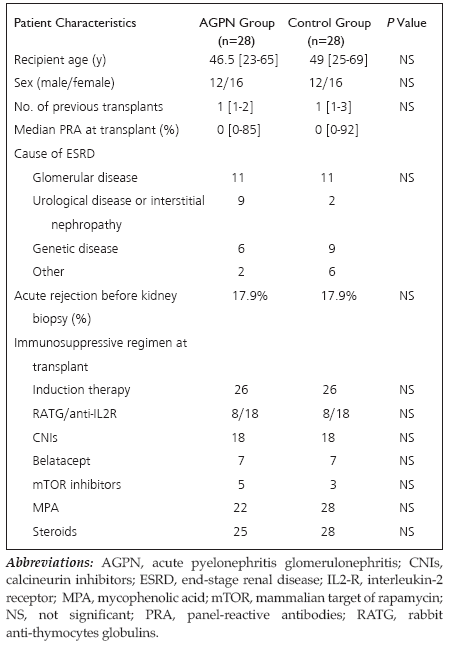
Table 1. Patient Characteristics
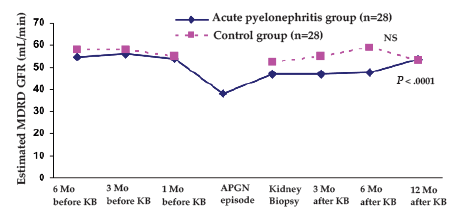
Figure 1. Outcome of Glomerular-Filtration Rate Before and After the Kidney Biopsy in the Acute Pyelonephritis and Control Groups
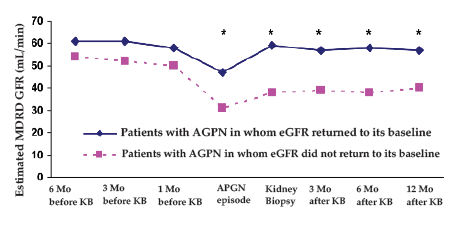
Figure 2. Outcome of Glomerular-Filtration Rate in Patients in Whom Kidney Function Returned, or Not, to its Baseline Values by 1 Month After Acute Allograft Pyelonephritis
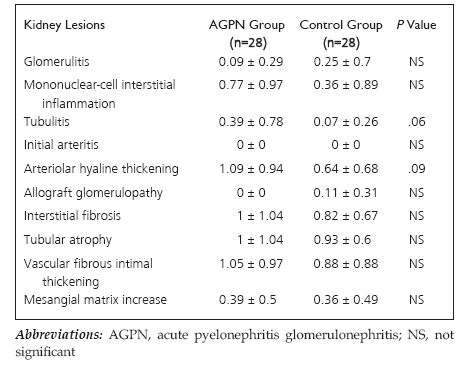
Table 2. Histopathologic Patterns in the Acute-Allograft Pyelonephritis and Control Groups
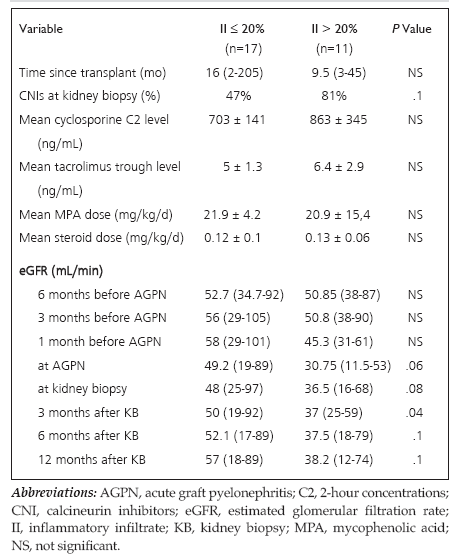
Table 3. Comparison Between Patients With an Inflammatory Infiltrate Greater Than 20% and Those Less Than or Equal to 20%