Volume: 11 Issue: 3 June 2013
FULL TEXT
Objectives: The optimal immunosuppression regimen for elderly kidney transplant recipients is poorly defined. We sought to evaluate the short-term efficacy and safety of thymoglobulin in geriatric recipients of deceased-donor kidneys.
Materials and Methods: A single-center, retrospective analysis was undertaken between elderly (≥ 65 years) (n=137) and nonelderly (n=276) kidney transplant recipients who received rabbit antithymocyte globulin induction and calcineurin inhibitor, mycophenolic acid, and prednisone maintenance.
Results: The mean age was 70 versus 52 years. Fewer elderly patients had an earlier transplant or panel reactive antibodies > 20%, but had more machine perfused, older, and extended criteria donor kidneys. Elderly patients received lower rabbit antithymocyte globulin (5.4 vs 5.6 mg/kg; P = .04) and initial mycophenolic acid doses (1620 vs 1774 mg; P = .002), and experienced less delayed graft function (31.1% vs 50.0%; P < .001). Death-censored graft survival and graft function at 3 years and biopsy-proven acute rejection at 1 year were comparable; however, there was lower 3-year patient survival in elderly patients. Donor age was the only factor associated with reduced patient survival. Rates of malignancy, infection, or thrombocytopenia were similar; however, leukopenia occurred less frequently in elderly patients (11.7% vs 19.9%; P = .038).
Conclusions: Elderly kidney transplant recipients receiving rabbit antithymocyte globulin did not experience different short-term graft survival, graft function or rates of infection, malignancy or hematologic adverse reactions than did nonelderly patients; they experienced fewer episodes of delayed graft function, but had lower 3-year patient survival.
Key words : Elderly, Induction therapy, Kidney transplant, Rabbit antithymocyte globulin, rATG
Introduction
Population of patients aged 65 years and older with end-stage renal disease is rapidly growing. Between 2002 and 2010, more than 20 000 such patients underwent a kidney transplant in the United States Organ Procurement and Transplantation Network/Scientific Registry of Transplant Recipients (OPTN/SRTR) 2010 Annual Data Report.
Several studies have shown excellent outcomes in older patients.1-6 Results from an SRTR study by Rao and associates suggest that kidney transplant offers an overall reduction in mortality compared with dialysis.4 Schold and Meier-Kriesche demonstrated that elderly patients had longer life expectancy compared with dialysis patients when expanded criteria donor (ECD) kidneys were used, instead of waiting for a standard criteria donor.5 Macrae and associates demonstrated substantial life prolongation and excellent graft survival in kidney recipients 75 years and older.6
Despite the appreciable benefits of kidney transplant, the optimal immunosuppressive regimen to use in elderly persons has not been completely elucidated. Age-dependent defects in T-cell and B-cell function coexist with age-related changes within the innate immune system, and should be considered when selecting immunosuppression in older patients.7-10 While immunosenescence may make elderly persons more susceptible to infection, Friedman and associates have shown kidney transplant recipients older 60 years of age have up to a 4-fold lower risk of acute rejection.11
It has been well established that induction therapy significantly reduces the incidence of acute rejection and is associated with better patient and graft survival compared with induction-free regimens.12,13 Shah and associates reported that between 1999 and 2007, sixty percent to seventy percent of patients ≥ 50 years received some type of induction.14 Although thymoglobulin is the most widely used induction agent in kidney transplant, its efficacy and safety have not been well studied in elderly persons. This study aimed to evaluate the short- and medium-term efficacy and safety of thymoglobulin in elderly recipients of deceased-donor kidneys transplants.
Materials and Methods
Study design
This was a retrospective independent review board-approved outcomes analysis
between “elderly” and “nonelderly” kidney transplant recipients who had their
transplant done between January 1, 2002, and March 31, 2010, with a minimum of
12 months follow-up. Data were obtained from chart and electronic database
review and UNOS queries. For the purposes of this study, “elderly” was defined
as age ≥ 65 years at the time of transplant and “nonelderly” was defined as age
< 65 years. We chose 65 years of age because that is when benefits for Medicare
and the American Association of Retired Persons begin. A subgroup analysis of
the elderly group also was performed, comparing those who were between 65 and 74
years to those who were ≥ 75 years at the time of transplant. All protocols were
approved by the ethics committee of the institution before the study began, and
the protocols conformed with the ethical guidelines of the 1975 Helsinki
Declaration.
Subjects
All adult patients who received induction with rabbit antithymocyte globulin (rATG) and maintenance therapy with a calcineurin inhibitor (tacrolimus or cyclosporine) plus mycophenolate ([MPA]; mycophenolate mofetil or mycophenolate sodium) were eligible for inclusion. Patients defined as nonelderly at the time of transplant who met our inclusion criteria were randomly selected in a 2:1 ratio to serve as a control group. Patients were excluded from analysis or randomization if they had received a transplant from a living donor; had received immunosuppression other than rATG induction and calcineurin inhibitor + MPA maintenance; had undergone a multiorgan transplant; had an immediate graft loss before their hospital discharge; had died before they were discharged from the hospital; or had missing or incomplete records for analysis.
Immunosuppressive and infection prophylaxis protocols
All patients received antibody induction therapy with rATG, which was
started intraoperatively and was followed by 2 to 4 subsequent daily doses to
target a cumulative dosage of 5 to 6 mg/kg ideal body weight. In patients whose
actual weight was greater than 130% of their ideal body weight, an adjusted body
weight was used to calculate the dosage. A calcineurin inhibitor was initiated
once induction therapy was complete and/or after resolution of delayed graft
function (DGF). Target tacrolimus trough levels for the first 3 months
posttransplant were 7 to 10 ng/mL and 4 to 7 ng/mL thereafter. Target
cyclosporine trough levels for the first 3 months posttransplant were 150 to 250
ng/mL and 75 to 150 ng/mL thereafter. Mycophenolate mofetil 1000 mg twice daily
was initiated on postoperative day 1. To avoid discontinuation or dosage
reduction of mycophenolate mofetil because of intolerable gastrointestinal
adverse effects, mycophenolate mofetil may have been replaced by enteric-coated
mycophenolate sodium at therapeutically equivalent MPA doses. Methylprednisolone
5 to 10 mg/kg was administered intraoperatively, and corticosteroids were
tapered down to prednisone 20 mg daily by postoperative day 7, with further dose
reduction to 5 mg daily by 3 months posttransplant.
Perioperative wound infection prophylaxis consisted of cefazolin. Cefazolin-allergic patients were administered vancomycin. Cytomegalovirus prophylaxis with renal dose-adjusted valganciclovir (maximum 450 mg daily) for 6 months was given universally. Other infection prophylaxis included Pneumocystis pneumonia prophylaxis with sulfamethoxazole-trimethoprim for 6 months, and fungal prophylaxis with clotrimazole for 4 weeks after transplant. It is our protocol to treat borderline and Banff grade I rejections with pulse corticosteroids, and Banff grade IIA and higher with rATG.15
Endpoints
Efficacy endpoints included patient survival, graft survival, and graft
function at 12 and 36 months, and the incidence of biopsy-proven acute rejection
at
12 months. Graft function at 12 and 36 months was determined by calculating the
estimated glomerular filtration rate, by using an abbreviated 4-variable
Modification of Diet in Renal Disease formula. Biopsy-proven acute rejections (BPAR)
included all acute rejections which were graded borderline or higher by Banff
criteria. Biopsies were performed for allograft dysfunction without an obvious
technical or infectious cause. Delayed graft function was defined as the need
for dialysis in the first 7 days posttransplant.
Safety endpoints included the incidence of cytomegalovirus, urinary tract infections, pneumonias, and wound complications at 12 months. Urinary tract infections included any positive urine culture within the first posttransplant year that was treated with antimicrobials. Wound complications were defined as any wound that required vacuum-assisted dressings, opening of the wound, or a wound defined as infected on the discharge summary. Malignancies that occurred at any time during the study were included. The incidence of leukopenia and thrombocytopenia requiring dosage modification of thymoglobulin also was assessed. Based on the prescribing information for rATG, leukopenia requiring a dosage adjustment was defined as white blood cell count less than 3 × 10³ cells/μL and thrombocytopenia was defined as platelet count less than 75 × 103 cells/μL.
Statistical analyses
Statistical analyses were performed with SPSS software (SPSS: An IBM
Company, version 12.0, IBM Corporation, Armonk, NY, USA). Nominal data were
compared using the chi-squared test, and numeric means were compared using a
t test. Patient and graft survival were depicted using Kaplan-Meier curves
and compared using log-rank tests. All tests were 2-sided, and a P value
< .05 was considered statistically significant. We performed a cox regression
analysis for statistically significant confounders.
Results
Four hundred thirteen patients were included in the study: 137 in the elderly group and 276 in the nonelderly control group. The demographics are shown in Table 1. Mean ages for the 2 groups were 70 and 52 years. There were no differences between groups with regard to sex, race, or recipient by mass index. Fewer patients in the elderly group received a prior transplant (4.4% vs 19.9%; P < .001) or had a PRA > 20% (9.4% vs 19.7%; P = .012). All patients were placed on a calcineurin inhibitor as part of their maintenance immunosuppression, with almost 95% initiated on tacrolimus-based regimens. The mean rATG dosage was 5% lower (5.3 mg/kg vs 5.6 mg/kg; P = .04) and mean MPA dose at discharge was 9% lower in elderly recipients (1620 mg vs 1774 mg; P = .002). Patients in the elderly group received more ECD kidneys (42.3% vs 16.7%; P < .001), and the mean donor age was 10 years older in the elderly group (P < .001). There were no significant differences in the use of donation after cardiac death (DCD) organs mean cold ischemic time or mean donor terminal creatinine between groups. Kidneys that were transplanted to elderly recipients were more likely to have been machine perfused (29.3 vs 14.1%; P < .001).
Safety results are summarized in Table 2. Leukopenia occurred more frequently in the younger patients (19.9% vs 11.7%; P = .038). Thrombocytopenia occurred with a similar frequency in both groups. There was no difference between the 2 groups in terms of infectious complications including cytomegalovirus disease, urinary tract infections, and pneumonia within 1 year after transplant. The rate of malignancies throughout the study was higher in the elderly group (5.1% vs 2.2%); however, the difference was not statistically significant. The types of malignancies reported are summarized in Table 3. There were no reported cases of posttransplant lymphoproliferative disorder in the study. Wound complications were comparable.
The efficacy endpoints are summarized in Table 4, and patient and graft survival are depicted in Figures 1 and 2. The rate of DGF was significantly lower in the elderly group (31.1% vs 50%; P < .001). There were no significant differences in graft survival rates or mean estimated GFR between the groups at 36 months. Patient survival at 36 months was lower in the elderly group. We performed a Cox regression analysis for PRA > 20%, prior transplant status, rATG dosage, initial MPA dosage, donor age, dual kidney transplant status, and machine perfusion status. Donor age was the only factor associated with reduced survival in our elderly patients. The incidence of BPAR or the time-to-BPAR was not different at 12 months; however, the majority of the BPAR in the elderly occurred within the first 180 days after transplant. The BPAR subtypes are summarized in Table 5. Most BPAR episodes were mild acute cellular rejections. There were fewer cases of antibody-mediated rejection or mixedcellular/antibody-mediated rejection in the elderly.
Subgroup analyses
We analyzed 2 subgroups of the elderly, patients between 65-74 years (n=112)
and patients 75 years and older (n=25). The mean ages of the subgroups were 69
and 78 years of age. The only demographic difference between these 2 elderly
subgroups was donor age (49 years vs 59 years in the older subgroup; P =
.012). We did not find any significant differences in rates of infectious
complications, hematologic toxicity, rejection, malignancy, graft function or
patient and graft survival.
Discussion
We should expect more adults aged 65 years and older to undergo a kidney transplant in the future (OPTN/SRTR 2010 Annual Data Report). Many studies have shown that well-selected elderly patients benefit from transplant when compared with those remaining on dialysis, and that patient and graft survival rates are comparable to younger recipients.1-5,16 Although there is a consensus on the benefit of kidney transplant in the elderly, the optimal immunosuppression strategy for these recipients is not been clearly elucidated. Reduced immune response and a potential for increased risk of infections and malignancies are the main concerns.7-10 Most centers in United States use induction for kidney transplants; however, the optimal induction agent or dose in the elderly is not known. A study by Gill and associates comparing rATG, alemtuzumab, and interleukin-2 receptor antagonists in kidney recipients aged 60 years and older suggests that rATG may be preferable for both low–and high–immunologic-risk recipients (PRA > 20%, prior transplant or black race) who receive high-risk donor kidneys (ECD, DCD, or cold ischemic time > 24 h).16 In lower risk donor kidneys, patient and graft survival did not differ.
In our relatively large retrospective study, we did not find any significant difference in short-term death-censored graft survival, graft function, rejection or safety (infections and rATG tolerability) between elderly and nonelderly kidney recipients who received rATG induction followed by triple-agent, calcineurin inhibitor-based maintenance regimens. We found that patient survival was reduced in the elderly, and that lower MPA dose and higher donor age negatively affected patient survival in this group. Recipient age also should be considered for its role in reduced survival owing to the increased risks for hypertension, atherosclerosis, coronary artery disease, malignancies, and other age-related comorbidities. While there were numerically more cases of malignancy in the elderly, the findings were not statistically significant. These findings also applied to the very old group (75 and older) although the number in our eldest subgroup is very small and it may not be possible to make a statistically meaningful conclusion.
Delayed graft function occurred less frequently in the elderly group, despite our more frequent use of older ECD kidneys. The only significant differences we observed were that the kidneys used in our elderly recipients were more frequently machine perfused and elderly patients were more likely to have received a dual-kidney transplant. Allograft function is influenced by nephron mass, which is highly dependent on donor age; however, ECD kidneys are frequently used in older recipients because they are associated with better outcomes than waiting on the list for an standard criteria donor.5,17,18 Machine perfusion has been associated with lower rates of DGF and graft survival in ECD kidneys compared with standard cold storage.19,20 Additionally, transplant of dual ECD kidneys has been shown to have comparable outcomes, including DGF and graft survival, when compared with lower-risk, single ECD kidneys.21-23 The more frequent use of machine perfused kidneys and/or dual-kidneys may have contributed to the favorable short-term outcomes that were observed in our elderly group.
The incidence of acute rejection or time to BPAR was comparable between groups. While not evaluated statistically, BPAR in the elderly more frequently occurred within the first 180 days after transplant. Although our elderly patients were not dosed differently per protocol, it should be noted that the mean doses of rATG induction and MPA at discharge were lower in our elderly patients. These lower doses may have been the result of less aggressive induction in patients who did not have DGF and were presumably at an increased risk for infection; however, they could have influenced earlier onset of acute rejection. Similarly, the higher doses of rATG in the nonelderly may be responsible for their statistically significantly higher rates of leucopenia that was observed.
Although rATG is associated with risk for infectious complications, studies including ours have shown that rATG could be safely used in the elderly.24-26 Patel and associates performed a retrospective analysis of patients older than 60 years of age.25 Similar to the results of our study, their elderly population experienced worse 3-year patient survival in comparison to controls; however, the 3-year actuarial graft survival and graft function were comparable. Delayed graft function and BPAR occurred less often in their elderly population, despite more frequent use of ECD kidneys. The kidneys placed in their elderly recipients also were more likely to be machine perfused. Our graft survival results were similar to their findings; however, rejection did not occur less frequently in our elderly cohort.
Laftavi and associates retrospectively evaluated low-dose (3 mg/kg) rATG induction with calcineurin inhibitor-MPA maintenance in patients older than 65 years versus controls.26 They found comparable 3-year patient and graft survival, as well as 6-month graft function between groups. They also reported similar rates of infectious complications. While our elderly patients had lower patient survival in our study, the rest of our findings are congruent with theirs.
We feel that the primary limitations of our study include its retrospective nature, small numbers (in comparison to registry data), and short duration of follow-up. While longer time on dialysis has been associated with higher rates of DGF and less favorable graft survival, we only had “wait-list” time, and not accurate time-on-dialysis value for our patients.27,28 Additionally, we could not account for uncontrolled hypertension posttransplant, which has been shown to adversely affect patient and graft survival.29-31 Unfortunately, the optimal strategy to evaluate the effect of hypertension on survival in kidney transplant recipients is to perform 24-hour ambulatory blood pressure monitoring, rather than using intermittent, single blood pressure readings.32 Lastly, with the limited records available, our ability to evaluate every infectious episode including BK viral infection, as well as rehospitalizations after transplant was hindered.
Conclusions
The results of our study suggest that rATG induction, with a target dose of 5 to 6 mg/kg, is no less safe or effective in elderly recipients of deceased donor kidney transplants, when compared to younger patients. Patient survival was lower in the elderly; however, death-censored graft survival, graft function, and rejection rates did not differ. Adverse events do not seem to increase with recipient age, even in patients 75 years of age and older. Interestingly, we did note a lower rate of DGF in the elderly; however, this occurred despite the fact that the elderly received older donor kidneys.
References:
- 1. Sener A, Schweitzer EJ, Munivenkatappa R, et al. Deceased-donor renal
transplantation in the geriatric population demonstrates equal graft
survival compared with younger recipients. Transplantation.
2009;87(10):1549-1554.
CrossRef - PubMed - Wolfe RA, Ashby VB, Milford EL, et al. Comparison of mortality in all
patients on dialysis, patients on dialysis awaiting transplantation, and
recipients of a first cadaveric transplant. N Engl J Med.
1999;341(23):1725-1730.
CrossRef - PubMed - Ghafari A, Ardalan MR. Renal transplantation in elderly recipients: a
single-center experience. Transplant Proc. 2008;40(1):238-239.
CrossRef - PubMed - Rao PS, Merion RM, Ashby VB, Port FK, Wolfe RA, Kayler LK. Renal
transplantation in elderly patients older than 70 years of age: results from
the Scientific Registry of Transplant Recipients. Transplantation.
2007;83(8):1069-1074.
CrossRef - PubMed - Schold JD, Meier-Kriesche HU. Which renal transplant candidates should
accept marginal kidneys in exchange for a shorter waiting time on dialysis?
Clin J Am Soc Nephrol. 2006;1(3):532-538.
CrossRef - PubMed - Macrae J, Friedman AL, Friedman EA, Eggers P. Live and deceased donor
kidney transplantation in patients aged 75 years and older in the United
States. Int Urol Nephrol. 2005;37(3):641-648.
CrossRef - PubMed - Weiskopf D, Weinberger B, Grubeck-Loebenstein B. The aging of the immune
system. Transpl Int. 2009;22(11):1041-1050.
CrossRef - PubMed - Pawelec G. Immunosenescence: impact in the young as well as the old?
Mech Ageing Dev. 1999;108(1):1-7.
CrossRef - PubMed - Targonski PV, Jacobson RM, Poland GA. Immunosenescence: role and
measurement in influenza vaccine response among the elderly. Vaccine.
2007;25(16):3066-3069.
CrossRef - PubMed - Hirokawa K. Understanding the mechanism of the age-related decline in
immune function. Nutr Rev. 1992;50(12):361-366.
CrossRef - PubMed - Friedman AL, Goker O, Kalish MA, et al. Renal transplant recipients over
aged 60 have diminished immune activity and a low risk of rejection. Int
Urol Nephrol. 2004;36(3):451-456.
CrossRef - PubMed - Taber DJ, Weimert NA, Henderson F, et al. Long-term efficacy of
induction therapy with anti-interleukin-2 receptor antibodies or
thymoglobulin compared with no induction therapy in renal transplantation.
Transplant Proc. 2008;40(10):3401-3407.
CrossRef - PubMed - Cai J, Terasaki PI. Induction immunosuppression improves long-term graft
and patient outcome in organ transplantation: an analysis of United Network
for Organ Sharing registry data. Transplantation. 2010;90(12):1511-1515.
CrossRef - PubMed - Shah T, Bunnapradist S, Hutchinson I, et al. The evolving notion of
“senior” kidney transplant recipients. Clin Transplant. 2008;22(6):794-802.
CrossRef - PubMed - Racusen LC, Solez K, Colvin RB, et al. The Banff 97 working
classification of renal allograft pathology. Kidney Int. 1999;55(2):713-723.
CrossRef - PubMed - Gill J, Sampaio M, Gill JS, et al. Induction immunosuppressive therapy
in the elderly kidney transplant recipient in the United States. Clin J Am
Soc Nephrol. 2011;6(5):1168-1178.
CrossRef - PubMed - Kasiske BL. The influence of donor age on renal function in transplant
recipients. Am J Kidney Dis. 1988;11(3):248-253.
PubMed - Hoy WE, Hughson MD, Bertram JF, Douglas-Denton R, Amann K. Nephron
number, hypertension, renal disease, and renal failure. J Am Soc Nephrol.
2005;16(9):2557-2564.
CrossRef - PubMed - Schold JD, Kaplan B, Howard RJ, Reed AI, Foley DP, Meier-Kriesche HU.
Are we frozen in time? Analysis of the utilization and efficacy of pulsatile
perfusion in renal transplantation. Am J Transplant. 2005;5(7):1681-1688.
CrossRef - PubMed - Sung RS, Christensen LL, Leichtman AB, et al. Determinants of discard of
expanded criteria donor kidneys: impact of biopsy and machine perfusion. Am
J Transplant. 2008;8(4):783-792.
CrossRef - PubMed - Gill J, Cho YW, Danovitch GM, et al. Outcomes of dual adult kidney
transplants in the United States: an analysis of the OPTN/UNOS database.
Transplantation. 2008;85(1):62-68.
CrossRef - PubMed - Remuzzi G, Grinyò J, Ruggenenti P, et al. Early experience with dual
kidney transplantation in adults using expanded donor criteria. Double
Kidney Transplant Group (DKG). J Am Soc Nephrol. 1999;10(12):2591-2598.
PubMed - Remuzzi G, Cravedi P, Perna A, et al. Long-term outcome of renal
transplantation from older donors. N Engl J Med. 2006;354(4):343-352.
CrossRef - PubMed - Clesca P, Dirlando M, Park SI, et al. Thymoglobulin and rate of
infectious complications after transplantation. Transplant Proc.
2007;39(2):463-464.
CrossRef - PubMed - Patel SJ, Knight RJ, Suki WN, et al. Rabbit antithymocyte induction and
dosing in deceased donor renal transplant recipients over 60 yr of age. Clin
Transplant. 2011;25(3):E250-E256.
CrossRef - PubMed - Laftavi MR, Patel S, Soliman MR, et al. Low-dose thymoglobulin use in
elderly renal transplant recipients is safe and effective induction therapy.
Transplant Proc. 2011;43(2):466-468.
CrossRef - PubMed - Mangray M, Vella JP. Hypertension after kidney transplant. Am J Kidney
Dis. 2011;57(2):331-341.
CrossRef - PubMed - Kasiske BL, Anjum S, Shah R, et al. Hypertension after kidney
transplantation. Am J Kidney Dis. 2004;43(6):1071-1081.
CrossRef - PubMed - Mange KC, Feldman HI, Joffe MM, Fa K, Bloom RD. Blood pressure and the
survival of renal allografts from living donors. J Am Soc Nephrol.
2004;15(1):187-193.
CrossRef - PubMed - Joseph JT, Jindal RM. Influence of dialysis on post-transplant events.
Clin Transplant. 2002;16(1):18-23.
CrossRef - PubMed - Ushigome H, Sakai K, Suzuki T, et al. Kidney transplantation for
patients on long-term hemodialysis. Transplant Proc. 2008;40(7):2297-2298.
CrossRef - PubMed - Paoletti E, Gherzi M, Amidone M, Massarino F, Cannella G. Association of
arterial hypertension with renal target organ damage in kidney transplant
recipients: the predictive role of ambulatory blood pressure monitoring.
Transplantation. 2009;87(12):1864-1869.
CrossRef - PubMed

Volume : 11
Issue : 3
Pages : 222 - 228
DOI : 10.6002/ect.2012.0211
From the Department of 1Surgery, 2Pharmacy, and,
3Medicine, Einstein Medical
Center, Philadelphia, PA, USA
Acknowledgements: This study was funded in part by a grant from Novartis
Corporation, New York, NY (Novartis International AG, Basel, Switzerland).
Corresponding author: Kamran Khanmoradi, 5401 Old York Road, Klein Suite
500, Philadelphia, PA 19141, USA.
Phone: +1 215 456 4543
Fax: +1 215 456 6716
E-mail: khanmok@einstein.edu
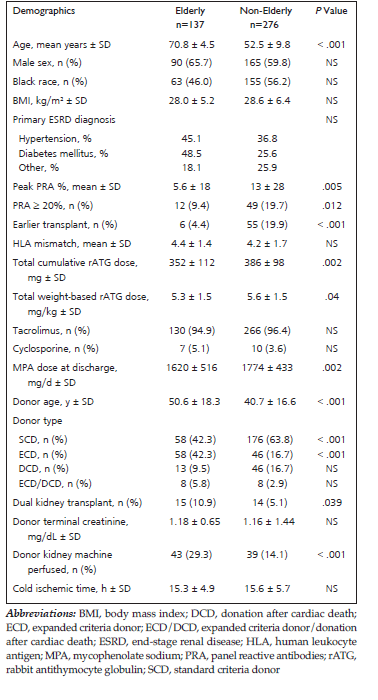
Table 1. Demographics
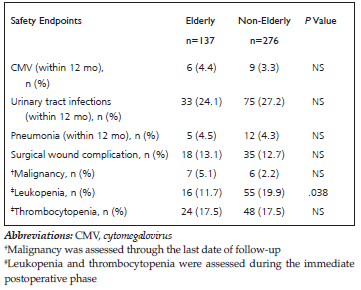
Table 2. Safety Endpoints
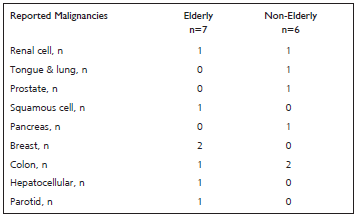
Table 3. Reported Malignancies
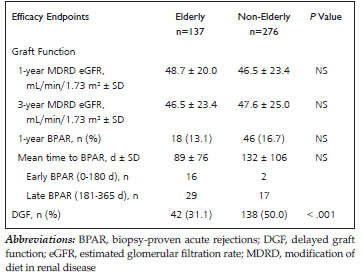
Table 4. Efficacy Endpoints
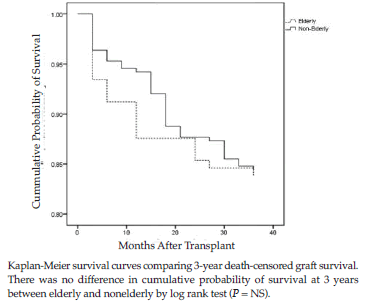
Figure 1. 3-Year Death-Censored Graft Survival
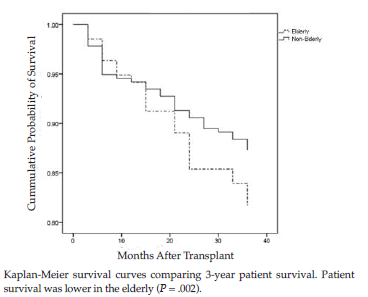
Figure 2. 3-Year Patient Survival
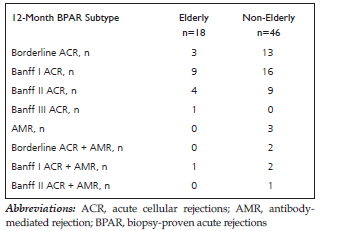
Table 5. 12-Month BPAR Subtype