Volume: 11 Issue: 2 April 2013
FULL TEXT
Plasma cell infiltration into a renal allograft comprises a spectrum of lesions from acute rejection to posttransplant lymphoproliferative disease. We report an unusual case of plasma cell infiltration into a renal allograft with monoclonal gammopathy. A 42-year-old woman was admitted because of graft dysfunction after noncompliance with immunosuppressive therapy for 5 months. A graft biopsy showed acute T-cell–mediated rejection and massive plasma cell infiltration. Despite initial treatment with steroids and antithymocyte globulin, there was persistence of graft dysfunction, monoclonal gammopathy, and plasma cell infiltration. Subsequent treatment with bortezomib improved graft function and caused the monoclonal gammopathy to resolve. Immunohistochemical evaluation of markers of B cells (CD20 and CD138) and the ratio of kappa-to-lambda light chain (15:1) showed that infiltrating cells were plasma cells producing kappa light chain. This suggested that plasma cell-rich acute rejection with monoclonal gammopathy in this patient might have been in an early stage of kappa light chain-producing posttransplant lymphoproliferative disease confined to the renal allograft, and that bortezomib may be effective in treating a patient with this condition.
Key words : Kidney, Antibody, Immunosuppression, Bortezomib
Introduction
Plasma cell infiltration into a renal allograft may occur in varied conditions such as plasma cell-rich acute rejection (PCAR) or posttransplant lymphoproliferative disease (PTLD). In PCAR, which is observed in 5% patients with biopsy-proven acute rejection, mature plasma cells comprise > 10% inflammatory cells in the graft1,2; this syndrome often is observed in patients noncompliant with immunosuppressive therapy3 and is associated with a poor outcome irrespective of the Banff score. The reason for the poor outcome of PCAR is unknown but might be related to the humoral component in graft injuries.1
Plasma cell infiltration also is observed in renal allograft biopsies from patients with PTLDs such as plasmacytic hyperplasia, polymorphous B-cell hyperplasia, or plasmacytomalike PTLD.2 An association between plasmacytic infiltration into renal allografts and PTLD has been reported in a few studies.2 As with PCAR, PTLD confined to the renal allograft has a poor clinical outcome. All reported cases of PTLD confined to a renal allograft have undergone a transplant nephrectomy because of acute rejection during reduction of immunosuppression.2
Bortezomib is a proteasome inhibitor used to treat multiple myeloma and has been approved by the United States Food and Drug Administration.4 In addition to their properties against plasma cells, proteasome inhibitors suppress T-cell function and may be useful in the treatment of cell-mediated allograft rejection.4 Bortezomib is effective therapy for antibody- or cell-mediated acute rejection.5
We treated a patient who had monoclonal gammopathy and PCAR. Initial impression was that this patient had PCAR because of noncompliance with immunosuppressive therapy; however, immuno-histochemical analysis of B-cell markers and light chains, showed that infiltrating cells were mature plasma cells that produced kappa light chain. The condition partially responded to steroid and antithymocyte globulin treatment and further improved with bortezomib treatment.
Case Report
A 42-year-old woman visited our out-patient clinic because of pitting edema. She had received a living-related renal allograft from her brother 7 years earlier because of presumed chronic glomerulonephritis that had not been confirmed with renal biopsy. Since the transplant, her monthly serum creatinine level was stable (0.07 to 0.09 μmol/L). She had stopped taking all immunosuppressive drugs 5 months before visiting our clinic.
Evaluation showed elevated blood pressure (170/110 mm Hg) and serum creatinine (0.55 μmol/L). Ultrasonography showed favorable perfusion in the transplanted kidney. Urinary protein excretion was 1.1 g/d. The hemoglobin concentration was 80 g/dL (normal, 120 to 160 g/dL) and the serum protein level was 104 g/dL (albumin, 34 g/dL; globulin, 70 g/dL). Serum protein electrophoresis showed monoclonal immunoglobulin (M component) (29 g/dL; IgG-κ type) and the serum kappa-to-lambda ratio was 3.75. Bone marrow aspiration and biopsy showed plasma cell infiltration < 1%. The results of a skull bone radiography revealed no osteolytic lesions.
Allograft biopsy on the day of admission showed massive infiltration of plasma cells, which comprised 60% of the cells infiltrating the graft in the interstitium, and severe tubulitis, consistent with acute T-cell–mediated rejection type IB according to the Banff classification (Figures 1 and 2).6 There was no deposition of C4d detected in the peritubular capillaries. Donor-specific antibody using single-antigen Luminexx assay, panel reactive antibody, and cross-matching test with complement-dependent cytotoxicity and flow cytometry were negative.
The patient was treated initially with high-dose steroids (methylprednisolone, 500 mg/d) for 3 days, but serum creatinine level was unchanged. Subsequent treatment with antithymocyte globulin (1.5 mg/kg/d) for 7 days improved the serum creatinine level from 0.55 to 0.24 μmol/L, but there was no further improvement in graft function, and the monoclonal gammopathy persisted. A second allograft biopsy on day 17 showed persistent plasma cell infiltration and interstitial edema (Figures 1 and 2).
It was suspected that the incomplete recovery of graft function was related to the infiltrating plasma cells. Therefore, on day 25, bortezomib therapy (1.3 mg/m2 in 4 separate doses) was initiated. Within 1 month after the start of bortezomib therapy, graft function improved (serum creatinine, 0.16 μmol/L) and the monoclonal gammopathy disappeared (serum protein, 77 g/dL; albumin, 35 g/dL; globulin, 32 g/dL). A third biopsy performed 3 months later showed much less plasma cell infiltration and interstitial edema with tubular atrophy (Figure 2). Follow-up serum protein electrophoresis revealed no M peak. At the 12-month follow-up after the completion of bortezomib therapy, serum creatinine level was stable (0.16 μmol/L).
To identify the infiltrating plasma cells, we performed immuno-histochemistry for CD20 and CD138 (Dako A/S, Glostrup, Denmark). The distribution of intensity of CD20 immuno-reactivity was minimal. Immuno-reactivity of CD138 was distributed evenly and strongly in the first biopsy specimen, and the intensity of CD138 immunoreactivity decreased after treatment against rejection (Figure 3). Kappa light chain was expressed heavily initially, and kappa-to-lambda ratio was 15:1 in the first biopsy specimen. The high ratio between kappa and lambda light chain expression gradually decreased after treatment against rejection (Figure 3). Molecular genetic analysis of the immunoglobulin genes showed no heavy chain rearrangement. The cells stained negative for Epstein-Barr virus early RNA by in situ hybridization. These findings were suggestive of kappa light chain restricted PTLD confined to the renal allograft.
Discussion
Our patient had PCAR with monoclonal gammopathy, and the evaluation of the infiltrating plasma cells showed high expression of kappa light chain, consistent with light chain-restricted PTLD confined to the allograft.7 The condition was resistant to steroid and antithymocyte globulin treatment but responded to bortezomib. This case suggests that plasma cell infiltration observed with acute rejection should be evaluated carefully.
The PCAR often is reported in renal transplant recipients who are noncompliant with immuno-suppressive therapy.3 Therefore, the initial impression in this patient was that the plasma cell infiltration in the graft was related to acute rejection that resulted from noncompliance with immuno-suppressive therapy for 5 months. We evaluated antibody-mediated acute rejection using a donor-specific antibody, a panel reactive antibody, and cross-match, but these results were negative at the time of initial biopsy. We could not detect C4d in peritubular capillaries in graft biopsies in this patient. Therefore, we excluded the possibility that infiltration of plasma cells was not associated with antibody-mediated acute rejection. We further evaluated the infiltrated plasma cells with surface markers of B cells (CD20 and CD138), because it may have been difficult to identify plasma cells on biopsy specimens unless the plasma cells were abundant and identified by surface markers. The finding of strong, evenly distributed CD138 immunoreactivity confirmed that infiltrated cells in the present case were plasma cells and not immature B cells (Figure 3).
Monoclonal gammopathy is present in 10% to 30% renal transplant recipients.8,9 Therefore, monoclonal gammopathy in this patient may have been coincidental and distinct from PCAR. However, the high kappa-to-lambda ratio (15:1) was consistent with kappa light chain-restricted monoclonal gammopathy. Furthermore, molecular genetic analysis of the immunoglobulin genes showed no heavy chain rearrangement. These findings suggested that this patient had an early stage of kappa light chain-restricted PTLD confined to the allograft.2,7
Resolution of the monoclonal gammopathy after bortezomib treatment with only partial improvement with steroids and antithymocyte globulin, suggests that the graft dysfunction was closely associated with plasma cell infiltration. Bortezomib was effective in improving both dysfunction and pathology of the graft. We considered using rituximab for treatment against rejection, but we used bortezomib because the plasma cells did not express CD20, a target of rituximab.
This case provided 2 important lessons for clinical practice. Evaluating clonality of the infiltrating plasma cells usually is not performed in clinical practice, but this case suggested that clonality of infiltrated plasma cells observed with acute rejection should be evaluated for the differential diagnosis between acute rejection and PTLD. In addition, bortezomib usually is not recommended in treating PCAR, and by focusing on the infiltrated plasma cells in the graft, we did not consider the diagnosis of PTLD. However, chemotherapy such as bortezomib against plasma cells may be effective in treating PTLD associated with plasma cells.10 It is unknown whether bortezomib was effective in treating PCAR or PTLD in this case, but the choice of bortezomib was reasonable for treating PCAR or monoclonal gammopathy caused by PTLD.
In conclusion, the present patient had PCAR with monoclonal gammopathy. We evaluated the plasma cell clonality and treated the patient successfully with bortezomib.
References:
- Desvaux D, Le Gouvello S, Pastural M, et al. Acute renal allograft
rejections with major interstitial oedema and plasma cell-rich infiltrates:
high gamma-interferon expression and poor clinical outcome. Nephrol Dial
Transplant. 2004;19(4):933-939.
CrossRef - PubMed - Meehan SM, Domer P, Josephson M, et al. The clinical and pathologic
implications of plasmacytic infiltrates in percutaneous renal allograft
biopsies. Hum Pathol. 2001;32(2):205-215.
CrossRef - PubMed - Charney DA, Nadasdy T, Lo AW, Racusen LC. Plasma cell-rich acute renal
allograft rejection. Transplantation. 1999;68(6):791-797.
CrossRef - PubMed - Kyle RA, Rajkumar SV. Multiple myeloma. N Engl J Med.
2004;351(18):1860-1873.
CrossRef - PubMed - Everly MJ, Everly JJ, Susskind B, et al. Bortezomib provides effective
therapy for antibody- and cell-mediated acute rejection. Transplantation.
2008;86(12):1754-1761.
CrossRef - PubMed - Sis B, Mengel M, Haas M, et al. Banff ’09 meeting report: antibody
mediated graft deterioration and implementation of Banff working groups. Am
J Transplant. 2010;10(3):464-471.
CrossRef - PubMed - Turner JJ, Morton LM, Linet MS, et al. InterLymph hierarchical
classification of lymphoid neoplasms for epidemiologic research based on the
WHO classification (2008): update and future directions. Blood.
2010;116(20):e90-e98.
CrossRef - PubMed - Radl J, Valentijn RM, Haaijman JJ, Paul LC. Monoclonal gammapathies in
patients undergoing immunosuppressive treatment after renal transplantation.
Clin Immunol Immunopathol. 1985;37(1):98-102.
CrossRef - PubMed - Passweg J, Thiel G, Bock HA. Monoclonal gammopathy after intense
induction immunosuppression in renal transplant patients. Nephrol Dial
Transplant. 1996;11(12):2461-2465.
CrossRef - PubMed - Trappe R, Zimmermann H, Fink S, et al. Plasmacytoma-like post-transplant
lymphoproliferative disorder, a rare subtype of monomorphic B-cell
post-transplant lymphoproliferation, is associated with a favorable outcome
in localized as well as in advanced disease: a prospective analysis of 8
cases. Haematologica. 2011;96(7):1067-1071.
CrossRef - PubMed

Volume : 11
Issue : 2
Pages : 191 - 194
DOI : 10.6002/ect.2012.0141
From the 1Division of Nephrology, Department of Internal Medicine,
and the 2Department of Pathology, Seoul St. Mary's Hospital, College
of Medicine, The Catholic University of Korea, Seoul, Korea
Acknowledgements: The authors declare that they have no conflicts of
interest. This study was supported by a grant of the Korean Health Technology R
& D Project, Ministry for Health & Welfare, Republic of Korea (A092258). The
authors alone are responsible for the content and writing of the paper.
Corresponding author: Chul Woo Yang, Department of Internal Medicine,
Seoul St. Mary’s Hospital, 505 Banpo-Dong, Seocho-Ku, 137-040, Seoul, Korea
Phone: +82 2 2258 1150
Fax: +82 2 5360 323
E-mail: yangch@catholic.ac.kr
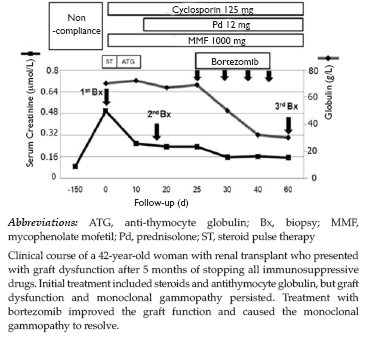
Figure 1. Clinical Course of a 42-Year-Old Woman With Renal Transplant
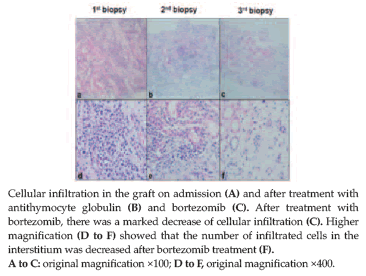
Figure 2. Serial Renal Allograft Biopsy Results
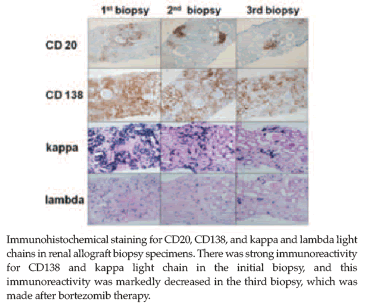
Figure 3. Immunohistochemical Staining