Volume: 10 Issue: 3 June 2012
FULL TEXT
Pancreatic transplant effectively cures type 1 diabetes mellitus and maintains consistent long-term euglycemia. However, technical failure, and in particular graft thrombosis, accounts for the vast majority of transplants lost in the early postoperative period. The pancreas’ inherently low microvascular flow state makes it vulnerable to vascular complications, as does the hypercoagulable blood of diabetic patients. Ultimately, the phenomenon is most definitely multifactorial. Prevention, as opposed to treatment, is key and should focus on reducing these multiple risk factors. This will involve tactical donor selection, optimal surgical technique and some form of anticoagulation. Close monitoring and early intervention will be crucial when treating thrombosis once preventative methods have failed. This may be achieved by further anticoagulation, graft salvage, or pancreatectomy with retransplant. This article will explore the multiple factors contributing to graft thrombus formation and the ways in which they may be addressed to firstly prevent, or more likely, reduce thrombosis. Secondly, we will consider the management strategies which can be implemented once thrombosis has occurred.
Key words : Salvage, Diabetes, Cure, Complication, Loss
Introduction
Pancreatic transplants, first undertaken in 1966, have become the curative modality for type 1 diabetes mellitus1 and the treatment of choice for end-stage renal failure secondary to diabetic nephropathy.2 Unlike transplant of other organs, where the outcome is most often shaped by immunologic success, survival of a transplanted pancreas still depends on technical factors.3 Between 2004 and 2008, the technical failure rate for pancreatic transplant was reported at approximately 8% in the United States; furthermore, of these surgical factors, graft thrombosis is the most-common complication that results in graft loss and ultimately, pancreatectomy.4 The incidence of graft thrombosis reported in the literature ranges from 5.5% to 27%.4-8
It is important to distinguish between early and late vascular thrombosis, the latter (at least 12 months after surgery) is considered secondary to immunologic injury.2 Early thrombosis, which will be the focus of this article, occurs within 6 weeks, often within 48 hours, and usually within 24 hours of transplant.9 It can present with acute hyperglycemia, abdominal tenderness over the graft, melena in enterically drained grafts, as well as dark hematuria and decreased urinary amylase in grafts draining into the bladder.3 The vast majority of these early thromboses are considered technical failures, with only a negligible proportion being part of an early acute rejection process. With no one intervention proving effective in negating the risk of it occurring, the cause of graft thrombosis may be presumed to be multifactorial.
Prevention
We will consider the preventative strategies that may be used to reduce
thrombosis. It should be noted that this risk will, of course, never be
eliminated, and is unlikely to be reduced to levels associated with other
transplantable organs. This is due, in part, to the pancreas’ inherently poor
parenchymal microvascular flow state, which predisposes it to vascular
complications. Furthermore, diabetic patients, who comprise almost all patients
undergoing pancreatic transplant, have been shown to possess a hypercoagulable
state, both directly and indirectly, in terms of commonly associated
dyslipidaemia.10, 11
Donor and recipient optimization/selection
Multivariate analyses have highlighted many donor-specific and recipient-specific
factors that predict a higher rate of graft thrombosis. Therefore, it follows
that one could improve outcomes by imposing stricter criteria for selecting
patients, donors in particular. However, this would decrease the size of the
donor pool—an unfortunate consequence of trying to reduce the incidence of graft
thrombosis.
Donor age as a risk factor for pancreatic graft thrombosis has conflicting reports in the literature. Some studies have suggested that it is a strong independent risk factor for graft loss12 and thrombosis,13 whereas others have shown it may only be a factor indirectly, that is, a surrogate for other factors including a “cause of death other than trauma.”14 Either way, it would be prudent to consider limiting donors of advanced age, especially when the same patients have other risk factors, which in conjunction with their age, would almost certainly increase the incidence of thrombosis and reduce overall graft survival.
Increased donor body mass index is almost certainly 1 of those additional risk factors. In pancreatic transplant, donor obesity has been shown to increase the risk of surgical infections, thrombosis, overall technical failure, and short-term graft survival.15 Indeed, according to the Preprocurement Pancreas Suitability score, a scoring system introduced by the Eurotransplant Pancreas Advisory Committee in 2008, higher scoring (marginal) donors, which would be older and obese, had a higher rate of graft thrombosis.16
Other donor risk factors include a cerebrovascular cause of death, hemodynamic instability, and massive volume resuscitation involving catecholamine therapy.13 The presence of such multiple and diverse risk factors makes donor optimization difficult without reducing the donor pool size too much. A balance in determining more-stringent criteria in the future is needed.
Obesity is a significant risk factor for perioperative complications in all surgical specialties.17 Pancreas transplant recipients are no different, with increased body mass index having been shown to correlate well with increased frequency of dehiscence, ventral hernia, intra-abdominal infection, gangrene, necrotizing fasciitis, and repeat laparotomy.18 However, it is not an independent risk factor for pancreatic thrombosis.18, 19
Donor criteria, therefore, must be sound. The selection of suitably aged donors with healthy body mass indexes and an appropriate mechanism of death will help reduce the incidence of graft thrombosis. Scoring systems such as the Preprocurement Pancreas Suitability score crucially aid in the amalgamation and quantification of diverse factors, even if overall graft survival cannot be predicted with such a tool.16 Recipient factors influencing graft thrombosis rates will play little role in terms of determining selection as clinical need will justify the transplant attempt.
Surgical factors
As graft thrombosis is considered first and foremost a technical failure, it is
most important to consider factors in the surgical phase of pancreas transplant.
As with the retrieval of any organ, atraumatic procurement from the donor will
have undeniably favorable outcomes. This is especially crucial regarding the
pancreas, owing to its fragile composition and extensive microvasculature.
Back bench preparation protocols have never been standardized. Arguably, the biggest area of controversy within our field is the decision whether to use histidine-tryptophan-ketoglutarate (HTK) solution or University of Wisconsin (UW) solution for flushing and preservation. Preservation solutions were devised with the intention of maintaining organs in prime condition from obtaining them to implanting them.20 University of Wisconsin solution is the current criterion standard against which potential solutions are compared; of these, HTK is a promising alternative owing to its low viscosity (thus, enabling higher flow rates and quicker cooling) and lower potassium content.20
Since 2004, there have been 8 articles attempting to assess whether HTK is indeed a viable alternative (Table 1). Of these, 1 is a randomized prospective trial whereas the others are retrospective analyses. Of note, only 2 studies have demonstrated inferiority on the part of HTK as compared to UW regarding graft survival and thrombosis: Alonso and associates in 2008 showed a statistically significant higher rate of graft thrombosis in the HTK group compared with the UW group (19% vs 4%, P = .05).21 Stewart and associates, in 2009, used the United Network for Organ Sharing (UNOS) database to show that HTK solution was associated with a higher rate of graft loss, especially within 30 days, compared with UW solution.22 However, the vast majority of studies show equivalency between the 2 solutions. Interestingly, any differences seen may be due to confounding factors such as longer flush volumes recommended for HTK solution. We are planning to switch to HTK as soon as it becomes available in the UK.
It has been suggested by the aforementioned papers that the differences between solutions are only present when alongside a prolonged cold ischemic time (> 12 hours). The relevance of this association for pancreatic transplant is that prolonged cold ischemic time is widely considered to be an independent risk factor for graft thrombosis.13, 23 And so, by reducing the cold ischemic time to acceptable levels (< 12 hours), we can, in theory, negate the issue of which solution to use.
The pancreas is also unique in terms of the extent of arterial reconstruction needed before implantation. Procurement is technically demanding and en bloc resection with an intact liver is now considered standard. The coeliac axis is often retained with the liver and so the dual supply of the pancreas needs additional reconstruction.24 In 1996, Troppmann suggested that anything other than a “Y graft” is associated with a higher incidence of graft thrombosis.13 In addition to this requisite, to minimize graft thrombosis, implantation should be right-sided and portal vein extensions should be avoided.13 These extensions are only used with unusual placement sites, for example, left-sided, and so can be avoided by adhering to the aforementioned right-sided recommendation. Of relevance, kidney implantation in diabetic cases, therefore, should be left-sided to allow for a possible future “pancreas-after-kidney” procedure.
Undoubtedly, there will be variations among the different formats of pancreas transplant. These are pancreas transplant alone, pancreas after kidney, and simultaneous pancreas and kidney transplant, and we have not yet mentioned them as possible confounding factors for the variables discussed earlier. A paper looking at all pancreas transplants in the United States between 2000 and 2004 showed higher graft thrombosis rates for pancreas transplant alone procedures (7.8%) when compared with pancreas after kidneys (5.5%) and simultaneous pancreas and kidneys (4.9%) (P = .04).25 Tying in with these subtypes, is the route of exocrine drainage, which is either bladder or enteric draining. Enteric drainage has been associated with a greater rate of thrombosis than bladder drainage.26 However, interestingly, graft thrombosis rates have decreased over time even though the proportion of enterically drained transplants has increased.25 This underscores the definite multifactorial nature of the cause of a graft thrombosis. Enteric drainage continues to be used owing to lower long-term sequelae of recurrent urologic complications that are heavily associated with bladder drainage.27, 28
It should be noted that the higher rate of thrombosis in enterically drained pancreas transplant-alone procedures may be due to recording error as opposed to true technical errors. It has been suggested that with enterically drained grafts, it is more difficult to detect rejection and so, thromboses may be incorrectly attributed to technical error instead, thus giving a false high rate. This is because firstly, in enterically drained grafts, there is the absence of urinary amylase as a potential marker of rejection. Secondly, unlike simultaneous pancreas and kidney transplants, serum creatinine cannot be used to identify rejection (using the fact that kidney rejection often precedes that of the pancreas).3 We feel that these considerations make the pancreas transplant subtype and exocrine drainage difficult to manipulate when attempting to lower graft thromboses.
Atraumatic procurement and appropriate back bench preparation will contribute to a lower graft thrombosis rate. This can be supplemented by using tactical implantation techniques. Reducing cold ischemic time will have the greatest effect in reducing such technical failures.
Pharmacological prophylaxis
Prophylactic anticoagulation has been extensively studied and debated by experts.
Massive variation in practice is secondary to the lack of evidence in the field
to support either selective or universal anticoagulation.29 Despite Sollinger
and associates, in 1991, having reported a remarkable graft thrombosis rate of
only 0.8% and stating that “systemic anticoagulation is unnecessary,”30 it is agreed by many that our programs should include some form of anticoagulant
prophylaxis. A more valid debate that has been suggested is whether all patients
require the same anticoagulation protocol.31 The continued use of
anticoagulation postoperatively is an undoubtedly contentious issue;
difficulties will almost certainly arise in balancing thrombosis rates with
bleeding rates.
Aspirin will be routinely taken by most, if not all patients, as it is standard secondary prevention against the vascular complications of diabetes mellitus. It will indirectly play a part in any prophylactic regimens used against thrombosis, even if not administered primarily for that purpose.
A recent retrospective study by Schenker and associates has suggested that daily low molecular weight heparin has lower rates of vascular graft thrombosis associated with it than unfractionated heparin.32 This would make it an attractive option for any stringent future guidelines as it is associated with better compliance, reduced requirements for monitoring and increased patient mobility.29 Importantly, there was no difference in graft hemorrhage rates between the 2 agents.32
The use of warfarin as an anticoagulant appears at first glance illogical, owing to its delayed onset of action, making it unlikely to be effective against graft thromboses, which usually occur within 48 hours of transplant. It has been suggested, however, that it should be used in patients with known or suspected thrombophilia, and that for patients without these conditions, the risk of bleeding, together with the inconvenience of prothrombin time testing, probably outweigh any benefit.29
Regimens used by different centers tend to use combinations of these different agents, and their overall practice will vary in other confounding variables discussed in the previous section. Therefore, analyzing individual antithrombotics from the literature is difficult, given the variety of combination regimens. For example, 1 typical regimen, reported by the Wake Forest Baptist Health Group, includes unfractionated heparin and aspirin: an intraoperative bolus of heparin precedes a 5-day infusion followed by aspirin alone.29 Another, by Vaidya and associates, uses thromboelastography to successfully predict individual antithrombotic requirements; this approach led to a thrombosis rate of 0% in their study.31 More novel drugs such as recombinant antithrombin III,33 and dabigatran, a direct thrombin inhibitor, may play a role in the future. Financial reasons, however, will limit their immediate introduction to this arena. Table 2, adapted from a recent paper by Muthusamy and associates,2 shows some of these regimens, as well as others from the literature, and their respective thrombosis and hemorrhage rates.
The breadth of anticoagulation regimens adopted worldwide, many to equally successful ends, is vast. There is perhaps no real need for stringent guidelines to be made as long as the thrombosis rates, as shown in Table 2, are kept low. However, it is sensible to adopt some form of anticoagulation measure. To attempt to individualize this therapy with technology such as thromboelastography seems logical and may aid in our attempts to prevent vascular thrombosis from persisting as the major cause for technical graft failure.
Treatment
Next, we will discuss how one may approach graft thrombosis once it has already
occurred. This, despite being able to restore graft function in some cases, is
not ideal, and a preventative approach, using the information described earlier
in this article, will be considered more desirable by our group. Nonetheless,
preventative approaches will never reduce the thrombosis rate to zero, and
treatment strategies for it must be considered.
Different interventions will be appropriate for different extents of thrombosis. It should be noted that in the vast majority of graft thrombosis cases, the treatment of choice is pancreatectomy.34
A thrombosed graft is only salvageable within a short time of initial thrombus formation, highlighting the importance of close postoperative monitoring and early intervention. Interventions at salvaging the original graft may be pharmacological, surgical, or by use of percutaneous interventional radiology. Noncomplex thromboses (ie, partial or those isolated to the splenic vein) can be managed with systemic anticoagulation and the specific regimens vary as widely as the prophylaxis regimens discussed above.8, 9, 31
Surgical salvage of thrombosed grafts was initially reported with thrombectomy being the specific surgical intervention.8, 35, 36 This has been shown to be effective even against complete venous thrombosis by Ciancio and associates in 2000.37 However, alternatively, surgical salvage of thrombosed pancreatic grafts may be achieved by partial pancreatectomy.38 If thrombosis is diagnosed early enough, surgical salvage may lead to successful graft rescue rates as high as 67%.8
This is eclipsed by rescue rates as high as 75% for the next salvage method to be considered: percutaneous interventional radiology procedures.8 These novel interventional procedures have been seen mostly in the last couple of years.39-41 Advantages with this approach include avoiding mortality and morbidity that would be associated with general anesthesia and repeat open surgery for thrombectomy or graft pancreatectomy. However, more case series and research are required before percutaneous nonsurgical attempts at salvaging thrombosed grafts are widely accepted.
Finally, retransplant can be considered a treatment for thrombosis once salvage is considered inappropriate and pancreatectomy has occurred. It has been suggested that this be immediate at the same operation as pancreatectomy to avoid adhesion formation, complicating future attempts at the original anastomotic site. Furthermore, graft function in these immediate retransplants may have outcomes comparable to the primary transplanted organ.42
Conclusions
With advances in immunologic pharmacology, graft thrombosis has overtaken rejection as the leading cause of graft loss in pancreatic transplant and is the most prevalent form of technical failure in our field.4 We suggest a “top-down” approach to management, with earlier interventions aimed at prevention being given higher priority than later interventions aimed at salvaging thrombosed grafts (Figure 1).
In summary, eliminating thromboses, or at the very least, reducing them, can launch pancreatic transplant outcomes on par with other organs in the transplant arena. Robust donor selection, optimal surgical technique, and individualized anticoagulation protocols are crucial in our attempt to prevent occurrence. Only if these are used and fail should we turn to pursuing more-challenging solutions in the form of salvage and immediate retransplant.
References:
- Han DJ, Sutherland DE. Pancreas transplantation. Gut Liver.
2010;4(4):450-465.
CrossRef - PubMed - Muthusamy AS, Giangrande PL, Friend PJ. Pancreas allograft thrombosis.
Transplantation. 2010;90(7):705-707.
CrossRef - PubMed - Troppmann C. Complications after pancreas transplantation. Curr Opin Organ
Transplant. 2010;15(1):112-118.
CrossRef - PubMed - Gruessner AC, Sutherland DE. Pancreas transplant outcomes for United States
(US) cases as reported to the United Network for Organ Sharing (UNOS) and the
International Pancreas Transplant Registry (IPTR). Clin Transpl. 2008:45-56.
PubMed - Gruessner RW, Burke GW, Stratta R, et al. A multicenter analysis of the first
experience with FK506 for induction and rescue therapy after pancreas
transplantation. Transplantation. 1996;61(2):261-273.
CrossRef - PubMed - Gruessner RW, Sutherland DE, Troppmann C, et al. The surgical risk of
pancreas transplantation in the cyclosporine era: an overview. J Am Coll Surg.
1997;185(2):128-144.
CrossRef - PubMed - Troppmann C, Gruessner AC, Dunn DL, Sutherland DE, Gruessner RW. Surgical
complications requiring early relaparotomy after pancreas transplantation: a
multivariate risk factor and economic impact analysis of the cyclosporine era.
Ann Surg. 1998;227(2):255-268.
CrossRef - PubMed - Gilabert R, Fernández-Cruz L, Real MI, Ricart MJ, Astudillo E, Montaña X.
Treatment and outcome of pancreatic venous graft thrombosis after kidney--pancreas
transplantation. Br J Surg. 2002;89(3):355-360.
CrossRef - PubMed - Delis S, Dervenis C, Bramis J, Burke GW, Miller J, Ciancio G. Vascular
complications of pancreas transplantation. Pancreas. 2004;28(4):413-420. Erratum
in: Pancreas. 2004;29(4):1a.
CrossRef - PubMed - Carr ME. Diabetes mellitus: a hypercoagulable state. J Diabetes
Complications. 2001;15(1):44-54.
CrossRef - PubMed - Miller GJ. Hyperlipidaemia and hypercoagulability. Prog Lipid Res.
1993;32(1):61-69.
CrossRef - PubMed - Sousa MG, Linhares MM, Gonzalez AM, et al. Multivariate analysis of risk
factors for early loss of pancreas grafts among simultaneous pancreas-kidney
transplants. Transplant Proc. 2010;42(2):547-551.
CrossRef - PubMed - Troppmann C, Gruessner AC, Benedetti E, et al. Vascular graft thrombosis
after pancreatic transplantation: univariate and multivariate operative and
nonoperative risk factor analysis. J Am Coll Surg. 1996;182(4):285-316.
PubMed - Humar A, Ramcharan T, Kandaswamy R, Gruessner RW, Gruessner AC, Sutherland
DE. Technical failures after pancreas transplants: why grafts fail and the risk
factors--a multivariate analysis. Transplantation. 2004;78(8):1188-1192.
CrossRef - PubMed - Humar A, Ramcharan T, Kandaswamy R, Gruessner RW, Gruessner AG, Sutherland
DE. The impact of donor obesity on outcomes after cadaver pancreas transplants.
Am J Transplant. 2004;4(4):605-610.
CrossRef - PubMed - Schenker P, Vonend O, Ertas N, Wunsch A, Viebahn R. Preprocurement pancreas
allocation suitability score does not correlate with long-term pancreas graft
survival. Transplant Proc. 2010;42(1):178-180.
CrossRef - PubMed - Pasulka PS, Bistrian BR, Benotti PN, Blackburn GL. The risks of surgery in
obese patients. Ann Intern Med. 1986;104(4):540-546.
PubMed - Hanish SI, Petersen RP, Collins BH, et al. Obesity predicts increased
overall complications following pancreas transplantation. Transplant Proc.
2005;37(8):3564-3566.
CrossRef - PubMed - Rogers J, Chavin KD, Baliga PK, et al. Influence of mild obesity on outcome
of simultaneous pancreas and kidney transplantation. J Gastrointest Surg.
2003;7(8):1096-1101.
CrossRef - PubMed - Fridell JA, Mangus RS, Powelson JA. Organ preservation solutions for whole
organ pancreas transplantation. Curr Opin Organ Transplant. 2011;16(1):116-122.
CrossRef - PubMed - Alonso D, Dunn TB, Rigley T, et al. Increased pancreatitis in allografts
flushed with histidine-tryptophan-ketoglutarate solution: a cautionary tale. Am
J Transplant. 2008;8(9):1942-1945.
CrossRef - PubMed - Stewart ZA, Cameron AM, Singer AL, Dagher NN, Montgomery RA, Segev DL.
Histidine-tryptophan-ketoglutarate (HTK) is associated with reduced graft
survival in pancreas transplantation. Am J Transplant. 2009;9(1):217-221.
CrossRef - PubMed - Humar A, Kandaswamy R, Drangstveit MB, Parr E, Gruessner AG, Sutherland DE.
Prolonged preservation increases surgical complications after pancreas
transplants. Surgery. 2000;127(5):545-551.
CrossRef - PubMed - Troppmann C. Surgical complications. In: Gruessner RWG, Sutherland DER, eds. Transplantation of the Pancreas. New York, NY: Springer; 2004:206-237.
- Gruessner AC, Sutherland DE. Pancreas transplant outcomes for United States
(US) and non-US cases as reported to the United Network for Organ Sharing (UNOS)
and the International Pancreas Transplant Registry (IPTR) as of June 2004. Clin
Transplant. 2005;19(4):433-455.
CrossRef - PubMed - Gruessner AC, Sutherland DE, Gruessner RW. Enteric versus bladder drainage
for solitary pancreas transplants-a registry report. Transplant Proc.
2001;33(1-2):1678-1680.
CrossRef - PubMed - Monroy-Cuadros M, Salazar A, Yilmaz S, McLaughlin K. Bladder vs enteric
drainage in simultaneous pancreas-kidney transplantation. Nephrol Dial
Transplant. 2006;21(2):483-487.
CrossRef - PubMed - Hakim NS, Gruessner AC, Papalois BE, et al. Duodenal complications in
bladder-drained pancreas transplantation. Surgery. 1997;121(6):618-624.
CrossRef - PubMed - Farney AC, Rogers J, Stratta RJ. Pancreas graft thrombosis: causes,
prevention, diagnosis, and intervention. Curr Opin Organ Transplant.
2012;17(1):87-92.
CrossRef - PubMed - Sollinger HW, Knechtle SJ, Reed A, et al. Experience with 100 consecutive
simultaneous kidney-pancreas transplants with bladder drainage. Ann Surg.
1991;214(6):703-711.
CrossRef - PubMed - Vaidya A, Muthusamy AS, Hadjianastassiou VG, et al. Simultaneous pancreas--kidney
transplantation: to anticoagulate or not? Is that a question? Clin Transplant.
2007;21(4):554-557.
CrossRef - PubMed - Schenker P, Vonend O, Ertas N, et al. Incidence of pancreas graft thrombosis
using low-molecular-weight heparin. Clin Transplant. 2009;23(3):407-414.
CrossRef - PubMed - Fertmann JM, Wimmer CD, Arbogast HP, et al. Single-shot antithrombin in
human pancreas-kidney transplantation: reduction of reperfusion pancreatitis and
prevention of graft thrombosis. Transpl Int. 2006;19(6):458-465. Erratum in:
Transpl Int. 2006;19(10):859.
CrossRef - PubMed - Douzdjian V, Abecassis MM, Cooper JL, Smith JL, Corry RJ. Incidence,
management and significance of surgical complications after pancreatic
transplantation. Surg Gynecol Obstet. 1993;177(5):451-456.
PubMed - Schaapherder AF, van Oosterhout EC, Bode PJ, van der Woude FJ, Lemkes HH,
Gooszen HG. Pancreatic graft survival after arterial thrombosis in simultaneous
renal-pancreatic transplantation. Clin Transplant. 1993;7(1 part 1):37-42.
PubMed - MacMillan N, Fernandez-Cruz L, Ricart MJ, et al. Venous graft thrombosis in
clinical pancreas transplantation: options for a rescue treatment. Transplant
Proc. 1998;30(2):425-426.
CrossRef - PubMed - Ciancio G, Julian JF, Fernandez L, Miller J, Burke GW. Successful surgical
salvage of pancreas allografts after complete venous thrombosis. Transplantation.
2000;70(1):126-131.
PubMed - Maraschio MA, Kayler LK, Merion RM, et al. Successful surgical salvage of
partial pancreatic allograft thrombosis. Transplant Proc. 2003;35(4):1491-1493.
CrossRef - PubMed - Stockland AH, Willingham DL, Paz-Fumagalli R, et al. Pancreas transplant
venous thrombosis: role of endovascular interventions for graft salvage.
Cardiovasc Intervent Radiol. 2009;32(2):279-283.
CrossRef - PubMed - Yoshimatsu R, Yamagami T, Terayama K, et al. Percutaneous transcatheter
thrombolysis for graft thrombosis after pancreas transplantation. Pancreas.
2009;38(5):597-599.
CrossRef - PubMed - Izaki K, Yamaguchi M, Matsumoto I, et al. Percutaneous selective embolectomy
using a Fogarty Thru-Lumen Catheter for pancreas graft thrombosis: a case report.
Cardiovasc Intervent Radiol. 2011;34(3):650-653.
CrossRef - PubMed - Hollinger EF, Powelson JA, Mangus RS, et al. Immediate retransplantation for
pancreas allograft thrombosis. Am J Transplant. 2009;9(4):740-745.
CrossRef - PubMed - Potdar S, Malek S, Eghtesad B, et al. Initial experience using histidine-tryptophan-ketoglutarate
solution in clinical pancreas transplantation. Clin Transplant.
2004;18(6):661-665.
CrossRef - PubMed - Agarwal A, Murdock P, Pescovitz MD, Goggins WC, Milgrom ML, Fridell JA.
Follow-up experience using histidine-tryptophan ketoglutarate solution in
clinical pancreas transplantation. Transplant Proc. 2005;37(8):3523-3526.
CrossRef - PubMed - Englesbe MJ, Moyer A, Kim DY, et al. Early pancreas transplant outcomes with
histidine-tryptophan-ketoglutarate preservation: a multicenter study.
Transplantation. 2006;82(1):136-139.
CrossRef - PubMed - Becker T, Ringe B, Nyibata M, et al. Pancreas transplantation with histidine-tryptophan-ketoglutarate
(HTK) solution and University of Wisconsin (UW) solution: is there a difference?
JOP. 2007;8(3):304-311.
PubMed - Schneeberger S, Biebl M, Steurer W, et al. A prospective randomized
multicenter trial comparing histidine-tryptophane-ketoglutarate versus
University of Wisconsin perfusion solution in clinical pancreas transplantation.
Transpl Int. 2009;22(2):217-224.
CrossRef - PubMed - Fridell JA, Mangus RS, Powelson JA. Histidine-tryptophanketoglutarate for
pancreas allograft preservation: the Indiana University experience. Am J
Transplant. 2010;10(5):1284-1289.
CrossRef - PubMed - Burke GW 3rd, Ciancio G, Figueiro J, et al. Hypercoagulable state associated
with kidney-pancreas transplantation. Thromboelastogram-directed anti-coagulation
and implications for future therapy. Clin Transplant. 2004;18(4):423-428.
CrossRef - PubMed
Volume : 10
Issue : 3
Pages : 282 - 289
DOI : 10.6002/ect.2012.0003
From The West London Renal and Transplant Centre, Imperial College Healthcare
NHS Trust, London, United Kingdom
Corresponding author: Professor Nadey Hakim, The West London Renal and
Transplant Centre, Imperial College Healthcare NHS Trust, Hammersmith Hospital,
Du Cane Road, London, W12 0QT, United Kingdom
Phone: +44 208 383 5164 Fax: +44 208 383 5169 E-mail:
nadey@globalnet.co.uk
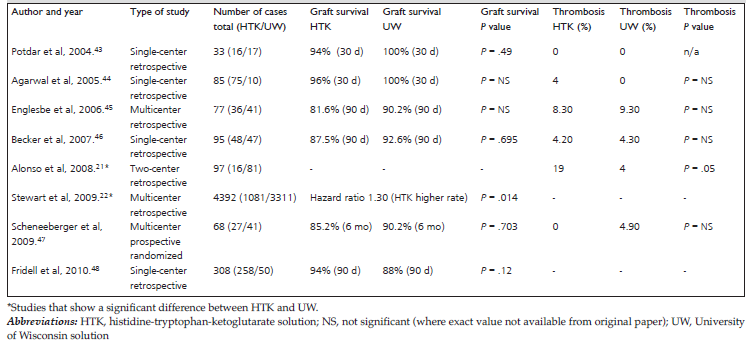
Table 1. Graft survival and thrombosis rates for various studies in the literature comparing histidine-tryptophan-ketoglutarate solution and University of Wisconsin solution.
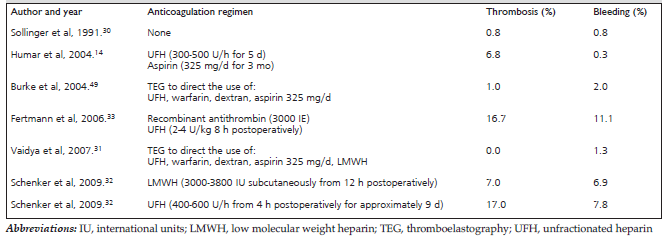
Table 2. (Adapted from Muthusamy and associates.2) Graft thrombosis and hemorrhage rates for different anticoagulation protocols
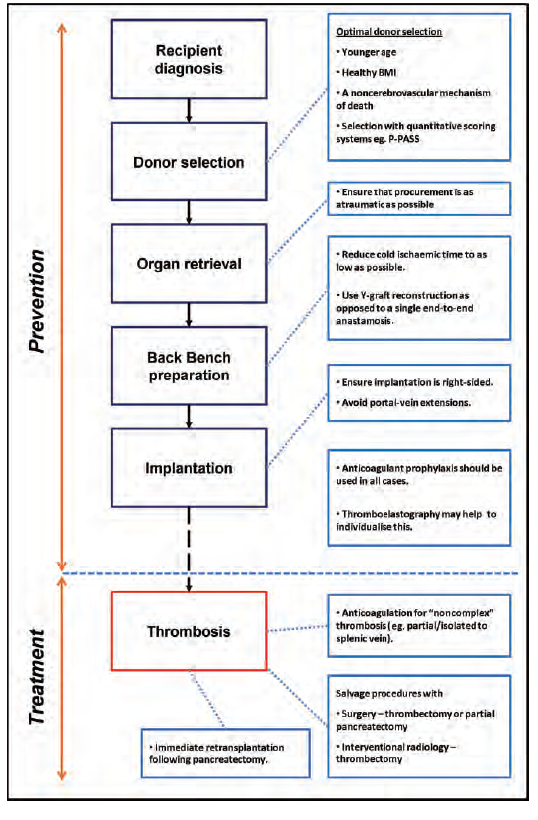
Figure 1. Typical steps in pancreatic transplant with various suggestions for intervention at each stage.