Volume: 9 Issue: 4 August 2011
FULL TEXT
Liver Transplantation From an Upper Midline Incision
Objectives: To evaluate the minimally invasive incision to the recipient of a liver transplant.
Materials and Methods: A 55-year-old man with cirrhosis due to hepatitis B accompanied by hepatocellular carcinoma underwent a right lobe, living-donor liver transplant using an 18-cm long, upper midline incision. The recipient hepatectomy was performed from the left to the right side (from medial to lateral). Deep retractors and long surgical instruments were preferred.
Results: The surgical procedure was completed without problem. Both the recipient hepatectomy and implantation of the right liver took 8 hours. Postoperative recovery of the patient was rapid, and he was discharged 8 days after surgery, uneventfully.
Conclusions: An upper midline incision can be preferred for liver transplant for selected cases. Minimally invasive surgery is an option for liver transplant recipients as well.
Key words : Liver transplantation, Living donor, Minimal invasive surgery, Incision, Postoperative care
Introduction
Decreasing incision line in surgery affects positively the patient’s postoperative early and late period comfort, thus accompanying one of the popular headings in today’s surgery. Recently, minimally invasive surgery has become common in liver transplant.1 While these approaches are generally preferred for donors, there is a limited benefit for recipients from minimally invasive approaches, probably because liver recipients are prone to bleeding and surgical intervention is complicated.2 Classically, a liver transplant is performed with a “Mercedes” or “J” type incision. In our center, some of the liver transplants are performed with smaller incisions. Here, we describe a liver transplant from an upper midline incision. To the best of our knowledge, a similar case has not been reported.
Case Report
While a 55-year-old man was being followed for liver cirrhosis due to hepatitis B, a liver mass was detected radiologically. His height and weight were 173 cm and 83 kg (body mass index, 27.7 kg/m2). Preoperative MELD and CHILD-PUGH scores were both 6. There was no ascites on the ultrasound; and a 10-cm mass was seen with contrast in liver segments 8 and 5 on dynamic computed tomography. Alpha-fetoprotein level was 60.7 mg/L. The patient had no comorbid diseases.
The patient was accepted as having hepatocellular carcinoma together with cirrhosis due to hepatitis B. In our center, we perform liver transplants for hepatocellular carcinoma beyond the Milan criteria, and the patient was considered a candidate for a liver transplant with a living donor. If there is no documented hepatocellular carcinoma outside the liver (peritoneal, extrahepatic portal vein, or hilar lymph nodes), we choose these patients as candidates for liver transplant, particularly for a living-related transplants.
The 27-year-old son was an appropriate donor with respect to liver volume, hepatosteatosis, vascular and biliary anatomy, and blood group type. On the right liver lobe, a 751-g graft, including the middle hepatic vein, was recovered from the donor. Separate right and middle hepatic veins made a common trunk by approximate suturing at the back table (30 mm in diameter). An additional venoplasty was performed by placing the saphenous vein around the junction of the middle and right hepatic veins. A new hepatic venous orifice was reached that was 40 mm in diameter. The purpose of the venoplasty was to ease the anastomosis between the hepatic veins and the inferior vena cava. The portal vein (12 mm in diameter), artery (3 mm in diameter), and bile duct (4 mm in diameter) of the graft were single.
The incision to the recipient was a middle upper line 18 cm long (Figure 1). The xiphoid process was excised. Sternum lifting retractors and a liver retractor were placed. Large and deep abdominal retractors were used to retract the stomach and the intestines. The hilum of the liver was explored. Both hepatic arteries and common bile duct were transected, but only the portal vein was preserved. The left liver triangular ligament was divided. By approaching between the left liver lobe and the inferior vena cava, short hepatic veins between the caudate lobe and the retrohepatic vena cava were explored.
From caudal to cranial, all short hepatic veins on the left side of the retrohepatic vena cava were ligated and divided. In the retrohepatic area, going upward, the middle-left hepatic vein trunk was reached, and the trunk was divided with a laparoscopic stapler (Echalon, Ethicon 60 mm; Ethicon Endo-Surgery, Inc, Cincinnati, OH, USA). Right-sided short hepatic veins on the retrohepatic vena cava were dissected, ligated, and divided caudocranially again from the left side of the liver. The right side of the liver was not manipulated until all of the short hepatic veins were divided. The right hepatic vein was reached and suspended. After that, adhesions between the Bare area and the right lobe were divided with a Ligasure Atlas vessel sealing system (10 mm laparoscopic) (Valleylab, a division of Tyco Healthcare Group LP, Boulder CO, USA). After clamping the portal vein and right hepatic vein, these vessels were divided, and the liver was completely free in the abdomen. Pringle’s maneuver was not used at any stage. When the liver could not be taken out through the incision by pulling from the left lobe, it was turned to the opposing side in the lower abdomen and delivered through the right lobe, and then the entire liver was extracted. The recipient hepatectomy continued for 4 hours.
The inferior vena cava was suspended by dissecting it from paravertebral muscles and right surrenal gland. Blood flow into the inferior vena cava was stopped by clamping it at the level of the lower right surrenal gland and the upper suprahepatic diaphragma.
The opening of the right hepatic vein at the inferior vena cava was enlarged caudally (40 mm in diameter), and the graft’s hepatic vein trunk was anastomosed continuously with 5-0 Prolene (40 mm in diameter). The recipient’s portal vein (15 mm in diameter) was anastomosed to the graft portal vein (12 mm in diameter) with 6-0 Prolene continuously and by applying growth factor. The liver was reperfused and hemostasis was applied to minor bleeding. The recipient’s right hepatic artery (4 mm in diameter) was anastomosed with the graft artery (3 mm in diameter) via 4.5× magnifier loop glasses with 8-0 Prolene. After completion of the vascular anastomosis, blood flow was controlled by intraoperative Doppler ultrasound. The recipient bile duct (7 mm in diameter) and graft bile duct (4 mm in diameter) were anastomosed with 4.5× magnifier loop glasses with 6-0 Prolene. A 10-cm 6-French transanastomotic feeding tube was placed into the bile duct. Graft implantation lasted approximately 4 hours (Figure 2). During all of the processes, owing to a limited working area, longer surgical equipment was used. Drains were placed in each subdiaphragmatic, subhepatic, cut liver surface area, and pelvis. The midline incision was closed with an unblocked loop nylon.
The patient was extubated the first day after surgery. Oral intake was started the first day postoperatively. The immunosuppressive regimen consisted of corticosteroids, tacrolimus, and mycophenolate mofetil. The patient was transferred to the ward on the second day after surgery. A total of 6 doses of analgesia was administered (only for the first 2 days). The patient was discharged 8 days after surgery.
Discussion
Various incisions have been described for a liver transplant (Figure 3). The Mercedes incision is probably the most-classic and common one.3 Its modified form, the reverse T incision, also has been routinely used for years.4, 5 Both incisions have 3 separate lines joining at the weakest point—the center of the incision. A modification by Haberal and associates to get better vision in the suprahepatic area is in the same group of incisions.6 All 3 incisions with 3 lines can result in incisional complications in both early and late follow-up.5, 7, 8
By omitting the left-sided extensions, 2 line incisions were created for liver surgery and transplant. After this minor modification, the Mercedes and reverse T incisions were changed to “J” and “hockey stick” incisions.5, 7-11 These new incisions decreased the probability of early- and late-term incision problems; however; wound complications and late-term hernia risks remain challenging. For this reason, single-line incisions are used. A bilateral subcostal incision, which is used for children,4 is not appropriate for adults owing to technical reasons on the suprahepatic area. A wide, subcostal incision also has been used in a liver transplant.10 However, the surgeon can face difficulties during dissection of the left lobe and the suprahepatic veins with this incision. Conversely, with incisions without vertical extensions, the abdominal wall forms a convex structure in which caudal retraction of the intestines becomes problematic.
In this case of liver transplant, we performed a single, upper midline incision. This incision is one of the simplest and best-known incisions in abdominal surgery and allows many surgical interventions. During the liver transplant, it allows the left lobe to be freed and the suprahepatic vena cava to be reached easily. Especially in liver transplant from live donors, midline incisions provide good exposure for both the hepatic and portal vein anastomoses.
There were 3 difficulties in this procedure: First of all, retraction of the stomach and intestines was troublesome. We dealt with this using deep abdominal retractors for the stomach and intestines. Second, we had difficulty dissecting the right lobe posterior segment. We dealt with this by performing a right posterior manipulation at the end of the procedure. Posterior liver dissection was done from the left posterior to the right posterior (from medial to lateral approach). Finally, it was difficult to make the deep anastomoses. We dealt with this by using longer surgical equipment.
Kurosaki and associates had excised right and left liver donor grafts using a laparoscopy through a 12-cm incision in adult living-donor transplants.2 Kim and associates excised the right liver donor grafts through 13- to 17-cm incisions without laparoscopic aid.1 We performed both recipient hepatectomy in a cirrhotic patient by preserving the vena cava and the right lobe living-donor implant using an 18-cm upper midline incision without laparoscopic aid.
Beginning with an upper midline incision to the liver transplant can be a good choice. It allows intra-abdominal exploration first, and then may be extended to right lateral exploration when needed. With experience, it is possible to perform most of the liver transplants with only an upper midline incision. However, this technique should be used only by experienced surgeons who can overcome the obstacles that occur during resection and anastomoses. They should never hesitate to convert to J or reversed T incisions when needed. We believe that liver transplant from a limited incision is similar to advanced laparoscopic procedures. Advanced laparoscopic procedures may be more difficult; they require expertise, and the surgeon should convert the incision when necessary. A single-line incision can improve postoperative patient comfort, decrease early and late wound complications, and prevent incisional hernia.
References:
- Kim SH, Cho SY, Lee KW, Park SJ, Han SS. Upper midline incision for living donor right hepatectomy. Liver Transpl. 2009;15(2):193-198.
- Kurosaki I, Yamamoto S, Kitami C, et al. Video-assisted living donor hemihepatectomy through a 12-cm incision for adult-to-adult li ver transplantation. Surgery. 2006;139(5):695-703.
- Starzl TE. Orthotopic liver transplantation. In: Starzl TE, Shapiro R, Simmons R, eds. Atlas of Organ Transplantation. New York, NY: Gower Medical Publishing; 1992:7-14.
- Fujita S, Inomata Y. Surgical procedure for recipient hepatectomy. In: Tanaka K, Inomata Y, Kaihara S, eds. Living Donor Liver Transplantation. Barcelona, Spain: Prous Science; 2003:67.
- Togo S, Nagano Y, Masumoto C, et al. Outcome of and risk factors for incisional hernia after partial hepatectomy. J Gastrointest Surg. 2008;12(6):1115-1120.
- Haberal M, Emiroðlu R, Karakayali H, et al. Exposure for hepatobiliary operations: a new incision. Transplant Proc. 2003;35(7):2770-2771.
- D'Angelica M, Maddineni S, Fong Y, et al. Optimal abdominal incision for partial hepatectomy: increased late complications with Mercedes-type incisions compared to extended right subcostal incisions. World J Surg. 2006;30(3):410-418.
- Heisterkamp J, Marsman HA, Eker H, Metselaar HJ, Tilanus HW, Kazemier G. A J-shaped subcostal incision reduces the incidence of abdominal wall complications in liver transplantation. Liver Transpl. 2008;14(11):1655-1658.
- Dixon E, Sahajpal A, Vollmer CM Jr, Cattral M, Greig PD. Multipurpose extended subcostal incision for hepatobiliary surgery. Am J Surg. 2004;187(1):128-130.
- Donataccio M, Genco B, Donataccio D. Right subcostal incision in liver transplantation: prospective study of feasibility. Transplant Proc. 2006;38(4):1109-1110.
- Chang SB, Palavecino M, Wray CJ, Kishi Y, Pisters PW, Vauthey JN. Modified Makuuchi incision for foregut procedures. Arch Surg. 2010;145(3):281-284.
Volume : 9
Issue : 4
Pages : 273 - 276
From 1Inonu University, Department of General Surgery, Malatya, and
2Ataturk
University, Department of General Surgery, Erzurum, Turkey
Address reprint requests to: Cuneyt Kayaalp MD Prof, Department of General
Surgery, Staff Surgeon of Gastrointestinal Surgery, Turgut Ozal Medical Center,
Inonu University, Malatya 44315, Turkey
Phone: +90 422 341 0660 / 3706
E-mail: cuneytkayaalp@hotmail.com;
ckayaalp@inonu.edu.tr
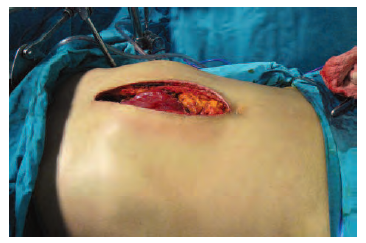
Figure 1. Supraumbilical midline incision.
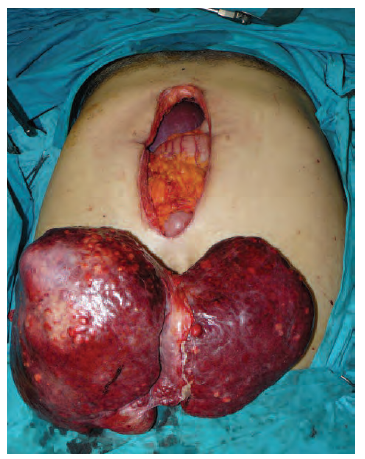
Figure 2. Excised and newly implanted liver with incision presentation.
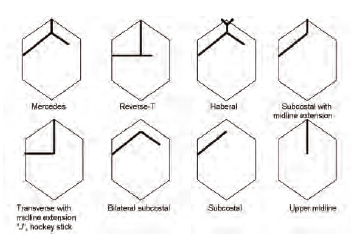
Figure 3. Incisions used in liver transplantation