Volume: 8 Issue: 2 June 2010
FULL TEXT
Seroprevalence of HTLV-1 Among Kidney Graft Recipients: A Single-Center Study
Background: Renal transplant recipients are susceptible to viral infections because of their immunocompromised background. HTLV-1 is a retrovirus that leads to adult T-cell leukemia/lymphoma or myelopathies. This study aimed to evaluate HTLV-1 antibodies among renal transplant recipients in Urmia, Iran.
Materials and Methods: Serum samples of 91 renal transplant recipients from Urmia, Iran, were examined serologically for antibodies against HTLV type 1 using an enzyme-linked immunosorbent assay.
Results: Mean age was 37.26 ± 14.22 years old. Only 1 patient had a positive anti-HTLV-1 enzyme-linked immunosorbent assay test, which was confirmed by Western blot. The HTLV-1–positive case did not have HTLV-associated clinical manifestation. This patient was a 45-year-old man, with no history of blood transfusion, but he did have a history of hemodialysis before transplant.
Conclusions: The frequency of HTLV-1 among renal transplant recipients of our region in the northwest of Iran was not so high, and it is similar to the HTLV-1 seroprevalence among hemodialysis patients. Still, it is more frequent among healthy blood donors as representative of the general population in our region.
Key words : Human T lymphocyte virus type 1, Renal transplant, ELISA
Introduction
Human T-cell lymphotropic virus 1 (HTLV-1) is a retrovirus, which causes adult T-cell leukemia-lymphoma, and HTLV-associated neuropathies (1). The Middle East is mentioned as 1 of endemic regions for HTLV-1 in the world (2), but HTLV infection has a different situation through Iran. On 1 hand, Great Khorasan in northeast Iran is reported as being an endemic region for HTLV, with a prevalence of 1.97 (3, 4); on the other hand, this prevalence in general population of Urmia in northwest Iran is estimated to be 0.34% (5). Previous studies have reported higher seroprevalence among hemodialysis patients as 1 of high-risk groups (5-7). Renal transplant recipients are at a high risk of HTLV infection, not only for their compromised immune system (due to the background renal dysfunction [or probable history of blood transfusion]), but because of receiving immunosuppressive treatment to prevent graft rejection. There are few studies available regarding the HTLV-1 seroprevalence among transplant recipients, and most of them are limited to case review of their evolution (8-10). Nakamura and associates reported the seroprevalence of HTLV as 8.3% to 9.9% in their studies (11, 12).
There are no data reporting this population from our country. This study is aimed to evaluate the seroprevalence of HTLV-1 among Iranian renal transplant recipients.
Materials and Methods
Ninety-one renal transplant recipients from the Imam-Khomeini Hospital of Urmia followed-up regularly in the transplant clinic were included randomly in our cross-sectional descriptive study. Before the study, the protocol was approved by our local institutional ethics committee, and conforms with the ethical guidelines of the 1975 Helsinki Declaration. Written, informed consent was obtained from all of the subjects.
Data were collected regarding age, sex, education, history or duration of hemodialysis, posttransplant period, cause of renal failure, immunosuppressant regimen, and previous blood transfusions.
Blood samples were obtained from the study subjects via venipuncture, and the sera were isolated by centrifuge. All the sera were frozen at -20ºC. HTLV-1 antibody assay on serum samples was done by standard enzyme-linked immunosorbent assay (ELISA; Dia Pro Diagnostic bio probe kits, Italy) in the central laboratory of blood transfusion organization. Data were analyzed by descriptive statistics, and statistical analyses were performed with SPSS software for Windows (Statistical Product and Service Solutions, version 16.0, SSPS Inc, Chicago, IL, USA).
Results
The mean age of the study population was 37.26 ± 14.22 years old. Fifty-seven were men (62.6%), and 37.4% were women; of these, 76.9% were married, and 23.1% were single.
Subjects had been under hemodialysis for 6.39 ± 4.31 years before transplant. The mean posttransplant period was 5.04 ± 4.45 years. Four of these were transplanted for a second time and had a history of graft rejection. Sixty-one had a history of a previous blood transfusion (67%).
Different causes of developing renal failure among the study population are demonstrated in Table 1. Various maintenance immunosuppressive therapies are indicated in Table 2.
Among 91 recipients, only 1 was seropositive for anti HTLV-1 antibody (IgG) (1.09%). The HTLV seropositive case was a 41-year-old married man, which was a known case of end-stage renal failure for 1 year. The seropositive case was transplanted 1 year earlier, but the interesting point is that he had no history of blood transfusion or hemodialysis in his past medical history.
The case was transplanted because of renal failure due to glomerulonephritis. Maintenance immunosuppression relied on cyclosporine, prednisolone, and mycophenolate mofetil in the HTLV-I seropositive case.
There was no clinical manifestation of symptomatic HTLV-induced adult T-cell leukemia or any associated neuropathy in seropositive case. Because the population also was screened for HSV-1, 2 in our setting, the HTLV-1 positive case, was HSV-2 seropositive, too.
There was no association among age, sex, previous history of hemodialysis, transplant, or blood transfusion, immunosuppressive regimen, and HTLV-I serologic infection (P > .05).
Discussion
There was only 1 HTLV-1 seropositive case among 91 renal transplant recipients in our study. This yields a seroprevalence of 1.09% in the mentioned population.
As stated in the Introduction, there are few articles in this regard worldwide. Nakamura and associates from Japan, which is an endemic region for HTLV-1, reported the seroprevalence of HTLV-1 as 8.3% to 9.9% in renal transplant recipients (11, 12). Another study by Linhares and associates found the HTLV seropositivity of renal transplant recipients to be 11.1% in Brazil (13). Both mentioned frequencies much higher than those achieved in our study, which can be justified by the higher HTLV seroprevalence among their population compared with ours. However, another study by Perez and associates reported only 2 HTLV-1 seropositive cases (0.89%) in a population of 224 American renal transplant recipients (14).
Khameneh and associates, in a previous study reported on HTLV-1 seropositivity of healthy blood donors (considered as general population) and hemodialysis patients, to be 0.34% and 1.05%, respectively (5). Of course, in the mentioned study, the ELISA technique was determined 3 positive cases for HTLV-1, which only 1 of them confirmed by Western blot. In the current study, we had not performed any additional confirmatory test, so we can consider the frequency of HTLV-1 to be among 0% (if the positive case may be revealed to be false-positive in a probable confirmatory test) to 1.09%. By excluding 2 HTLV-1 false-positive cases in the study of hemodialysis patients, the current study revealed no significant difference between the seroprevalence of HTLV among hemodialysis patients and renal transplant recipients. The frequency is higher in both transplant recipients and hemodialysis patients compared with healthy blood donors, as a representative of general population. Limited available data from Japan revealed that in HTLV-1 endemic areas of Japan (such as Okinawa), the seroprevalence of HTLV-1 in transplant recipients is much lower than that of hemodialysis patients (almost 9% vs 20%) (12, 15). The transmission routes of HTLV are similar to the other famous virus of this family, human immunodeficiency virus (5). Blood transfusion is the major means of HTLV transmission. So we can expect to have higher prevalence of HTLV-1 among long-term hemodialysis patients compared with transplanted patients, which do not undergo hemodialysis for a long time before transplant.
While the compromised immune system and probable history of blood transfusion during hemodialysis is present in both transplant recipients and hemodialysis patients, we can expect HTLV-1 infection to be similar in both groups. This study demonstrates that the use of immunosuppressive regimens among renal transplant recipients may not increase the seroprevalence of HTLV-1 in that population. Although there were no cases with symptoms related to HTLV infection in our study, but based on the previous studies (11), we can claim that these immunosuppressants may play their roles by altering the natural history of HTLV infection (ie, presenting a symptomatic disease), not by increasing the frequency of infection.
Some articles addressed the transmission of virus from seropositive donor to seronegative recipient via the graft organ (16). While we have no data regarding the HTLV seronegativity of the recipients before transplant, we cannot talk about the origin of infection in seropositive case.
Despite the policy of United Network for Organ Sharing (UNOS) regarding the necessity of testing and reporting HTLV-1 in all potential organ donors (17), this policy is not adhered to in Iran yet, and we have no information regarding HTLV seropositivity in organ donors.
Although there was only 1 HTLV-positive case through our population, and despite the occurrence of adult T-cell leukemia/lymphoma in only 2% to 4% of HTLV-1–infected individuals (2), because of the devastating consequences of HTLV-1 infection for immunocompromised organ recipients (1), systematic survey of HTLV antibodies in all potential organ donors may be suggested.
Limitations
Limited sample size in our study probably interfered and had an influence on our
final results, so implementing further studies with larger amounts of
participants to study-related risk factors of HTLV-1 infection is recommended.
Conclusions
We can conclude that the frequency of HTLV-1 seropositive cases is not so high among renal transplant recipients, and it is similar to the HTLV-1 seroprevalence among hemodialysis patients, but more than its frequency among healthy blood donors as a representative of the general population in our region.
References:
- González-Pérez MP, Muñoz-Juárez L, Cárdenas FC, Zarranz Imirizaldu JJ, Carranceja JC, García-Saiz A. Human T-cell leukemia virus type I infection in various recipients of transplants from the same donor. Transplantation. 2003;75(7):1006-1011.
- Siegel RS, Gartenhaus RB, Kuzel TM. Human T-cell lymphotropic-I-associated leukemia/lymphoma. Curr Treat Options Oncol. 2001;2(4):291-300.
- Farid R, Poryamoth N, Godarzi A. A familial seroepidemiological survey of HTLV-1 in Mashhad, Northeastern Iran suggested an important mother to child transmision. J AIDS Hum Retrovirol. 1995;10:209-212.
- Rezvan H, Ahmadi J, Farhadi MA. Cluster of HTLV-1 infection in North-Eastern of Iran. Transfusion Today. 1996;27:1-9.
- Khameneh ZR, Baradaran M, Sepehrvand N. Survey of the seroprovalence of HTLV I/II in hemodialysis patients and blood donors in Urmia. Saudi J Kidney Dis Transpl. 2008;19(5):838-841.
- Karimi A, Nafisi M. Seroprevalence of Human T-Cell Leukemia Virus Type-1 (HTLV-1) in High Risk Patients. J Res Health Sci. 2006;6(1):44-47.
- PourKarim MR, KhamisiPour GR, Hajiani GR. Seroepidemiologic survey of HTLV-I/II among frequent blood recipients of Bushehr province-Iran. Khoon (hematology) Res J. 2005;4:99-103.
- Nakatsuji Y, Sugai F, Watanabe S, et al. HTLV-I-associated myelopathy manifested after renal transplantation. J Neurol Sci. 2000;177(2):154-156.
- Villafruela Mateos A, Arruza Echevarría A, Martín Bazaco J, Azurmendi Arin I, Zabala Eugurrola JA, Pertusa Peña C. HTLV infection after renal transplant [in Spanish]. Arch Esp Urol. 2005;58(10):1064-1068.
- Zarranz Imirizaldu JJ, Gomez Esteban JC, Rouco Axpe I, et al. Post-transplantation HTLV-1 myelopathy in three recipients from a single donor. J Neurol Neurosurg Psychiatry. 2003;74(8):1080-1084.
- Nakamura N, Arakaki Y, Sunagawa H, et al. Influence of immunosuppression in HTLV-1-positive renal transplant recipients. Transplant Proc. 1998;30(4):1324-1326.
- Nakamura N, Tamaru S, Ohshima K, Tanaka M, Arakaki Y, Miyauchi T. Prognosis of HTLV-I-positive renal transplant recipients. Transplant Proc. 2005;37(4):1779-1782.
- Linhares MI, Eizuru Y, de Andrade GP, et al. Human T cell leukemia virus type 1 (HTLV-1) antibodies in healthy populations and renal transplanted patients in the north-east of Brazil. Microbiol Immunol. 1994;38(6):475-478.
- Perez G, Ortiz-Interian C, Bourgoignie JJ, et al. HIV-1 and HTLV-I infection in renal transplant recipients. J Acquir Immune Defic Syndr. 1990;3(1):35-40.
- Morikawa K, Kuroda M, Tofuku Y, et al. Prevalence of HTLV-1 antibodies in hemodialysis patients in Japan. Am J Kidney Dis. 1988;12(3):185-193.
- Remesar MC, del Pozo AE, Pittis MG, Mangano AM, Sen L, Briones L. Transmission of HTLV-I by kidney transplant. Transfusion. 2000;40(11):1421-1422.
- Kauffman HM, Taranto SE. Human T-cell lymphotrophic virus type-1 and organ donors. Transplantation. 2003;76(4):745-746.

Volume : 8
Issue : 2
Pages : 146 - 149
From the Departments of 1Microbiology and Immunology,
2Students’ Research
Committee, 3Epidemiology, and 4Nephrology and Transplantation at the Umria
University of Medical Sciences, Urmia, Iran.
Address reprint requests to: Nariman Sepehrvand, MD, Students' Research
Committee, Urmia University of Medical Sciences, Resalat Avenue, Djahad Square,
Urmia, West-Azerbaijan 098-441, Iran
Phone: +2937296
Fax: +2231930
E-mail: nariman256@gmail.com
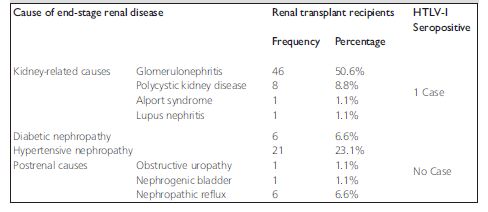
Table 1. Frequency of different causes for pretransplant end-stage renal disease, and the seropositivity of herpes simplex virus in each one.
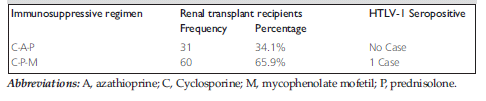
Table 2. Immunosuppressive regimen among the study population.