Volume: 8 Issue: 2 June 2010
FULL TEXT
Determinants of Coronary Artery Disease in Liver Transplant Candidates
Objectives: The potential for perioperative and late cardiovascular complications in liver transplant candidates makes careful preoperative risk assessment imperative. We sought to identify the determinants of coronary artery disease in liver transplant candidates.
Materials and Methods: Liver transplant candidates with end-stage liver disease who were more than 40 years old and undergoing coronary angiography were retrospectively included in this study. Patients with known coronary heart disease or valvular heart disease were excluded. Symptoms, coronary artery disease risk factors, blood tests, electrocardiogram, echocardiography, treadmill stress test, myocardial perfusion scintigraphy, and coronary angiography results were recorded. A multivariable logistic regression model was used to assess the independent predictors of coronary artery disease.
Results: A total of 139 patients (mean age, 52 ± 8; 110 male [79%]) were included in the analysis. Coronary angiography revealed that 13 patients (9.4%) had coronary artery disease. The frequency of diabetes mellitus, stable angina symptoms, positive smoking status, presence of 2 or more risk factors for coronary artery disease, and mean low-density lipoprotein cholesterol levels were significantly higher in patients with coronary artery disease than in patients without coronary artery disease. The electrocardiogram, echocardiography, and noninvasive stress test results were not valuable tools in liver transplant candidates for the diagnosis of coronary artery disease. In multivariate analysis, typical angina symptoms and low-density lipoproteins cholesterol levels appeared to be independent factors that were predictive of coronary artery disease.
Conclusions: Typical anginal symptoms and low-density lipoprotein cholesterol levels seem to be the best predictors of coronary artery disease in liver transplant candidates.
Key words : Transplantation, Liver disease, Perioperative risk
The increasing demand and the decreased supply of liver donors for transplant and the potential for perioperative and late cardiovascular complications make careful preoperative cardiac risk assessment imperative in candidates (1-3). Classic preoperative risk assessment tools can be misleading in end-stage liver disease. Symptoms are masked because of limited effort capacity, and risk factors such as blood pressure and cholesterol are modified owing to liver failure. Diagnostic coronary angiography has been advocated, but it has several associated risks, such as bleeding, because candidates mostly have thrombocytopenia or high prothrombin times. An optimal, noninvasive, screening method in this population has not been established. This retrospective study sought to identify the determinants of coronary artery disease in liver transplant candidates.
Materials and Methods
Study population and protocol
Liver transplant candidates with end-stage liver disease who were more than 40-years-old
and who were undergoing coronary angiography were retrospectively included in
this study. Patients with known coronary heart disease before coronary
angiography or patients with valvular heart disease undergoing coronary
angiography for coincidental coronary artery disease were excluded. The files of
2722 patients who underwent coronary angiography between January 2007 and
December 2008 were retrospectively investigated. One hundred seventy-two of
these patients were liver transplant candidates. Out of these candidates, 33
were excluded owing to a previous diagnosis of coronary artery disease or severe
valvular heart disease. Symptoms, coronary artery disease risk factors, blood
tests, electrocardiogram, echocardiography, treadmill stress test, myocardial
perfusion scintigraphy, and coronary angiography results were carefully recorded.
A total of 139 patients (mean age, 52 ± 8; 110 male [79%]) were included in the
analysis, and the baseline clinical, demographic, and laboratory features of the
patients are summarized in Table 1. The protocol of the study was approved by
the Ethics Committee of the institution before the study began, and the protocol
conformed with the ethical guidelines of the 1975 Helsinki Declaration. Written,
informed consent was obtained from all of the patients before coronary
angiography.
Statistical Analyses
Statistical analyses were performed with SPSS software for Windows (Statistical
Product and Service Solutions, version 9.0, SSPS Inc, Chicago, IL, USA).
Continuous variables are expressed as means ± standard deviation. All continuous
variables were checked with the Kolmogorov-Smirnov test to determine their
distributions. Continuous variables with normal distributions were compared
using the unpaired t test. Continuous variables with abnormal distributions were
compared using the Mann-Whitney U test. For categorical variables, the chi-square
test was used. P values less than .05 were considered to be statistically
significant.
A multivariable logistic regression model was used to assess the independent predictors of coronary artery disease. We built a 2-sided alternative test hypothesis for each statistical analysis. Results of the univariate analyses are shown in Table 2. Significant univariate variables with P values less than .05 were included in the multiple logistic regression analyses for odds ratios and 95% confidence intervals. P values less than .05 were considered to indicate statistical significance.
Results
Stable angina pectoris frequency was very low in the patient population (5 patients; 3.6%). Most of the patients had no angina (80 patients; 57.6%) or had atypical angina (54 patients; 40.2%). Coronary angiography indications in most of the patients were determined by high-risk treadmill stress test, and the results of myocardial perfusion scintigraphy (92 patients; 66.2%). The other important coronary angiography indication was the presence of atypical angina and high-risk factors (42 patients; 30.2%) such as diabetes, with additional major ischemic echocardiogram or echocardiography findings. The few patients with typical angina (5 patients; 3.6%) were directly referred to angiography. Coronary angiography revealed that 13 patients (9.4%) had coronary artery disease. Therapy decisions were percutaneous coronary intervention in 8 patients (5.3%), coronary artery bypass graft surgery in 2 patients (1.4%), and medical treatment in 3 patients (2.2%).
Baseline clinical, demographic, and laboratory features of patients with and without coronary artery disease are shown in Table 2. The frequency of diabetes mellitus, stable angina symptoms, positive smoking status, presence of 2 or more risk factors for coronary artery disease, and mean low-density lipoproteins cholesterol levels were significantly higher in patients with coronary artery disease than in patients without coronary artery disease. The echocardiogram, echocardiography, and noninvasive stress test results were not valuable tools in liver transplant candidates for diagnosing coronary artery disease (Table 2). Diabetes mellitus, smoking, low-density lipoprotein cholesterol levels, the presence of more than 2 risk factors and typical anginal symptoms were assessed with multivariate analysis. Typical angina symptoms and low-density lipoprotein cholesterol levels appeared to be independent factors that were predictive of coronary artery disease in liver transplant candidates (Table 3).
Discussion
Cardiovascular complications are one of the most-common causes of morbidity and mortality after a liver transplant for patients with end-stage liver disease (4, 5). Patients with concurrent cardiovascular disease have worse perioperative and late outcomes (6). The prevalence of coronary artery disease in patients with end-stage liver disease ranges from 2.5% to 27% and exceeds the 2.5% prevalence in a healthy population (6). In our study, the prevalence of coronary artery disease was 9.4%. No optimal, preoperative, screening guidelines are available to prevent morbidity and mortality or to predict outcomes in liver transplant candidates. Transplant surgery induces marked hemodynamic and hypercoagulability alterations that can adversely affect the perioperative outcomes of patients with coronary artery disease (4, 7, 8). In addition, the late cardiovascular-related mortality of liver transplant patients with coronary artery disease is high (5, 9, 10), as various immunosuppressive regimens adversely alter the lipid profile, blood pressure, and body weight, all of which add to the risk of atherosclerosis progression (5, 11).
Symptoms are the most-significant predictors of coronary artery disease, but poor exercise capacity in patients with advanced liver disease, make it difficult to identify cardiac disease. These patients may not experience common symptoms that can be brought on by exercise, such as chest pain or shortness of breath. Furthermore, it may be impossible to determine if some symptoms, such as shortness of breath, are caused by cardiac or liver disease. Thus, screening asymptomatic patients for underlying cardiac disease is an essential step in the evaluation of transplant candidates. In our study, the incidence of coronary artery disease was significantly higher in patients with typical angina, since 3 of the 5 patients with typical angina also had coronary artery disease. However, the majority of the patients with coronary artery disease (77%) had atypical symptoms or did not have any symptoms.
Studies show that at least 1 critical coronary artery lesion occurs in 5% to 26% of all liver transplant candidates who are asymptomatic (1, 6, 12). In our study, more than half of the patients with coronary artery disease (7 patients; 54%) were asymptomatic. Up to 50% of patients with significant coronary artery disease die preoperatively from cardiac complications (6). This rate is substantially greater than the 1-year mortality rate (10%) for all liver transplant recipients (13) and greater than the mortality rate from cardiac complications for other study populations (14, 15). A previous history or classic symptoms of coronary artery disease places patients in well-tested protocols that direct further evaluation (16, 17). The challenge, however, remains in identifying those patients who have significant coronary artery disease but are asymptomatic.
Risk factors for coronary artery disease are also prevalent in liver transplant candidates (12). Although cirrhotic patients with 0-1 risk factors have a low likelihood for coronary artery disease, the presence of 2 or more factors indicates that patients have a moderate-to-severe risk of coronary artery disease (12). In our study, patients with 2 or more risk factors also had a significantly higher incidence of coronary artery disease. Diabetes, smoking, and mean low-density lipoprotein levels—despite the fact that the average low-density lipoprotein levels were low—were the major significant risk factors for coronary artery disease.
In our study population, the sensitivity of myocardial perfusion scintigraphy was 100%. In contrast, its specificity was as low as 15% as a result of the high incidence of false positive test results because the accuracy of the test was low. The stress tests of transplant candidates, especially myocardial perfusion scintigraphy, are known to have a better negative rather than positive predictive value (18). In our study, the negative predictive value of the stress tests was very high (100%). The small number of patients undergoing coronary angiography with negative myocardial perfusion scans was a major limitation in our study for determining the diagnostic value of that test.
In conclusion, typical anginal symptoms and low-density lipoprotein cholesterol levels seem to be the best predictors of coronary artery disease in liver transplant candidates.
References:
- Carey WD, Dumot JA, Pimentel RR, et al. The prevalence of coronary artery disease in liver transplant candidates over age 50. Transplantation. 1995;59(6):859-864.
- Donovan CL, Marcovitz PA, Punch JD, et al. Two-dimensional and dobutamine stress echocardiography in the preoperative assessment of patients with end-stage liver disease prior to orthotopic liver transplantation. Transplantation. 1996;61(8):1180-1188.
- Plotkin JS, Benitez RM, Kuo PC, et al. Dobutamine stress echocardiography for preoperative cardiac risk stratification in patients undergoing orthotopic liver transplantation. Liver Transpl Surg. 1998;4(4):253-257.
- Plotkin JS, Johnson LB, Rustgi V, Kuo PC. Coronary artery disease and liver transplantation: the state of the art. Liver Transpl. 2000;6:53-56.
- Rabkin JM, de La Melena V, Orloff SL, Corless CL, Rosen HR, Olyaei AJ. Late mortality after orthotopic liver transplantation. Am J Surg. 2001;181:475-479.
- Plotkin JS, Scott VL, Pinna A, Dobsch BP, De Wolf AM, Kang Y. Morbidity and mortality in patients with coronary artery disease undergoing orthotopic liver transplantation. Liver Transpl Surg. 1996;2:426-430.
- Keeffe BG, Valantine H, Keeffe EB. Detection and treatment of coronary artery disease in liver transplant candidates. Liver Transpl. 2001;7:755-761.
- Dec GW, Kondo N, Farrell ML, Dienstag J, Cosimi AB, Semigran MJ. Cardiovascular complications following liver transplantation. Clin Transplant. 1995;9:463-471.
- Asfar S, Metrakos P, Fryer J, et al. An analysis of late deaths after liver transplantation. Transplantation.1996;61:1377-1381.
- Pruthi J, Medkiff KA, Esrason KT, et al. Analysis of causes of death in liver transplant recipients who survived more than 3 years. Liver Transpl. 2001;7:811-815.
- Romero M, Parera A, Salcedo M, et al. Cardiovascular risk factors and late cardiovascular disease in liver transplantation. Transplant Proc. 1999;31:2364-2365.
- Tiukinhoy-Laing SD, Rossi JS, Bayram M, et al. Cardiac hemodynamic and coronary angiographic characteristics of patients being evaluated for liver transplantation. Am J Cardiol. 2006;98:178-181.
- United Network for Organ Sharing Organ Procurement: Available at The U.S. Transplant Network/Scientific Registry of Transplant Recipients 2006 Annual report: Transplant data. Available at: http://www.ustransplant.org/annual_reports/current/survival_rates.htm.
- Yang H, Raymer K, Butler R, Parlow J, Roberts R. The effects of perioperative beta-blockade: results of the Metoprolol after Vascular Surgery (MaVS) study, a randomized controlled trial. Am Heart J. 2006;152:983-990.
- Devereaux PJ, Goldman L, Cook DJ, Gilbert K, Leslie K, Guyatt GH. Perioperative cardiac events in patients undergoing noncardiac surgery: a review of the magnitude of the problem, the pathophysiology of the events and methods to estimate and communicate risk. CMAJ. 2005;173:627-634.
- Mangano DT, Browner WS, Hollenberg M, London MJ, Tubau JF, Tateo IM. Association of perioperative myocardial ischemia with cardiac morbidity and mortality in men Ischemia Research Group. N Engl J Med. 1990;323:1781-1788.
- Eagle KA, Berger PB, Calkins H, et al. ACC/AHA guideline update for perioperative cardiovascular evaluation for noncardiac surgery--executive summary: a report of the American College of Cardiology/American Heart Association Task Force on Practice Guidelines (Committee to Update the 1996 Guidelines on Perioperative Cardiovascular Evaluation for Noncardiac Surgery). J Am Coll Cardiol. 2002;39:542-553.
- Zoghbi GJ, Patel AD, Ershadi RE, Heo J, Bynon JS, Iskandrian AE. Usefulness of preoperative stress perfusion imaging in predicting prognosis after liver transplantation. Am J Cardiol. 2003;92:1066-1071.

Volume : 8
Issue : 2
Pages : 142 - 145
Departments of 1Cardiology, 2Nuclear Medicine, and
3General Surgery, Baskent
University Faculty of Medicine, Ankara, Turkey
Acknowledgement: None of the authors has an association that might pose a
conflict of interest. No financial support from any organization was received.
Address reprint requests to: Send reprint requests to Alp Aydinalp, MD, Baskent
University Hospital, 1. Cadde, 10. Sokak, No: 45 Bahçelievler 06490 Ankara,
Turkey
Phone: +90-312-2126868/1037
Fax: +90-312-2238697
E-mail:
alpaydinalp@superonline.com
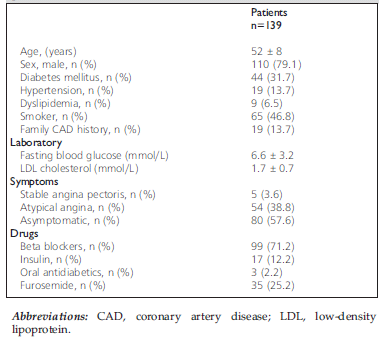
Table 1. Baseline clinical, demographics, and laboratory features of patients.
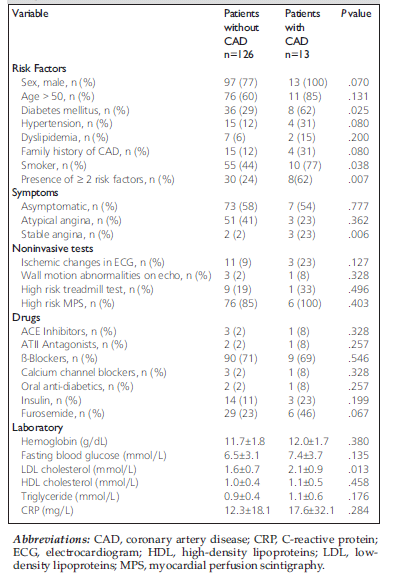
Table 2. Factors associated with coronary artery disease: Univariate analysis results.
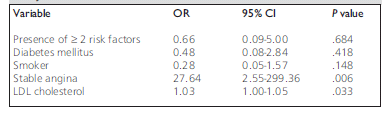
Table 3. Factors associated with coronary artery disease: Multivariate analysis.