Volume: 8 Issue: 2 June 2010
FULL TEXT
Infectious Complications in Kidney Transplant: A Lebanese Perspective
Subjects and Methods: Between 1998 and 2006, we evaluated the incidence of infections in 114 kidney transplant patients, with a 1-year follow-up. All patients received a posttransplant anti-infectious prophylaxis regimen. Induction therapy was given to 94 patients (82.4%), and maintenance immunosuppression consisted of calcineurin inhibitor (cyclosporin microemulsion or tacrolimus), together with mycophenolate mofetil and prednisone.
Results: In total, 56 patients (49.1%) developed a total of 95 infections up to 1-year after kidney transplant, including 46 in-hospital infections in 38 patients. Bacterial infections were the most frequent (97.8%), and were mainly urinary, followed by drain, central line catheter, and pulmonary infections. The most-frequent isolated bacteria were E. coli, followed by Klebsiella, Acinetobacter, and Pseudomonas. No viral infections were detected. Up to 1 year after discharge from the hospital, 49 infections occurred in 26 patients, of which 79.5% were bacterial; mainly urinary tract infections due to E. coli, in addition to 7 cases of cytomegalovirus, 1 herpes, and 2 cases of fungal infections.
Conclusions: This is the first Lebanese study that deals with posttransplant infections in kidney transplant patients and underscores the importance of close patient monitoring and follow-up. Comparison with international data shows similar patterns.
Key words : Immunosuppression, Infection
Introduction
Infection is a major concern in kidney transplant (1, 2) and is associated with increased morbidity and mortality, coupled with higher chronic graft dysfunction and graft loss (3-7). Despite progressive improvements in patient and graft survival (7, 8), transplant recipients remain at risk of contracting infection. These infections reside in the immunosuppressive medications associated with antirejection medications (6), together with the need for external devices (1), exposure to pathogens, and in the disturbance of the bacterial balance, which facilitates establishment of potentially antibiotic-resistant infections (9, 10).
The link between the need for immunosuppression and the potential for contracting infection necessitates development of preventive strategies, which depend on familiarity with the site and timing of posttransplant infections (10, 11). Infections in the high-risk kidney transplant recipient are related to timing posttransplant, state of immunosuppression, and environmental exposures (6, 12, 13). While infections occurring in the first month are similar to those seen in the general surgical patient, unusual nosocomial infection outbreaks of Aspergillus, Legionella, vancomycin-resistant enterococcus, and respiratory syncytial virus have been reported (2, 14-17). Community-acquired infections, including syndromes related to chronic viral infections (cytomegalovirus, Epstein-Barr virus) are detected after the sixth month (18). Owing to prophylaxis, newer immunosuppressive regimens, the emergence of antibiotic resistance, and newer pathogens (BK polyomavirus) have altered the form and timing of some infections (19).
Here, we evaluated, retrospectively, bacterial, viral, and fungal infections up to 1 year posttransplant in 114 Lebanese kidney transplant patients between 1998 and 2006. The study clearly demonstrates changes in the pattern of infection from hospital discharge to 1 year postoperatively.
Subjects and Methods
Patients and donors. Between 1998 and 2006, 114 adult patients (89 men, 25 women; mean age, 42.0 ± 13.8 years) had kidney transplants at St-Georges University Hospital and Sacre-Coeur Hospital (Beirut, Lebanon). Of these, 105 were first transplants; the others had a second retransplant. Donor age (34.6 ± 9.9 years) and sex distribution (75 men, 39 women) were comparable to those of patients, and donors comprised living-related (n=37), emotionally related (n=68), and 9 from brain-dead donors; 97 patients received a kidney from an identical, and the remaining 17 received a kidney from compatible blood-group donors.
Donor-recipient HLA AB/DR matching is shown in Figure 1. Sensitized patients were defined as those who had multiple pregnancies (> 4), received multiple transfusions (> 4), were having a retransplant, and those who had a panel-reactive antibody score (anti-HLA class 1 and 2 antibodies) > 50%. According to this definition, sensitization comprised 9 retransplants, 7 multiple transfusions, 5 multiple pregnancies, 1 pretransplant panel-reactive antibody score > 50%, and 1 multiple pregnancies and transfusions. While chronic glomerulonephritis and pyelonephritis were the most-common, the cause of renal disease was not clear because of a late diagnosis in 36 patients (Table 1). The pretransplant dialysis duration ranged from 0-115 months (mean 17.9 ± 19.6 months). Twelve patients had a pre-emptive kidney transplant.
Immunosuppressive regimen. Induction therapy was instituted for 94 patients, and consisted of antithymocyte globulin (Fresenius) given as a single intraoperative bolus (6 mg/kg) to 38 patients, or as an extended protocol to 18 highly sensitized patients (6 mg/kg during surgery, followed by 4 doses of 4 mg/kg every other day), or daclizumab (1 mg/kg) given as single (n=35) or 2 (n=3) doses. Maintenance immunosuppression consisted of intravenous methylprednisolone (500 mg), given during surgery, and then tapered progressively over the next 4 weeks to 0.2 mg/kg/day prednisone. Cyclosporine microemulsion (CyA-me) was given after the transplant (5 mg/kg bid), or was delayed in case of slow graft function or delayed graft function; the dose adjusted to a C2 levels of 1700 ng/mL during the first month. Tacrolimus was given at a dosage of 0.1 mg/kg bid, and monitored for a trough level of 12-15 ng/mL during the first month. Mycophenolate mofetil was started 48 hours before kidney transplant at 1 g twice a day (in CyA-me patients) or 500 mg twice a day (in tacrolimus patients).
Diagnosis of infections. Active infections excluded kidney transplant. Urine, throat, nose, peritoneal fluid (peritoneal dialysis patients) and blood (hemodialysis catheter) cultures, together with cytomegalovirus, herpes simplex, herpes zoster, Epstein-Barr, and toxoplasmosis titers were done before transplant. In addition to serologic testing, cytomegalovirus detection by polymerase chain reaction was performed on patient’s blood and/or urine specimens, with an anatomic pathology study of tissue biopsies (when applicable). Cytomegalovirus testing was performed only with positive symptoms (cytomegalovirus disease or suspicion of cytomegalovirus syndrome), and thus was not routinely done for the asymptomatic patients. Detection of BK virus also was requested in case of occurrence of symptoms, or a rise in serum creatinine. In this case, kidney graft biopsy and urine BK-PCR tests were performed. Specific immunohistochemistry coloration was done systematically in all kidney graft biopsies. The tips of indwelling arterial and central venous catheters, and hemodialysis intravascular catheters were cultured. Bronchoscopy and bronchial lavage were performed when a pulmonary infiltrate was present and sputum samples were inadequate. Chest radiographs were taken daily until extubation, then when indicated. Intravascular catheters were assessed by the semiquantitative culture method (20). Urine was considered infected if greater than 100 000 CFU/mL were present, and infections were divided into in-hospital and out-of-hospital infections.
Perioperative antibiotic prophylaxis. Intraoperative antibiotic prophylaxis with intravenous first-generation cephalosporin (or others, in case of specific preoperative infections or drug allergies) was instituted for all patients, and continued for 48 hours after surgery. Intravenous ganciclovir was administered during hospitalization, and the dosage adjusted according to the renal status (glomerular filtration rate). Oral valacyclovir was administered for 3 months after hospital discharge, and for extended period in cytomegalovirus high-risk patients (ATG-F extended protocol, multiple acute rejection episodes needing higher dose of steroids, or cytomegalovirus-negative recipients receiving a kidney from a cytomegalovirus-positive donor). In addition, trimethoprine/sulfametoxazole was given for 1 year after the transplant for Pneumocystis carinii prophylaxis.
Statistical analyses. Statistical analyses were performed with SPSS software for Windows (Statistical Product and Service Solutions, version 13.0, SSPS Inc, Chicago, IL, USA). Data are reported as the mean ± SD or percentage of the total. Intergroup significance was determined by the t test (continuous variables) and the Fisher exact test (categorical variables). Statistical significance set at P < .05.
Results
Of the patients investigated, 56 (49.1%) developed an infection during, or up to 1 year after hospitalization, of whom 30 (53.5%) developed the infection during hospitalization, 18 (32.2%) after discharge, with the remaining 8 (14.3%) infected during and after hospitalization. In total, 95 infection episodes at a rate of 1.69 infectious episodes/patient were recorded. These comprised 46 episodes, which occurred during the hospital stay (group 1), and 49 that occurred up to 1 year later (group 2). These episodes consisted of 84 bacterial (88.4%), 8 viral (8.4%), and 3 fungal infections (3.2%).
Most infections in group 1 patients (infections occurring during the hospital stay) were bacterial (45/46; 97.8%), of which urinary tract infections were the most frequent (55.5%). This was followed by external drainage catheter (13.3%) and intravascular catheter-related infections (11.1%) (Table 2). E. coli and Klebsiella being the most-common infective organism isolated from urinary infections, while E. coli and Acinetobacter, and S. epidermidis or S. aureus infections were seen in the external drainage catheter and intravascular catheter-related infections. While statistically not significant, fewer bacterial infections (39 episodes, 79.5%) were recorded for group 2 patients (infections occurring up to 1 year posthospitalization) compared with group 1 patients; with urinary tract infections (87.1%) being the frequent site of infection (Table 2).
All 8 viral infections (7 cytomegalovirus, and 1 herpes) occurred after patients’ discharge (group 2). In addition to the 7 cytomegalovirus infections (87.5%), there was 1 case of oral herpes, which occurred on day 210 after kidney transplant, which responded well to acyclovir treatment. All cytomegalovirus infections were diagnosed by positive cytomegalovirus-PCR testing or tissue biopsy, and in general, all patients responded well to intravenous ganciclovir for 2 weeks, followed by oral ganciclovir for a 3-month period. There were 3 cases of fungal infections: 1 case (esophageal mycotic infection) diagnosed in group 1, and 2 cases (ungueal candidiasis) seen in group 2 patients. All fungal infection cases were treated with oral fluconazole.
Acute rejection episodes occurred in 30 patients (26.3%) between day 2 and day 11 after kidney transplant. All acute rejection cases responded well to treatment. These included 9 cases (30%) of steroid-resistant acute rejection, which required ATG-F therapy.
Excellent actuarial 1-year patient and graft survival rates were obtained. While the patient’s hospital stay duration was longer in the infection than in the noninfection group (14 ± 7 vs 11.9 ± 3.5 days), the rates of slow graft function (5.2% vs 7.1%) and delayed graft function (5.2% vs 8.9%) were comparable between the 2 groups (Table 3). Slow graft function cases comprised 2 cases of drug-induced acute tubular necrosis, and 1 case of early acute rejection in the noninfection group, and 4 cases related to drug toxicity, and 1 case owing to acute tubular necrosis in the infection group. The delayed graft function cases consisted of 2 cases of drug-induced acute tubular necrosis, and 1 case of early acute rejection in the noninfected group, compared to 3 cases of drug-induced acute tubular necrosis, 1 case of double-J ureteric stent obstruction, and 1 case related to early acute rejection in the infected patients (day 3 after kidney transplant).
There was a steady decline in serum creatinine levels from 136.1 ± 70.7 µmol/L upon discharge, to 127.3 ± 48.6 µmol/L and 115.8 ± 42.4 µmol/L at 1 month and 12 months after discharge (Table 4). In general, serum creatinine levels were comparable between the infection and noninfection patient groups (Table 4).
Discussion
Despite progressive improvements in kidney transplant outcomes, infection remains a frequent cause of allograft failure, and patient morbidity and mortality in early and late stages after transplant (13, 21), with postoperative infections reportedly occurring in 10% to 50% of recipients depending on the definition of infection and the type of immunosuppressive regimen employed (1, 22, 23). This necessitated the need for effective treatment regimen, which controls rejection episodes, while minimizing morbidity and mortality from infection. Moreover, the definition of infection varies from the clinically significant and laboratory-proven episode, to the asymptomatic positive culture.
The immunosuppressive protocol instituted was based on the extent of immunosensitization, with extended ATG-F given to highly sensitized but not immunologically low-risk patients, and in posttransplant slow graft function or delayed graft function (to minimize toxicity of calcineurin inhibitors). This translated to acceptable an acute rejection rate (26.3.%), and the steroid-resistant acute rejection needing ATG-F as rescue therapy (30%), in a population where 20% of patients are highly sensitized.
Renal transplant patients are susceptible to infection, partly for the immunosuppressive treatment they receive, and also for uremia, anemia, and coagulation defects with delayed wound healing (24, 25). In addition, vascular and urologic manipulations (urinary catheters, intravenous cannulae, and peritoneal dialysis catheters) increase the susceptibility to contracting infections by nonspecifically lowering their immunity (26). In view of the contribution of these and other factors to the development of infectious episodes, we analyzed both immunologic and nonimmunologic contributing factors, and except for the degree of sensitization, did not identify any additional predisposing factor linked to the rate of posttransplant infections, or to the need for ATG-F as a rescue (steroid-resistant acute rejection) or hospital stay.
In this retrospective study, the rate of infectious episodes was stable during the 1-year follow-up, and was lower than that reported by others studies (3, 5, 26). Compared with other studies (4), excellent graft and patient survival were seen, which is due to effective infection control policy adopted at our institutions. This includes early removal of central venous line, drainage and urinary catheters, as suggested elsewhere (12, 13, 26). As the routine use of antibiotic prophylaxis in kidney transplant recipients is still debatable (4, 27), coupled with the possibility of emergence of antibiotic-resistant infections (1, 9), together with patient’s factors (primary kidney disease and immunosuppression protocol) (4, 17), care was exercised in administering antibiotic therapy, unless justified by development of clear signs and symptoms of infection. Insofar as minor infections have the potential to progress to major invasive sepsis in high-risk patients, this supports the need for detailed diagnosis and monitoring of infection, before precipitation of morbidity and mortality.
Despite close monitoring and progressive reduction of the dosage of immunosuppressive medication, episodes that are more infectious were noted to occur outside than inside the hospital (51.5% vs 48.5%), of which cytomegalovirus infections were the most prominent. Most cytomegalovirus infections occurred 3 to 4 months after cytomegalovirus prophylaxis, and did not compromise graft or patient survival, and generally responded well to ganciclovir therapy. This was in agreement with a recent Turkish study documenting increased cytomegalovirus infection following hospital discharge (17).
Insofar as cytomegalovirus testing was done only on symptomatic patients, and hence may have underestimated the number of infected patients, it is likely that this number would increase if routine tests were also adopted for asymptomatic patients, as shown elsewhere (28). While urinary tract infections remain the most-common type of bacterial infection contracted by kidney transplant recipients (1, 12), the relatively high rate of urinary infections seen here (62%) and elsewhere recommends adopting effective preventive measures, including using closed-bladder drainage, with less manipulation and its early removal (13), as well as regular urine analysis and culture to detect urinary infections, which are frequent but often asymptomatic (1, 12).
The incidence of (bacterial and viral) infectious complications remains high, and a major cause of morbidity and mortality in kidney transplant recipients. However, they may be controlled by adoption of strict infection control measures, appropriate use of prophylactic antibiotic therapy, careful monitoring for allograft function, and routine, but sensitive, laboratory monitoring.
References:
- Säemann M, Hörl WH. Urinary tract infection in renal transplant recipients. Eur J Clin Invest. 2008;38(suppl 2):58-65.
- Weikert BC, Blumberg EA. Viral infection after renal transplantation: surveillance and management. Clin J Am Soc Nephrol. 2008;3(suppl 2):S76-S86.
- Tanphaichitr NT, Brennan DC. Infectious complications in renal transplant recipients. Adv Ren Replace Ther. 2000;7(2):131-146.
- Valera B, Gentil MA, Cabello V, Fijo J, Cordero E, Cisneros JM. Epidemiology of urinary infections in renal transplant recipients. Transplant Proc. 2006;38(8):2414-2415.
- Schmidt A, Oberbauer R. Bacterial and fungal infections after kidney transplantation. Curr Opin Urol. 1999;9(1):45-49.
- Padiyar A, Akoum FH, Hricik DE. Management of the kidney transplant recipient. Prim Care. 2008;35(3):433-450.
- Patel R, Paya CV. Infection in solid organ transplant recipients. Clin Microbiol Rev. 1997;10(1):86-124.
- Hariharan S, Johnson CP, Bresnahan BA, Taranto SE, McIntosh MJ, Stablein D. Improved graft survival after renal transplantation in the United States, 1988 to 1996. N Engl J Med. 2000;342(9):605-612.
- Moreno A, Cervera C, Gavaldá J, et al. Bloodstream infections among transplant recipients: results of a nationwide surveillance in Spain. Am J Transplant. 2007;7(11):2579-2586.
- Rubin RH. Infection in the organ transplant recipient. In: Rubin RH, Young LS, eds. Clinical Approach to Infection in the Compromised Host. 4th ed. New York, NY: Kluwer Academic/Plenum Publishers; 2002:chap 17.
- Mattner F, Fischer S, Weissbrodt H, et al. Post-operative nosocomial infections after lung and heart transplantation. J Heart Lung Transplant. 2007;26(3):241-249.
- de Souza RM, Olsburgh J. Urinary tract infection in the renal transplant patient. Nat Clin Pract Nephrol. 2008;4(5):252-264..
- Karam G, Maillet F, Braud G, et al. Surgical complications in kidney transplantation. Ann Urol (Paris). 2007;41(6):261-275.
- Keven K, Sengul S, Memikoglu O, et al. Fatal outcome of disseminated invasive aspergillosis in kidney allograft recipients. Med Mycol. 2008;46(7):713-737.
- Knirsch CA, Jakob K, Schoonmaker D, et al. An outbreak of Legionella micdadei pneumonia in transplant patients: evaluation, molecular epidemiology, and control. Am J Med. 2000;108(4):290-295.
- López-Medrano F, Aguado JM, Lizasoain M, et al. Clinical implications of respiratory virus infections in solid organ transplant recipients: a prospective study. Transplantation. 2007;84(7):851-856.
- Cavdar C, Celtik A, Saglam F, et al. Cytomegalovirus disease in renal transplant recipients: a single-center experience. Ren Fail. 2008;30(5):503-506.
- Ferraresso M, Berardinelli L. Nosocomial infection in kidney transplant recipients: a retrospective analysis of a single-center experience. Transplant Proc. 2005;37(6):2495-2496.
- Hirsch HH, Brennan DC, Drachenberg CB, et al. Polyomavirus-associated nephropathy in renal transplantation: interdisciplinary analyses and recommendations. Transplantation. 2005;79(10):1277-1286.
- Maki DG, Weise CE, Sarafin HW. A semi-quantitative culture method for identifying intravenous-catheter-related infection. N Engl J Med. 1977;296(23):1305-1309.
- Fishman JA, Rubin RH. Infection in organ-transplant recipients. N Engl J Med. 1998;338(24):1741-1751.
- Alangaden GJ, Thyagarajan R, Gruber SA, et al. Infectious complications after kidney transplantation: current epidemiology and associated risk factors. Clin Transplant. 2006;20(4):401-409.
- Gueco IP, Evans DB, Calne RY. Prolonged survival after renal transplantation: a study of 54 patients who lived for 10 years after operation with functioning allografts. Transplant Proc. 1985;17:108-109.
- Martins C, Pecoits-Filho R, Riella MC. Nutrition for the post-renal transplant recipients. Transplant Proc. 2004;36(6):1650-1654.
- Mehrabi A, Fonouni H, Wente M, et al. Wound complications following kidney and liver transplantation. Clin Transplant. 2006;20(suppl 17):97-110.
- Maraha B, Bonten H, van Hooff H, Fiolet H, Buiting AG, Stobberingh EE. Infectious complications and antibiotic use in renal transplant recipients during a 1-year follow-up. Clin Microbiol Infect. 2001;7(11):619-625.
- Melchor JL, Gracida C. Prophylactic antibiotics in renal transplantation. Transplant Proc. 1996;28(6):3305.
- Aquino VH, Figueiredo LT. Cytomegalovirus infection in renal transplant recipients diagnosed by nested-PCR. Braz J Med Biol Res. 2001;34(1):93-101.

Volume : 8
Issue : 2
Pages : 136 - 141
From the 1Transplant unit, Sacre-Coeur Hospital, Beirut;
2Transplant unit, St-Georges
University Hospital, Beirut; 3Faculty of Medicine, University of Balamand,
Beirut, Lebanon; and the 4Department of Medical Biochemistry, Arabian Gulf
University, Manama, Bahrain.
Address reprint requests to: Wassim Y Almawi, PhD, Department of Medical
Biochemistry, College of Medicine and Medical Sciences, Arabian Gulf University,
P. O. Box 22979. Manama, Bahrain.
Phone: +973-39717118
Fax: +973-17271090
E-mail:
wassim@agu.edu.bh
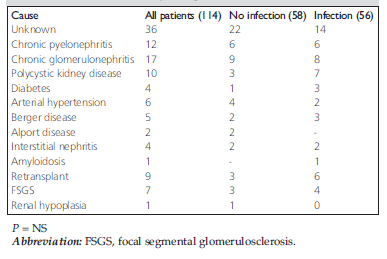
Table 1. Indications for kidney transplant.
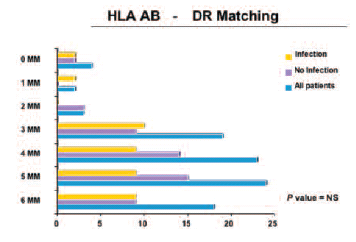
Figure 1. HLAAB-DRmatching between donors and recipients;
Abbreviations: MM,mismatching; NS, not significant.
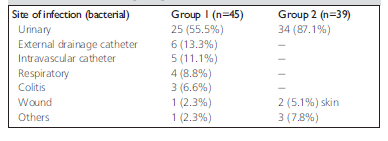
Table 2. Distribution of postoperative bacterial infections.
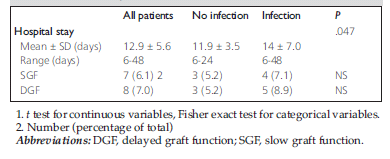
Table 3. Patient and graft outcome.
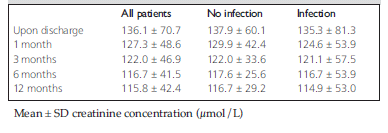
Table 4. Serum creatinine levels.