Volume: 7 Issue: 3 September 2009
FULL TEXT
Objectives: The recurrence of hepatitis C virus infection after liver transplant is common and may endanger both graft and patient survival. We investigated the frequency and outcome of and risk factors for the recurrence of that virus after living-donor liver transplant in hepatitis C virus positive recipients.
Materials and Methods: Seventy-four adult hepatitis C virus positive subjects were monitored for 36 months after living-donor liver transplant and demographic and laboratory data for the recipients and donors were evaluated. Recurrent hepatitis C virus infection was diagnosed on the basis of viral replication revealed by polymerase chain reaction after transplant, elevated levels of transaminases, and the results of liver biopsy.
Results: Hepatitis C virus recurrence was identified in 31.1% of the patients studied. Histopathologic recurrence was mild, and 91% of the subjects had a fibrosis score of ≤ F2. No recipient exhibited cirrhosis or clinical decompensation during follow-up. Recurrent hepatitis C virus infection was associated with pretransplant and posttransplant viral load and antibody positive to hepatitis B core antigen. No other risk factors (sex, donor or recipient age, pretransplant Child-Pugh or Model for End-Stage Liver Disease scores, immunosuppressive drug therapy, and treatment with pulse steroids) were significantly correlated with the frequency of hepatitis C virus recurrence, the grade of the histologic activity index, or the stage of fibrosis.
Conclusions: In living-donor liver transplant recipients, patient and graft survival rates associated with hepatitis C virus (genotype 4) related cirrhosis were comparable to those in deceased-donor liver transplant recipients reported in the literature. Recurrent infection with hepatitic C virus after living-donor liver transplant was mild. After transplant, a higher viral load and the presence of antibody to hepatitis B core antigen could be risk factors for hepatitis C virus recurrence. Long-term follow-up in a large number of patients is required.
Key words : Hepatitis C recurrence, Liver transplant, Outcome post LDLT
Liver transplant is a life-saving procedure for patients with end-stage liver disease caused by chronic hepatitis C virus infection. Unfortunately, the recurrence of that infection after transplant is almost universal. It causes graft damage in most cases (1) and is the leading cause of graft loss and the need for retransplant (2-4). Several factors (donor age, living-donor and donor-recipient matching, virologic features, acute rejection episodes, immune suppression) have been shown to influence the progression of posttransplant liver disease (5-8). Because of the limited pool of deceased donors, living-donor liver transplant has become the most feasible alternative for patients with end-stage liver disease or hepatocellular carcinoma.
In Egypt, the use of deceased organ donors is still prohibited, and as a result,
some patients seek liver transplant abroad. Thus living-donor liver transplant
is the only possible option for patients with end-stage liver disease in Egypt
(9). In Egyptian patients who have undergone living-donor liver transplant,
hepatitis C virus related end-stage liver disease is the main indication for
transplant.
In this study, we estimated the rate of recurrence of hepatitis C virus
infection, analyzed the factors that could contribute to that recurrence, and
reviewed the survival rates in a series of patients with hepatitis C virus
associated liver cirrhosis who had received a living-donor liver transplant.
Materials and Methods
We prospectively evaluated 74 patients infected with hepatitis C virus who underwent living-donor liver transplant for the treatment of end-stage cirrhosis or hepatocellular carcinoma at Dar Al-Fouad Hospital in Giza, Egypt, between August 2001 and November 2005. After we had received the approval of the scientific and ethical committee of Dar Al-Fouad Hospital to perform this study, we obtained written consent to participate from all subjects. The protocol of the study conforms with the ethical guidelines of the 1975 Helsinki Declaration. Eligibility criteria were age older than 18 years, having received a right-lobe living-donor liver transplant to treat hepatitis C virus related end-stage liver disease, survival of more than 3 months after having undergone a living-donor liver transplant, postoperative elevation of liver enzymes, evidence of hepatitis C viral replication revealed by polymerase chain reaction after liver transplant, and evidence of a histopathologic recurrence in the results of a liver biopsy. The mean follow-up was 36 months. Fifty-seven men (77% of the subjects) and 17 women (23%) (median age, 49.17 ± 7.41 years) were studied. For those patients, the Child-Pugh score was A/B/C = 2/17/55, and the median Model for End-Stage Liver Disease score was 17.45 ± 4.39 (Table 1). The study variables included patient and donor demographics, pretransplant and posttransplant viral load, hepatic injury markers, the results of synthetic liver function tests before and after living-donor liver transplant, histologic data, actual graft weight, and estimated graft volume. The laboratory data included levels of aspartate aminotransferase, alanine aminotransferase, total and direct bilirubin, serum albumin, and alkaline phosphatase, as well as prothrombin concentration, all of which were evaluated before transplant and daily after transplant during the first postsurgical month, then twice weekly until the end of the third postsurgical month, and then monthly. Hepatitis C virus RNA in serum was detected by PCR assay (Cobas Amplicor HCV test version 2.0; Roch Molecular system; lower limit of detection 50 IU/mL) before transplant, 3 months after transplant, and then whenever there is clinical indication.
A liver biopsy was performed to clarify the cause of unexplained elevations in liver enzymes that would confirm the histopathologic recurrence of hepatitis C virus infection. The biopsy was performed with ultrasonographic guidance and a conventional automatic 16-gauge Tru-cut needle. The coagulation profile was determined before the biopsy to ensure the safety of the patient.
The histopathologic diagnosis for the recurrence of hepatitis C virus infection was based on the pattern of inflammatory infiltrate and a histologic activity index (an 18-point scale). The stage of fibrosis was assessed with a 6-point scale according to the Ishak modification of the Knodell classification (4). Other possible diagnoses (particularly cellular rejection or drug-induced liver injury) were excluded.
The immunosuppressive regimen consisted of long-term therapy with tacrolimus (the dose of which was modified according to the patient’s trough serum level) and a steroid regimen that was withdrawn at the end of the third postoperative month. Tacrolimus was replaced by cyclosporine in patients who exhibited adverse effects from treatment with tacrolimus. The donor work-up included a complete laboratory evaluation, a helical computed tomographic scan, 3-dimensional reconstruction via liver volumetric and an angiogram (to determine the vascular anatomy of the donor) and magnetic resonance imaging to assess for biliary anatomy of the donor.
Calculation of intraoperative graft weight
After parenchymal transection, the actual weight of the hepatic graft was
measured, after which the hepatic grafts were flushed via the portal vein in
situ or ex situ and were preserved in a cold preservation solution. Histidine-tryptophan-ketoglutarate
solution was used as a flushing solution and a preservative.
Statistical analysis
All data were tabulated and processed with SPSS software (Statistical Product
and Service Solutions, version 12.0, SSPS Inc, Chicago, IL, USA) and Windows XP
(Microsoft Corporation, Redmond, Washington, USA). Qualitative data are
expressed in frequency and percentage and were analyzed with the chi-square test
or the Fisher exact test, when appropriate. Quantitative data were expressed as
the mean and standard deviation and were compared with the t test. The
correlation between 2 quantitative variables was performed with Pearson’s
correlation coefficient or Spearman’s rank correlation coefficient, when
appropriate. In all tests, a P value of < .05 was considered significant, and a
P value of < .01 was highly significant.
Results
Clinical hepatitis C virus recurrence
In our series, the recurrence of hepatitis C virus was universal in terms of
viremia. The clinical recurrence of hepatitis C virus infection (indicated by
evidence of viral replication shown via PCR after transplant, elevated levels of
transaminases, and necroinflammatory changes) was found in 23 (31.1%) of the 74
subjects. In all subjects, the recurrent infection was mild: of 23 patients, 21
(91%) had fibrosis score ≤ F2. The mean fibrosis score of those 23
patients was 0.55 ± 0.69, and the mean grade of inflammation was 6.12 ± 2.85.
None of the recipients exhibited allograft cirrhosis or clinical decompensation
during follow-up. No significant correlation was found between the age of the
recipients and the age of the donors; viral load, graft-recipient weight ratio,
and the grade of the histologic activity index; or the stage of fibrosis and
hepatitis C virus recurrence (Table 2).
Risk factors
Various recipient and donor risk factors for clinical hepatitis C virus
recurrence after living-donor liver transplant were studied (Table 3). There was
no significant correlation between the mean donor age (28.48 ± 6.88 years) in
patients who experienced clinical recurrent hepatitis C virus infection after
transplant and the mean donor age (27.78 ± 5.41 years) in patients who had no
such recurrence (P = .48). There was also no correlation between recipient age
(49.26 ± 5.6 years) in patients who experienced a clinical recurrent hepatitis C
virus infection after transplant and the mean recipient age (49.2 ± 8.0 years)
in patients who had no such recurrence (P = .85). There was no significant
correlation between the pretransplant hepatitis C viral load and posttransplant
clinical recurrence (P ≥ .15). The posttransplant viral load in patients
with a recurrent infection was significantly higher than that in patients with
no such recurrence (P = .03) (Table 4). The posttransplant viral load was
significantly higher than the pretransplant load (P = .01 and P = .02, respectively) in all patients studied, regardless of hepatitis C virus
recurrence.
The standard immunosuppressive protocol (Table 5) used in our subjects was tacrolimus (however, cyclosporine was used in patients who experienced adverse effects from treatment with tacrolimus) and a small dose of steroid. In the 74 recipients studied, tacrolimus was used in 50 and cyclosporine was used in 24. Neither of those agents was superior to the other in immunosuppressive effect, and there was no significant correlation between the administration of pulse steroid therapy and the development of clinically recurrent hepatitis C virus.
In this study, we found no significant correlation between the mean estimated or
actual graft weight and the development of clinically recurrent hepatitis C
virus infection. The mean graft weight was
803 ± 142 g in patients in whom a clinically recurrent hepatitis C virus
infection developed and 836 ± 167 g in patients who did not experience such an
infection (P = .41). When we correlated the mean graft-recipient weight ratio of
< 1% or > 1% and the development of clinically recurrent hepatitis C virus, we
found no significant correlation (P = .42) (Table 3).
The test results for antibody to hepatitis B core antigen (total) were positive in 21 of 54 recipients in whom clinically recurrent hepatitis C virus infection did not develop and in 15 of 23 recipients who exhibited a clinically recurrent hepatitis C virus infection after transplant. There was a significant association between pretransplant positive antibody to hepatitis B core antigen (total) in the recipients and the development of clinically recurrent hepatitis C virus after transplant (P = .04). We also studied the correlation between the recurrence of posttransplant clinical hepatitis C virus infection and both the pretransplant Child-Pugh classification and the Model for End-Stage Liver Disease score and found no significant correlation (P = .47 and P = .48, respectively) (Table 3).
Outcome
After 36 months, none of the recipients in whom a clinical hepatitis C virus
recurrence developed exhibited allograft cirrhosis. Twenty-one (91.3%) of 23
recipients with a recurrence of hepatitis C virus were alive at the end of the
follow-up period and demonstrated similar graft survival. None of the deceased
recipients died from complications caused by recurrent hepatitis C virus
infection.
Discussion
In our series, the survival rate for hepatitis C virus positive patients was 91.3% 3 years after liver transplant. With similar graft survival, those results were almost comparable to the reported deceased-donor liver transplant outcomes listed in the United Network for Organ Sharing database in (OPTN 1997-2004).
Progression to fibrosis after a liver transplant is an important indicator of prognosis. Stage 2 fibrosis that develops after a liver transplant in patients infected with the hepatitis C virus is considered by some authors to be a significant fibrosis (10), but other investigators view the development of cirrhosis in such patients as a sign of severe recurrent infection (11). In our series, none of the recipients who experienced a clinical hepatitis C virus recurrence demonstrated allograft cirrhosis, and only 2 (9%) of 23 patients exhibited a fibrosis score of > F2 (mean fibrosis score, 0.6).
Several risk factors associated with posttransplant hepatitis C virus recurrence have been described in the literature (12, 13). In our study, pretransplant risk factors such as Child-Pugh and Model for End-Stage Liver Disease scores were not significantly associated with hepatitis C virus recurrence. Investigators at Baylor University have shown a decline in outcomes for hepatitis C virus recipients with a Model for End-Stage Liver Disease score of 25 or higher (14); however, in our experience, it is uncommon to proceed with a living-donor liver transplant for patients who have a Model for End-Stage Liver Disease score higher than 25.
Donor and recipient sex and age were not correlated with disease recurrence in our study. However, in other studies older recipient and donor age was associated with an increased incidence of disease recurrence, perhaps because older patients are less able to mount an effective immune response against viral recurrence (15). Prior exposure to hepatitis B virus in patients with hepatitis C virus related chronic liver disease was associated with a higher incidence of disease and more fibrosis (16). In our study, pretransplant positive antibody to hepatitis B core antigen (total) in the recipients was significantly associated with hepatitis C virus recurrence, despite the absence of serum hepatitis B virus deoxyribonucleic acid in the recipients.
Higher pretransplant and posttransplant viral loads are likely to be associated with more severe recurrences of hepatitis C virus infection (17). In our study, although the pretransplant viral load was more than 1 million IU/mL in patients with hepatitis C virus recurrence (a level higher than that in patients with no recurrence of infection), the pretransplant viral load could not be considered an independent factor for hepatitis C virus recurrence. In a study by Terrault and Berenguer, however, the pretransplant viral load was an independent factor in the progression of fibrosis, and the 5-year survival of hepatitis C virus transplant recipients was lower in patients with a viral load higher than 1 million mEq/mL (18). In our study, the posttransplant viral load was significantly higher in patients with hepatitis C virus recurrence than in those with no recurrence, particularly during the first 6 months after liver transplant (perhaps because of extensive immunosuppressive therapy during that period). The issue of whether early or late virologic events are more relevant to disease outcome remains controversial. Some authors have suggested that higher levels of viremia in the early months after liver transplant accelerate the progression of liver disease (19, 20), and others have demonstrated a significant correlation between liver fibrosis and higher levels of viremia during follow-up (21, 22).
Another (smaller) study of 38 patients performed by our team showed a significant correlation between estimated and actual graft volume and clinical hepatitis C virus recurrence; this indicated that the smaller the graft volume, the greater the possibility of posttransplant clinical hepatitis C virus recurrence (23). However, our current investigation failed to support that finding in a larger number of patients.
Immunosuppression is considered a main factor in the severity of recurrent hepatitis C virus infection (20) because of its effect on viral replication and its suppression of systemic immune responses, both of which can lead to accelerated hepatocellular damage and fibrosis. However, in our study, the regimen, the level of immunosuppression, and the use of pulse steroid therapy were not associated with hepatitis C virus recurrence. The possible explanation for that finding is that steroids were administered to the study subjects for only 3 months, and monotherapy is the standard immunosuppressive regimen in our center. Cyclosporine has been shown to exert antiviral properties in vitro and to result in a significantly lower risk of recurrence of HCV (24) and less fibrosis (25). However, no compelling data suggest that there is an advantage to using either tacrolimus or cyclosporine in clinical practice (26, 27).
Because of the lack of deceased-donor liver transplants in Egypt, hepatitis C virus recurrence rates in patients who received a deceased-donor transplant as opposed to a living-donor transplant could not be compared. In previous studies of hepatitis C virus recurrence after deceased-donor liver transplant (10, 11, 28, 29), a histologically diagnosed recurrence of chronic hepatitis C virus occurred in 65% to 90% of hepatitis C virus positive deceased-donor liver transplant recipients during the first 2 years after surgery. However, there are neither standard criteria nor definitions for the recurrence of hepatitis C virus after liver transplant, significant fibrosis, and severe recurrence. According to a recent report by Takada and colleagues, the probability of a severe recurrence of hepatitis C virus infection that results in a fibrosis stage of 2 or higher was 39% at 2 years after transplant (30). A study by Garcia-Retortillo and colleagues defined severe recurrence as the development of cirrhosis or decompensation and found that the probability of severe recurrence was 45% after living-donor liver transplant and 22% after deceased-donor liver transplant (11).
In conclusion, we found that the postoperative patient and graft survival rates for hepatitis C virus (genotype 4) related cirrhosis were more or less comparable to those in deceased-donor liver transplant recipients reported in the literature. Recurrent clinical hepatitis C virus infection after living-donor liver transplant in our study was mild. A posttransplant higher viral load and pretransplant positivity for antibody to hepatitis B core antigen could be risk factors for hepatitis C virus recurrence. Long-term follow-up in a large number of patients is required, however.
References:
- Brown RS. Hepatitis C and liver transplantation. Nature. 2005;436(7053):973-978.
- Forman LM, Lewis JD, Berlin JA, Feldman HI, Lucey MR. The association between hepatitis C infection and survival after orthotopic liver transplantation. Gastroenterology. 2002;122(4):889-896.
- Berenguer M, Ferrell L, Watson J, et al. HCV-related fibrosis progression following liver transplantation: increase in recent years. J Hepatol. 2000;32(4):673-684.
- Shiffman ML, Stravitz RT, Contos MJ, et al. Histologic recurrence of chronic hepatitis C virus in patients after living donor and deceased donor liver transplantation. Liver Transpl. 2004;10(10):1248-1255.
- Wiesner R, Edwards E, Freeman R, et al. Model for end-stage liver disease (MELD) and allocation of donor livers. Gastroenterology. 2003;124(1):91-96.
- Féray C, Gigou M, Samuel D, et al. Influence of the genotypes of hepatitis C virus on the severity of recurrent liver disease after liver transplantation. Gastroenterology. 1995;108(4):1088-1096.
- Prieto M, Berenguer M, Rayón JM, et al. High incidence of allograft cirrhosis in hepatitis C virus genotype 1b infection following transplantation: relationship with rejection episodes. Hepatology. 1999;29(1):250-256.
- Berenguer M. Host and donor risk factors before and after liver transplantation that impact HCV recurrence. Liver Transpl. 2003;9(11):S44-S47.
- El-Meteini M, Fayez A, Fathy M, et al. Living related liver transplantation in Egypt: an emerging program. Transplant Proc. 2003;35(7):2783-2786.
- Gane EJ, Portmann BC, Naoumov NV, et al. Long-term outcome of hepatitis C infection after liver transplantation. N Engl J Med. 1996;334(13):815-820.
- Garcia-Retortillo M, Forns X, Llovet JM, et al. Hepatitis C recurrence is more severe after living donor compared to cadaveric liver transplantation. Hepatology. 2004;40(3):699-707.
- Berenguer M, Prieto M, San Juan F, et al. Contribution of donor age to the recent decrease in patient survival among HCV-infected liver transplant recipients. Hepatology. 2002;36(1):202-210. Erratum in: Hepatology. 2003;37(2):489.
- Berenguer M, Prieto M, Córdoba J, et al. Early development of chronic active hepatitis in recurrent hepatitis C virus infection after liver transplantation: association with treatment of rejection. J Hepatol. 1998;28(5):756-763.
- Onaca NN, Levy MF, Netto GJ, et al. Pretransplant MELD score as a predictor of outcome after liver transplantation for chronic hepatitis C. Am J Transplant. 2003;3(5):626-630.
- Cameron AM, Ghobrial RM, Hiatt JR, et al. Effect of nonviral factors on hepatitis C recurrence after liver transplantation. Ann Surg. 2006;244(4):563-571.
- Cacciola I, Pollicino T, Squadrito G, Cerenzia G, Orlando ME, Raimondo G. Occult hepatitis B virus infection in patients with chronic hepatitis C liver disease. N Engl J Med. 1999;341(1):22-26.
- Charlton M. Hepatitis C infection in liver transplantation. Am J Transplant. 2001;1(3):197-203.
- Terrault NA, Berenguer M. Treating hepatitis C infection in liver transplant recipients. Liver Transpl. 2006;12(8):1192-1204.
- Gretch D, Wile M, Gaur L. Donor-recipient match at the HLA-DQB locus is associated with recrudescence of chronic hepatitis following liver transplantation for end stage hepatitis C. NEJM. Volume 1996: Number 13, 334:815-821
- Charlton M. Liver biopsy, viral kinetics, and the impact of viremia on severity of hepatitis C virus recurrence. Liver Transpl. 2003;9(11):S58-S62.
- Gane EJ, Naoumov NV, Qian KP, et al. A longitudinal analysis of hepatitis C virus replication following liver transplantation. Gastroenterology. 1996;110(1):167-177.
- Papatheodoridis GV, Barton SG, Andrew D, et al. Longitudinal variation in hepatitis C virus (HCV) viraemia and early course of HCV infection after liver transplantation for HCV cirrhosis: the role of different immunosuppressive regimens. Gut. 1999;45(3):427-434.
- Yosry A, Esmat G, El-Serafy M, et al. Outcome of living donor liver transplantation for Egyptian patients with hepatitis C (genotype 4)-related cirrhosis. Transplant Proc. 2008;40(5):1481-1484.
- Herrero JI, de la Peña A, Quiroga J, et al. Risk factors for recurrence of hepatitis C after liver transplantation. Liver Transpl Surg. 1998;4(4):265-270.
- Oton E, Barcena R, Castillo M, et al. Hepatitis C virus recurrence after liver transplantation: influence of immunosuppressive regimens on viral load and liver histology. Transplant Proc. 2006;38(8):2499-2501.
- Berenguer M, Palau A, Fernandez A, et al. Efficacy, predictors of response, and potential risks associated with antiviral therapy in liver transplant recipients with recurrent hepatitis C. Liver Transpl. 2006;12(7):1067-1076.
- Hilgard P, Kahraman A, Lehmann N, et al. Cyclosporine versus tacrolimus in patients with HCV infection after liver transplantation: effects on virus replication and recurrent hepatitis. World J Gastroenterol. 2006;12(5):697-702.
- Gane E. The natural history and outcome of liver transplantation in hepatitis C virus-infected recipients. Liver Transpl. 2003;9(11):S28-S34.
- Russo MW, Galanko J, Beavers K, Fried MW, Shrestha R. Patient and graft survival in hepatitis C recipients after adult living donor liver transplantation in the United States. Liver Transpl. 2004;10(3):340-346.
- Takada Y, Haga H, Ito T, et al. Clinical outcomes of living donor liver transplantation for hepatitis C virus (HCV)-positive patients. Transplantation. 2006;81(3):350-354.

Volume : 7
Issue : 3
Pages : 157 - 163
*From the Liver Transplantation Center, Dar Al-Fouad Hospital, Giza, Egypt; the
Departments of 1Endemic Medicine and Hepatogastroenterology, and 2General
Surgery, Cairo University, Giza; 3National Liver Institute, Menofia University,
Menofia; the Departments of 4General Surgery, 5Intensive Care, and
6Anesthesia,
Ain Shams University, Cairo; the Department of 7Clinical Pathology, Cairo
University, Giza; the Department of 8Surgery, National Cancer Institute, Cairo
University; the Department of 9Pathology, Ain Shams University, Cairo; and the
Department of 10Radiology, Cairo University, Giza.
Address reprint requests to: Ayman Yosry, MD, Department of Endemic Medicine and
Hepatogastroenterology, Faculty of Medicine, Cairo University and Dar Al-Fouad
Hospital, 6 of October City, Giza, Egypt
Phone: +20114422006
Fax: +2023366605
E-mail: ayosry@tedata.net.eg or
ayosry2@yahoo.com
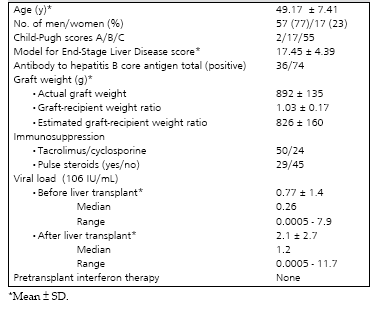
Table 1. Preoperative profile and clinical characteristics of the liver transplant recipients studied.
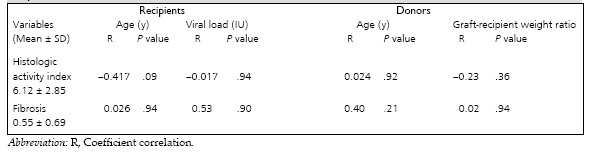
Table 2. Correlation between histologic activity index, fibrosis score, and recipient and donor factors in the study subjects.
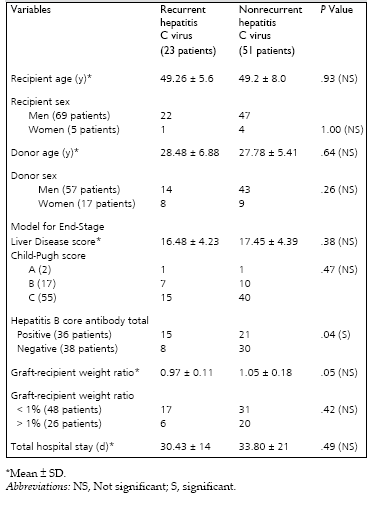
Table 3. Recipient and donor risk factors for hepatitis C virus infection recurrence.
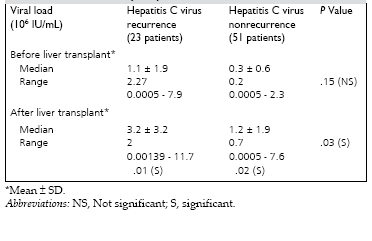
Table 4. Association between the recurrence of hepatitis C virus infection and viral load in the study subjects.
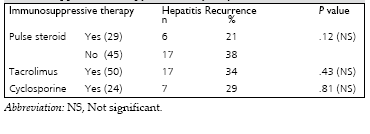
Table 5. Association of recurrent hepatitis C virus infection and immunosuppressive therapy in the study subjects.