Volume: 7 Issue: 3 September 2009
FULL TEXT
Objectives: As clinicians who treat hepatocellular carcinoma move yttrium-90 intra-arterial radio-therapy from the palliative setting to the treatment of patients with potentially curable early stage disease, more intense scrutiny of the safety of that procedure is warranted. To demonstrate the potential risks associated with this treatment, in the following case report, we describe a patient with early stage hepatocellular carcinoma who experienced severe toxicity from intra-arterial radiotherapy.
Materials and Methods: Screening studies in a 64-year-old Asian woman with a history of hepatitis C virus infection and cirrhosis identified a 3.5-cm well-differentiated hepatocellular carcinoma with no vascular invasion. After initial evaluation, the patient received treatment with intra-arterial radiotherapy. Four weeks after the conclusion of that therapy, she experienced nausea, vomiting, and weight loss. Upper endoscopy with biopsy identified antral gastritis and embolic microspheres in the submucosal layer of the gastric antrum.
Results: When she was subsequently referred for a liver transplant evaluation, her symptoms included failure to thrive and persistent weight loss. She was initially treated with feeding via a jejunostomy tube and ultimately received a liver transplant. However, 8 months after transplant she required an urgent gastrojejunostomy to bypass a progressive pyloric outlet obstruction. At the time of this writing, 1 year has elapsed since this patient received a liver transplant. No evidence of malignancy has been identified, but she remains partially dependent on tube feedings.
Conclusions: This case highlights the potential risks associated with radioactive microsphere embolization in patients with hepatocellular carcinoma. Given the paucity of data regarding the efficacy of this therapy in treating early stage disease, the use of radioactive microsphere therapy in that patient population should be prospectively studied. To minimize the risk of complications, internationally approved consensus guidelines for the delivery of yttrium-90 should be followed.
Key words : Liver cancer, Radioembolization, Treatment-related complications
Case Report
The results of screening studies in a 64-year-old female Asian patient with a history of chronic hepatitis C virus infection and cirrhosis identified a 3.5-cm hypervascular mass in the right liver (Figure 1). Image-guided biopsy indicated that the mass was a well-differentiated hepatocellular carcinoma (HCC), and no microvascular invasion was noted (American Joint Committee on Cancer clinical stage I and United Network for Organ Sharing clinical stage II). After her initial evaluation, her primary physician referred her to an interventional radiology department for intra-arterial radiotherapy. After screening with a tagged albumin study that indicated the absence of hepatopulmonary shunts and an arteriogram that showed type I hepatic arterial anatomy, the patient was treated with intra-arterial yttrium-90 microsphere embolization.
Four weeks after that treatment, she experienced nausea, vomiting, and a 2.3-kg weight loss. Upper endoscopy identified moderate antral gastritis, ulceration, and duodenitis. Endoscopic biopsies revealed multiple microspherules in the lower lamina propria, severe reactive glandular atypia, and a denuded mucosa consistent with radiation injury (Figure 2).
During the next 2 months, this patient continued to experience persistent failure to thrive, nausea, occasional emesis, and weight loss. When she was subsequently referred to our institution for liver transplant evaluation, her diet consisted of baby food and liquid nutritional supplements. She complained of frequent epigastric abdominal pain that required narcotic therapy. She had lost a total of 5.4 kg and weighed only 30.8 kg (a 15% weight loss). Repeat radiologic staging identified a 3.5-cm hypervascular HCC in segment V of the liver, no other intrahepatic masses, and no evidence of distant metastatic disease. However, a computed tomographic study of the abdomen showed an abnormal appearance of the stomach (thickened antral mucosa and a long stenotic segment of the gastric outlet, both of which are consistent with ongoing radiation gastritis) (Figure 3). To optimize her nutritional status, a feeding jejunostomy tube was placed via laparoscopy. During that procedure, the stomach was found to be edematous and hyperemic (Figure 4). Only the index solitary tumor was visible in the liver, and no intra-abdominal metastases were noted. Although the patient continued to experience symptoms of epigastric pain and gastroparesis (nausea and occasional emesis), after 8 weeks of complete nutritional support via jejunostomy tube feeding with Promote (Abbott Nutrition, Columbus, Ohio) 60 mL/h for 18 h/d, her nutritional status improved. She was subsequently listed to receive a liver transplant with a Model for End-Stage Liver Disease (MELD) score of 22 points based on regional HCC MELD exception criteria.
Twenty-two days after having been added to the liver transplant waiting list, this patient was allocated a type-matched allograft and underwent orthotopic liver transplant. The results of pathologic analysis from the explant revealed a solitary 3.4-cm HCC with extensive but incomplete tumor necrosis (Figure 5) and radiation-induced chronic cholecystitis.
Postoperatively, the patient’s allograft function was excellent. However, she continued to experience symptoms from a partial gastric outlet obstruction and was completely dependent on jejunal feedings. Eight months after having received the transplant, she experienced an acute complete gastric outlet obstruction that required an open gastrojejunostomy bypass.
At the time of this writing, 1 year has elapsed since this patient received her liver transplant. She has resumed an oral diet, is partially tube-fed, and has experienced no HCC recurrence.
Discussion
For patients with HCC, a number of local treatment modalities (ethanol injection, transarterial chemoembolization, thermal ablation, radioembolization) are available. Each of those treatments is associated with unique risks and benefits. Radioactive microsphere embolization has been proposed as a local therapy for patients with an unresectable liver tumor such as HCC (1). Although the efficacy of yttrium-90 microsphere therapy in patients with early stage HCC is unproven and has not been studied in randomized trials, some centers have successfully used that technology in selected patients as a bridge therapy before liver transplant. In addition, selected centers have reported that yttrium-90 radioembolization can downstage large tumors, thus rendering some patients candidates for potentially curative therapies such as radiofrequency ablation, resection, or transplant (2, 3).
As more experience with the use of radioactive microsphere embolization has been gained, the nontarget injection of identified or anomalous gastric arteries has been established as a known complication that causes radiation damage to the stomach (4-6). This unintended delivery of radioactive particles may be due to their direct injection into anatomic variant arteries or to the reflux of particles from hepatic arteries into gastric artery branches. During injection, careful attention to stasis and flow reversal is required to ensure the patent’s safety. To further guard against that complication, many centers advocate the use of interventional techniques such as the prophylactic coil embolization of gastric arteries before the injection of radioactive microspheres (7-10). A recent consensus panel report from the Radioembolization Brachytherapy Oncology Consortium supports that practice (11).
Varying degrees of symptomatic radiation gastritis can develop in patients who experience nontarget embolization, which, in its most severe form, causes gastric edema, gastroparesis, gastric outlet obstruction, perforation, and/or ulceration with bleeding. The published rate of gastric ulceration after yttrium-90 microsphere treatment ranges from 0% to 14% (12-14). The symptoms of radiation gastritis can be progressive (as they were in the patient described in this case report), may persist from 6 to 18 months, and are refractory to therapy with steroids and other anti-inflammatory agents. Most importantly, those complications can delay potentially curative treatment of the primary malignancy.
The case described in this article highlights the potential risks of radioactive microsphere embolization in patients with HCC. As more clinicians who treat hepatobiliary tumors apply that technology to patients with potentially curable disease, greater scrutiny of the safety of that procedure is warranted. Given the paucity of data on the efficacy of radioactive microsphere embolization in individuals with early stage HCC, the use of that therapy in patients with HCC that is potentially curable with a liver transplant should be prospectively studied. To minimize the risk for complications, internationally approved consensus guidelines regarding the technique of yttrium-90 delivery should be followed.
References:
- Goin JE, Salem R, Carr BI, et al. Treatment of unresectable hepatocellular carcinoma with intrahepatic yttrium 90 microspheres: a risk-stratification analysis. J Vasc Interv Radiol. 2005;16(2 Pt 1):195-203.
- Kim DY, Kwon DS, Salem R, Ma CK, Abouljoud MS. Successful embolization of hepatocelluar carcinoma with yttrium-90 glass microspheres prior to liver transplantation. J Gastrointest Surg. 2006;10(3):413-416.
- Kulik LM, Atassi B, van Holsbeeck L, et al. Yttrium-90 microspheres (TheraSphere) treatment of unresectable hepatocellular carcinoma: downstaging to resection, RFA and bridge to transplantation. J Surg Oncol. 2006;94(7):572-586.
- Murthy R, Brown DB, Salem R, et al. Gastrointestinal complications associated with hepatic arterial Yttrium-90 microsphere therapy. J Vasc Interv Radiol. 2007;18(4):553-561; quiz 562.
- Yip D, Allen R, Ashton C, Jain S. Radiation-induced ulceration of the stomach secondary to hepatic embolization with radioactive yttrium microspheres in the treatment of metastatic colon cancer. J Gastroenterol Hepatol. 2004;19(3):347-349.
- Ogawa F, Mino-Kenudson M, Shimizu M, Ligato S, Lauwers GY. Gastroduodenitis associated with yttrium 90-microsphere selective internal radiation: an iatrogenic complication in need of recognition. Arch Pathol Lab Med. 2008;132(11):1734-1738.
- Rhee TK, Omary RA, Gates V, et al. The effect of catheter-directed CT angiography on yttrium-90 radioembolization treatment of hepatocellular carcinoma. J Vasc Interv Radiol. 2005;16(8):1085-1091.
- Salem R, Thurston KG. Radioembolization with 90Yttrium microspheres: a state-of-the-art brachytherapy treatment for primary and secondary liver malignancies. Part 1: Technical and methodologic considerations. J Vasc Interv Radiol. 2006;17(8):1251-1278. Erratum in: J Vasc Interv Radiol. 2006;17(10):1594.
- Salem R, Thurston KG. Radioembolization with 90yttrium microspheres: a state-of-the-art brachytherapy treatment for primary and secondary liver malignancies. Part 2: special topics. J Vasc Interv Radiol. 2006;17(9):1425-1439.
- Salem R, Thurston KG. Radioembolization with yttrium-90 microspheres: a state-of-the-art brachytherapy treatment for primary and secondary liver malignancies: part 3: comprehensive literature review and future direction. J Vasc Interv Radiol. 2006;17(10):1571-1593.
- Kennedy A, Nag S, Salem R, et al. Recommendations for radioembolization of hepatic malignancies using yttrium-90 microsphere brachytherapy: a consensus panel report from the radioembolization brachytherapy oncology consortium. Int J Radiat Oncol Biol Phys. 2007;68(1):13-23.
- Goin JE, Salem R, Carr BI, et al. Treatment of unresectable hepatocellular carcinoma with intrahepatic yttrium 90 microspheres: factors associated with liver toxicities. J Vasc Interv Radiol. 2005;16(2 Pt 1):205-213.
- Dancey JE, Shepherd FA, Paul K, et al. Treatment of nonresectable hepatocellular carcinoma with intrahepatic 90Y-microspheres. J Nucl Med. 2000;41(10):1673-1681.
- Geschwind JF, Salem R, Carr BI, et al. Yttrium-90 microspheres for the treatment of hepatocellular carcinoma. Gastroenterology. 2004;127(5 suppl 1):S194-S205.

Volume : 7
Issue : 3
Pages : 141 - 144
From the
1Department of Surgery, The Methodist Hospital, Houston,
Texas, USA; and the
2Departments of Surgery and 3Pathology, St. Luke’s Episcopal
Hospital, Houston, Texas, USA
Address reprint requests to: Thomas A. Aloia, MD, The Methodist Hospital
Department of Surgery, Division of Transplantation, 6550 Fannin Street, Suite
1661A, Houston, TX 77030
Phone: +1 713-441-6101
Fax: +1 713-790-6470
E-mail: taaloia@tmhs.org
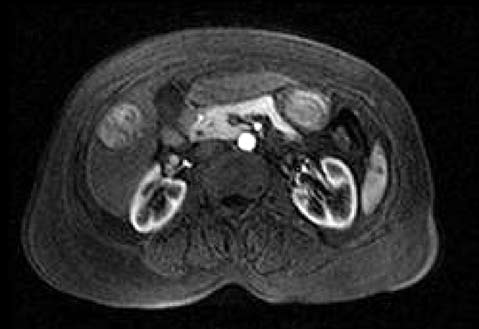
Figure 1. Contrast magnetic resonance image demonstrating a 3.5-cm hypervascular hepatocellular carcinoma (arrow) in Couinaud segment V.
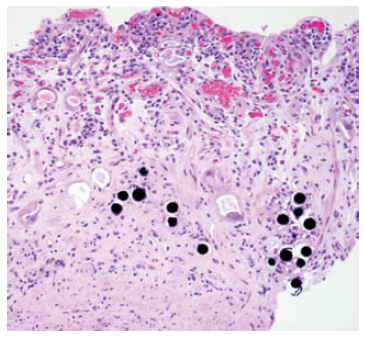
Figure 2. Digital photomicrograph of an endoscopic antral gastric ulcer biopsy. Note the multiple microspheres (dark dots) in the lower lamina propria. The observed abnormalities of severe atypia in the reactive gland between the 2 clusters of microspheres and the overlying denuded mucosa are radiation-induced injuries (hematoxylin-eosin, original magnification ×100).
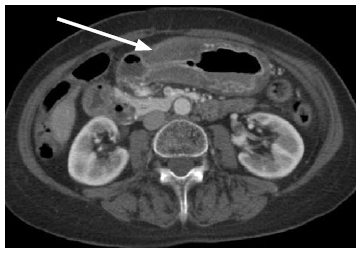
Figure 3. Postradioembolization contrasted computed tomographic image demonstrating severe thickening and edema of the gastric antrum and pyloric region (arrow).
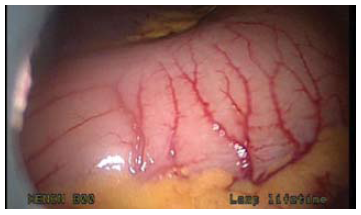
Figure 4. Laparoscopic digital photograph of the gastric antrum in a patient with nontarget embolization of yttrium-90 microspheres. Note the external appearance of radiation gastritis.
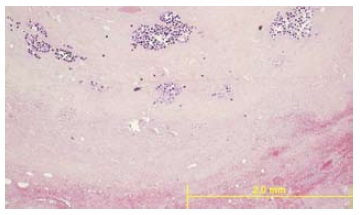
Figure 5. Digital photomicrograph of a liver explant. Necrotic hepatocellular carcinoma surrounds embolized yttrium-90 microspheres (hematoxylin-eosin, original magnification ×100).