Volume: 6 Issue: 4 December 2008
FULL TEXT
Background: Wilson disease is a disorder of copper metabolism characterized by copper overload. A mutation in the ATP7B gene causes dysfunction of ATP7B protein and a reduction in copper excretion into the bile in hepatocytes. Excess copper accumulation leads to liver injury. D-penicillamine primarily can inhibit fibrogenesis and prevent the appearance of scar lesions in the liver. We studied this phenomenon in our patients.
Materials and Methods: Pathology slides from the explanted livers of 26 patients diagnosed as having Wilson disease with hepatoneurologic manifestations between 2000 and 2008 who had undergone a liver transplant were investigated retrospectively. Patients were divided into 2 groups according to their history of D-penicillamine use before transplant. The degree of fibrosis and inflammation were classified as mild (1), moderate (2), and severe (3), and were reviewed by an impartial hepatopathologist.
Results: Of 26 patients (20 male, 6 female) who had Wilson disease with a mean age of 17.6 ± 8.6 years, 69% (18/26) had a history of D-penicillamine use before liver transplant from 6 months to 9 years (mean, 3.4 ± 2.7 years). In the D-penicillamine group, 14 patients (77%) had grade 1 fibrosis. Grade 2 and 3 fibrosis was seen in 5.6% and 16% of patients, respectively. In D-penicillamine group, inflammation was grade 3 in 44% (8/18), grade 2 in 44% (8/18), and grade 1 in 11% of the patients (2/18). In the non–D-penicillamine group (8 patients), grades of fibrosis were grade 3 (62%), grade 2 (25%), and grade 1 (12%); 87% of the patients had grade 2 and 3 inflammation. The degree of fibrosis was significantly lower in the D-penicillamine group than it was in the non–D-penicillamine group (P < .05).
Conclusion: D-penicillamine may reduce the rate of liver fibrogenesis in patients with Wilson disease.
Key words : Wilson disease, Liver fibrosis, D-penicillamine
Introduction
Wilson disease, an autosomal recessive disorder of copper metabolism and progressive lenticular degeneration associated with liver cirrhosis, was originally described by Wilson in 1912 (1). Today, the mutation of ATP7B, the gene that encodes copper transporting of P-type ATPase on chromosome 13, has been identified as the pathogenic cause of this disease (2). Presentation in childhood may range from chronic hepatitis, acute liver failure, and may be asymptomatic; in adults it also may include neuropsychiatric symptoms (dystonia, tremor, personality change, and cognitive impairments) (3). Available treatments include chelating agents (D-penicillamine, trientine) and zinc sulfate depending on predominant manifestations (neurologic or hepatic).
In the liver, the histologic appearance of early Wilson disease includes fatty infiltration, glycogen-filled hepatocytes in the nuclei and mitochondrial abnormalities on electron microscopy. As the disease progresses, the pathologic process continues toward more severe fibrosis, parenchymal collapse, inflammatory cell infiltrates, and nodular regeneration, culminating in frank cirrhosis (4). In patients presenting with acute liver failure, liver necrosis is the predominant histologic feature (5). In this study, we aimed to compare the patients with proved Wilson disease, according to degree of liver fibrosis and history of D-penicillamine use.
Materials and Methods
Between April 2000 and May 2008, 26 patients (20 male, 6 female) with clinical, biochemical, or histologic evidence of Wilson disease or established diagnosis of Wilson disease were referred to the Shiraz Organ Transplantation Center affiliated with Shiraz University of Medical Sciences where they subsequently underwent a liver transplant. According to old charts and patients' interviews, they divided into 2 groups: those who used D-penicillamine before liver transplant (D-penicillamine group, n= 18) for at least 6 months prior to the transplant and those who did not use D-penicillamine (non–D-penicillamine group, n= 8). The duration of medical therapy ranged between 6 months to 9 years (mean, 3.4 ± 2.7 years) 500-2000 mg/day. In the non–D-penicillamine group, 3 patients (all female) presented with fulminant liver failure.
Slides from the explanted livers were reviewed by a hepatopathologist without any knowledge of the treatment. All of the patients had at least 2 slides of H&E and masson trichrome. The hematoxylin-and-eosin (H&E) slides were examined for grades of inflammation, 3 scores were given to the severity of the inflammation: mild (1), moderate (2), and severe (3). These scores correlated as grade 1, mild inflammation of the portal tract or fibrous septae, grade 3, marked inflammation with bridging necrosis and inter face activity, and moderate was in the middle.
The degree of fibrosis was studied by trichrome stain and graded according to thickness of the septa: grade 1 indicated thin, enlarged, fibrotic portal tracts, grade 2 was moderate indicating periportal or portal-portal septa but intact architecture, and grade 3 was considered severe demonstrating marked, coarse, broad, and thick fibrotic bands between the nodules with architectural distortion. Data were analysed using SPSS software (Statistical Product and Services Solutions, version 15.0, SPSS Inc, Chicago, IL, USA). The Fisher exact test also was used. Values for P less than .05 were considered statistically significant.
Results
Of the 26 patients (20 males, 6 female) with mean age of 17.6 ± 8.6 years (age range, 1-33 years), 18 patients (69%) were in the D-penicillamine group and 8 patients (31%) were in the non–D-penicillamine group. In the latter group, 3 patients (all female) presented with fulminant liver failure. Twenty-six livers were transplanted to these patients, 22 from deceased donors and 4 from living donors; 11 (42.3%) of them had a positive family history of the disease. The time lag from the appearance of the first symptoms or clinical signs to transplant was 20.2 ± 22.4 months (range, 1-96 months).
In the D-penicillamine group, 14 patients (77.8%), had grade 1 fibrosis between nodules. Grades 2 and 3 fibrosis were seen in 5.6% (1/18) and 16.7% (3/18) of patients, respectively. Inflammation was seen in various degrees in this group: mild 11% (2/18), moderate 44% (8/18), and severe 44% (8/18). In the non–D-penicillamine group, grades of fibrosis were as follows: grade 3, 62% (5/8); grade 2, 25% (2/8); and grade 1, 12% (1/8). The majority of patients in this group (n=7, 87%) had severe inflammation. These results are shown in Table 1. Only the difference regarding the degree of fibrosis between the 2 groups was statistically significant (P < .05).
Discussion
Wilson disease is an autosomal recessive disorder of copper metabolism; patients with this disease have hepatic damage that manifests as progressive hepatic cirrhosis or rapidly progressive liver failure accompanied by fibrosis (5, 6). Copper deposition in the liver can stimulate a chronic inflammatory process resulting in fibrosis. Expression of lysyl oxidase 12 is associated with collagen deposition around hepatocytes, a phenomenon that is not seen in virally induced fibrotic liver disease (5, 6). The actual age at presentation is from 5 to 40 years, and there are some reports of hepatocellular carcinoma as a complication (7). Wilson disease and primary biliary cirrhosis, as well as other fibrotic liver diseases are accompanied by formation of fibrotic lesions, that the majority of the cells within these fibrotic lesions expresses lysyl oxidase 12 (5). Copper is required for the biological activity of lysyl oxidase 12.
Copper chelators such as D-penicillamine are used to treat Wilson disease and also can inhibit lysyl oxidase 12 to inhibit liver fibrosis. However, liver regeneration requires angiogenesis, a process that is inhibited by copper chelators (8, 9). Fifty-two years after its introduction, D-penicillamine is used as the initial treatment of Wilson disease (10). D-penicillamine inhibits formation of inter- and intramolecular collagen cross-links (11, 12). The antifibrotioc effect of D-penicillamine on the liver has been studied on rats with different results. One study in 1991 showed that D-penicillamine was ineffective in rats with liver fibrosis-cirrhosis induced by CCl4. It seems that D-penicillamine can be effective only in the cirrhosis types accompanied by a considerable copper accumulation due to suppression of the toxic effects of copper (13,14). Also, Loginov, in 1990, showed that use of D-penicillamine in the early stages of their experimental study (until 4 months) reduced the process of the liver cirrhosis in rats. This fact was confirmed by the reduction of the quantity of collagen in the space of Disse and absence of fibers in the intercellular spaces near the sinusoids (15, 16).
We did not find any data about this effect on the human liver in the literature except for a case report (1). In our study, the degree of fibrosis was statistically less in patients who received D-penicillamine for various durations than in patients in the non D-penicillamine group (P < .05). Inflammatory cell infiltration did not show any difference between the 2 groups. This indicates that D-penicillamine revealed its inhibiting action on the fibrotic process without any effect on inflammation degree.
In cirrhotic patients, liver transplant is strongly recommended because of the difficulty in achieving liver function recovery. Liver transplant normalizes copper hemostasis within 6 months and usually results in sustained improvement in symptoms. Appropriate regulation of serum copper level with D-penicillamine in addition to its antifibrogenic effects could reverse or decrease the amount of liver fibrosis in patients with Wilson disease.
This study showed that a lower grade of fibrosis is seen in patients with Wilson disease who used D-penicillamine as a chelating agent. Long-term administration of such agents may delay the liver fibrosis and the need for liver transplant. However, more studies on a larger scale are required to elucidate this effect.
References:
- Wilson SAK. Progressive lenticular degeneration: a familial nervous disease associated with cirrhosis of the liver. Brain. 1912;34:295-307.
- Bull PC, Thomas GR, Rommens JM, Forbes JR, Cox DW. The Wilson disease gene is a putative copper transporting P-type ATPase similar to the Menkes gene. Nat Genet. 1993;5(4):327-337. Erratum in: Nat Genet 1994;6(2):214.
- Merle U, Schaefer M, Ferenci P, Stremmel W. Clinical presentation, diagnosis and long-term outcome of Wilson's disease: a cohort study. Gut. 2007;56(1):115-120.
- Sokol RJ, Francis PD, Gold SH, Ford DM, Lum GM, Ambruso DR. Orthotopic liver transplantation for acute fulminant Wilson disease. J Pediatr. 1985;107:549-452.
- Vadasz Z, Kessler O, Akiri G, et al. Abnormal deposition of collagen around hepatocytes in Wilson's disease is associated with hepatocyte specific expression of lysyl oxidase and lysyl oxidase like protein-2. J Hepatol. 2005;43(3):499-507
- Gitlin JD. Wilson disease. Gastroenterology. 2003;125(6):1868-1877.
- Kumagi T, Horiike N, Michitaka K, et al. Recent clinical features of Wilson's disease with hepatic presentation. J Gastroenterol. 2004;39(12):1165-1169.
- Brewer GJ. Copper control as an antiangiogenic anticancer therapy: lessons from treating Wilson's disease. Exp Biol Med (Maywood). 2001;226(7):665-673.
- Sproull M, Brechbiel M, Camphausen K. Antiangiogenic therapy through copper chelation. Expert Opin Ther Targets. 2003;7(3):405-409.
- Scheinberg IH, Jaffe ME, Sternlieb I. The use of trientine in preventing the effects of interrupting penicillamine therapy in Wilson's disease. N Engl J Med. 1987;317(4):209-213.
- Chung KY, Kang DS. Regulation of type I collagen and interstitial collagenase mRNA expression in human dermal fibroblasts by colchicine and D-penicillamine. Yonsei Med J. 1999;40(5):490-495.
- Nikeghbalian S, Atefi S, Kazemi K, Roshan N, Tanideh N, Jalaeian H. Effect of oral D-penicillamine vs. colchicine on experimentally induced peritoneal adhesions in rats. Fertil Steril. 2007;88(suppl 4):1187-1189.
- Roberts EA, Schilsky ML; Division of Gastroenterology and Nutrition, Hospital for Sick Children, Toronto, Ontario, Canada. A practice guideline on Wilson disease. Hepatology. 2003;37(6):1475-1492.
- Schaff Z, Lapis K, Szende B, et al. The effect of D-penicillamine on CCl4-induced experimental liver cirrhosis. Exp Pathol. 1991;43(1-2):111-120.
- Loginov AS, Makar'eva ED, Skobeleva TV, Tumanian MA. Effects of D-penicillamine on the ultrastructure of hepatocytes and state of the base substance in the liver of rats with experimental cirrhosis [in Russian]. Biull Eksp Biol Med. 1990;109(1):85-86.
- Skobeleva TV. The effect of D-penicillamine on the metabolism of the basic substance of the connective tissue and the indices of the liver parenchyma in experimental cirrhosis in rats [in Russian]. Eksp Klin Farmakol. 1995;58(1):54-57.

Volume : 6
Issue : 4
Pages : 261 - 263
From the Shiraz Organ Transplantation Center, Nemazee Hospital, Shiraz University of Medical Sciences, Shiraz, Iran
Address reprint requests to: Saman Nikeghbalian, MD, Assistant Professor of Surgery, Nemazee Hospital, Shiraz University of Medical Sciences, Shiraz, 71937-11351, Iran
Phone: +98 711 626 1775
Fax: +98 711 647 4298
E-mail: dehghanism@sums.ac.ir
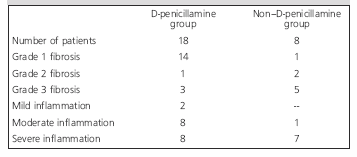
Table 1. Grade of fibrosis and inflammation in patients with Wilson disease