Volume: 6 Issue: 2 June 2008
FULL TEXT
Objectives: We sought to compare the antigenemia assay and in-house semiquantitative polymerase chain reaction to monitor human cytomegalovirus infection after transplant in hematopoietic cell transplant recipients.
Materials and Methods: A pp65 antigen test for polymorphonuclear leukocytes and a semiquantitative polymerase chain reaction for whole blood were performed for 201 samples obtained from 26 hematopoietic cell transplant recipients over a 3-month surveillance period.
Results: Fourteen episodes of antigenemia positivity were detected in 7 patients in whom human cytomegalovirus DNA loads and pp65-positive cells ranged between < 102 to 2.96 × 10⁴ copies/mL and 0-35/ 5 × 10⁴ polymorphonuclear leukocytes, respectively. A significant correlation was detected between human cytomegalovirus DNA load and the antigenemia test. A receiver operating characteristic analysis determined 5000 copies/mL of human cytomegalovirus as the threshold value for initiation of ganciclovir therapy.
Conclusions: Based on a comparison of the pp65 antigenemia assay, quantification of human cytomegalovirus DNA in whole blood can be used to guide clinical management of hematopoietic cell transplant recipients. This approach may have important advantages including superior sensitivity and efficient monitoring of preemptive therapy, allowing inclusion of kinetic criteria in clinical guidelines. Furthermore, a high human cytomegalovirus load among patients with grade II-IV acute graft-versus-host disease may indicate a high risk of human cytomegalovirus disease among hematopoietic cell transplant patients. Human cytomegalovirus reactivation must be monitored using more-sensitive assays such as real-time polymerase chain reaction.
Key words : Human cytomegalovirus, Hematopoietic cell transplantation, antigenemia, PCR, Viral load
Introduction
Human cytomegalovirus (HCMV) infection is of pathogenic importance in hematopoietic cell transplant recipients. Monitoring its reactivation and treating it preemptively or prophylactically using ganciclovir are critical for these patients. However, because of the myelotoxicity of ganciclovir and its prolongation of neutropenia, the prognosis in patients at low risk of developing HCMV disease is not necessarily improved. Identifying patients at high risk of developing HCMV disease therefore is thought to be important in the management of hematopoietic cell transplant recipients (1, 2, 3).
To date, surveillance bronchoscopy (4), surveillance blood culture (5), and an HCMV antigenemia assay (6) have been used to identify patients at high risk of developing HCMV disease; among them, the HCMV antigenemia assay is, at present, widely used to monitor hematopoietic cell transplant recipients. Using a monoclonal antibody, this method aims at detecting the pp65 antigen expressed in HCMV-infected polymorphonuclear leukocytes. Because of its high sensitivity for HCMV and quantitative nature of this assay, it is quite useful for monitoring hematopoietic cell transplant recipients (7, 8, 9).
However, this method has some problems. It is time consuming and cumbersome, and its quantitative nature is subjective. Insufficient sensitivity for HCMV diagnosis in high-risk patients, like those with acute graft-versus-host disease (GVHD), is one of the antigenemia defects. Furthermore, the antigenemia assay is only applicable in blood specimens in which the number of polymorphonuclear leukocytes is adequate. The lack of standardization among laboratories also limits the applicability and reproducibility of the results (10).
The PCR method using HCMV specific primers has been used to diagnose HCMV reactivation in the early posttransplant period. PCR is a useful diagnostic method for detecting HCMV reactivation, but it can frequently be too sensitive for clinical use. That is, when the results of HCMV PCR are positive, they do not necessarily indicate an imminent risk of HCMV disease, and the results obtained are frequently overestimates (11).
Automated commercial quantification of HCMV DNA offers a solution for monitoring HCMV disease and for assessing the efficacy of antiviral therapy. However, these techniques are expensive, which impedes their routine use in developing countries such as Iran.
In the present study, we evaluated the usefulness of a low-cost, simple-to-use HCMV semiquantitative PCR technique to determine the HCMV DNA load in whole blood from hematopoietic cell transplant patients to replace the antigenemia assay and determine a threshold value for HCMV DNA load for initiating ganciclovir treatment.
Materials and Methods
Patients and specimens
Twenty-six consecutive patients (13 men, 13 women; mean age, 22 years; age range, 3-61 years) who underwent allogeneic hematopoietic cell transplants in the Hematology-Oncology and Stem Cell Research Center of Shariati Hospital in Tehran, Iran, were enrolled in this study. All of the recipients were HCMV seropositive before the transplant. Blood specimens anticoagulated with EDTA were drawn once per week from the time of hospitalization until 100 days after the transplant from all the studied patients (total of 201 samples). Acyclovir was given to all patients until day 100, starting 5 days after the transplant. The study protocol was approved by the local ethics committee of Tehran University of Medical Sciences, Tehran, Iran, and conforms with the ethical guidelines of the 1975 Helsinki Declaration.
Extraction of HCMV DNA
DNA was extracted from 1 mL of whole blood using 500 µL PCR lysis buffer (0.05 M KCl, 0.01 M Tris HCl, 2.5 mM
MgCl2, 0.45% Nonidet P40, 0.45%, Tween 20) containing 120 µg/mL proteinase K. The mixture was incubated at 60°C for 30 minutes and then processed using a QIAamp blood mini-kit (QIAGEN Inc, Valencia, CA, USA). The DNA absorbed in the QIAamp spin column was eluted with 55 µL of Tris EDTA and then subjected to the PCR.
Amplification and detection of viral DNA
The PCR primer sequences were selected from the gB region of the HCMV genome. The forward and reverse primers were 5´-CGG TGG AGA TAC TGC TGA GGT C-3´ and 5´- CAA GGT GCT GCG TGA TAT GAA G -3´, respectively (gene bank accession number: NC-001347).
The reaction mixture of the PCR contained in a total volume of 50 µL, 75mM Tris-HCl (pH: 9), 1.5 mM MgCl2, 50 mM KCl, 20 mM of (NH4)2SO4, 50 µM of each one of the deoxynucleoside triphosphates, 20 pM of primers gB1 and gB2, and 1 µg of DNA obtained from whole blood. The reaction mixture was first incubated at 94°C for 3 minutes, followed by 40 cycles of 94°C for 30 seconds, 55°C for 30 seconds, 72°C for 30 seconds, and finally for 3 minutes at 72°C. The PCR products were subjected to electrophoresis on a 2% agarose gel, and 257 bp amplicons were visualized by ultraviolet after ethidium bromide staining.
Each PCR assay included a positive control with HCMV AD169 DNA and a negative control containing no template (only distilled water). Polymerase chain reaction for β globin gene detection was done to confirm the integrity of the extracted DNA and the lack of PCR inhibitors.
HCMV semiquantitative PCR
The PTZ57R plasmid containing the HCMV gB gene was used as the quantification standard for the semiquantitative PCR assay. For semiquantitative PCR, samples containing
101 to 106 plasmid particles were tested with clinical samples, and amplicon band densities were determined using the LabWorks Analysis Software version 3.0.02 (UVP, Inc., Upland, CA, USA). The HCMV load of the clinical specimens was determined by plotting the optical density value of the amplicon band for each specimen into a graph including samples containing
101 to 106 plasmid particles.
HCMV antigenemia assay
The HCMV antigenemia assay was done after engraftment. Detection of 1 antigen-positive cell per 5 ×
104 stained polymorphonuclear leukocytes was an indication of active HCMV infection. Patients with 5 or more antigen-positive cells per 5 ×
104 stained polymorphonuclear leukocytes had preemptive intravenous ganciclovir treatments until day 14 in the induction phase, followed by oral ganciclovir therapy until HCMV reactivation disappeared, if polymorphonuclear leukocytes were greater than
1000/mm3. This therapy was maintained until 100 days after transplant, with concomitant corticosteroid treatment if there was any GVHD.
Graft-versus-host disease prophylaxis
For prophylaxis of GVHD, the majority of patients received cyclosporine with 4 doses of methotrexate. Cyclosporine was discontinued after 6 months, if possible. Acute GVHD was diagnosed based on clinical symptoms and/or positive results from biopsy specimens taken from skin, liver, gastrointestinal tract, or oral mucosa.
Statistical analyses
Statistical analyses were performed using the Pearson product moment correlation analysis. Values for
P less than .05 were accepted as statistically significant. A receiver operating characteristic (ROC) plot analysis was done to determine a threshold value of the HCMV DNA load for initiating treatment. Because clinical practice was based on the results of a pp65 antigenemia assay, this assay was chosen to determine the optimal cutoff value for the DNA-based assay. The statistical analyses were done using SPSS software (Statistical Product and Services Solutions, version 15.0, SPSS Inc, Chicago, IL, USA).
Results
Sensitivity of the HCMV semiquantitative PCR
The sensitivity of the HCMV semiquantitative PCR using primers gB1 and gB2 was determined by testing decimal dilutions of the cloned plasmid solution in quadruplicate. Specific amplicons with 257 bp were detected until the
10-12 fold dilution, which corresponds to 102 plasmid molecules.
Patient-related findings
Of the 26 hematopoietic cell transplant recipients, 7 (26%) demonstrated some degree of HCMV antigenemia, and DNAaemia was detected in all patients after transplant. Of 201 samples that were drawn from studied patients, 14 (7%) and 151 (75%) were antigenemia and PCR positive, respectively. Of 7 patients with a pp65-positive test, 3 developed 1 episode of antigenemia positivity, and 2 of them were given intravenous ganciclovir for at least 2 weeks. The other patient was not treated because the patient had fewer than 5 pp65-positive cells. Mean antigenemia titer and HCMV DNA levels for these 3 patients were 1.2 positive cells and 2.7 ×
103 copies/mL, respectively (range, 0-25 positive cells and < 102 –1.57 ×
104 copies/mL, respectively).
In the other 4 patients in whom 11 episodes of antigenemia were detected (2-4 episodes for each patient), the mean antigenemia titer and HCMV DNA level were 4.1 positive cells and 4.43 × 10³ copies/mL, respectively (range, 0-35 positive cells and < 102 –2.96 × 10⁴ copies/mL, respectively). However, the highest levels of antigenemia titer and HCMV DNA load were measured in patient No. 23 who developed HCMV hepatitis at the third episode of HCMV reactivation (35 positive cells and 2.96 × 10⁴ copies/mL, respectively). Virologic characterization of the antigenemia positive patients is shown in Table 1.
Comparison of semiquantitative polymerase chain reaction and antigenemia
Comparison of antigenemia and HCMV DNA load for all samples tested showed a statistically significant correlation. The HCMV DNA load was plotted against the antigenemia results, and a correlation coefficient
(r) of 0.91 indicated a high correlation between HCMV DNA loads and antigenemia titer
(P < .0001). A higher correlation was seen between antigenemia results and HCMV DNA load in whole blood from antigenemia positive patients
(r = 0.95; P < .0001) (Figure 1).
Determining the threshold value of HCMV DNA load
Because the pp65 antigenemia test has been used to guide HCMV therapy in current clinical practice, it is important to establish a corresponding threshold value for the HCMV DNA assay. To define the optimal cutoff value of the HCMV DNA load to initiate treatment in patients at risk for HCMV disease, an ROC curve analysis was done using existing treatment criteria based on detection of more than 5 pp65-positive cells in the antigenemia. The optimal cutoff value of the HCMV DNA load was 5000 copies /mL (sensitivity and specificity of 100% and 93%, respectively).
Negative antigenemia results and an HCMV DNA load above the threshold value were observed in patient No. 22. This patient developed fever and neutropenia during the posttransplant period, and he died of fungemia (aspergillosis) 85 days after transplant.
Discussion
One of the most significant complications after hematopoietic cell transplant is infection with HCMV, a ubiquitous member of the β herpes family. HCMV disease causes severe morbidity and mortality in hematopoietic cell transplant recipients, and the risk varies with the patient’s prior exposure to HCMV, presence of GVHD, source of the stem cells, and immunosuppression regimen (12).
The fact that all donors and recipients in our study population were HCMV seropositive may indicate a high risk of HCMV reactivation and disease. However, pp65-positive cells were detected in 27% of patients, but only 1 patient developed HCMV disease while being monitored. The low incidence of HCMV disease in hematopoietic cell transplants like the one found in this study also has been reported by other authors (13, 14, 15) and may be indicative of successful prophylactic regimens to prevent HCMV reactivation.
The rates of HCMV DNA detection (75%) in our study are similar to those of other studies. In studies by Ziyaeyan and Ksouri, 71% and 52% of samples were positive, respectively (16, 17). In antigenemia-negative patients who had clinically recovered after antiviral therapy as well as in latently infected patients, the rate of HCMV DNA detection in peripheral blood mononuclear cells is significantly higher than is the rate of detection in polymorphonuclear leukocytes. This phenomenon causes unwanted positive PCR results and therefore, quantification of the DNA load must be considered (18).
The correlation between the amount of pp65-positive cells and HCMV DNA loads means that the relation between both the parameters is linear: The samples with high DNA copy numbers had high numbers of pp65-positive cells and vice versa. This finding is comparable with those of previous studies (11, 19). The highest HCMV DNA level and antigenemia titer were detected in patient No. 23 who developed HCMV hepatitis. The study by Ljungman and associates showed that patients with HCMV disease had higher peak viral loads than did patients who did not develop HCMV disease (3). Moreover, viral load at the onset or at peak HCMV activation has been correlated with the appearance of HCMV disease in hematopoietic cell transplant recipients (20), but our patients had too few episodes of disease to confirm this correlation.
The analytical results of the 2 assays correlated well, and we subsequently assessed the results of the clinical application. This implies that criteria to initiate treatment based on HCMV DNA values should be developed. Detection of the HCMV DNA load above the threshold value despite the antigenemia negativity in patient No. 22 who died of aspergillosis may indicate the limited value of the latter assay in monitoring HCMV infection in neutropenic patients and the increased sensitivity of PCR compared with the pp65 test. Moreover, it has been shown that HCMV reactivation is a predisposing factor for fungal infections. The probable reasons for the discrepancy between the threshold determined in our study and the cutoffs proposed by others are the source of the DNA (whole blood vs plasma), the distinct genomic regions selected for detection of HCMV (gB vs IE), and the level of antigen-positive cells by the antigenemia assay that were used as the reference standard (21, 22).
Detecting the highest mean value for pp65-positive cells and HCMV DNA load and the greater incidence of antigenemia positivity in patients with grade II-IV acute GVHD may reflect the role of acute GVHD on HCMV reactivation. It has been reported that the growth of HCMV-specific cytotoxic T lymphocytes is impaired in patients who develop acute GVHD. This may be related to the reactivation of HCMV and subsequent occurrence of HCMV-associated disease in patients with acute GVHD. A recent report suggests that the detection rate of HCMV DNA is higher in peripheral blood from patients with grade II-IV acute GVHD than it is in patients with grade-0 or -I GVHD (23).
Despite the lack of a remarkable decrease in HCMV DNA load, the rapid disappearance of pp65-positive cells after the first episode of preemptive therapy in patients with grade II-IV acute GVHD compared with patients with grade-I GVHD may indicate better monitoring of high-risk patients receiving preemptive therapy with HCMV DNA measurement. It has been suggested that if HCMV antigenemia does not develop, or remains at a low level, patients without acute GVHD are not at risk of developing HCMV disease and may be followed without commencing preemptive therapy (24).
In conclusion, quantification of HCMV DNAaemia is a useful tool for monitoring the risk of developing HCMV disease and the efficacy of the preemptive therapy in hematopoietic cell transplant recipients. However, because of the few episodes of HCMV disease in our patient population, we could not confirm the correlation between the peak level of antigenemia or DNAaemia with acute GVHD. We suggest that preemptive therapy may be delayed safely until a cutoff value is achieved to avoid treatment of self-resolving infections. Monitoring HCMV reactivation and initiating HCMV preemptive therapy must be done with care in patients with grade II-IV acute GVHD.
References:
- Meijer E, Boland GJ, Verdonck LF. Prevention of cytomegalovirus disease in recipients of allogeneic stem cell transplants. Clin Microbiol Rev. 2003;16(4):647-657.
- Stocchi R, Ward KN, Fanin R, Baccarani M, Apperley JF. Management of human cytomegalovirus infection and disease after allogeneic bone marrow transplantation. Haematologica. 1999;84(1):71-79.
- Ljungman P, Perez-Bercoff L, Jonsson J, et al. Risk factors for the development of cytomegalovirus disease after allogeneic stem cell transplantation. Haematologica. 2006;91(1):78-83.
- Schmidt GM, Horak DA, Niland JC, Duncan SR, Forman SJ, Zaia JA. A randomized, controlled trial of prophylactic ganciclovir for cytomegalovirus pulmonary infection in recipients of allogeneic bone marrow transplants; The City of Hope-Stanford-Syntex CMV Study Group. N Engl J Med. 1991;324(15):1005-1011.
- Goodrich JM, Mori M, Gleaves CA, et al. Early treatment with ganciclovir to prevent cytomegalovirus disease after allogeneic bone marrow transplantation. N Engl J Med. 1991;325(23):1601-1607.
- Boeckh M, Gooley TA, Myerson D, Cunningham T, Schoch G, Bowden RA. Cytomegalovirus pp65 antigenemia-guided early treatment with ganciclovir versus ganciclovir at engraftment after allogeneic marrow transplantation: a randomized double-blind study. Blood. 1996;88(10):4063-4071.
- Dankner WM, McCutchan JA, Richman DD, Hirata K, Spector SA. Localization of human cytomegalovirus in peripheral blood leukocytes by in situ hybridization. J Infect Dis. 1990;161(1):31-36.
- Gerna G, Zipeto D, Percivalle E, et al. Human cytomegalovirus infection of the major leukocyte subpopulations and evidence for initial viral replication in polymorphonuclear leukocytes from viremic patients. J Infect Dis. 1992;166(6):1236-1244.
- Saltzman RL, Quirk MR, Jordan MC. High levels of circulating cytomegalovirus DNA reflect visceral organ disease in viremic immunosuppressed patients other than marrow recipients. J Clin Invest. 1992;90(5):1832-1838.
- Razonable RR, Paya CV, Smith TF. Role of the laboratory in diagnosis and management of cytomegalovirus infection in hematopoietic stem cell and solid-organ transplant recipients. J Clin Microbiol. 2002;40(3):746-752.
- Machida U, Kami M, Fukui T, et al. Real-time automated PCR for early diagnosis and monitoring of cytomegalovirus infection after bone marrow transplantation. J Clin Microbiol. 2000;38(7):2536-2542.
- Cortez KJ, Fischer SH, Fahle GA, et al. Clinical trial of quantitative real-time polymerase chain reaction for detection of cytomegalovirus in peripheral blood of allogeneic hematopoietic stem-cell transplant recipients. J Infect Dis. 2003;188(7):967-972.
- Weinberg A, Schissel D, Giller R. Molecular methods for cytomegalovirus surveillance in bone marrow transplant recipients. J Clin Microbiol. 2002;40(11):4203-4206.
- Nguyen Q, Champlin R, Giralt S, et al. Late cytomegalovirus pneumonia in adult allogeneic blood and marrow transplant recipients. Clin Infect Dis. 1999;28(3):618-623.
- Reusser P, Einsele H, Lee J, et al. Randomized multicenter trial of foscarnet versus ganciclovir for preemptive therapy of cytomegalovirus infection after allogeneic stem cell transplantation. Blood. 2002;99(4):1159-1164.
- Ziyaeyan M, Sabahi F, Alborzi A, et al. Diagnosis and monitoring of human cytomegalovirus infection in bone marrow transplant recipients by quantitative competitive PCR. Exp Clin Transplant. 2006;4(1):470-474.
- Ksouri H, Eljed H, Greco A, et al. Analysis of cytomegalovirus (CMV) viremia using the pp65 antigenemia assay, the amplicor CMV test, and a semi-quantitative polymerase chain reaction test after allogeneic marrow transplantation. Transpl Infect Dis. 2007;9(1):16-21.
- Schäfer P, Tenschert W, Cremaschi L, Gutensohn K, Laufs R. Utility of major leukocyte subpopulations for monitoring secondary cytomegalovirus infections in renal-allograft recipients by PCR. J Clin Microbiol. 1998;36(4):1008-1014.
- Razonable RR, Brown RA, Wilson J, et al. The clinical use of various blood compartments for cytomegalovirus (CMV) DNA quantitation in transplant recipients with CMV disease. Transplantation. 2002;73(6):968-973.
- Emery VC, Sabin CA, Cope AV, Gor D, Hassan-Walker AF, Griffiths PD. Application of viral-load kinetics to identify patients who develop cytomegalovirus disease after transplantation. Lancet. 2000;355(9220):2032-2036.
- Kalpoe JS, Kroes AC, de Jong MD, et al. Validation of clinical application of cytomegalovirus plasma DNA load measurement and definition of treatment criteria by analysis of correlation to antigen detection. J Clin Microbiol. 2004 Apr;42(4):1498-1504. Erratum in: J Clin Microbiol. 2004;42(10):4917.
- Ikewaki J, Ohtsuka E, Satou T, et al. Real-time PCR assays based on distinct genomic regions for cytomegalovirus reactivation following hematopoietic stem cell transplantation. Bone Marrow Transplant. 2005;35(4):403-410.
- Maeda Y, Teshima T, Yamada M, et al. Monitoring of human herpesviruses after allogeneic peripheral blood stem cell transplantation and bone marrow transplantation. Br J Haematol. 1999;105(1):295-302.
- Mori T, Okamoto S, Matsuoka S, et al. Risk-adapted pre-emptive therapy for cytomegalovirus disease in patients undergoing allogeneic bone marrow transplantation. Bone Marrow Transplant. 2000;25(7):765-769.
Volume : 6
Issue : 2
Pages : 149 - 154
From the 1Microbiology Department, Faculty of Medicine, Tehran University of Medical Sciences, Tehran, Iran; 2Alborzi Clinical Microbiology Research Center, Namazi General Hospital, Shiraz University of Medical Sciences, Shiraz, Iran; 3Hematology-Oncology and Stem Cell Research Center, Shariati Hospital, Tehran University of Medical Sciences, Tehran, Iran
Acknowledgements: This research was supported by grant number 132/6503 from the Faculty of Medicine of Tehran University of Medical Sciences in Tehran, Iran. We wish to express our appreciation and gratitude to the members of the Hematology-Oncology and Stem Cell Research Center of Shariati Hospital and DAY Hospital laboratory as well as the members of the Microbiology Department of Tehran University of Medical Sciences. We would like to thank Dr. FB Hashemi for excellent technical assistance.
Address reprint requests to: Omid Pajand, MSc, Department of Microbiology, Faculty of Medicine, Tehran University of Medical Sciences, PO Box 1417613151 Tehran, Iran
Phone: +982188955810
E-mail: om24pa@yahoo.com
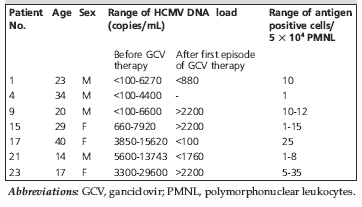
Table 1. Virologic characterization of antigenemia-positive patients.
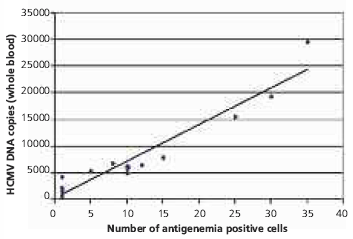
Figure 1. Correlation between antigenemia results and HCMV DNA level in antigenemia-positive samples.