Volume: 6 Issue: 2 June 2008
FULL TEXT
Objectives: Inulin clearance and radioisotope studies are the most accurate means of measuring glomerular filtration rates (GFRs). The Kidney Disease Outcomes Quality Initiative guidelines recommend estimating GFRs with the Modification of Diet in Renal Disease (MDRD) or the Cockcroft-Gault equation. We examined the accuracy of the MDRD equation and creatinine clearance based on 24-hour urine collection to predict GFRs in a group of healthy donors.
Materials and Methods: We examined the medical records of 100 kidney donors who had undergone 99mTc-diethylenetriamine-pentaacetic acid (DTPA) renal clearance and creatinine clearance measurements at the transplant outpatient clinic of Cairo University Hospital in Cairo, Egypt, between June 2002 and July 2006. GFR was predicted with the abbreviated MDRD formula. We examined significant differences, potential correlations, and agreements between GFR as predicted and as measured.
Results: The mean eGFRMDRD was 8.16% lower than the 99mTc-DTPA GFR (116.11 ± 25.44 mL/min/1.73 m2 vs 126.32 ± 24.21 mL/min/1.73 m2; difference range, –84 to +61 mL/min/1.73 m2; P = .002). Creatinine clearance was 13.14% higher than the 99mTc-DTPA GFR (142.90 ± 27.51 mL/min/1.73 m2; difference range, +65 to –60 mL/min/1.73 m2; P < .001). A significant positive correlation was observed when creatinine clearance and 99mTc-DTPA-measured GFR were compared (R=0.451; P = .000). No significant correlation was noted between eGFRMDRD and 99mTc-DTPA-measured GFRs (R=0.126; I = .211). A Bland-Altman analysis showed poor agreement between GFRMDRD and creatinine clearance on the one hand and measured GFR on the other.
Conclusions: Neither the MDRD equation nor creatinine clearance is accurate in predicting GFRs in healthy donors.
Key words : Estimation of kidney function, Prediction equation, Creatinine clearance
Introduction
An accurate estimation of the glomerular filtration rate (GFR) is essential in assessing prospective kidney donors. Inulin clearance and radioisotope studies are the most accurate means of measuring GFR, but they are cumbersome and expensive (1). The new Kidney Disease Outcomes Quality Initiative (K/DOQI) guidelines recommend estimating GFR by using the Modification of Diet in Renal Disease (MDRD) or the Cockcroft-Gaul equation (2). The MDRD equation was derived from 1628 subjects with chronic renal insufficiency enrolled in the MDRD study (3). The original MDRD formula used 6 variables (serum creatinine, albumin, urea nitrogen, sex, age, and ethnicity); a simpler equation requiring 4 variables (serum creatinine, sex, age, and ethnicity) that offered similar performance was proposed (4).
Owing to the demographically sensitive nature of the creatinine measurement, GFR prediction equations cannot always be applied to individual patient groups without validation (5). The MDRD equation has been evaluated in blacks with chronic kidney disease (6), scleroderma patients (7), patients with kidney disease and normal serum creatinine levels (8), and in 46 normal individuals and 46 individuals with type 1 diabetes without evidence of nephropathy (9).
Several studies have been done to validate the use of MDRD formulae to assess GFRs for potential kidney donors and have shown mixed results (10-13). The MDRD equation underestimated measured GFRs in Swedish and American healthy donors (10-12). In an Indian study, the MDRD equation was more precise and accurate in estimating the GFR compared with the Cockcroft-Gault formula; however, both equations had a poor correlation with the measured GFR (13).
The purpose of this study was to assess the accuracy of the modified MDRD formula and creatinine clearance (CrCl) in evaluating renal function in kidney donors with regard to the radioisotope GFR.
Materials and Methods
We reviewed the medical records of 100 healthy kidney donors who had undergone measurements of 99mTc-diethylenetriamine-pentaacetic acid (DTPA) renal clearance and CrCl as part of a routine work-up at the transplant outpatient clinic at the Cairo University Hospital in Cairo, Egypt, between June 2002 and July 2006. The patients were hydrated orally or intravenously at 10 mL/kg per hour for 30 minutes before the start of the study. 99mTc- DTPA dosed at 50 µCi/kg was injected intravenously, and blood was sampled at 120, 180, 240 minutes after the injections. Three GFR measurements were averaged and standardized for body surface area of 1.73
m2. Creatinine clearance was assessed based on serum creatinine level, 24-hour urinary creatinine, and volume and was adjusted to a body surface area of
1.73 m2 (14, 15). Age, sex, and serum creatinine levels were recorded for the study subjects to estimate the GFR using the abbreviated MDRD formula (4, 16, 17): GFRMDRD = 186 × [serum
creatinine]-1.154 × [age]-0.203 × [0.742 (if female)]. The study was performed in accordance with the ethical standards laid down in the Declaration of Helsinki Principles.
Statistical analyses
Results are expressed as means ± SD. The t test was used to assess any statistically significant difference between the GFR measured by radionuclide method on one hand and the MDRD-predicted GFR and the CrCl on the other hand. The Pearson product moment correlation analysis was used to estimate the correlation between the results of GFRMDRD, CrCL, and 99mTc-DTPA GFRs. Bias was defined by the mean prediction error (the sum differences between predicted and measured value divided by sample size). The R2 statistics were derived by simple linear regression and reflect the predictive ability of the mode (precision). Accuracy of the predicted GFR and CrCl was described from the percentage of GFR values falling within 30% and 50% of the 99mTc-DTPA GFR. Statistical analyses of the Bland-Altman analysis were used to study agreement among the different methods of assessing the GFR. The limits of agreement were given by the means ± 1.96 SD. Values for
P less than .05 were considered statistically significant. The data were analyzed using SPSS software (Statistical Product and Services Solutions, version 11.0, SPSS Inc, Chicago, IL, USA).
Results
Table 1 shows the main characteristics of the study group. There were 61 men and 39 women (mean age, 32.22 ± 7.23 years; range, 20-50 years). Body mass index ranged from 21.9 to 32.6 kg/m2, and body surface area was 1.5 to 2.4 m2. The mean eGFRMDRD was 8.16% lower than the mean 99mTc-DTPA GFR (116.11 ± 25.44 mL/min/1.73 m2 vs 126.32 ± 24.21 mL/min/1.73 m2, mean difference was –10.31 ± 4.59 mL/min/1.73 m2; range, –84 to + 61 mL/min/1.73 m2; P = .002) (Figure 1). Creatinine clearance was 13.14% higher than 99mTc-DTPA GFR (142.90 ± 27.51 mL/min 1.73 m2; mean difference, 16.60 ± 27.26 mL/min/1.73 m2; range + 65 to –60 mL/min/1.73 m2; P < .001) (Figure 1).
Table 2 (data) and Figure 2 (graph) show the correlations of the studied methods. A significant positive correlation was observed when CrCl and measured GFR were compared (R = 0.451, R2 = 0.203;
P = .000). There was no significant correlation between eGFRMDRD and measured GFR on the one hand (R=0.126,
R2=0.016; P = .211) and CrCl on the other hand (R=130,
R2=0.017; P = .98). Linear regression analyses showed that at eGFRMDRD, less than 99.37
mL/min/1.73 m2, eGFRMDRD underestimated the DTPA GFR values.
The concordance analysis (Table 2) revealed that eGFRMDRD was less biased (–10.31) and more precise and accurate compared with CrCl, as 48% of the predicted values were within 30%, and 57% of the values were within 50% of the DTPA-measured GFR. Creatinine clearance on the other hand showed a higher mean prediction error (16.60), with only 20% of donors within 30%, and 27% within 50% of the DTPA-measured GFR. A Bland-Altman analysis (Figure 3) was used to plot the distribution of the data with the limits of the mean ± 1.96 SD. The MDRD predicted equation underestimated measured the DTPA GFR in 62% of cases, whereas CrCl overestimated it in 78% of cases.
Discussion
The results of this study show that neither the MDRD equation nor CrCl accurately estimated GFRs in Egyptian kidney donors. A Bland-Altman analysis showed poor agreement between eGFRMDRD and CrCL on one hand and the measured GFR on the other hand (+54.2/–74.6 and +70/–36.8, respectively). Creatinine clearance, however, correlated better with the measured GFR compared with the eGFRMDRD (P = .000 and P = .211, respectively). The MDRD equation and CrCl demonstrated poor accuracy as assessed by values falling within 30% and 50% of the measured GFR (Table 2).
The results of this study agree with those of previous reports of poor performance of the MDRD equation in predicting GFRs in healthy kidney donors (10-13). A recent Swedish study showed poor correlation between iohexol clearance and the GFRMDRD (R2=0.045) in kidney donors (10). Similarly, the MDRD equation underestimated iohexol GFR by 6.45 ± 9.5 mL/min and was within 10% of the actual GFR in only half of an examined group of American healthy donors (11). The MDRD equation significantly underestimated the measured GFR with a bias that is similar to our results (9 mL/min/1.73 m2) in a study of 457 potential kidney donors (12). A study of a group of Indian donors showed a poor correlation and a high error level in predicting GFR using the MDRD and Cockcroft-Gault formulas and CrCL, but GFRMDRD was more precise and accurate (76% within 30%) compared with CrCl (69% within 30%) (13). The median percentage absolute difference between calculated and measured GFR was 20.8 and 25.5 for the simplified MDRD equation and CrCl, respectively (13).
Others have shown a higher difference (29%) between the measured and MDRD predicted GFR, thus invalidating its use in healthy donors (18). Lin and coworkers reported a mean difference of 28.7 mL/min between simplified MDRD eGFR and DTPA-measured GFR (1). Of note, our study demonstrated much lower accuracy rates for both the GFRMDRD and CrCl compared with the study by Mahajan and associates (13) (76% and 69% within 30% of measured GFR, respectively) and Lin and associates (1) (65% and 95% accuracy within 30% and 50% for GFRMDRD).
The poor performance of the MDRD equation in predicting GFR in our study could be explained by the fact that the MDRD equation was derived from American patients with moderate to severe kidney disease in the MDRD study (3). The equation has been validated in different studies for use in chronic kidney disease patients (19-20) but not in healthy individuals from different ethnic backgrounds (1, 10-13, 18). Serum creatinine measurements in our laboratory were not calibrated to match those of the MDRD laboratory. Lack of calibration of the serum creatinine measurement method might affect precision and accuracy of the MDRD equation and CrCl, especially when estimating GFR in subjects with normal or mildly impaired renal function, as small changes in serum creatinine result in large changes in calculated CrCL and estimated GFR (3). Nevertheless, we have used the MDRD formula suggested by the National Kidney Disease Education Program for predicting the GFR when the serum creatinine measurement method is not calibrated to be traceable to isotope dilution mass spectrometry (16-17).
It is noteworthy that the MDRD eGFR underestimated the measured GFR at a level below 99.37 mL/min/1.73 m2 in the present study. Four donors in the present study (4%) had an estimated eGFRMDRD below 80 mL/min/1.73 m2, which is the lowest GFR acceptable for donation. This means that using MDRD formulae to predict GFR in healthy donors as well as in the general population should be interpreted with caution, taking into consideration other risk factors and markers of chronic kidney disease to avoid improper diagnosis of renal insufficiency in healthy subjects.
Creatinine clearance based on 24-hour urine collection significantly overestimated the GFR in our study, despite standardization of body surface area. However, there was a significant correlation between CrCL and DTPA when measuring GFR in our study (R=0.451). The lack of accuracy of CrCl to predict the GFR in our study is not surprising because of the reported inaccuracies of using 24-hour urine collections to measure CrCl resulting from under/overcollection of urine and tubular creatinine secretion (21-22). Bertolatus and associates (21) found that 10% of healthy donors had lower CrCl levels compared with the measured GFR. Coresh and associates (22) concluded that there is no advantage in 24-hour urine collection over Cockcroft-Gault estimation when compared with a GFR determined by radionuclide methods.
In conclusion, our results show that neither the abbreviated MDRD equation nor CrCl accurately predict GFRs in healthy donors as determined by the radioisotope method. To avoid the risk of underestimating kidney function in individuals without chronic kidney disease, care should be taken in interpreting the results of MDRD-derived GFR in healthy individuals, especially when the eGFR is less than 99 mL/min/1.73m2.
References:
- Lin J, Knight EL, Hogan ML, Singh AK. A comparison of prediction equations for estimating glomerular filtration rate in adults without kidney disease. J Am Soc Nephrol. 2003 Oct;14(10):2573-80. Erratum in: J Am Soc Nephrol. 2005;16(9):2814.
- National Kidney Foundation. K/DOQI clinical practice guidelines for chronic kidney disease: evaluation, classification, and stratification. Am J Kidney Dis. 2002;39(2 suppl 1):S1-S266.
- Levey AS, Bosch JP, Lewis JB, Greene T, Rogers N, Roth D. A more accurate method to estimate glomerular filtration rate from serum creatinine: a new prediction equation. Modification of Diet in Renal Disease Study Group. Ann Intern Med. 1999;130(6):461-470.
- Levey AS, Greene T, Kusek J, et al. A simplified equation to predict glomerular filtration rate from serum creatinine (abstract). J Am Soc Nephrol. 2000;11:A 0828.
- Hallan S, Asberg A, Lindberg M, Johnsen H. Validation of the Modification of Diet in Renal Disease formula for estimating GFR with special emphasis on calibration of the serum creatinine assay. Am J Kidney Dis. 2004;44(1):84-93.
- Lewis J, Agodoa L, Cheek D, et al. Comparison of cross-sectional renal function measurements in African Americans with hypertensive nephrosclerosis and of primary formulas to estimate glomerular filtration rate. Am J Kidney Dis. 2001 Oct;38(4):744-753. Erratum in: Am J Kidney Dis 2002;39(2):444.
- Kingdon EJ, Knight CJ, Dustan K, et al. Calculated glomerular filtration rate is a useful screening tool to identify scleroderma patients with renal impairment. Rheumatology (Oxford). 2003;42(1):26-33.
- Bostom AG, Kronenberg F, Ritz E. Predictive performance of renal function equations for patients with chronic kidney disease and normal serum creatinine levels. J Am Soc Nephrol. 2002;13(8):2140-2144.
- Vervoort G, Willems HL, Wetzels JF. Assessment of glomerular filtration rate in healthy subjects and normoalbuminuric diabetic patients: validity of a new (MDRD) prediction equation. Nephrol Dial Transplant. 2002;17(11):1909-1913.
- Biglarnia AR, Wadström J, Larsson A. Decentralized glomerular filtration rate (GFR) estimates in healthy kidney donors show poor correlation and demonstrate the need for improvement in quality and standardization of GFR measurements in Sweden. Scand J Clin Lab Invest. 2007;67(2):227-235.
- Ibrahim HN, Rogers T, Tello A, Matas A. The performance of three serum creatinine-based formulas in estimating GFR in former kidney donors. Am J Transplant. 2006;6(6):1479-1485.
- Poggio ED, Wang X, Greene T, Van Lente F, Hall PM. Performance of the modification of diet in renal disease and Cockcroft-Gault equations in the estimation of GFR in health and in chronic kidney disease. J Am Soc Nephrol. 2005;16(2):459-466.
- Mahajan S, Mukhiya GK, Singh R, et al. Assessing glomerular filtration rate in healthy Indian adults: a comparison of various prediction equations. J Nephrol. 2005;18(3):257-261.
- Du Bois D, Du Bois EF. A formula to estimate the approximate surface area if height and weight be known. 1916. Nutrition. 1989;5(5):303-311; discussion 312-313.
- Body surface area calculator. Cornell University Web site. http://www users.med.cornell.edu/~spon/picu/calc/bsacalc. htm. Accessed August 1, 2007.
- GFR Calculation for adults. National Kidney Disease Education Program Web site. http://www.nkdep.nih.gov /professionals /gfr_ calculators /orig_con.htm. Accessed August 2, 2007.
- Diagnostics today Online (Beckman Coulter). Creatinine standardization. August 2006. http://www.beckman. com/resourcecenter /diagtoday/DTO_July _2006/DTO _Issue3_Creatinine.asp?pf=1. Accessed August 1, 2007.
- Rule AD, Larson TS, Bergstralh EJ, Slezak JM, Jacobsen SJ, Cosio FG. Using serum creatinine to estimate glomerular filtration rate: accuracy in good health and in chronic kidney disease. Ann Intern Med. 2004;21;141(12):929-937. Summary for patients in: Ann Intern Med. 2004;141(12):I40.
- Nóbrega AM, Gomes CP, Lemos CC, Bregman R. Is it possible to use modification of diet in renal disease (MDRD) equation in a Brazilian population? J Nephrol. 2006;19(2):196-199.
- Kuan Y, Hossain M, Surman J, El Nahas AM, Haylor J. GFR prediction using the MDRD and Cockcroft and Gault equations in patients with end-stage renal disease. Nephrol Dial Transplant. 2005;20(11):2394-2401.
- Bertolatus JA, Goddard L. Evaluation of renal function in potential living kidney donors. Transplantation. 2001;71(2):256-260.
- Coresh J, Toto RD, Kirk KA, et al. Creatinine clearance as a measure of GFR in screenees for the African-American Study of Kidney Disease and Hypertension pilot study. Am J Kidney Dis. 1998;32(1):32-42.

Volume : 6
Issue : 2
Pages : 144 - 148
From the Departments of 1Internal Medicine and 2Medical Biochemistry, Faculty of Medicine, Cairo University, Cairo, Egypt
Acknowledgements: The results described in this paper were presented in abstract form at the 3rd annual meeting of the Saudi Society of Nephrology in Jeddah, Saudi Arabia, in February 2008.
Address reprint requests to: Salwa Ibrahim, MD MRCP, Cairo University, Egypt, 3 Refaah Street, Flat 14, Dokki, Giza, Egypt 12311
Phone: 0020122380307
E-mail: salwaibrahim@hotmail.com
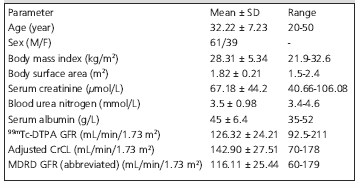
Table 1. General and biochemical data of the study subjects.
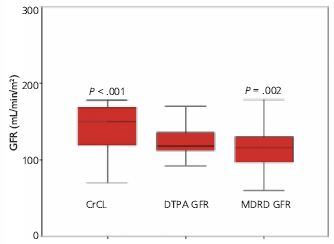
Figure 1. Mean DTPA-measured GFR in comparison with MDRDpredicted GFR and CrCl (mean ± SD).
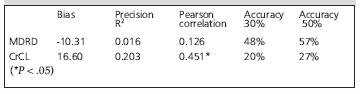
Table 2. Analysis of MDRD eGFR and CrCL in comparison with DTPAmeasured GFR; bias, precision, Pearson’s correlation coefficient, concordance coefficient, and accuracy of GFR prediction.
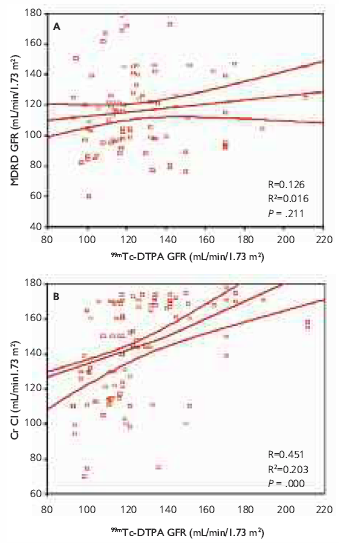
Figure 2. Linear regression analysis between isotopic and MDRD estimated GFR (A) and Cr Cl (B).
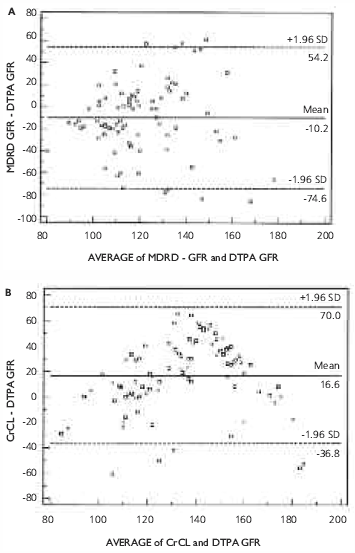
Figure 3. Bland-Altman analysis of agreement between isotopicGFR and MDRD-estimated GFR (A) and adjusted creatinine clearance level (B).