Volume: 6 Issue: 2 June 2008
FULL TEXT
Objectives: The present study, registered at clinicaltrials.gov with the unique registration number NCT00560014, sought to evaluate the relations between fatty acid concentrations in red blood cells or plasma and amino acid concentrations in plasma on rejection, calcineurin inhibitor toxicity, and new-onset diabetes mellitus.
Materials and Methods: Lipid profiles on plasma or red blood cell samples were performed preoperatively and postoperatively in 54 patients. Plasma amino acid profiles were obtained in 49 of these patients.
Results: High concentrations of total ω-3 fatty acids, eicosapentaenoic and docosahexaenoic acids in red blood cells, and ornithine in plasma, all were associated with a significantly lower incidence of rejection, whereas high total ω-6 fatty acids were associated with a high rejection rate. Calcineurin inhibitor toxicity was associated with low levels of docosahexaenoic acid, ornithine, and the ω-3 index, and high total ω-6 and ω-3/ω-6 ratios. Inhibition of new-onset diabetes mellitus was seen only with high levels of ornithine. Peak concentrations of fatty acids in red blood cells were not obtained until after 30 days. High levels of arginine were not associated with reduced complications.
Conclusions: The levels of selected nutrients in plasma and red blood cell membranes appear to have a profound effect on complications after renal transplant. These preliminary results need confirmation in prospective randomized clinical trials.
Key words : Rejection, Renal transplant, Omega-3 fatty acids, Calcineurin inhibitor toxicity, New-onset diabetes mellitus
Previous animal studies have shown that dietary supplementation with arginine and lipids containing ω-3 and ω-9 fatty acids would independently prolong allograft survival in animals receiving a short course of low-dose chemical immunosuppression (1-4). As a result of those studies, we conducted a prospective randomized clinical trial in patients receiving standard immunosuppression, dividing them randomly into 2 groups: 1 that did not receive dietary supplementation and 1 that received arginine 4.5 g and canola oil (containing both ω-3 and ω-9 fatty acids) 15 mL twice daily (5). We then followed those patients for a minimum of 3 years. On follow-up, patients given supplementation had fewer post–30-day rejection episodes when compared with controls who did not receive supplementation (5.4% vs 23.7%; P = .01) and fewer post–30-day episodes of calcineurin inhibitor drug toxicities (9.2% vs 35.3%; P = .003). At 3-year follow-up, supplemented patients also had fewer instances of new-onset diabetes mellitus (2.3% vs 14.5%; P = .04), fewer episodes of bacteremia (6.5% vs 18.7%; P = .05), and fewer cardiac events (5.0% vs 17.1%; P = .05).
A subsequent study was conducted in which dietary supplementation with arginine and canola oil was given to renal transplant patients treated with sirolimus, antithymocyte globulin induction, a short course of cyclosporine, and mycophenolate mofetil (which was discontinued after 2 years) (6). Steroids were completely avoided. Patients were followed from 1 to 3 years (in different subgroups). Thirty-one of 54 patients (57%) with a functioning kidney at 3 years were receiving only monotherapy with rapamycin (plus the dietary supplements), and no kidney was lost to rejection. In a concurrent subgroup, canola oil was replaced with Coromega (ERBL Inc., Carlsbad, CA, USA), a fish oil preparation that has high concentrations of eicosapentaenoic acid and docosahexaenoic acid, 4 to 5 packets daily (290-350 mg of eicosapentaenoic acid and 190-230 mg docosahexaenoic acid/packet). The dosage was modified in some patients based on weight, and patients weighing 80 kg or more received 5 packets daily. None of the 13 patients receiving Coromega in the steroid-free protocol developed a rejection episode during the first year.
The current analysis determined the effects of dietary supplementation with Coromega or canola oil on plasma and red blood cell fatty acid profiles in total lipid fatty acids. We also sought to determine amino acid profiles in patients supplemented with arginine. The relations of nutrient concentrations with complications were then determined.
Materials and Methods
Fifty-four patients had 2 or more postoperative measurements (obtained between 30 and 365 days) of plasma and red blood cell fatty acid profiles. Patients received Coromega (4-5 packets daily) plus arginine
(9 g/d), canola oil (30 mL/d) plus arginine (9 g/d), or no supplementation (see Tables and Figures for numbers of patients and samples). These samples were obtained sporadically after an overnight fast, and analyses were done with the researchers blinded to the treatment groups. The studies were approved by the institutional review boards of the respective institutions, and all HIPPA regulations were followed. The study protocol conforms with the ethical guidelines of the 1975 Helsinki Declaration. All measurements of lipid profiles were done at the Kennedy Kreiger Institute (Baltimore, MD, USA), using previously published methods (7). Plasma samples obtained after November 1, 2002, were measured using gas chromatography mass spectroscopy (8), which gave identical results. The analytic method for the red blood cell fatty acids did not change. Plasma amino acid profiles were obtained between 30 and 365 days after the transplant in 49 of the patients using a Beckman 6300 amino acid analyzer (Beckman Instruments Inc, Fullerton, CA, USA) using the method of Lee and Slocum (9).
The percentage of change in the fatty acid measurements from baseline for the Coromega and canola oil groups was analyzed in mixed 1-factor analysis of variance models, in which the patient was treated as a random effect. The intervals of the postoperative day when measures were made comprised the factor levels that were compared. Fatty acid levels in plasma and red blood cells were compared among supplementation groups (Coromega, canola oil, and controls) in mixed 2-factor analysis of variance models including the treatment group and postoperative day interval as factors and the patient as a random effect. Incidences of rejection, calcineurin inhibitor toxicity, and new-onset diabetes mellitus were determined for different levels of ω-3 and ω-6 fatty acids, eicosapentaenoic acid, docosahexaenoic acid, arginine, and ornithine and analyzed by the Cochran-Armitage test for trend.
Rejection episodes and calcineurin inhibitor toxicity were based on biopsy results. The diagnosis of new-onset diabetes mellitus was defined as the added need for treatment of diabetes with medications for 30 days or more. Values for P less than .05 were considered statistically significant. All analyses were performed using the Statistical Analysis System version 9.1 (SAS Institute Inc, Cary, NC, USA) MIXED and FREQ procedures.
Results
Comparing normal adult controls (from the Baltimore area) with our dialysis patients (in Cincinnati) before transplant, only minor differences were noted in total lipid fatty acids in plasma and red blood cells, with the exception that dialysis patients had higher total lipid fatty acid levels in plasma but lower levels of total lipid fatty acids in red blood cells (data not shown). The total lipid fatty acid levels in red blood cells in the 3 groups were similar when preoperative levels were compared with levels during follow-up (Table 1).
Pretransplant and posttransplant levels are shown in Figure 1 for alpha-linolenic acid, oleic acid, eicosapentaenoic acid, docosahexaenoic acid, and total ω-3 and total ω-6 fatty acids in red blood cells. Maximal changes in total ω-3, total ω-6, and docosahexaenoic acid did not occur until after postoperative day 30. Changes in alpha-linolenic acid and oleic acid were much smaller than those in eicosapentaenoic acid and docosahexaenoic acid. The patterns of change in plasma were generally similar, with the exception that ω-6 fatty acid levels dropped considerably more in the red blood cells of Coromega-treated patients than they did in plasma (data not shown). The mean pretransplant level of ornithine was 119 ± 43 nmol/mL. For days 1 through 30, the mean level was 140.7 ± 43.7 nmol/mL; for days 31 through 90, it was 191.4 ± 72.6 nmol/mL; and for more than 90 days, it was 149.4 ± 72.6 nmol/mL.
Eleven patients from the Coromega group had preoperative and 1 or more postoperative specimens analyzed for red blood cell fatty acids (Figures 2a-d). The greatest change from baseline was for eicosapentaenoic acid with 4 of 8 patients with blood samples greater than 90 days having a greater-than-300% rise in the level of eicosapentaenoic acid. It is noteworthy that maximum changes in eicosapentaenoic acid, docosahexaenoic acid, total ω-3 and ω-6 fatty acids, and ornithine were not achieved until 31 or more days after transplant. As the ω-3 fatty acid levels increased (Figure 2a), total ω-6 fatty acid levels decreased (Figure 2d).
An ω-3 index (total ω-3 as a percentage of total lipid fatty acids) was calculated using an average of the samples for each patient during the time between 30 and 365 days. The relation of the ω-3 index to rejection (from 30-365 days) is shown in Figure 3a. No episodes of rejection occurred in the 37 patients with more than 6% ω-3/total lipid fatty acids compared with an 18.5% rejection rate when the ω-3 index was lower than 6%. There also was a strong correlation between the levels of eicosapentaenoic acid and docosahexaenoic acid and freedom from rejection (Figure 3b, 3c). Conversely, no rejections occurred when the mean total ω-6 fatty acid level was under 485 µg/mL compared with 20% when it was higher than this value (Figure 3d). Not surprisingly, the ratio of the ω-3 and ω-6 fatty acids was also closely associated with the incidence of rejection (Figure 3e).
The relations between concentrations of the nutrients and calcineurin inhibitor toxicity are shown in Figure 4. Higher total ω-6 fatty acid concentrations were associated with increased rejection, whereas the ω-3 index and docosahexaenoic acid concentrations were associated with protection against toxicity.
New-onset diabetes mellitus is an important complication after solid organ transplant. While there was a trend for ω-3 fatty acids to protect against the incidence of new-onset diabetes mellitus, and for ω-6 fatty acids to promote new-onset diabetes mellitus, this was not statistically significant (Figure 5).
In contrast to what was anticipated, arginine levels were not protective for rejection but ornithine levels were (Figure 6). Similarly, ornithine was associated with low calcineurin inhibitor toxicity whereas arginine was not (Figure 7). Ornithine also was associated with a decreased incidence of new-onset diabetes mellitus (Figure 8). None of the levels of other amino acids, including citrulline and glutamine, was associated with a reduced incidence of rejection, calcineurin inhibitor toxicity, or new-onset diabetes mellitus.
It is of concern that risk factors might not be evenly distributed among patients with high and low levels of the ω-3 index, eicosapentaenoic acid, docosahexaenoic acid, total ω-6 fatty acids, ω-3/ω-6 ratios, and ornithine. The data shown in Table 2 demonstrate that the risk factors may have been slightly greater in the patients who had higher levels of eicosapentaenoic acid, docosahexaenoic acid, ω-3 index, and ornithine.
Discussion
To the best of our knowledge, this is the first demonstration that a single or group of fatty acid concentrations in cell membranes is associated with a reduction in the number of complications in transplant patients. However, it is now well established that dietary intake of ω-3 polyunsaturated fatty acids reduces the risk of coronary heart disease in the general population. In a recent meta-analysis, Bucher and associates (10) reported a risk ratio for fatal and nonfatal myocardial infarction, sudden death, and overall mortality of 0.7 to 0.8 in patients supplemented with omega-3 fatty acids. Recent studies also have shown that the ω-3 level in whole blood is a strong predictor of death from cardiac causes (11). The relative risk of death was 0.19 comparing the lowest versus the highest quartile. Harris and von Schacky (12) defined the ω-3 index as the percentage of eicosapentaenoic acid plus docosahexaenoic acid in the fatty acids of red blood cell membranes. An ω-3 index of 8% or more was associated with the greatest protection, whereas the least protection was found in the lowest ω-3 index quartile. The effect of the ω-3 index (defined in our paper as the percentage of ω-3 fatty acids in total lipid fatty acids) and the ω-6 index on rejection and calcineurin inhibitor toxicity is striking and consistent with the cardioprotective effects, suggesting that the balance ω-3 and ω-6 fatty acids may play a significant role in patient and transplant survival. The potential mechanisms involved are complex but clearly involve down-regulation of inflammatory and immunologic responses by ω-3 fatty acids (13).
Lim and associates (14) reviewed the Cochrane Central Register for articles related to fish oil for kidney transplant recipients and concluded that an analysis of 16 studies failed to show any significant effect on patient or graft survival, or rates of acute rejection or calcineurin inhibitor toxicity. This analysis is in contrast to ours, but this could be for several reasons. The studies reviewed by Lim and associates (14) may not have had sufficient concentrations of eicosapentaenoic acid and docosahexaenoic acid in the fish oil to achieve the desired effect, and the supplements may not have been given for a long enough time. Perhaps of equal or greater importance, neither arginine nor ornithine was given to the patients receiving fish oil, and there was no analysis of plasma or red blood cell concentrations of individual fatty acids on rejection rates, calcineurin inhibitor toxicity, or instances of new-onset diabetes mellitus.
It is interesting that in our study, plasma levels of ornithine but not arginine were significantly associated with freedom from rejection, calcineurin inhibitor toxicity, and incidences of new-onset diabetes mellitus. Ornithine is derived directly from arginine and is further metabolized by ornithine decarboxylase to the polyamines, which are important for cellular growth, protein synthesis, apoptosis, and regulation of the immune response (15, 16). How either ornithine or polyamines could relate to prevention of rejection is unknown. However, ornithine causes maturation of M2-type macrophages and a shift toward TH2-type immune responses (17). Because in our studies there was supplementation with both the ω-3 fatty acids and arginine (the precursor of ornithine), it was not possible to determine whether there is a causal relation between the ω-3 and ω-6 fatty acids in red blood cells and plasma ornithine. It is possible that the 2 have synergistic effects that could not be detected.
At any rate, it is clear that there are significant links between concentrations of ω-3 fatty acids in red blood cells and/or the concentration of ornithine in the plasma on the development of complications in renal transplant patients. From our studies, it is likely that long-term survival also will be improved by reducing the incidence of cardiovascular complications; however, this is by no means proved. Possible immunologic mechanisms include reduced inflammatory responses and shifts to Th2-type immune responses (13).
Unfortunately, we did not draw samples at all of the desired intervals. However, sufficient material was available to show that concentrations of fatty acids incorporated in cellular (red blood cell) membranes are directly linked to the reduced incidence of selected complications, such as rejection, in patients with kidney transplants. We conclude that immuno-nutrient therapy appears to be an effective, nontoxic, and inexpensive adjunct to immunosuppression for preventing complications after kidney transplant.
The relations between concentrations of ω-3 and ω-6 fatty acids in red blood cell membranes and plasma ornithine on reducing complications after kidney transplant in humans receiving immunosuppression requires further study using blinded controlled clinical trials.
References:
- Levy AE, Alexander JW. Nutritional immunomodulation enhances cardiac allograft survival in rats treated with donor-specific transfusion and cyclosporine. Transplantation. 1995;60(8):812-815.
- Alexander JW, Levy A, Custer D, et al. Arginine, fish oil, and donor-specific transfusions independently improve cardiac allograft survival in rats given subtherapeutic doses of cyclosporin. JPEN J Parenter Enteral Nutr. 1998;22(3):152-155.
- Alexander JW, Valente JF, Greenberg NA, et al. Dietary amino acids as new and novel agents to enhance allograft survival. Nutrition. 1999;15(2):130-134.
- Alexander JW, Valente JF, Greenberg NA, et al. Dietary omega-3 and omega-9 fatty acids uniquely enhance allograft survival in cyclosporine-treated and donor-specific transfusion-treated rats. Transplantation. 1998;65(10):1304-1309.
- Alexander JW, Metze TJ, McIntosh MJ, et al The influence of immunomodulatory diets on transplant success and complications. Transplantation. 2005;79(4):460-465.
- Alexander JW, Goodman HR, Cardi M, et al. Simultaneous corticosteroid avoidance and calcineurin inhibitor minimization in renal transplantation. Transpl Int. 2006;19(4):295-302.
- Moser AB, Jones DS, Raymond GV, Moser HW. Plasma and red blood cell fatty acids in peroxisomal disorders. Neurochem Res. 1999;24(2):187-197.
- Lagerstedt SA, Hinrichs DR, Batt SM, Magera MJ, Rinaldo P, McConnell JP. Quantitative determination of plasma c8-c26 total fatty acids for the biochemical diagnosis of nutritional and metabolic disorders. Mol Genet Metab. 2001;73(1):38-45.
- Lee PL, Slocum RH. A high-resolution method for amino acid analysis of physiological fluids containing mixed disulfides. Clin Chem. 1988;34(4):719-723.
- Bucher HC, Hengstler P, Schindler C, Meier G. N-3 polyunsaturated fatty acids in coronary heart disease: a meta-analysis of randomized controlled trials. Am J Med. 2002;112(4):298-304.
- Albert CM, Campos H, Stampfer MJ, et al. Blood levels of long-chain n-3 fatty acids and the risk of sudden death. N Engl J Med. 2002;346(15):1113-1118.
- Harris WS, Von Schacky C. The Omega-3 Index: a new risk factor for death from coronary heart disease? Prev Med. 2004;39(1):212-220.
- Alexander JW. Immunonutrition: the role of omega-3 fatty acids. Nutrition. 1998;14(7-8):627-633.
- Lim AK, Manley KJ, Roberts MA, Fraenkel MB. Fish oil treatment for kidney transplant recipients: a meta-analysis of randomized controlled trials. Transplantation. 2007;83(7):831-838.
- Larqué E, Sabater-Molina M, Zamora S. Biological significance of dietary polyamines. Nutrition. 2007;23(1):87-95.
- Grimble RF, Grimble GK. Immunonutrition: role of sulfur amino acids, related amino acids, and polyamines. Nutrition. 1998;14(7-8):605-610.
- Mills CD. Macrophage arginine metabolism to ornithine/urea or nitric oxide/citrulline: a life or death issue. Crit Rev Immunol. 2001;21(5):399-425.
Volume : 6
Issue : 2
Pages : 118 - 126
From the Departments of 1Surgery and 2Environmental Health, University of Cincinnati College of Medicine, Cincinnati, OH; the 3Department of Surgery, Washington Hospital, Washington, DC; the 4Department of Surgery, Duke University Medical Center, Durham, NC; and the 5Kennedy Krieger Institute, Baltimore, MD
Acknowledgements: Funding for this study came from grants numbered R03 AI142743 and 5 U01 AI40167 from the National Institutes of Health.
Address reprint requests to: J Wesley Alexander, MD, 2123 Auburn Avenue, MOB Suite 315, Cincinnati, OH 45219 USA
Phone: +513-558-6006
Fax: +513-558-3580
E-mail: jwesley.alexander@uc.edu
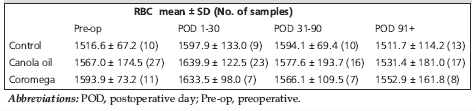
Table 1. TLFA in RCB (mcg/mL/packed RBC).
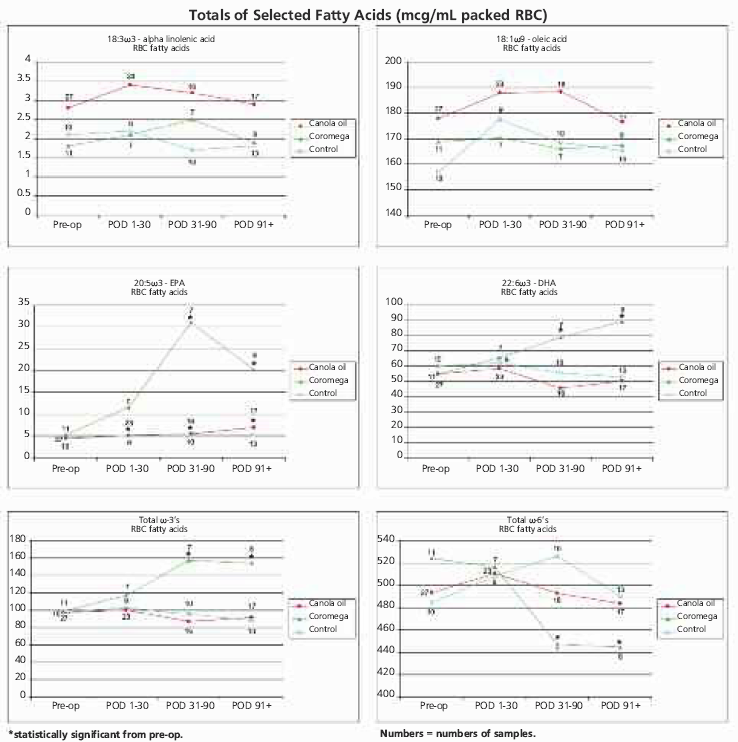
Figure 1. Concentration of selected fatty acids in the red blood cells of patients receiving Coromega, canola oil, or no lipid supplementation. Numbers of samples are shown for each time point.
Abbreviations: POD, postoperative day; Pre-op, preoperative.
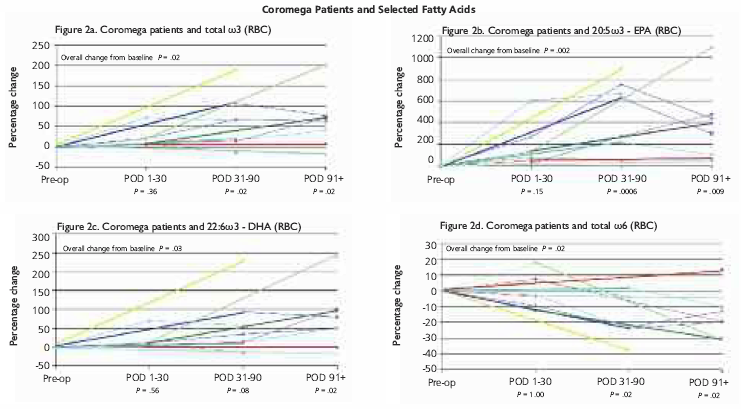
Figure 2. Selected fatty acid concentrations in the patients receiving Coromega.
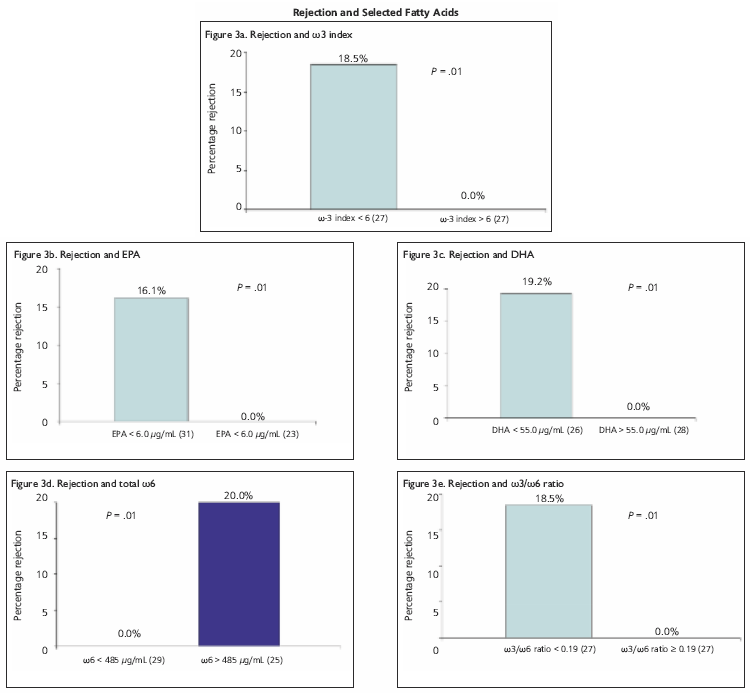
Figure 3. Relation between rejection, ω-3 index, eicosapentaenoic acid, docosahexaenoic acid, total ω-6, and ω-3/ω-6 ratio. Numbers of patients are in parentheses.
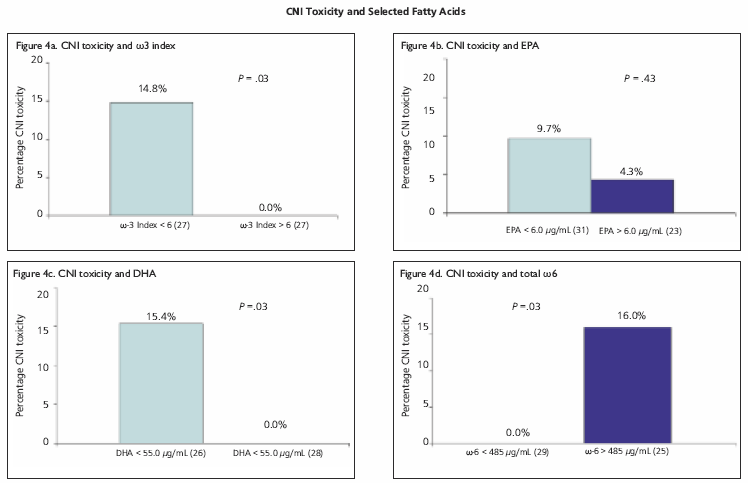
Figure 4. Relations of ω-3 index, eicosapentaenoic acid, docosahexaenoic acid, and total ω-6 on calcineurin inhibitor toxicity.Numbers of patients are in parentheses.
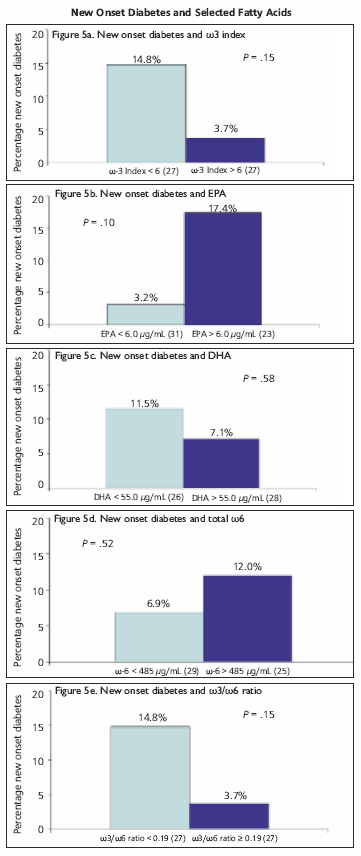
Figure 5.Newonset diabetes and levels of selected fatty acids.Numbers of patients are in parentheses.
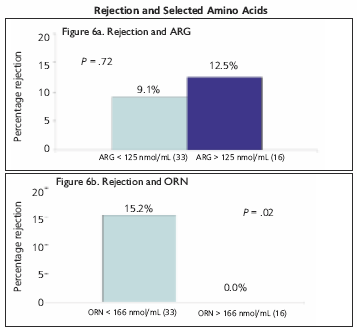
Figure 6. Relation between arginine and ornithine levels in rejection. Numbers of patients are in parentheses.
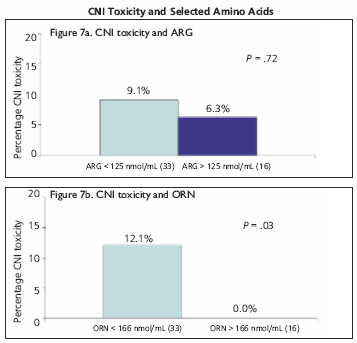
Figure 7. Arginine and ornithine levels related to calcineurin inhibitor toxicity. Numbers of patients are in parentheses.
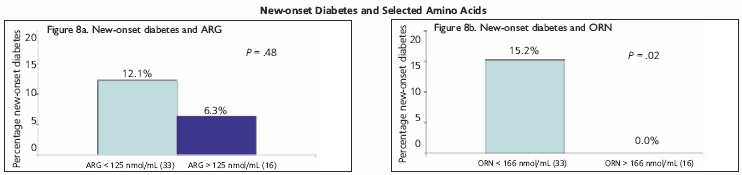
Figure 8. Relation between arginine and ornithine levels on new-onset diabetesmellitus. Numbers of patients are in parentheses.
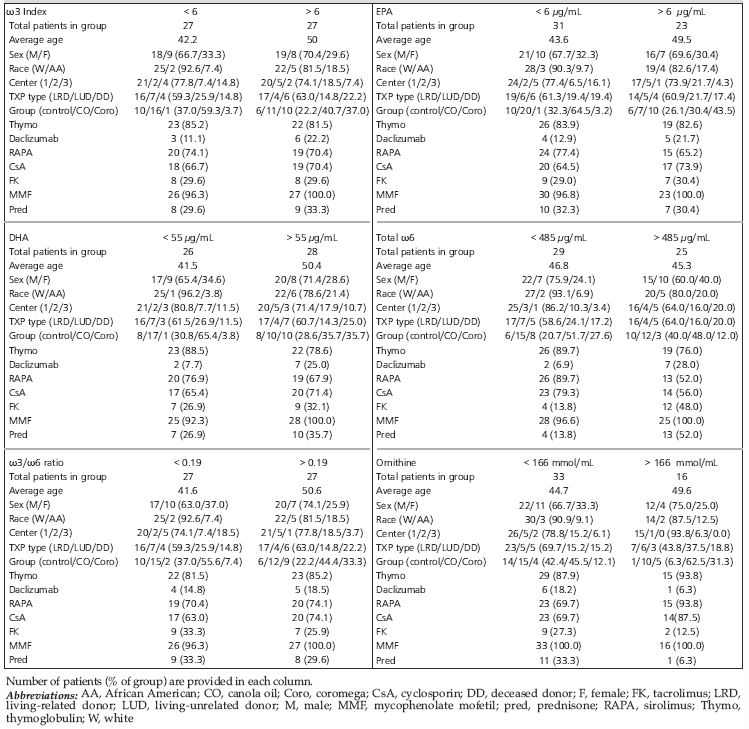
Table 2. Demographics and immunosupression in subgroups of patients with good or bad outcome related to w3 index, EPA, DHA, total w6, w3/w6 ratio and ORN.