Volume: 6 Issue: 2 June 2008
FULL TEXT
Objectives: Calcineurin inhibitors are used widely in liver transplant recipients. Sirolimus is a new, potent immunosuppressant considered to be nonnephrotoxic. There is limited experience with the use of sirolimus in liver transplant recipients. This study aimed to investigate the clinical experience of conversion from tacrolimus-based to sirolimus-based immunosuppression in liver transplant recipients. Patients switched to cyclosporine-based immunosuppression during the same period were enrolled as controls.
Materials and Methods: This retrospective study examined liver transplant recipients who had been switched from tacrolimus-based to sirolimus-based or cyclosporine-based immunosuppressive therapy between January 2004 and January 2007 in the first affiliated hospital of Sun Yat-sen University. Patients were divided into 3 groups: those switched to sirolimus-based immunosuppression owing to acute rejection (group SIR-AR; n=11); those switched to sirolimus-based immunosuppression owing to renal insufficiency (group SIR-RI; n=18), and those switched to cyclosporine-based immunosuppression owing to acute rejection (group CsA-AR; n=15)
Results: In patients switched owing to acute rejection, the rate of successful conversion was 54.5% in group SIR-AR (6/11) compared with 60% in group CsA-AR (9/15); this difference was not statistically significant (P > .05). After conversion, renal function in patients in group SIR-AR remained normal. Conversely, renal function in patients in group CsA-AR became abnormal 3 months after conversion. In patients who were switched owing to renal insufficiency in group SIR-RI, renal function improved significantly after conversion (P < .05). In the sirolimus groups, some sirolimus-associated adverse effects occurred but were limited and well controlled.
Conclusions: Sirolimus can be used safely in liver transplant recipients. In the early stages after liver transplant, sirolimus combination therapy is recommended to prevent acute rejection. For patients with tacrolimus-related adverse effects, a sirolimus-based immunosuppression regimen is a rescue therapy.
Key words : Conversion, Immunosuppression, Sirolimus, Orthotopic liver transplant
Introduction
Immunosuppressive therapy with calcineurin inhibitors is the standard regimen after liver transplant. In most organ transplant centers, use of tacrolimus is more popular than use of cyclosporine. However, unavoidable calcineurin inhibitor-associated adverse effects have been reported. Sirolimus was approved for use to prevent rejection after renal transplant in 1999 by United States Food and Drug Administration. It was further approved for use in liver transplant recipients. Sirolimus has been shown to be a potent immunosuppressant in liver, kidney, heart, and lung transplant recipients (1-5) and a replacement of calcineurin inhibitors when patients have nephrotoxic effects (6, 7).
Here, we report a retrospective analysis of 44 patients switched from tacrolimus-based to sirolimus-based or cyclosporine-based immunosuppressive therapy in a consecutive cohort of 280 orthotopic liver transplant recipients.
Materials and Methods
Patients
From January 2004 to January 2007 at the first affiliated Hospital of Sun Yat-sen University in Guangzhou, China, 44 recipients of an orthotopic liver transplant who had been switched from tacrolimus-based to sirolimus-based or cyclosporine-based immunosuppressive therapy were enrolled in the study.
Tacrolimus-based immunosuppression was initiated. A large dose of prednisolone was used to induce immunosuppression. During the operation, 1000 mg methylprednisolone was given intravenously; then, 500 mg methylprednisolone was given on the first day after surgery, followed by a taper from 240 mg to 20 mg a day within 7 days. Prednisolone 4 mg was given daily for maintenance and was withdrawn completely within 3 months if the patient’s liver function was normal. Tacrolimus was administered orally 12 hours after liver transplant at 0.05 mg/kg/day every 12 hours. The dosage was adjusted to reach target trough levels of 10 to 15 ng/mL during the first 14 days and maintain this level for 1 month. Then, the level was adjusted within the range of 6 to 10 ng/mL during the second and third month and 5 to 8 ng/mL thereafter.
After orthotopic liver transplant, laboratory data were collected continually. Trough blood levels of tacrolimus were recorded every other day for 2 weeks and measured when necessary, thereafter. Results of routine blood, liver function, and renal function tests, as well as measures of blood glucose levels were obtained daily for 2 weeks, then once a week for 1 month, and then once a month thereafter. Twenty-four-hour creatinine clearance (CCr), serum triglyceride, and cholesterol levels were measured once a month. Chest radiography and abdominal ultrasonography were done once a month. Computed tomographic scanning, magnetic resonance imaging, or magnetic resonance cholangiopancreatography were recommended if necessary.
Conversion scheme
The indications for conversion included patients with acute rejection or severe tacrolimus-related adverse effects. Among 44 patients, 11 (4 women, 7 men; mean age, 54 ± 13 years; 10 with liver sclerosis, 1 with hepatocellular carcinoma) switched to sirolimus owing to acute rejection were assigned to group SIR-AR; 18 (7 women, 11 men; mean age, 50 ± 15 years; 16 with liver sclerosis, 2 with hepatocellular carcinoma) switched to sirolimus owing to renal insufficiency were assigned to group SIR-RI; and 15 (5 women, 10 men; mean age, 52 ± 15 years; 11 with liver sclerosis, 4 with hepatocellular carcinoma) switched to cyclosporine-based immunosuppression owing to acute rejection were assigned to group CsA-AR.
Diagnosis of acute rejection was based on internationally accepted histologic criteria (8). Immunosuppressant conversion was done in those cases in which acute rejection occurred even though the dosage and trough blood level of tacrolimus were close to upper limit of therapeutic effect (10 mg/d and 15 ng/mL). Then, administration of tacrolimus was discontinued, and prednisolone pulse therapy was used for reversion of acute rejection (1000 mg methylprednisolone was given intravenously on the first day, then 500 mg methylprednisolone was given on the second day, which was followed by a taper from 240 mg to 20 mg/day within 7 days.) Prednisolone 4 mg was administered daily and withdrawn completely in 1 month if liver functioning was normal. In group SIR-AR, when the acute rejection was reversed, sirolimus oral solution was administered at the initial loading dosage of 2 mg/day followed by 1 mg/day. The dosage was then adjusted to achieve a steady-state trough whole blood level of approximately 5 to 8 ng/mL, thereafter. Sirolimus was administered once daily in the morning. The dosage was reduced or increased by 0.5 mg/day if the trough whole blood level was higher than 8 ng/mL or lower than 5 ng/mL.
In group CsA-AR, cyclosporine was administered when the acute rejection was reversed at an initiation dosage of 2 mg/kg per day, which was subsequently adjusted to maintain cyclosporine whole blood trough levels between 200 and 300 ng/mL.
Creatinine clearance, more accurate than a serum creatinine level, was used to test for renal function. Renal insufficiency was defined as mild (CCr, 72-101 L/24 h [50-70 mL/min]), moderate (CCr, 43-72 L/24 h [30-50 mL/min]), and severe (CCr < 43 L/24 h [30 mL/min]). When CCr was below 72 L/24 h and other causes leading to renal insufficiency were excluded, the conversion began. In group SIR-RI, the dosage of tacrolimus was reduced by half, and sirolimus was administered at an initial loading dosage of 2 mg/day, followed by 1 mg/day. Tacrolimus was discontinued completely when therapeutic levels of sirolimus were achieved.
Follow-up
Follow-up lasted from conversion to final follow-up. Trough blood levels of sirolimus or cyclosporine were recorded every other day within 2 weeks after conversion and measured when necessary thereafter. Creatinine clearance, serum triglyceride, and cholesterol levels were measured twice a month for the first month and once a month thereafter. Drug-related adverse effects including hyperlipidemia and oral ulceration also were recorded.
Statistical analyses
The chi-square test was used to compare differences in the rate of successful conversion between group SIR-AR and group CsA-AR. Preconversion and postconversion CCr and serum lipid levels were compared using the paired Wilcoxon signed rank test. The data were analyzed using SPSS software (Statistical Product and Services Solutions, version 13.0, SPSS Inc, Chicago, IL, USA). Values for P less than .05 were considered statistically significant.
Results
In group SIR-AR, the mean interval between orthotopic liver transplant and acute rejection was 21 days (range, 14-29 days). Before prednisolone pulse therapy, the mean serum aspartate aminotransferase level was 460U/L (range, 390-510 U/L), and the mean serum total bilirubin level was 196 µmol/L (range, 100-250 µmol/L). All episodes of acute rejection were reversed and immediately after reversion, immunosuppressant conversion was initiated. The conversion was considered to be successful if serum aspartate aminotransferase and bilirubin levels gradually decreased to their normal levels and there was no acute rejection at 1 month after the conversion. The success rate in group SIR-AR was 54.5% (6/11). Five patients failed to convert. They had biopsy-proven acute rejection 15 days (range, 8-24 days) after conversion. Prednisolone pulse therapy was given to the 5 patients again; then, sirolimus and mycophenolate mofetil combination suppression was used. In group CsA-AR, the mean interval between orthotopic liver transplant and acute rejection was 22 days (range, 15-33 days). Before prednisolone pulse therapy, the mean serum aspartate aminotransferase level was 411 U/L (range, 330-520 U/L), the mean serum total bilirubin level was 188 µmol/L (range, 145-243 µmol/L). The success rate for conversion in this group was 60% (9/15). There were no significant differences (P > .05) compared with group SIR-AR. For the other 6 patients with acute rejection within 1 month, prednisolone pulse therapy and cyclosporine and mycophenolate mofetil combination suppression were used.
Before conversion, the mean CCr levels in group SIR-AR and group CsA-AR were in the normal range (155 L/24 h [107 mL/min] and 147 L/24 h [102 mL/min], respectively). At 1 and 2 months after conversion, there was no statistically significant difference in CCr levels between the 2 groups (P > .05). However, the difference became significant (P < .05) at 3 months after conversion and later (Figure 1).
In group SIR-RI, the mean interval between orthotopic liver transplant and immunosuppressant conversion was 19 weeks (range, 14-24 weeks). Before conversion, the mean CCr level was 69 L/24 h (48 mL/min). After conversion, the CCr level increased continuously. Statistical analyses showed that renal function in patients in group SIR-RI improved significantly 3 months after conversion (P < .05) (Figure 2).
Mean serum triglyceride and cholesterol levels were normal before conversion in group SIR-AR and group CsA-AR, but they were abnormal in group SIR-RI owing to tacrolimus-related adverse effects. There was no significant difference between group SIR-AR and group CsA-AR regarding the change in serum triglyceride and cholesterol levels within 2 months of conversion (P > .05). However, at 3 months and afterwards, serum triglyceride and cholesterol levels in group SIR-AR increased at a significantly higher rate than they did in group CsA-AR (P < .05). Mean serum triglyceride and cholesterol levels in group SIR-RI remained moderately abnormal and were managed with antilipid agents. The data regarding serum triglyceride and cholesterol levels before and after conversion in the 3 groups are shown in Table 1.
The patients were followed-up for a mean of 11 months (range, 10-13 months). During follow-up, there were no incidents of acute rejection. No patient developed diabetes mellitus. Four patients in groups SIR had mild mouth ulcers 3 months after conversion.
Discussion
Calcineurin inhibitors, tacrolimus, and cyclosporine, have been the mainstay of immunosuppressive regimens for preventing acute rejection in liver transplant. Because tacrolimus was thought to be more powerful in terms of immunosuppression efficiency, tacrolimus-based immunosuppressive regimens has been more popular in most transplant centers. Several studies have reported the replacement of cyclosporine with tacrolimus. However, in recent years, reports of immunosuppressive regimens of tacrolimus being converted to cyclosporine have increased (9, 10). Tacrolimus-related adverse effects may affect its clinical use in some patients.
Conversion between tacrolimus and cyclosporine does not reduce the exposure of patients to the nephrotoxicity associated with calcineurin inhibitors. Renal insufficiency is associated with lower survival rates among liver transplant recipients. Pawarode and associates reported that patients who developed severe renal failure had significantly lower rates of survival compared with those who did not have severe renal failure (11). Therefore, it is important to use nonnephrotoxic immunosuppressants in liver transplant recipients.
Sirolimus is a macrocyclic triene antibiotic that was initially found to have an antifungal effect and may act as a potent immune suppressant (12). Although sirolimus is structurally similar to tacrolimus or cyclosporine, its mechanism of action is different. Tacrolimus and cyclosporine block calcineurin and inhibit transcription of such proinflammatory cytokines as interleukin-2. Sirolimus exerts its effect later in the cell cycle by blocking interleukin-2–dependent proliferation through its interaction with a class of kinases known as the mammalian target of rapamycin (13, 14).
Whether sirolimus is more useful than tacrolimus in immunosuppression has been extensively explored. Most studies of sirolimus in liver transplant recipients have used sirolimus in combination with low-dose calcineurin inhibitors, steroids, or mycophenolate mofetil. An early pilot study of 4 patients treated with sirolimus monotherapy yielded an unacceptably high rate of acute rejection (75%), but none of the 4 patients in the same study treated with sirolimus in combination with cyclosporine and steroids had an episode of acute rejection. Sirolimus in combination with calcineurin inhibitors, steroids, or mycophenolate mofetil has been considered an acceptable immunosuppressive regimen yielding satisfactory patient and graft survival rates and a low incidence of acute cellular rejection (15, 16).
In our study, we found that sirolimus monotherapy did not reduce the rate of acute hepatocellular rejection in the early periods after liver transplant compared with cyclosporine. It demonstrated that sirolimus and calcineurin inhibitors or mycophenolate mofetil combination therapy should be recommended when tacrolimus monotherapy cannot prevent acute rejection. However, clinical experience has shown that the rate of acute rejection decreases significantly after 3 months posttransplant. Our study confirmed that. Therefore, it would be acceptable to use sirolimus monotherapy in the late periods after liver transplant. Sirolimus seems to be devoid of the neurotoxicity and nephrotoxicity common to calcineurin inhibitors (17, 18). In our study, conversion to sirolimus followed by a significant improvement in renal function suggests that sirolimus can be a good alternative for liver transplant recipients with renal insufficiency due to calcineurin inhibitors.
Hyperlipidemia is a common complication associated with the use of sirolimus (19). In our study, there was also a significant increase in serum triglyceride and cholesterol levels after conversion to sirolimus therapy. Another adverse effect was oral ulceration, which was found in 4 patients in groups SIR. However, these adverse effects were limited and well controlled after proper treatment.
Sirolimus has been thought to have antitumor effects in malignant cell lines (20, 21). In our study, 3 patients in groups SIR and 4 patients in group CsA-AR with early stage hepatocellular carcinoma underwent an orthotopic liver transplant. During follow-up, no patient was found to have tumor recurrence or a metastasis. However, owing to the small sample size of our study, further details regarding the risk of tumor recurrence in sirolimus-based immunosuppression were unavailable.
Our study is limited by the small number of patients and the duration of our follow-up. Further studies are needed to explore the effects of sirolimus in immunosuppression and nonnephrotoxicity and to define its adverse effect profile.
References:
- Chang GJ, Mahanty HD, Quan D, et al. Experience with the use of sirolimus in liver transplantation--use in patients for whom calcineurin inhibitors are contraindicated. Liver Transpl. 2000;6(6):734-740.
- Gonwa TA, Hricik DE, Brinker K, Grinyo JM, Schena FP; Sirolimus Renal Function Study Group. Improved renal function in sirolimus-treated renal transplant patients after early cyclosporine elimination. Transplantation. 2002;74(11):1560-1567.
- Diekmann F, Waiser J, Fritsche L, Dragun D, Neumayer HH, Budde K. Conversion to rapamycin in renal allograft recipients with biopsy-proven calcineurin inhibitor-induced nephrotoxicity. Transplant Proc. 2001;33(7-8):3234-3235.
- Flechner SM, Goldfarb D, Modlin C, et al. Kidney transplantation without calcineurin inhibitor drugs: a prospective, randomized trial of sirolimus versus cyclosporine. Transplantation. 2002;74(8):1070-1076.
- Snell GI, Levvey BJ, Chin W, et al. Sirolimus allows renal recovery in lung and heart transplant recipients with chronic renal impairment. J Heart Lung Transplant. 2002;21(5):540-546.
- Nair S, Eason J, Loss G. Sirolimus monotherapy in nephrotoxicity due to calcineurin inhibitors in liver transplant recipients. Liver Transpl. 2003;9(2):126-129.
- Fairbanks KD, Eustace JA, Fine D, Thuluvath PJ. Renal function improves in liver transplant recipients when switched from a calcineurin inhibitor to sirolimus. Liver Transpl. 2003;9(10):1079-1085.
- Terminology for hepatic allograft rejection. International Working Party. Hepatology. 1995;22(2):648-654.
- Ogino S, Hashikura Y, Katsuyama Y, et al. Conversion from tacrolimus to cyclosporine microemulsion therapy in liver transplant recipients. Transplant Proc. 2004;36(suppl 2):299S-301S.
- Akamatsu N, Sugawara Y, Tamura S, et al. Late-onset acute rejection after living donor liver transplantation. World J Gastroenterol. 2006;12(41):6674-6677.
- Pawarode A, Fine DM, Thuluvath PJ. Independent risk factors and natural history of renal dysfunction in liver transplant recipients. Liver Transpl. 2003;9(7):741-747.
- Morris RE. Rapamycin: FK506's fraternal twin or distant cousin? Immunol Today. 1991;12(5):137-140.
- Sehgal SN. Rapamune (Sirolimus, rapamycin): an overview and mechanism of action. Ther Drug Monit. 1995;17(6):660-665.
- Liu J, Farmer JD Jr, Lane WS, Friedman J, Weissman I, Schreiber SL. Calcineurin is a common target of cyclophilin-cyclosporin A and FKBP-FK506 complexes. Cell. 1991;66(4):807-815.
- Pridöhl O, Heinemann K, Hartwig T, et al. Low-dose immunosuppression with FK 506 and sirolimus after liver transplantation: 1-year results. Transplant Proc. 2001;33(7-8):3229-3231.
- Trotter JF, Wachs M, Bak T, et al. Liver transplantation using sirolimus and minimal corticosteroids (3-day taper). Liver Transpl. 2001;7(4):343-351.
- Forgacs B, Merhav HJ, Lappin J, Mieles L. Successful conversion to rapamycin for calcineurin inhibitor-related neurotoxicity following liver transplantation. Transplant Proc. 2005;37(4):1912-1914.
- Kniepeiss D, Iberer F, Schaffellner S, Jakoby E, Duller D, Tscheliessnigg KH. Nonnephrotoxic immunosuppression in patients after liver transplantation. Int Immunopharmacol. 2005;5(1):133-136.
- Groth CG, Bäckman L, Morales JM, et al. Sirolimus (rapamycin)-based therapy in human renal transplantation: similar efficacy and different toxicity compared with cyclosporine. Sirolimus European Renal Transplant Study Group. Transplantation. 1999;67(7):1036-1042.
- Hidalgo M, Rowinsky EK. The rapamycin-sensitive signal transduction pathway as a target for cancer therapy. Oncogene. 2000;19(56):6680-6686.
- Schumacher G, Oidtmann M, Rosewicz S, et al. Sirolimus inhibits growth of human hepatoma cells in contrast to tacrolimus which promotes cell growth. Transplant Proc. 2002;34(5):1392-1393.
Volume : 6
Issue : 2
Pages : 113 - 117
From the 1Department of Organ Transplantation and the 2Department of Anaesthesia of the First Affiliated Hospital, Sun Yat-sen University, Guangzhou, China.
Acknowledgements: This work was sponsored by the China Medical Board in New York. No. 06837
Address reprint requests to: Xiaoshun He, Department of Organ Transplantation of the First Affiliated Hospital, Sun Yat-sen University, Guangzhou 510080, China
Fax: +: 86 20 87 30 60 82
E-mail: gdtrc@163.com
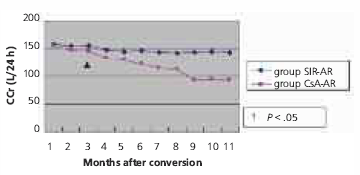
Figure 1. CCr in groups SIR-AR and CsA-AR
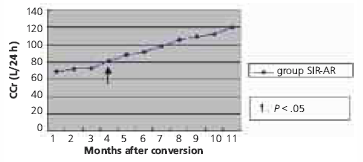
Figure 2. CCr in group SIR-RI

Table 1. Serum lipid levels before and after conversion (mean ± standard deviation; mmol/L).