Volume: 22 Issue: 4 April 2024 - Supplement - 4
FULL TEXT
This brief overview is designed to address the options for increasing organ transplant rates to between 100 and 120 transplanted organs per million population globally. The focus of this review is the data produced through the World Health Organization's Global Observatory on Donation and Transplantation, with consideration for the issues that different countries need to address to achieve higher transplant rates. Without both optimized living donation and optimized deceased donation, rates of transplant are not sufficient to provide for a level of self-dependency for transplant therapy. Deceased donation comprises both donation from donors declared dead after cessation of all functions of the brain and donors declared dead from irreversible cessation of circulation of the blood. The preservation strategies that hold the greatest chance of increasing the utility of marginal and older donors involve normothermic circulation to prevent ischemic damage and potentially restore function of damaged organs. Normothermic in situ perfusion of abdominal organs has demonstrated utility, and consideration must be given to normothermic perfusion of the thoracic organs to improve heart and lung transplants, but this may challenge the legal definitions of death. Each nation must endeavor to increase organ donation capacity across the spectrum of donor types and must address the opportunities that normothermic perfusion of organs at retrieval may offer to alleviate shortages of organs for transplant and provide self-dependency for the communities.
Key words : Donation after circulatory death, DCD, Ex situ perfusion, In situ perfusion, Normothermic, Organ perfusion
Introduction
Organ donation rates vary greatly between countries, as demonstrated by the extensive data collated by the World Health Organization in its Global Observatory of Donation and Transplantation.1 The lowest rates of organ donation and transplant are seen in countries with the lowest Human Development Index (HDI), which is not surprising. These countries are unable to afford access to many basic health services such as maternal health and vaccination; therefore, it is not surprising that access to high-end tertiary care programs such as transplantation is low or nonexistent. What is, perhaps, surprising is the very great variability in access to transplants in wealthy countries with high and very high HDI scores as seen in Figure 1.
The reasons for the high level of observed variability are much debated, with variation in rates of mortality in causes of death that lead to brain death, explaining, for example, the recent surge in younger donors in the United States who have died from opiate overdose. The dominant causes of variation include (1) countries with no deceased donation, with transplant programs relying solely on living donation, and (2) countries with donation that only includes donors after brain death, but not donation after cessation of circulation. To maximize access to organ donation for citizens, it is thus demonstrably important that each country (1) optimizes deceased organ donor hospital identification and consent processes to reach global best-practice deceased donation rates, (2) optimizes living donation rates of kidneys and livers, and (3) increases utilization of extended criteria/marginal deceased organ donors. The data available through the World Health Organization's Global Observatory of Donation and Transplantation provide reasonable evidence that countries should set a target of 100 to 120 organ transplants per million population (pmp) annually. Figure 2 and Figure 3 demonstrate that different countries will need to focus on different aspects of these 3 targets, depending on their current performance in each of these domains. For some countries, living donors are providing the only source of organs for transplants, whereas in many countries it is clear that a very small number of deceased organ donors are providing the only real source of transplants for their citizens. When these data are dissected by the age range of donors (Figure 3), the achievement of transplant rates of 100 pmp or more will require focus on increased donation in donors over the age of 65 years. The outcome of transplants from older donors has thus become a subject of great interest in recent years,2 as have the quandaries that come with determining allocation of organs.3
The cause of death of deceased donors is changing over time, with a reduction in deaths from motor vehicle accidents and an increase in cerebrovascular causes of death. Figure 3 demonstrates the high number of younger organ donors aged 18 to 55 years in the United States compared with all other countries, which is widely attributed to its opiate overdose crisis. However, the most important factor that has been affecting most high-HDI countries is the overall declining mortality rate and increasing longevity of citizens. Apart from a small spike in the data, attributable to the impact of the COVID-19 pandemic, the trend to death at older ages is expected to continue in the future, leading to the real prospect that ideal deceased organ donors will become increasingly rare, despite efforts to improve identification and gain consent from all potential deceased donors. It is thus recognized that the third strategy, which is to increase utilization of extended criteria/marginal deceased organ donors and to utilize as many donors as possible who die from cessation of circulation, is becoming an urgent priority.
Organ perfusion systems after retrieval of deceased donor organs were used quite extensively in the 1980s, until the advent of better cold static storage solutions reduced the rate of ischemic damage and reduced the incidence of delayed graft function. These have now been explored for their potential to reduce ischemia-reperfusion injury, providing better outcomes for marginal donor organs and even permitting recovery of substantially injured organs. These systems have progressed from hypothermic organ perfusion systems to transport organs, to normothermic systems, and then to in situ perfusion systems in the deceased donor to allow for better organ recovery, so-called normothermic regional perfusion (NRP).4 It is in the normothermic systems that there may be the most potential for increasing organ transplant rates globally, and yet it is exactly in the development of these systems that there is a challenge to the present legal definitions of death.5
Death is defined, in almost all legal systems in the world, as occurring when 1 of 2 conditions has been met: irreversible cessation of all functions of the brain of the person, or irreversible cessation of circulation of blood in the body of the person. Brain death is usually established by the documentation of irreversible coma and irreversible loss of brainstem reflex responses and respiratory center function or by the demonstration of the cessation of intracranial blood flow. The actual medical tests used to document brain death have varied over time as newer and more accurate tests have become available, but the essential goal of these tests has not changed. Donation after circulatory death (DCD) is achieved by establishing cessation of circulation has occurred for more than a set period of time, which is 5 minutes in Australia, but as few as 2 minutes in some jurisdictions. The so-called stand-down time has been based on the time in which a heart, having ceased beating, may spontaneously restart without intervention, since with DCD a decision has already been made that there will be no intervention to restart the heart. Rapid surgical intervention is then required to minimize the period of ischemia, and NRP systems have been implemented to minimize or resolve the organ damage, especially to retrieve the heart and allow for it to recommence beating ex situ, in a machine that perfuses the heart with oxygenated blood or an oxygen-carrying blood substitute.
Livers retrieved from DCD donors are also especially susceptible to ischemic injury, with bile duct damage from ischemia limiting their use, and so a focus of research has been on how to minimize this risk by commencing NRP in situ, occluding the aorta and inferior vena cava just above the diaphragm, and applying regional perfusion of the abdominal organs. The challenge to legal definitions of death has arisen when the heart and lungs are now also included in NRP. The systems used for cardiothoracic NRP physically occlude the carotid and vertebral circulations, to prevent restarting circulation to the brain; however, controversy persists,6 and further research is being undertaken to ensure that such systems do not inadvertently return circulation to the brain.
The immediate future of machine perfusion trials includes development of standardized criteria for those clinical trials, which at present are not easily compared between different commercial offerings.7 Perhaps the greatest promise will come from research into the options that NRP provides for rejuvenation and regeneration of organs, including pharmacological interventions and potential gene therapy.8
References:
- Global Observatory on Donation and Transplantation. Organ Donation and Transplantation Activities 2022 Report. Accessed December 30, 2023. https://www.transplant-observatory.org/wp-content/uploads/2023/11/2022-data-global-report_VF_2.pdf
CrossRef - PubMed - Cuadrado-Payan E, Montagud-Marrahi E, Casals-Urquiza J, et al. Outcomes in older kidney recipients from older donors: a propensity score analysis. Front Nephrol. 2022;2:1034182. doi:10.3389/fneph.2022.1034182
CrossRef - PubMed - Oniscu GC, Mehew J, Butler AJ, et al. Improved organ utilization and better transplant outcomes with in situ normothermic regional perfusion in controlled donation after circulatory death. Transplantation. 2023;107(2):438-448. doi:10.1097/TP.0000000000004280
CrossRef - PubMed - Lopez-Martinez S, Simon C, Santamaria X. Normothermic machine perfusion systems: where do we go from here? Transplantation. 2024;108(1):22-44. doi:10.1097/TP.0000000000004573
CrossRef - PubMed - Bernat JL, Domínguez-Gil B, Glazier AK, et al. Understanding the brain-based determination of death when organ recovery is performed with DCDD in situ normothermic regional perfusion. Transplantation. 2023;107(8):1650-1654. doi:10.1097/TP.0000000000004642
CrossRef - PubMed - Shemie SD, Wilson LC, Hornby L, et al. A brain-based definition of death and criteria for its determination after arrest of circulation or neurologic function in Canada: a 2023 clinical practice guideline. Can J Anaesth. 2023;70(4):483-557. doi:10.1007/s12630-023-02431-4
CrossRef - PubMed - Martins PN, Rizzari MD, Ghinolfi D, et al. Design, analysis, and pitfalls of clinical trials using ex situ liver machine perfusion: the International Liver Transplantation Society Consensus Guidelines. Transplantation. 2021;105(4):796-815. doi:10.1097/TP.0000000000003573
CrossRef - PubMed - Stimmeder S, Leber B, Sucher R, Stiegler P. Genetic modulation: future trends toward graft optimization during machine perfusion. Transplantation. 2023;10.1097/TP.0000000000004738. doi:10.1097/TP.0000000000004738
CrossRef - PubMed

Volume : 22
Issue : 4
Pages : 7 - 11
DOI : 10.6002/ect.BDCDSymp.L3
From the Renal Unit, Westmead Hospital, University of Sydney, Sydney, NSW, Australia
Acknowledgements: The author has not received any funding or grants in support of the presented research or for the preparation of this work and has no declarations of potential conflicts of interest.
Corresponding author: Jeremy Chapman, Renal Unit, Westmead Hospital, University of Sydney, Westmead NSW 2145, Australia
E-mail: Jeremy.chapman@health.nsw.gov.au
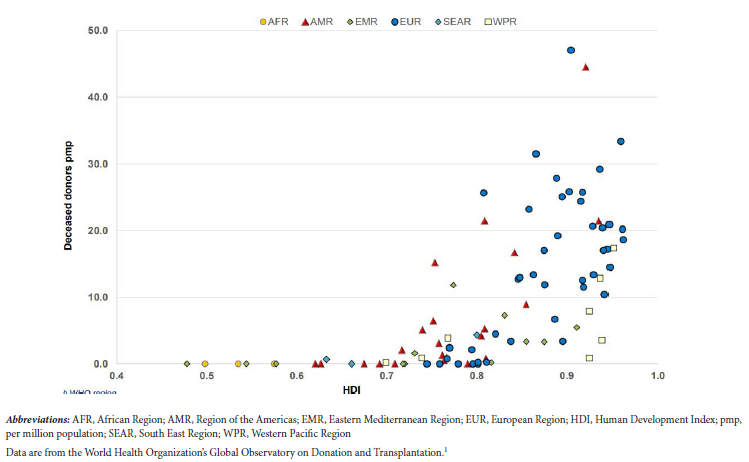
Figure 1. Global Deceased Donation Rates in Relation To the Human Development Index in 2022
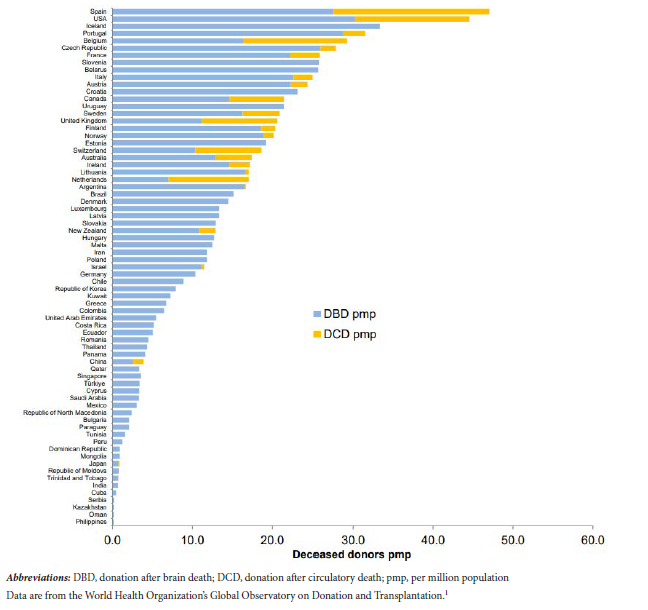
Figure 2. Actual Deceased Donors by Donor Type
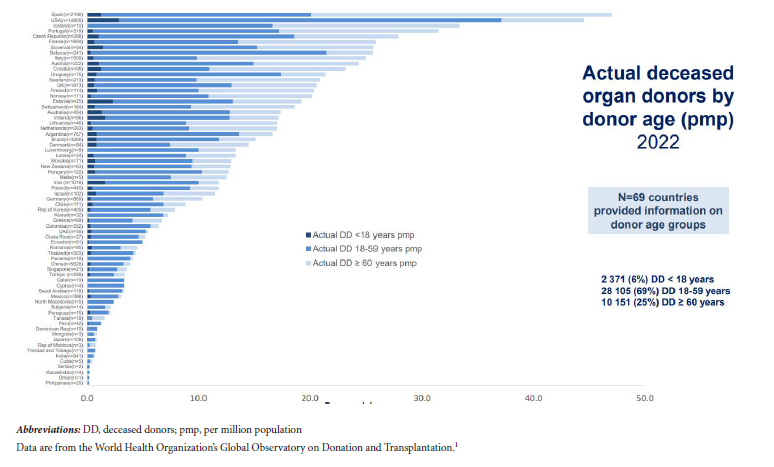
Figure 3. Actual Deceased Donors by Donor Age Group