Volume: 22 Issue: 1 January 2024 - Supplement - 1
FULL TEXT
Objectives: Acute liver failure is a life-threatening
condition that may result in death if liver transplant is not performed.
The aim of our study was to evaluate patients with acute liver failure
or acute-on-chronic liver failure who were followed and treated with
therapeutic plasma exchange in a pediatric intensive care unit until
they achieved clinical recovery or underwent liver transplant.
Materials and Methods: In this retrospective, single-center
study, we included patients with acute liver failure or acute-on-chronic
liver failure who received therapeutic plasma exchange between April
2020 and December 2021. Clinical findings, laboratory findings,
extracorporeal therapies, Pediatric Risk of Mortality III and liver
injury unit scores and pretherapy and posttherapy hepatic encephalopathy
scores, Model for End-Stage Liver Disease score, and Pediatric End-Stage
Liver Disease score were retrospectively analyzed.
Results: Nineteen patients were included in the study. One
patient was excluded because of positivity for COVID-19. The mean age of
children was 62.06 months, ranging from 5 months to 16 years (12 boys, 6
girls). Thirteen patients (72.2%) had acute liver failure, and 5
patients (27.8%) had acute-on-chronic liver failure. No significant
difference was shown for mean liver injury unit score (P = .673) and
Pediatric Logistic Organ Dysfunction score (P = .168) between patients
who died and patients who received treatment at the inpatient clinic and
transplant center. However, Pediatric Risk of Mortality score and the
mean Model for End-Stage Liver Disease/Pediatric End-Stage Liver Disease
scores before therapeutic plasma exchange and after therapeutic plasma
exchange (after 3 consecutive days of treatment) were statistically
significant (P = .001 and P = .004).
Conclusions: Therapeutic plasma exchange may assist bridge to
liver transplant or assist with spontaneous recovery of liver failure in
pediatric patients with acute liver failure or acute-on-chronic liver
failure.
Key words : Bridge to transplant, Liver failure, Pediatric transplant, Therapeutic plasma exchange
Introduction
Acute liver failure (ALF) and acute-on-chronic liver failure (ACLF) are 2 different types of severe hepatic dysfunction that can lead to multiple organ failure (MOF) and have significant effects on morbidity and mortality.1,2 Pediatric acute liver failure (PALF) is characterized by acute onset of jaundice, coagulopathy, and hepatic encephalopathy (HE) in patients without preexisting liver disease.3 The incidence of ALF is 17 per 100?000 people annually in the United States across all age groups. However, the frequency of ALF in children is currently unknown.4 The etiology of ALF and diagnostic criteria in pediatric patients are markedly different from adults.5,6 Metabolic diseases and indeterminate causes are more common among pediatric patients.7
Acute-on-chronic liver failure is defined as acute decompensation in a patient with preexisting chronic liver disease and can be identified by the presence of long-term liver disease, as well as an increase in serum bilirubin levels and a prolongation of the international normalized ratio (INR). The diagnosis may also be supported by the presence of kidney, lung, circulatory, or brain failure.8 The mortality rate of pediatric ACLF is between 20% and 30%.9 The high mortality of PALF is due to the rapidly progressing development of MOF, profound cardiovascular instability, HE, and oliguria.10 The presence of these is mainly due to decreased capacity of biotransformation and excretion of toxic substances.11 The exact cause of MOF is still unknown. However, it is believed to be mainly caused by systemic inflammation and immune activation resulting from various factors, including microbial and nonmicrobial. Liver injury may also contribute, although its impact is less significant.2,12,13
Therapeutic plasma exchange (TPE) removes a portion of plasma to clear circulating pathogenic molecules and toxic substances, which is replaced with an equivalent amount of fresh frozen plasma to replenish important physiologic components.14
Acute and acute-on-chronic liver failure may be fatal without liver transplant. The goal of intensive care treatment is to prevent or treat complications that may arise from ALF. Therapeutic plasma exchange potentially offers a survival benefit for ALF patients who can not undergo liver transplant. In this study, we aimed to evaluate patients with ALF and ACLF who were followed and treated with TPE in a pediatric intensive care unit until they achieved clinical recovery or underwent liver transplant.
Materials and Methods
This study was conducted as a retrospective, single-center study. Our study included 18 patients aged 0 to 17 years who were hospitalized in the pediatric intensive care unit between April 2020 and December 2021 with a diagnosis of ALF according to international ALF criteria and who received TPE.15 Conventional hepatic failure and HE medical treatment options were also provided. The study was approved by the Ethics Committee of Mustafa Kemal University Faculty of Medicine (approval number: 02/36; date:17.02.2022).
We obtained demographic data, primary diagnoses, clinical findings, laboratory findings, HE status, the need for mechanical ventilation, TPE data, continuous renal replacement therapy (CRRT) data, the number of sessions received in TPE and CCRT, vasopressor use, length of pediatric intensive care unit, outcomes, supportive treatments, and Pediatric Risk of Mortality III (PRISM III) and liver injury unit (LIU) scores from medical records. Liver injury unit score was calculated as 3.507 × total bilirubin (mg/dL) + 45.53 × INR + 0.254 × ammonia (µmol/L).16
Pretherapy and posttherapy HE, Model for End-Stage Liver Disease (MELD), and Pediatric End-Stage Liver Disease (PELD, for <12 years old) scores were determined. Calculation of MELD and PELD scores were made from websites at www.mdcalc.com or the Organ Procurement and Transplantation Network (www.optn.transplant.hrsa.gov). To evaluate HE, we used either the West Haven criteria or age-based modified encephalopathy rating scores.17
We based the definition of PALF on the following criteria: “(1) no known evidence of chronic liver disease; (2) biochemical evidence of acute liver injury (raised transaminases) <onset 8 weeks; (3) hepatic-based coagulopathy defined as a prothrombin time (PT) ?15 seconds or INR ?1.5 not corrected by vitamin K in the presence of clinical HE or a PT ?20 seconds or INR ?2.0 regardless of HE.”5
We used the following criteria in defining pediatric ACLF: an acute hepatic insult manifesting as jaundice (serum bilirubin >5 mg/dL) and coagulopathy (INR >1.5) complicated within 4 weeks by clinical ascites and/or HE in a patient with previous chronic liver disease.18
Treatment
All patients received fluid restriction (70% to 80% of estimated average fluid needs). Based on clinical observation, patients received appropriate antibiotic treatment (cefotaxime, meropenem, or piperacillin/tazobactam) and proton-pump inhibitors.
Kidney functions were closely monitored by twice daily or more checks of diuretic output and creatinine levels. If necessary, a diuretic or dialysis was initiated. During the HE stage, blood glucose and blood pressure levels were monitored frequently. Glucose and blood pressure levels were kept within a normal range with intravenous glucose and noradrenaline treatments, respectively. For patients who experienced hypotension, appropriate tension levels were achieved with the use of inotropic agents such as noradrenalin, adrenalin, dopamine, and dobutamine. If values were considered to be stable, the frequency of monitoring was minimized to 4 times per day until INR level decreased. If the patient developed severe HE (grade 3 or 4), respiratory failure, or hemodynamic instability, patients received noninvasive or mechanical ventilation.
Scores of PELD or MELD were calculated at the first day of intensive care unit and periodically thereafter. Patients were listed for liver transplant if liver failure progressed despite receipt of appropriate medical therapies. The use of CRRT was not routinely initiated to reduce ammonia levels but was used for children who developed oliguric acute kidney injury and fluid overload. Routine blood tests included complete blood cell count test, electrolytes, kidney and liver function tests, and measurement of C-reactive protein (CRP) at least twice daily. Ammonia levels were monitored daily. The differential diagnosis included screening for acute viral infections (hepatitis A, B and C, Epstein-Barr virus, cytomegalovirus), autoimmune hepatitis (autoantibodies and immunoglobulin G), a metabolic screen with lactate, urate, creatine kinase, ?-fetoprotein, plasma amino acids, urinary organic acids, plasma ?1-antitrypsin level, and ceruloplasmin. Within the first 1 or 2 days of hospitalization, patients received an abdominal ultrasonography and Doppler ultrasonography to examine the liver, spleen, and kidneys.
Procedure
All children had ultrasonography-guided venous access via a high-flow double-lumen catheter placed in the internal jugular or femoral vein. The double-lumen venous access catheters were predetermined based on the patient’s body weight, ranging from 6.5F to 11F. Before the procedure, the patient’s risk of bleeding was assessed by checking bleeding parameters, such as prothrombin time, INR, and platelet count. If necessary, a substitute was given to the patient as determined by the attending clinician.
We aimed to exchange 1 to 1.5 times the estimated plasma volume, resulting in filtration rate of 10 to 50 mL/kg/hour over 1 hour. The estimated plasma volume was calculated as follows: 1 to 1.5 × (70 to 80 mL × weight (kg) × [1 – hematocrit]). Fresh frozen plasma was used as exchange fluid. The TPE procedure was conducted using the Prismaflex TPE 1000/2000 filter technique through the Gambro 8.2. Before the administration of packed red blood cells in small children weighing less than 10 kg, circuits were prepared with saline containing sodium heparin. No anticoagulants were used. Additional heparin was administered through an extracorporeal line to maintain an activated clotting time of 160 to 180 seconds.
The decision to perform TPE was made after confirmation of diagnosis of PALF. After parent consent was obtained, preparation for TPE was initiated. The first 3 sessions were performed daily for all patients. In the first 3 sessions, blood gas parameters, complete blood cell count test, liver and kidney function tests, CRP, and procalcitonin and ammonia levels were measured before and within the first 6 hours after plasmapheresis. The decision to continue TPE before the procedure was made according to the daily evaluations of the patients. No bleeding episodes were noted during TPE.
Statistical analyses
We used the IBM Statistical Package for Social Sciences (SPSS) version 22.0 software for statistical analyses. We tested the hypothesis of a normal distribution with the Kolmogorov-Smirnov test and histograms. We expressed continuous variables as means with standard deviations or as medians with interquartile ranges. We expressed categorical variables as numbers and percentages. We compared categorical variables using the chi-square test and continuous variables using the Mann-Whitney U test or t-test. P values of categorical variables were calculated using the Fisher exact test since the total sample included fewer than 40 patients. Differences were considered significant at P < .05.
Results
Nineteen patients were included in the study. One patient was excluded because of positivity for COVID-19. The mean age of children was 62.06 months, ranging from 5 months to 16 years (12 boys, 6 girls). Thirteen patients (72.2%) had ALF, and 5 patients (27.8%) had ACLF. Among the patients, the common etiology was idiopathic in 12, followed by Wilson disease in 3, and autoimmune hepatitis in 3. Toxic hepatitis, viral hepatitis, and mushroom poisoning were not seen in any of our patients. Every child successfully finished a minimum of 1 set of 3 days with TPE. A total of 107 TPE sessions (minimum of 3 and maximum of 17) were performed among the 18 patients. Four patients (22.2%) underwent dialysis. Five patients (27.8%) received inotropic therapy. The median length of stay in the pediatric intensive care unit was 14.75 days (range, 3-125). The mean number of TPE sessions was 5.94 (range, 3-17). Two patients (11.1%) had comorbid diseases (acute pancreatitis in 1 patient and Fournier gangrene in 1 patient). Fourteen patients (77.8%) had ascites. Total bilirubin level was >11.7 mg/dL in 11 patients (9 patients with ALF, 2 patients with ACLF).
Five patients (27.8%) were successfully transferred to the transplant center, 6 (33.3%) were transferred to the inpatient clinic, and 7 (38.8%) died during TPE (6 with ALF, 1 with ACLF). Our youngest patient (6 months old) died on day 4. A donor could not be found for 2 patients, and the other 4 died because of liver and multiorgan failure. The mean LIU score, PRISM score, and the Pediatric Logistic Organ Dysfunction score of patients who died were 235.97 ± 115.35, 29.42 ± 10.84, and 9.71 ± 2.49, respectively; among those who were transferred to inpatient clinic or the transplant center, respective scores were 195.84 ± 55.31, 23.27 ± 7.33, and 5.55 ± 1.44 (P = .673, P = .001, P = .168) (Table 1).
In our study, the mean MELD or PELD scores before versus after TPE (after 3 consecutive days of treatment) were 32.48 ± 14.13 versus 21.94 ± 8.8 and statistically significant (P = .004). The mean MELD or PELD scores before and after TPE were 33.04 ± 15.28 and 25.80 ± 4.1 among patients who died and 32.10 ± 14.10 and 19.25 ± 10.45 among patients who were transferred to inpatient clinic or the transplant center (P = .89 and P = .139).
The biochemical profile during 3 days of TPE is shown in Table 2. Rapid declines in alanine aminotransferase (P = .06), total bilirubin (P = .01), and INR (P = .001) were noted after treatment, with a tendency of reversion 24 hours after the last TPE. Although bicarbonate (HCO3) levels were high after 3 consecutive doses of TPE, differences were not significant (P = .093). In 11 patients, HCO3 levels were even higher after TPE sessions. A difference was shown between mean venous oxygen saturation and pH levels; however, the difference was not significant. No significant differences were shown in mean lactate, ionized calcium, procalcitonin, and partial pressure of carbon dioxide (pCO2) levels.
Although no significant change in ammonia levels was shown, ammonia was higher after TPE treatment in 6 patients. In our study, mean ammonia values before extracorporeal treatment were 78.57 ± 49.58 ?mol/L. No significant difference was shown between ammonia level after TPE and baseline ammonia level in patients who died versus patients who did not die (110.80 ± 73.98, 95.75 ± 50.03 vs 82.80 ± 70.35, 76.46 ± 40.12) (P = .66 and P = .82). No changes in sodium and potassium levels were shown. Albumin levels after TPE were higher than before treatment in 13 patients (P = .04). Heart rate and blood pressure remained stable during TPE. No significant differences in CRP (P = .98) and procalcitonin (P = .18) levels were shown after 3 consecutive doses of TPE. Procalcitonin levels of 17 patients were lower after TPE.
One patient showed increased CRP and procalcitonin levels during TPE, but urine and blood culture results were negative; the patient died on day 31 of hospitalization because of lactic acidosis and MOF, as there was no donor. A patient with ACLF (autoimmune hepatitis) underwent skin grafting because of Fournier gangrene in the genital area, and TPE was administered. Candida albicans growth was shown in blood, tissue, and urine cultures. After appropriate treatment, the patient was successfully referred to the transplant center. A patient who was followed up for acute pancreatitis recovered and was transferred to the inpatient clinic. None of the patients developed clinical or biochemical signs of new infections during TPE.
Discussion
Both ALF and ACLF are devastating and complex pathophysiologic processes in children that can cause sudden death characterized by MOF.9,19 Although there have been some advancements, PALF continues to be a rare disease with high mortality. Mortality rates of 48% to 70% have been shown if liver transplant is not performed.20,21 Our study showed a mortality rate of 38.8%. This rate may be explained by the fact that 27.8% of our patients (n = 5) were <2 years old, no donor was available, and our hospital was not a transplant center.
Studies have shown that the mortality rates for pediatric ACLF ranged between 20% and 30%, which is 5 times higher compared with chronic liver disease.22,23 According to our study, mortality rates of ALF, ACLF, and total ALF + ACLF were 46.16%, 20%, and 38.8%, respectively.
Although liver transplant is the ultimate treatment for PALF or ACLF, spontaneous recovery in the native liver is the ideal outcome.19,24 Artificial liver support systems are increasingly showing promise as effective techniques. Therapeutic plasma exchange is an artificial liver support system used for treatment of PALF, either as a way to promote spontaneous regeneration or as a bridge to liver transplant. Unlike other extracorporeal life support systems, adequate evidence has been provided for immune-related conditions.25 Classical methods are generally used for TPE in PALF patients. In addition, high-volume plasma exchange, which is used more frequently for adults, has also been applied.26,27 In our study, filter-based techniques were used, similar to previous studies.
The appropriate duration and frequency of TPE treatment for ALF patients are still lacking and controversial. In our study, all patients underwent 3 consecutive sessions of classical TPE, consistent with some pediatric reports.26,27 No treatment-related complications were observed in any of the patients.
Studies have shown that TPE significantly improves systemic inflammatory response syndrome and biochemical parameters, while also stabilizing hemodynamics.28-30 In our study, bilirubin, alanine aminotransferase, and INR values significantly decreased after TPE. However, ammonia levels did not significantly decrease. This situation may be explained by the fact that TPE treatment duration is shorter than hemodialysis or hemofiltration, and it is less effective in cleaning small molecule substrates (ammonia, urea, creatinine), as reported in some studies.31
Peak bilirubin level, HE, and PT are known prognostic factors for ALF. Recent studies also used scores such as LIU and PELD or MELD for prognosis.19,20 Studies have concluded that TPE may be a bridge treatment and can be used to reduce mortality and morbidity.32,33 We found a significant difference between the mean MELD/PELD scores before and after TPE. However, as shown in other studies, no statistical significance was found between patients who survived versus those who died.32,33 Thus, TPE can be a bridge to liver transplant or to spontaneous recovery. Defining a value for starting an extracorporeal method approved by scoring systems may be difficult. We believe that a more extensive series of studies may provide further guidance.
The mean numbers of TPE sessions was 5.94 (range, 3-17). In 2 other studies, the number of TPE sessions was reported as 4 (range, 1-8) and 3 (range, 1-20).19,20 Treatment of PALF and ACLF are significantly heterogenous, and treatment protocols have not been standardized. In addition, sampling durations for biomarkers are not standardized. In our study, the median length of stay in the pediatric intensive care unit was 14.75 days (range, 3-125 days). The number of days of hospitalization in the intensive care unit in patients who survived versus those who died was not significantly different, similar to other studies.33
Recent studies have shown that mortality rates increase with the number of extracorporeal methods received by patients.20,32 Two of our ALF patients who required CRRT and needed mechanical ventilation died.
Some studies have shown that a high LIU score may be associated with mortality.16 In our study, the mean LIU score was higher in the deceased group than in the inpatient clinic/transplant group; however, the difference was not significant.
The PRISM score is a frequently used physiologic-based measure of severity of illness that uses 17 commonly measured physiologic variables and their ranges. The PRISM score quantifies physiologic status by using predetermined physiologic variables and their ranges, using categorical variables to facilitate accurate mortality risk estimation.33 The PRISM variables and their ranges are significantly associated with morbidity and mortality and could be used to simultaneously estimate risk of morbidity and mortality.33 In our study, patients who died had a significantly higher PRISM score than patients in the inpatient clinic/transplant group.
A study that compared biochemical data after 3 consecutive days of high-volume TPE had results similar to ours.27 The study reported a tendency to metabolic alkalosis after TPE, and three patients with pH >7.55 was treated with hydrochloric acid. In our study, we observed a patient who experienced metabolic acidosis after TPE. However, we did not detect any cases of severe metabolic acidosis. The study reported 6 of 16 patients who died, our study reported death in 7 of 18 patients. However, 5 of our patients had ALF on a chronic basis.
Both ALF and ACLF are rare entities seen in pediatric intensive care units. Liver transplant or death is inevitable unless extracorporeal supportive treatments are performed for both situations. Similar efficacy has been shown with different TPE treatments (therapeutic [classical] or high volume). However, considering that TPE procedures are performed with products with high-volume load (free frozen plasma, albumin), therapeutic (classical) plasmapheresis applications seem to be more effective.
Our study had some limitations. Our study was retrospective with a small sample size, and it was conducted at a single center.
Conclusions
Currently, one-third of PALF and ACLF patients require liver transplant or die before a donor is available for transplant. Use of TPE and CRRT is essential for patients who are diagnosed with this challenging situation. Our study showed that TPE and CRRT may assist a bridge for liver transplant or to spontaneous recovery of liver failure in PALF and ACLF patients.
References:
- Moreau R, Jalan R, Gines P, et al. Acute-on-chronic liver failure is a distinct syndrome that develops in patients with acute decompensation of cirrhosis. Gastroenterology. 2013;144(7):1426-1437, 1437 e1421-1429. doi:10.1053/j.gastro.2013.02.042
CrossRef - PubMed - Dong V, Nanchal R, Karvellas CJ. Pathophysiology of acute liver failure. Nutr Clin Pract. 2020;35(1):24-29. doi:10.1002/ncp.10459
CrossRef - PubMed - Alonso EM, Horslen SP, Behrens EM, Doo E. Pediatric acute liver failure of undetermined cause: a research workshop. Hepatology. 2017;65(3):1026-1037. doi:10.1002/hep.28944
CrossRef - PubMed - Arya G, Balistreri WF. Pediatric liver disease in the United States: epidemiology and impact. J Gastroenterol Hepatol. 2002;17(5):521-525. doi:10.1046/j.1440-1746.2002.02678.x
CrossRef - PubMed - Squires RH, Jr., Shneider BL, Bucuvalas J, et al. Acute liver failure in children: the first 348 patients in the pediatric acute liver failure study group. J Pediatr. 2006;148(5):652-658. doi:10.1016/j.jpeds.2005.12.051
CrossRef - PubMed - European Association for the Study of the Liver. Clinical practice guidelines p, Wendon J, et al. EASL Clinical Practical Guidelines on the management of acute (fulminant) liver failure. J Hepatol. 2017;66(5):1047-1081. doi:10.1016/j.jhep.2016.12.003
CrossRef - PubMed - Narkewicz MR, Dell Olio D, Karpen SJ, et al. Pattern of diagnostic evaluation for the causes of pediatric acute liver failure: an opportunity for quality improvement. J Pediatr. 2009;155(6):801-806 e801. doi:10.1016/j.jpeds.2009.06.005
CrossRef - PubMed - Bajaj JS, O'Leary JG, Lai JC, et al. Acute-on-chronic liver failure clinical guidelines. Am J Gastroenterol. 2022;117(2):225-252. doi:10.14309/ajg.0000000000001595
CrossRef - PubMed - Mataya LA, Srinivasan V, Rand EB, Alcamo AM. Multiple organ involvement and ICU considerations for the care of acute liver failure (ALF) and acute on chronic liver failure (ACLF) in children. Transl Pediatr. 2021;10(10):2749-2762. doi:10.21037/tp-20-375
CrossRef - PubMed - Clemmesen JO, Galatius S, Skak C, Dalgaard P, Larsen FS, Ott P. The effect of increasing blood pressure with dopamine on systemic, splanchnic, and lower extremity hemodynamics in patients with acute liver failure. Scand J Gastroenterol. 1999;34(9):921-927. doi:10.1080/003655299750025417
CrossRef - PubMed - Khamri W, Abeles RD, Hou TZ, et al. Increased expression of cytotoxic T-lymphocyte-associated protein 4 by T Cells, induced by B7 in sera, reduces adaptive immunity in patients with acute liver failure. Gastroenterology. 2017;153(1):263-276 e268. doi:10.1053/j.gastro.2017.03.023
CrossRef - PubMed - Jalan R, Moreau R, Kamath PS, Arroyo V. Acute-on-chronic liver failure: a distinct clinical condition. Semin Liver Dis. 2016;36(2):107-108. doi:10.1055/s-0036-1583287
CrossRef - PubMed - Chung RT, Stravitz RT, Fontana RJ, et al. Pathogenesis of liver injury in acute liver failure. Gastroenterology. 2012;143(3):e1-e7. doi:10.1053/j.gastro.2012.07.011
CrossRef - PubMed - Yang CF, Zhang Z, Zhang XY, Li YM. Artificial liver support system in pediatric acute liver failure due to mushroom poisoning: Case series. Ann Hepatol. 2021;23:100290. doi:10.1016/j.aohep.2020.100290
CrossRef - PubMed - Squires RH, Ng V, Romero R, et al. Evaluation of the pediatric patient for liver transplantation: 2014 practice guideline by the American Association for the Study of Liver Diseases, American Society of Transplantation and the North American Society for Pediatric Gastroenterology, Hepatology and Nutrition. Hepatology. 2014;60(1):362-398. doi:10.1002/hep.27191
CrossRef - PubMed - Lu BR, Zhang S, Narkewicz MR, et al. Evaluation of the liver injury unit scoring system to predict survival in a multinational study of pediatric acute liver failure. J Pediatr. 2013;162(5):1010-1016 e1-4 011-1014. doi:10.1016/j.jpeds.2012.11.021
CrossRef - PubMed - Antoniades CG, Berry PA, Wendon JA, Vergani D. The importance of immune dysfunction in determining outcome in acute liver failure. J Hepatol. 2008;49(5):845-861. doi:10.1016/j.jhep.2008.08.009
CrossRef - PubMed - Sarin SK, Kumar A, Almeida JA, et al. Acute-on-chronic liver failure: consensus recommendations of the Asian Pacific Association for the study of the liver (APASL). Hepatol Int. 2009;3(1):269-282. doi:10.1007/s12072-008-9106-x
CrossRef - PubMed - Akcan Arikan A, Srivaths P, Himes RW, et al. Hybrid extracorporeal therapies as a bridge to pediatric liver transplantation. Pediatr Crit Care Med. 2018;19(7):e342-e349. doi:10.1097/PCC.0000000000001546
CrossRef - PubMed - Gun E, Durak A, Botan E, et al. Extracorporeal therapies in children with acute liver failure: a single-center experience. Turk J Gastroenterol. 2023;34(1):73-79. doi:10.5152/tjg.2022.22062
CrossRef - PubMed - Chien MM, Chang MH, Chang KC, et al. Prognostic parameters of pediatric acute liver failure and the role of plasma exchange. Pediatr Neonatol. 2019;60(4):389-395. doi:10.1016/j.pedneo.2018.09.006
CrossRef - PubMed - Alam S, Lal BB, Sood V, Rawat D. Pediatric acute-on-chronic liver failure in a specialized liver unit: prevalence, profile, outcome, and predictive factors. J Pediatr Gastroenterol Nutr. 2016;63(4):400-405. doi:10.1097/MPG.0000000000001179
CrossRef - PubMed - Jagadisan B, Srivastava A, Yachha SK, Poddar U. Acute on chronic liver disease in children from the developing world: recognition and prognosis. J Pediatr Gastroenterol Nutr. 2012;54(1):77-82. doi:10.1097/MPG.0b013e318228d7da
CrossRef - PubMed - Zoica BS, Deep A. Extracorporeal renal and liver support in pediatric acute liver failure. Pediatr Nephrol. 2021;36(5):1119-1128. doi:10.1007/s00467-020-04613-4
CrossRef - PubMed - Zanatta E, Cozzi M, Marson P, Cozzi F. The role of plasma exchange in the management of autoimmune disorders. Br J Haematol. 2019;186(2):207-219. doi:10.1111/bjh.15903
CrossRef - PubMed - Larsen FS, Schmidt LE, Bernsmeier C, et al. High-volume plasma exchange in patients with acute liver failure: an open randomised controlled trial. J Hepatol. 2016;64(1):69-78. doi:10.1016/j.jhep.2015.08.018
CrossRef - PubMed - Jorgensen MH, Rasmussen A, Christensen VB, et al. Safety of high-volume plasmapheresis in children with acute liver failure. J Pediatr Gastroenterol Nutr. 2021;72(6):815-819. doi:10.1097/MPG.0000000000003108
CrossRef - PubMed - Stahl K, Hadem J, Schneider A, et al. Therapeutic plasma exchange in acute liver failure. J Clin Apher. 2019;34(5):589-597. doi:10.1002/jca.21737
CrossRef - PubMed - Squires JE, McKiernan P, Squires RH. Acute liver failure: an update. Clin Liver Dis. 2018;22(4):773-805. doi:10.1016/j.cld.2018.06.009
CrossRef - PubMed - Pawaria A, Sood V, Lal BB, Khanna R, Bajpai M, Alam S. Ninety days transplant free survival with high volume plasma exchange in Wilson disease presenting as acute liver failure. J Clin Apher. 2021;36(1):109-117. doi:10.1002/jca.21848
CrossRef - PubMed - Lutfi R, Abulebda K, Nitu ME, Molleston JP, Bozic MA, Subbarao G. Intensive care management of pediatric acute liver failure. J Pediatr Gastroenterol Nutr. 2017;64(5):660-670. doi:10.1097/MPG.0000000000001441
CrossRef - PubMed - Arikan AA, Srivaths P, Himes RW, et al. Hybrid extracorporeal therapies as a bridge to pediatric liver transplantation. Pediatric critical care medicine. 2018;19(7):e342-e349.
CrossRef - PubMed - Ruth A, McCracken CE, Fortenberry JD, Hebbar KB. Extracorporeal therapies in pediatric severe sepsis: findings from the pediatric health-care information system. Crit Care. 2015;19:397. doi:10.1186/s13054-015-1105-4
CrossRef - PubMed - Pollack MM, Holubkov R, Funai T, et al. Simultaneous prediction of new morbidity, mortality, and survival without new morbidity from pediatric intensive care: a new paradigm for outcomes assessment. Crit Care Med. 2015;43(8):1699-1709. doi:10.1097/CCM.0000000000001081
CrossRef - PubMed

Volume : 22
Issue : 1
Pages : 88 - 95
DOI : 10.6002/ect.MESOT2023.O12
From the 1Pediatric Intensive Care Unit, Hatay Research and
Education Hospital, and 2Pediatric Gastroenterology, Hepatology
and Nutrition, Hatay Research and Education Hospital, Hatay, Turkey
Acknowledgements: The authors have not received any
funding or grants in support of the presented research or for the
preparation of this work and have no declarations of potential conflicts
of interest.
Corresponding author: Neslihan Ek?i Bozbulut, Hatay
Research and Training Hospital, Pediatric Gastroenterology, Hepatology and
Nutrition, 31000, Hatay, Turkey
Phone: +90 5323059135
E-mail: neslihaneksi@hotmail.com
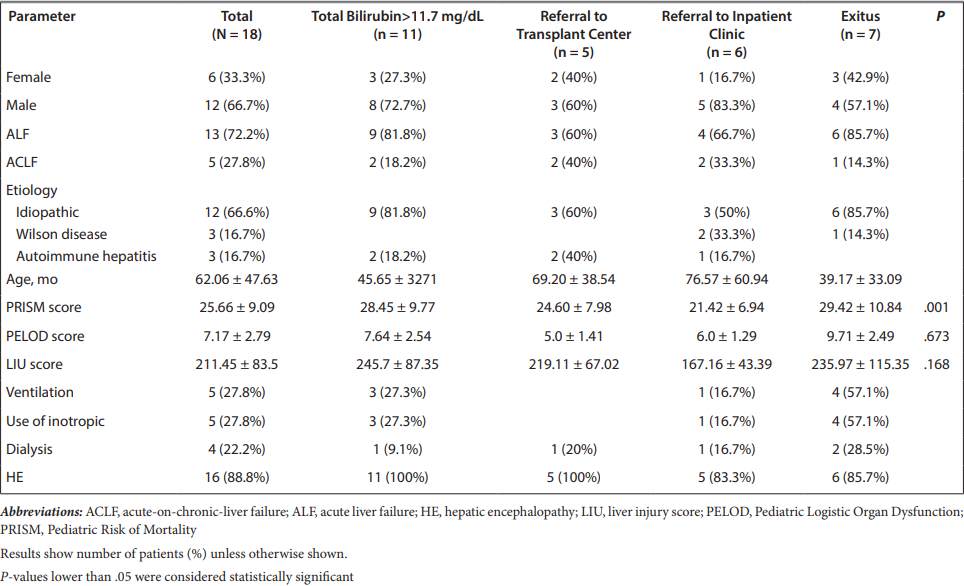
Table 1. Variables of Patients
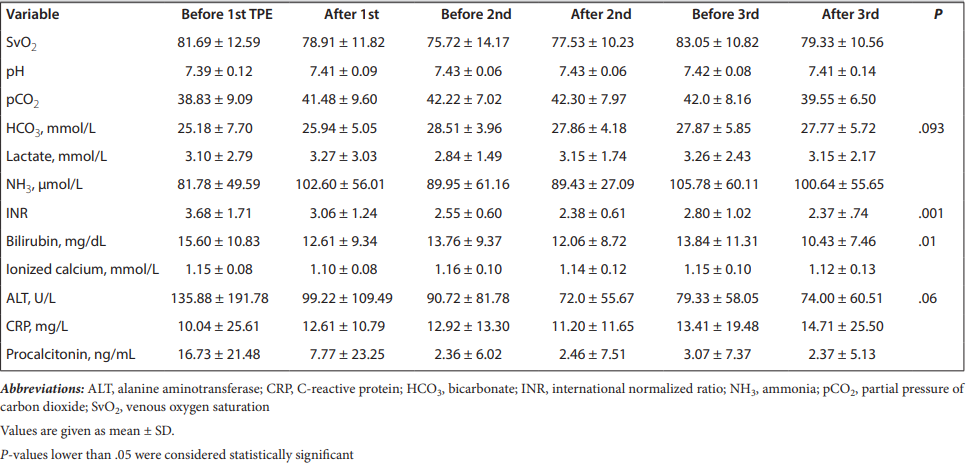
Table 2. Biochemical Variables Before and After 3 Days of Plasmapheresis Therapy