Volume: 22 Issue: 1 January 2024 - Supplement - 1
FULL TEXT
The present study presents the results of a collaborative program in Saudi Arabia, aiming to improve deceased organ donation rates. Launched in 2017, the program involved implementing a training program and quality management system in conjunction with the Donation and Transplantation Institute and the Saudi Center for Organ Transplantation. The study summarizes 2 phases of the program, including the implementation of key performance indicators and a continuous improvement plan. Results revealed a 198% increase in potential donor detection and a 44% increase in donation rates in the pilot program. The second phase, applying a 3-level methodology in selected hospitals, led to a 40% increase in utilized organ donors. The creation of in-hospital organ donation units showed the best results, and the program emphasizes the importance of continuous training and quality management to achieve optimal organ donation outcomes.
Key words : Conversion rate, Institutional training program, Organ donation unit, Program performance indicators, Self-sufficiency in donation
Introduction
The World Health Organization is advocating for the development of self-sufficiency in donation and transplantation worldwide.
Since 2017, the Ministry of Health of the Kingdom of Saudi Arabia launched a program coordinated by the Donation and Transplantation Institute with the support of the Saudi Center for Organ Transplantation aiming to improve the deceased donation rates by implementing a training program and a quality management system. In 2022, the second phase of the International Program for the Enhancement of the Deceased Organ Donation System was implemented. The present study summarizes the effect of the implementation of a quality indicators pilot program and training programs in Saudi Arabia’s critical pathway for organ donation.
Materials and Methods
The collaboration between the Donation and Transplantation Institute and the Saudi Center for Organ Transplantation has included a pilot program with the implementation of a training program and key performance indicators2-3 in 4 hospitals, as well as a second phase that includes 5 points of focus: (1) diagnostic study to achieve a comprehensive vision of the organ donation system; (2) capacity building for the professionals in the region; (3) implementation of a pilot program to develop organ donation units in 4 health clusters and a military hospital; (4) monthly follow-up to analyze the data collected and promote knowledge exchange with international experts; and (5) implementation of key performance indicators and a continuous improvement plan.
Results
The collaboration allowed identification of the organizational, structural, and educational needs. During 2018 at the pilot program hospitals, the donation alerts increased from 100 to 298 during the first year of the project (255 of these were potential, 106 were eligible, and 26 were actual donors1). This represented a 198% increase in potential donor detection and referral, as well as a 44% increase in the donation rate (Figure 1). The second phase of the project applies a 3-level methodology in 4 health clusters from the Ministry of Health network and a military hospital. First, a diagnostic study was performed in these hospitals to calculate potentiality1 and identify the organizational, structural, and educational needs. Second, specialized training was provided to 216 professionals in 2022. Third, a quality management system was implemented with an internal and external audit methodology2. After the implementation of this methodology, the hospitals demonstrated a 40% increase in the number of utilized organ donors compared with 2021, which represents 25.7% of the deceased organ donors from the whole country (Figure 2). The hospitals that created in-hospital organ donation teams demonstrated the best results. Results from the implementation of the second phase suggest that implementation of an in-hospital organ donation unit improves the hospital’s organ donation activity.
Discussion
The project allowed homogenization of organ donation standard operating procedures in the network of participant centers by creation of a methodology that followed key performance indicators. The project facilitated the development of in-hospital organ donation units that enact the organ donation activity inside the selected hospitals. The main areas for improvement have been identified. Continuous follow-up is crucial to maintain motivation and facilitate better results.
The project allowed homogenization of organ donation standard operating procedures in the network of participant centers by creation of a methodology that followed key performance indicators. The project facilitated the development of in-hospital organ donation units that enact the organ donation activity inside the selected hospitals. The main areas for improvement have been identified. Continuous follow-up is crucial to maintain motivation and facilitate better results.
References:
- Dominguez-Gil B, Delmonico FL, Shaheen FA, et al. The critical pathway for deceased donation: reportable uniformity in the approach to deceased donation. Transpl Int. 2011;24(4):373-378. doi:10.1111/j.1432-2277.2011.01243.x
CrossRef - PubMed - Manyalich M, Guasch X, Gomez MP, Paez G, Teixeira L; ODEQUS Consortium. Organ Donation European Quality System: ODEQUS project methodology. Transplant Proc. 2013;45(10):3462-3465. doi:10.1016/j.transproceed.2013.09.009
CrossRef - PubMed - Quality Management System in Organ Donation (QUORUM). 2022. http://www.quorumdti.org/

Volume : 22
Issue : 1
Pages : 81 - 82
DOI : 10.6002/ect.MESOT2023.O3
From the 1International Development, Donation and
Transplantation Institute, Barcelona, Spain; and the 2Saudi
Center for Organ Transplantation, Riyad, Kingdom of Saudi Arabia
Acknowledgements: The authors have not received any
funding or grants in support of the presented research or for the
preparation of this work and have no declarations of potential conflicts
of interest.
Corresponding author: Brian Alvarez, Baldiri Reixac, 4-8
Tower I, 8th Floor, 08028 Barcelona, Spain
Phone: +34 664 770 509
E-mail:
brian.alvarez@dtifoundation.com
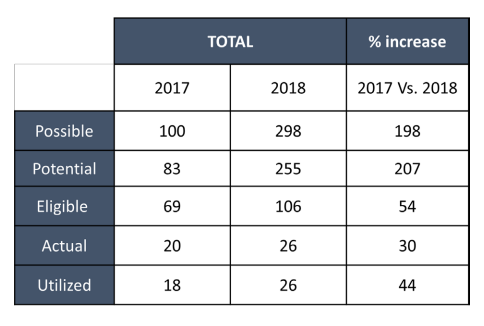
Figure 1. Increase in Critical Pathway for Organ Donation: 2017 Versus 2018
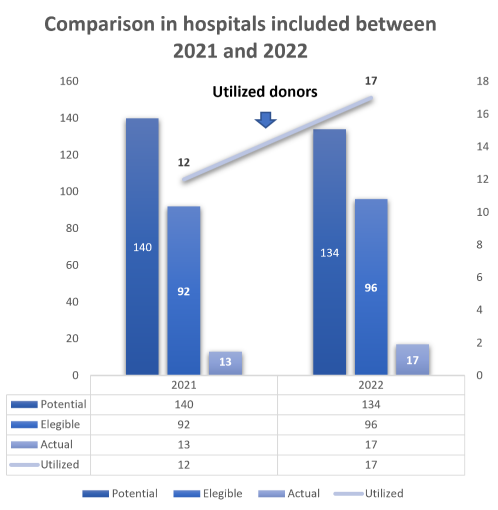
Figure 2. Increase in Critical Pathway for Organ Donation: 2021 Versus 2022