Volume: 22 Issue: 1 January 2024 - Supplement - 1
FULL TEXT
This article explores the impact of a partnership program involving the International Society of Nephrology-The Transplantation Society, the Southern Philippines Medical Center, and the University of Barcelona. The program included capacity building and partnership with the Donation and Transplant Institute, leading to the creation of 5 Intermediate Transplant Procurement Management courses for Southern Philippines Medical Center’s healthcare professionals. The study analyzed organ donation activity and training records from 2016 to 2022, dividing the periods pre- and post-Sister Transplant Center partnership, and further subdividing to assess the impact of the COVID-19 pandemic. Results showed an increase of 474.39% in donor referrals by 2019, which then dropped significantly during the COVID-19 pandemic. In 2022, a reimplementation of training opportunities led to a 657% increase in referrals. Capacity building through education, training, and partnerships has a direct and positive impact on organ donation activity, even in the face of challenging circumstances like a global pandemic.
Key words : Deceased donation, Education and training impact, Increased donor referrals, Organ donation unit
Introduction
The International Society of Nephrology-The Transplantation Society (ISN-TTS) has granted the Sister Transplant Center (STC) to the Southern Philippines Medical Center (SPMC) as an emerging center with the University of Barcelona as the supporting center. As part of capability building, partnership with the Donation and Transplant Institute (DTI) was integrated in the partnership. This has led to 5 Intermediate Transplant Procurement Management courses with health care professionals from SPMC, who provide access to strengthen the deceased organ donation activity through education and training.
The number of deceased donor transplants has substantially increased as a result of changes in the implementation of principles in transplant coordination and organ procurement management.1 Education of health care professionals will improve referral rates for potential donors.2
During the COVID-19 pandemic, SPMC as an end hospital referral facility had stopped all donation and transplant activity. Nimmo and colleagues3 reported that the COVID-19 pandemic was an important limiting factor in the hospital’s transplant program. In this report, we analyzed the effects of training and education in the organ donation activity within the framework of the ISN-TTS and SPMC partnership.
Materials and Methods
The hospital database on organ donation activity and training records were used to analyze the information from 2016 to 2022. The periods were divided as pre-STC partnership in 2016 and post-STC implementation from 2017 to 2022. We further divided the periods as prior, during, and after the pandemic (recovery period) to show the impact. We used an observational descriptive study method for analysis.
Results
In 2016 (pre-STC partnership), there were only 4 donor referrals per year. With the partnership’s implementation and trainings, the number of referrals substantially increased to 54, with a 151.85% increase in 2018 and 474.39% in 2019 (Figure 1). In 2020 and 2021, the COVID-19 pandemic directly affected the decreased number of referrals by 306.3%, arriving finally to 7 referrals in 2021 (Figure 2). To reactivate the program, during 2022, training opportunities on deceased donor organ transplant processes were reimplemented for the hospital teams involved in the care of potentially brain dead patients. Additionally, a monthly audit of donors referred was implemented with support from the STC and DTI. These actions helped achieve 657% increase in number of referrals in 2022.
Discussion
Implementation of the ISN-TTS-STC partnership program of SPMC, University of Barcelona, and DTI has successfully increased the hospital organ donation and transplant activity. During the COVID-19 pandemic, organ donation activity decreased, which was thus also directly related to the decrease in the number of referrals. Resumption of the training program in organ donation after the pandemic increased the program’s activity. In conclusion, capacity building has been shown to have a direct impact on organ donation activity.
References:
- Karatzas T, Katsani M, Mitropoulou E, Nikolaou E, Vosnides A, Kostakis A. Substantial increase in cadaveric organ transplantation in Greece for the period 2001-2005. Transplant Proc. 2007;39(4):797-800. doi:10.1016/j.transproceed.2007.03.053
CrossRef - PubMed - Organ Donation Innovative Strategies for Southeast Asia. https://odisseaproject.eu
- Nimmo A, Gardiner D, Ushiro-Lumb I, Ravanan R, Forsythe JLR. The global impact of COVID-19 on solid organ transplantation: two years into a pandemic. Transplantation. 2022;106(7):1312-1329. doi:10.1097/TP.0000000000004151
CrossRef - PubMed

Volume : 22
Issue : 1
Pages : 78 - 80
DOI : 10.6002/ect.MESOT2023.O2
From the 1International Development, Donation and
Transplantation Institute (DTI Foundation), Barcelona, Spain; the
2Organ Donation Team, Southern Philippines Medical Center,
Davao city, Philippines; and the 3University of Barcelona, Barcelona,
Spain
Acknowledgements: The authors have not received any
funding or grants in support of the presented research or for the
preparation of this work and have no declarations of potential conflicts
of interest.
Corresponding author: Brian Alvarez, Baldiri Reixac, 4-8
Tower I, 8th Floor, 08028 Barcelona, Spain
Phone: +34 664770509
E-Mail:
brian.alvarez@dtifoundation.com
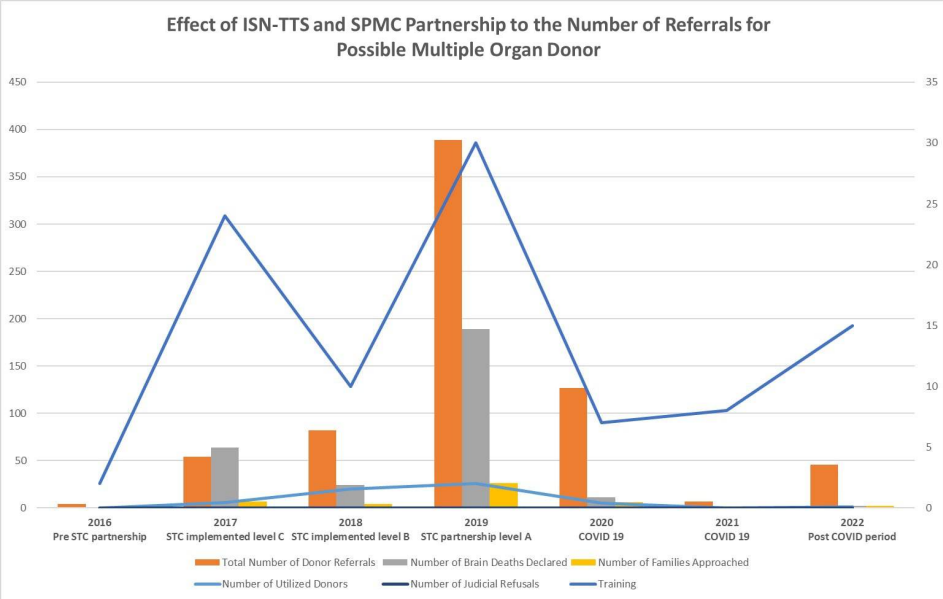
Figure 1. Effect of the International Society of Nephrology-The Transplantation Society (ISN-TTS) and Southern Philippines Medical Center (SPMC) Partnership to the Number of Referrals for Possible Multiple Organ Donors
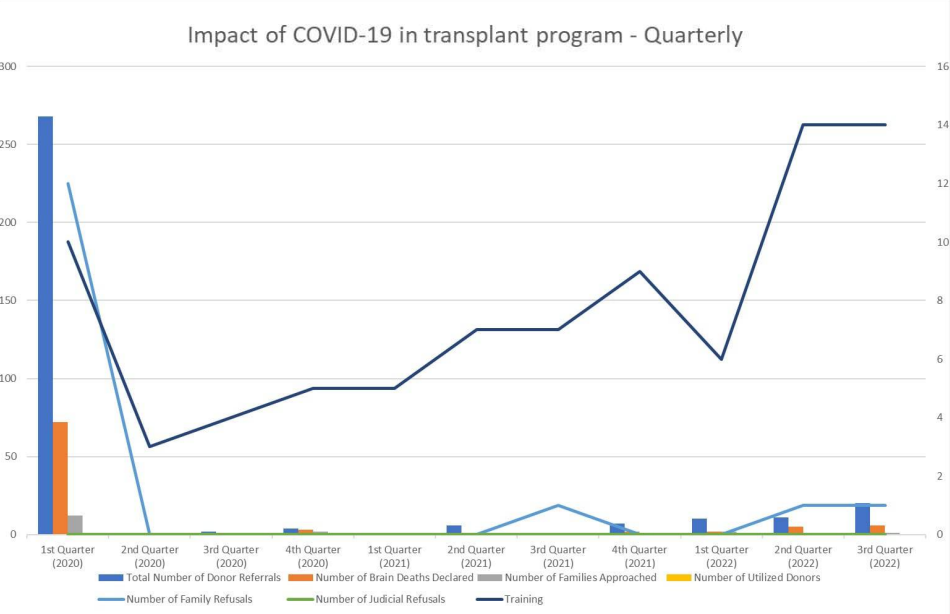
Figure 2. Impact of COVID-19 on the Transplant Program, Quarter 1 of 2020 Through Quarter 3 of 2022