Volume: 22 Issue: 1 January 2024 - Supplement - 1
FULL TEXT
Renal transplant is the best procedure for patients with end-stage renal disease. Although an ideal kidney transplant should survive for the lifetime of each recipient, there may be a need for a second, third, or even a fourth retransplant. The outcomes of these kidney allografts, surgical approaches, immunology issues, and drug therapies warrant greater focus. Pediatric kidney retransplant is even more important because these patients are more immunologically responsive to donor antigens and because they need longer allograft survival. Although kidney retransplant provides a survival advantage for patients who would otherwise remain on the wait list and/or hemodialysis, careful patient selection is crucial for second, third, and fourth renal transplants. Despite the shortage of donor organs, outcomes, manageable complications, and economic considerations support earlier kidney retransplants rather than delayed retransplants. Preoperative vascular imaging, appropriate induction therapy, regular monitoring of renal function, and regular surveillance for malignancy and infection are more important in the retransplanted kidneys than in cases of first kidney transplants. The lack of robust data on optimal clinical management of these retransplant recipients has contributed to substantial variations in clinical practice among different centers. In this review, we discuss medical and surgical approaches in the cases of second and third kidney transplants.
Key words : Allograft failure, Graft survival, Immuno-suppression, Retransplantation
Introduction
Short-term outcomes of kidney transplant have improved over time since the introduction of new immunotherapies and better HLA matching; however, long-term graft survival outcomes have been less remarkable. Presently, 20% of recipients experience allograft failure within 5 years of transplant, and almost 50% lose their allograft within 10 years.1 About 14% of renal transplant recipients require retransplants, and almost 20% of patients on the wait list have had a prior kidney transplant graft failure. Although the total number of registered failed allografts has been constant during the past 2 decades (between 3000 and 4000 patients), the percentage of registered candidates for retransplant has decreased over time (from 14% in 2004 to 10% in 2018). This decrement was more prominent among racial minorities and low socioeconomic populations.2 Presently, relisting of a failing allograft is allowed for patients whose glomerular filtration rate has dropped below 20 mL/min.
Schulak and colleagues published the pioneer study of third renal transplants and introduced the University of Iowa experience for 14 cases.3 They reported 3 successful third transplants with graft survival of 6 years, 3 years, and 1 year that occurred in recipients with more than 1 year survival of a previous kidney. It was suggested that third kidney transplant recipients who have lost their first 2 grafts with early rejection should receive more potent immunosuppression.
Evaluated outcomes of third allograft transplants have demonstrated that, in selected patients, the retransplant provides a greater survival advantage for the recipient versus remaining on the wait list, despite a slightly worse graft outcome compared with first kidney transplants.4 Early graft loss was significantly higher in the third allograft recipients. Disparities were shown between candidates listed for a third allograft versus candidates listed for a first transplant. This discrepancy for access to transplantation is especially prominent among minority groups such as African American patients and patients with low socioeconomic situations. The favorable outcomes of retransplant recipients are likely attributable, in part, to careful recipient selection with regard to medical and surgical issues. There are challenging aspects for second and third renal transplants, including (1) numerous surgical interventions add greater technical difficulty compared with the first renal transplant surgery, (2) there is a lack of a standard surgical technique for all of the patients, and (3) retransplant candidates may have a long history of immunosuppression with subsequent wound-related complications and multiple comorbidities that may affect patient survival and graft survival.
Patients with allograft loss have a higher mortality rate than patients on the wait list for a first transplant. The annual mortality rate for patients with allograft failure is 3 times higher than for patients with functioning allografts.5 Patients with cardiovascular diseases are more prone to the higher mortality rates associated with graft loss.
Despite the many adverse side effects of long-term immunosuppression and the long history of comorbidities in patients with failed allografts, patient survival in retransplant cases is similar to first transplant cases.6 However, overall graft survival is lower for retransplant allografts than for primary transplant allografts.
Although the estimated number of retransplants is around 10%, there are very few third and subsequent transplanted allografts.7
Comparable patient survival rates and somewhat inferior graft survival rates have been shown for retransplant allografts compared with primary allografts.8 Patient survival rates for third grafts have been reported as 92.3% after 1 year and 76.9% after 5 years. The 1-year censored graft survival rate for third grafts was 100%, and 5-year graft survival rate was 74.1%. Even in the cases of fourth transplant, graft survival rates of 33.3% at 1 year and 2 years were noted. Results of third kidney transplants have shown satisfactory patient and graft outcomes. Hence, the patients who have lost 2 previous kidney grafts should not be excluded from consideration for further transplants, although patient and graft survival rates may be lower than for the first and second transplants.
Patients on the wait list for a third kidney graft, as well as recipients of third transplants, were more highly sensitized immunologically than recipients of first or second kidney transplant.4 The incidence rates of delayed graft function and graft loss are higher in recipients of third renal allografts from deceased donors.
In a study that included 4334 patients on the wait list for a third renal transplant from 1995 to 2009, 2492 patients received a third allograft.4 Transplant recipients of a third allograft showed good overall patient survival compared with patients on the wait list (hazard ratio, 0.379; CI, 0.302-0.475; P < .001) who were waiting for a first, second, or third kidney transplant, although graft outcomes remained inferior compared with outcomes with first kidney transplants. The duration of survival after a second graft was predictive of third graft survival, such that second graft survival beyond 5 years was associated with superior third allograft survival. Second graft loss in 30 days or less was not associated with inferior third graft survival.
Here, we will discuss 2 main perspectives about the evaluations of medical challenges and provide a glimpse of surgical issues for retransplant candidates.
Medical Issues
Medical challenges about relisting a patient with a failed allograft comprise numerous aspects, including factors near or after allograft failure and during workup of the retransplant.9
Factors to be assessed after allograft failure for retransplant
Management of chronic kidney disease and comorbidity
Anemia, mineral and bone disorder, residual kidney function, dialysis access, nutrition and frailty, hypertension, diabetes, and dyslipidemia are all important aspects should be considered. Many patients with a failing allograft have worse blood pressure control, which should be treated with effective non-nephrotoxic drugs. Severe anemia results in poor condition of patients and accelerates progression of allograft failure, which should be treated with erythropoietin or iron and vitamins, as needed. Severe acidosis by producing a catabolic milieu influences patient wellness; hence, this should be treated with suitable buffers. Higher phosphate levels should be managed with appropriate phosphate-chelating agents without interfering with gastrointestinal absorption of immunosuppressive drugs. Because almost 50% of patients with failed allograft also have failed vascular access, vascular access is needed, if preemptive retransplant is unexpected.
Assessment of preemptive kidney retransplant
Timely relisting, a living donor, and deceased donor organ allocation priority (eg, pediatric patient) are aspects to consider. The physician should initiate discussion about identification of a potential living donor. If a potential living donor is not available, then an acceptable strategy for retransplant is to enroll the patient on the preemptive wait list for a deceased donor as soon as glomerular filtration rate has reached <20 mL/min. Acceptable workup criteria are similar to the standard workup criteria for first kidney transplant candidates.
Immunosuppression management
Low-dose immunosuppression maintenance versus weaning is challenging for patients with failing allografts who will be relisted for deceased donors.
Sensitization events provoke HLA antibody production. Prior allograft failure is a leading cause of sensitization among patients on wait lists.10 Consequently, retransplant candidates often remain longer on the wait list than the first-transplant candidates and may have inferior retransplant recipient outcomes due to higher alloantibodies.
Cardiovascular risk factors
Because cardiovascular risk factors, such as hypertension, hyperlipidemia, diabetes mellitus, and atherogenesis, are exacerbated by previous allograft failure, the cardiovascular risks should be assessed thoroughly before relisting a patient for a second or third allograft.
Infection
Infectious risk factors should be evaluated for any hidden or apparent infection. Infection with BK virus (BKV) is an important cause of allograft failure. Retransplant for BKV nephropathy-related graft loss is widely known to be effective for improvement of patient survival compared with remaining on dialysis. Graft survival and patient survival with retransplant after BKV have been acceptable. Transplant nephrectomy is most likely to reduce BKV nephropathy in the retransplant setting if the results of BKV tests by polymerase chain reaction are persistently positive.
Malignancy
Risk for malignancy may appear as another barrier or risk factor for retransplant patients. After skin cancer, posttransplant lymphoproliferative disorders are the most common malignancy. The overall intensity of maintenance immunosuppression is a key determinant in the pathogenesis of malignancies, especially lymphomas. For posttransplant lymphoproliferative disorders that are localized to the renal allograft, allograft nephrectomy is required. Although the optimal timing for retransplant is not clear, it is important that the lymphoma is in remission. Reduction in long-term immunosuppression is recommended for retransplant recipients.
Retransplant after primary disease recurrence
Recurrence of primary disease may be higher in retransplant patients and is most commonly seen secondary to focal segmental glomerulosclerosis, hemolytic-uremic syndrome, immunoglobulin A nephropathy, and primary hyperoxaluria.11 With novel treatment modalities, the potential for recurrence has not been a contraindication for further renal transplant. Among these treatments are eculizumab (a terminal complement pathway inhibitor) for atypical hemolytic uremic syndrome, pretreatment with B-cell-depleting agents such as rituximab and ofatumumab (a second-generation anti-CD20 monoclonal antibody that binds to a site different than rituximab and is more potent and has earlier action than rituximab), plasmapheresis to prevent of recurrent focal segmental glomerulosclerosis,12,13 and liver transplant before renal retransplant in cases of primary hyperoxaluria.
Immunosuppression therapy in retransplant allograft
Immunosuppressive drugs should be managed for (1) induction therapy and maintenance therapy for the retransplant recipients and (2) adjustment of optimal immunosuppression strategy in patients with failed allografts.
For induction and maintenance therapies in retransplant recipients, the induction agent is crucial because the immune system has been stimulated by the failed allograft. Although maintenance immunosuppressive drugs for a retransplant are the same as for the first allograft (calcineurin inhibitors, mycophenolate mofetil, and steroids), the interventional threshold for physicians, such as allograft biopsy and antirejection therapy (if necessary), should be extremely low.
The optimal immunosuppression strategy in patients with failed allografts should be balanced between the potential risks (eg, infection, malignancy, and cost) and benefits of continuing on immunosuppressive drugs (eg, avoiding sensitization, avoiding graft-intolerance syndrome, and protecting residual kidney function). A recent study from the Mayo Clinic has shown that kidney transplant recipients with allograft failure have a high mortality rate after initiation of dialysis. Although immunosuppression withdrawal was associated with increased calculated panel reactive antibody, it was not associated with lower incidence of retransplant (probably due to rigorous donor selection, such as paired donors and HLA matching by organ sharing). Therefore, if retransplant is delayed, then it is reasonable to discontinue immunosuppression after allograft failure despite sensitization.14
An important option could be a personalized immunosuppression tapering regimen based on the time interval between allograft failure and subsequent retransplant (Figure 1).
Surgical Issues
Preoperatively, the surgical approach for renal retransplant should be assigned to an experienced transplant surgeon to ensure that appropriate arterial inflow and venous outflow exists and to confirm that adequate space exists to implant the new kidney.
We have 2 surgical techniques for second and subsequent renal transplants: the extraperitoneal approach and intraperitoneal approach.
Extraperitoneal approach
The extraperitoneal approach of the iliac fossa is the technique performed in most patients. In this method, the surgeon chooses the retroperitoneal heterotopic kidney retransplant approach with new unused vessels or the retroperitoneal heterotopic kidney retransplant approach by using the vessels of the previously transplanted kidney. Otherwise, the choice should be the orthotopic kidney transplant approach, which is placed at the same location of the native kidney. When the iliac vessels are unsuitable for vascular anastomosis, the orthotopic approach is the best choice. The average transplant time is 190 minutes, and the overall complication rate is 16%. In this procedure the allograft vein is anastomosed to the native renal vein, with the allograft artery anastomosed to the splenic artery, and by using the recipient’s own ureter higher urologic complications are expected.
Intraperitoneal approach
Intraperitoneal approach is an alternative approach in the case of a severely fibrotic or scarred iliac fossae in repeated transplants. There are drawbacks associated with intraperitoneal kidney transplant. (1) Immunosuppression should be given intravenously until the patient is able to receive medication orally. (2) Recovery after midline laparotomy is more difficult than recovery after the extraperitoneal approach. (3) Protracted ileus, particularly in patients with diabetes, is a problem that may require nutritional support. (4) Control of pain is more difficult following a midline laparotomy incision compared with a transverse or oblique incision. (5) It would be quite difficult to perform a transplant nephrectomy of the failing kidney (for example, if the intraperitoneal graft were adherent to the bowel), which increases the risk of postoperative complications. (6) If needed, an allograft biopsy is very difficult. (7) The risk of twisting of the kidney on the vascular pedicle is greater with the intraperitoneal approach than with the extraperitoneal approach.
The surgical technique of the second kidney transplant is similar to that of a first kidney transplant when the contralateral retroperitoneal space is available, unless a pancreas graft occupies that space or there is significant arterial or venous disease that renders the space unsuitable for transplant. The second kidney transplant into the ipsilateral iliac fossa has a poor outcome and should be avoided. Third and subsequent kidney transplants are technically more challenging because a kidney graft must be transplanted into (or near) the space where the previous graft was transplanted or into an unconventional space (eg, intraperitoneal cavity). It has been suggested that the retroperitoneal heterotopic transplant approach could be the best option for third and fourth retransplants.15 The retroperitoneal heterotopic procedure is performed with or without transplant nephrectomy, as needed. Usually, computed tomography angiography is used to evaluate which side is most suitable for retransplant.
Kidney retransplant in ipsilateral iliac fossa is associated with more vascular complications and graft loss within the first year after transplant. Whenever feasible, the second renal transplant should be performed contralateral to the prior failed one.16 The third and subsequent kidney transplants in the ipsilateral iliac fossa are feasible and the short-term results may be comparable to a first or second kidney transplant. In carefully selected recipients, a third or subsequent transplant in the ipsilateral fossa is possible. Although this procedure is more technically difficult, the short-term and long-term outcomes are satisfactory.17
Indications for Allograft Nephrectomy Before Second or Third Renal Transplant
Routine allograft nephrectomy is avoided because the rate of positive panel reactive antibody is 2-fold higher for nephrectomy cases versus cases without nephrectomy. Indications for allograft nephrectomy are (1) infection of a nonfunctioning allograft (ie, removal of the active BK viral reservoir to prevent recurrence in retransplant patients with active viremia), (2) malignancy of a nonfunctioning allograft, (3) use of the same iliac vessels for the subsequent transplant, and (4) graft-intolerance syndrome.18
Conclusions
Renal retransplant provides a patient survival advantage versus remaining on the wait list and/or remaining on hemodialysis. The renal retransplant has better graft survival with a living kidney donor than a deceased donor after cardiac death. Careful patient selection is mandatory for second, third, and fourth renal retransplants. Despite a high rate of surgical complications, the main cause of graft loss is a medical reason, not surgical, such as immune-mediated allograft rejection. Preoperative vascular imaging and appropriate induction therapy are important for multiple kidney retransplants. Regular monitoring of renal function with a low threshold for renal biopsy is crucial. Regular surveillance for malignancy and infection of this high-risk group may improve patient survival. Earlier second or third renal transplant is better than delayed retransplant.
References:
- Saran R, Robinson B, Abbott KC, et al. US Renal Data System 2018 Annual Data Report: epidemiology of kidney disease in the United States. Am J Kidney Dis. 2019;73(3 Suppl 1):A7-A8. doi:10.1053/j.ajkd.2019.01.001
CrossRef PubMed: https://pubmed.ncbi.nlm.nih.gov/30798791/ - Davis S, Mohan S. Managing patients with failing kidney allograft: many questions remain. Clin J Am Soc Nephrol. 2022;17(3):444-451. doi:10.2215/CJN.14620920
CrossRef - PubMed - Schulak JA, Nghiem DD, Ercolani L, Corry RJ. The third kidney transplant. Am J Surg. 1984;147(2):269-272. doi:10.1016/0002-9610(84)90105-3
CrossRef - PubMed - Redfield RR, Gupta M, Rodriguez E, Wood A, Abt PL, Levine MH. Graft and patient survival outcomes of a third kidney transplant. Transplantation. 2015;99(2):416-423. doi:10.1097/TP.0000000000000332
CrossRef - PubMed - Gill JS, Abichandani R, Kausz AT, Pereira BJ. Mortality after kidney transplant failure: the impact of non-immunologic factors. Kidney Int. 2002;62(5):1875-1883. doi:10.1046/j.1523-1755.2002.00640.x
CrossRef - PubMed - Khalil AK, Slaven JE, Mujtaba MA, et al. Re-transplants compared to primary kidney transplants recipients: a mate kidney paired analysis of the OPTN/UNOS database. Clin Transplant. 2016;30(5):566-578. doi:10.1111/ctr.12722
CrossRef - PubMed - Assfalg V, Selig K, Tolksdorf J, et al. Repeated kidney re-transplantation: the Eurotransplant experience: a retrospective multicenter outcome analysis. Transpl Int. 2020;33(6):617-631. doi:10.1111/tri.13569
CrossRef - PubMed - Friedersdorff F, Patabendhi S, Busch J, et al. Outcome of patients after third and fourth kidney transplantation. Urol Int. 2016;97(4):445-449. doi:10.1159/000445216
CrossRef - PubMed - Sageshima J, Chandar J, Chen LJ, et al. How to deal with kidney retransplantation-second, third, fourth, and beyond. Transplantation. 2022;106(4):709-721. doi:10.1097/TP.0000000000003888
CrossRef - PubMed - Redfield RR, Scalea JR, Zens TJ, et al. The mode of sensitization and its influence on allograft outcomes in highly sensitized kidney transplant recipients. Nephrol Dial Transplant. 2016;31(10):1746-1753. doi:10.1093/ndt/gfw099
CrossRef - PubMed - Cochat P, Fargue S, Mestrallet G, et al. Disease recurrence in paediatric renal transplantation. Pediatr Nephrol. 2009;24(11):2097-2108. doi:10.1007/s00467-009-1137-6
CrossRef - PubMed - Hickson LJ, Gera M, Amer H, et al. Kidney transplantation for primary focal segmental glomerulosclerosis: outcomes and response to therapy for recurrence. Transplantation. 2009;87(8):1232-1239. doi:10.1097/TP.0b013e31819f12be
CrossRef - PubMed - Kienzl-Wagner K, Rosales A, Scheidl S, et al. Successful management of recurrent focal segmental glomerulosclerosis. Am J Transplant. 2018;18(11):2818-2822. doi:10.1111/ajt.14998
CrossRef - PubMed - Balakrishnan S, Smith B, Bentall A, et al. Effect of maintaining immunosuppression after kidney allograft failure on mortality and retransplantation. Transplant Direct. 2023;9(1):e1415. doi:10.1097/TXD.0000000000001415
CrossRef - PubMed - Halawa A. The third and fourth renal transplant; technically challenging, but still a valid option. Ann Transplant. 2012;17(4):125-132. doi:10.12659/aot.883703
CrossRef - PubMed - Ooms LS, Roodnat JI, Dor FJ, et al. Kidney retransplantation in the ipsilateral iliac fossa: a surgical challenge. Am J Transplant. 2015;15(11):2947-2954. doi:10.1111/ajt.13369
CrossRef - PubMed - Domagala P, van den Berg T, Tran K, et al. Surgical safety and efficacy of third kidney transplantation in the ipsilateral iliac fossa. Ann Transplant. 2019;24:132-138. doi:10.12659/AOT.913300
CrossRef - PubMed - Budhiraja P, Nguyen M, Heilman R, Kaplan B. The role of allograft nephrectomy in the failing kidney transplant. Transplantation. 2023;10.1097/TP.0000000000004625. doi:10.1097/TP.0000000000004625
CrossRef - PubMed

Volume : 22
Issue : 1
Pages : 60 - 65
DOI : 10.6002/ect.MESOT2023.L45
From the Division of Nephrology, the Urology and Nephrology Research
Center, Shahid Beheshti University of Medical Sciences, Tehran, Iran
Acknowledgements: The author has not received any funding
or grants in support of the presented research or for the preparation of
this work and has no declarations of potential conflicts of interest.
Corresponding author: Hassan Argani, Division of
Nephrology, the Urology and Nephrology Research Center, Shahid Beheshti
University of Medical Sciences, Tehran, Iran
E-mail: hassanargani@gmail.com
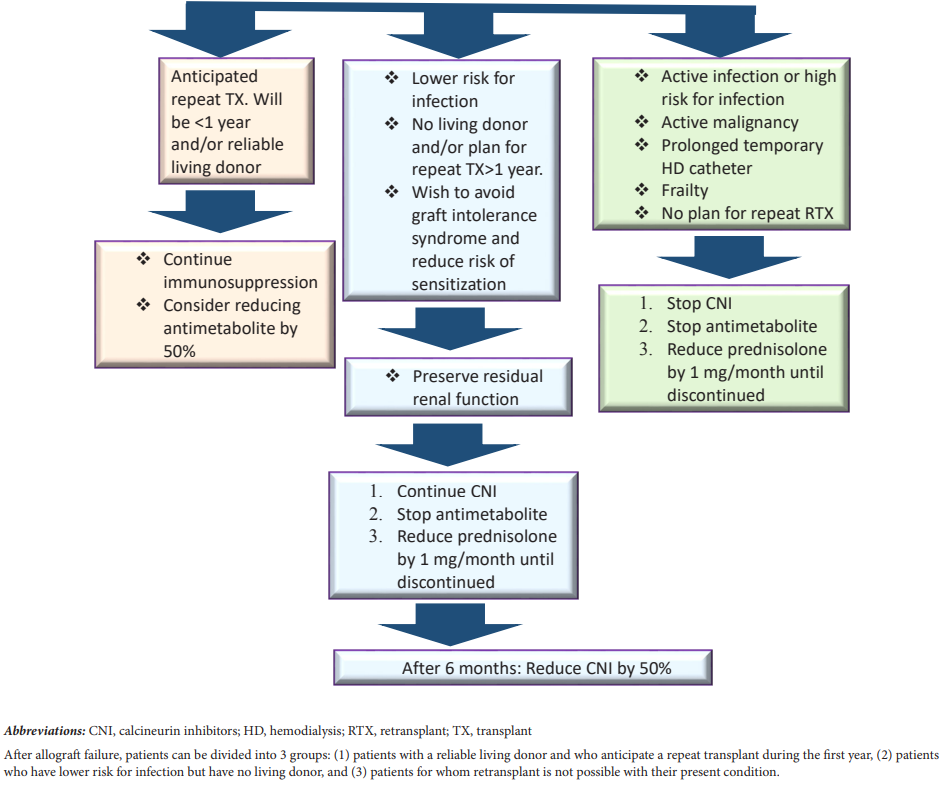
Figure 1. An Approach To Immunosuppression Weaning Upon Allograft Failure