Volume: 22 Issue: 1 January 2024 - Supplement - 1
FULL TEXT
Introduction
Onconephrology is an emerging field of medicine dealing with renal paraneoplastic syndromes that develop concurrently or within a few years of cancer diagnosis and that can be improved significantly with treatment. There is a pathophysiologic link between cancer and kidney disease. In this respect, cancer-associated glomerulonephritis includes most pathological forms, with minimal, membranous, membranoproliferative, and focal segmental sclerosis being the most reported.
Patients with posttransplant malignancy are 3 times more likely to die of cancer (hazard ratio of 3.13). This has prompted transplant specialists to optimize immunosuppression to reach the optimal balance between under- and overimmunosuppression. Malignancy is one of the leading causes of graft failure and death with functioning graft. As shown in the ANZDATA registry data, the standardized incidence ratio of cancers is 3.27 in transplant recipients versus 1.35 in dialysis populations.1
Posttransplant malignancy risk factors can be grouped as patient-related (age, smoking, ultraviolet ray exposure, viral infections, time on dialysis), donor-related (cancer transmission from the donor is rare at 2/10?000), and medication-related (net immunosuppression, eg, incidence of nonmelanoma skin cancers increases with duration of immunosuppression exposure, mTOR inhibitor use, and induction therapy). Some cancers (breast, prostate) are not increased after transplant; however, the standardized incidence ratios of skin cancers and posttransplant lymphoproliferative diseases are markedly increased.
Therefore, cancer screening tests among recipients of solid-organ transplant are strongly recommended. Time between transplant and cancer treatment depends on the type of cancer, staging and grading, prognostic factors, and probability of 5-year survival. For example, cancers in situ do not require a wait time, whereas other cancers require a 2- to 5-year waiting period without recurrence.
Africa. Figure 1 shows comparisons of cancer burden of all cancer groups in 2020 and forecasted values in 2040 incidence and deaths.2 Launay-Vacher and colleagues3 reported survival rates in patients with cancer according to baseline glomerular filtration rate at inclusion (n = 4267) and in nonmetastatic patients (n = 2382). Renal insufficiency, anticancer medications, and worse kidney function impair cancer survival.
Onconephrology
Onconephrology is an emerging field of medicine involving renal paraneoplastic syndromes that develop concurrently or within a few years of cancer diagnosis but can be improved significantly with treatment, with a pathophysiologic link between cancer and kidney disease, and malignancy-related kidney injury. In this respect, cancer-associated glomerulonephritis includes most pathological forms, with minimal, membranous, membranoproliferative, and focal segmental glomerulosclerosis being the most reported. Anticancer drug toxicity can result in acute kidney injury, chronic kidney disease, and electrolyte acid-base disorders.
Mechanisms of anticancer drug-induced nephropathy
Mechanisms of anticancer drug-induced nephropathy include changes in glomerular hemodynamics, tubular cell toxicity (cytotoxicity from mitochondrial lesions in the tubules, disrupted tubular transport system, and increased oxidative stress by free radical generation), inflammation (acute interstitial nephritis, chronic interstitial nephritis), crystal nephropathy (drugs that produce crystals that are insoluble in human urine), rhabdomyolysis (myoglobin release resulting in acute tubular necrosis/acute renal failure), and thrombotic microangiopathy (by inflammation or direct toxicity).4-7
Kidney damage from cancer immunotherapies, including immune checkpoint inhibitors
Programmed cell death protein 1 (PD1) and programmed death ligand 1 (PD-L1) inhibitors are a group of immune checkpoint anticancer drugs that block the activity of PD1 and PD-L1 immune checkpoint proteins present on the surface of cells. Immune checkpoint inhibitors are emerging as a front-line treatment for several types of cancer.
The PD1 and PD-L1 inhibitors act to inhibit the association of PD-L1 with its receptor, PD-1. The interaction of these cell surface proteins is involved in the suppression of the immune system and occurs after infection to limit the killing of bystander host cells and prevent autoimmune disease. This immune checkpoint is also active in pregnancy, following tissue allografts, and in different types of cancer. One-fourth of melanomas, non-small cell lung cancers, and kidney cancers respond to this treatment, particularly in neoadjuvant chemotherapy of non-small cell lung cancer in its resectable form.
Use of antidiabetic drugs
Dipeptidyl peptidase 4 inhibitors reduce cisplatin-induced acute kidney injury in cancer patients with diabetes mellitus by suppressing inflammation and promoting tubular regeneration.8
Gemigliptin protects against cisplatin-induced nephrotoxicity by inhibiting apoptosis and inflammatory responses by increasing heme oxygenase 1 and NAD(P)H:quinone oxidoreductase 1 expression.9
Posttransplant malignancy
Posttransplant malignancy
Patients with posttransplant malignancy are 3 times more likely to die of cancer (hazard ratio 3.13), resulting in transplant specialists working to optimize immunosuppression to reach the optimal balance between under and overimmunosuppression. Malignancy is one of the leading causes of graft failure and death with a functioning graft, as shown in ANZDATA registry data (2007-2011).1 Standardized incidence ratios of cancers are 3.27 in the transplant population versus 1.35 in the dialysis population.
As shown in solid-organ transplant recipients in Ontario, Canada, rate of death was increased compared with that expected in the general population; cancer was the second leading cause of death in these patients. Advances in prevention, clinical surveillance, and cancer treatment modalities for solid-organ transplant recipients are needed to reduce the burden of cancer mortality in this population.10
Some cancers (breast, prostate) are not increased after transplantation, but standardized incidence ratios for skin cancers and posttransplant lymphoproliferative diseases are markedly increased.
Posttransplant malignancy risk factors
Posttransplant risk factors for malignancy can be divided into patient-related (age, smoking, ultraviolet ray exposure, viral infections, vintage on dialysis) and donor-related. In a meta-analysis of 69 studies,11 among 91 donors (16 living donors, 75 deceased), the most common transmitted cancer types were renal cell cancer (19%), melanoma (17%), lymphoma (14%), and lung cancer (9%). Another risk factor is medication related (net immunosuppression; eg, incidence of nonmelanoma skin cancers increases with duration of immunosuppression exposure, mTOR inhibitor use, and induction therapy). In the RESCUE study, there was reduced skin cancers risk in patients who took mTOR inhibitors.12
Posttransplant Cancer Screening
Transplant recipients should follow guidelines for annual examinations of breast, cervical, and prostate cancers. Examinations for gastric and colorectal cancer should be every 3 years for individuals older than 50 years and with a positive familial history or annual fecal occult blood test. High-risk patients should receive ?-fetoprotein test or ultrasonographic examinations every 6 months. Patients should perform monthly self-examinations of skin and see an expert every 12 months for skin cancers. For renal cancer, patients should have ultrasonographic examinations of the native kidney every 6 to 12 months. For posttransplant lymphoproliferative diseases, patients should have viral nucleic acid dosage monthly until 6 months posttransplant and then every 6 to 12 months thereafter.
Recommendation for Transplant Wait Times After Cancer
Time between cancer treatment and transplant depends on the type of cancer, staging and grading, prognostic factors, and probability of 5-year survival. Contraindications for transplant include uncontrolled or untreated malignancies, multiple myeloma, advanced breast cancer, advanced colorectal cancer, and advanced prostate cancer. Some cancers, for example, superficial bladder cancer, nonmetastatic basal cell carcinoma, and microscopic prostate cancer, do not require waiting time. Some cancers require wait times of 2 or 5 years.13
References:
- ANZDATA. Australia and New Zealand Dialysis and Transplant Registry. https://www.anzdata.org.au/anzdata/
CrossRef - PubMed - International Agency for Research on Cancer. GLOBOCAN 2020. https://www.uicc.org/news/globocan-2020-new-global-cancer-data
CrossRef - PubMed - Launay-Vacher V, Janus N, Deray G. Renal insufficiency and cancer treatments. ESMO Open. 2016;1(4):e000091. doi:10.1136/esmoopen-2016-000091
CrossRef - PubMed - Zager RA. Pathogenetic mechanisms in nephrotoxic acute renal failure. Semin Nephrol. 1997;17(1):3-14.
CrossRef - PubMed - Schnellmann RG, Kelly KJ. Pathophysiology of nephotoxic acute renal failure. In: Schrier RW, ed. Atlas of Diseases of the Kidney. Volume 1. Blackwell Science; 1999: 15.1-15.4.
CrossRef - PubMed - Schetz M, Dasta J, Goldstein S, Golper T. Drug-induced acute kidney injury. Curr Opin Crit Care. 2005;11(6):555-565. doi:10.1097/01.ccx.0000184300.68383.95
CrossRef - PubMed - Ferguson MA, Vaidya VS, Bonventre JV. Biomarkers of nephrotoxic acute kidney injury. Toxicology. 2008;245(3):182-193. doi:10.1016/j.tox.2007.12.024
CrossRef - PubMed - Iwakura T, Fukasawa H, Kitamura A, Ishibuchi K, Yasuda H, Furuya R. Effect of dipeptidyl peptidase-4 inhibitors on cisplatin-induced acute nephrotoxicity in cancer patients with diabetes mellitus: a retrospective study. PLoS One. 2020;15(2):e0229377. doi:10.1371/journal.pone.0229377
CrossRef - PubMed - Choi SH, Leem J, Lee IK. Protective effects of gemigliptin, a dipeptidyl peptidase-4 inhibitor, against cisplatin-induced nephrotoxicity in mice. Mediators Inflamm. 2017;2017:4139439. doi:10.1155/2017/4139439
CrossRef - PubMed - Acuna SA, Fernandes KA, Daly C, et al. Cancer mortality among recipients of solid-organ transplantation in Ontario, Canada. JAMA Oncol. 2016;2(4):463-469. doi:10.1001/jamaoncol.2015.5137
CrossRef - PubMed - Xiao D, Craig JC, Chapman JR, Dominguez-Gil B, Tong A, Wong G. Donor cancer transmission in kidney transplantation: a systematic review. Am J Transplant. 2013;13(10):2645-2652. doi:10.1111/ajt.12430
CrossRef - PubMed - Opelz G, Unterrainer C, Süsal C, Döhler B. Immunosuppression with mammalian target of rapamycin inhibitor and incidence of post-transplant cancer in kidney transplant recipients. Nephrol Dial Transplant. 2016;31(8):1360-1367. doi:10.1093/ndt/gfw088
CrossRef - PubMed - Acuna SA, Huang JW, Daly C, Shah PS, Kim SJ, Baxter NN. Outcomes of solid organ transplant recipients with preexisting malignancies in remission: a systematic review and meta-analysis. Transplantation. 2017;101(3):471-481. doi:10.1097/TP.0000000000001192
CrossRef - PubMed

Volume : 22
Issue : 1
Pages : 56 - 59
DOI : 10.6002/ect.MESOT2023.L44
From Cairo University, Cairo Egypt
Acknowledgements: The author has not received any funding
or grants in support of the presented research or for the preparation of
this work and has no declarations of potential conflicts of interest.
Corresponding author: Mohamed Hany Hafez, Professor of
Nephrology and Medicine, 41 Noubar Street, Babelouk, Cairo, Egypt.
President of the African Society of Nephrology (AFRAN) and General
Secretary of the Middle East Society for Organ Transplantation (MESOT)
E-mail: drhany_hafez@hotmail.com
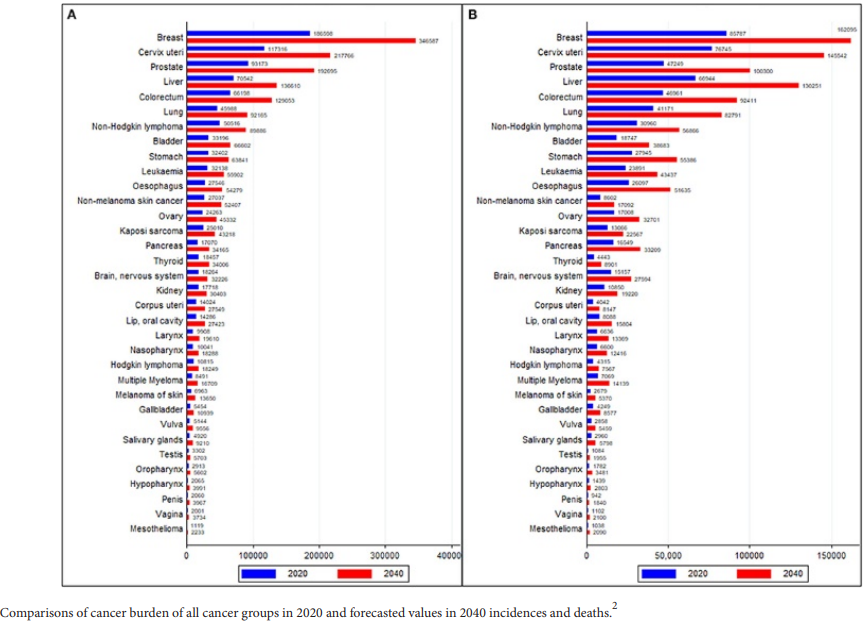
Figure 1. World Cancer Incidence