Volume: 22 Issue: 1 January 2024 - Supplement - 1
FULL TEXT
Objectives: The presence of donor-specific antibodies against HLA before kidney transplant has been variably associated with decreased long-term graft survival. Data on the association between pretransplant donor-specific antibodies and rejection and cause of graft failure in recipients of donor kidneys are scarce.
Materials and Methods: For this study of HLA antibody levels, we analyzed serum samples from 76 patients (48 women and 28 men) who were prepared for kidney transplant at the Baskent University ?stanbul Hospital between 2017 and 2022. Levels were determined by using Lifecodes panel reactive antibody class I and II identification kits and Lifecodes LSA class I and II identification kits by the Luminex assay method.
Results: Multiple antigen tests showed more than 70% sensitization detected against both class I and class II antigens in our patient group. When some samples were reevaluated with the single-antigen bead method, desensitization values were shown to be considerably reduced compared with values from multiple antigen methods.
Conclusions: The single-antigen-coated bead method can be useful in determining the risk of donor-specific antibodies in highly sensitized patients.
Key words : Donor-specific antibody, Single antigen, Solid-organ transplantation
Introduction
Antibodies to HLA antigens may develop in the blood of recipients due to blood transfusions, rejection after transplant, and pregnancy and abortion. These antibodies are called panel reactive antibodies (PRAs) because they are generally from common global HLA panels. With these tests, patients with antibodies against HLA antigens above 85% are considered to be hypersensitized. High sensitization in kidney transplant patients remains a major problem for transplant.1,2 Since early transplant investigations, pretransplant antibodies against HLA molecules are known risk factors of acute rejection and graft loss.3 Plasmapheresis and intravenous immunoglobulin treatments to prevent acute rejection are difficult and expensive practices. Therefore, the importance of the HLA antibodies, non-HLA antibodies, and other autoantibodies (eg, vimentin, angiotensin receptor type 1) have been increasing, thus increasing the number of investigations.4-6
Today, different methods are used to detect antibodies (eg, flow cytometry, Luminex, enzyme-linked immunosorbent assays). For the Luminex method, multiantigen-coated beads are applied to detect antibodies. There are 3 levels of bead attachment. The first level consists of beads bound with a large number of class I or class II molecules, which essentially provides a positive or negative result. At the second level, the bead is equivalent to a cell, with each bead containing 2 molecules derived from 2 alleles at each loci (HLA-A, HLA-B, and HLA-C are class I; HLA-DR and HLA-DQ are class II). The third level consists of beads with 1 HLA molecule attached (either class I or II) referred to as a single-antigen bead (SAB). This third level is particularly useful for characterizing complex sera with a high PRA, accurately defining the antibodies present.
The Luminex antibody screening technology consists of a series of polystyrene microspheres (beads) that contain fluorochromes of different intensities embedded within the bead, giving each group of beads with an HLA molecule or molecules derived from lymphoblastoid cell lines attached a unique signal. Test sera are added to the bead mix, and the HLA antibodies bind to the bead with the appropriate HLA molecule attached. A second phycoerythrin-labeled anti-human IgG antibody is then added, which binds to the primary HLA antibody. When the sample is passed through the detector, a laser excites the fluorochrome in the bead, which exhibits a unique signal, and another laser excites phycoerythrin bound to the second antibody.7,8 The combination of these signals defines the specificity of the antibody in the test serum. The test method is depicted in Figure 1.
Materials and Methods
For this study, we obtained HLA antibody levels that were determined with serum samples from 76 patients (48 women, 28 men) who were prepared for kidney transplant at Baskent University ?stanbul Hospital between 2017 and 2022. Levels were determined from serum samples with the Lifecodes PRA class I and II identification tests and Lifecodes LSA class I and II identification tests, with measurement with the Luminex method. The presence of HLA antibodies in the pretransplant sera was assessed as described previously.9 In brief, the presence of HLA class I and class II antibodies was tested with Lifecodes LifeScreen Deluxe and Lifecodes SAB assay (LSA) class I and II kits (Immucor GTI Diagnostics).The cutoff level was defined according to the manufacturer’s instructions.
The presence of SAB donor-specific antibodies (DSA) was determined by comparing the SAB antibody specificities among HLA-A, HLA-B, HLA-C, HLA-DR, HLA-DQ, and HLA-DP in serum samples with the broad-level HLA typing of the donor.8 The number of DSAs per individual, the maximum median fluorescent intensity (MFI) of DSA, and the cumulative MFI of DSA were calculated and used for the relation with transplant outcome. Donor-specific antibodies to HLA-C, HLA-DP, and HLA-DQA1 were not assessed because, within the study period, HLA typing of kidney donors did not routinely include these HLA.
Results
As a result of multiple antigen tests, more than 70% sensitization was detected against both class I and class II antigens of the patients. When the same samples were reevaluated with the SAB method, desensitization values were considerably reduced compared with values shown with the multiple antigen method. However, we observed that the DSA MFI values also decreased to negative or acceptable limits. To determine whether an individual bead was positive, the MFI of the bead was divided by the MFI of 3 negative control beads, subtracted by a background adjustment factor, to provide 3 different adjusted ratios. A mathematical negative control calculation gave a fourth negative ratio. A specific bead was considered positive if 2 or more adjusted ratios were positive. At the end of the study, the ratios of the Luminex PRA and Luminex single antibody were compared in terms of HLA class I/II of the patients (Table 1, Table 2, and Table 3).
Discussion
The simultaneous presence of class I and class II immunoglobulin GDSA as detected by Life SAB (L-SAB) in pretransplant sera of crossmatch-negative kidney transplant recipients has been reported to be indicative of an increased risk of graft failure.10 In contrast, graft loss in patients with only HLA class I or class II DSA was not significantly higher than in patients without HLA antibodies. These findings are in agreement with antibody findings with the enzyme-linked immunosorbent assay published by us previously in 200211 and 2009,12 which indicated that presensitization of recipients of a first kidney transplant against either HLA class I or class II is of no clinical consequence, whereas sensitization against both HLA class I and class II resulted in increased rejection of kidney grafts.
Highly sensitized patients (eg, patients with a PRA >85%) often have positive pretransplant CDC crossmatches with their respective donors because of the high number of preexisting HLA alloantibodies. In general, positive CDC crossmatch results are considered a contraindication to transplant since patients with a positive CDC crossmatch often reject their graft early after transplant. With the introduction of more sensitive antibody detection techniques, such as the L-SAB, more patients are considered sensitized or even highly sensitized. However, because of the lower specificity of L-SAB-detected antibodies for allograft loss, these antibodies are not considered a contraindication but a risk factor for transplant. Because the L-SAB method allows the precise characterization of HLA antibody specificities, it represents, in combination with other antibody detection techniques and knowledge of the immunization history of the patient, an important tool in the work up and care of sensitized or highly sensitized patients before and after transplant.13 However, because of the lower specificity of L-SAB-detected antibodies for allograft loss, these antibodies are not considered a contraindication but a risk factor for transplant.
Many centers presently perform routine HLA alloantibody screening in stable graft recipients at different time points after transplant to diagnose a humoral antibody-mediated rejection at early stages. Although there is consensus that HLA alloantibodies are responsible for a significant proportion of late graft losses and that HLA antibodies in the context of deteriorating graft function are harmful, the significance of HLA alloantibodies that are detected solely during routine screening is controversial. Early after transplant, acute antibody-mediated rejection occurs in about 1% to 6% of patients; however, this number may increase up to 21% to 55% in patients who have detectable DSA already before transplant and who are receiving desensitization therapy.12,14,15 Persistence or reemergence of DSA, which are already detectable pretransplant, is associated with poor allograft outcome.
Conclusions
Graft damage from alloimmune injury and the reduced access of highly sensitized patients to transplant are 2 major challenges in the transplant community. The accurate determination of clinically relevant HLA antibodies and an appropriate interpretation of their impact are essential in addressing these issues. In the detection of HLA antibodies, a single perfect test providing the desirable accuracy, quantitation, sensitivity, and specificity does not exist. As a result, HLA laboratories must incorporate multiple laboratory tests and analyses with information about each individual to ensure that the correct information on immunologic risk is provided for each patient. In light of our present findings, we believe that the single antigen-coated bead method is useful in determining the risk of DSA in highly sensitized patients.
References:
- Clatworthy MR, Espeli M, Torpey N, Smith KG. The generation and maintenance of serum alloantibody. Curr Opin Immunol. 2010;22(5):669-681. doi:10.1016/j.coi.2010.08.018
CrossRef - PubMed - Cardarelli F, Pascual M, Tolkoff-Rubin N, et al. Prevalence and significance of anti-HLA and donor-specific antibodies long-term after renal transplantation. Transpl Int. 2005;18(5):532-540. doi:10.1111/j.1432-2277.2005.00085.x
CrossRef - PubMed - Weinstock C, Schnaidt M. The complement-mediated prozone effect in the Luminex single-antigen bead assay and its impact on HLA antibody determination in patient sera. Int J Immunogenet. 2013;40(3):171-177. doi:10.1111/j.1744-313X.2012.01147.x
CrossRef - PubMed - Fuggle SV, Martin S. Tools for human leukocyte antigen antibody detection and their application to transplanting sensitized patients. Transplantation. 2008;86(3):384-390. doi:10.1097/TP.0b013e31817c90f5
CrossRef - PubMed - Inal A, Ozcelik U, Ogan Uyanik E, Kulah E, Demirag A. Analysis of panel reactive antibodies in renal transplant recipients detected by Luminex: a single-center experience. Exp Clin Transplant. 2016;14(4):401-404. doi:10.6002/ect.2014.0285
CrossRef - PubMed - Cho YW, Cecka JM. Crossmatch tests--an analysis of UNOS data from 1991-2000. Clin Transpl. 2001:237-246.
CrossRef - PubMed - Barocci S, Valente U, Nocera A. Detection and analysis of HLA class I and class II specific alloantibodies in the sera of dialysis recipients waiting for a renal retransplantation. Clin Transplant. 2007;21(1):47-56. doi:10.1111/j.1399-0012.2006.00578.x
CrossRef - PubMed - Tait BD, Hudson F, Cantwell L, et al. Review article: Luminex technology for HLA antibody detection in organ transplantation. Nephrology (Carlton). 2009;14(2):247-254. doi:10.1111/j.1440-1797.2008.01074.x
CrossRef - PubMed - Mehrotra S, Sharma RK, Mayya M, et al. Pre transplant PRA (penal reactive antibody) and DSA (donor specific antibody) screening status and outcome after renal transplantation. Indian J Transplant. 2015;9(1):7-12. doi:10.1016/j.ijt.2015.04.003
CrossRef - PubMed - Otten HG, Verhaar MC, Borst HP, Hene RJ, van Zuilen AD. Pretransplant donor-specific HLA class-I and -II antibodies are associated with an increased risk for kidney graft failure. Am J Transplant. 2012;12(6):1618-1623. doi:10.1111/j.1600-6143.2011.03985.x
CrossRef - PubMed - Susal C, Opelz G. Kidney graft failure and presensitization against HLA class I and class II antigens. Transplantation. 2002;73(8):1269-1273. doi:10.1097/00007890-200204270-00014
CrossRef - PubMed - Lefaucheur C, Loupy A, Hill GS, et al. Preexisting donor-specific HLA antibodies predict outcome in kidney transplantation. J Am Soc Nephrol. 2010;21(8):1398-1406. doi:10.1681/ASN.2009101065
CrossRef - PubMed - Susal C, Dohler B, Opelz G. Presensitized kidney graft recipients with HLA class I and II antibodies are at increased risk for graft failure: a Collaborative Transplant Study report. Hum Immunol. 2009;70(8):569-573. doi:10.1016/j.humimm.2009.04.013
CrossRef - PubMed - Amico P, Honger G, Mayr M, Steiger J, Hopfer H, Schaub S. Clinical relevance of pretransplant donor-specific HLA antibodies detected by single-antigen flow-beads. Transplantation. 2009;87(11):1681-1688. doi:10.1097/TP.0b013e3181a5e034
CrossRef - PubMed - Gloor JM, Winters JL, Cornell LD, et al. Baseline donor-specific antibody levels and
outcomes in positive crossmatch kidney transplantation. Am J Transplant. 2010;10(3):582-589. doi:10.1111/j.1600-6143.2009.02985.x
CrossRef - PubMed

Volume : 22
Issue : 1
Pages : 332 - 335
DOI : 10.6002/ect.MESOT2023.P116
From the Immunology Department, the Chest Disease Department, and the General Surgery Department, Baskent University Medical Faculty, Istanbul, Turkey
Acknowledgements: The authors have not received any funding or grants in support of the presented research or for the preparation of this work and have no declarations of potential conflicts of interest.
Corresponding author: Ali Ünal, Immunology Department, Baskent University Med
Phone: +90 505 393 11 72
E-mail: dr.ali inal@gmail.com
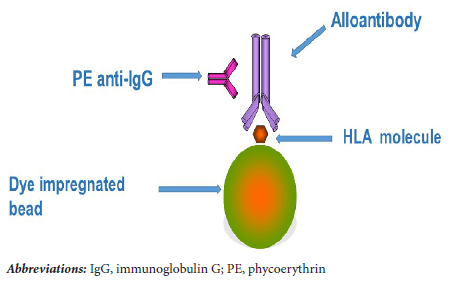
Figure 1. Basic Principle of LABScreen
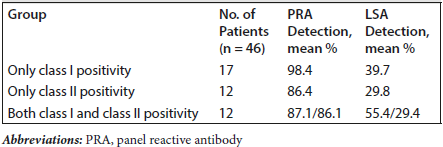
Table 1. Comparison of Antibody Rates in Panel Reactive Antibody Identification Test and LSA Identification Test in Patients
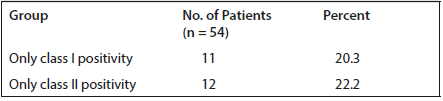
Table 2. Patients Without Donor-Specific Antibodies in Panel Reactive Antibody Identification but With Donor-Specific Antibodies in the LSA Identification
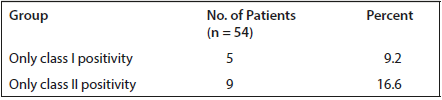
Table 3. Patients Without Donor-Specific Antibodies in the LSA Identification Test but With Donor-Specific Antibodies in the Panel Reactive Antibody Identification Test