Volume: 22 Issue: 1 January 2024 - Supplement - 1
FULL TEXT
Objectives: Urinary tract infections are the main infectious complications among kidney transplant recipients and are considered as a potential risk factor for poor graft outcomes. However, the risk factors of urinary tract infections are controversial. The purpose of our study was to estimate the incidence and predisposing factors of urinary tract infections in patients undergoing kidney transplant in our teaching hospital of Sahloul, Tunisia.
Materials and Methods: We retrospectively analyzed the charts of 141 consecutive adult kidney transplants that were performed at the Department of Nephrology, University Hospital of Sahloul, Tunisia, between January 2007 and April 2016.
Results: Of 141 patients, 72 (51.1%) had urinary tract infections after kidney transplant. Mean age was 32.54 ± 12.1 years; 47.6% were male patients, and 52.4% were female patients. The average time between transplant and early urinary tract infections was 11 days (range, 1-30 days). Among our patient group, 87.8% of urinary tract infections occurred within the first 6 months posttransplant. We collected 205 episodes of urinary tract infections: 66.3% were asymptomatic bacteriuria, 10.2% acute cystitis, and 23.4% pyelonephritis. The estimated risk factors for urinary tract infection included only female sex (P < .05); older age (P = .32), longer duration of catheter (P = .34), and high body mass index (P = .46) were not correlated with urinary tract infection.
Conclusions: Despite preventive measures, urinary tract infections remain an important cause of morbidity among kidney transplant recipients. In fact, more than half of kidney transplant recipients had at least 1 urinary tract infection after surgery. Female sex was statistically associated with higher risk of urinary tract infection.
Key words : Bacterial infection, Posttransplant infection, Renal transplant
Introduction
Although kidneys are the most frequently transplanted organs and kidney transplant (KT) is the preferred method for treating patients with end-stage renal disease, posttransplant urinary tract infection (UTI) is still a source of morbidity and graft failure.
Urinary tract infections represent the most common bacterial infection in KT recipients.1 Many studies have demonstrated that the incidence of UTIs in KT recipients is much higher than that observed in the general population.2 The incidence of a UTI ranges from 4% to 80%.3-5
The most common manifestation is that of lower UTI with urinary frequency and urgency due to cystitis. However, symptoms of more severe infection, such as fever and localized pain of the renal allograft, as well as sepsis due to acute pyelonephritis, can also be observed.6
Recurrent UTIs worsen the quality of life, decrease graft survival, and increase the KT costs. Several studies have put infections in the context of limited long-term graft function. Hence, early diagnosis and treatment are necessary to prevent the occurrence of life-threatening complications and graft loss.7,8
The aim of our study was to determine the incidence of UTIs among our KT recipients within the first year posttransplant, to determine the causative microorganisms, and to identify underlying risk factors.
Materials and Methods
The medical records of all adult patients (n = 168) who received KTs in the Renal Transplantation Center of the University Hospital of Sahloul, Tunisia, over a 9-year period (from January 2007 to April 2016) were analyzed. The inclusion criteria were adequate follow-up period of more than 1 year postoperatively and consistency at scheduled visits.
An internal J ureteral stent and a bladder catheter were placed during the operation in all patients. Bladder catheters were removed within 7 to 10 days posttransplant, whereas ureteral stents were removed after approximately 6 weeks posttransplant.
Antibiotic prophylaxis with single dose cefuroxime at a dose of 2 g was used in all patients before surgery. Ofloxacin 400 mg/day was administered after transplant for 5 to 7 days.
All UTI episodes, verified by a positive urine culture showing >105 colony-forming units/mL bacteria, and the sensitivity of each pathogen to antibiotics were recorded. A positive urine culture without any clinical symptoms was considered as asymptomatic bacteriuria. According to patients’ clinical presentations, UTI episodes were divided into 3 groups: lower UTI, complicated UTI, and asymptomatic bacteriuria. All UTI patients with ureteral stent were treated. Recurrent UTI was defined as ≥3 UTIs in any 12-month period or ≥2 UTIs in any 6-month period, irrespective of the causative organism.
We compared demographic data, immunosuppressive drug regimens, and transplant-related clinical features of KT recipients versus presence of at least 1 episode of UTI. We further analyzed UTI characteristics, including related microorganisms and antibiotic-resistant patterns. Risk factors associated with UTI were explored.
Results
Our study included 141 KT recipients; 74 were women (52.4%) and 67 (47.6%) were men, with a mean ± SD age of 32.54 ± 12.1 years. The etiologic distribution of underlying primary kidney disease was as follows: chronic glomerulonephritis (n = 39, 27.7%), interstitial nephritis (n = 74, 52.5%), vascular nephropathy (n = 11, 7.8%), and other etiology (n = 17, 12.1%). Five patients had undergone a second KT. Among 141 KT recipients, 107 (75.9%) were on hemodialysis, 28 (19.9%) were on peritoneal dialysis, and 6 (4.3%) underwent preemptive transplant. Antithymocyte globulin was used in 94 patients (66.7%), whereas basiliximab was used in 47 patients (33.3%). Patients received maintenance triple or dual therapy based essentially on the use of calcineurin inhibitors, with 41 KT recipients (29.1%) on cyclosporin and 76 (53.9%) on tacrolimus. These agents were used in combination with mycophenolate mofetil (97.9%) and prednisone (100%). Only 1 patient was on azathioprine (Imurel). Demographics and clinical characteristics of KT recipients are listed in Table 1.
Of 141 patients, 72 (51.1%) had UTIs after KT. The average time between transplant and early UTI was 11 days, with extremes ranging from 1 to 30 days. Our analyses showed that 87.8% of UTIs occurred within the first 6 months posttransplant. We collected 205 episodes of UTIs: 66.3% were asymptomatic bacteriuria, 10.2% were acute cystitis, and 23.4% were pyelonephritis.
During the first month posttransplant, the most common pathogen was Klebsiella pneumoniae (n = 15, 20.8%), followed by Escherichia coli (n = 12, 16.6%) and Ecloacae (n = 12, 16.6%) (Figure 1). After month 1, E coli was the most frequently isolated germ (n = 62, 86.1%), then K pneumoniae (n = 53, 73.6%) and Enterococcus (n = 22, 30.5%) (Figure 2).
A significant correlation was found between female sex and UTI occurrence in the first month posttransplant (P = .02), in the first year posttransplant (P = .004), and during the following years of the observation period (P = .003). No correlations were shown with regard to patient age (P = .32), body mass index (P = .46), and longer indwelling urinary catheter stay time (P = .34) versus incidence and time of UTI occurrence after transplant. No pathological history was correlated with post-KT UTI. Urological malformations before KT did not increase the risk of UTI after KT and the history of urinary infection before transplant (Table 2).
Long-term renal function, estimated by measurements of serum creatinine values every month, showed no significant changes between patients with and without UTIs during the first month after transplant (P = .79). Similarly, no significant changes in renal function at 1 year of follow-up were observed in patients who showed no UTI, those who had 1 to 3 UTI episodes, and those with more than 3 UTI episodes (P = .36).
Discussion
Urinary tract infections represent a serious cause of morbidity after KT, accounting for approximately 40% to 50% of all infectious complications in KT recipients.1 Many different mechanisms and risk factors are responsible for the increased frequency of UTIs in KT recipients.
Pathogens include both Gram-negative and Gram-positive bacteria, as well as fungi.9,10Escherichia coli, which is the most common pathogen of UTI in the general population,11 is also the most common cause of UTI in KT recipients, with a frequency ranging from 29% to 71% in various studies.12,13 In addition, rare pathogens, such as Corynebacterium urealyticum, various mycobacteria, and BK virus 7, have also been reported.14 In our study, E coli was also the most frequent cause isolated in 37% of UTIs after the first month posttransplant.
The most commonly reported risk factors for UTIs are advanced age, female sex, diabetes mellitus, urinary system abnormality, and previous history of urinary system infection. Deceased donor KT, retransplant, neurogenic bladder dysfunction, vesicoureteral reflux, and in-dwelling urinary catheters also increase the risk of UTIs. In addition, intensive immunosuppressive use after transplant also contributes to the increased susceptibility to infections.6,15,16
Female sex has been shown to be closely related with posttransplant UTI episodes.2,11,17 However, other studies have shown no relation.18,19 Our data showed a significant correlation between female sex and UTI.
Although it is difficult to estimate the effects of UTIs on the long-term renal function among healthy people, some patients (3%-4%) with chronic renal disease who develop acute pyelonephritis have had unfavorable effects on long-term renal function.20 For KT recipients, the data are again unclear. Although KT patients who develop upper UTIs caused by E coli bearing adherence factors are at increased risk for acute renal failure and graft scarring,21 they do not exhibit worsening of long-term renal function.22 We found no significant changes in the renal function at 1 year of follow-up in patients who showed no UTI, those who had 1 to 3 UTI episodes, and those with more than 3 UTI episodes.
Our results should be interpreted with caution because of the single-center and retrospective nature of the study and the relatively small number of patients. The low number of events limited further statistical analysis for exploring the exact effect of male sex on resistant and recurrent UTIs.
Conclusions
Despite preventive measures, UTIs remain an important cause of morbidity among KT recipients. Escherichia coli and Klebsiella species are the most frequent pathogens and often show resistance to commonly used antibiotics, leading to increased number of hospital admissions. Our results suggested that female sex is a risk factor for UTI after KT. We strongly recommend that each transplant center should explore their own UTI risk factors and causative agents, which will direct centers to manage these patients correctly.
References:
- Veroux M, Giuffrida G, Corona D, et al. Infective complications in renal allograft recipients: epidemiology and outcome. Transplant Proc. 2008;40(6):1873-1876. doi:10.1016/j.transproceed.2008.05.065
CrossRef - PubMed - Memiko?lu KO, Keven K, Sengül S, Soypaçaci Z, Ertürk S, Erbay B. Urinary tract infections following renal transplantation: a single-center experience. Transplant Proc. 2007;39(10):3131-3134. doi:10.1016/j.transproceed.2007.10.005
CrossRef - PubMed - Hollyer I, Ison MG. The challenge of urinary tract infections in renal transplant recipients. Transpl Infect Dis. 2018;20(2):e12828. doi:10.1111/tid.12828
CrossRef - PubMed - O' Connell K, Kennedy C, Skally M, Foley M, Alex S, Magee C, Davis NF, Humphreys H, Burns K. Surveillance of common infections in the early period after renal transplantation in a national center: 2014-2017. Transpl Infect Dis. 2020;22(3):e13261. doi:10.1111/tid.13261
CrossRef - PubMed - Van Delden C, Stampf S, Hirsch HH, et al. Burden and timeline of infectious diseases in the first year after solid organ transplantation in the Swiss Transplant Cohort Study. Clin Infect Dis. 2020;71(7):e159-e169. doi:10.1093/cid/ciz1113
CrossRef - PubMed - Ariza-Heredia EJ, Beam E, Lesnick TG, Kremers WK, Cosio FG, Razonable RR. Urinary tract infections in kidney transplant recipients: role of gender, urologic abnormalities, and antimicrobial prophylaxis. Ann Transplant. 2013;18:195-204. doi:10.12659/AOT.883901
CrossRef - PubMed - Tekkar??maz N, Özelsancak R, Micozkad?o?lu H, et al. Risk factors for urinary tract infection after kidney transplant: a retrospective analysis. Exp Clin Transplant. 2020;18(3):306-312. doi:10.6002/ect.2019.0081
CrossRef - PubMed - Sánchez MP, Rubio DC, Luna IM, et al. Impact of complicated urinary tract infection on renal graft function. Transplant Proc. 2020;52(4):1173-1177. doi:10.1016/j.transproceed.2020.01.066
CrossRef - PubMed - Schmaldienst S, Dittrich E, Hörl WH. Urinary tract infections after renal transplantation. Curr Opin Urol. 2002;12(2):125-130. doi:10.1097/00042307-200203000-00007
CrossRef - PubMed - Ferraresso M, Berardinelli L. Nosocomial infection in kidney transplant recipients: a retrospective analysis of a single-center experience. Transplant Proc. 2005;37(6):2495-2496. doi:10.1016/j.transproceed.2005.06.029
CrossRef - PubMed - Chuang P, Parikh CR, Langone A. Urinary tract infections after renal transplantation: a retrospective review at two US transplant centers. Clin Transplant. 2005;19(2):230-235. doi:10.1111/j.1399-0012.2005.00327.x
CrossRef - PubMed - Prát V, Horcicková M, Matousovic K, Hatala M, Liska M. Urinary tract infection in renal transplant patients. Infection. 1985;13(5):207-210. doi:10.1007/BF01667212
CrossRef - PubMed - Valera B, Gentil MA, Cabello V, Fijo J, Cordero E, Cisneros JM. Epidemiology of urinary infections in renal transplant recipients. Transplant Proc. 2006;38(8):2414-2415. doi:10.1016/j.transproceed.2006.08.018
CrossRef - PubMed - López-Medrano F, García-Bravo M, Morales JM, et al. Urinary tract infection due to Corynebacterium urealyticum in kidney transplant recipients: an underdiagnosed etiology for obstructive uropathy and graft dysfunction-results of a prospective cohort study. Clin Infect Dis. 2008;46(6):825-830. doi:10.1086/528713
CrossRef - PubMed - Bodro M, Linares L, Chiang D, Moreno A, Cervera C. Managing recurrent urinary tract infections in kidney transplant patients. Expert Rev Anti Infect Ther. 2018;16(9):723-732. doi:10.1080/14787210.2018.1509708
CrossRef - PubMed - Gozdowska J, Czerwi?ska M, Chabros ?, et al. Urinary tract infections in kidney transplant recipients hospitalized at a transplantation and nephrology ward: 1-year follow-up. Transplant Proc. 2016;48(5):1580-1589. doi:10.1016/j.transproceed.2016.01.061
CrossRef - PubMed - Sqalli TH, Laboudi A, Arrayhani M, et al. Urinary tract infections in renal allograft recipients from living related donors. Saudi J Kidney Dis Transpl. 2008;19(4):551-553.
CrossRef - PubMed - Kamath NS, John GT, Neelakantan N, Kirubakaran MG, Jacob CK. Acute graft pyelonephritis following renal transplantation. Transpl Infect Dis. 2006;8(3):140-147. doi:10.1111/j.1399-3062.2006.00148.x
CrossRef - PubMed - Jung GO, Chun JM, Park JB, et al. Clinical significance of posttransplantation vesicoureteral reflux during short-term period after kidney transplantation. Transplant Proc. 2008;40(7):2339-2341. doi:10.1016/j.transproceed.2008.06.027
CrossRef - PubMed - Fünfstück R, Ott U, Naber KG. The interaction of urinary tract infection and renal insufficiency. Int J Antimicrob Agents. 2006;28 Suppl 1:S72-77. doi:10.1016/j.ijantimicag.2006.05.004
CrossRef - PubMed - Rice JC, Peng T, Kuo YF, et al. Renal allograft injury is associated with urinary tract infection caused by Escherichia coli bearing adherence factors. Am J Transplant. 2006;6(10):2375-2383. doi:10.1111/j.1600-6143.2006.01471.x
CrossRef - PubMed - Dupont PJ, Psimenou E, Lord R, Buscombe JR, Hilson AJ, Sweny P. Late recurrent urinary tract infections may produce renal allograft scarring even in the absence of symptoms or vesicoureteric reflux. Transplantation. 2007;84(3):351-355. doi:10.1097/01.tp.0000275377.09660.fa
CrossRef - PubMed
?

Volume : 22
Issue : 1
Pages : 285 - 289
DOI : 10.6002/ect.MESOT2023.P96
From the 1Nephrology Department and the 2Urology Department, Sahloul Teaching Hospital, Sousse, Tunisia; and the 3Nephrology Department, Kairouan Hospital, Tunisia
Acknowledgements: The authors have not received any funding or grants in support of the presented research or for the preparation of this work and have no declarations of potential conflicts of interest.
Corresponding author: Sonia Dziri, Nephrology Department Sahloul Teaching Hospital, Sousse, Tunisia
Phone: +21 650360202
E-mail: dziri.sonia@yahoo.com
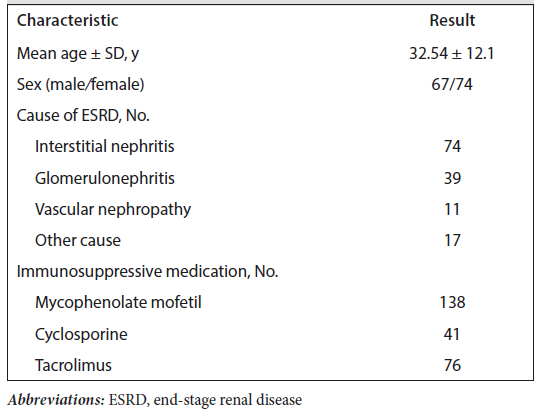
Table 1. Patient Characteristics and Immunosuppressive Medications at Transplant

Figure 1. Distribution of Bacteria Isolated During Month 1 Posttransplant (Early Urinary Tract Infection)
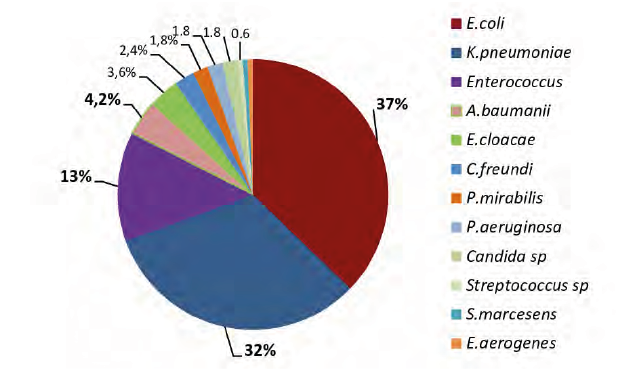
Figure 2. Distribution of Bacteria Isolated After Month 1 Posttransplant
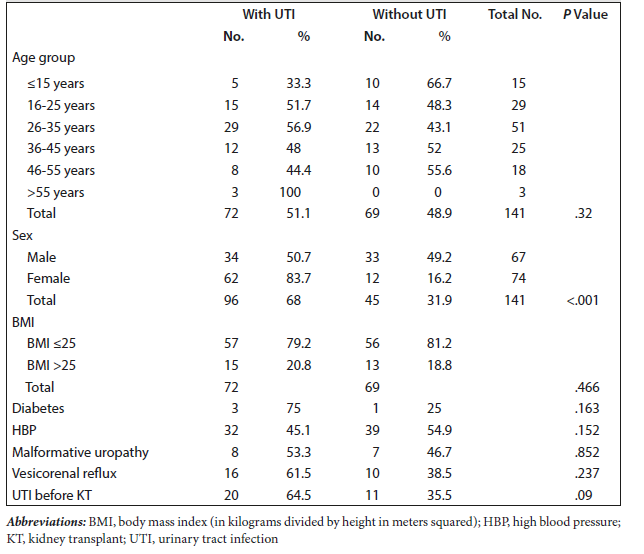
Table 2. Correlation Between Demographic and Clinical Data With Urinary Tract Infections