Volume: 22 Issue: 1 January 2024 - Supplement - 1
FULL TEXT
Objectives: HLA molecules play a crucial role in transplantation. The best treatment modality in patients with end-stage renal disease is renal transplant. HLA mismatches between patients and donors can prolong time for renal transplant therapy, reduce graft survival, and increase mortality. HLA region is the most polymorphic genetic region and is essential for antigen presentation. The main target of the recipient’s immune system is HLA molecules on the surface of donor cells. HLA-B*51 is associated with Behcet disease, a rare multisystemic disease characterized by autoimmunity and inflammatory processes. In transplant recipients, inflammation and vasculitis are immunologic mechanisms that are responsible for damage of graft tissue. In this retrospective study, we aimed to investigate the frequency of HLA-B*51 in patients diagnosed with end-stage renal disease and in controls and to investigate correlations with rejection episodes.
Materials and Methods: Patients who applied to Baskent University Adana Dr. Turgut Noyan Research and Medical Center (between 2010 and 2022) with end-stage renal disease (n = 1732) and a control group (n = 5277) received HLA typing for class I (HLA-A, HLA-B). Sequence-specific primers or sequence-specific oligonucleotides were used. Among patients diagnosed with end-stage renal disease, 321 had kidney transplant.
Results: Frequency of HLA-B*51 was 25.92% in patients and 25.22% in controls. No significant differences were found between patients and controls in the frequency of HLA-B*51. Among kidney transplant recipients with HLA-B*51 (n = 72), 38.89% had rejection episodes and 61.11% had no rejection. No significant association was found between HLA-B*51 allele positivity and rejection.
Conclusions: No significant relationship was shown between patients diagnosed with end-stage renal disease and HLA-B*51 positivity. Previous studies support frequency of the HLA-B*51 allele in the control group. Although Behçet disease is known to cause renal vasculitis, HLA-B*51 positivity alone was not associated with vasculitis or inflammation.
Key words : Behçet disease, HLA, Renal transplant
Introduction
Major histocompatibility complex (MHC), known as HLA complex, constitutes a specific group of molecules expressed on the cell surface that is crucial for the recognition of nonself molecules by the acquired immune system and encompasses 4 Mbp of the short arm of chromosome 6p21.3.1 The main function of HLA is to present antigens to lymphocytes and initiate the specific immune response. In addition to the importance of HLA molecules in tissue and organ transplants, autoimmune, viral, allergic, and neurological diseases have been found to be related. HLA is divided into 3 subclasses: (1) class I region, which includes the classical, highly polymorphic HLA-A, HLA-B, and HLA-C genes; (2) class II region, which includes HLA-DP, HLA-DQ, and HLA-DR genes, as well as less variable genes involved in antigen processing and presentation; and (3) class III region, which contains genes implicated in inflammatory responses, leukocyte maturation, and the complement cascade.2 Major histocompatibility complex molecules expressed on the surface of antigen-presenting cells can activate T cells, which then execute effector functions, such as cytotoxicity, provision of help to B cells, and cytokine production.3 HLA class I and class II molecules are similar in function: they present peptides at the cell surface to CD8+ and CD4+ T cells, respectively.4
Kidney transplant is the gold standard therapeutic strategy of replacing renal dysfunction that offers the best survival to patients with end-stage renal disease (ESRD).5 HLA matching in renal transplant is an important factor influencing long-term graft survival.6 HLA antigens are polymorphic proteins expressed on donor kidney allograft endothelium and are critical targets for recipient immune recognition. HLA antibodies are risk factors for acute and chronic rejection and allograft loss.7 Mismatched HLAs by adaptive immune cells is considered as a primary cause of transplant rejection. Currently, kidney transplant rejection is categorized in 2 main groups: T-cell-mediated rejection, referring to tubulointerstitial inflammation following T-cell activation and migration to the allograft, and antibody-mediated rejection, referring to microvascular inflammation following B-cell activation, plasma cell differentiation, and production of antibodies targeting the donor endothelium.8
Behçet disease is a recurrent inflammatory multiorgan illness involving the skin, mucosa, eyes, joints, gut, and central nervous system. Behçet disease is a systemic vasculitis that predominantly affects veins over arteries.9 It was first described by Hulusi Behçet in 1937 and consists of a triad of recurrent ulcers of the oral and genital mucosa with relapsing uveitis. Behçet syndrome has a unique geographical distribution of incidence and prevalence and is sometimes referred to as the Silk Route Disease because of its increased frequency in the Middle East and far East Asia.10 The prevalence of Behçet disease is the highest along the Ancient Silk Road, connecting Europe to Asia, with 80 to 370 cases per 100 000 population in Turkey.11 Genetic studies have identified HLA-B*51 as a genetic risk factor. Because the HLA- B*51 allele confers the strongest risk of developing Behçet disease, T-cell-mediated immune dysfunction involving MHC class I molecules has attracted much attention.12
The endoplasmic reticulum aminopeptidases are also risk factors for Behçet disease. In addition, ERAP1 is a locus found in epistasis with HLA-B*51. This enzyme is a key player in the antigen processing pathway of MHC-I molecules because they trim peptides to the optimal size for MHC-I binding. ERAP1 further processes proteasome-derived peptides, especially those with a hydrophobic C-terminal amino acid, reducing them to 8 or 9 residues, the optimal length of binding onto MHC class I molecules. Finally, the antigenic peptide repertoires are presented to the CD8+ T-cell receptor.13,14
Materials and Methods
Study population
This retrospective study included patients with ESRD (n = 1732) and a control group (n = 5277) seen at the Ba?kent University Dr. Turgut Noyan Medical and Research Center between January 2010 and October 2022. Volunteer donors were included in the control group. Among patients diagnosed with ESRD, 321 patients received kidney transplant at the Ba?kent University Dr. Turgut Noyan Medical and Research Center.
HLA typing
HLA class I (HLA-A, HLA-B) tissue typing tests were performed. DNA was isolated from whole blood from patients and controls with EDTA. For DNA isolation, a commercially available kit was used (EZ1 DNA Blood 200 µL kit; Qiagen).
Tissue typing tests were performed by sequence-specific oligonucleotide (SSO) and/or the sequence-specific priming (SSP) method based on polymerase chain reaction. For HLA tissue typing with the SSP method, the commercially available kit A-B-DR SSP Combi Tray (Olerup SSP AB) was used. For HLA tissue typing with the SSO method, the commercially available kit Lifecodes HLA-A, HLA-B eRES SSO typing kit (Immucor) was used.
Donor-specific antibody detection
For donor-specific antibody (DSA) detection, anti-HLA antibody identification test (HLA class I and II) and/or the Luminex single antigen (LSA) test (HLA class I and II) were performed with the use of serum samples from transplant recipients at time of the rejection episode. For panel reactive antibody identification of HLA class I and II, the commercially available kit Lifecodes Class I-II ID (Immucor GT Diagnostics) or the Labscreen PRA class I-II test (Onelamda) was used. For LSA HLA class I and II tests, Lifecodes LSA I-II (Immucor GT Diagnostics) or Labscreen single antigen HLA class I-II (Onelamda) was used. The cutoff value for a positive DSA was a mean fluorescence intensity ≥1000.
Results
The frequency of HLA-B*51 was investigated in patients with ESRD. The frequency of HLA-B*51 was 25.92% in patients with ESRD and 25.22% in the control group. In ESRD patients versus controls, HLA-B*51 homozygous positivity was 2.14% versus 2.20%, whereas HLA-B*51 heterozygous positivity was 23.79% versus 23.02% (Table 1).
Among patients with ESRD at our center, 321 had a kidney transplant. When we investigated the relationship between HLA-B*51 positivity and sex in patients and controls, HLA-B*51 positivity was 39.42% in female patients with ESRD and 60.82% in male patients with ESRD (Table 2). In the control group, HLA-B*51 positivity was 48.69% in female controls and 51.31% in male controls. In transplant recipients, HLA-B*51 positivity was 31.94% in female transplant recipients and 68.06% in male transplant recipients.
HLA mismatch is important in kidney transplant. HLA mismatches among kidney transplant recipients are listed in Table 3. We investigated the relationship between HLA-B*51 positivity in patients with a rejection episode and good clinical outcome after kidney transplant. Among kidney transplant recipients with HLA-B*51(n = 72), 38.89% had a rejection episode and 61.11% had no rejection episodes (Table 4). Patients with rejection episodes were classified as T-cell-mediated rejection, antibody-mediated rejection, and both T-cell-mediated rejection and antibody-mediated rejection.
The presence of DSAs was also investigated in patients during rejection episodes. Positive DSA was considered if the mean fluorescence intensity value of the DSA was ≥1000. Donor-specific antibodies (against both class I and class II) were detected during rejection episodes in 2 kidney transplant recipients with HLA-B*51 positivity. DSAs (against both class I and class II) were detected during rejection episodes in 13 kidney transplant recipients with HLA-B*51 negativity.
We focused on the relationship between HLA-B*51, the main risk factor for Behçet disease, and rejection in transplant recipients. The rate of HLA-B*51 in patients with a rejection episode was 38.89%, whereas the rate of HLA-B*51 in patients without a rejection episode was 61.11%. We also investigated the effects of HLA alleles that are risk factors (HLA-A*26, HLA-B*15, HLA-B*27) and protective factors (HLA-A*03, HLA-B*49) for Behçet’s disease on rejection in transplant recipients. We then investigated the association of HLA-B*51 with HLA-A*03, HLA-A*26, HLA-B*15, HLA-B*27, and HLA-B*49 with rejection episodes. The results of our analyses are shown in Table 5.
Discussion
Frequency of HLA-B*51 was 25.92% in our study patients with ESRD and 25.22% in our control group. No significant differences were found between patients with ESRD and controls with regard to the frequency of HLA-B*51. In 2021, Takeno examined the frequency of HLA-B*51 in various regions in Behçet patients and controls.15 The HLA-B*51 frequency of the control group in Turkey (24.7%) was similar to the frequency of our control group (25.22%).
In patients with ESRD and controls, the HLA-B*51 homozygous positivity rate (2.14% vs 2.20%) was considerably lower than the HLA-B*51 heterozygous positivity rate (23.79% vs 23.02%).
When we investigated the relationship between HLA-B*51 positivity and sex in patients with ESRD and controls, the prevalence of HLA-B*51 was 39.42% in female and 60.82% in male ESRD patients, 48.69% in female and 51.31% in male controls, and 31.94% in female and 68.06% in male in renal transplant recipients. Although results were not significantly different, the HLA-B*51 rate was higher in males than in females. In the literature, both female and male patients have been equally affected by Behçet disease, although the disease is more severe in male patients.10,15,16
HLA mismatch is important in kidney transplant. The effect of HLA mismatches between the donor and the potential recipient prolongs the time for renal transplant therapy, reduces graft survival, and increases mortality. After transplant, the development of de novo antibodies may increase the risk for acute and chronic rejection episodes. In our center, kidney transplant was performed in 4 patients with HLA mismatches and in 22 patients with complete HLA matches.
We investigated the relationship between HLA-B*51 positivity and rejection episode. Among transplant recipients with HLA-B*51 positivity, 38.89% had rejection episodes and 61.11% had good clinical outcomes. No significant association was found between HLA-B*51 and rejection. In patients with rejection episodes, 57.14% had T-cell-mediated rejection, 71.43% had antibody-mediated rejection, and 35.71% had both T-cell-mediated and antibody-mediated rejection.
Although HLA-B*51 is a main risk factor for Behçet disease, other HLA alleles are risk factors and protective factors in Behçet disease. Ombrello and colleagues reported that HLA-B*51, HLA-A*03, HLA-A*26, HLA-B*15, HLA-B*27, and HLA-B*49 contributed independently to risk of Behcet disease. The investigators also showed that HLA-A*26, HLA-B*15, and HLA-B*27 were independent risk alleles, whereas HLA-A*03 and HLA-B*49 were protective against development of Behcet disease.17 In our investigation of the relationship between HLA-B*51 and rejection episodes in renal transplant recipients, we did not find a significant result. We then investigated the association of HLA alleles that are risk factors for Behçet disease, independently and in combination with HLA-B*51, with rejection episodes.
Meguro and colleagues reported that HLA-A*26 was significantly and independently associated with the risk of Behçet disease, apart from HLA-B*51, in the Japanese population.18 In our study, among HLA-B*51-positive transplant recipients, 38.46% had rejection episodes and 61.54% had good clinical outcomes. No significant association was found between HLA-A*26 and rejection. Among patients with the HLA-A*03 allele, which has been reported as a protective factor for Behçet disease, 39.13% had a rejection episode. Patients with HLA-B*51, HLA-A*26, and HLA-A*03 have similar rates of rejection episodes. In addition, the rate of rejection episodes among patients with the HLA-B*51-HLA-A*26 (both risk factors) haplotype is similar to the rate among patients with the HLA-B*51-HLA-A*03 (risk and protective factor) haplotype.
Nakamura and colleagues reported that the haplotype frequency of HLA-A*26:01-B*51:01 was 0.46%. They showed that HLA-A*26:01 and HLA-B*51:01, the predominant suballeles in both Behçet disease patients and controls, were not in the linkage disequilibrium, supporting the confirmation of HLA-A*26 as an independent genetic risk factor apart from HLA-B*51.19 Although our results were not significant, the rejection rate in patients with HLA-B*51 and HLA-A*26 independently was slightly higher than in patients with the HLA-B*51-HLA-A*26 combination. In a global meta-analysis study that investigated the relationship between HLA and Behçet disease, HLA-A*26:01 was not observed among the Turkish study group.20
References:
- Matzaraki V, Kumar V, Wijmenga C, Zhernakova A. The MHC locus and genetic susceptibility to autoimmune and infectious diseases. Genome Biol. 2017;18(1):76. doi:10.1186/s13059-017-1207-1
CrossRef - PubMed - Dendrou CA, Petersen J, Rossjohn J, Fugger L. HLA variation and disease. Nat Rev Immunol. 2018;18(5):325-339. doi:10.1038/nri.2017.143
CrossRef - PubMed - Pishesha N, Harmand TJ, Ploegh HL. A guide to antigen processing and presentation. Nat Rev Immunol. 2022;22(12):751-764. doi:10.1038/s41577-022-00707-2
CrossRef - PubMed - Neefjes J, Jongsma ML, Paul P, Bakke O. Towards a systems understanding of MHC class I and MHC class II antigen presentation. Nat Rev Immunol. 2011;11(12):823-836. doi:10.1038/nri3084
CrossRef - PubMed - Alelign T, Ahmed MM, Bobosha K, Tadesse Y, Howe R, Petros B. Kidney transplantation: the challenge of human leukocyte antigen and its therapeutic strategies. J Immunol Res. 2018 2018:5986740. doi:10.1155/2018/5986740
CrossRef - PubMed - Kramer CSM, Roelen DL, Heidt S, Claas FHJ. Defining the immunogenicity and antigenicity of HLA epitopes is crucial for optimal epitope matching in clinical renal transplantation. HLA. 2017;90(1):5-16. doi:10.1111/tan.13038
CrossRef - PubMed - Konvalinka A, Tinckam K. Utility of HLA antibody testing in kidney transplantation. J Am Soc Nephrol. 2015;26(7):1489-1502. doi:10.1681/ASN.2014080837
CrossRef - PubMed - Callemeyn J, Lamarthee B, Koenig A, Koshy P, Thaunat O, Naesens M. Allorecognition and the spectrum of kidney transplant rejection. Kidney Int. 2022;101(4):692-710. doi:10.1016/j.kint.2021.11.029
CrossRef - PubMed - Yazici H, Seyahi E, Hatemi G, Yazici Y. Behcet syndrome: a contemporary view. Nat Rev Rheumatol. 2018;14(2):107-119. doi:10.1038/nrrheum.2017.208
CrossRef - PubMed - Yazici Y, Hatemi G, Bodaghi B, et al. Behcet syndrome. Nat Rev Dis Primers. 2021;16;7(1):67. doi:10.1038/s41572-021-00301-1
CrossRef - PubMed - van der Houwen TB, van Hagen PM, van Laar JAM. Immunopathogenesis of Behcet’s disease and treatment modalities. Semin Arthritis Rheum. 2022;52:151956. doi:10.1016/j.semarthrit.2022.151956
CrossRef - PubMed - Pineton de Chambrun M, Wechsler B, Geri G, Cacoub P, Saadoun D. New insights into the pathogenesis of Behcet’s disease. Autoimmun Rev. 2012;11(10):687-698. doi:10.1016/j.autrev.2011.11.026
CrossRef - PubMed - Perazzio SF, Allenspach EJ, Eklund KK, et al. Behcet disease (BD) and BD-like clinical phenotypes: NF-kappaB pathway in mucosal ulcerating diseases. Scand J Immunol. 2020;92(5):e12973. doi:10.1111/sji.12973
CrossRef - PubMed - Lopez de Castro JA. How ERAP1 and ERAP2 Shape the peptidomes of disease-associated MHC-I proteins. Front Immunol. 2018;9:2463. doi:10.3389/fimmu.2018.02463
CrossRef - PubMed - Takeno M. The association of Behcet’s syndrome with HLA-B51 as understood in 2021. Curr Opin Rheumatol. 2022;34(1):4-9. doi:10.1097/BOR.0000000000000846
CrossRef - PubMed - Alpsoy E, Bozca BC, Bilgic A. Behcet disease: an update for dermatologists. Am J Clin Dermatol. 2021;22(4):477-502. doi:10.1007/s40257-021-00609-4
CrossRef - PubMed - Ombrello MJ, Kirino Y, de Bakker PI, Gul A, Kastner DL, Remmers EF. Behcet disease-associated MHC class I residues implicate antigen binding and regulation of cell-mediated cytotoxicity. Proc Natl Acad Sci U S A. 2014;111(24):8867-8872. doi:10.1073/pnas.1406575111
CrossRef - PubMed - Meguro A, Inoko H, Ota M, et al. Genetics of Behcet disease inside and outside the MHC. Ann Rheum Dis. 2010;69(4):747-754. doi:10.1136/ard.2009.108571
CrossRef - PubMed - Nakamura J, Meguro A, Ishii G, et al. The association analysis between HLA-A*26 and Behcet’s disease. Sci Rep. 2019;9(1):4426. doi:10.1038/s41598-019-40824-y
CrossRef - PubMed - Capittini C, Rebuffi C, Lenti MV, et al. Global meta-analysis on the association between Behcet syndrome and polymorphisms from the HLA class I (A, B, and C) and class II (DRB1, DQB1, and DPB1) genes. Dis Markers. 2021;2021:9348697. doi:10.1155/2021/9348697
CrossRef - PubMed
?

Volume : 22
Issue : 1
Pages : 265 - 269
DOI : 10.6002/ect.MESOT2023.P76
From the 1Transplantation Immunology-Tissue Typing Laboratory, Adana Research and Medical Center, Baskent University, Adana, Turkey; and the 2Department of Medical Biology and the 3Department of Immunology, Baskent University, Ankara, Turkey
Acknowledgements: This study was supported by the Baskent University Research Fund. The authors have no conflicts of interest to declare.
Corresponding author: Miray Kavuzlu, Baskent University Dr. Turgut Noyan Medical and Research Center, Dadaloglu Neighbourhood, 2591 Street 4/A 01250 Yüregir, Adana, Turkiye
Phone: +90 536 382 2512
E-mail: mkavuzlu@baskent.edu.tr
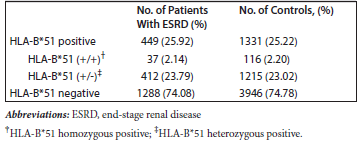
Table 1. Frequency of HLA-B*51 in Patients and Controls
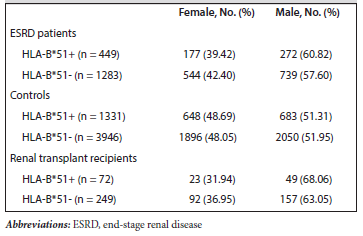
Table 2. Relationship Between Sex and HLA-B*51
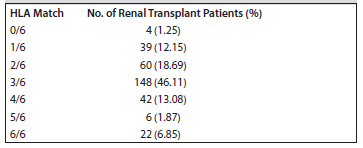
Table 3. HLA Matches in Renal Transplant Patients
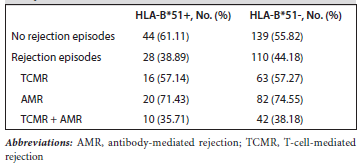
Table 4. Relationship Between HLA-B*51 and Rejection Episodes in Renal Transplant Patients
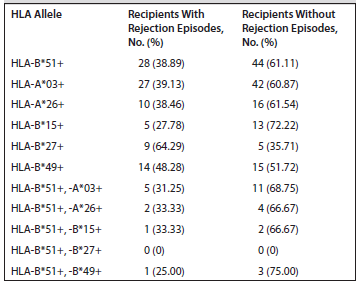
Table 5. Relationship Between HLA and Rejection Episodes in Kidney Transplant Recipients