Volume: 22 Issue: 1 January 2024 - Supplement - 1
FULL TEXT
Objectives: We investigated the outcomes of liver transplant in patients with hepatocellular carcinoma.
Materials and Methods: Prospectively, recipients of deceased donor liver transplants from 2007 to 2021 at Imam Khomeini Hospital, Tehran University of Medical Sciences, Tehran, Iran, were enrolled into the study. The Milan criteria were applied for selection of liver transplant candidates diagnosed with hepatocellular carcinoma. Patients with diagnosis of acute liver failure and who underwent secondary liver transplant were excluded. All patients diagnosed with hepatocellular carcinoma were given mechanistic target of rapamycin inhibitor with calcineurin inhibitor minimization 4 weeks after liver transplant. Patients were assigned to the experimental group (with hepatocellular carcinoma; n = 82) or the control group (without hepatocellular carcinoma; n = 1076). We recorded the etiologies of liver cirrhosis in the experimental group, demographic data from all patients, and postoperative complications.
Results: Of 1158 total patients, mean age was 44.15 ± 14.71 years (range, 1-73 years) and 712 were male patients (61.5%). In the experimental group (n = 82), there were 76 patients (92.68%) who were within the Milan criteria; others were excluded intraoperatively. All patients were followed for a median of 65.3 ± 40.8 months (range 10-197 months). Patient survival rates in the experimental group and control group at 3 months, 1 year, and 3 years were 89%, 80%, and 78% versus 84%, 81%, and 70%, respectively (P = .742). Hepatocellular carcinoma reoccurred in 6 patients (7.31%) at mean of 16.83 months postoperatively.
Conclusions: Liver transplant for patients with hepatocellular carcinoma in the post-Milan criteria era is associated with acceptable outcomes.
Key words : Cirrhosis, Deceased donor, Liver trans-plantation, Recurrence of hepatocellular carcinoma
Introduction
Globally, hepatocellular carcinoma (HCC) is the most common primary liver neoplasm, the fifth most frequent tumor in men, and the ninth most frequent tumor in women.1 Because of its highly aggressive behavior, HCC is the third leading cause of cancer-related death worldwide, with a mortality-to-incidence ratio of 0.95.2 The therapeutic strategies for treatment of HCC are challenging and differ based on the liver function, characteristics of the lesion, and performance status of the patients.
Curative therapies such as liver transplant and surgical resection are available options for patients with early-stage HCC. Liver transplant may be the best treatment choice for HCC, due to the simultaneous removal of the lesion and treatment of the underlying liver cirrhosis.3 With the introduction of Milan criteria for eligibility of patients with early-stage HCC for liver transplant (1 lesion less than 5 cm, or 3 lesions less than 3 cm), the outcomes of liver transplant for treatment of HCC have greatly improved.4
In this study, we studied the outcomes of liver transplant in patients with HCC in the Milan criteria era and the incidence rates of HCC recurrence after liver transplant.
Materials and Methods
Prospectively, we enrolled patients in our study who underwent deceased donor liver transplant from 2007 to 2021 at Imam Khomeini Hospital, Tehran University of Medical Sciences, Tehran, Iran. Our study was approved by the Ethics Committee of Tehran University of Medical Sciences. Each patient with the diagnosis of HCC or other diagnoses was explained that their data would be collected to use for a study about posttransplant complications and survival rates, and written consent was obtained from each patient or their guardians before entering the study.
The Milan criteria were applied for selection of liver transplant candidates with the diagnosis of HCC. The inclusion criteria were the patients with the diagnosis of early-stage HCC based on the Barcelona Clinic Liver Cancer staging system. Patients with the diagnosis of acute liver failure and who underwent secondary liver transplant were excluded. All patients underwent modified piggyback liver transplant and were given a triple immunosuppression regimen in the early postoperative period. All patients diagnosed with HCC were given mechanistic target of rapamycin inhibitor with calcineurin inhibitor minimization 4 weeks after liver transplant. Patients were assigned to the HCC group (n = 82) or the non-HCC group (n = 1076).
We used SPSS statistical software (version 20.0) to analyze the data. Quantitative data were analyzed with the independent sample t test, and qualitative data were analyzed with the Fisher exact test. Patient survival rates were calculated according to the Kaplan-Meier method. Statistical significance was defined by P < .05.
Results
There were 1341 liver transplants performed at our center during the study period, and 82 (6.1%) were performed to treat HCC. Of these 1341, we enrolled 1158 patients with a mean age of 44.15 ± 14.71 years (range 1-73 years), including 712 (61.5%) male patients. The etiologies of liver cirrhosis in the HCC group, demographics data of all the patients, and postoperative complications are shown in Table 1. The HCC group included more older and male patients compared with the non-HCC group. Regarding postoperative complications, acute graft rejection rates were significantly higher in the HCC group versus the non-HCC group; however, the frequencies of hepatic artery thrombosis and infection were not significantly different in both groups.
There were 76 (92.68%) patients in the HCC group who were included according to the Milan criteria, whereas the other 6 patients in the HCC group were excluded according to the Milan criteria due to intraoperative findings. All patients were followed for a median of 65.3 ± 40.8 months (range, 10-197 months). Patient survival rates in the HCC group and non-HCC group at 3 months, 1 year, and 3 years were 89%, 80%, and 78% versus 84%, 81%, and 70%, respectively, and these results were not significantly different (P = .742). The Kaplan-Meier survival graph of the patients in each group is shown in Figure 1.
Hepatocellular carcinoma reoccurred in 6 patients (7.31%) at mean postoperative time of 16.83 months; detailed data are shown in Table 2.
Discussion
In this study, we studied the outcomes of deceased donor liver transplant for 82 patients diagnosed with HCC. Hepatocellular carcinoma accounts for 6.1% of liver transplants at our center. As expected, patients in the HCC group were significantly older and included more male patients versus the non-HCC group in our study. This may be due to the increased incidence of cancers among older patients and viral hepatitis among male patients.5,6
The Model for End-Stage Liver Disease scores and early posttransplant renal function levels (calculated as the estimated glomerular filtration rate) were not significantly different between the HCC and non-HCC groups.
Recurrence of HCC was found in 6 patients (7.31%) after liver transplant associated with lower survival rates in our study. These findings are in accordance with other studies that have reported HCC recurrence after liver transplant among 6% to 18% of patients with significantly lower survival versus those without recurrence.7
Finally, survival rates of our patients in the HCC group were acceptable in the Milan era with no significant difference versus the non-HCC group, which is compatible with other studies.8,9
Conclusions
Liver transplant in patients with HCC in the post-Milan criteria era is associated with acceptable outcomes. However, recurrence of HCC after liver transplant may result in highly unfavorable outcomes.
References:
- Bray F, Ferlay J, Soerjomataram I, Siegel RL, Torre LA, Jemal A. Global cancer statistics 2018: GLOBOCAN estimates of incidence and mortality worldwide for 36 cancers in 185 countries. CA Cancer J Clin. 2018;68(6):394-424. doi:10.3322/caac.21492
CrossRef - PubMed - Njei B, Rotman Y, Ditah I, Lim JK. Emerging trends in hepatocellular carcinoma incidence and mortality. Hepatology. 2015 Jan;61(1):191-199. doi:10.1002/hep.27388
CrossRef - PubMed - Ishizaki Y, Kawasaki S. The evolution of liver transplantation for hepatocellular carcinoma (past, present, and future). J Gastroenterol. 2008;43(1):18-26. doi:10.1007/s00535-007-2141-x
CrossRef - PubMed - Mazzaferro V, Regalia E, Doci R, et al. Liver transplantation for the treatment of small hepatocellular carcinomas in patients with cirrhosis. N Engl J Med. 1996;334(11):693-699. doi:10.1056/NEJM199603143341104
CrossRef - PubMed - Jefferies M, Rauff B, Rashid H, Lam T, Rafiq S. Update on global epidemiology of viral hepatitis and preventive strategies. World J Clin Cases. 2018;6(13):589-599. doi:10.12998/wjcc.v6.i13.589
CrossRef - PubMed - Nolen SC, Evans MA, Fischer A, Corrada MM, Kawas CH, Bota DA. Cancer-Incidence, prevalence and mortality in the oldest-old. A comprehensive review. Mech Ageing Dev. 2017;164:113-126. doi:10.1016/j.mad.2017.05.002
CrossRef - PubMed - de’Angelis N, Landi F, Carra MC, Azoulay D. Managements of recurrent hepatocellular carcinoma after liver transplantation: a systematic review. World J Gastroenterol. 2015;21(39):11185-11198. doi:10.3748/wjg.v21.i39.11185
CrossRef - PubMed - Clavien PA, Lesurtel M, Bossuyt PM, et al. Recommendations for liver transplantation for hepatocellular carcinoma: an international consensus conference report. Lancet Oncol. 2012;13(1):e11-e22. doi:10.1016/S1470-2045(11)70175-9
CrossRef - PubMed - Goldaracena N, Mehta N, Scalera I, et al. Multicenter validation of a score to predict prognosis after the development of HCC recurrence following liver transplantation. HPB (Oxford). 2019;21(6):731-738. doi:10.1016/j.hpb.2018.10.005
CrossRef - PubMed

Volume : 22
Issue : 1
Pages : 252 - 255
DOI : 10.6002/ect.MESOT2023.P70
From the 1Liver Transplantation Research Center, Tehran University of Medical Sciences; and the 2Hepatobiliary Surgery and Liver Transplantation Division, Department of General Surgery, Imam Khomeini Hospital Complex, Tehran, Iran
Acknowledgements: The authors have not received any funding or grants in support of the presented research or for the preparation of this work and have no declarations of potential conflicts of interest.
Corresponding author: Amir Kasraianfard, Hepatobiliary and Liver Transplantation Research Center, Imam Khomeini Hospital Complex, Keshavarz Blvd., Tehran, 14197-33141, I.R. Iran
Phone: +98 21 61192659
E-mail: amirkasraian@gmail.com
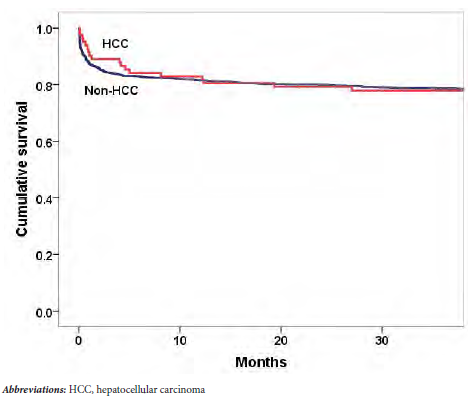
Figure 1. Kaplan-Meier Survival of Patients in Each Group
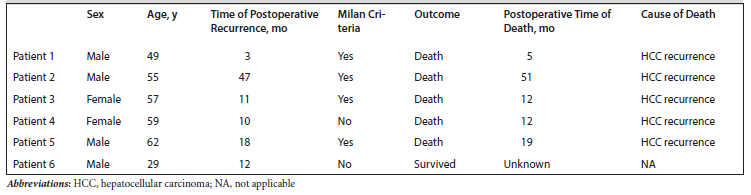
Table 2. Detailed Data of Patients With Recurrence of Hepatocellular Carcinoma