Volume: 22 Issue: 1 January 2024 - Supplement - 1
FULL TEXT
Objectives: Attitudes and knowledge toward organ donation can influence a person's willingness to donate. The aim of this study was to assess attitudes and knowledge regarding organ donation among Tunisian adults.
Materials and Methods: We conducted a cross-sectional survey at the national level from January 23 to February 15, 2017, among 1026 Tunisian adults. We used a standardized questionnaire to collect data by phone call. We performed statistical analyses with Stata software (version 11).
Results: The study included 495 male and 531 female participants. Forty-one percent of participants were 18 to 30 years old. In total, 81.7% had heard about organ donation. Fewer than half of respondents (47.8%) were aware that organ donation is regulated. In total, 80.7% accepted to donate their organs after death, and 32.2% had mentioned their opinion to relatives or friends. Only 1% had added their donor status on their national identity cards.
Conclusions: Tunisian adults seem to have positive attitudes regarding organ donation. However, the proportion of respondents who included their donor status on their national identity cards was low. It is important to enhance information and education on organ donation in an effort to mitigate the shortage of organs.
Key words : Deceased donor, Transplant legislation, Transplantation
Introduction
Organ transplant may save the lives of many patients.1-3 Despite the efforts made by many countries to increase rates of organ donation, these rates have not reached the desired levels, and the gap between supply and demand continues to widen.4-8 In Tunisia, substantial progress has been made in organ transplantation with regard to improvements in transplant techniques and patient care.9,10 However, in Tunisia, as in other countries, the needs for organ transplantation remain largely unmet.9,11
Attitudes and knowledge toward organ donation can influence a person's willingness to donate. Therefore, a better understanding of the public perception of organ donation is crucial to guide strategies for promotion of organ donation. The aim of this study was to assess attitudes and knowledge regarding organ donation among Tunisian adults.
Materials and Methods
Ethics statement
Our study protocol conformed to the ethical guidelines or the 1975 Helsinki Declaration. Data were collected and analyzed anonymously. Data did not include information that could identify individuals or affect the confidentiality of data.
Study area
Tunisia is a North African country of 163 610 km2 and had a population of 11.4 million people in 2017.
Study design and participants
We conducted a cross-sectional survey in Tunisia at the national level from January 23 to February 15, 2017, among 1026 Tunisian adults. The study was led by the National Center for the Promotion of Organ Transplantation. Data collection was performed by phone call using a standardized questionnaire. The selection criteria for inclusion in the study were as follows: Tunisian adults older than 18 years living in the 24 governorates of Tunisia, belonging to any socio-professional category, who agreed to participate in the phone survey.
Data collection
Trained investigators used a questionnaire to collect data from participants by phone, with questions on sociodemographic characteristics (sex, age, living area, and level of education) and knowledge and attitudes toward organ donation.
Statistical analyses
We performed statistical analyses with Stata software (version 11). Data are expressed as numbers of responses and percentages.
Results
Among the 1026 adult survey respondents, 531 (51.8%) were women, 421 (41%) were between 18 and 30 years old, 612 (59.6%) were married, 454 (44.2%) had a secondary school education, 347 (33.8%) had a university education, and 707 (68.9%) lived in urban area (Table 1).
Among the respondents, 838 (81.7%) were aware of organ transplantation, and 182 (17.8%) were unaware that organ transplant was possible in Tunisia. Fewer than half of respondents (47.8%) were aware that organ donation was regulated, 561 (54.7%) were aware of legislated institutional coordination of organ transplantation in Tunisia, and 58.4% were aware that the Ministry of Health was the supervisory authority for regulation of organ transplantation. Almost three-quarters of participants (73.4%) thought that there was illegal organ trafficking in Tunisia (Table 2).
For those who were aware that organ transplant was possible in Tunisia, 98.2% declared that the audiovisual media, social networks, and the internet were their main sources of information.
Among respondents, 80.7% agreed to donation of their organs after death. Among the married respondents, 547 (60.4%) were in favor of deceased donation of their spouse's organs. Among those who had children, 498 (54.7%) were in favor of deceased donation of their child's organs. More than half of respondents (59.6%) agreed to deceased donation of organs from another family member. Among the participants in the survey, 75.9% considered that it is difficult to make a decision about deceased organ donation for a relative without having been informed of the living relative's position regarding organ donation (Table 3).
The most frequently reported reason by respondents to refuse donation of their organs after death was religious (55.4%). Fear of illegal organ trafficking and doubts about the destination of grafts accounted for 10.2% of responses. Lack of confidence in medical competence was reported by 5.1% of the respondents.
Only 330 respondents (32.2%) had told their family or friends about their position on organ donation. Respondents stated knowledge of their spouse's position in 42.3% of cases. This proportion was 28.6% for father's position, 31.6% for mother's position, and 27.4% for position of brothers and sisters. In total, only 10 participants (1%) had their donor status mentioned on their national identity cards.
To promote organ donation, 45.3% of participants suggested improvements of awareness through associations or through the media (20.3%), 19.8% asked to be regularly informed about the number of patients awaiting transplant, 5.4% suggested dissemination of religious arguments, and 4.5% recommended that the treating physician discuss the subject with the patient and patient's family.
Discussion
Development of transplant activity depends on the availability of grafts. Worldwide, the demand for transplants exceeds the supply of donated organs.7,12-14 In Tunisia, as for other countries in the world, organ transplantation has been facing an imbalance between supply and demand.15 In fact, the option for procurement of organs from patients after brain death in many cases remains suppressed by a high proportion of family refusals to donate organs.15 Our study aimed to assess attitudes and knowledge regarding organ donation among Tunisian adults at the national level.
In terms of Tunisians'knowledge, 17.8% of respondents were unaware of the possibility of organ transplant in Tunisia. Among the population informed about the feasibility of this activity, knowledge on organ donation was insufficient. In fact, 31.9% were unaware of the existence of the legislative framework for regulation of organ donation, and 45.3% were unaware of the existence of a national institution for coordination of organ transplantation in Tunisia. Our findings are similar to the results of a previous local study from 2007 in Tunis, Tunisia, which showed that 18.8% of interviewed adults thought that organ transplant was not possible in Tunisia and 30.4% thought that there was no legislative regulation for this activity.11
The lack of awareness of the legal and organizational policies that govern organ transplantation could lead to doubts and apprehension among the public about organ donation. As evidence of this, our study revealed that a high proportion of respondents (73.4%) wrongly thought that there is illegal organ trafficking in Tunisia. This high proportion of misinformed respondents should encourage promotional campaigns to reassure the public that all transplant practices in Tunisia are legal. In fact, an organ procurement and transplant law was passed in March 1991 and the National Center for the Promotion of Organ Transplantation was created by the law No. 95-49 of June 12, 1995. This national institution is responsible for coordination of transplantation activity in accordance with legislation. The current legislation sets rigorous and detailed rules with regard to brain death, as well as the removal, storage, transportation, allocation, and transplant of human tissue and organs.9,10,15
With regard to public attitudes toward organ donation, 80.3% of respondents accepted to donate their organs after their death. This proportion is higher than observed in a previous local study from 2007 in Tunis for which only 53.9% of adults were in favor of organ donation after death.11
Among those who refused to donate their organs, the most frequently reported reasons were religious in 55.4% of participants in our present study. Religious reasons for donation refusals are high despite the fact that the Islamic authority supports organ donation and transplantation.15 Fear of illegal organ trafficking and doubts about the destination of grafts were reported in 10.2%. Lack of confidence in medical competence was reported in 5.1% of cases. In the previous local study from 2007, among the respondents who refused to donate organs after death, 13% thought that it was prohibited by religion, and 15.2% declared that they had no confidence in the organ transplantation system.
To reduce the rate of refusals by families to offer their relative's organs in the case of brain death, it is essential to reassure the general population that there is a legal framework of regulation for organ donation. Furthermore, it is important to reassure the public about the fact that organ transplantation activity respects ethical principles: professionalism, dignity, autonomy, consent, beneficence, absence of maleficence, anonymity, gratuity, equity, and justice.
Our study showed that the rate of acceptance of donation decreased when it concerned giving consent for the donation of a relative's organs after death. In fact, 54.7% of respondents were in favor of deceased donation from their child, 53.4% in favor of deceased donation from their spouse, and 60.4% in favor of deceased donation from another family member. This could be explained by the difficulty of making an organ donation decision on behalf of another person. In fact, 75.9% of respondents considered that the decision to donate organs from a deceased relative, without having been informed of their relative's position, represents a heavy responsibility.
In terms of communication, only 32.2% of respondents said they had discussed the subject of organ donation with their family or close friends. In this environment of lack of communication, it is not surprising that the proportion of people who knew their relatives'position on organ donation was low and depended on the degree of familial relationship. Respondents stated that they knew their spouse's position in 42.3% of cases. This proportion was 28.6% for fathers, 31.6% for mothers, and 27.4% for brothers and sisters. It has to be said that organ donation is still a taboo subject in our society and that it is rarely discussed within families. It is essential to establish a culture of communication within Tunisian families and the public in general and to encourage adults to express their position regarding deceased donation in the case of brain death in order to facilitate an informed decision by families after a relative's death.
Since 1999, Tunisian law has allowed adult citizens to declare their donor status on their national identity card.9 This attitude is encouraged by the National Center for the Promotion of Organ Transplantation because it reveals the deceased person's living wishes and may facilitate the family decision. In our study, only 1% of respondents stated that they had declared their donor status on their national identity card. Although the spirit of solidarity and altruism seems to be present in more than three-quarters of the respondents (80.3% accepted to donate organs after death), this only represents an intention to donate. If a potential donor's wishes have not been communicated to relatives or donor status has not been declared on one's national identity card, then the decision to accept or refuse the option to donate belongs to the family of the deceased person.
In light of our findings, we suggest that it is essential to encourage public debate on organ donation. It is also important to enhance dissemination of practical information about organ donation and transplantation and ensure accessibility of this information for the general population. There are many ways to provide this information. Audiovisual media, the internet, and social networks are the best vectors for information about organ donation, according to our study (98.2%). Information campaigns in schools could promote a culture of communication and facilitate discussion within families. Enhanced training of physicians about organ transplantation could have a positive influence on public knowledge and attitudes. In fact, it has been demonstrated that physicians'knowledge and attitudes may influence the rate of acceptance of organ donation in a population.16 The success of organ donation is the result of a set of measures, particularly information, education, and training, that creates a favorable context for organ donation.17-20
To our knowledge, our study is the first published assessment of knowledge and attitudes of adults toward organ donation in Tunisia at the national level. Another strength of our study is the large size of our sample and the inclusion of all governorates. Our work enabled us to better understand the Tunisian population's perception of organ donation, through the evaluation of their knowledge and attitudes in order to guide strategic measures to reverse the shortage of organs.
A limitation of this study was that some knowledge items about population awareness of the imbalance between transplant demand and supply of grafts were not included in our questionnaire, such as the number of patients on the wait list and the mean number of performed transplants by organ type. However, our questionnaire was able to address many important themes to fulfill the aims of our study.
Conclusions
There are gaps in population knowledge about organ donation in Tunisia. Citizens seem to have positive attitudes toward deceased donation. However, the proportion of respondents who have donor status included on their national identity cards remains low, and communication about organ donation within families is limited. It is important to enhance information and education on organ donation in order to mitigate the present and persistent shortage of organs.
References:
- Gurler H, Hancer AT. Attitudes of Turkish health care professionals toward organ donation and factors affecting organ donation: a systematic review. Int J Caring Sci. 2020;13(1):93-102.
CrossRef - PubMed - Balajee KL, Ramachandran N, Subitha L. Awareness and attitudes toward organ donation in rural Puducherry, India. Ann Med Health Sci Res. 2016;6(5):286-290. doi:10.4103/amhsr.amhsr_63_15
CrossRef - PubMed - Buthelezi N, Ross E. Gift of life or cultural taboo: effects of an educational pamphlet on young adults’ knowledge and attitudes regarding organ donation. Soc Work Health Care. 2011;50(9):719-738. doi:10.1080/00981389.2011.576543
CrossRef - PubMed - Oluyombo R, Fawale MB, Ojewola RW, et al. Knowledge regarding organ donation and willingness to donate among health workers in South-West Nigeria. Int J Organ Transplant Med. 2016;7(1):19-26.
CrossRef - PubMed - Watson CJ, Dark JH. Organ transplantation: historical perspective and current practice. Br J Anaesth. 2012;108 Suppl 1:i29-42. doi:10.1093/bja/aer384
CrossRef - PubMed - Etheredge HR. Assessing global organ donation policies: opt-in vs opt-out. Risk Manag Healthc Policy. 2021;14:1985-1998. doi:10.2147/RMHP.S270234
CrossRef - PubMed - Lewis A, Koukoura A, Tsianos GI, Gargavanis AA, Nielsen AA, Vassiliadis E. Organ donation in the US and Europe: the supply vs demand imbalance. Transplant Rev (Orlando). 2021;35(2):100585. doi:10.1016/j.trre.2020.100585
CrossRef - PubMed - Hickey M, Yadav K, Abdulaziz KE, et al. Attitudes and acceptability of organ and tissue donation registration in the emergency department: a national survey of emergency physicians. CJEM. 2022;24(3):293-299. doi:10.1007/s43678-022-00262-8
CrossRef - PubMed - Tebourski F, Jaouadi N, Ben Alaya D, Benamar-Elgaaied A, Ayed M. Attitude of health personnel to organ donation and transplantation. Tunis Med. 2003;81(7):482-487.
CrossRef - PubMed - El Matri A, Ben Abdallah T. Organ transplantation in Tunisia. Exp Clin Transplant. 2015;13 Suppl 1:33-36. doi:10.6002/ect.mesot2014.L52
CrossRef - PubMed - Hamouda C, Hamida MB, Benzarti N, Zouari B, Chébil M. Don d’organes et population Tunisienne, attitude et opinion? Presse Med. 2010;39(1):e11-e16.
CrossRef - PubMed - Laidouni N, Gil-Gonzalez D, Latorre-Arteaga S. Barriers to organ transplantation in the Algerian health system from the perspective of health professionals: a qualitative approach. Transplant Proc. 2016;48(10):3261-3267. doi:10.1016/j.transproceed.2016.08.046
CrossRef - PubMed - DeRoos LJ, Zhou Y, Marrero WJ, et al. Assessment of national organ donation rates and organ procurement organization metrics. JAMA Surg. 2021;156(2):173-180. doi:10.1001/jamasurg.2020.5395
CrossRef - PubMed - Alanzi AK, Gomaa FRE, Gomaa OR, et al. Willingness and attitude of the Arab world population toward solid-organ donation. Exp Clin Transplant. 2022;20(9):811-816. doi:10.6002/ect.2022.0010
CrossRef - PubMed - Abderrahim E, Zammouri A, Bacha MM, et al. Thirty years of experience at the first Tunisian kidney transplant center. Exp Clin Transplant. 2017;15(Suppl 1):84-89. doi:10.6002/ect.mesot2016.O66
CrossRef - PubMed - Ahmed M, Kubilis P, Padela A. American Muslim physician attitudes toward organ donation. J Relig Health. 2018;57(5):1717-1730. doi:10.1007/s10943-018-0683-2
CrossRef - PubMed - Erdogan O, Yucetin L, Tuncer M, et al. Attitudes and knowledge of Turkish physicians about organ donation and transplantation. Transplant Proc. 2002;34(6):2007-2008. doi:10.1016/s0041-1345(02)02831-2
CrossRef - PubMed - Rios A, Conesa C, Ramirez P, et al. Attitudes of resident doctors toward different types of organ donation in a Spanish transplant hospital. Transplant Proc. 2006;38(3):869-874. doi:10.1016/j.transproceed.2006.02.029
CrossRef - PubMed - Bassit NH, Habiblah M, Fadili W, Laouad I. University hospital doctors: what are their beliefs about organ donation? Transplant Proc. 2013;45(10):3466-3468. doi:10.1016/j.transproceed.2013.09.007
CrossRef - PubMed - Weber F, Canbay AE. Attitudes of physicians and nursing staff members toward organ donation in an urban area of Germany. Transplant Proc. 1999;31(5):2179-2180. doi:10.1016/s0041-1345(99)00300-0
CrossRef - PubMed

Volume : 22
Issue : 1
Pages : 224 - 228
DOI : 10.6002/ect.MESOT2023.P56
From the 1National Center for the Promotion of Organ Transplantation; the 2Faculty of Medicine of Tunis, University of Tunis El Manar; the 3Department of Oto-Rhino-laryngology, Mongi Slim University Hospital; the 4Laboratory of Research in Immunology, Renal Transplantation and Immunopathology, Charles Nicolle Hospital; and the 5Pediatric Department, Charles Nicolle Hospital, Tunis, Tunisia
Acknowledgements: The authors have not received any funding or grants in support of the presented research or for the preparation of this work and have no declarations of potential conflicts of interest.
Corresponding author: Wafa Aissi, National Center for the Promotion of Organ Transplantation, Rue Jebel Lakdhar, 1006, Tunis, Tunisia
E-mail: wafa.aissi@fmt.utm.tn
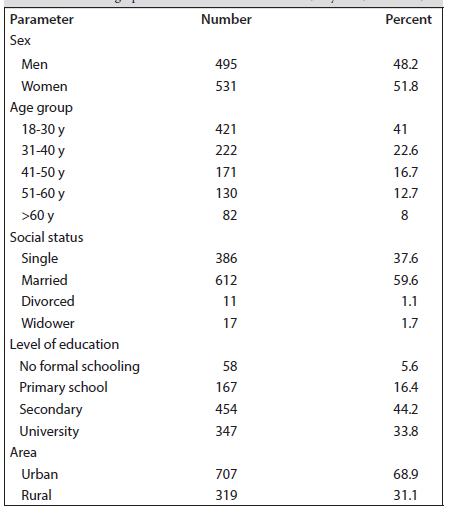
Table 1. Sociodemographic Characteristics of the 1026 Surveyed Tunisian Adults
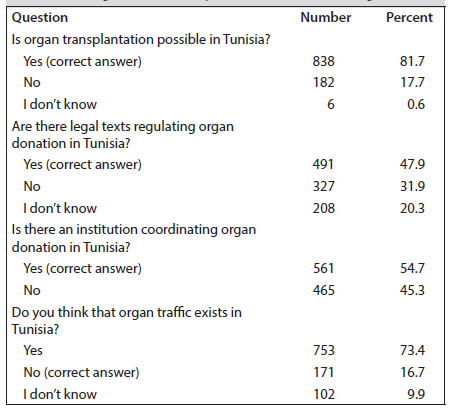
Table 2. Knowledge of the 1026 Surveyed Tunisian Adults Toward Organ Donation
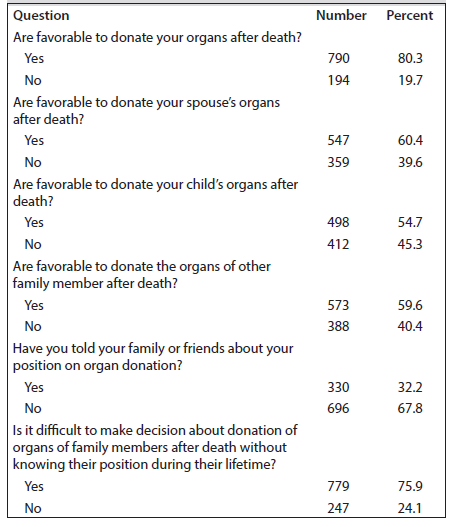
Table 3. Attitudes of the 1026 Surveyed Tunisian Adults Toward Organ Donation After Death