Volume: 22 Issue: 1 January 2024 - Supplement - 1
FULL TEXT
Objectives: The objective of this study was to assess the attitudes of undergraduate nursing and midwifery students toward organ donation and identify the factors that influence these attitudes.
Materials and Methods: The study was conducted at Burdur Mehmet Akif Ersoy University, Bucak School of Health, in Turkey. A total of 700 students participated in the study, representing 88.49% of the population. Online forms were used for data collection, and the Organ Donation Attitude Scale was used as a data collection tool.
Results: Our results showed that 47.9% of the students had not expressed a desire to donate their organs, and only 0.1% reported having donated organs. Additionally, 41.4% of the participants did not share their thoughts on organ donation with their families. Our study also found that 87.4% of the participants had not participated in any training program on organ donation. Logistic regression analysis revealed that factors such as students’ sex, progress toward completion of curriculum (ie, class year), presence of a family member with organ transplant experience, organ donation status, and knowledge of organ donation influenced the participants’ attitudes toward organ donation.
Conclusions: This study highlights the need for health care professionals, including nursing students, to be educated and prepared to promote and support organ donation. By understanding the factors that influence attitudes, interventions and educational programs can be developed to improve organ donation rates and address misconceptions or concerns among nursing students.
Key words : Educational programs, Midwifery, Nursing, Organ transplant
Introduction
Organ transplant is a successful treatment method for irreversible organ failure and provides patients with a second chance at life.1 Organ donation is a crucial step in the process of organ transplantation, which requires the voluntary and documented use of an individual’s tissues and organs for the treatment of other patients after their death.2 Organs for transplant can come from living relatives, unrelated donors, or deceased (cadaveric) donors. The demand for organ transplants has increased in recent years due to economic and technological advancements, the aging population, and the prevalence of diseases.3 However, despite the growing number of patients awaiting organ transplant, the supply of donated organs falls short of the demand.4,5 In 2014, the total number of donors was 3260 (2696 living, 564 deceased).4 By 2022, the total number of donors had increased to 5067 (4778 living, 289 deceased).6 According to the 2019 data from the International Registry in Organ Donation and Transplantation, Turkey had 4348 living organ donors; Spain ranked first globally for deceased donation with 49.61 per million population (pmp) of organ donations coming from deceased individuals, while Turkey ranked 43rd for deceased donation with 7.54 pmp.6,7 Turkey also had a significantly higher rate of living organ donations (53.02 pmp) compared with other countries.7 According to data from the World Health Organization, organ transplants meet only 10% of the global demand in 2016.8 In 2019, The Turkish Ministry of Health reported 26.984 patients on the wait list for organ transplant.9
Health care professionals play a vital role in organ donation and transplantation. Promotion and support of organ donation are not only the responsibility of health care personnel directly involved in this field, but these factors are also the responsibility of the entire health care team. The attitudes of health care professionals toward organ donation significantly influence the attitudes of transplant recipients, donor families, approaches to patients with brain death, and the decision-making process of families. Therefore, nursing students, as future health care professionals, play a crucial role to raise awareness about organ donation and to promote organ transplantation in society.10,11 Thus, it is essential to assess the attitudes of nursing students toward organ donation to prepare them for these responsibilities and ensure they act with sensitivity.12
The objective of this study was to investigate the attitudes of nursing and midwifery undergraduate students, who are prospective health care professionals, toward organ donation and identify the factors that influence these attitudes. The questions we explored in this study were (1) What is the perspective of midwifery and nursing students regarding organ donation? and (2) What factors influence the attitudes and beliefs of nursing and midwifery students regarding organ donation?
Materials and Methods
Study design
We used a descriptive cross-sectional design for this study.
Place and time of study
The study was conducted during September and October 2022 at Burdur Mehmet Akif Ersoy University, Bucak School of Health, in the nursing and midwifery departments. These departments do not offer a separate course on organ transplantation.
Study sample
The study population comprised first-year (215), second-year (201), third-year (210), and fourth-year (165) students enrolled in the nursing and midwifery departments of a public university during the 2022-2023 academic year, resulting in a total of 791 students. The aim was to include the entire population as the sample. However, students who were absent during data collection or declined to participate in the study were excluded. As a result, the sample comprised 700 students (88.49% of the total population) who agreed to participate in the study.
Data collection tools
The data collection for this study was conducted electronically with online forms for the 2-month period of September and October 2022. The survey form included questions about sociodemographic characteristics, factors related to attitudes toward organ donation, and the Organ Donation Attitude Scale. Sociodemographic characteristics included age, sex, undergraduate program, family type, and place of residence. The factors associated with attitudes toward organ donation included variables such as the level of knowledge about organ donation, willingness to donate, personal experiences or family experiences with organ donation or transplantation, attitudes of family members toward organ donation, adherence to religious guidelines, and the religious permissibility of organ donation. The Organ Donation Attitude Scale, developed by Parisi and Katz,13 was used as a data collection tool. The Turkish version of the scale that we used in this study has been validated and proved reliable by Yazici Sayin.14 The scale consisted of general attitude, positive attitude, and negative attitude subdimensions with respective reliability coefficients of 0.839, 0.942, and 0.908. A stronger inclination toward voluntary organ donation was indicated by higher scores in the positive attitude subdimension and lower scores in the negative attitude subdimension.
Data collection
The researchers administered the data collection forms on different days for each class attended by the students. The questionnaires were distributed to the students who agreed to participate in the study, and they were asked to fill them out. On average, the implementation time for each class was approximately 20 minutes.
Statistical analyses
We used SPSS software (IBM) for statistical analyses. We used descriptive statistics, such as the independent sample t test and 1-way analysis of variance, to analyze the data. The data are presented in terms of frequency (with percentage) and mean values (with standard deviation) Logistic regression analysis was conducted to identify the factors associated with the inclination toward organ donation. The significance level was established at P < .05.
Ethical procedures
Approval (No. GO2023/18) was obtained from the institutional ethics committee before commencement of the research. Additionally, necessary permissions were obtained from the institution’s management team. This study followed the ethical principles described in the Declaration of Helsinki. The research objectives were explained to the students, and their informed consent was obtained before the research forms were distributed. Permission to use the scale developed by Yazici Sayin14 was obtained via email.
Results
Analysis of the demographic characteristics of the study participants revealed that 82% were women. Participants were mostly third-year students (27.1%). Regarding organ donation, 47.9% of the students did not express a desire to donate their organs. Only 0.1% of the participants reported having donated organs. Furthermore, 41.4% of the participants did not share their thoughts on organ donation with their families. A total of 87.4% of the participants had not participated in any training program on organ donation. Among the participants, 71.6% expressed a preference to receive information about organ donation from a doctor or nurse, and 17.3% preferred to obtain information from a religious official (Table 1).
Table 2 presents the average scores of organ donation attitudes based on the descriptive characteristics of the participants. A statistically significant difference was observed between the participant sex and the subdimensions of the scale (P < .05) (Table 1). The observed difference was ascribed to the subdimension of benevolence and moral values for women, whereas for men, it was linked to the subdimensions of fear of medical neglect and fear of bodily injury. Additionally, a statistically significant disparity was discovered between the participants’ education status (class year) and the benevolence and moral values subdimension of the scale (P < .05), specifically in relation to first-year and second-year students.
Another statistically significant difference was identified between the presence of a family member who had undergone (or was awaiting) an organ transplant and the benevolence and moral values subdimension of the scale (P < .05). Notably, a significant difference was also observed between the participants’ organ donation status and the subdimensions of benevolence and moral values, fear of medical neglect, and fear of bodily injury (P < .05). This difference was attributed to the participants’ expressed reluctance to donate organs or consider involvement in organ donation.
Additionally, a statistically significant disparity was observed between the students’ understanding of organ donation and the subdimension of benevolence and moral values on the scale (P < .05) (Table 2).
The reasons why students did not donate organs were as follows: 42.7% had never considered organ donation, 30% did not feel prepared for organ donation, 7.9% did not know where to apply for organ donation, 2.1% believed that there was no organized system for organ donation, 6.4% cited religious reasons, 1.2% thought there were insufficient organ transplant centers, 1% did not view organ donation as appropriate, 1.6% did not perceive their health was suitable for donation, and 6.3% were against organ transplantation.
Discussion
Organ donation and transplantation are significant and extensively studied topics both nationally and globally. Despite notable advancements, the number of donated organs remains insufficient to meet the demand. The number of organ donations primarily depends on the knowledge, awareness, and attitudes of the general population toward organ transplantation. This study aimed to assess the attitudes and factors that influence the attitudes of nursing and midwifery students, who are future health care professionals and will play a crucial role in raising social awareness about organ donation and influencing family decision-making processes.
The study revealed that 99% of the students had not donated solid organs, and 47.9% had not considered organ donation. Although a majority of the students recognized the importance of organ donation to save lives and promote healing, only 12% possessed organ donation cards. Similarly, other studies have reported positive attitudes toward organ donation among students but low possession rates of organ donation cards.15 To address this issue, nursing education should focus on increasing students’ knowledge about organ donation and emphasize the importance of their role to inform society, starting with their own families. Furthermore, we observed that some students declined organ donation due to religious reasons. A previous study has indicated that religious beliefs directly influence the decision to donate organs and the attitudes of potential donors.15
We reviewed the literature, and it is evident that only a limited number of studies have investigated the relationship between participants’ sex and attitudes toward organ donation. Baykan and colleagues16 found no significant difference in organ donation attitudes between male and female students. However, in our present study, we observed that female students exhibited more positive attitudes compared with male students.
Positive attitudes towards organ transplantation and donation were found to be associated with a 2.31 times higher likelihood of being willing to donate organs. Similarly, students with lower negative attitude scores were 6.07 times higher likelihood of being willing to donate organs.. Studies that have explored the relationship between negative and positive attitudes have reported that students demonstrate high levels of helpfulness, moral values, and beliefs (positive attitudes) regarding organ donation. However, such students may hesitate to proceed with organ donation due to concerns about bodily injury and medical neglect.5,17 Factors such as fear of compromising bodily integrity, attitudes toward death, traditional family values and beliefs, and inadequate health care systems can contribute to negative attitudes toward organ donation among students. Nursing students are future health care professionals, and as such it is crucial for them to foster positive attitudes toward organ transplantation. One study has suggested that addressing knowledge gaps would lead to the development of positive attitudes toward organ transplantation.15
Limitations of this study
Several limitations should be acknowledged in this study. First, the cross-sectional design restricted our ability to establish causal relationships between attitudes toward organ donation and other variables. Second, our findings cannot be generalized to all health school students in Turkey, because our research was conducted solely within a specific university’s health school located in the Mediterranean region.
Conclusions
The study revealed a high level of positive attitudes toward organ donation among the participants. However, there was a low level of willingness to proceed with organ donation. It was observed that attitudes and behaviors toward organ donation varied among the students, and willingness to donate organs was the primary influencing factor. Despite their positive thoughts about organ donation, the students in this study did not translate these thoughts into action. This highlights the necessity for enhanced and ongoing education to foster positive attitudes and desires among students who would otherwise retain negative attitudes toward organ donation. On the basis of these findings, it is crucial to increase the knowledge level of nursing and midwifery students regarding organ donation and to emphasize the importance of their role to raise awareness within society, starting from the family unit.
References:
- Tam WW, Suen LK, Chan HY. Knowledge, attitudes and commitment toward organ donation among nursing students in Hong Kong. Transplant Proc. 2012;44(5):1196-1200. doi:10.1016/j.transproceed.2012.01.108
CrossRef - PubMed - Aki? M, Katirci E, Uluda? H, et al. Knowledge and attitude of Suleyman Demirel University staff About organ-tissue donation and transplantation. SD Ü Tip Fak Derg. 2008;15:28-33. doi:10.17343/sdutfd.37099
CrossRef - PubMed - White SL, Hirth R, Mahillo B, et al. The global diffusion of organ transplantation: trends, drivers and policy implications. Bull World Health Organ. 2014;92(11):826-835. doi:10.2471/BLT.14.137653
CrossRef - PubMed - Kavurmaci M, Karabulut N, Koc A. The knowledge and views of university students about organ donation. J Educ Res Nurs. 2014;11(2):15-22.
CrossRef - PubMed - Kose OO, Onsuz MF, Topuzoglu A. Knowledge levels of and attitudes to organ donation and transplantation among university students. North Clin Istanb. 2015;2(1):19-25. doi:10.14744/nci.2015.58070
CrossRef - PubMed - International Registry in Organ Donation and Transplantation. 2019. https://www.irodat.org/?p=database&c=TR&year=2022#data
CrossRef - PubMed - International Registry in Organ Donation and Transplantation. https://www.irodat.org/img/database/pdf/Newsletter%20Dec%202020%20.pdf
CrossRef - PubMed - World Health Organization. WHO-ONT Global Observatory on Donation and Transplantation. Global activity in organ transplantation: estimations 2016. 2016. https://www.transplant-observatory.org/download/2016-activity-data-report/
CrossRef - PubMed - Ministry of Health, Turkey. Patients waiting for organ transplantation, 2022. https://organkds.saglik.gov.tr/dss/PUBLIC/PublicDefault2.aspx
CrossRef - PubMed - Ya?ar M, O?ur R, Uçar M, et al. Attitudes of last grade students of a vocational school of health about organ donation and related factors with their attitudes. Genel Tip Dergisi. 2008;18(1):33-37.
CrossRef - PubMed - Özer F, Karamano?lu A, Beyda? K, et al. Effect of education on a group of university school for health sciences students’ opinions and knowledge level about organ transplantation and donation. TAF Preventive Medicine Bulletin. 2008;7:39-46.
CrossRef - PubMed - Tumin M, Tafran K, Tang LY, et al. Factors associated with medical and nursing students’ willingness to donate organs. Medicine (Baltimore). 2016;95(12):e3178. doi:10.1097/MD.0000000000003178
CrossRef - PubMed - Parisi N, Katz I. Attitudes toward posthumous organ donation and commitment to donate. Health Psychol. 1986;5(6):565-580. doi:10.1037//0278-6133.5.6.565
CrossRef - PubMed - Yazici Sayin Y. Turkish validity and reliability of Organ Donation Attitude Scale. J Clin Nurs. 2016;25(5-6):642-655. doi:10.1111/jocn.12943
CrossRef - PubMed - Poreddi V, Katyayani B, Gandhi S, Thimmaiah R, Badamath S. Attitudes, knowledge, and willingness to donate organs among Indian nursing students. Saudi J Kidney Dis Transpl. 2016;27(6):1129-1138. doi:10.4103/1319-2442.194595
CrossRef - PubMed - Baykan Z, Naçar M, Yamanel R, et al. Knowledge and attitudes among first year medical students about organ donation. Turk J Surg. 2009;25(4):137-141.
CrossRef - PubMed - Akpinar Söylemez B, Ordin YS. Attitudes of the third-year nursing students toward organ donation: cross-sectional study. Transplant Proc. 2017;49(8):1698-1701. doi:10.1016/j.transproceed.2017.04.024
CrossRef - PubMed

Volume : 22
Issue : 1
Pages : 213 - 218
DOI : 10.6002/ect.MESOT2023.P52
From the Department of Nursing, Bucak School of Health, Burdur Mehmet Akif Ersoy University, Burdur, Turkey
Acknowledgements: The author has not received any funding or grants in support of the presented research or for the preparation of this work and has no declarations of potential conflicts of interest.
Corresponding author: Halil Ibrahim Tasdemir, Burdur Mehmet Akif Ersoy University, Burdur, Turkey
Phone: +90 544 3356575
E-mail: dibrahimtasdemir@gmail.com
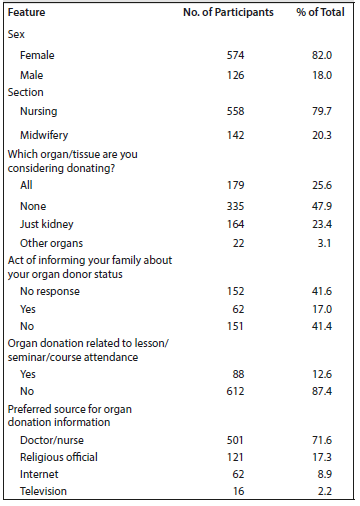
Table 1. Demographic Characteristics of Students and Information on Organ Donation (n = 700)
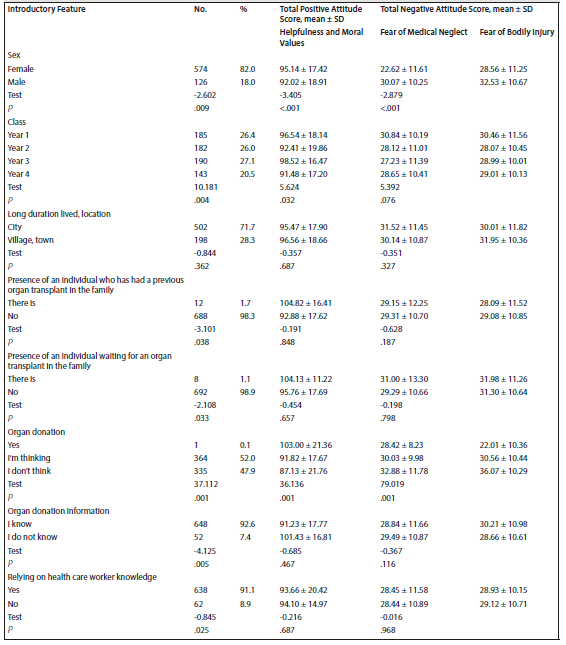
Table 2. Comparison of Scores for Participant Organ Donation Attitudes (n = 700)