Volume: 22 Issue: 1 January 2024 - Supplement - 1
FULL TEXT
Objectives: Our study aimed to identify the potential causes for the low lung procurement rate in Argentina and to develop strategies to the actual problems in donor management focused on lung retrieval.
Materials and Methods: We performed a cross-sectional study in which we analyzed data obtained from digital self-reported surveys conducted on professionals participating in the organ procurement process in Argentina. The surveys included questions on donor management, selection criteria, and resource availability involving increasing lung procurement.
Results: Among professionals surveyed, 23.7% did not use advanced hemodynamic monitoring in their donor maintenance and limited their use to central venous pressure. Only 35.8% of participants considered maintaining central venous pressure <10 mm Hg during donor maintenance. With regard to donors with severe deterioration of the ejection fraction, 47.4% of participants would not use restrictive fluid, and only 23.2% would use an advanced monitoring of the hemodynamic status to guide fluid management. Only 27.8% of participants routinely would use steroids to improve lung function in donors. With regard to mechanical ventilation, 80.4% of participants used protective ventilation, but only 4.10% used it adequately. Recruitment maneuvers were routinely used by only 3.1% of those surveyed. With regard to expanded selection criteria (age >55 years, smoking habit of >20 packs/year, positive upper airway cultures, unspecific infiltrates in radiography, and >72 hours of mechanical ventilation), 92.8% of surveyed participants would discount patients with some of these expanded selection criteria without considering offering the lungs for donation.
Conclusions: Opportunities for improvement may involve training physicians involved in the donor maintenance process and reviewing the donor selection criteria used to increase adherence to expanded selection criteria.
Key words : Donor Management, Expanded criteria donor, Lung donor
Introduction
According to the official information available in the CRESI platform (platform of reports and statistics from the SINTRA system in Argentina),1 in Argentina, 78% of patients on waiting lists to receive lung transplant have been waiting >1 year and 36% have been waiting >3 years. Because of these wait times, in the past 2 years, 113 people on the lung transplant wait list have died without receiving an organ, with 60% of these patients aged <60 years, indicating this is a critical situation that costs the lives of young people in Argentina. Among people on the wait list, the main diagnosis is idiopathic lung fibrosis, accounting for 47%. Among those who died, 48% were waiting for a selective surgery and 52% were on an emergency list.
According to the CRESI platform, during 2021 in Argentina, the donation activity from deceased organ donors was 12.77 donors per million population (PMP). From 585 actual donors, there were 22 bilateral lungs implanted, 7 left lungs alone, 6 right lungs alone, and 1 discarded organ. This means that 5.9% of actual donors were lung donors. Compared with that shown in Spain, donation activity in Argentina was 49 donors PMP, with a lung transplant rate of 8.9 PMP, meaning that 18.1% were lung donors. It is clear that there are challenges in Argentina on achieving expected lung donation rates.
Materials and Methods
A cross-sectional study was performed. This study analyzed data obtained from digital self-reported surveys conducted on professionals from Argentina who participate in the organ procurement process. The surveys included questions on donor management, selection criteria, and resource availability that affect ways to increase lung procurement. Our study had 2 objectives: (1) to identify the potential causes for the low lung procurement rate in Argentina,2,3 and (2) to develop strategies to the actual problems in the donor management focused on lung retrieval.4
Results
Our study had 97 people who were surveyed; participants were workers at intensive care units and transplant programs in Argentina. Among the 97 participants, 37 (38.1%) were from Buenos Aires Province, 21 (21.6%) were from Buenos Aires Autonomous City, and 39 (40.2%) were from all the other provinces in Argentina.
From the surveyed population, 64.9% were intensive care doctors in charge of the intensive care unit, 16.5% were transplant coordinators, and the remaining participants were nurses and doctors doing other activity inside the hospitals or the organ procurement organizations. From surveyed participants, 45.4% had been specifically trained by their organ procurement organizations on donor management, with 17.5% participating in the national authority’s fellowship training program and 27.8% trained by training courses. Those who did not take courses or participate in the fellowship program were not considered trained staff but participated in donor activities with experience gained from their daily practice. Of those with specific training in organ donation, 52.3% were doctors in the intensive care unit, 27.3% were transplant coordinators, and the remaining staff were nurses, doctors from the emergency department, doctors from the regional organ procurement organizations, other doctors, and administrative personnel. Half of the transplant coordinators were trained by the national authority’s fellowship training program and the other half by training courses.
To identify the potential causes for the low lung procurement rate in our surveyed population, we aimed to analyze whether there was a deficiency in the management of organ donors contributing to the discard of the lungs (aim 1) and whether viable lungs from donors were being discarded incorrectly (aim 2).
Aim 1
To determine whether there was a deficiency in the management of organ donors contributing to discard of lungs, specific questions on donor management were presented to participants. From those surveyed, 23.7% responded that they did not use advanced hemodynamic monitoring in their donor management and just used central venous pressure (CVP), although 43% of those had received specific training in organ donation.5 The most used method for advanced hemodynamic monitoring was echocardiography (among 70.1% of the surveyed sample). In addition, 10.3% responded that they used Swan Ganz, 8.2% used the PICCO system, and 11.3% used the Vigileo system. When using CVP to guide decisions, 35.8% of participants considered maintaining a CVP <10 mm Hg during donor maintenance.6
From the surveyed participants, 44% routinely measure left ventricular ejection fraction (LVEF) in all donors, 18% measure LVEF in hemodynamically unstable patients, 23% measure LVEF only when the donors could be a heart donor, and 15% cannot measure LVEF in their center.2 Concerning donors with severe deterioration of the ejection fraction, 47.4% of respondents indicated that they do not adhere to restrictive fluid management protocols if, based on clinical examination and CVP measurement, they deem that the patient requires additional fluid resuscitation. Of participants, 23.2% reported that they would use advanced monitoring of the hemodynamic status to guide fluid management. When we analyzed a subgroup of trained staff, 54.5% would not routinely measure LVEF during donor maintenance; in patients with severe deterioration of the LVEF, only 18.2% would use advanced hemodynamic monitoring.
During care of hemodynamically unstable donors, 10.3% of survey participants used vasopressin, with use of vasopressor as their first choice. The most used vasopressor was noradrenaline (84.4% of participants surveyed).5
When questioned about monitoring of extravascular lung water, 46.3% of participants measured it during the management of lung donors; 90% used lung ultrasonography, and 10% used a PICCO system to measure extravascular lung water.6
The use of steroids in potential lung donors was low among survey participants, with only 27.8% of participants routinely using steroids in all donors for improving lung function. In addition, 52.1% would only use steroids for hemodynamic instability and 15.6% reported not using steroids.7-10
With regard to use of the modified apnea test, 40.2% of those surveyed routinely used this test and 26.8% only used this test when the donor had acute respiratory distress syndrome.11,12
We analyzed 3 factors with regard to management of mechanical ventilation: the use of protective ventilation, the correct use of recruitment maneuvers, and the setting of the variables from protective ventilation. Among those surveyed, 80.4% reported using protective ventilation, but only 4.1% used it adequately (Figure 1). Recruitment maneuvers were routinely used by 3.1% of those surveyed.13,14
In a subanalyses of variables necessary for mechanical ventilation (Figure 2), 87.6% of participants set tidal volume between 6 and 8 mL/kg and 12.4% set tidal volume >8 mL/kg.15,16 In addition, 51.5% of participants used a driving pressure <19 cmH20 and a plateau pressure of <30 cmH20. The other 48.5% did not monitor these variables.17 With regard to oxygen inspired fraction, 67% targeted the lowest inspired fraction possible, whereas 33% used 100% inspired fraction. With regard to targeted positive end-expiratory pressure, 84.5% would target a pressure below 8 cmH2O, whereas 15.5% would seek a pressure above 8 cmH2O.
Bronchoscopy as a diagnostic and therapeutic method in donors was used by 4.2% of survey participants; 41.1% do not use bronchoscopy because it is not available in their center.18
Aim 2
To determine whether viable lungs from donors were being incorrectly discarded, specific questions on decisions to discard and selection criteria were presented to participants.19-25
Among those surveyed, 95.9% responded that the decision to discard lungs is made by the treating physician at the time of brain death diagnosis, prior to undertaking at least two hours of targeted therapy. When the initial ratio of partial pressure of oxygen in arterial blood to the fraction of inspiratory oxygen concentration (PaO2/FiO2) ratio was lower than 300, 54.6% of participants would perform directed therapy for at least 2 hours to recover the lungs before decisions were made to discard them, whereas 45.4% would discard them within the initial evaluation. When we analyzed responses from transplant coordinators, 31% made decisions to discard lungs for donation within the initial evaluation, whereas 69% would first do 2 hours of directed therapy before making a decision to discard them.20,21,26
When we questioned participants on age limits of lung donors, 33% did not consider age as a limitation for lung donation; among transplant coordinator, 25% did not consider age as a limitation.20,22
When we questioned participants about donors with history of smoking, 47.4% would use lungs from a heavy smoker if they did not have chronic obstructive pulmonary disease or lung cancer; the remaining responders considered that lungs of a heavy smoker should be discarded. Among transplant coordinators, 43.75% would discard lungs of patients with a history of heavy smoking without considering an expanded criteria of chronic obstructive pulmonary disease and cancer.25
In donors with positive cultures from upper airway samples, 67% of participants would further study the patient to rule out pneumonia or use a bronchoscopy without discarding the donor for lung retrieval. When we analyzed responses from transplant coordinators, 50% of them would discard the donor's lungs because of positive culture without further studying the donor to rule out an infection.27
Among patients with unspecific infiltrates in the lungs on chest radiography, most of the surveyed participants (89.7%) would further study the patient before considering discarding the lung; transplant coordinators had similar responses, with 87.5% further studying and 12.5% discarding the lung.27
With regard to time on mechanical ventilation before brain death, in those patients with >72 hours of mechanical ventilation, 78.4% would study the case before discarding the lungs; 12.3% would refer to the regional organ procurement organization before limiting based on this selection criteria. Among transplant coordinators 25% would discard the lung because of the time criteria.20
A multivariate analysis showed that certain variables substantially affected the expanded selection criteria: age >55 years, smoking habit of >20 packs/year, positive upper airway cultures, unspecific lung infiltrates on chest radiography, and >72 hours of mechanical ventilation. Among participants, 92.8% would discard the lung with some of these expanded selection criteria (Table 1).
Discussion
There are opportunities to improve donor management. The low adherence to an advanced hemodynamic management of potential lung donors by our surveyed population may contribute to the loss of lungs for transplant. Because 23.7% of participants reported not using advanced monitoring, 56% do not measure LVEF routinely in all their patients and 47.4% do not use restrictive fluid management, even in donors with severe deterioration of the LVEF. These factors could be contributing to the loss of lungs for procurement. Applying a more restrictive fluid protocol oriented through the use of advanced hemodynamic monitoring, which seems to be available in most centers (only 15% do not have echocardiography available), would help prevent those losses.
The use of steroids is a main independent factor to increase lung procurement; however, adherence to a routine administration of steroids was shown in only 27.8% of our participants, suggesting that their use could be an opportunity for improvement.
Among survey participants, a big deficiency was shown in ventilation strategies. Only 4.1% of participants correctly used all of the settings for protective ventilation and had correct use of recruitment maneuvers, suggesting this deficiency could lead to loss of lungs for transplant.
There seems to be a need for increasing the availability of bronchoscopy in donor management, as only 4.2% of participants used bronchoscopy. Having bronchoscopy available would help resolve atelectasis, which would improve lung function and prevent some teams from discarding lungs when an infection is suspected but cannot be ruled out.
With regard to donor selection criteria, transplant coordinators were especially analyzed because they are the ones mostly participating in the decision making for organ viability. Among transplant coordinators, 31% would discard a lung when the initial PaO2/FiO2 ratio is lower than 300 during the initial evaluation, before a protocol to determine viability of the lung. This factor a big opportunity to increase the donor pool, since it has been already shown that the PaO2/FiO2 ratio can increase up to 100 mm Hg with an adequate treatment maintained for at least 2 hours.
With regard to analysis of expanded donor selection criteria (age >55 years, smoking habit of >20 packs/year, positive upper airway cultures, unspecific lung infiltrates on chest radiography, and >72 hours of mechanical ventilation), 92.8% of survey participants would discount use of lungs in patients with at least one of these factors. Reviewing the actual selection criteria to establish the lung’s suitability for organ transplant could be an opportunity to decrease discard of lungs that could be actually viable. Among transplant coordinators, smoking habit, age limit, and a positive culture from an upper airway sample were the most common criteria to discard an otherwise suitable lung.
We suggest 2 main opportunities to improve lung donation rates. First is improving the training of physicians involved in donor maintenance, including the transplant coordinators, at least in the management of potential lung donors. Second is that donor selection criteria used should be reviewed with the transplant teams to achieve an increase in the adherence to expanded selection criteria.
To confirm these findings, a larger scale study should be carried out by the national authority to increase the sample size, reach comparable results, and find the weakest points in which training could have a major impact.
References:
- Organ donation and transplantation activity registry. Central de Reportes y Estadísticas del SINTRA. Accessed January 1, 2022. https://cresi.incucai.gov.ar/Inicio.do
CrossRef - PubMed2. McElhinney DB, Khan JH, Babcock WD, Hall TS. Thoracic organ donor characteristics associated with successful lung procurement. Clin Transplant. 2001;15(1):68-71. doi:10.1034/j.1399-0012.2001.150112.x
CrossRef - PubMed - Zaroff JG, Rosengard BR, Armstrong WF, et al. Consensus conference report: maximizing use of organs recovered from the cadaver donor: cardiac recommendations, March 28-29, 2001, Crystal City, Va. Circulation. 2002;106(7):836-841. doi:10.1161/01.cir.0000025587.40373.75
CrossRef - PubMed - De Perrot M, Weder W, Patterson GA, Keshavjee S. Strategies to increase limited donor resources. Eur Respir J. 2004;23(3):477-482. doi:10.1183/09031936.04.00094504
CrossRef - PubMed - Ware LB, Fang X, Wang Y, Sakuma T, Hall TS, Matthay MA. Selected contribution: mechanisms that may stimulate the resolution of alveolar edema in the transplanted human lung. J Appl Physiol (1985). 2002;93(5):1869-1874. doi:10.1152/japplphysiol.00252.2002
CrossRef - PubMed - Ball IM, Hornby L, Rochwerg B, et al. Management of the neurologically deceased organ donor: A Canadian clinical practice guideline. CMAJ. 2020;192(14):E361-E369. doi:10.1503/cmaj.190631
CrossRef - PubMed - Follette DM, Rudich SM, Babcock WD. Improved oxygenation and increased lung donor recovery with high-dose steroid administration after brain death. J Heart Lung Transplant. 1998;17(4):423-429.
CrossRef - PubMed - Lopez-Fraga M. European Committee (Partial Agreement) on Organ Transplantation. Guide to the Quality and Safety of Organs for Transplantation. European Directorate for the Quality of Medicines & HealthCare (EDQM); 2016, 7th ed.
CrossRef - PubMed - Dupuis S, Amiel JA, Desgroseilliers M, et al. Corticosteroids in the management of brain-dead potential organ donors: a systematic review. Br J Anaesth. 2014;113(3):346-359. doi:10.1093/bja/aeu154
CrossRef - PubMed - Dhar R, Cotton C, Coleman J, et al. Comparison of high- and low-dose corticosteroid regimens for organ donor management. J Crit Care. 2013;28(1):111 e111-117. doi:10.1016/j.jcrc.2012.04.015
CrossRef - PubMed - Busl KM, Lewis A, Varelas PN. Apnea testing for the determination of brain death: a systematic scoping review. Neurocrit Care. 2021;34(2):608-620. doi:10.1007/s12028-020-01015-0
CrossRef - PubMed - Park J, Lee YJ, Hong KS. Proposed safe apnea test using positive end-expiratory pressure valve and short-term blood gas analysis: observational study. Medicine (Baltimore). 2019;98(19):e15602. doi:10.1097/MD.0000000000015602
CrossRef - PubMed - Mascia L, Pasero D, Slutsky AS, et al. Effect of a lung protective strategy for organ donors on eligibility and availability of lungs for transplantation: a randomized controlled trial. JAMA. 2010;304(23):2620-2627. doi:10.1001/jama.2010.1796
CrossRef - PubMed - Marini JJ. How best to recruit the injured lung? Crit Care. 2008;12(3):159. doi:10.1186/cc6910
CrossRef - PubMed - Minambres E, Perez-Villares JM, Chico-Fernandez M, et al. Lung donor treatment protocol in brain dead-donors: a multicenter study. J Heart Lung Transplant. 2015;34(6):773-780. doi:10.1016/j.healun.2014.09.024
CrossRef - PubMed - Minambres E, Coll E, Duerto J, et al. Effect of an intensive lung donor-management protocol on lung transplantation outcomes. J Heart Lung Transplant. 2014;33(2):178-184. doi:10.1016/j.healun.2013.10.034
CrossRef - PubMed - Villar J, Martin-Rodriguez C, Dominguez-Berrot AM, et al. A quantile analysis of plateau and driving pressures: effects on mortality in patients with acute respiratory distress syndrome receiving lung-protective ventilation. Crit Care Med. 2017;45(5):843-850. doi:10.1097/CCM.0000000000002330
CrossRef - PubMed - Angel LF, Levine DJ, Restrepo MI, et al. Impact of a lung transplantation donor-management protocol on lung donation and recipient outcomes. Am J Respir Crit Care Med. 2006;174(6):710-716. doi:10.1164/rccm.200603-432OC
CrossRef - PubMed - Bos S, Vos R, Van Raemdonck DE, Verleden GM. Survival in adult lung transplantation: where are we in 2020? Curr Opin Organ Transplant. 2020;25(3):268-273. doi:10.1097/MOT.0000000000000753
CrossRef - PubMed - Orens JB, Boehler A, de Perrot M, et al. A review of lung transplant donor acceptability criteria. J Heart Lung Transplant. 2003;22(11):1183-1200. doi:10.1016/s1053-2498(03)00096-2
CrossRef - PubMed - Copeland H, Hayanga JWA, Neyrinck A, et al. Donor heart and lung procurement: a consensus statement. J Heart Lung Transplant. 2020;39(6):501-517. doi:10.1016/j.healun.2020.03.020
CrossRef - PubMed - Shepherd HM, Gauthier JM, Puri V, Kreisel D, Nava RG. Advanced considerations in organ donors. J Thorac Dis. 2021;13(11):6528-6535. doi:10.21037/jtd-2021-08
CrossRef - PubMed - Alvarez A, Moreno P, Espinosa D, et al. Assessment of lungs for transplantation: a stepwise analysis of 476 donors. Eur J Cardiothorac Surg. 2010;37(2):432-439. doi:10.1016/j.ejcts.2009.08.011
CrossRef - PubMed - McElhinney DB, Khan JH, Babcock WD, Hall TS. Thoracic organ donor characteristics associated with successful lung procurement. Clin Transplant. 2001;15(1):68-71. doi:10.1034/j.1399-0012.2001.150112.x
CrossRef - PubMed - Taghavi S, Jayarajan S, Komaroff E, et al. Double-lung transplantation can be safely performed using donors with heavy smoking history. Ann Thorac Surg. 2013;95(6):1912-1917; discussion 1917-1918. doi:10.1016/j.athoracsur.2012.11.079
CrossRef - PubMed - Straznicka M, Follette DM, Eisner MD, Roberts PF, Menza RL, Babcock WD. Aggressive management of lung donors classified as unacceptable: excellent recipient survival one year after transplantation. J Thorac Cardiovasc Surg. 2002;124(2):250-258. doi:10.1067/mtc.2002.123813
CrossRef - PubMed - Ruiz I, Gavalda J, Monforte V, et al. Donor-to-host transmission of bacterial and fungal infections in lung transplantation. Am J Transplant. 2006;6(1):178-182. doi:10.1111/j.1600-6143.2005.01145.x
CrossRef - PubMed

Volume : 22
Issue : 1
Pages : 207 - 212
DOI : 10.6002/ect.MESOT2023.P47
From the International Cooperation Programs, DTI foundation, Barcelona, Spain
Acknowledgements: The authors have not received any funding or grants in support of the presented research or for the preparation of this work and have no declarations of potential conflicts of interest.
Corresponding author: Brian Alvarez, Baldiri Reixac, 4-8 Tower I, 8th Floor, 08028 Barcelona, Spain
E-mail: brian.alvarez@dtifoundation.com
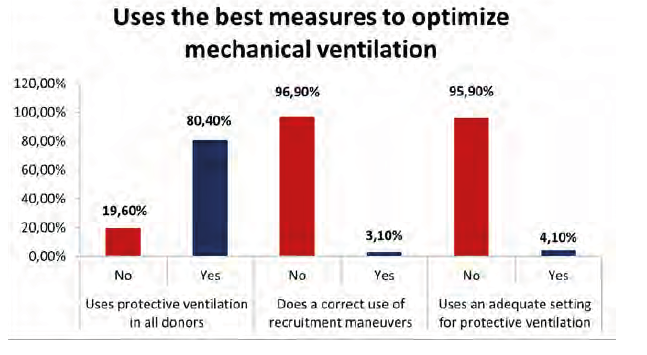
Figure 1. Distribution of Interventions Considered the Best Measures in the Management of Mechanical Ventilation: Use in the Surveyed Population
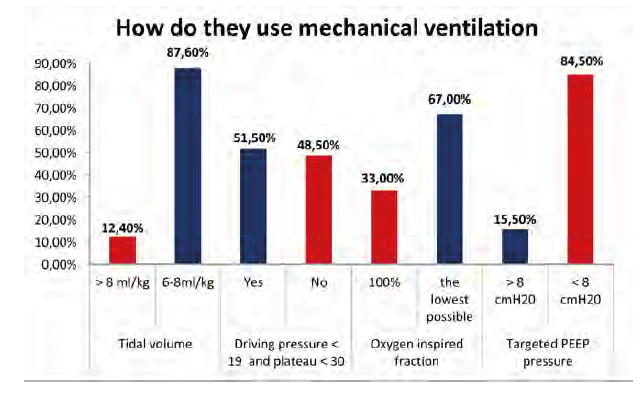
Figure 2. Distribution on How Professionals Manage the Mechanical Ventilator During Donor Management
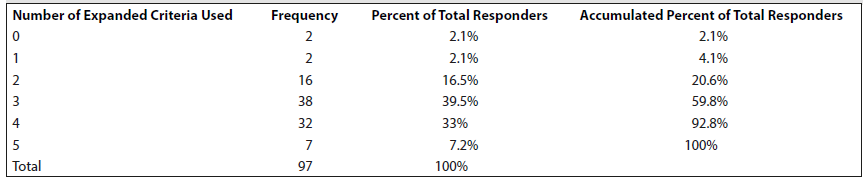
Table 1. Efficiency in Considering Expanded Selection Criteria