Volume: 22 Issue: 1 January 2024 - Supplement - 1
FULL TEXT
Immunology Status of Patients During Kidney Transplant
Objectives: The immunology status of a patient has a crucial role in kidney transplant. We investigated the effectiveness of a desensitization protocol, guided by the immunology status of patients, for kidney transplant candidates.
Materials and Methods: Antibody screening for human leukocyte antigens was conducted with the Luminex single-antigen microsphere bead assay method for 34 patients from June 2021 to June 2022. Donor human leukocyte antigen genotypes at 8 loci (A*, B*, С*, DRB1*, DQA1*, DQB1*, DPA1*, and DPB1*) were determined, to correlate the specificities of recipient human leukocyte antigen antibodies with donor antigens and identify unacceptable donor antigen combinations. Specialized immunology studies measured panel reactive antibody levels and human leukocyte antigen class I and class II antibodies. A crossmatch compatibility test using complement-dependent cytotoxicity was conducted.
Results: Of the 34 patients, 10 completed all 3 stages of the desensitization therapy. Most patients experienced decreased sensitization to human leukocyte antigen class I and class II antibodies. Two patients achieved complete clearance of A1 and DQ5 antibodies, respectively, whereas 1 patient exhibited an increase in donor-specific antibody mean fluorescence intensity. Prior to desensitization therapy, the crossmatch compatibility test yielded positive results with T and B lymphocytes. After completing the therapy, the crossmatch test showed negative results in 4 cases with T lymphocytes and positive results with B lymphocytes. Plasmapheresis sessions effectively reduced circulating antibodies. However, the combination of rituximab and plasmapheresis alone did not achieve a negative crossmatch test required for kidney transplant.
Conclusions: It is crucial to assess the reduction of donor-specific antibody quantity, considering both the percentage and the mean fluorescence intensity. To avoid false-positive results in crossmatch analysis, drug half-life must be considered. Laboratories should have various crossmatch techniques, such as flow cytometry and single-antigen microsphere bead assay technology, available for research and urgent cases that require crossmatch analysis.
Key words : Crossmatch analysis, Desensitization protocol, Human leukocyte antigen antibodies, Kidney transplantation
Introduction
In Kazakhstan, with a population of approximately 18 million people, the number of patients with chronic kidney disease (CKD) is increasing annually. According to statistical data, from 2014 to 2018, there were 8898 patients on dialysis therapy, with 98.7% receiving hemodialysis and 1.3% receiving peritoneal dialysis.1 Consequently, the incidence of CKD in Kazakhstan is significant in terms of health care financial costs. In this context, kidney transplant stands out as the most favorable therapeutic option among renal replacement therapies.2 Kidney transplant not only improves the quality of life but also significantly prolongs patient survival compared with other forms of renal replacement therapies.3,4
In this study, our aim was to determine the effectiveness of a desensitization protocol conducted on the basis of the immunological status of patients who were candidates for kidney transplant.
Materials and Methods
This study involved screening for antibodies to human leukocyte antigens (HLA) in 34 patients. The patients were tested from June 2021 to June 2022.
A total of 34 patients with confirmed diagnosis of chronic kidney failure (CKD stage 4-5) were examined, and all of these patients were on the organ transplant wait list. The study participants had a high immunological risk, with elevated levels of donor-specific antibodies (DSA) due to previous transplants, pregnancies, or blood transfusions. Patient surveys were conducted. In addition to general clinical investigations, the level of sensitization was assessed using specialized immunology studies, including the panel reactive antibody (PRA) level and HLA class I and class II antibodies.
All serum samples were tested using the single-antigen microsphere bead assay method (Luminex, One Lambda). To detect clinically significant Cq1 complement-binding antibodies, the sera of patients were treated in parallel with the C1qScreen (One Lambda) reagent, and then an analysis was performed (LabScreen PRA sets, Luminex) to determine the percentage of antibodies. To correlate the specificities of HLA antibodies detected in the recipient with donor antigens and identify unacceptable donor antigen combinations, the genotypes of potential donors were determined at 8 HLA loci: A*, B*, C*, DRB1*, DQA1*, DQB1*, DPA1*, and DPB1*. Antibody determination was performed 3 times: at the beginning of therapy, after the administration of rituximab and 1 plasmapheresis session, and after 3 plasmapheresis sessions. All recipients underwent a crossmatch compatibility test using the complement-dependent cytotoxicity serological method (CDC). Crossmatch analysis was conducted with T and B cells from native serum from both the donor and the recipient, at dilutions of 1:2, 1:4, 1:8, and 1:16. Prior to the crossmatch test, recipient sera were treated with dithiothreitol reagent to detect immunoglobulin G class antibodies. Results were evaluated on an inverted microscope using an 8-point scale.
The HLA typing at the HLA loci A*, B*, C*, DRB1*, DQA1*, DQB1*, DPA1*, and DPB1* was performed at low resolution using the single specific primer-polymerase chain reaction method with fluorescence detection (HLA-FluoGene, Inno-Train Diagnostik).
All ethical principles of the Helsinki Declaration were adhered to, and approval from the local ethical committee of the National Research Oncology Center was obtained (No. 4; from 18.09.2020). Informed consent was obtained from all patients.
Statistical analyses
All data were analyzed with STATA statistical software (version 14). Data are expressed as numbers and percentages for categorical variables.
Results
The most common complications among kidney recipients in our study were infection, rejection, and surgical complications. It has been demonstrated previously that episodes of acute rejection increase the risk of graft loss in kidney recipients.5
The male and female proportions of our study group were 34.8% (n = 8) and 65.2% (n = 15), respectively. The average age of the patients included in the study was 43 years, ranging from 19 to 68 years. Seasonal allergies were identified in 7 patients, whereas the rest denied having allergic reactions. Among the 23 patients, 18 had a history of blood transfusion. Seven patients had a history of organ transplant (kidney).
Human leukocyte antigen antibody determination
The level of HLA antibodies prior to desensitization therapy showed the presence of antibodies in all patients. The mean fluorescence intensity (MFI) ranged from 498.3 and above. The level of antibodies after the initiation of desensitization therapy showed antibody persistence. Of the 34 patients, 10 completed all 3 stages of desensitization therapy. Most patients exhibited a reduction in the percentage of sensitization to HLA class I and class II antibodies. However, there were exceptions. Patient 1 and patient 3 showed preserved antibody percentages with an increase in the MFI value of HLA class I antibodies, as well as 3.7 patients for class II HLA antibodies after the second desensitization therapy. In 1 patient, after the second desensitization therapy, the percentage of antibodies for class II HLA decreased from 23 to 9, but the MFI value doubled (from 4504 to 8961). In another patient, the percentage of class II antibodies decreased from 18% (MFI 2840) to 1% (MFI 1047) after the second desensitization therapy; however, after the third plasmapheresis session, an increase in the percentage to 13% with the achievement of the initial MFI value of 2085 was observed.
One possible reason for the increase in antibodies after the second plasmapheresis session could be the so-called hook effect, also known as the prozone phenomenon. The hook effect or prozone effect is an immunological phenomenon where the effectiveness of antibodies to form immune complexes sometimes decreases when the antibody concentrations are very high. In such cases, it is recommended to repeat the analysis with diluted serum to reduce the antibody levels and thereby restore the quantitative balance between the antibodies in the patient’s serum and the antigens used in the single-antigen microsphere bead assay. Tambur and Schinstock, in their research, recommend dilution of highly sensitized antibody serum to a ratio of 1:256.6
The level of leukocyte antibodies in the patients included in the study was determined before and after the desensitization therapy stages. The results of the analysis of antibodies to HLA class I and class II are presented in (Table 1) and (Table 2), respectively. Based on the results of single-antigen bead testing and donor HLA typing at 8 loci, the presence of DSA was virtually determined (Table 3).
A decrease in the MFI was observed after all 3 desensitization therapies. Patient 2 exhibited complete serum clearance of A1 antibodies, whereas patient 3 showed clearance of DQ5 antibodies. However, patient 10 demonstrated an increase in MFI intensity of DSA, which could also be attributed to the prozone effect (Table 3).
To detect complement-binding antibodies with clinical significance, the sera of patients were also examined for the presence of C1q complement-binding antibodies. In most patients, C1q complement-binding antibodies were not detected (Table 4). Antibodies of class I and class II with a decrease in MFI were detected in patient 4 and patient 8. Class I antibodies were found in patient 1, patient 7, and patient 10.
Crossmatch reaction
Prior to desensitization therapy, the compatibility test using the CDC crossmatch method yielded positive results in all cases, both with T lymphocytes and B lymphocytes. The intensity of cytotoxicity in the crossmatch reaction after the first plasmapheresis showed +2 in 8 patients, +6 in 1 patient, and a negative status with T cells in 1 patient. The crossmatch with B cells yielded the following results: +2 in 3 patients, +4 in 2 patients, and +8 in 5 patients. After the second desensitization therapy, which consisted of a single administration of rituximab and plasmapheresis, the results of the crossmatch analysis with B cells changed significantly. The intensity of cytotoxicity increased to +8 in all patients who had previously shown results of +2 and +4. Following the third stage of desensitization therapy, after the third plasmapheresis, the crossmatch compatibility test was negative in 4 of 10 cases with T lymphocytes and positive with B lymphocytes. There was no significant change in the intensity of the reaction with B cells (Table 5).
The change in crossmatch results after rituximab administration can be attributed to the destructive action of the drug on B cells. The mechanism of the antineoplastic action of rituximab is as follows: the Fab fragment of rituximab binds to the CD20 antigen on lymphocytes and, with the involvement of the Fc domain, initiates immunological reactions that mediate the lysis of B cells. Possible mechanisms of cell lysis include CDC and antibody-dependent cell-mediated cytotoxicity. It has also been shown that rituximab induces apoptosis in DHL-4 human B-cell lymphoma cells. Therefore, crossmatch analysis should be conducted after the drug has been partially eliminated from the patient’s body, approximately 3 weeks after discontinuation of the drug. In our study, this aspect was not taken into account, leading to significantly positive crossmatch reactions after rituximab administration.
Of 34 patients, 8 underwent transplant, 7 completed 2 stages of desensitization therapy, and 9 underwent only the first stage of desensitization therapy.
The HLA typing was conducted for 33 of 34 total donors. Six patients received organ transplant, specifically kidney transplant, which resulted in organ rejection. Presently, at the time of this writing, 7 patients are undergoing the second stage of desensitization. After completing the first 2 stages of desensitization, 5 patients still show a positive crossmatch test, so kidney transplant from a living related donor is not an option. The risk of hyperacute rejection is extremely high for a kidney transplant from a donor with a positive crossmatch test.
Although patients do not show significant differences in the level of leukocyte antibodies after the first stage of desensitization therapy and 1 session of plasmapheresis, a significant reduction is observed after subsequent plasmapheresis sessions. The remaining 9 individuals underwent only the first stage of desensitization (rituximab) and 1 session of plasmapheresis.
Sixteen of 34 patients were female. Two had experienced 4 or more pregnancies, and history of pregnancy is known to increase the immunological risk in ABO-incompatible kidney transplant. According to data from the Organ Procurement and Transplantation Network, only 6.5% of patients with preexisting antibody levels >80% are transplanted annually. During our present study, all recipients had a PRA ≥25% and MFI >3000 (patient data).
The results of the first 2 stages of desensitization achieved a reduction in sensitization (reduction in the percentage of leukocyte antibodies) through the administration of rituximab, which led to the inhibition of circulating B lymphocytes and prevention of the formation of new antibodies. Furthermore, extracorporeal methods such as plasmapheresis sessions successfully reduced circulating antibodies. However, the combination of rituximab and plasmapheresis proved insufficient to achieve a negative crossmatch test and proceed with kidney transplant.
Discussion
Kidney transplant is considered the best treatment method for patients with end-stage renal disease of any etiology. Kidney transplant recipients experience advantages in terms of survival across all age groups and have a better health-related quality of life. Furthermore, kidney transplant is economically cost-effective compared with dialysis.7
Kidney transplant is not a cure for patients with end-stage renal disease, but it represents the optimal form of treatment for chronic kidney failure compared with dialysis. Antibody-mediated rejection is the most common cause of graft failure.
Other common reasons for graft rejection include recurrence of the underlying disease and BK virus nephropathy.7 Most kidney transplant recipients experience a return to stage 2 or 3 CKD after transplant.
When determining the specificity of antibodies in highly sensitized patients, it is important to consider the presence of complement-binding antibodies. In addition, the determination of DSA and monitoring the quantity is crucial, not only in terms of percentage expression but also with regard to the MFI value. Furthermore, the routine implementation of diluted serum antibody detection is necessary to determine the true quantity. Establishment of the appropriate titer for antibody identification requires further detailed investigation.
To obtain an accurate result in the crossmatch reaction, it is necessary to repeat the test by a different method in which the presence of the drug in the blood serum will not affect the analysis result. An alternative approach could be the use of a donor-specific crossmatch on the Luminex analyzer, which use microbeads for this purpose.8 In this technique, instead of live donor cells, a cellular donor lysate is used, which eliminates the influence of rituximab on the analysis result.
Lefaucheur and colleagues reported that 8-year graft survival was significantly lower (61%) among patients with preexisting HLA-DSA compared with both sensitized patients without HLA-DSA (93%) and nonsensitized patients (84%). The peak MFI of HLA-DSA detected by Luminex assay was a better predictor of antibody-mediated rejection (AMR) than the current MFI of HLA-DSA (P = .028). As the MFI of HLA-DSA detected at its peak serum level increased, graft survival decreased, and the relative risk of AMR increased. Patients with an MFI >6000 had a >100-fold higher risk of AMR compared with patients with an MFI <465 (relative risk 113; 95% CI 31-414). The presence of HLA-DSA was not associated with patient survival. In conclusion, it is noteworthy that both the risk of AMR and graft loss are directly correlated with the peak activity of HLA-DSA.9
The effect of preexisting characteristics of DSA on kidney transplant outcomes was investigated in a previously published study by Malheiro and colleagues.10 They conducted an observational study to analyze the association between preexisting HLA-DSA and the frequency of acute AMR, as well as patient and graft survival, among 402 consecutive deceased donor kidney transplant recipients.
Only DSA results with an MFI >3000 were significantly associated with the occurrence of AMR. Receiver operating characteristic curves demonstrated that an MFI >4900 in the highest DSA bead had high sensitivity (85.7%), and a cumulative MFI of all DSA beads >11 000 had high specificity (92.3%) for prediction of AMR.
Our study had some limitations. This was a single-center study; therefore, generalization of our results to other centers may be challenging.
Conclusions
The immunology status of patients is of utmost importance in transplant. Many patients require careful selection of donor organs and preoperative preparation, which may include extracorporeal hematological correction methods and medication therapy.
An essential aspect is assessment of the reduction in the quantity of DSA antibodies, not only in terms of percentage but also by considering the MFI value. The evaluation of clinically significant complement-binding antibodies should not be overlooked. For crossmatch analysis, the drug’s elimination period from the patient’s body should be taken into account to avoid false-positive crossmatch results. Additionally, local laboratory availability of different crossmatch techniques, such as flow cytometry and Luminex technology, can provide additional methods for investigation and be useful in urgent situations where crossmatch analysis is required.
References:
- Gaipov A, Issanov A, Kadyrzhanuly K, et al. Epidemiology of dialysis-treated end-stage renal disease patients in Kazakhstan: data from nationwide large-scale registry 2014-2018. BMC Nephrol. 2020;21(1):407. doi:10.1186/s12882-020-02047-6
CrossRef - PubMed - Suthanthiran M, Strom TB. Renal transplantation. N Engl J Med. 1994;331(6):365-376. doi:10.1056/NEJM199408113310606
CrossRef - PubMed - Schnuelle P, Lorenz D, Trede M, Van Der Woude FJ. Impact of renal cadaveric transplantation on survival in end-stage renal failure: evidence for reduced mortality risk compared with hemodialysis during long-term follow-up. J Am Soc Nephrol. 1998;9(11):2135-2141. doi:10.1681/ASN.V9112135
CrossRef - PubMed - Wolfe RA, Ashby VB, Milford EL, et al. Comparison of mortality in all patients on dialysis, patients on dialysis awaiting transplantation, and recipients of a first cadaveric transplant. N Engl J Med. 1999;341(23):1725-1730. doi:10.1056/NEJM199912023412303
CrossRef - PubMed - Harada KM, Mandia-Sampaio EL, de Sandes-Freitas TV, et al. Risk factors associated with graft loss and patient survival after kidney transplantation. Transplant Proc. 2009;41(9):3667-3670. doi:10.1016/j.transproceed.2009.04.013
CrossRef - PubMed - Tambur AR, Schinstock C. Clinical utility of serial serum dilutions for HLA antibody interpretation. HLA. 2022;100(5):457-468. doi:10.1111/tan.14781
CrossRef - PubMed - Parajuli S, Mandelbrot DA, Aziz F, et al. Characteristics and outcomes of kidney transplant recipients with a functioning graft for more than 25 years. Kidney Dis (Basel). 2018;4(4):255-261. doi:10.1159/000491575
CrossRef - PubMed - Billen EV, Voorter CE, Christiaans MH, van den Berg-Loonen EM. Luminex donor-specific crossmatches. Tissue Antigens. 2008;71(6):507-513. doi:10.1111/j.1399-0039.2008.01032.x
CrossRef - PubMed - Lefaucheur C, Loupy A, Hill GS, et al. Preexisting donor-specific HLA antibodies predict outcome in kidney transplantation. J Am Soc Nephrol. 2010;21(8):1398-1406. doi:10.1681/ASN.2009101065
CrossRef - PubMed - Malheiro J, Tafulo S, Dias L, et al. Analysis of preformed donor-specific anti-HLA antibodies characteristics for prediction of antibody-mediated rejection in kidney transplantation. Transpl Immunol. 2015;32(2):66-71. doi:10.1016/j.trim.2015.01.002
CrossRef - PubMed

Volume : 22
Issue : 1
Pages : 180 - 186
DOI : 10.6002/ect.MESOT2023.P12
From the Scientific and Production Center of Transfusiology, Astana, Kazakhstan
Acknowledgements: This work was supported by the Ministry of Science and Education of the Republic of Kazakhstan (grant No. AP09260122; April 15, 2021). Other than described, the authors have not received any funding or grants in support of the presented research or for the preparation of this work and have no declarations of potential conflicts of interest.
Author contributions: All authors contributed equally to the development of the concept, execution of the study, analysis of the data, and composition of the manuscript.
Corresponding author: Aida Turganbekova, Department of Scientific Research, RSE on REM “Research and Production Center for Transfusiology” of the Ministry of Health of the Republic of Kazakhstan, st. Kerey-Zhanibek Khan, 10, 010000 Astana, Republic of Kazakhstan
E-mail:omninpct16@mail.ru
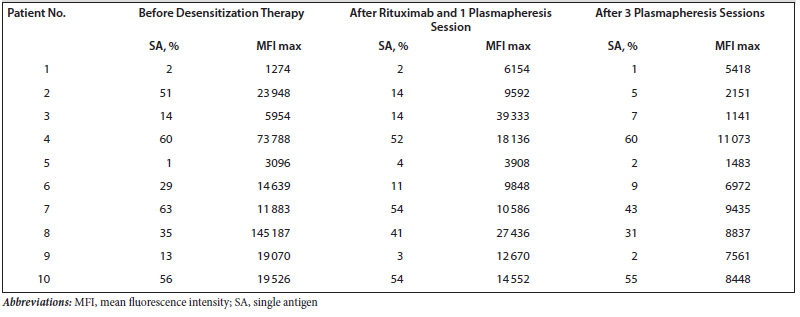
Table 1.Analysis of Class I Human Leukocyte Antigen Antibodies
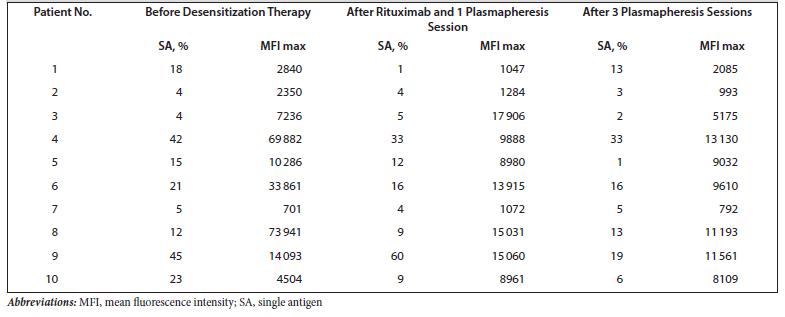
Table 2.Analysis of Class II Human Leukocyte Antigen Antibodies
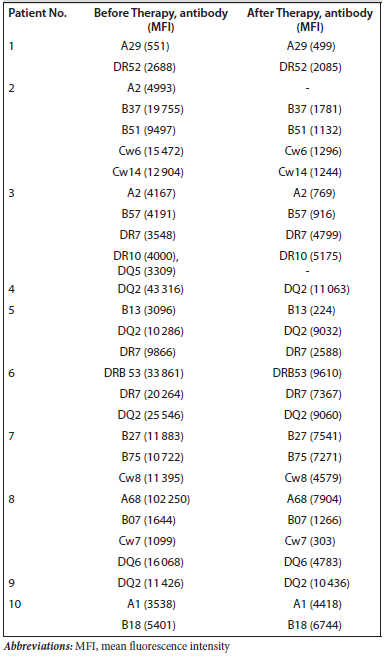
Table 3.Analysis of Presence of Donor-Specific Antibodies Targeting Class I and Class II Human Leukocyte Antigens
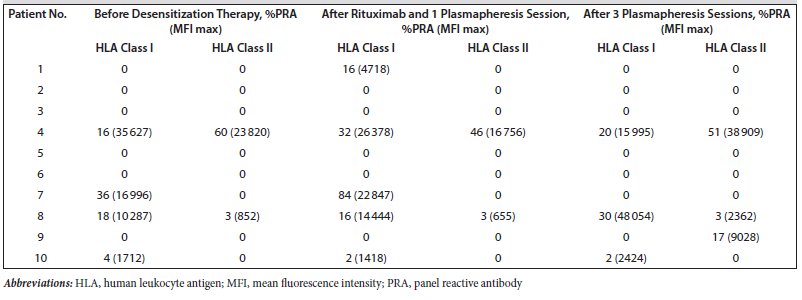
Table 4.Results of Panel Reactive Antibody Analysis of Human Leukocyte Antigen Class I and Class II Cq1 Complement-Binding Antibodies
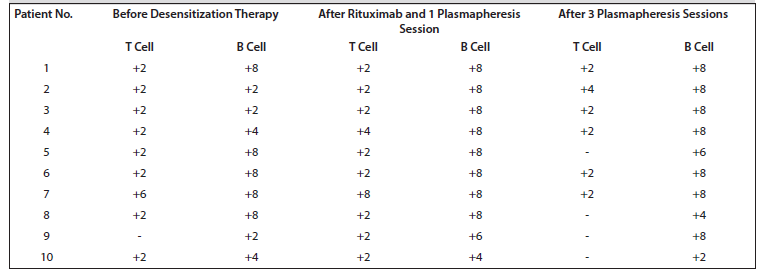
Table 5.Results of the CDC Response of a Cross-Match Analysis With T Cells and B Cells, Indicating Intensity of the Reaction