Volume: 22 Issue: 1 January 2024 - Supplement - 1
FULL TEXT
An Alternative and Up-To-Date Recommendation for a Proper Site for Parathyroid Transplantation: The Omentum
Objectives: Various sites have been used for parathyroid allotransplant, such as injection into the forearm, sternocleidomastoid, or deltoid muscles. However, transplant efficiency in these regions varies according to the results reported in the literature and also obtained from our previous studies. Using the omentum “as a natural incubator” for composite tissue-derived cell transplants to increase transplant success is possible.
Materials and Methods: To examine the efficiency of transplant sites for parathyroid allotransplant, we compared clinical cases from the literature and our experience with 23 cases. The omental transplant process is performed under general anesthesia by laparoscopic intervention. The abdominal cavity is visualized with an endocamera from a 5-mm trocar. With the help of a flexible catheter from another 5-mm trocar, microencapsulated or naked parathyroid cells are deposited on the omentum in approximately 30 mL of isotonic saline. The trocar sites are then sutured, and the surgery is terminated. Recipients were followed for 6 months with examination of biochemical parameters (parathormone, calcium, and phosphorus levels), medication use, and clinical scoring.
Results: In the 23 patients who received parathyroid allotransplants over the omentum, 7 recipients did not exhibit any changes according to the scoring system criteria. However, on average, serum calcium and phosphorus levels remained within the healthy reference range. In addition, use of oral medications among patients decreased, indicating successful transplant survival. These results were consistent with a significant decrease in hypocalcemia symptoms among patients.
Conclusions: In the 23 patients, the success rate was 69.5% for the first 6-month period after transplant. Recent developments and large cohorts are needed to demonstrate the higher efficacy of parathyroid allotransplant over the omentum.
Key words : Autoimmune hypoparathyroidism, Micro-encapsulation, Permanent hypoparathyroidism
Introduction
Parathyroid tissue and cell transplants have been extensively studied and characterized.1 Parathyroid allotransplant (PTX) stands as the sole therapeutic option that offers a potential cure for individuals diagnosed with permanent hypoparathyroidism.2 Presently, there are 550 reports of PTX in the literature between 1911 and 2023.2-6 For solid-organ transplant, the choice of the transplant site varies depending on the graft. For PTX, transplant sites are performed primarily as various muscle tissues. To date, tissues such as the deltoid muscle,7-12 forearm muscle (brachialis),1,13-20 shoulder junction muscles (pectoralis major),21 rectus muscle (rectus abdominis),22,23 and sternocleidomastoid muscle24 have been chosen as transplant sites for PTX.
The largest clinical series reported in the literature for PTX comes from a team at Warsaw University in Poland.1,25 They analyzed the survival rate of 316 transplants into the sternocleidomastoid muscle, and the graft remained functional for 55.1% of recipients.1,16 A separate study conducted by the same research team demonstrated that the peritoneal region does not elicit a rejection response against parathyroid cells when tested in vivo.26 Therefore, unlike various muscle tissues, the peritoneal area and the omentum are not subjected to mechanical pressure, and they maintain a relatively stable environment.6,26 Furthermore, the omentum is easily accessible surgically, making it a feasible option for PTX. Recent advancements have shown that the omentum is particularly favorable due to its ability to serve as a site for cell homing.26,27
The appearance of the greater omentum at a macroscopic level varies depending on factors such as age, nutrition, pathological conditions, and stimulation.28 The blood supply to the greater omentum is provided by the right and left gastroepiploic arteries, which originate from the celiac trunk and pass along the greater curvature of the stomach. The margin of the omentum receives blood supply from numerous capillaries, some of which may have small connections with each other. Special convoluted vascular structures called omental glomeruli can be observed in certain areas known as milky spots.28 These microvascular structures exhibit a distinct architecture. In addition, the vascular network in this region is typically densely packed with various cells of the reticular system and fat cells.28,29
In this study, we present the largest series in the literature, to our knowledge, on initial results of recipients who underwent PTX over the omentum. The study assessed biochemical parameters, medication usage, and clinical scoring as indicators of the success rate of survival. To evaluate the effectiveness of different transplant sites, we compared clinical cases from the literature with our experience involving 23 cases.
Materials and Methods
Transplant procedures were conducted with the permission of the Turkish Ministry of Health National Scientific Board for Transplantation. All protocols conformed to the ethical guidelines of the Helsinki Declaration, and written informed consent was obtained from all participants before surgery. Our Parathyroid Transplantation Unit is the first officially permitted center to conduct PTX and has been in operation since 2013.
Twenty-three recipients from 22 donors were evaluated for this study. Each donor had parathyroid hyperplasia secondary to chronic renal failure and was transferred to the general surgery department from the nephrology clinic. After donors provided written informed consent, donors were screened for viral markers, including anti-HIV, anti-hepatitic C virus, anti-HBc, anti-HBs, and anti-HBe antibodies; hepatitis B virus antigen; cytomegalovirus immunoglobulin G (IgG) and immunoglobulin M (IgM) antibodies; Epstein-Barr virus IgG and IgM antibodies; and venereal disease research laboratory tests. Secondary hyperparathyroidism patients then underwent subtotal parathyroidectomy and were discharged after 3 days without complications.
Preoperative immunological tests
Crossmatch tests were performed, including T-flow cytometry crossmatch, B-flow cytometry crossmatch, autoflow cytometry crossmatch, and complement-dependent cytotoxicity crossmatch tests between donors and recipients in accordance with a previously described method.5 All immunological tests were obtained from Istinye University HLA Typing Laboratory as a service purchase.
Transplantation
Transplant procedures were conducted after immunological examination and histopathological evaluation of donor tissue to exclude malignancy. We conducted cell isolation from parathyroid tissue according to our method (patent pending, application number: 201815244), which has been previously described,2,12 and microencapsulated PTX was performed by the specified method described in a previous report.6 Approximately 230 × 106 parathyroid suspension cells were transplanted as cell suspensions or as microencapsulated cells (recipient 8). Before the PTX procedure, each recipient received 250 mg and 125 mg of methylprednisolone the day before and 1 hour before PTX, respectively. Patients underwent the PTX procedure under general anesthesia and with a laparoscopic technique. Two 5-mm trocars were inserted, one for the 5-mm camera and the other for the Nelaton catheter. The cells were directly transferred over the omentum surface through the catheter. After each PTX, the trocar sites were closed with a single stitch. All recipients were discharged without any complications. The recipients were then followed for 6 months.
Clinical scoring
The symptomatic improvement and medication doses were scored and recorded at months 1, 4, and 6 of follow-up after PTX. Scores are coded as follows: score 0 indicated no change in either symptoms or medication use, score 1 indicated symptoms or medications were reduced, score 2 indicated symptoms and medications were reduced at least by half, and score 3 indicated no medication requirements and no symptoms after PTX.
Results
The evaluation of recipients before the operation and the decision-making process regarding donor-recipient compatibility began with ABO matching and crossmatch tests. All crossmatch tests conducted between donors and recipients yielded negative results, PTX was subsequently conducted. (Table 1) and (Table 2)present the characteristics of each recipient, including sex, blood type, age at time of PTX, preoperative and postoperative levels of serum calcium, phosphorus, and parathormone (PTH), as well as medication changes observed during postoperative follow-up visits. (Figure 1) illustrates changes in serum calcium levels and oral calcium intake from the preoperative visit to the month 6 postoperative visit.
Preoperatively, of 23 recipients, 9 had blood type O Rh+, 8 had blood type A Rh+, 4 had blood type B Rh+, and 2 had blood type B Rh-. The average age of the 23 recipients (16 women, 7 men) was 40 years (range, 28-55 y). Average intact PTH level was 5.8 pg/mL, serum calcium level was 7.8 mg/dL, serum phosphorus level was 4.9 mg/dL, and mean daily oral calcium intake was 3782 mg. The average daily doses of calcitriol and cholecalciferol were 1.34 µg and 2768 IU, respectively. Only 4 patients (recipients 4, 13, 17, and 20) received daily alfacalcidol. After PTX, each recipient underwent scoring based on the reduction in symptoms and medication use. Biochemical parameters and clinical scores were evaluated during subsequent follow-up visits (Table 3).
Among the 23 patients, recipient 8 had congenital hypoparathyroidism and received microencapsulated PTX over the omentum. Recipient 15 received daily Forteo (teriparatide injection, Lilly, USA) in addition to oral medication to prevent symptoms and hospitalization. Recipients 8 and 22 experienced the most severe symptoms and could not increase their medication dosage because of severe side effects before PTX, resulting in occasional serum calcium levels falling below 7 mg/dL. Subsequently, after PTX, recipient 15 did not experience any changes and continued to require Forteo injections. In contrast, recipient 8 exhibited notable improvements in symptoms of hypocalcemia after 6 months and was able to discontinue medication use. Similarly, recipient 22 achieved a score of 2 after 6 months, experiencing symptom relief and a reduction in medication dosage by half.
In the first month after PTX, average intact PTH levels increased to 8.5 pg/mL, serum calcium levels reached 8.0 mg/dL, and phosphorus levels remained stable. Oral calcium intake averaged at 3321 mg/day, whereas oral calcitriol intake was 1.1 µg and cholecalciferol intake was around 2400 IU. The average score was found to be less than 1 (0.48). At month 4 post-PTX, the average intact PTH level remained above 8 pg/mL, whereas serum calcium and phosphorus levels remained stable and within a healthy range (8.06 mg/dL and 4.86 mg/dL, respectively). Interestingly, the decrease in medication usage at month 4 was more significant compared with changes observed at month 1. The average oral calcium intake decreased to 2430 mg/day, oral calcitriol intake was 1.04 µg/day, and cholecalciferol intake dropped to 1951 IU/day. According to the clinical scoring system, the mean score remained below 1 (0.61). At 6 months, the mean intact PTH level decreased to 5.02 pg/mL, whereas serum calcium and phosphorus levels stayed within the healthy range (8.47 mg/dL and 4.49 mg/dL, respectively). The average oral calcium intake was 2291 mg/day, calcitriol intake was 0.96 µg, and cholecalciferol intake was 1840 IU/day. The mean score at month 6 exceeded 1 (1.26).
Discussion
The definitive transplant site should ideally minimize or prevent the immediate blood-mediated inflammatory reaction, maintain suitable oxygen levels and pH, effectively eliminate harmful metabolic byproducts, and provide access to necessary nutrients.30,31 In addition, it should protect the graft from the cellular immune response and be easily accessible, allowing for minimally invasive procedures.32-34
Among solid-organ transplant, the first studies in which the omentum was used as a transplant site belonged to islet transplants.30 Numerous studies on transplant of islet cells over the omentum have reported favorable results, particularly because of its positive effect on enhancing survival rates. Initial findings indicate that the omentum represents a promising and feasible alternative for islet transplant.29 Unlike intraportal islet transplant, the omentum possesses the advantage of accommodating larger quantities of islets, which is crucial for both naked and encapsulated islet transplant. This characteristic makes the omentum an ideal site for conducting islet transplant.35,36
Moreover, the preferred transplant site for PTX is commonly muscle tissues.1,12,17 Alternative transplant sites are needed, and the omentum has emerged as a promising candidate. It is easily accessible through a laparoscopic approach and possesses high vascularity, providing ample blood supply. In addition, the omentum has a large surface area that allows for efficient metabolic exchange.6,28 The omentum also has the capacity to accommodate large volumes of parathyroid or microencapsulated cells, making it an attractive option for PTX. Studies will help provide a better understanding of the potential of this approach and its applicability in treating hypoparathyroidism.
In our team’s previous study in 2016, which evaluated 10 recipients, the PTX was performed by injection into the deltoid muscle using the Cleveland Clinic protocol.11,19 At that time, the success rate of PTX was around 70%. However, over the 5 years of experience, along with the increasing number of transplanted recipients, the deltoid muscle survival rate was around 52.7% in the first 1-year evaluation (unpublished results). This outcome was consistent with the most extensive series reported by the group at the University of Warsaw.1,25 According to their results, objective progress was observed in 55.1% of patients, and graft functionality was maintained in 34.5% of cases between 1 and 6 months, in 10.2% between 6 and 12 months, in 6.2% between 12 and 24 months, and in 1.9% between 24 and 127 months.1 On the basis of the results from the Warsaw and Bezmialem groups, when the muscle tissue served as the transplant site, the average survival rate was 53.9%.
Since 2018, we have performed PTX procedures in our clinic by recommending 2 transplant areas to our patients and explaining the results in detail. Some of the recipients have preferred deltoid muscle transplant, although they were aware of an average success rate of 54%. With regard to the success rate of PTX over the omentum starting from 2018, we informed our patients about the success rate of islet cell transplants over the omentum and the in vivo studies that we conducted about PTX. In addition, in our clinic, we used some PTX scoring parameters. Those parameters served as a standardized way to assess transplant success and the effectiveness of graft survival in patients after transplant. Scoring is conducted using numerical values ranging from 0 to 3. Each score is assigned based on regular clinical follow-ups visits after PTX (with 0 indicating no changes in symptoms or medication use, 1 indicating reduction in symptoms or medications, 2 indicating reduction of at least 50% in symptoms and medications, and 3 indicating no requirement for medication and absence of symptoms after PTX). Our ultimate goal for recipients is to achieve 3 in our scoring system. However, any decrease in symptoms of hypocalcemia and medication regimen for recipients is considered a successful survival outcome for PTX. For this study, when we consider all scores >0, the success rate of PTX over the omentum during the initial 6-month period was evaluated as 69.5%. It should be noted that this study represents, to our knowledge, the first evaluation using such a scoring method, and future studies with larger cohorts will enable a more accurate determination of this percentage.
Conclusions
Our group has been conducting PTX procedures since 2013 and microencapsulated PTX procedures since 2018. These procedures are focused on the omentum and are carried out with the necessary authorization from the Ministry of Health. We have observed a progressively improving success rate in terms of PTX survival with the use of the omentum as a transplant site.
References:
- Barczynski M, Golkowski F, Nawrot I. Parathyroid transplantation in thyroid surgery. Gland Surg. 2017;6(5):530-536. doi:10.21037/gs.2017.06.07
CrossRef - PubMed - Goncu B, Salepcioglu Kaya H, Yucesan E, Ersoy YE, Akcakaya A. Graft survival effect of HLA-A allele matching parathyroid allotransplantation. J Investig Med. 2021;69(3):785-788. doi:10.1136/jim-2020-001648
CrossRef - PubMed - Ay?an ME, Göncü BS, Yücesan E. Paratiroit nakli immünolojisi. Türkiye Klinikleri Kök Hücre ve Transplantasyon ?mmünolojisi. 2019:31-38.
CrossRef - PubMed - Salepcio?lU H, Göncü B, Karatoprak U, et al. Parati?roi?t nakli? bekleyen hi?poparati?roi?di? hastalarinin naki?l bekleme süreleri?ni?n de?erlendirilmesi. Sa?l?k Hizmetleri E?itimi Dergisi. 2021;5(2):48-52. doi:10.29228/JOHSE.11
CrossRef - PubMed - Yucesan E, Goncu B, Ozdemir B, Idiz O, Ersoy YE, Aysan E. Importance of HLA typing, PRA and DSA tests for successful parathyroid allotransplantation. Immunobiology. 2019;224(4):485-489. doi:10.1016/j.imbio.2019.05.007
CrossRef - PubMed - Yucesan E, Basoglu H, Goncu B, Akbas F, Ersoy YE, Aysan E. Microencapsulated parathyroid allotransplantation in the omental tissue. Artif Organs. 2019;43(10):1022-1027. doi:10.1111/aor.13475
CrossRef - PubMed - Stone HB, Owings JC, Gey GO. Transplantation of living grafts of thyroid and parathyroid glands. Ann Surg. 1934;100(4):613-628. doi:10.1097/00000658-193410000-00005
CrossRef - PubMed - Houghton B, Klassen K, Curtis G. Studies in human parathyroid gland transplantation. Ohio MJ. 1939;35(5):505-508.
CrossRef - PubMed - Flechner SM, Berber E, Askar M, Stephany B, Agarwal A, Milas M. Allotransplantation of cryopreserved parathyroid tissue for severe hypocalcemia in a renal transplant recipient. Am J Transplant. 2010;10(9):2061-2065. doi:10.1111/j.1600-6143.2010.03234.x
CrossRef - PubMed - Ay?an ME, Ercan Ç, Akba? F. Parathyroid allotransplantation without continuous immunosuppression prospective clinical series on 44 cases. Turkiye Klinikleri J Gen Surg-Special Topics. 2016;9(3):3-6.
CrossRef - PubMed - Aysan E, Altug B, Ercan C, Kesgin Toka C, Idiz UO, Muslumanoglu M. Parathyroid allotransplant with a new technique: a prospective clinical trial. Exp Clin Transplant. 2016;14(4):431-435. doi:10.6002/ect.2014.0294
CrossRef - PubMed - Yucesan E, Goncu B, Basoglu H, et al. Fresh tissue parathyroid allotransplantation with short-term immunosuppression: 1-year follow-up. Clin Transplant. 2017;31(11). doi:10.1111/ctr.13086
CrossRef - PubMed - Feind CR, Weber CJ, Derenoncourt F, Williams GA, Hardy MA, Reemtsma K. Survival and allotransplantation of cultured human parathyroids. Transplant Proc. 1979;11(1):1011-1016.
CrossRef - PubMed - Torregrosa NM, Rodriguez JM, Llorente S, et al. Definitive treatment for persistent hypoparathyroidism in a kidney transplant patient: parathyroid allotransplantation. Thyroid. 2005;15(11):1299-1302. doi:10.1089/thy.2005.15.1299
CrossRef - PubMed - Hasse C, Zielke A, Klock G, et al. First successful xenotransplantation of microencapsulated human parathyroid tissue in experimental hypoparathyroidism: long-term function without immunosuppression. J Microencapsul. 1997;14(5):617-626. doi:10.3109/02652049709006814
CrossRef - PubMed - Nawrot I, Wozniewicz B, Tolloczko T, et al. Allotransplantation of cultured parathyroid progenitor cells without immunosuppression: clinical results. Transplantation. 2007;83(6):734-740. doi:10.1097/01.tp.0000258601.17505.9d
CrossRef - PubMed - Cabane P, Gac P, Amat J, et al. Allotransplant of microencapsulated parathyroid tissue in severe postsurgical hypoparathyroidism: a case report. Transplant Proc. 2009;41(9):3879-3883. doi:10.1016/j.transproceed.2009.06.211
CrossRef - PubMed - Agha A, Scherer MN, Moser C, et al. Living-donor parathyroid allotransplantation for therapy-refractory postsurgical persistent hypoparathyroidism in a nontransplant recipient - three year results: a case report. BMC Surg. 2016;16(1):51. doi:10.1186/s12893-016-0165-y
CrossRef - PubMed - Agarwal A, Waghray A, Gupta S, Sharma R, Milas M. Cryopreservation of parathyroid tissue: an illustrated technique using the Cleveland Clinic protocol. J Am Coll Surg. 2013;216(1):e1-e9. doi:10.1016/j.jamcollsurg.2012.09.021
CrossRef - PubMed - Chapelle T, Meuris K, Roeyen G, et al. Simultaneous kidney-parathyroid allotransplantation from a single donor after 20 years of tetany: a case report. Transplant Proc. 2009;41(2):599-600. doi:10.1016/j.transproceed.2008.12.026
CrossRef - PubMed - Groth CG, Hammond WS, Iwatsuki S, et al. Survival of a homologous parathyroid implant in an immunosuppressed patient. Lancet. 1973;1(7812):1082-1085. doi:10.1016/s0140-6736(73)90395-4
CrossRef - PubMed - Bland WH, Chesson AL, Crow JB. Parathyroid gland transplantation; report of a case. N C Med J. 1950;11(9):501-504.
CrossRef - PubMed - Garcia-Roca R, Garcia-Aroz S, Tzvetanov IG, et al. Simultaneous living donor kidney and parathyroid allotransplantation: first case report and review of literature. Transplantation. 2016;100(6):1318-1321. doi:10.1097/TP.0000000000001042
CrossRef - PubMed - Giulianotti PC, D'Amico G, Tzvetanov I, Benedetti E. Living donor parathyroid allotransplantation with robotic transaxillary procurement in a kidney transplant recipient. Transpl Int. 2014;27(6):e43-e45. doi:10.1111/tri.12269
CrossRef - PubMed - Tolloczko T, Wozniewicz B, Gorski A, et al. Cultured parathyroid cells allotransplantation without immunosuppression for treatment of intractable hypoparathyroidism. Ann Transplant. 1996;1(1):51-53.
CrossRef - PubMed - Nawrot I, Wozniewicz B, Szmidt J, Sladowski D, Zajac K, Chudzinski W. Xenotransplantation of human cultured parathyroid progenitor cells into mouse peritoneum does not induce rejection reaction. Cent Eur J Immunol. 2014;39(3):279-284. doi:10.5114/ceji.2014.45937
CrossRef - PubMed
- Chute JP. Stem cell homing. Curr Opin Hematol. 2006;13(6):399-406. doi:10.1097/01.moh.0000245698.62511.3d
CrossRef - PubMed - Pellicciaro M, Vella I, Lanzoni G, Tisone G, Ricordi C. The greater omentum as a site for pancreatic islet transplantation. CellR4--repair, replacement, regeneration, & reprogramming. 2017;5(3) e2410.
CrossRef - PubMed - Damyar K, Farahmand V, Whaley D, Alexander M, Lakey JRT. An overview of current advancements in pancreatic islet transplantation into the omentum. Islets. 2021;13(5-6):115-120. doi:10.1080/19382014.2021.1954459
CrossRef - PubMed - Stice MJ, Dunn TB, Bellin MD, Skube ME, Beilman GJ. Omental pouch technique for combined site islet autotransplantation following total pancreatectomy. Cell Transplant. 2018;27(10):1561-1568. doi:10.1177/0963689718798627
CrossRef - PubMed - Caiazzo R, Gmyr V, Hubert T, et al. Evaluation of alternative sites for islet transplantation in the minipig: interest and limits of the gastric submucosa. Transplant Proc. 2007;39(8):2620-2623. doi:10.1016/j.transproceed.2007.08.015
CrossRef - PubMed - Goncu B, Yucesan E. Microencapsulation for clinical applications and transplantation by using different alginates. In: Abu-Thabit N, ed. Nano- and Microencapsulation. IntechOpen; 2021. doi:10.5772/intechopen.92134
CrossRef - PubMed - Yucesan E, Goncu B, Oguz I, et al. The effect of intravenously parathyroid cell xenotransplantation in sheep: as an animal model. Kafkas Üniversitesi Veteriner Fakültesi Dergisi. 2020;26(6):765-770. doi:10.9775/kvfd.2020.24309
CrossRef - PubMed - Goncu B, Yucesan E, Basoglu H, Gul B, Aysan E, Ersoy YE. Xenotransplantation of microencapsulated parathyroid cells as a potential treatment for autoimmune-related hypoparathyroidism. Exp Clin Transplant. 2021;10.6002/ect.2020.0403. doi:10.6002/ect.2020.0403
CrossRef - PubMed - Ao Z, Matayoshi K, Lakey JR, Rajotte RV, Warnock GL. Survival and function of purified islets in the omental pouch site of outbred dogs. Transplantation. 1993;56(3):524-529. doi:10.1097/00007890-199309000-00007
CrossRef - PubMed - Kin T, Korbutt GS, Rajotte RV. Survival and metabolic function of syngeneic rat islet grafts transplanted in the omental pouch. Am J Transplant. 2003;3(3):281-285. doi:10.1034/j.1600-6143.2003.00049.x
CrossRef - PubMed

Volume : 22
Issue : 1
Pages : 102 - 109
DOI : 10.6002/ect.MESOT2023.O17
From the 1Department of General Surgery, Faculty of Medicine, Bezmialem Vakif University; the 2Organ Transplantation Center, Parathyroid Transplantation Unit, Bezmialem Vakif University Hospital; the 3Vocational School of Health Services, Department of Medical Services and Techniques, Bezmialem Vakif University; the 4Department of Medical Biology, Faculty of Medicine, Bezmialem Vakif University; the 5Institute of Neurological Sciences, Department of Neurogenetics, Istanbul University-Cerrahpasa; the 6Department of Internal Medicine, Division of Nephrology, Faculty of Medicine, Bezmialem Vakıf University; and the 7Organ Transplantation Center, Bezmialem Vakif University Hospital, Istanbul, Türkiye
Acknowledgements: The authors thank all of the relevant health care professionals who are working or worked in the General Surgery, Endocrinology, Nephrology, and Organ Transplantation Center of Bezmialem Vakif University Hospital and Bezmialem Vakıf University Faculty of Medicine. This study is dedicated to all patients undergoing treatment for parathyroid-related diseases who agreed to participate in this study. The authors have not received any funding or grants in support of the presented research or for the preparation of this work and have no declarations of potential conflicts of interest.
*Yeliz Emine Ersoy and Beyza Goncu contributed equally to this work.
Corresponding author: Beyza Goncu, Bezmialem Vakif University, Ilhan Varank Building, Ugur Mumcu Mah., Muhsin Yazicioglu Cad. 2115 Sok. No:6, 34265 Sultangazi/Istanbul, Türkiye
Phone: +90 212 523 22 88, extension 4884
E-mail: bgoncu@bezmialem.edu.tr, bsgoncu@gmail.com
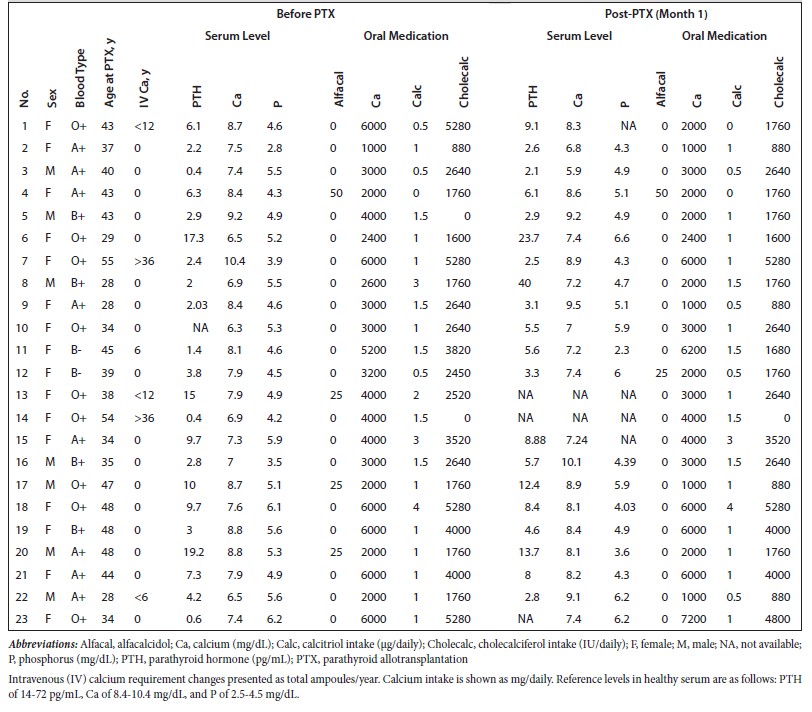
Table 1.Recipient Biochemical Parameter and Oral Medication Changes: Preoperative and Month 1 of Follow-Up
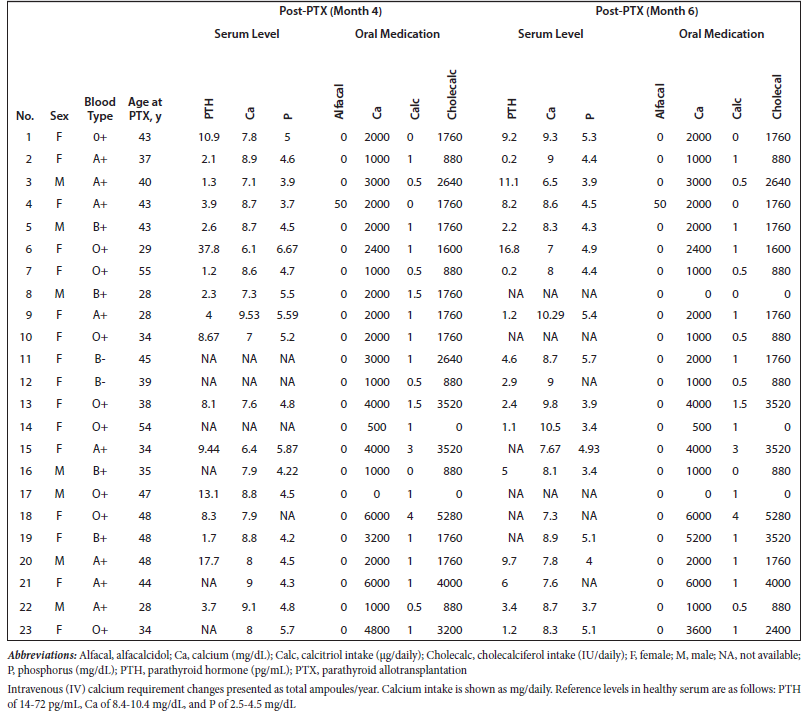
Table 2.Recipient Biochemical Parameter and Oral Medication Changes: Month 4 and Month 6 of Follow-Up
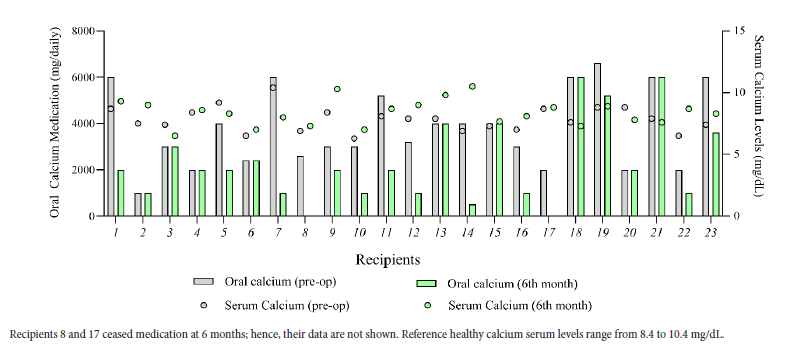
Figure 1.Changes in Oral Calcium Medication and Serum Calcium Levels Before Transplant and at 6-Month Clinic Visit in 23 Recipients
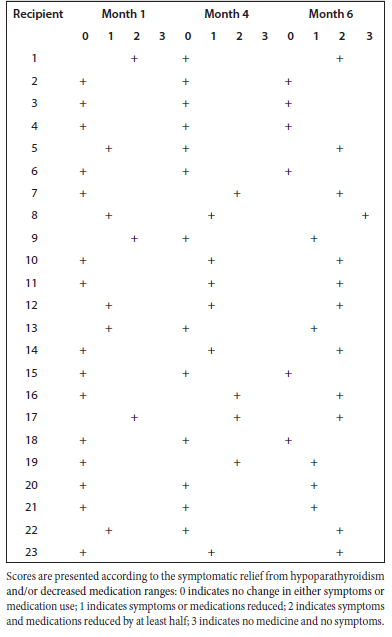
Table 3.Post-operative Clinical Scores of the 23 Recipients at Each Follow-Up Period