Volume: 22 Issue: 1 January 2024 - Supplement - 1
FULL TEXT
Introduction
Members of the Middle East Society for Organ Transplantation (MESOT) are active in establishing and promoting ethical transplant programs. Members of MESOT were part of a steering committee that would lead to what is now the Declaration of Istanbul. About 20% of the participants of the Declaration of Istanbul were MESOT members and still are members of the Declaration’s custodial group. The great efforts and the unconditional support of Professor Mehmet Haberal were the main factors behind the May meeting in Istanbul. The Kuwait Document, which preceded the Declaration of Istanbul, was written by MESOT members only.
On the scientific side, many first transplants have been performed in MESOT countries and by its members. Prof. Mehmet Haberal conducted the first adult segmental living-related liver transplantation (left lobe) in the world on April 24, 1990.1 Prof. Haberal also performed the first living-related combined liver-kidney transplant in the world on May 16, 1992, at Baskent University Hospital in Ankara, Turkey.1 Dr. Ömer Özkan performed the first successful uterus transplant in the world in Antalya, Turkey in August 2011.2 The first ever healthy baby was born in June 2020, following a uterus transplant in Antalya, Turkey.2 The world record for the youngest renal transplant donor was performed by Professor A. S. Daar and N. Mohsin Oman.1 The MESOT is also the home of the Shiraz Transplant Center, which is considered to be the largest liver transplant center in the world.3 The world’s first womb transplant was performed in Saudi Arabia in 2000 at the King Fahad Hospital.4
These great successes and achievements have been overshadowed by the lack of deceased donor programs in many MESOT countries, a large number of living transplant procedures, and a high rate of living unrelated transplant procedures.
To strengthen our successes and to correct these shortcomings necessitate the establishment of a comprehensive registry. The purpose of the registry is (1) to identify the strengths and weaknesses of each center. Countries with well-established deceased donor transplant programs are encouraged to share information, expertise, and technology with countries seeking to improve their organ donation efforts and (2) to address these needs and (3) to establish programs to empower the transplant programs in all of the regional countries by joining a comprehensive and accepted data registry system. This system is necessary for MESOT countries because it protects the vulnerable population, promotes equality between donor and recipient populations, and does not violate the principles set forth by the Declaration of Istanbul. Finally, the registry should (4) establish a unified criteria for organ donation and organ sharing.
The purpose of this paper is to describe the current solid-organ transplant programs in each of the MESOT countries and the proposed outline for a comprehensive registry. The data were collected voluntarily and verified by the participating countries.
Materials and Methods
Proposed structure of the registry
The purpose of the registry is to (1) manage and update the list of people in need of an organ or tissue transplant; (2) collect data about a potential donor when a tissue or organ donation is referred; (3) gather information about the transplant of suitable organs or tissues and the clinical evolution of the recipient to evaluate the transplant success; (4) provide analysis and information to the transplant and health care community; and (5) improve the quality and safety of care. Other purposes include involvement in allocation activities, to increase the scientific value, to provide transparency, and to maintain ethical conduct and accountability. The registry must have clear and precise objectives, have clear information on what group or population the registry is directed toward, and allow clear ways to extract useful and reliable information. Finally, the registry should obtain integrated information on donation, wait list, and transplant activities, and users should be able to analyze and interpret the information correctly.
Structure of the registry
The registry will have 3 modules (Figure 1): (1) a Waiting List Module (Table 1), to manage and update the list of people waiting for a transplant; (2) a Donation Module, to collect and share clinical data of potential organ and tissue donors; and (3) a Follow-up Module, to collect information about a transplant, to be periodically updated with follow-up data.
Information to obtain for the Waiting List Module is shown in Table 1. Information to obtain for the Transplantation Module is shown in Table 2. The data should include the following: (1) number of actual donors after brain death (DBD) (ie, actual deceased organ donors in whom death has been determined by neurological criteria); (2) number of actual donors after circulatory death (DCD) (ie, actual deceased organ donors in whom death has been determined by circulatory criteria); (3) number of multiorgan donors; (4) number of utilized deceased organ donors; (5) number of utilized DBDs (ie, utilized deceased organ donors in whom death has been determined by neurological criteria; and (6) number of utilized DCDs (ie, utilized deceased organ donors in whom death has been determined by circulatory criteria). Information for the Donation Module is listed in Table 3.
Transplants abroad
For transplant procedures performed abroad, first, the number of resident patients in the reporting country, known to have been transplanted abroad from a living or deceased donor, within the year indicated will be reported. For any reported cases, information on the destination country or countries should be provided. Second, the number of resident living donors in the reporting country, known to have travelled abroad to donate, within the year indicated should be reported. For any reported cases, information on the destination country or countries should be provided.
Transplant outcomes
The following information should be collected on transplant outcomes: transplant-specific data, donor immunological data, rejection, neoplasia, infections, biopsies, examination data, blood chemistry tests, infectious markers, instrumental tests, physical examinations, and therapies.
Starting the registry program
Because many countries may still be reluctant to have the fully integrated data reported to the registry, we have designed a simpler form for countries to use when starting a registry program (Table 4).
Current status of transplantation in MESOT
Each country was asked to fill in data for each organ about the number of transplants accumulated from 2019 to 2022. Requested data included the number of transplants during 2022 (deceased, living related, and living unrelated) and the existing laws regulating transplantation and national support for the program. Data for outcomes and for living related and nonrelated transplants were not requested. Data were tabulated using Microsoft Excel (version 2022) and analyzed for total number of transplants. Data received from Egypt were for the total number per organ for each year; however there was no distinction between living related or living nonrelated. As such, the data were included for accumulated transplant data only.
Results
Transplant results in MESOT
Transplantation in the MESOT countries started sporadically with renal transplants, as early as 1967 in the city of Shiraz, the Islamic Republic of Iran (Iran). The first cardiac transplant was performed in Turkey in 1968, and a kidney transplant was performed in Lebanon (with Dr. A. Daouk) and then Jordan in 1972 (with HE Dr. Daoud Hanania and with Dr. Said Karmi) and in 1973 Iraq (with Dr Walid Al Khayal) and then in Turkey in 1975 (with Prof. Mehmet Haberal). The other countries followed quickly, with Palestine being the last country to start in 2011 (Table 5).
Historical notes
The first deceased renal transplant was from the EuroTransplant system (performed by Prof. Haberal, October 10, 1978).1 The first local deceased donor kidney transplant was performed by Prof. Haberal on July 27, 1979.1 The first cardiac transplant was performed in Turkey, by Dr. Kemal Beyaz?t, in 1968.1 The first living kidney transplant in MESOT was performed by Dr. Sanadizadeh in Namazi Hospital Shiraz in 1968.1 The first center for cardiac transplant in the MESOT was established by HE Dr Daoud Hanania in 1985.1 Professor A. S. Daar and N. Mohsin are the holders of the world record of the youngest renal transplant donor.1 The world’s first womb transplant was performed in Saudi Arabia in 2000 at King Fahad Hospital.4
Historical notes by country
Iran: Historical transplant milestones for Iran have been described. 5-15 The first kidney transplant was performed in Shiraz in 1967.1 The first deceased kidney transplant was performed in Shiraz in 2003. The first living liver transplant was performed by Dr. Malek Hosseini, Namazi Hospital, Shiraz, in 1993. The first deceased liver transplant was by Dr. Malek Hosseini (Namazi Hospital, Shiraz). The first lung transplant was at Imam Khomeini Hospital, Tehran, in 2000. The first pancreatic transplant was by Dr. Ali Malek Hosseini (Namazi Hospital, Shiraz) in 2006. The first cardiac transplant was in Tabriz in 1993 and at Shariati Hospital (Tehran) in 1993. Fourteen deceased kidneys were transported through the Euro Transplantation Network and transplanted from 1968 to 1980. The first bone marrow transplant was at Shariati Hospital, Tehran, in 1991. The first corneal transplant was in 1935 in Tehran.
Turkey: Historical transplant milestones for Turkey have been described.16-29 Prof. Mehmet Haberal established the first Transplantation and Burn Treatment units in Turkey at Hacettepe University. He performed the first living-related kidney transplantation in Turkey on November 3, 1975, the first deceased-donor kidney transplantation in Turkey on October 10, 1978, with a kidney donated by Eurotransplant, and the first local deceased-donor kidney transplantation in Turkey on July 27, 1979, immediately after enabling the laws on procurement, storage, grafting, and transplantation of organs and tissues to be enacted on June 3, 1979. He is the first person to perform the first successful deceased-donor liver transplant in Turkey, in the Middle East, and in Northern Africa on December 8, 1988. This was followed by the first pediatric segmental living-related liver transplantation in Turkey, the region, and in Europe on March 15, 1990, and immediately succeeded by the first adult segmental living-related liver transplantation (left lobe) in the world on April 24, 1990. On May 16, 1992, Prof. Haberal performed combined liver-kidney transplantation from a living-related donor, which was the first operation of its kind anywhere in the world. The first cardiac transplant was performed in 1968 by Dr. Kemal Beyaz?t and Dr. Siyami Ersek.
Pakistan: Historical transplant milestones for Pakistan have been described.1,30-34 The first living donor kidney transplant was performed by Dr. Mukhtar Hamid Shah at Army Hospital in 1979. The first deceased kidney transplant was done at SIUT by Dr. Adib Rizvi and Dr. Anwar Naqvi in 1998. Deceased kidney transplants included 8 from local deceased donors and 23 from the Euro Transplant Network (performed at SIUT by Dr. Adib Rizvi and Dr. Anwar Naqvi).
United Arab Emirates: Historical transplant milestones for the United Arab Emirates (UAE) have been described.1,35-37 The first living donor transplant was performed by Prof. Abdalah Daar (1985). The first 2 deceased kidney transplants by Prof. IK Dahwan were donated by the Euro Transplant Network (1989). The first locally retrieved deceased donor kidney transplant was done in 2017. The first full liver transplant from a deceased donor was performed by Antonio Pinna in 2018. The first lung transplant from a deceased donor was performed by Redha Souilamas in 2018. The first cardiac transplant was performed by Rakesh Suri in 2017.
Kuwait: Historical transplant milestones in Kuwait have been described.1,38-42 The first 100 deceased donors for kidney transplant were from outside Kuwait. The first living renal transplant and the first deceased renal transplant were performed by Prof. George Abouna. The first liver transplant was by a joint Kuwaiti-British team of surgeons in 2018. The first successful pancreas transplant was performed in 2007.
Egypt: Historical transplant milestones for Egypt have been described.43-49 The Mansoura Center performed living-donor renal transplants, with the first performed by Dr. Mohammad Ghoneim. The first liver transplant performed in Egypt in 1999 was by the surgical team at the National Liver Institute, Menoufeya University, with the help of Prof. Habib.
Iraq: Historical transplant milestones for Iraq have been described.50-52 The first kidney transplant was by Walid El khayal in 1973. The first living liver transplant was performed by Dr. Assad Hassoum in 2011.
Lebanon: Historical transplant milestones for Lebanon have been described.53-59 The first renal transplant was by Dr. A. Daouk in 1972. The first deceased renal transplant was performed by Dr. Gaby Kamel in 1985. The first liver transplant was performed by HE Dr. Mohamed Khalife in 1998. The first cardiac transplant was performed by Dr. Mohammad Saab and Dr. Fayez Abou Jaoude in 1998. The first lung was performed by Dr. Maroun Abou Jaoude. The first artificial heart transplant was performed by Dr. Mohammad Saab in 2020.
Kingdom of Saudi Arabia: Historical transplant milestones for the Kingdom of Saudi Arabia (KSA) have been described.39,60-66 The first kidney transplant was by Dr. J. Thompson and Dr Anthony Wing. The first deceased kidney transplant was performed by Ketab Al Otaibi and Rene Chang. The first liver transplant was performed in July 1990. The first lung transplant was in 1998. The first cardiac transplant was performed in 1986 at Riyadh Military Hospital. The first visceral transplant was performed at the King Faisal Specialist Hospital in 2017.
Bahrain: Historical transplant milestones for Bahrain have been described.1,39 The first living kidney transplant was performed by Dr. George Abouna.
Oman: Historical transplant milestones for Oman have been described.1,39,67-72 The first living kidney transplant was by Dr. Abdalah Daar. The first transplant with a deceased donor was performed by Dr. Abdalah Daar. Drs. Daar and Mohsin are holders of the world record for the youngest donor in renal transplantation. In 1995 and 1996, 2 kidneys and 1 kidney, respectively, were from deceased donors from the Euro Transplant Network and Saudi Arabia.
Jordan: Historical transplant milestones for Jordan have been described.1,39,73-76 The first kidney transplant was performed in 1972 by HE Dr. Daoud Hanania, who also performed the first heart transplant in 1985. The first liver transplant was performed in 2004.
Qatar: Historical transplant milestones for Qatar have been described.1,77-79 The first kidney transplant was performed by Dr. Ali Hijazi. The first liver transplant was performed by Dr. Hatem Khalaf in 2011. The first lung transplant was performed in 2021.
Syria: Historical transplant milestones for Syria have been described.1,80-83 The first kidney transplant was performed by HE Dr. Maher Housami.
Tunisia: Historical transplant milestones for Tunisia have been described.1,84-89 The first living transplant was performed by Drs. Sadedine Zmerli, Mounir El Ouakdi, Mohsen Ayed, and Habib Boujnah in 1986. The first liver transplant was performed by Dr. R. Bel Haj Hamida in 1998. The first cardiac transplant was performed by Prof. M. Fourati in 1993. The first kidney transplant from a deceased donor was performed in 1986 by Dr. Sadedine Zmerli.
Libya: Historical transplant milestones for Libya have been described.1,90,91 The first living kidney transplant was performed by a visiting Polish team in the Al Zahra Hospital in 1989.
Yemen: Historical transplant milestones for Yemen have been described.1,92-94 The first kidney transplant was done by a visiting team from Mansoura University.
Morocco: Historical transplant milestones for Morocco have been described.1,95-96 The first renal transplant was in 1985. The first cardiac transplant was performed by Professor Wajih Mâazouzi in 1993 and the first liver transplant was in 2016.
Overall interpretations in MESOT countries
Table 5 lists the milestones for the MESOT countries. From Table 5, we can conclude that many countries are still transplanting only livers and kidneys and that major countries involved in transplant, such as Egypt, Iraq, Syria, and Pakistan, are utilizing only living donors (Table 6).
Figure 2 and Table 7 show the cumulative data transplant for all the reporting countries by year from 2019 to 2022. From Figure 2, it is apparent that there was a decrease in the number of both kidney and liver transplants in 2020, which is most probably because of the COVID-19 pandemic. Transplantation rates in 2021 and 2022 receded to pre-COVID-19 rates.
Figure 3 shows the cumulative percentage of living versus deceased liver and kidney transplants from 2019 to 2022. The cumulative data indicate that nearly 80% of the total transplants performed between 2019 and 2022 were from living donors, kidney transplants accounted for 75% of total transplants, and living donation rates are extremely higher than the current world data.
Figure 4 shows the comparative kidney transplant data from living versus deceased donors for 2019, 2020, 2022, and 2023. The data indicate that the rate of deceased versus living transplant for 2019 was 24%. This rate decreased significantly in 2020 through 2022 to reach 14%.
Figure 5 shows cumulative data for liver transplant by year from all reporting countries from 2019 through 2022. For liver transplants, excluding data from Egypt, rates were similar to rates for kidney transplant, with rate of deceased donor transplants of ~42%. Rates decreased significantly to 26% between 2020 and 2022.
Table 8 shows cardiac, lung, and pancreas transplant data for each reporting country by year from 2019 through 2022. Cumulative results are shown in Table 9 and Figure 6. The rates for cardiac, lung, and pancreas, although modest, have been consistent over the years from 2019 through 2022. There are only a few countries in the MESOT, such as Turkey, UAE, KSA, and Iran, that perform multiorgan transplants.
Table 10 shows organ transplant data for 2022 in each country that provided data. In 2022, countries that performed the most transplants were the Islamic Republic of Iran, Turkey, and KSA. Iran accounted for 50% of deceased kidney transplants and 80% of deceased liver transplants. Nonrelated kidney transplant accounted for 49% of the living donor transplants. Nonrelated liver transplants made up 13% of the total living donations. No data were available from Egypt where only living donation is available; from personal communication, the unrelated liver and kidney donation rate was high.
Figure 7 shows kidney transplant data from all the reporting countries for the year 2022. Most kidney transplants were from living donors (80%). Rate of nonrelated donations was high (26%). Of note, the data do not include transplants performed in Egypt.
Figure 8 shows liver transplant data from all the reporting countries for the year 2022. Data do not include transplant procedures performed in Egypt. Of liver transplants, 70% of donations were from living donors.
Transplantation abroad (medical tourism)
Data on transplantations from abroad are shown in Figure 9. The data from Jordan indicate that transplants are being performed for non-Jordanian people at nearly 40% of the total transplants. The nationality of both donors and recipients were reported to ensure ethical conduct
Discussion and Conclusions
All countries within MESOT are working to achieve self-sufficiency at least for renal transplantation. All countries have renal transplant programs. MESOT countries are performing nearly 11?000 kidney transplants every year, with 80% of these transplants from living donors. The reported rate of living unrelated transplants is still alarmingly high. However, it should be noted that some countries did not report the rate of living related versus living unrelated transplants.
The rate for liver transplant is nearly 4000 transplants every year, with 30% of these transplants from living donors. Egypt, Syria, and Iraq are only transplanting from living donors. There are countries in the MESOT that lack a proper transplant program, and these countries are sending their patients abroad. We need to identify these countries and help them to establish their own program.
Although the percentages of living related versus unrelated donors were not available from some countries, countries should work toward eliminating unrelated transplants. Religious obstacles are a misconception, as most religion-adherent countries such as KSA, Kuwait, Iran, and Turkey have the highest rate of deceased donations. Social barriers may be an obstacle that could be helped by education. Government support has helped many countries, especially Kuwait, Iran, KSA, Turkey, and UAE. Support is not only needed to be financial but could also could be legislative.
We need a data registry system as a dynamic process. It should be filled automatically and voluntarily by each country each year and include more valuable variables (such as recipient survival, complications in each organ, graft survival). With barriers in organ transplant still existing in a few MESOT countries, support should be given to these countries to resolve any obstacles.
References:
- Masri MA, Haberal MA, Shaheen FA, et al. Middle East Society for Organ Transplantation (MESOT) Transplant Registry. Exp Clin Transplant. 2004;2(2):217-220.
CrossRef - PubMed - Ozkan O, Ozkan O, Dogan NU, et al. Birth of a healthy baby 9 years after a surgically successful deceased donor uterus transplant. Ann Surg. 2022;275(5):825-832. doi:10.1097/SLA.0000000000005346
CrossRef - PubMed - Malek-Hosseini SA, Habibzadeh F, Nikeghbalian S. Shiraz Organ Transplant Center: The largest liver transplant center in the world. Transplantation. 2019;103(8):1523-1525. doi:10.1097/TP.0000000000002581
CrossRef - PubMed - Fageeh W, Raffa H, Jabbad H, Marzouki A. Transplantation of the human uterus. Int J Gynaecol Obstet. 2002;76(3):245-251. doi:10.1016/s0020-7292(01)00597-5
CrossRef - PubMed - Nikeghbalian S, Nejatollahi SM, Salahi H, et al. Experience of living donor liver transplantation in Iran: a single-center report. Transplant Proc. 2009;41(7):2868-28671. doi:10.1016/j.transproceed.2009.07.009
CrossRef - PubMed - Larijani B, Zahedi F, Taheri E. Ethical and legal aspects of organ transplantation in Iran. Transplant Proc. 2004;36(5):1241-1244. doi:10.1016/j.transproceed.2004.05.065
CrossRef - PubMed - Broumand B. Living donors: the Iran experience. Nephrol Dial Transplant. 1997;12(9):1830-1831. doi:10.1093/ndt/12.9.1830
CrossRef - PubMed - Ghavamzadeh A, Iravani M, Jabehdar-Maralani P, Hajrasouliha A, Tavakoli S. Allogeneic peripheral blood and bone marrow stem cell transplantation for chronic myelogenous leukemia: single center study from Iran. Haematologica. 2003;88(4):ELT13
CrossRef - PubMed - Malek Hosseini SA, Lahsaee M, Zare S, et al. Report of the first liver transplants in Iran. Transplant Proc. 1995;27(5):2618.
CrossRef - PubMed - Fazel I. Renal transplantation from living related and unrelated donors. Transplant Proc. 1995;27(5):2586-2587.
CrossRef - PubMed - Broumand B. Transplantation activities in Iran. Exp Clin Transplant. 2005;3(1):333-337.
CrossRef - PubMed - Ghods AJ. Renal transplantation in Iran. Nephrol Dial Transplant. 2002;17(2):222-228. doi:10.1093/ndt/17.2.222
CrossRef - PubMed - Mandegar MH, Bagheri J, Chitsaz S, et al. Heart transplantation in Iran; a comprehensive single-center review of 15-year performance.
Arch Iran Med. 2009;12(2):111-115.
CrossRef - PubMed - Nafar M, Einollahi B, Sharifian M, Firoozan A, Aghighi M. Renal transplantation in Iran. Transplant Proc. 2001;33(5):2649. doi:10.1016/s0041-1345(01)02131-5
CrossRef - PubMed - Zahedi F, Fazel I, Larijani B. An overview of organ transplantation in Iran over three decades: with special focus on renal transplantation. Iranian J Publ Health. 2009;38(suppl 1):138-149.
CrossRef - PubMed - Haberal M, Abbaso?lu N, Büyükpamukçu N et al. Combined liver- kidney transplantation from a living related donor. Transplant Proc. 1993;25(3):2211-2213.
CrossRef - PubMed - Haberal M, Moray G, Ayvazo?lu Soy EH, Arslan G. Transplantation and legislation history in Turkey. Exp Clin Transplant. 2020;18(Suppl 2):6-15. doi:10.6002/ect.rlgnsymp2020.L2
CrossRef - PubMed - Haberal M, Bilgin N, Büyükpamukçu N et al. Living-related kidney transplantation in Turkey. In: Abouna GM, et al, eds. Current Status of Clinical Organ Transplantation. Martinus Nijhoff Publishers; 1984:209-213.
CrossRef - PubMed - Haberal M. Kidney disease and transplantation: my journey. Saudi J Kidney Dis Transplant. 2005;16(4): 612-621.
CrossRef - PubMed - Haberal M, Oner Z, Karamehmet M, Yenia I, Bilgin N. Transplantation of imported cadaver kidneys. Kidney Int. 1984;26(3):637.
CrossRef - PubMed - Haberal M, Oner Z, Karamehmetoglu M, Gulay H, Bilgin N. Cadaver kidney transplantation with cold ischemia time from 48 to 95 hours. Transplant Proc. 1984;16(5):1330-1332.
CrossRef - PubMed - Haberal M, Sert S, Aybasti N, et al. Cadaver kidney transplantation cases with a cold ischemia time of over 100 hours. Transplant Proc. 1987;19(5):4184-4188
CrossRef - PubMed - Haberal M, Moray G, Bilgin N. Cadaver kidney transplantation in Turkey. Transplant Proc. 1999;31:3377-3778.
CrossRef - PubMed - Haberal M, Gülay H, Karpuzo?lu T, et al. Multiorgan harvesting from heart-beating donors in Turkey. Transplant Proc. 1991;23(5):2566-2567.
CrossRef - PubMed - Haberal M, Moray G, Karakay Ali H, Bilgin N. Transplantation legislation and practice in Turkey: a brief history. Transplant Proc. 1998;30(7):3644-3646. doi:10.1016/s0041-1345(98)01173-7
CrossRef - PubMed - Haberal M, Moray G, Karakayali H, Bilgin N. Ethical and legal aspects, and the history of organ transplantation in Turkey. Transplant Proc. 1996;28(1):382-383.
CrossRef - PubMed - Karakayali H, Haberal M. The history and activities of transplantation in Turkey. Transplant Proc. 2005;37(7):2905-2908
CrossRef - PubMed - Haberal M. Historical evolution of kidney and liver transplantation in Turkey. Transplant Proc. 1995;27(5):2771-2774.
CrossRef - PubMed - Haberal M. Donation after circulatory death in Turkey and the Middle East: current status. Transplant Rep. 2022;7(4):100109. doi:10.1016/j.tpr.2022.100109
CrossRef - PubMed - SIUT. Pakistan web Site. Accessed March 13, 2013. http://www.siut.org
CrossRef - PubMed - Rizvi SA, Naqvi SA. Our vision on organ donation in developing countries. Transplant Proc. 2000;32(1):144-145. doi:10.1016/s0041-1345(99)00914-8
CrossRef - PubMed - Bile KM, Qureshi JA, Rizvi SA, Naqvi SA, Usmani AQ, Lashari KA. Human organ and tissue transplantation in Pakistan: when a regulation makes a difference. East Mediterr Health J. 2010;16(suppl): S159-S166.
CrossRef - PubMed - Rizvi SA, Naqvi SA, Zafar MN. Renal transplantation in Pakistan. Clin Transpl. 2002:191-200.
CrossRef - PubMed - Naqvi SA, Ali B, Mazhar F, Zafar MN, Rizvi SA. A socioeconomic survey of kidney vendors in Pakistan. Transpl Int. 2007;20(11):934-939. doi:10.1111/j.1432-2277.2007.00529.x
CrossRef - PubMed - Daar AS. The response to the challenge of organ shortage in the Middle East region: a summary. Transplant Proc. 1997;29(8):3215-3216. doi:10.1016/s0041-1345(97)00875-CrossRef: https://doi.org/10.1016/S0041-1345(97)00875-0
PubMed - Masri MA, Shakuntala RV, Dhawan IK, et al. Transplantation in the United Arab Emirates. Transplant Proc. 1993;25(3):2358.
CrossRef - PubMed - MH Jamal, AlMahmeed H, AlGhanem M, et al. Organ transplantation in Kuwait and the recent initiation of a liver program. Transplantation. 2021;105(10):2125-2127. doi:10.1097/TP.0000000000003537.
CrossRef - PubMed - Al Sayyari AA. The history of renal transplantation in the Arab world: a view from Saudi Arabia. Am J Kidney Dis. 2008;51(6):1033-1046. doi:10.1053/j.ajkd.2008.01.016
CrossRef - PubMed - El-Reshaid K. Renal replacement therapy in Kuwait. Saudi J Kidney Dis Transpl. 1994;5(4):493-497.
CrossRef - PubMed - Samhan M, Fathi T, Al-Kandari N, et al. Renal transplantation in children. Transplant Proc. 2007;39(4):911-913. doi:10.1016/j.transproceed.2007.03.042
CrossRef - PubMed - Buresley S, Samhan M, Al-Mousawi M. Kuwait experience in laparoscopic donor nephrectomy: first 80 cases. Transplant Proc. 2007;39(4):813-815. doi:10.1016/j.transproceed.2007.03.050.
CrossRef - PubMed - Samhan M, Al-Mousawi M, Hayati H, et al. Results in 158 consecutive cadaveric renal transplantations. Transplant Proc. 2005;37(7):2965-2966. doi:10.1016/j.transproceed.2005.08.019
CrossRef - PubMed - Paris W, Nour B. Organ transplantation in Egypt. Prog Transplant. 2010;20(3):274-278. doi:10.1177/152692481002000312
CrossRef - PubMed - World Health Organization. WHO Proposes Global Agenda on Transplantation. March 30, 2007. https://www.who.int/news/item/30-03-2007-who-proposes-global-agenda-on-transplantation
CrossRef - PubMed - El-Gazzaz GH, El-Elemi M AH. Liver transplantation in Egypt from West to East. Transplant Res Risk Management. 2010;2:41-46. doi:10.2147/TRRM.S8490
CrossRef - PubMed - Khalaf H, El-Meteini M, El-Sefi T, et al. Evolution of living donor liver transplantation in Egypt. Saudi Med J. 2005;26(9):1394-1397.
CrossRef - PubMed - Barsoum R. Renal replacement therapy in Egypt. Saudi J Kidney Dis Transpl. 1997;8(2):152-154.
CrossRef - PubMed - Barsoum RS. Renal transplantation in a developing country: the Egyptian 17-year experience. Afr J Health Sci. 1994;1(1):30-36.
CrossRef - PubMed - Barsoum RS. The Egyptian transplant experience. Transplant Proc. 1992;24(6):2417-2420.
CrossRef - PubMed - Sheashaa HA, Bakr MA, Rashad RH, Ismail AM, Sobh MA, Ghoneim MA. Ten-year follow-up of basiliximab induction therapy for live-donor kidney transplant: a prospective randomized controlled study. Exp Clin Transplant. 2011;9(4):247-251.
CrossRef - PubMed - Rifat UN. Kidney transplantation in Iraq. Saudi J Kidney Dis Transpl. 2006;17(3):399-400.
CrossRef - PubMed - Al-Jebory HM, Abd KH, Mahmood S, Jabur WL, Al Khyat QJ. Characteristics of kidney transplantation in Baghdad: an epidemiological study. Saudi J Kidney Dis Transpl. 2007;18(3):432-438.
CrossRef - PubMed - Sh Al-Taee IK, Al-Shamaa I. Long term follow-up of renal transplant patients-a single center experience in Iraq. Saudi J Kidney Dis Transpl. 2005;16(1):40-45.
CrossRef - PubMed - Stephan AG. Lebanese experience in renal transplantation: protocol and complications. Saudi J Kidney Dis Transpl. 2005;16(4):584-585.
CrossRef - PubMed - Akouri R, Maalouf G, Abboud J, et al. First live birth after uterus transplantation in the Middle East. Middle East Fertility Soc J. 2020;25(1):1-7.
CrossRef - PubMed - Faraj W, Fakih H, Mukherji D, Khalife M. Organ donation after cardiac death in the Middle East. Transplant Proc. 2010;42(3):713-715. doi:10.1016/j.transproceed.2010.02.058
CrossRef - PubMed - Faraj W, Deborah Mukherji D, Fakih H, Majzoub N, Khalife M. Liver transplantation in Lebanon: a hard lesson to learn. Ann Transplant. 2010;15(3):25-29.
CrossRef - PubMed - The National Organization for Organ Donation and Transplantation. Accessed March 13, 2013. http://www.nootdt.org
CrossRef - PubMed - Kamel G, Stephan A, Barbari A, et al. Transplantation at Rizk Hospital: 10 years’ experience. Transplant Proc. 1998;30(7):3114-3115. doi:10.1016/s0041-1345(98)00955-5
CrossRef - PubMed - Kamel G, Stephan A, Salme P, Zeineh S. Renal transplantation: the Lebanese experience. Transplant Proc. 1993;25(3):2356-2357.
CrossRef - PubMed - Shaheen F. Organ transplantation in Saudi Arabia. QScience Proc. 2012;2012(11). doi:10.5339/qproc.2012.bioethics.5.11
CrossRef - PubMed - Jawdat M. Story of the first liver transplant in Saudi Arabia. Saudi J Kidney Dis Transpl. 1996;7(2):178-181.
CrossRef - PubMed - Jawdat M, Qattan N, Bassas A, al Karawi MA, Mohamed E, Khallil H. The first liver transplant in Saudi Arabia and the Arab world. Hepatogastroenterology. 1993;40(3):297-300.
CrossRef - PubMed - SCOT Data. Organ transplantation in Saudi Arabia. Saudi J Kidney Dis Transpl. 2010;21(6):1179-1187.
CrossRef - PubMed - SCOT Data. Organ donation and transplantation in the Kingdom of Saudi Arabia 2011. Saudi J Kidney Dis Transpl. 2012;23(5):1118-1122.
CrossRef - PubMed - Organ donation and transplantation in the Kingdom of Saudi Arabia 2008. Saudi J Kidney Dis Transpl. 2009;20(5):885-889.
CrossRef - PubMed - Mohsin N, Militsala E, Budruddin M, et al. Attitude of the Omani population toward organ transplantation. Transplant Proc. 2010;42(10):4305-4308. doi:10.1016/j.transproceed.2010.09.120
CrossRef - PubMed - Mohsin N, Budruddin M, Khalil M, et al. Donor gender balance in a living-related kidney transplantation program in Oman. Transplant Proc. 2007;39(4):803-806. doi:10.1016/j.transproceed.2007.04.016
CrossRef - PubMed - Daar AS. Living nonrelated kidney transplantation: time to be taken seriously. Transplant Proc. 1999;31(4):1769-1771. doi:10.1016/s0041-1345(99)00163-3
CrossRef - PubMed - Transplant Worldwide Records. Terasaki P.I. and Cecka J.M. Los Angelos, UCLA, 1996:513.
CrossRef - PubMed - Daar AS. An overview of transplantation issues in the Middle East. Transplant Proc. 1998;30(7):3638. doi:10.1016/s0041-1345(98)01170-1
CrossRef - PubMed - Kehinde EO. Attitude to cadaveric organ donation in Oman: preliminary report. Transplant Proc. 1998;30(7):3624-3625. doi:10.1016/s0041-1345(98)01164-6
CrossRef - PubMed - Hammad S, Albreizat AH. Living-donor organ donation: impact of expansion of genetic relationship. Exp Clin Transplant. 2019;17(Suppl 1):1-5. doi:10.6002/ect.MESOT2018.L24
CrossRef - PubMed - Hazza I, Al-Mardini R, Salaita G. Pediatric renal transplantation: Jordan's experience. Saudi J Kidney Dis Transpl. 2013;24(1):157-161. doi:10.4103/1319-2442.106361
CrossRef - PubMed - Shilbayeh S, Hazza I. Pediatric renal transplantation in the Jordanian population: the clinical outcome measures during long-term follow-up period. Pediatr Neonatol. 2012;53(1):24-33. doi:10.1016/j.pedneo.2011.11.006
CrossRef - PubMed - Almaslamani Y, Almalki H, Fadhil R, Khalaf H, Asim M. Transplantation in Qatar. Transplantation. 2016;100(12):2487-2488. doi:10.1097/TP.0000000000001475
CrossRef - PubMed - Alsaied O, Bener A, Al-Mosalamani Y, Nour B. Knowledge and attitudes of health care professionals toward organ donation and transplantation. Saudi J Kidney Dis Transpl. 2012;23(6):1304-1310. doi:10.4103/1319-2442.103585
CrossRef - PubMed - Bener A, El-Shoubaki H, Al-Maslamani Y. Do we need to maximize the knowledge and attitude level of physicians and nurses toward organ donation and transplant? Exp Clin Transplant. 2008;6(4):249-253.
CrossRef - PubMed - Saeed B. Development of solid organ transplantation in Syria. Int J Organ Transplant Med. 2011;2(1):40-46.
CrossRef - PubMed - Al-Habash MM, Al-Shaer MB, Othman MI, Sabbag A, Ojeilie I. Experience with renal transplantation at Al-Mouassat University Hospital, Damascus. Saudi J Kidney Dis Transpl. 1999;10(4):526-530.
CrossRef - PubMed - Riad AA. Current issues and future problems of transplantation in the Middle East: Syria. Transplant Proc. 2001;33(5):2632-2633. doi:10.1016/s0041-1345(01)02121-2
CrossRef - PubMed - Al Asfari R, Hadidy S, Yagan S. Kidney transplantation from living unrelated donors. Saudi J Kidney Dis Transpl. 1996;7(1):38-39.
CrossRef - PubMed - El Matri A, Ben Abdallah T. Organ transplantation in Tunisia. Exp Clin Transplant. 2015;13 Suppl 1:33-36.
CrossRef - PubMed - El Matri A. Histoire de la Transplantation d’Organes en Tunisie et son Avenir. Bull Don Vie. 2008;4:15-17.
CrossRef - PubMed - El Matri A. The history of nephrology in Tunisia. Saudi J Kidney Dis Transpl. 2010;21(4):784-788.
CrossRef - PubMed - Hachicha J, Yaich S, Charfeddine K, et al. Living and cadaver donor transplant programs in the Maghreb. Saudi J Kidney Dis Transpl. 2013;24(1):150-156. doi:10.4103/1319-2442.106316
CrossRef - PubMed - Zmerli S. History, law and ethics of kidney transplantation through my experience of 60 patients [in French]. Tunis Med. 2009;87(1):3-5.
CrossRef - PubMed - Ben Abdallah T, el Younsi F, Ben Hamida F, et al. Results of 144 consecutive renal transplants from living-related donors. Transplant Proc. 1997;29(7):3071-3072. doi:10.1016/s0041-1345(97)00786-0
CrossRef - PubMed - Elusta A, Shawish T, Mishra A, et al. Living related donor kidney transplantation in Libya: a single center experience. Saudi J Kidney Dis Transpl. 2008;19(5):831-837.
CrossRef - PubMed - Ehtuish EF, Abouna GM, Shebani AH, Abdulmola TS, Shawesh TZ. Kidney transplantation in Libya: a North African and Middle Eastern perspective. Exp Clin Transplant. 2006;4(1):425-428.
CrossRef - PubMed - El-Nono IH, Al-Ba'adani TH, Ghilan AM, et al. Adult-to-adult living related donor renal transplantation in Yemen: the first experience. Saudi J Kidney Dis Transpl. 2007;18(2):265-269.
CrossRef - PubMed - El-Nono IH, Telha KA, Al-Alimy GM, et al. Challenges in renal transplantation in Yemen. Ann Transplant. 2015;20:92-96. doi:10.12659/AOT.891362
CrossRef - PubMed - Sheiban AK, Yehia A, Mohamed YA, Hajar AR. Renal replacement therapy in Yemen. Saudi J Kidney Dis Transpl. 1996;7(3):313-314.
CrossRef - PubMed - Haddiya I, Radoui A, Benamar L, et al. Ten years of renal transplantation in a Moroccan hospital: results and constraints. Transplant Proc. 2012;44(10):2976-2981. doi:10.1016/j.transproceed.2012.02.038
CrossRef - PubMed - Bourquia A. Renal replacement therapy in Morocco. Saudi J Kidney Dis Transpl. 1999;10(1):66-68.
CrossRef - PubMed

Volume : 22
Issue : 1
Pages : 1 - 13
DOI : 10.6002/ect.MESOT2023.L6
From the 1Transmedical for Life and 2Department of
General Surgery, Division of Transplantation, Baskent University, Ankara,
Turkey
Acknowledgements: For Dr. Antoine Stephan and Antoine
Barbari from Lebanon; Dr. Bassam Saeed from Syria; Dr. Mohamad Gouunamat
from Jordan; Dr. Hani Hafiz, Dr. Refaat Kamel for Egypt, Dr. Faissal
Shaheen, and Dr. Besher Attar from Saudi Arabia; Dr Mehmet Haberal from
Turkey; Dr. Mustafa Al Mosawi from Kuwait; Dr. Saman Nikeghbalian, Dr. Ali
Malek Hosseini, Dr. Hassan Argani, and Dr. Iraj Fazel from Iran; Dr.
Ehtuish Faraj Ehtuish from Libya; Dr. Ben Abdallah and Dr. Aziz El Matri
from Tunisia; Dr. Ali Abdul Kareem Alobaidli from the UAE; Dr. Anwar Naqvi
and Dr. Adib Rizvi from Pakistan; Dr. Yousef Al Maslamani, Dr. Hassan Ali
Mohd, and Hasan Al-Malki from Qatar; Dr. Mohammed Ayyoub from Palestine;
Dr. Alaa Ali from Iraq; Dr. Ahmed Al Busaidi and Faisal Jalal Al Balushi
for Oman. The authors have not received any funding or grants in support
of the presented research or for the preparation of this work and have no
declarations of potential conflicts of interest.
Corresponding author: Marwan Masri, Transmedical for Life
E-mail:
marwanmasri@tmforlife.com
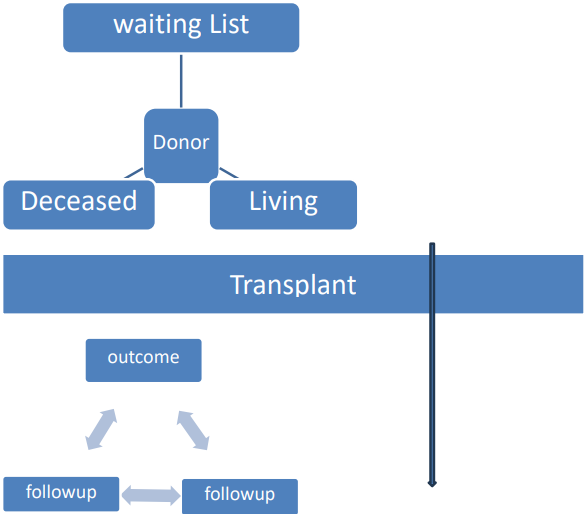
Figure 1. Structure of the Registry
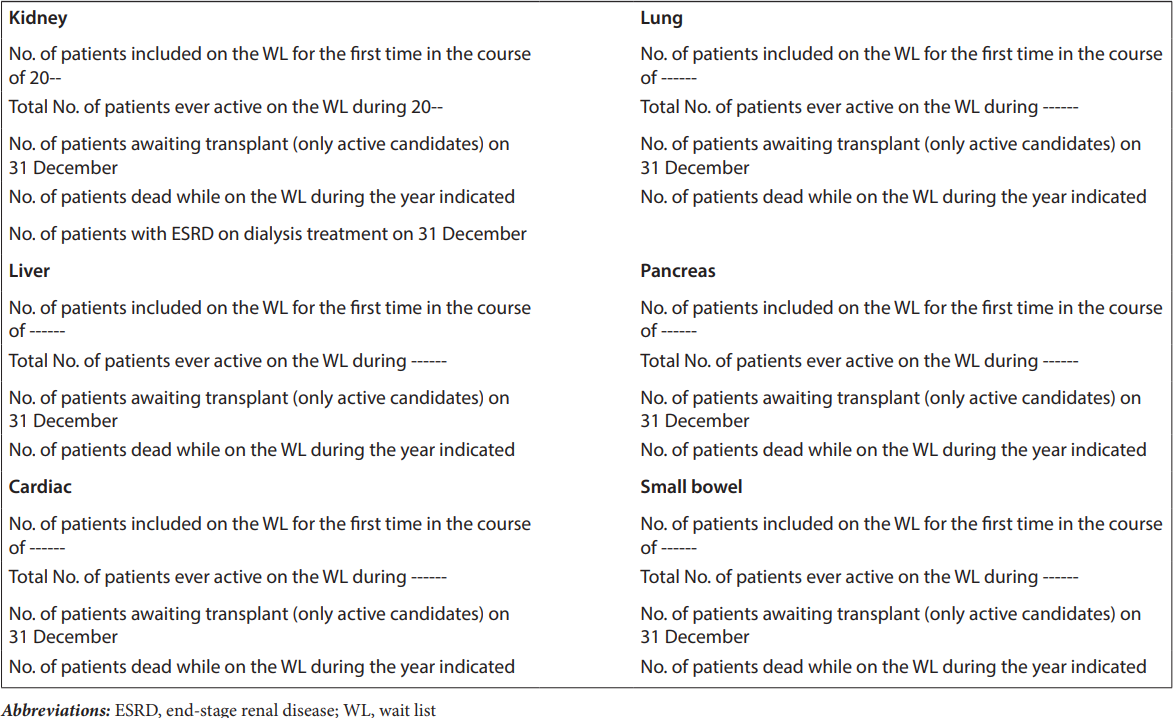
Table 1. Waiting List Module Information
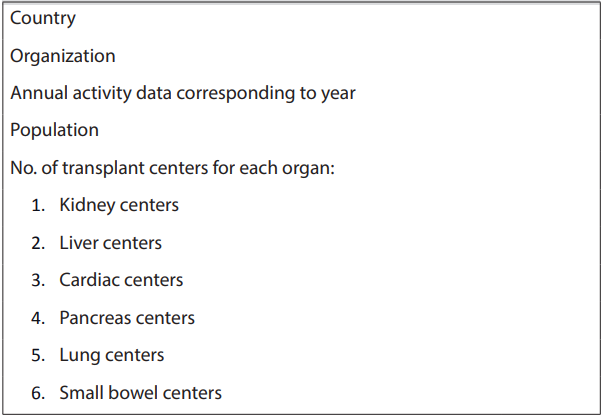
Table 2. Transplantation Module
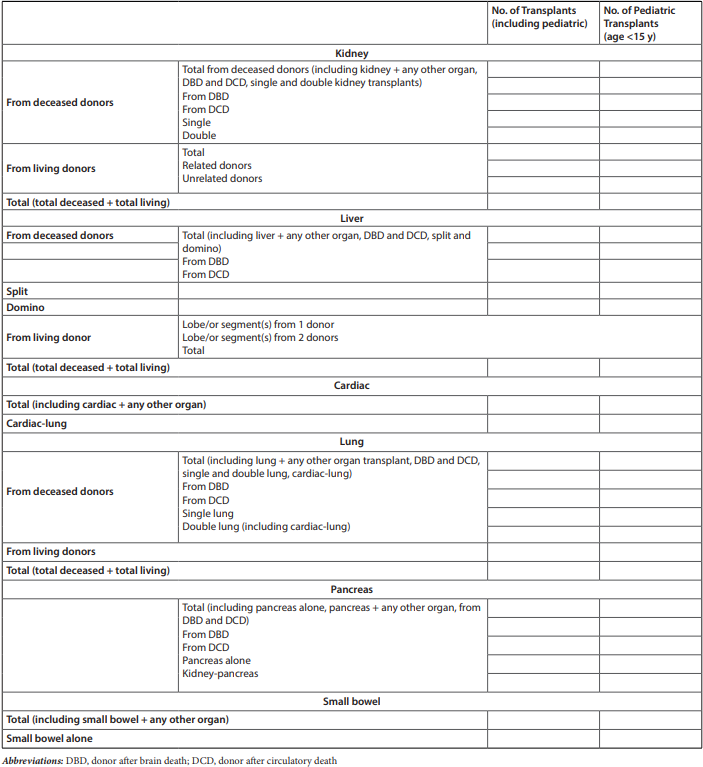
Table 3. Information for the Donation Module
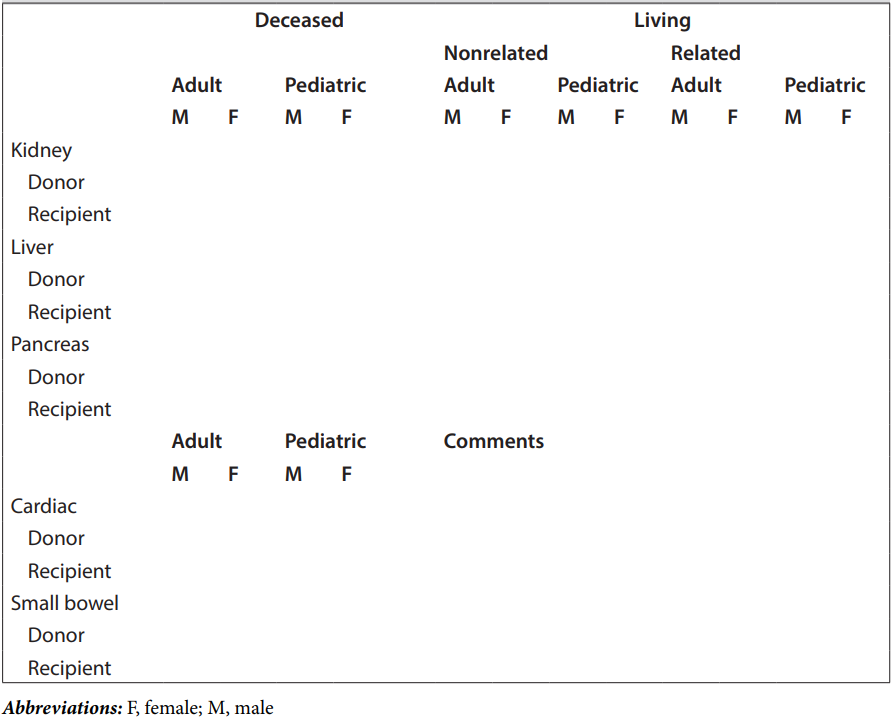
Table 4. Information for Countries to Use When Starting a Registry Program
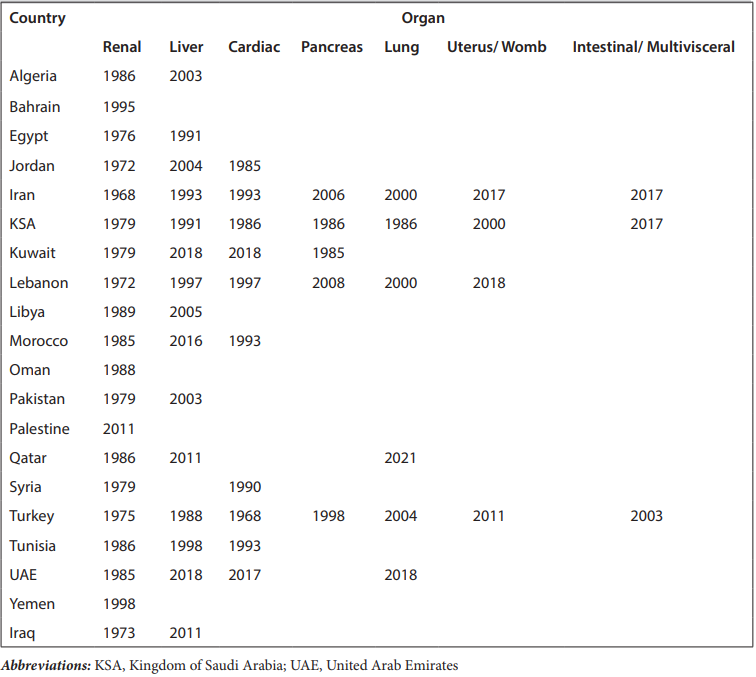
Table 5. Year of First Organ Transplant in Each Country
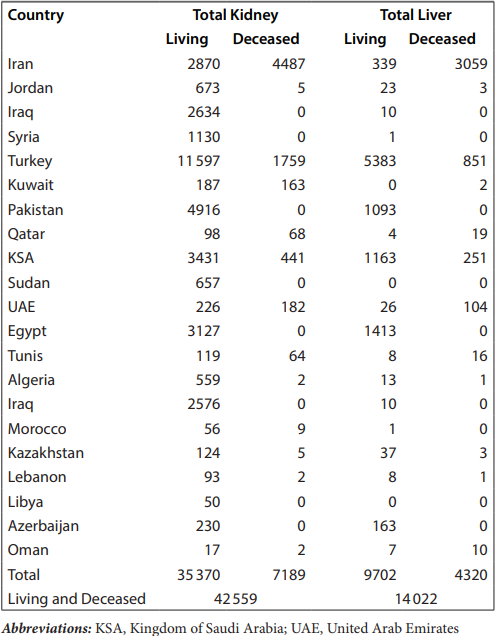
Table 6. Cumulative Data for Each Country From 2019 to 2022 for Liver and Kidney Living Versus Deceased Transplant
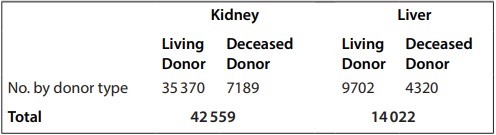
Table 7. Cumulative Data for Kidney and Liver Transplants in MESOT Countries From 2019 to 2022
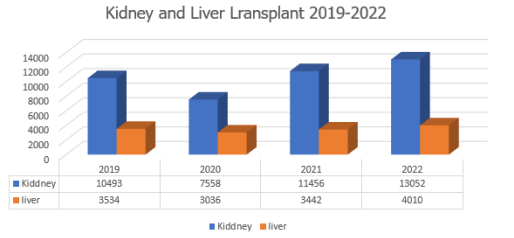
Figure 2. Cumulative Transplant Data for All Reporting Countries by Year From 2019 to 2022
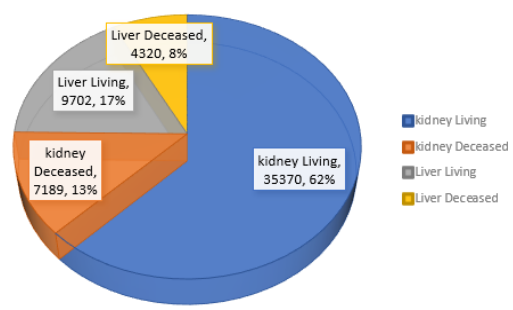
Figure 3. Cumulative Percentage of Living Versus Deceased Liver and Kidney Transplant From 2019 to 2022
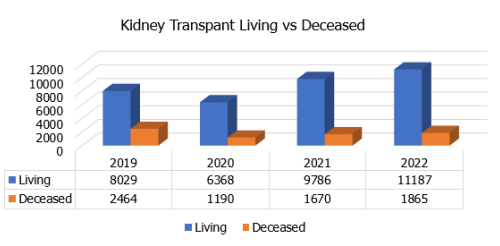
Figure 4. Comparative Kidney Transplant Data From Living Versus Deceased Donors for 2019, 2020, 2022, and 2023
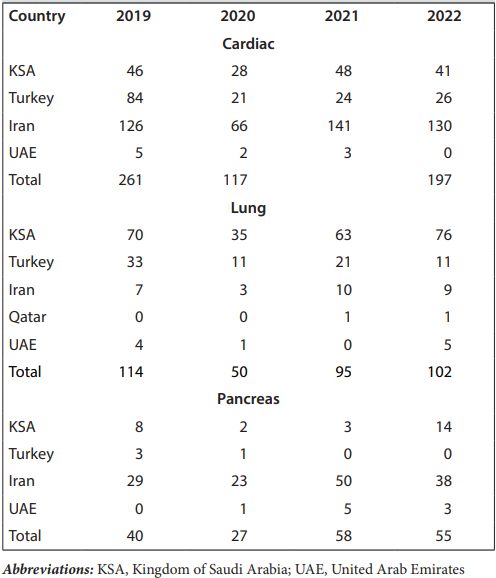
Table 8. Cardiac, Lung and Pancreas Data for Each Reporting Country by Year from 2019-2022.
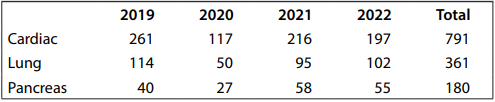
Table 9. Cumulative Data on Cardiac, Lung, and Pancreas Transplant From 2019 to 2022
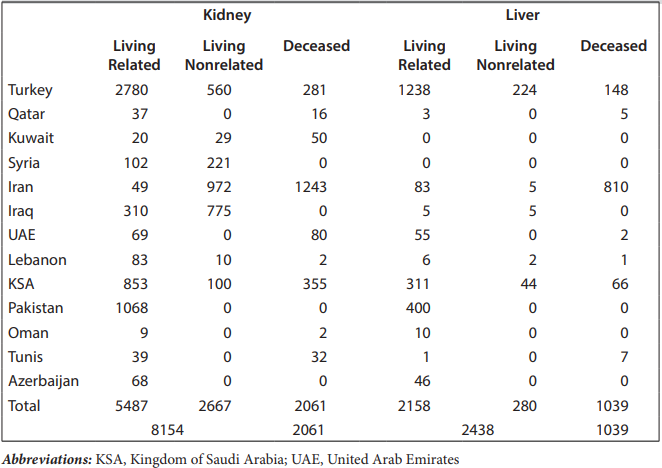
Table 10. Organ Transplant Data for 2022 Performed in Each Country That Reported
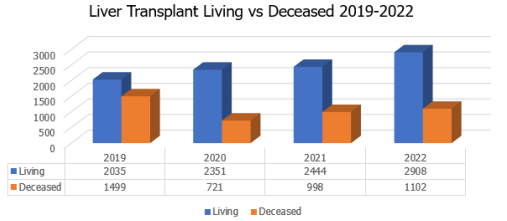
Figure 5. Cumulative Data for Liver Transplants From Reporting Countries From 2019 Through 2022
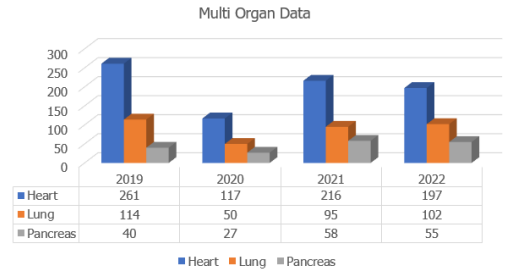
Figure 6. Cumulative Data for Cardiac, Lung, and Pancreas Transplants From 2019 to 2022
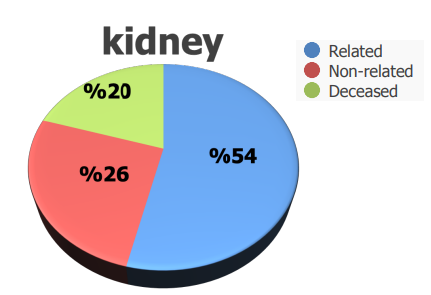
Figure 7. Kidney Transplant Data for 2022 From Reporting Countries: Living (Related and Nonrelated) and Deceased
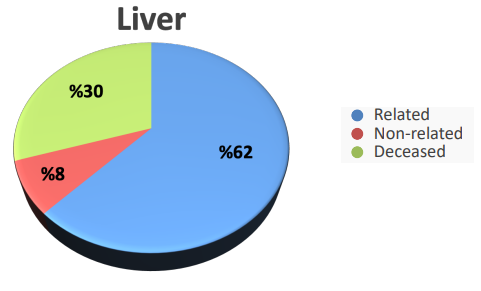
Figure 8. Liver Transplant Data for 2022 From Reporting Countries: Living (Related and Nonrelated) and Deceased
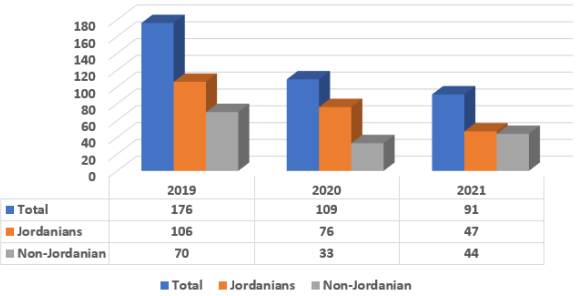
Figure 9. Transplant for Foreigners: Example for Jordanian Versus Non-Jordanian Population for 2019, 2020, and 2021