Volume: 18 Issue: 1 January 2020 - Supplement - 1
FULL TEXT
Complement dysregulation is related to different glomerular pathologies. Patients with complement dysregulation have high recurrence risk after transplant; however, with trough-effective therapeutics, renal transplant can be an option for these patients. Here, we present 2 boys with renal disease related to complement dysregulation and their outcomes after renal transplant. Patient 1 had atypical hemolytic uremic syndrome, which was treated with eculizumab before renal transplant; eculizumab therapy was also continued after transplant as preventive therapy. Eculizumab therapy was stopped at year 2 posttransplant. At year 4 posttransplant, his serum creatinine level was 0.87 mg/dL. Patient 2, who had chronic renal disease related to C3 glomerulopathy, was not responsive to eculizumab before renal transplant. At month 4 posttransplant, C3 glomerulopathy recurrence was demonstrated with biopsy, and serum creatinine level was 1.96 mg/dL at this time. Eculizumab was started as a rescue therapy. At year 4 posttransplant, his serum creatinine level was 2.07 mg/dL. In our 2 patients with complement dysregulation, eculizumab was an effective and preventive therapy after renal transplant. However, more studies are needed to understand the long-term efficacy and safety of eculizumab after renal transplant.
Key words : Complement dysregulation, Disease recurrence, Kidney transplantation
Introduction
The complement system plays a central role in inflammatory reactions. It also conducts adaptive immune responses with T and B cells. Complement dysregulation is related to different glomerular pathologies (atypical hemolytic uremic syndrome, C3 glomerulopathy, dense deposit disease, etc.). The main problem is uncontrolled stimulation of the alternative complement pathway.1 This uncontrolled stimulation can continue after transplant, and it can result in disease recurrence and graft loss. Patients with complement dysregulation have high recurrence risk after transplant; however, with trough-effective therapeutics, renal transplant can be an option for these patients. Here, we present 2 patients with complement dysregulation-related renal disease and their outcomes after renal transplant.
Case Report
Patient 1
Patient 1 was a 4.5-year-old boy; cause of renal failure was atypical hemolytic
uremic syndrome. Complement C3 levels were within normal ranges. Eculizumab
treatment was started before renal transplant and continued for 6 months. He was
not responsive to eculizumab treatment before renal transplant. Renal function
recovery was not achieved. Patient 1 received a graft from his father. His
immunosuppressive therapy after transplant consisted of prednisolone,
calcineurin inhibitor (cyclosporine A), and mycophenolate mofetil. Eculizumab
treatment was continued after transplant as preventive therapy. The patient had
been receiving 300 mg eculizumab every 2 weeks. It was stopped at year 2
posttransplant. He did not need any biopsy intervention. At 2.5 years
posttransplant and after cessation of eculizumab therapy, he had no episodes of
acute rejection or disease recurrence. At year 4 posttransplant, his serum
creatinine level was 0.87 mg/dL and glomerular filtration rate was 97.58 mL/min.
No reduction in complement C3 serum level was observed during follow-up.
Mutation analyses for complement components still continue.
Patient 2
Patient 2 was a 14-year-old boy; cause of renal failure was C3 glomerulopathy.
Complement C3 serum level was decreased. He was not responsive to eculizumab
treatment before renal transplant. After 18 months of dialysis, he received a
renal transplant from his brother. His immunosuppressive therapy after
transplant consisted of prednisolone, calcineurin inhibitor (cyclosporine A),
and mycophenolate mofetil. At month 4 posttransplant, a biopsy was performed
related to increased serum creatinine level. C3 glomerulopathy recurrence was
demonstrated at biopsy, and serum creatinine level was 1.96 mg/dL at this time.
Eculizumab was started as a rescue therapy, and he received 1200 mg eculizumab
every 2 weeks. No episodes of acute rejection or disease recurrence were shown
after eculizumab therapy. At year 4 posttransplant, his serum creatinine level
was 2.07 mg/dL and glomerular filtration rate was 38.04 mL/min. Patient 2
continued to receive eculizumab therapy monthly. A reduction in complement C3
serum level was not observed after starting eculizumab therapy during follow-up.
Mutation analyses for complement components have continued for Patient 2 (Table
1).
Discussion
Renal transplant is the best treatment choice for end-stage renal failure during childhood. The prevalence of disease recurrence is higher in children than in adults. Disease recurrence is one of the important risk factors for graft loss after transplant.2 The complement system is an important and powerful part of host defense. Half of the components of the system are related to its regulation. Dysregulation and uncontrolled activation of the complement system will end with self-tissue damage. This dysregulation is often related to genetic mutations of complement components. The harmful dysregulation and uncontrolled activation of the complement system without any prevention or treatment will cause disease recurrence and graft loss.3,4 Atypical hemolytic uremic syndrome and C3 glomerulopathy are different clinical and pathologic diseases. Dysregulation and uncontrolled alternative pathway activation of the complement system are the similar pathogenic mechanisms for both of these diseases. Eculizumab, a humanized monoclonal anti-C5 antibody, blocks uncontrolled alternative pathway activation at the level of C5a and lytic C5b-9 complex generation. It can be used for treatment and prevention after renal transplant for diseases related to complement dysregulation, such as shown in our patients.5 Timing of start or cessation of eculizumab therapy and time interval between doses are still unclear. These decisions must be made in accordance with the clinical and pathologic aspects of each patient.6
Eculizumab is an effective preventive and curative therapy after renal transplant in patients with complement dysregulation. However, more studies should be done to understand the long-term efficacy and safety of eculizumab after renal transplant.
References:
- Liszewski MK, Java A, Schramm EC, Atkinson JP. Complement dysregulation and disease: Insights from contemporary genetics. Annu Rev Pathol. 2017;12:25-52.
CrossRef - PubMed - Cochat P, Fargue S, Mestrallet G, et al. Disease recurrence in paediatric renal transplantation. Pediatr Nephrol. 2009;24(11):2097-2108.
CrossRef - PubMed - Le Quintrec M, Zuber J, Moulin B, et al. Complement genes strongly predict recurrence and graft outcome in adult renal transplant recipients with atypical hemolytic and uremic syndrome. Am J Transplant. 2013;13(3):663-675.
CrossRef - PubMed - Vernon KA, Gale DP, de Jorge EG, et al. Recurrence of complement factor-H related protein 5 nephropathy in a renal transplant. Am J Transplant. 2011;11(1):152-155.
CrossRef - PubMed - McCaughan JA, O’Rourke DM, Courtney AE. Recurrent dense deposit disease after renal transplantation: An emerging role for complementary therapies. Am J Transplant. 2012;12(4):1046-1051.
CrossRef - PubMed - Rodriguez-Osorio L, Ortiz A. Timing of eculizumab therapy for C3 glomerulonephritis. Clin Kidney J. 2015;8(4):449-452.
CrossRef - PubMed
Volume : 18
Issue : 1
Pages : 82 - 83
DOI : 10.6002/ect.TOND-TDTD2019.P28
From the 1Department of Pediatric Nephrology, 2Department of Pathology, and the
3Department of General Surgery, Baskent University, Ankara, Turkey
Acknowledgements: The authors have no sources of funding for this study and have
no conflicts of interest to declare.
Corresponding author: Kaan Gulleroglu, Baskent University Pediatric Nephrology
Department, Temel Kuğuluoğlu C. No: 24 K: 3, Bahcelievler-Cankaya 06490,Ankara,
Turkey
Phone: +90 312 2234936
E-mail: kaangulleroglu@yahoo.com
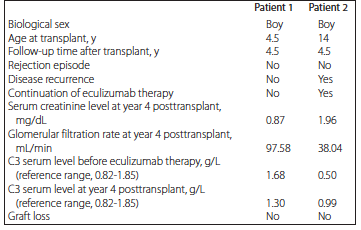
Table 1. Demographic and Clinical Data of Patients