Volume: 18 Issue: 1 January 2020 - Supplement - 1
FULL TEXT
Kidney transplant has been the standard-of-care treatment for patients with end-stage renal disease for many years. To expand the acceptance and care of complicated situations in patients with end-stage renal disease, transplant teams should be ready to find innovative solutions to prevent and manage pretransplant, intraoperative, and posttransplant problems. In this report, we present our approach for the following scenarios: transplant in patients with urinary diversion and augmentation, polycystic disease in recipients, tumors in transplanted kidney and native kidneys, and the roles of laparoscopy and mini-laparoscopy in kidney transplant.
Key words : Cystoplasty, Laparoscopic donor nephrectomy, Renal transplant, Ureteric stenting, Urinary diversion
Introduction
Kidney transplant is the treatment of choice for management of end-stage renal disease (ESRD). During the past 5 decades, indications for kidney transplant have been extended to more difficult and complicated cases. Today, recipients with different congenital and acquired diseases leading to ESRD are accepted to be included on wait lists for transplant.
Kidney transplant was started in 1984 in our department; since then, 5110 kidney transplant procedures have been performed. Deceased-donor transplant was started in 2000, when the law for deceased-donor transplant was passed in the parliament. At present, 60% of the kidney transplant procedures are from deceased donors, with 40% from living donors. We have performed 2081 cases of open donor nephrectomy (ODN), which is no longer performed in our department. We performed the first randomized clinical trial (RCT)1 comparing laparoscopic donor nephrectomy (LDN) with ODN. The RCT showed that LDN has less morbidity with graft outcomes similar to ODN. After completion of this RCT, LDN became routine in our center thereafter for the last 2309 cases. There have been 2801 cases of ODN, which is no longer preferred, and 2309 cases of LDN.
All cases of kidney transplant are registered in the “Collaborative Transplant Study” in Heidelberg, Germany. Rates of 1-year and 5-year graft survival are 95% and 90% for living-donor transplant and 93% and 83% for deceased-donor transplant, respectively (Figure 1).
During the past 34 years, our department has made several modifications and has accepted increasingly more challenging cases, resulting in overall gained experience (center effect). This report discusses some of these challenging cases.
Nonoperative Stent Removal in Kidney Transplant
We use the Lich Gregoir technique for uretero-vesical transplant with double J
stenting. Since 2013, our center connects the double J stent to the tip of the
Foley catheter, and the stent is removed within 1 week by removing the Foley
catheter.2,3 Therefore, cystoscopy is avoided by removal of the stent, making
the procedure more comfortable and less costly.
One-Suture, One-Knot Technique
Since 2006, arterial and venous anastomoses are performed with 1 suture, with
only 1 knot used at the end of suturing, with artery and vein filled with blood
to prevent purse-string effect (Figure 2). With this technique, the kidney
remains in a stable position and is not touched or manipulated during the
procedure. A fast and wide anastomosis can be achieved.4
Inverted Kidney Transplant for Right Donor Kidney
An innovative technique to transplant a right kidney with a short vein is done
by clipping the vein during right LDN. So far, we have performed this new
technique in 32 donors and their recipients. The right renal vein is ligated by
Hem-o-Lok clips, which results in a short vein (< 1.5 cm). When the kidney is
positioned inverted in the recipient, the renal vein is placed posteriorly and
therefore adjacent to the external iliac vein, making a safe and simple venous
anastomosis possible.5,6
Mini-Laparoscopic Donor Nephrectomy
Our center presented results of 100 donor nephrectomies performed by our group
using mini-LDN.7 For this procedure, the instrument is introduced through 3.5-mm
trocars. As shown in Figure 3, trocar sites are not visible and are barely
visible in the visible area of the abdomen. The kidney is then delivered through
a Pfannenstiel incision, which will be covered in the future by hair growth.
Simultaneous Unilateral Nephrectomy of Massively Enlarged Polycystic Kidney in
Recipient During Kidney Transplant
Since 1987, instead of performing pretransplant bilateral nephrectomies in
recipients with polycystic kidney disease, we only perform unilateral
nephrectomy from the same incision where the kidney transplant will be
performed (Figure 4). This will make the procedure less invasive. This procedure
is done only when necessary (that is, if there is not enough area for the kidney
allograft). With unilateral nephrectomy, it is possible to save the
contralateral polycystic kidney, which could assist with function of the new
kidney.8,9
Management of Renal Mass in Native Kidney in Transplant Patients
As shown in Figure 5, we performed a simultaneous transperitoneal bilateral
radical nephrectomy in a woman with body mass index of 36 kg/m2 (obese level);
the procedure occurred 7 years after successful kidney transplant. We have also
performed this procedure in a 34-year-old man with renal tumor in the right
native kidney, which was discovered 22 years after successful transplant.
Therefore, we recommend laparoscopic nephrectomy in recipients who develop
tumors in their native kidneys instead of ODN, which is an invasive procedure
for these patients and requires immunosuppression. Laparoscopic nephrectomy
results in less pain, better cosmesis, and less hospitalization.
Zero-Ischemia Partial Nephrectomy for Treatment of Multifocal Renal Cell
Carcinoma
Traditionally, if renal cell carcinoma is discovered in the transplanted kidney,
radical nephrectomy is recommended, especially if there is more than 1 tumor. As
shown in Figure 6, we were able to spare a transplanted kidney with 2 tumors (1
in the upper pole and 1 in the lower pole). This was possible with use of the
enucleating technique on the tumor (without invading the tumor capsule) instead
of the popular partial nephrectomy. We did not clamp the renal vessels, thus
avoiding induced ischemia in the transplanted kidney.10
Management of Neurogenic Bladder in Kidney Transplant
We previously compared bladder augmentation before and after kidney
transplant.11 One of the important diseases leading to ESRD is significant
bladder dysfunction. Among the different kinds of neurogenic bladders that cause
ESRD, a hypertonic bladder with dyssynergic sphincter is the most common type.
Bladder augmentation has grown in popularity as a treatment for neurogenic
bladder in renal transplant patients. Presently, ileocystoplasty is the common
procedure for augmentation enterocystoplasty. If a recipient with ESRD has
gross vesicoureteral reflux, usually there is no need to do augmentation
enterocystoplasty before renal transplant because there is a pop-off mechanism
(Figure 7). Augmentation cystoplasties in selected patients before or after
transplant are both safe and yield accepted morbidity.
In our center, we follow these steps when a patient with neurogenic bladder and ESRD is referred to us. If the patient has gross vesicoureteral reflux, kidney transplant is performed without doing enterocystoplasty and the patient is followed closely. If the patient has chronic renal failure and is on dialysis, kidney transplant is performed and the patient is followed. If an indication such as hydronephrosis in the transplanted kidney is shown, augmentation cystoplasty is performed. However, if the patient already has an augmented bladder, we will transplant the kidney on the augmented bladder.
Conclusions
Over our 34-year experience with kidney transplant procedures, we have performed a number of different innovative techniques. These techniques have widened patient indications for kidney transplant and have allowed us to accept more complicated patients who are on wait lists for transplant.
References:
- Simforoosh N, Basiri A, Tabibi A, Shakhssalim N, Hosseini Moghaddam SM. Comparison of laparoscopic and open donor nephrectomy: a randomized controlled trial. BJU Int. 2005;95(6):851-855.
CrossRef - PubMed - Simforoosh N, Obeid K, Javanmard B, Rezaeetalab GH, Razmjoo S, Soltani MH. Stent removal in 200 kidney transplant recipients: nonoperative versus endoscopic removal. Exp Clin Transplant. 2016;14(4):385-388.
CrossRef - PubMed - Taghizadeh-Afshari A, Alizadeh M, Farshid S. Comparison of complications and short term results of conventional technique versus new technique during graft ureteral stent insertion in Bari technique at Emam Khomeini Hospital, Urmia. Glob J Health Sci. 2014;6(7 Spec No):31-37.
CrossRef - PubMed - Simforoosh N, Gharaati MR, Moslemi MK, Feizzadeh B. One-suture, 1-knot technique in renal vascular transplant. Exp Clin Transplant. 2010;8(3):224-227.
CrossRef - PubMed - Simforoosh N, Tabibi A, Soltani MH, Zare S, Yahyazadeh SR, Abadpoor B. Long-term follow-up after right laparoscopic donor nephrectomy and inverted kidney transplant. Exp Clin Transplant. 2016;14(1):27-31.
CrossRef - PubMed - Ramesh S, Taylor K, Koyle MA, Lorenzo AJ. "Inverted" positioning of renal allograft during kidney transplantation in children and adolescents: A single-institution comparative analysis. Pediatr Transplant. 2019;23(3):e13365.
CrossRef - PubMed - Simforoosh N, Hosseini Sharifi SH, Valipour R, Narouie B, Kamranmanesh MR, Soltani MH. Minilaparoscopy vs. standard laparoscopic donor nephrectomy: comparison of safety, efficacy and cosmetic outcomes in a randomized clinical trial. Urol J. 2015;12(4):2223-2227.
CrossRef - PubMed - Tabibi A, Simforoosh N, Abadpour P, Gholamrezaie HR, Nafar M. Concomitant nephrectomy of massively enlarged kidneys and renal transplantation in autosomal dominant polycystic kidney disease. Transplant Proc. 2005;37(7):2939-2940.
CrossRef - PubMed - Desai PJ, Castle EP, Daley SM, et al. Bilateral laparoscopic nephrectomy for significantly enlarged polycystic kidneys: a technique to optimize outcome in the largest of specimens. BJU Int. 2008;101(8):1019-1023.
CrossRef - PubMed - Simforoosh N, Nadjafi-Semnani M. Long-term outcome of zero-ischemia partial nephrectomy for the treatment of multifocal renal cell carcinoma in renal transplant allograft: a case report. Exp Clin Transplant. 2019;17(Suppl 1):145-147.
CrossRef - PubMed - Basiri A, Simforoosh N, Khoddam R, Hosseini Moghaddam MM, Shayani Nasab H. A comparison of augmentation cystoplasty before and after renal transplantation with the control group. Urol J. 2004;1(1):45-48.
CrossRef - PubMed
Volume : 18
Issue : 1
Pages : 10 - 15
DOI : 10.6002/ect.TOND-TDTD2019.L19
From the Department of Urology and Renal Transplantation, Shahid Labbafinejad
Hospital, Urology Nephrology Research Center, Shahid Beheshti University of
Medical Science, Tehran, IR Iran
Acknowledgements: The authors have no sources of funding for this study and have
no conflicts of interest to declare.
Corresponding author: Nasser Simforoosh, Pasdaran Ave. Ninth Boostan St.,
Department of Urology and Renal Transplantation, Shahid Labbafinejad Hospital,
Tehran, IR Iran
Phone: +98 2122588016
E-mail: simforoosh@iurtc.org.ir
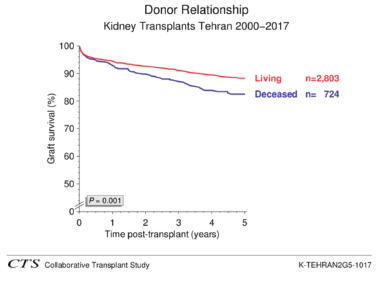
Figure 1. Kidney Transplants From 2000 to 2017
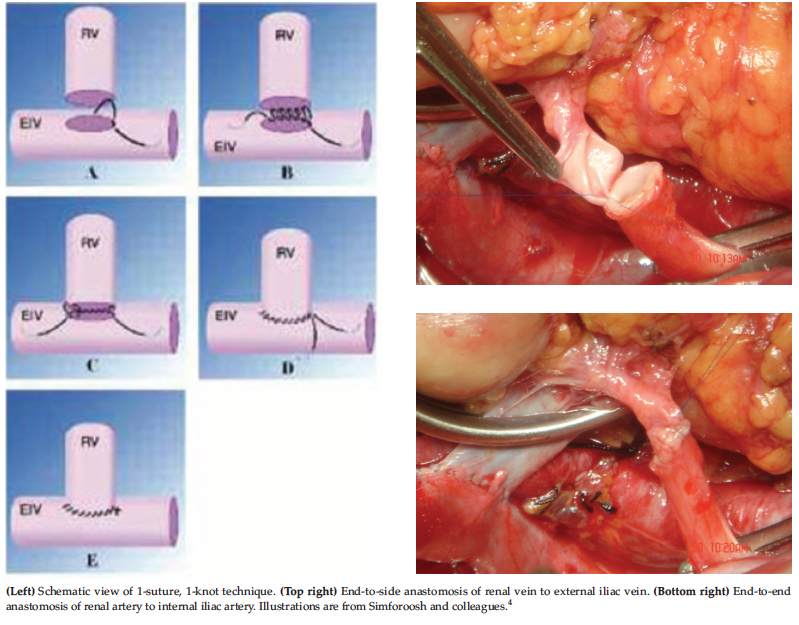
Figure 2. 1-Suture, 1-Knot Technique
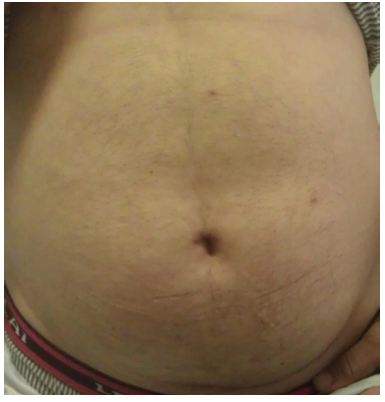
Figure 3. Scar Appearance of Trocars in Mini-Laparoscopic Donor Nephrectomy After 3 Months
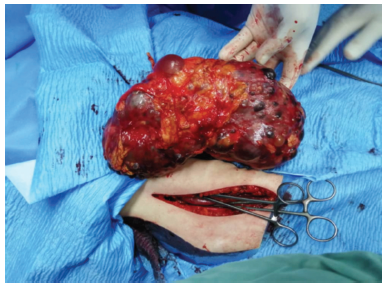
Figure 4. Simultaneous Unilateral Nephrectomy of Massively Enlarged Polycystic Kidney in Recipient During Kidney Transplant
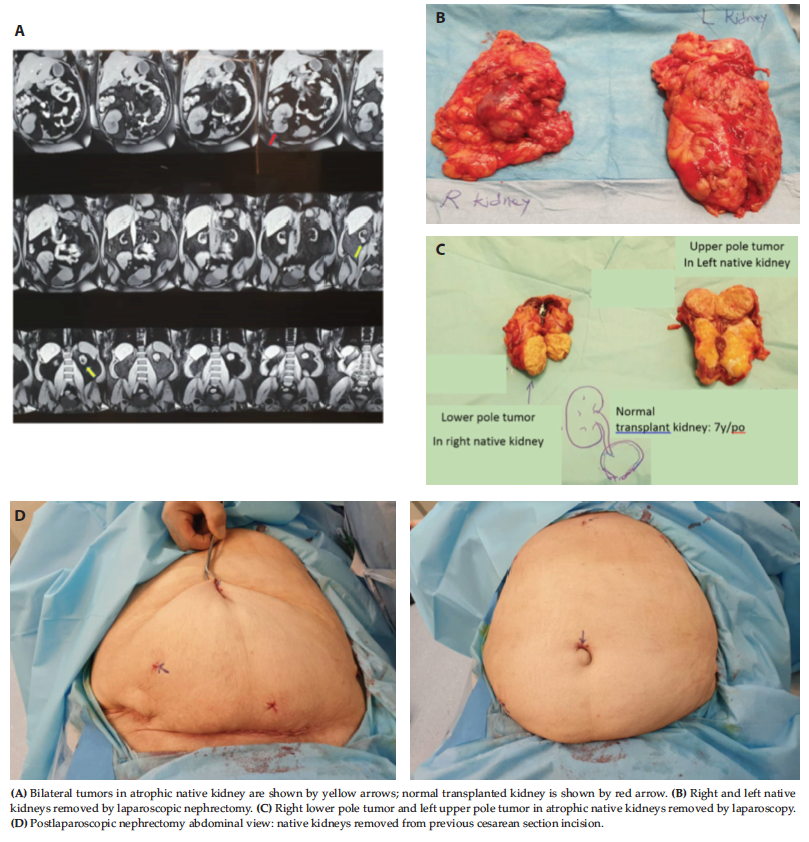
Figure 5. Simultaneous Transperitoneal Bilateral Radical Nephrectomy
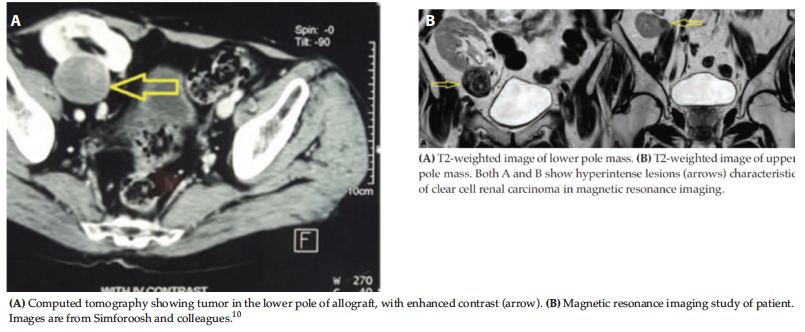
Figure 6. Imaging of Renal Cell Carcinoma
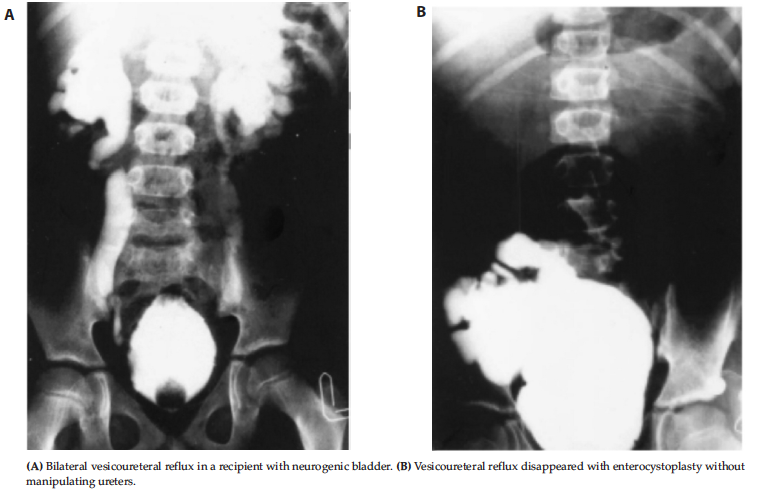
Figure 7. Bladder Augmentation