Volume: 17 Issue: 1 January 2019 - Supplement - 1
FULL TEXT
Objectives: To identify the risk of developing acute rejection, allograft fibrosis, and antibody-mediated rejection, a retrospective review of pediatric patients who underwent liver transplant between July 31, 1998 and February 29, 2016 and had donor-specific antibodies measured at time of liver biopsy was undertaken.
Materials and Methods: HLAMatchmaker Software (http://www.hlamatchmaker.net) was used to define epitope mismatches between donors and recipients and to predict de novo donor-specific antibody risk. Epitope mismatches were evaluated for their immuno-genicity.
Results: In our group of 42 recipients, 20 (48%) had donor-specific antibodies. Having an antibody against HLA-DQB1*02 was associated with acute rejection (66.6% vs 36%; P = .024). We found that DQ epitope mismatch load was greater in recipients with class II donor-specific antibodies (9.7 vs 3.6; P = .001). HLA-DQ (7.4 vs 3.6; P = .04) and HLA-DR (8.8 vs 3.8; P = .04) epitope mismatch loads were higher in recipients with DQ + DR donor-specific antibodies. A high portal fibrosis score was associated with higher mismatch load at the DQ locus (P = .005) and DQ + DR loci (P = .03). Having > 5 or > 6 epitope mismatch loads at the DQ locus identified a threshold above which development of DQ donor-specific antibodies would occur (area under the curve = 0.878). Mismatches for eplet 4Q, 45GE, 52PQ, and 52PL, thought to be immunodominant epitopes, were observed for several recipients.
Conclusions: Knowledge of epitope mismatches between recipients and donors may aid transplant physicians in devising immunosuppression strategies.
Key words : Acute rejection, Allograft dysfunction, Allograft fibrosis, Donor-specific antibodies, Epitope
Introduction
The application of high-resolution molecular HLA typing has resulted in an increased knowledge of the amino acid sequences of HLA alleles, enabling the identification of polymorphic positions and a better understanding of the quaternary structure of HLAs.1-4 An eplet consists of polymorphic HLA residues within 3.0 to 3.5 Angstrom of a given sequence position on the molecular surface.5 An epitope consists of one or multiple combinations of eplets.5,6
HLAMatchmaker is a computer-based matching program that considers the structural basis of epitopes on class I and II HLA antigens.5,6 The matching algorithm determines the degree of mismatch between donor and recipient pairs based on structural epitopes called eplets.6,7 Several reports have demonstrated the usefulness of HLAMatchmaker in kidney,8-10 heart,11 and lung12 transplantation.
Given that several risk factors proposed as being associated with allograft inflammation and fibrosis in pediatric protocol liver biopsies13-15 are mostly postoperative factors, we sought to identify pre-operative factors for predicting the risk of developing (1) acute cellular (T-cell-mediated) rejection (ACR), (2) allograft fibrosis, and (3) antibody-mediated rejection (AMR) in terms of histocompatibility. Epitope mismatches for HLA-DR, HLA-DQ, and HLA-DP were evaluated to predict de novo donor-specific antibody (DSA) risk, and specific epitope mismatches were evaluated for their relative immunogenicity. We hypothesized that an eplet-based matching strategy would predict the risk of developing anti-HLA DSAs, ACR, allograft fibrosis, and AMR in pediatric patients who underwent liver transplant.
Materials and Methods
Patients
The Yale University Institutional Review Board (HIC 1503015482) approved this
study. A retrospective review of medical records of patients who under-went
liver transplant or were followed at our center between July 31, 1998 and
February 29, 2016, and had anti-HLA DSAs measured at the time of liver biopsy
was undertaken. Patients who had no anti-HLA
DSA measurements posttransplant were excluded. Information extracted included
recipient date of birth and transplant, sex, pretransplant diagnosis, blood
group, type of transplant (living donor/deceased donor), Epstein-Barr virus
(EBV) copies in blood at time of anti-HLA DSA measurement/liver biopsy,
HLA-DRB1*03/04 status of the recipient, liver biopsy pathologic diagnosis,
including fibrosis stage, the presence and type of anti-HLA DSA, angiotensin II
type 1 receptor (AT1R) antibody, immunoglobulin G (IgG) and autoan-tibodies
performed at time of anti-HLA DSA measurement/liver biopsy, history of
postoperative complications such as bile leaks, biliary obstruction, vascular
complications, donor age and sex, and blood group.
Pediatric patients on wait lists for transplant undergo HLA typing, and their sera are stored for subsequent measurements of anti-HLA DSA and AT1R. After liver transplant, anti-HLA DSA, serum IgG, and autoantibodies (antinuclear antibody, anti-smooth muscle antibody, anti-soluble liver antigen, anti-liver kidney microsomal antibody) are measured as part of evaluation of liver allograft dysfunction and when a protocol liver biopsy is performed. Protocol liver biopsies are performed at ≥ 5 years after liver transplant. Measurements of anti-HLA and non-HLA antibodies are performed at time of liver biopsy. If a patient had more than 1 liver biopsy within our study period, only the first liver biopsy performed at the same time as measurement of anti-HLA and non-HLA antibodies was included.
Immunosuppression
Our standard immunosuppression protocol consists of methylprednisolone after
perfusion and for the first 7 days posttransplant before conversion to oral
steroids, basiliximab on postoperative day 0, steroids weaned at 6 months
posttransplant, and short-term mycophenolate mofetil until therapeutic
tacrolimus levels are attained. Target tacrolimus levels are 10 to 12 ng/mL in
month 1 posttransplant, 8 to 10 ng/mL in months 2 and 3 posttransplant, and 5 to
7 ng/ml in year 1 posttransplant.
HLA antibody and non-HLA antibody measu-rements
LABScreen (One Lambda, Canoga Park, CA, USA) single antigen beads were used to
measure HLA antibody. Mean fluorescence intensity (MFI) > 1000 was considered
positive. Tests from One Lambda/ ThermoFisher (Canoga Park, CA, USA) were used
to measure complement 1Q (C1q) DSAs. Antinuclear antibodies were measured by
indirect fluorescent assay using HEp-2 substrate with an IgG-specific conjugate.
Titers > 1:80 were considered positive. Anti-smooth muscle and anti-liver kidney
microsome antibodies were measured using a semi-quantitative enzyme-linked
immunosorbent assay (ELISA), with levels > 30 U and > 25.0 U, respectively,
considered as positive. Soluble liver antigen auto-antibody was measured using
ELISA, with level
> 25.0 U considered as positive. The AT1R antibody was measured by ELISA, with
level > 17 U consi-dered as positive.
HLA typing and epitope mismatch identification
High-resolution HLA typing with Nextgen sequ-encing was performed in all
recipients for epitope analysis and in 27 donors using the Omixon HOLOTYPE HLA
24/11 (Cambridge, MA, USA) and IMMUCOR MIA FORA NGS FLEX HLA (Norcross, GA, USA)
typing kits. Sequencing was run on an Illumina miSeq platform (Salem, MA, USA).
Loci typed for recipients and their respective donors included A, B, C, DRB1,
DRB3, DRB4, DRB5, DQA, DQB, DPA, and DPB. HLAMatchmaker DRDQDP version 3.0
(https://www. hlamatchmaker.net) was used to identify potential eplet-derived
epitope mismatches between donors and recipients.5 With this method, potential
eplet-derived epitopes have been described for each HLA locus (170
HLA-DRβ1/3/4/5, 89 HLA-DQα1, 76 HLA-DQβ1, 17 HLA-DPα1, and 43 HLA-DPβ1) that may
be present on the alleles.8
Liver biopsy
Liver biopsy was obtained for cause (ie, evaluation of allograft dysfunction or
as protocol liver biopsy) using 15G true-cut liver biopsy needles. Three cores
of tissue, each at least 2 cm in length, were obtained for routine hematoxylin
and eosin, Masson trichrome, and complement 4d (C4d) staining by either
immuno-fluorescence or immunohistochemistry. Briefly, rabbit monoclonal antibody
(SP91; Cell Marque, Rocklin, CA, USA) in prediluted form, following low-pH
epitope retrieval over 20 minutes, was used for preparation of
paraffin-embedded, formalin-fixed liver tissue. For immunofluorescence, rabbit
polyclonal anti-human C4d antibody (Biomedica, Wien, Austria) was used. Fibrosis
was staged as described by Venturi and associates.16 The terms ACR and AMR were
defined as previously described.17 Liver biopsies were reviewed by a blinded
pathologist for the purpose of this study.
Statistical analyses
Patient characteristics were summarized using mean, standard deviation, median,
and range for continuous variables and frequency and percentage for categorical
variables. Wilcoxon rank sum or Kruskal-Wallis tests were conducted to test
group differences for continuous variables. Chi-square or Fisher exact tests
were conducted to test associations between categorical variables. Associations
between 2 contin-uous variables were tested using the Spearman correlation
coefficient. Kaplan-Meier curves were created for time-to-event outcomes, and
log-rank tests were conducted to test differences in survival among defined
patient groups. The accuracy of epitope mismatch loads predicting DSA
devel-opment was assessed using receiver operating characteristic curve analysis
and logistic regression models. Cutoffs for epitope mismatch load were
determined using the Youden index. Two-sided P values < .05 were considered
statistically significant. We used SAS 9.4.3 software (SAS Institute, Cary, NC,
USA) for statistical analyses.
Results
Demographics
Patients included in the study are shown in Figure 1. Donor and recipient
characteristics are shown in Tables 1 to 3. Table 4 compares the 42 recipients
who formed the study cohort and the recipients excluded due to lack of DSA
testing. Of 42 recipients, 20 (47.6%) had anti-HLA DSAs, mostly to class II HLA.
Class II anti-HLA DSAs were predominantly a de novo occurrence posttransplant.
Two patients had class I anti-HLA DSAs pretransplant. After liver transplant,
the previously detected class I anti-HLA DSAs disappeared; however, 2 patients
had class I anti-HLA DSA posttransplant. This was a new occurrence in 1 patient.
Because the second patient had missing pretransplant testing, it was unclear
whether this was de novo or present pretransplant. Of the 22 recipients without
posttransplant anti-HLA DSAs, 1 recipient had class I DSA pretransplant, 16
recipients had no anti-HLA DSA pretransplant, and 5 recipients had insufficient
pretransplant sera for measurement of anti-HLA DSAs.
Of the patients with elevated anti-AT1R antibody levels posttransplant, 6 patients also had elevated levels pretransplant. Unfortunately, most patients did not have anti-AT1R antibody measurements pretransplant (insufficient sera) (Table 2). The trend in anti-AT1R antibody levels is shown in Figure 2A. Because AT1R was not measured pretransplant in all patients, it is unclear whether AT1R levels were elevated or normal in patients before transplant and then normalized immediately after transplant and subsequently became elevated at some time point posttransplant.
Anti-HLA class II donor-specific antibodies increased with duration
posttransplant
The median duration from transplant to the time of obtaining a blood sample was
significantly shorter in patients without anti-HLA class II DSAs (18.9 mo
[range, 0.4-119.6 mo] vs 58.3 mo [range, 8.2-202.8 mo]; P = .006). The presence
of anti-HLA class II DSAs was not significantly associated with age at
transplant, donor age, donor type (living or deceased donor), elevated serum
aminotransferase levels, the presence of EBV copies in blood, or the presence of
autoantibodies. Within our cohort, there were 13 cases of DQ2 mismatch between
recipient and donor, 2 cases of DQ4 mismatch, 2 cases of DQ5 mismatch, 8 cases
of DQ6 mismatch, 9 cases of DQ7 mismatch, 3 cases of DQ8 mismatch, and 1 case of
DQ9 mismatch. Antibody to the DQ antigen was the predominant antibody (Table 1),
with antibody to DQ2 being the most frequent (9 patients). Antibody to DQ3, DQ4,
DQ8, and DQ9 was present in 1 patient each, DQ6 in 2 patients, DQ5 in 2
patients, DQ7 in 6 patients, DQA5 in 3 patients, and DQA2 and DQA3 in 1 patient
each. No patient had DR DSA alone, DP DSA alone, or a combination of DR + DP DSA
(Table 1). DQ mismatch between recipient and donor was present in 31 of 42
recipients (~74%). Patients with DQ mismatch between donor and recipient were
significantly less likely to have smooth muscle antibody (P = .007) and showed a
nonsignificant trend toward being less likely to have any autoantibody present
(P = .06). DQ mismatch was not significantly associated with elevated serum
aminotransferases or EBV levels, and the number of DQ mismatches was not
significantly associated with the presence of anti-HLA class II DSA or ACR (P =
.32 and P = .54, respectively).
With regard to relationship between when DSA presence was noted and biliary and/or vascular complications, 6 patients within the study cohort had biliary complications (5 had biliary stricture and 1 had a bile leak). No DSAs were detected immediately preceding and immediately after diagnosis of biliary strictures in 2 patients; DSAs were detected immediately preceding the diagnosis of biliary stricture in 1 patient; 2 patients had DSAs checked after the diagnosis of a biliary complication, with DSAs detected in both; and 1 patient had a biliary stricture, but it was present 5 years before its diagnosis, with DSA checked but not detected. No patient in the study cohort had a vascular complication. The small number of patients with biliary complications in our study cohort contributed to difficulty in drawing any conclusions about a temporal relationship between DSA presence and biliary complications.
Mismatch for HLA-DQB1*02 antigen associated with acute cellular rejection
Presence of anti-HLA class II DSAs was significantly associated with ACR (66.7%
vs 26.6%; P = .034), and the median time to development of DQ DSA posttransplant
was significantly shorter for patients with ACR at 43.17 months (range,
15.83-93.37 mo) versus 146.27 months (range, 96.87-165.03 mo; P = .02) (Figure
2B). Moreover, patients with antibody against HLA-DQB1*02 antigen were
significantly more likely to develop ACR (66.6% vs 36%; P = .024). We found that
13 recipients had a mismatch for HLA-DQB1*02; however, only 9 developed antibody
to DQ2. Table 5 shows the differences between the 13 recipients. Although there
appeared to be a tendency for patients with a combination of DQ + DR ± DP DSAs
to develop ACR earlier posttransplant compared with patients with DQ DSA alone,
this did not achieve statistical significance (Figure 3; P = .31). The average
MFI of anti-HLA class II DSA is shown in Table 6; recipients with ACR had
overall significantly higher MFI results for anti-HLA class II DSAs compared
with recipients with no ACR (16 458 vs 5976; P = .027). Moreover, DQ MFI was
significantly higher in recipients with ACR compared with recipients without ACR
(13 840 vs 5792; P = .034). Only 1 and 3 patients within our study cohort had
liver biopsy suspicious and indeterminate for AMR,17 respectively. We therefore
found no association between presence of anti-HLA DSAs or antibodies against
HLA-DQB1*02 antigen and AMR.
DQ donor-specific antibodies are significantly associated with portal fibrosis
and complement fixing anti-HLA class II donor-specific antibodies are
significantly associated with sinusoidal fibrosis
Portal, central, sinusoidal, and overall mean fibrosis scores were not
significantly different between liver biopsies performed for evaluation of
allograft dysfunction and protocol liver biopsies. Mean portal fibrosis score
was significantly lower in patients without anti-HLA class II DSA or antibody
against DQ (2.0 vs 1.6; P = .018). There was also a nonsignificant trend toward
higher mean total fibrosis score in patients with anti-HLA class II DSAs or
antibodies against DQ (3.9 vs 3.1; P = .09). Mean sinusoidal fibrosis score was
significantly lower in patients without complement fixing anti-HLA class II DSAs
(1.29 vs 1.0; P = .023). Although there appeared to be a tendency for patients
with a combination of
DQ + DR ± DP DSAs to develop average total fibrosis score of > 2 earlier
posttransplant than patients with DQ DSA alone, this did not achieve statistical
significance (Figure 4; P = .56). There were no significant associations between
portal fibrosis scores in recipients with higher overall MFI results for
anti-HLA class II DSAs and higher MFI results for DQ DSA (P = .06 and P = .07,
respectively). However, a similar association was not observed with sinusoidal,
central, or total fibrosis scores. Fibrosis score was not significantly
associated with the presence of antibody against HLA-DQB1*02 antigen or
recipient HLA DRB1*03 or HLA DRB1*04.
In our patient cohort, the presence of anti-AT1R antibody, antinuclear antibody, or anti-smooth muscle antibody posttransplant was not significantly associated with portal, central, sinusoidal, or overall fibrosis score.
Higher DQ epitope mismatch load is associated with development of class II
donor-specific antibodies and higher portal fibrosis scores
High-resolution molecular typing data were available for 40 recipients, with DNA
available for high-resolution molecular typing in donors of 27/40 recipients.
Thus epitope mismatch could only be evaluated in 27 recipients and their
respective donors. Of these 27 recipient/donor pairs, results for anti-HLA DSA
pretransplant were available for all but 7 recipients, as there were
insufficient pretransplant sera for testing in these 7 recipients. Two of the 7
recipients had no anti-HLA DSAs detected posttransplant, and 5 had class II
anti-HLA DSAs detected posttransplant.
To quantify HLA-DRβ epitope mismatches, HLA-DRβ1 and HLA-DRβ3/4/5 were considered together. Similarly, both HLA-DQα1 and β1 chains were considered as a combined HLA-DQα1/β1 score. Epitope mismatch load was greater in patients with class II DSAs than in patients without class II DSAs (Table 1). DQ epitope mismatch load was significantly greater in those who developed class II DSAs (9.7 vs 3.6; P = .001; Table 1). In contrast, DR epitope mismatch load was not significantly greater in those who developed class II DSAs (5.6 vs 3.8; P = .14; Table 1). For patients who developed DSAs against both HLA-DR and HLA-DQ loci, DQ epitope mismatch load (7.4 vs 3.6; P = .04) and DR epitope mismatch load (8.8 vs 3.8; P = .04) were significantly higher than that shown in patients with no class II DSAs. Epitope mismatch load at the DQ locus seemed to discriminate best those who developed DQ DSAs from those who did not develop DQ DSAs (Figure 5A). When we compared non-antibody-defined epitope-mismatch loads at the DR + DQ loci, we observed a significantly higher epitope mismatch load in patients with class II DSAs than in patients with no class II DSAs (34.2 vs 20.7; P = .03). (A non-antibody-defined epitope is an epitope without an identified monoclonal antibody; that is, the histocompatibility field is unable to prove that the theoretical epitope can actually induce antibody formation.) Because only 1 patient developed DSAs against HLA-DR, HLA-DQ, and HLA-DP, we did not compare epitope mismatch at the DP loci.
We attempted to define the threshold for epitope mismatch load at each locus above which development of class II DSAs would occur. We identified a cutoff of > 5 or > 6 epitope mismatch loads at the DQ locus (Figure 5B, Table 7), with an area under the curve of 0.878 (Figure 5C). We were unable to define a cutoff for the DR locus, likely because of the small number of patients in our cohort who had DR DSAs. Recipients with higher portal fibrosis scores were significantly more likely to have a higher mismatch load at the DQ locus (P = .005) and DQ + DR loci (P = .03) (Figure 5, D and E). Although recipients with acute rejection also had higher mismatch loads at the DQ locus and DQ + DR loci, this did not achieve statistical significance.
Epitope specificities
Epitope specificities were assigned for DSAs against HLA-DQ or HLA-DR (Table 8).
The most common epitope specificity assigned to DQB1*02-DSA was 45GE (Terasaki
epitope [TerEp] no. 2001]. The most common to DQB1*03:01-DSA was 45EV (TerEp no.
2005), and the most common to DQB1*06-DSA was 52PQ (TerEp no. 2004). Assigned
epitope specificities for DQB1*04-DSA included 182N (TerEp no. 2014), 84QL
(TerEp no. 2013), 70ED (TerEp no. 2002), and 52PL, 140T, and 182N (TerEp no.
2014). For DQB1*05-DSA, these included 52PQ (TerEp no. 2004) and 116I (TerEp no.
2015); for DQB1*03:03-DSA, the assigned epitope specificity was 182N (TerEp no.
2014).18
The most common epitope specificities assigned to DR53-DSA were 4Q (TerEp no. 1001), 18L, 26WN, 40YNL, 81Y, 181M, and 48Q. The assigned epitope for DR15, DR51-DSA was 108T (TerEp no. 1402).8 The 2 epitopes assigned to DR12 and DR52 (77N and 98Q) were TerEp no. 1027 and 1036, respectively.18
Discussion
The principal findings of this study are that (1) the HLA-DQB1*02 allele was associated with an increased risk of ACR, (2) DQ DSAs were associated with portal fibrosis, and fixed complement class II DSAs were associated with sinusoidal fibrosis; (3) an epitope-based mismatching approach can predict DQ de novo DSA development in pediatric liver transplant recipients; and (4) higher epitope mismatch loads at the DQ and DQ + DR loci were significantly associated with higher portal fibrosis scores.
HLA-DQB1*02 has been reported to carry a higher risk for development of multiple sclerosis19 and confer a high risk for the development of celiac disease.20 However, almost no patients with celiac disease carry either one or more of the at-risk variants, and most individuals carrying the celiac disease-associated HLA-DQ molecules will never develop celiac disease, suggesting certain HLA genes are necessary but not sufficient for the development of celiac disease.20 In the same manner, because our study was a retrospective study, it was unclear what role factors such as medication nonadherence, degree of immunosuppression, and age at transplant played in predisposing recipients who developed antibody to HLA-DQB1*02 to developing ACR. As shown in Table 5, our numbers were much too small for meaningful statistics to be done; however, this should be further studied in a prospective fashion in a larger multicenter study.
HLA-DQ allotypes lead to celiac disease by presenting gluten antigens to CD4+ T cells, with subsequent immune reactions leading to formation of the celiac lesion.21-23 Similarly, in ACR, alloantigen presentation involves either (1) the direct pathway, where allogeneic major histocompatibility complex (MHC) molecules on the surface of donor antigen-presenting cells are recognized by recipient T cells, or (2) the indirect pathway, where recipient antigen-presenting cells traffic through the graft and phagocytose allogeneic material shed by donor cells (mostly peptides derived from allogeneic MHC molecules) and present it to recipient T cells.24 CD4+ T cells primarily mediate the rejection response. The association of HLA-DQB1*02 with ACR may explain our finding that recipients with ACR had a higher probability of developing DQ DSAs earlier post-transplant (Figure 2B).
The association of class II DSA with portal fibrosis has been previously reported.25 In our cohort, we found a similar association between the presence of class II DSAs and increased risk for portal fibrosis; this association appeared to be driven by DQ DSAs and not DR DSAs. Portal tracts are reported to have high hepatic stellate cell levels26 that can become activated and fibrogenic by persistent inflammation. Because our study did not collect serial HLA antibody measurements and data on inflammation from serial liver biopsies, we were unable to comment on whether DSA development preceded or followed inflammation. In contrast to Varma and colleagues,25 we found no significant association between recipient HLA-DRB1*03/04 allele and graft fibrosis. This may be because almost half of their recipients had the HLA-DRB1*03/04 allele but only about a third of our cohort had the HLA-DRB1*03/04 allele. In our patient cohort, the presence of anti-AT1R antibody posttransplant was not significantly associated with portal, central, sinusoidal, or overall fibrosis score. This is in contrast to the published observations of Ohe and associates,27 possibly because those investigators used the Ishak system for scoring fibrosis. In our study, we used the liver allograft fibrosis score developed by Venturi and associates,16 which is now generally considered to be more appropriate for assessing and scoring fibrosis in the posttransplant liver allograft.
Presence of class II DSAs with fixed complement (C1q) was significantly associated with sinusoidal fibrosis in our cohort. Class II C1q DSAs have been reported to successfully predict early rejection risk in liver transplant recipients,28 be associated with de novo autoimmune hepatitis, late ACR, and chronic rejection in pediatric LT recipients,29 and be a supportive adjunct in identifying patients at risk of postoperative acute AMR.30 However, those studies were not designed to assess the relationship between the presence of fixed C1q DSA and allograft fibrosis. No patient in our cohort had chronic rejection, and only 1 and 3 patients within our study cohort had liver biopsy suspicious and indeterminate for AMR,17 respectively.
In our cohort, epitope mismatch load at the DQ locus seemed to discriminate best those who developed DQ DSAs from those who did not develop DQ DSAs (Figure 5, A and B; Table 7). The significant correlation between higher epitope mismatch load at the DQ and DQ + DR loci and higher portal fibrosis score is likely driven by mismatch load at the DQ locus, as both we and others have shown portal fibrosis to be significantly associated with DQ DSA. Epitope mismatch load at the DQ locus and DQ + DR loci was not significantly associated with ACR, likely due to our small sample size. This not withstanding, being that development of ACR is significantly associated with the presence of DQ DSAs, epitope mismatch load may be able to provide clinicians with a more detailed assessment of immunologic risk posttransplant and aid in clinical decision making with regard to immuno-suppression-sparing strategies or the need for posttransplant monitoring for de novo DSA. Although the mechanisms of how epitope load increases the risk of de novo DSA development are unknown, the probability of allorecognition by a specific B-cell clone likely increases with an increasing number of mismatches, as would the likelihood of an immunodominant epitope being present.8
Our study is the first to report eplet-derived epitopes to which de novo DSA is directed against in pediatric liver transplant recipients (Table 8). Importantly, some of the eplet-derived epitopes observed in our study cohort correlate with known monoclonal antibody or isolated alloantibody single antigen bead reactivity patterns used to identify the Terasaki epitopes.18 Moreover, the eplet 4Q (TerEp no. 1001) for HLA-DR DSAs and the eplets 45GE (TerEp no. 2001), 52PQ (TerEp no. 2004), and 52PL (TerEp no. 2014) for HLA-DQ DSAs observed in several of our patients are thought to be possible immunodominant epitopes (Figure 6).8 Of note, 45GE is the eplet-derived epitope for HLA-DQB1*02, and we have shown that development of antibody to HLA-DQB1*02 is associated with risk of ACR development. Further examination in a larger prospective cohort of consecutive pediatric liver transplant recipients could uncover whether any of these eplet-derived epitopes would be significant independent predictors of de novo DSA development. If validated, this could be added information for transplant physicians to utilize in immunosup-pression decision making. Thus, performance of high-resolution HLA typing at time of recipient listing with collection of donor DNA during organ procurement for performance of the same would enable identification of eplet-derived epitopes deemed to be immunodominant epitopes and guide risk stratification of patients.
Some of the limitations of our study include its retrospective nature and our small sample size, allowing an associated risk for a type II error. Several statistical tests were performed for the purpose of hypothesis generation. We acknowledge that a larger-scale prospective study is needed to further verify the associations observed in our study. One could argue that the incidence of T-cell-mediated rejection (ACR) seems high in our cohort; however, these results are in line with the published literature in pediatric liver transplant patients from a North American pediatric liver transplant database, which reported that the probability of an episode of acute rejection occurring within 5 years of liver transplant was 60%.31 Despite good faith efforts, we were also unable to obtain donor samples from all donors for high-resolution molecular typing. Liver biopsies were not done at the exact point in time after liver transplant in recipients, and blood was not collected for measurement of anti-HLA DSA and non-HLA antibodies at the same time point posttransplant. Therefore, it is entirely plausible that recipients with ACR appeared to develop anti-HLA DSAs earlier posttransplant because they had liver biopsies and DSA measurements performed earlier posttransplant for evaluation of allograft dysfunction. Because our study was conducted for hypothesis generation, these points can be addressed and confirmed in a larger prospective study. Given the duration of our study, it would be prudent to test for an era effect; however, our small cohort precluded this.
Our data demonstrated a significant difference in patients developing antibody to DQ when the mismatch load was greater than 5. Because our cohort was small, we chose to refine our analysis specifically to DQ mismatched epitopes, to avoid the possible irrelevant contribution to the mismatch score by DR or DP epitopes. Studies by Wiebe and Sapir-Pichhadze and colleagues8,9 in kidney transplant patients demonstrated significant differences in class II antibody formation when the epitope mismatch was greater than 17; however, their measurement is inclusive of epitope mismatches at DR and DP as well as DQ. Thus, it is expected that the load differences would be higher. It is important to note that epitope mismatch contribution to class II DSA development was clearly shown in our study and in the report from Wiebe and associates8; even with our small cohort, these results perhaps highlight the importance of these mismatches in contributing to antibody formation and rejection.
We acknowledge that there were missing data in our study cohort, specifically anti-HLA and non-HLA antibodies pretransplant. There were patients who had sera collected, but unfortunately the amount was insufficient to complete all measurements. Despite these limitations, we feel it is important to be transparent about our missing data and report this in the results, especially because we believe our study adds to the pediatric liver transplant literature and also has relevance to adult liver transplant. We also acknowledge that some recipients were excluded due to lack of measurement of anti-HLA DSAs. Despite this limitation, we believe our results provide a foundation for subsequent prospective, multicenter studies that could better understand the mechanism(s) underlying fibrosis in pediatric liver transplant recipients.
Conclusions
Allorecognition can generate antibodies to nonself epitope mismatches; thus knowledge of the presence of HLA-DR and HLA-DQ epitope mismatches between recipients and donors in the immediate posttransplant period may aid transplant physicians in devising immunosuppression strategies in select patients after liver transplant.
References:
- Saper MA, Bjorkman PJ, Wiley DC. Refined structure of the human histocompatibility antigen HLA-A2 at 2.6 A resolution. J Mol Biol. 1991;219(2):277-319.
CrossRef - PubMed - Hogue CW. Cn3D: a new generation of three-dimensional molecular structure viewer. Trends Biochem Sci. 1997;22(8):314-316.
CrossRef - PubMed - Robinson J, Malik A, Parham P, Bodmer JG, Marsh SG. IMGT/HLA database--a sequence database for the human major histocompatibility complex. Tissue Antigens. 2000;55(3):280-287.
CrossRef - PubMed - Kramer CSM, Roelen DL, Heidt S, Claas FHJ. Defining the immunogenicity and antigenicity of HLA epitopes is crucial for optimal epitope matching in clinical renal transplantation. HLA. 2017;90(1):5-16.
CrossRef - PubMed - Duquesnoy RJ. A structurally based approach to determine HLA compatibility at the humoral immune level. Hum Immunol. 2006;67(11):847-862.
CrossRef - PubMed - Duquesnoy RJ. HLAMatchmaker: a molecularly based algorithm for histocompatibility determination. I. Description of the algorithm. Hum Immunol. 2002;63(5):339-352.
CrossRef - PubMed - Wiebe C, Pochinco D, Blydt-Hansen TD, et al. Class II HLA epitope matching---A strategy to minimize de novo donor-specific antibody development and improve outcomes. Am J Transplant. 2013;13(12):3114-3122.
CrossRef - PubMed - Wiebe C, Nevins TE, Robiner WN, et al. The synergistic effect of class II HLA epitope-mismatch and nonadherence on acute rejection and graft survival. Am J Transplant. 2015;15(8):2197-2202.
CrossRef - PubMed - Sapir-Pichhadze R, Tinckam K, Quach K, et al. HLA-DR and -DQ eplet mismatches and transplant glomerulopathy: a nested case-control study. Am J Transplant. 2015;15(1):137-148.
CrossRef - PubMed - Sullivan PM, Warner P, Kemna MS, et al. HLA molecular epitope mismatching and long-term graft loss in pediatric heart transplant recipients. J Heart Lung Transplant. 2015;34(7):950-957.
CrossRef - PubMed - Sullivan PM, Warner P, Kemna MS, et al. HLA molecular epitope mismatching and long-term graft loss in pediatric heart transplant recipients. J Heart Lung Transplant. 2015;34(7):950-957.
CrossRef - PubMed - Walton DC, Hiho SJ, Cantwell LS, et al. HLA Matching at the eplet level protects against chronic lung allograft dysfunction. Am J Transplant. 2016;16(9):2695-2703.
CrossRef - PubMed - Hubscher SG. What is the long-term outcome of the liver allograft? J Hepatol. 2011;55(3):702-717.
CrossRef - PubMed - Venturi C, Sempoux C, Quinones JA, et al. Dynamics of allograft fibrosis in pediatric liver transplantation. Am J Transplant. 2014;14(7):1648-1656.
CrossRef - PubMed - Miyagawa-Hayashino A, Yoshizawa A, Uchida Y, et al. Progressive graft fibrosis and donor-specific human leukocyte antigen antibodies in pediatric late liver allografts. Liver Transpl. 2012;18(11):1333-1342.
CrossRef - PubMed - Venturi C, Sempoux C, Bueno J, et al. Novel histologic scoring system for long-term allograft fibrosis after liver transplantation in children. Am J Transplant. 2012;12(11):2986-2996.
CrossRef - PubMed - Demetris AJ, Bellamy C, Hubscher SG, et al. 2016 Comprehensive update of the Banff Working Group on liver allograft pathology: introduction of antibody-mediated rejection. Am J Transplant. 2016;16(10):2816-2835.
CrossRef - PubMed - Marrari M, Duquesnoy RJ. Correlations between Terasaki's HLA class II epitopes and HLAMatchmaker-defined eplets on HLA-DR and -DQ antigens. Tissue Antigens. 2009;74(2):134-146.
CrossRef - PubMed - Al Jumah M, Kojan S, Al Shehri AM, et al. HLA class II polymorphism in Saudi patients with multiple sclerosis. HLA. 2018;91(1):17-22.
CrossRef - PubMed - Sollid LM. The roles of MHC class II genes and post-translational modification in celiac disease. Immunogenetics. 2017;69(8-9):605-616.
CrossRef - PubMed - Lundin KE, Scott H, Hansen T, et al. Gliadin-specific, HLA-DQ(alpha 1*0501,beta 1*0201) restricted T cells isolated from the small intestinal mucosa of celiac disease patients. J Exp Med. 1993;178(1):187-196.
CrossRef - PubMed - Lundin KE, Scott H, Fausa O, Thorsby E, Sollid LM. T cells from the small intestinal mucosa of a DR4, DQ7/DR4, DQ8 celiac disease patient preferentially recognize gliadin when presented by DQ8. Hum Immunol. 1994;41(4):285-291.
CrossRef - PubMed - Bodd M, Kim CY, Lundin KE, Sollid LM. T-cell response to gluten in patients with HLA-DQ2.2 reveals requirement of peptide-MHC stability in celiac disease. Gastroenterology. 2012;142(3):552-561.
CrossRef - PubMed - Sanchez-Fueyo A, Strom TB. Immunologic basis of graft rejection and tolerance following transplantation of liver or other solid organs. Gastroenterology. 2011;140(1):51-64.
CrossRef - PubMed - Varma S, Ambroise J, Komuta M, et al. Progressive fibrosis is driven by genetic predisposition, allo-immunity, and inflammation in pediatric liver transplant recipients. EBioMedicine. 2016;9:346-355.
CrossRef - PubMed - Maia JM, Maranhao Hde S, Sena LV, et al. Hepatic stellate cell activation and hepatic fibrosis in children with type 1 autoimmune hepatitis: an immunohistochemical study of paired liver biopsies before treatment and after clinical remission. Eur J Gastroenterol Hepatol. 2010;22(3):264-269.
CrossRef - PubMed - Ohe H, Uchida Y, Yoshizawa A, et al. Association of anti-human leukocyte antigen and anti-angiotensin II type 1 receptor antibodies with liver allograft fibrosis after immunosuppression withdrawal. Transplantation. 2014;98(10):1105-1111.
CrossRef - PubMed - O'Leary JG, Kaneku H, Banuelos N, et al. Impact of IgG3 subclass and C1q-fixing donor-specific HLA alloantibodies on rejection and survival in liver transplantation. Am J Transplant. 2015;15(4):1003-1013.
CrossRef - PubMed - Wozniak LJ, Hickey MJ, Venick RS, et al. Donor-specific HLA antibodies are associated with late allograft dysfunction after pediatric liver transplantation. Transplantation. 2015;99(7):1416-1422.
CrossRef - PubMed - Kozlowski T, Weimer ET, Andreoni K, Schmitz J. C1q test for identification of sensitized liver recipients at risk of early acute antibody-mediated rejection. Ann Transplant. 2017;22:518-523.
CrossRef - PubMed - Ng VL, Fecteau A, Shepherd R, et al. Outcomes of 5-year survivors of pediatric liver transplantation: report on 461 children from a North American multicenter registry. Pediatrics. 2008;122(6):e1128-1135.
CrossRef - PubMed

Volume : 17
Issue : 1
Pages : 6 - 17
DOI : 10.6002/ect.MESOT2018.L30
From the 1Department of Pediatrics, the 2Department of
Surgery, and the 3Department of Pathology, Yale University School of
Medicine; the 4Yale Center for Analytical Sciences; and the 5Histocompatibility
and Immune Evaluation Laboratory, Yale University School of Medicine, New Haven,
Connecticut, USA; and the 6Department of Surgery, University of Utah, Salt Lake
City, Utah, USA
Acknowledgements: We received funding from the National Center for
Advancing Translational Science (NCATS), a component of the National Institutes
of Health (UL1 TR000142) and the National Institute of Diabetes and Digestive
and Kidney Diseases of the National Institutes of Health (P30KD034989). The
authors declare no conflicts of interest.
Corresponding author: Sukru H. Emre, Section of Transplantation and
Immunology, Department of Surgery, 333 Cedar Street, FMB121 PO Box 208062, New
Haven, CT 06520, USA
Phone: +1 203 785 6501
E-mail: sukru.emre@yale.edu
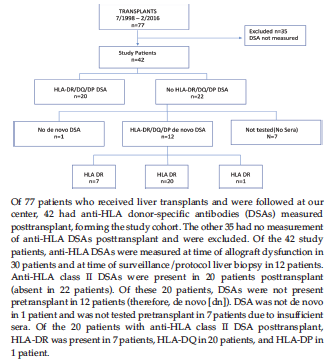
Figure 1. Consort Diagram Showing the Study Population
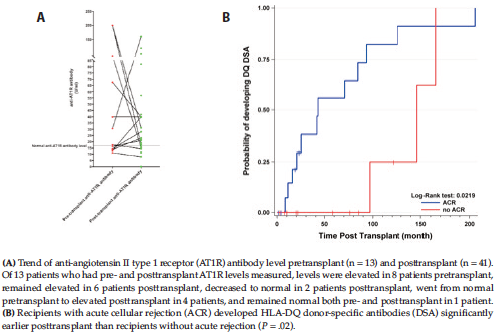
Figure 2. Non-HLA Antibody and Anti-HLA Class II Donor-Specific Antibody Trend
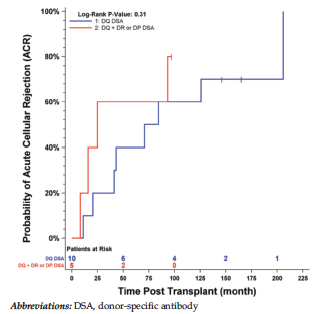
Figure 3. Acute Cellular (T-Cell Mediated) Rejection Was Not Observed Significantly Earlier After Liver Transplant in Patients With DQ + DR ± DP Donor-Specific Antibodies Compared With Patients With DQ Donor-Specific Antibodies (P = .31)
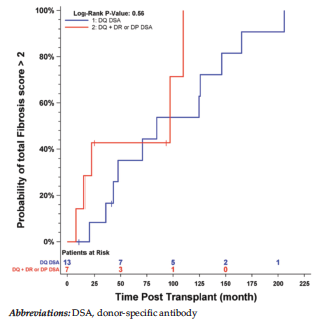
Figure 4. Development of Average Total Portal Fibrosis Score > 2 Was Not Observed Significantly Earlier After Liver Transplant in Patients With DQ + DR ± DP Donor-Specific Antibodies Compared With Patients With DQ Donor- Specific Antibodies (P = .56)
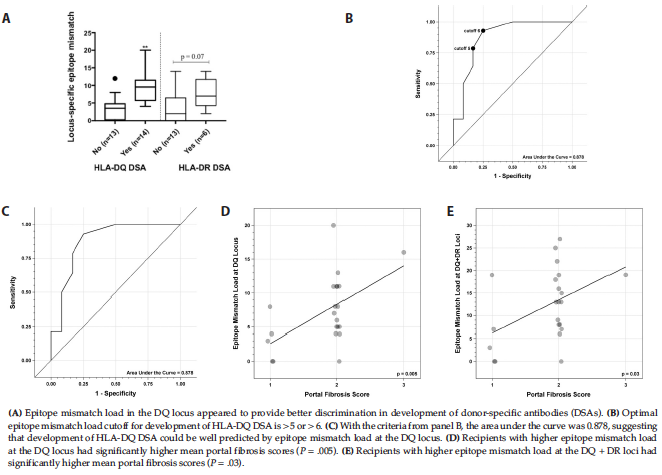
Figure 5. Locus-Specific Epitope Mismatch and Development of Class II Anti-HLA Donor-Specific Antibodies and Portal Fibrosis Posttransplant, Showing HLADQα1/ β1 or HLA-DRβ1/3/4/5 Eplet-Derived Epitope Mismatches
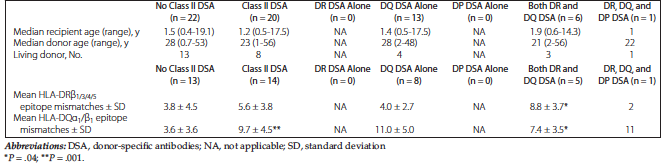
Table 1. HLA Antibodies Posttransplant
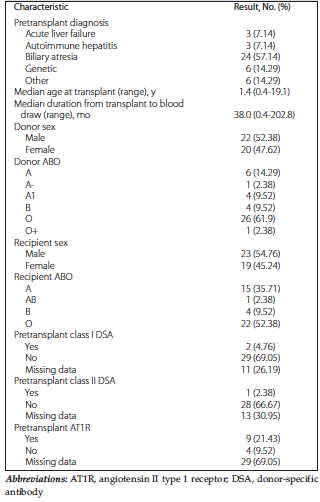
Table 2. Recipient Demographics (N = 42)
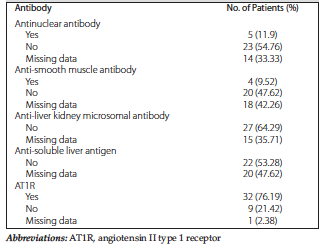
Table 3. Non-HLA Antibodies Posttransplant in Recipients (N = 42)
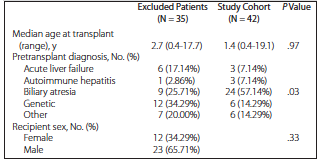
Table 4. Demographics of Study Cohort and Excluded Patients
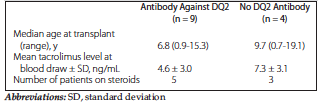
Table 5. Recipients With Mismatches for HLA-DQB1*02
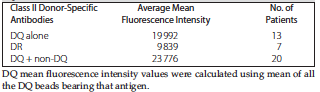
Table 6. Average Mean Fluorescence Intensity of Anti-HLA Class II Donor-Specific Antibodies
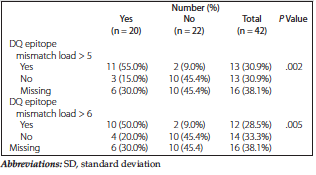
Table 7. DQ Epitope Mismatch Load Cutoff for Development of DQ Donor-Specific Antibodies
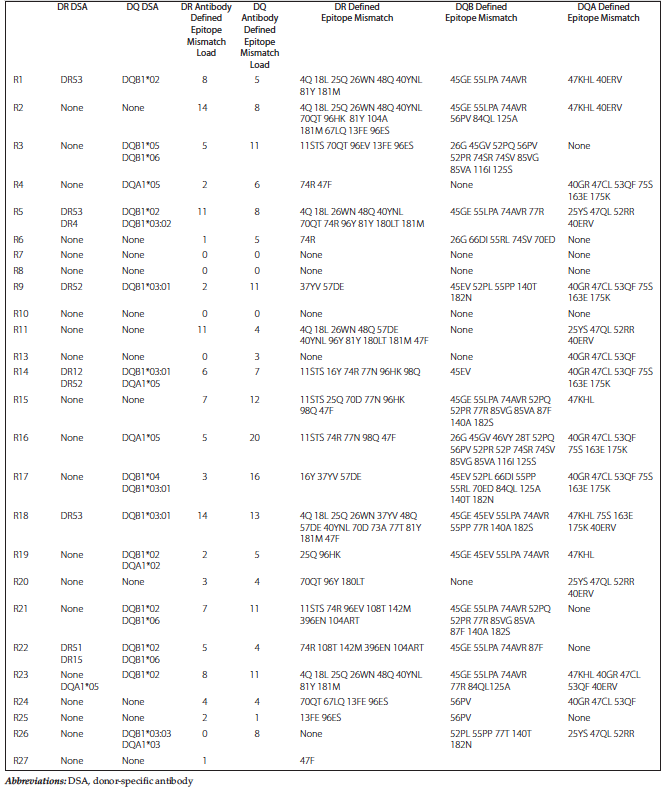
Table 8. Epitope Specificities of De Novo Donor-Specific Antibodies