Volume: 17 Issue: 1 January 2019 - Supplement - 1
FULL TEXT
Objectives: Transplantation offers better quality of life and long-term survival benefits. Further knowledge is needed regarding exercise in daily life of transplant recipients. Here, we investigated the relationship between exercise perception and physical activity level, body awareness, and illness cognition in renal transplant patients.
Materials and Methods: Our study included 53 renal transplant recipients (Standardized Mini-Mental Test score = 26.35 ± 1.36; age = 41.11 ± 13.52 year, body mass index = 25.96 ± 5.26 kg/m2, elapsed time after transplant = 3.68 ± 1.53 year). Perceived benefits and barriers to exercise, physical activity level, body awareness, and illness cognition were assessed with the Exercise Benefits/Barriers Scale, International Physical Activity Questionnaire, Body Awareness Questionnaire, and Patient Illness Perception Questionnaire, respectively. Correlations were estab-lished with Spearman test for nonparametric data, with regression analysis used to find determinants of physical activity levels.
Results: We observed correlations between physical activity level and perceived benefits and barriers to exercise. There was a positive relationship between body awareness and perceived benefits and barriers to exercise and also illness cognition, with significant correlation between perceived benefits and barriers to exercise and illness cognition (P < .05). Perceived benefits and barriers to exercise (P = .006, R = 0.373, R2 = 0.139, beta = 0.373, t = 2.867, F = 8.22) were determining factors for physical activity level.
Conclusions: Psychologic and physical factors, including negative emotions and body dissatisfaction, are risk factors for poor quality of life. Although it is important to increase quality of life, tools to enhance body awareness and to develop strategies to alter motor behaviors in daily living activities are needed. Treatment and assessment strategies on body awareness and illness perception should be considered, with emphasis on the importance of physical activity posttransplant.
Key words : Exercise barrier, Illness cognition, Transplantation
Introduction
To improve quality of life in patients with end-stage renal disease, kidney transplant has become the preferred and most successful treatment modality. This has been due to developments in immunosup-pressive treatment and infection control, improve-ments in surgical techniques, increased opportunities to treat complications, and improved intensive care unit care.1,2 After transplant, a disciplined, controlled life and close cooperation with a health team are required. Patients should be aware of the adverse effects of immunosuppressive therapy, know the rules to be followed against the risk of rejection, and regulate their social and working lifestyle in this way.2
Organ transplant is not merely a physical experience; rather, it is influenced by psychosocial factors, including illness cognition. Illness cognition is a significant factor in predicting adjustment to transplant outcomes of kidney transplant patients.3
Patient cognition about their disease and treatment can play an important role in health and quality of life of patients with chronic diseases.4 Increasing body awareness and illness cognition may help patients to adapt to their new life more easily.
Self-care and healthy lifestyle are recommended for kidney transplant recipients.5 Many studies have mentioned the positive effects of physical activity and exercise on chronic diseases. Exercise programs for renal transplant recipients can also provide social and psychologic benefits by increasing exercise capacity, reducing cardiovascular risk factors, de-creasing drug levels and levels of inflammatory markers, increasing “graft” function, increasing aerobic capacity and muscle strength, and improving quality of life.6-8
Although exercise is beneficial to transplantpatients, it is not known why some patients do not exercise. Learning the benefits of exercise can encou-rage people to exercise once perceptions about their disabilities are understood. In this study, our purpose was to investigate the relationship between exercise perception and physical activity, body awareness, and illness cognition in renal transplant patients.
Materials and Methods
Patients
This study was carried out between March 1, 2018 and June 1, 2018 at the Başkent
University Ankara Hospital Transplantation Outpatient Clinic. Our study included
53 renal transplant recipients (Standardized Mini-Mental Test score = 26.35 ±
1.36; age = 41.11 ± 13.52 years, body mass index = 25.96 ± 5.26 kg/m2, elapsed
time after transplant = 3.68 ± 1.53 years).
Study patients were referred by a physician and met the following inclusion criteria: (1) 18 to 60 years old and (2) normal cognitive functions (Standardized Mini-Mental Test Score > 24).9 Patients were exclu-ded if they demonstrated any of the following: (1) neurologic symptoms (cerebrovascular events, Guillain-Barre syndrome), (2) heart failure, (3) unstable angina pectoris, (4) history of cardiovas-cular events (within the past 12 mo), (5) orthopedic problems, and (6) respiratory distress.
All patients provided written informed consent before start of study. This study was approved by the Baskent University Social and Humanities and Arts Research Board (project no: 17162298.600-164).
Perceived benefits and barriers to exercise, physical activity level, body awareness, and illness cognition were assessed with the Exercise Benefits/Barriers Scale, the International Physical Activity Questionnaire, the Body Awareness Questionnaire, and the Patient Illness Perception Questionnaire, respectively.
Exercise benefits and barriers scale
The Exercise Benefits/Barriers Scale is a 43-item questionnaire that also
utilizes a 4-point Likert scale. This scale produces 3 scores: an exercise
benefits scale score, an exercise barriers scale score, and a total score.
Questions in the benefits scale are grouped into 5 categories: (1) life
enhancement, (2) physical performance, (3) psychologic outlook, (4) social
interaction, and (5) preventive health. Questions in the barriers scale are
grouped into 4 categories: (1) exercise milieu, (2) time expenditure, (3)
physical exertion, and (4) family encouragement. The score ranges from 43 to
172. Higher scores on the benefits scale indicate higher perceived benefits of
physical activity, whereas higher scores on the barrier scale indicate lower
perceived barriers to physical activity.10-12
International physical activity questionnaire
The patients’ habitual physical activity levels were assessed by using the
International Physical Activity Questionnaire Short Form. This questionnaire
com-prises items assessing the frequency and duration of physical activity in 3
ranges of intensity: vigorous physical activity (8.0 metabolic equivalents
[METs]), moderate physical activity (4.0 METs), and low physical activity (3.3
METs). Physical activity is measured across a set of domains, including leisure
time, domestic and gardening (yard) work, and work-related and transport-related
activities during a typical week. On the basis of collected data on the
frequency and duration of physical activity and estimated energy expenditure
(EE) expressed in MET minutes/week, the respondents were categorized into 3
groups according to their physical activity levels. Those who fit the high
physical activity level met any 1 of the following criteria: 3 or more days of
vigorous activity of at least EE ≥ 1500 MET minutes/week or 7 or more days of
any combination of activities of 3 intensity ranges of at least EE ≥ 3000 MET
minutes/week. Those who fit the moderate physical activity level performed 3 or
more days of vigorous activity of at least 20 minutes/day, 5 or more days of
moderate- or low-intensity activity of at least 30 minutes/day, or 5 or more
days of any combination of low-intensity, moderate-intensity, or vigorous
activity of at least EE ≥ 600 MET minutes/week. Those who fit the low-intensity
physical activity level had no physical activity reported or some activity
reported but not enough to meet at least the moderate-intensity physical
activity level criteria.13
Patient illness perception questionnaire
Illness cognition was measured with the Patient Illness Perception
Questionnaire. This questionnaire is a generic measure of illness cognition
designed to assess 3 cognitive ways patients ascribe meaning to a disease:
helplessness (6 items), acceptance (6 items), and perceived benefits (6 items).
Each item is scored from 1 to 4, with 1 corresponding to “not” and 4
corresponding to “totally.” High scores indicate that disease conception is at
top level.14,15
Body awareness questionnaire
Body awareness was evaluated with the Body Awareness Questionnaire. It is a
questionnaire composed of 4 subgroups (changes in the body process, sleep-wake
cycle, estimation of the onset of the disease, estimation of body reactions) and
a total of 18 expressions to determine the normal or nonnormal sensitivity level
of body composition. Patients assess each item from 1 to 7. Higher scores on
this questionnaire indicate higher awereness.16,17
Statistical analyses
The Statistical Program for Social Sciences (version 18, SPSS, Chicago IL, USA)
was used for statistical analyses of the data. Descriptive and clinical
characteristics of patients were described as frequency (number) and proportion
(%) for categorical variables and as mean with standard deviation for continuous
variables. Normal distribution characteristics of the data were tested. Because
the outcome measures were not normally distributed, nonparametric tests were
used. Correlations were established through the Spearman test for nonparametric
data, and regression analysis was performed to find determinants of levels of
physical activity. The Mann-Whitney U test was used for comparisons of paired
groups. P < .05 was considered significant.
Results
The descriptive and clinical characteristics of patients are shown in Table 1. There was a correlation between physical activity level and perceived benefits and barriers to exercise. There was a positive relationship between body awareness and perceived benefits and barriers to exercise and also illness cognition. We observed a correlation between perce-ived benefits and barriers to exercise and illness cognition (Table 2). The results of the regression analysis showed that perceived benefits and barriers to exercise (P = .006, R = 0.373, R2 = 0.139, beta = 0.373, t = 2.867, F = 8.22) were determining factors for physical activity level.
Data were divided into 4 groups according to the sex, transplant type, obesity, and physically activity level. Comparisons of paired groups for obesity showed no difference between physical activity level, body awareness, perceived benefits and barriers to exercise, and illness cognition (P > .05). According to the comparisons between male and female patients, male patients were physically more active than female patients (P < .05). We found higher scores on the exercise barrier scale in patients who had living-donor procedures versus patients who had deceased-donor procedures (P < .05). In addition, patients who were physically active showed higher scores in perceived benefits and barriers to exercise scores than lower physically active patients (P < .05) (Table 3).
Discussion
Most investigations on lifestyle changes after kidney transplant have focused on quality of life.7,18,19 Other important issues, such as effects on exercise perception, illness cognition, and physical activity levels, have not yet been thoroughly explored. Although there is limited research on chronic illness,14 within our knowledge, there is no research about illness cognition and body awareness in renal transplant patients.
According to the World Health Organization, physical activity is strongly recommended for healthy individuals with the aim to improve cardio-respiratory and muscular fitness and bone and functional health and to reduce the risk of noncom-municable diseases, depression, and cognitive decline. For adult patients, at least 150 minutes of moderate-intensity or, alternatively, at least 75 minutes of vigorous-intensity aerobic physical activity per week are recommended, which require sessions of at least 10-minute duration. To obtain additional benefits, individuals should increase moderate-intensity activity to 300 minutes or vigorous-intensity activity to 150 minutes per week. The International Kidney Disease Outcomes Quality Initiative guidelines for patients with kidney diseases suggest that patients with chronic kidney disease undertake aerobic physical activity compatible with cardiovascular health and tolerance. At least 30 minutes of moderate-intensity physical activity 5 times per week are recommended (corresponding to a minimum range from 450 to 750 MET minutes per week). This suggestion is associated with the lifestyle recommendations to achieve a healthy weight (corresponding to a body mass index in the range of 20 to 25 kg/m2) and to stop smoking.20 In our study, the mean body mass index was 25.96 ± 5.26 kg/m2 and there was a statistically significant correlation between perceived benefits and barriers to exercise and physical activity level. Although patients knew the importance of exercise for weight loss, they were overweight. Therefore, a multidisciplinary approach is necessary, and these patients should be directed to other departments such as dieticians.
Low physical functioning is expected at the time of kidney transplant since patients with end-stage renal disease often have reduced muscle mass and/or impaired physical capacity due to either comorbidities or dialysis treatment itself. Further specific factors related to kidney transplant itself, such as renal failure, immunosuppressive treatment, obesity, and diabetes, may contribute to impaired physical performance in transplant patients versus an age- and sex-matched general population.5 In our study, physical activity levels of patients were 35.1% with low, 59.5% with moderate, and 5.4% with high activity. Comparisons of paired groups for obesity showed no differences between physical activity, body awareness, perceived benefits and barriers to exercise, and illness cognition. Patients who were physically active showed higher scores in perceived benefits and barriers to exercise scores. In our study, perceived benefits and barriers to exercise were determining factors for level of physical activity. Similar to our study, Grubbs and associates showed that individuals who exercised regularly perceived significantly more benefits to exercise than non-exercising individuals.21
We found that male patients were physically more active than female patients, similarly to that shown by Juarbe and associates, who stated that, although women perceived many benefits from staying physically active, most (73%) were physically inactive.22
Increased physical activity, compared with less activity during the pretransplant period, may result in both a correction of uremic toxicity and no further need for hemodialysis sessions posttransplant. On the other hand, both the surgical procedure and chronic steroid treatment can adversely affect muscle metabolism and bone mass, resulting in less physical activity after kidney transplant. Thus, the level of physical activity of patients after kidney transplant is similar to elderly people in the general population. This is despite the fact that physical activity rates increase by approximately 30% compared with rates pretransplant within the first year after transplant. It is important in this sense that elapsed time after transplant was 3.68 ± 1.53 years in our study.
Physical activity level, physical fitness, and other modifiable lifestyle characteristics may influence the risk of chronic diseases. Changes in lifestyle may therefore promote optimal health and longevity. One of the most important changes in the way of life is to gain exercise habits. Knowing the benefits of exercise could encourage people to exercise, and it is useful for transplant patients. Despite a successful trans-plant procedure, many kidney graft recipients remain inactive and maintain a sedentary lifestyle. However; in our study, there was a statistically significant correlation between perceived benefits and barriers to exercise and physical activity level, with most of our patients moderately active. This may be due to the fact that the head of the surgical team who initiated the first transplant in Turkey is conscious about the importance of exercise, and our patients are admitted to a physical therapy program from the first day of surgery, thus increasing awareness of exercise.
The most common and important barriers to exercise are physical limitations, energy level, fear, and comorbidities. The most frequently indicated and important facilitators are motivation, coping, consequences of (in)activity, routine/habit, goals/goal priority, and the transplanted organ. Some studies have indicated that being overweight was a barrier due to a perceived increased threshold for initiating being active. Others have indicated that maintaining or reducing weight was a facilitator for being active, which was often related to the suspected relationship between medication use and weight gain.23
Illness cognition is also important for health and quality of life of patients with chronic diseases. Patient’s belief that the presence of disease impacts ability to be more beneficial in life can lead to the emergence of depressive symptomatology and avoidance of activities that previously brought satisfaction. On the contrary, if the patient is convinced that life changes as a result of the disease but finds other ways to be useful in life, the likelihood of effective adaptation to the disease increases. These differences in a patient’s response to the disease might be recognized by identifying the patient’s cognitions and beliefs.4,14
Christense and associates24 suggested that, for patients who are more severely ill, the use of techniques designed to distract attention from bodily changes (ie, decreased self-focusing tendencies) may be most desirable. For patients who are less physically impaired, the use of techniques to promote greater somatic focus may be preferred.25
Hamama-Raz and associates, in an analyses of 104 kidney transplant patients, determined that patients who experienced improvements in their physical functions and decreased adverse effects of antirejection treatment may have psychologic relief, which has an impact on positive cognition.3 The group also indicated that illness cognition could play a key role in adjustment to kidney transplant, as higher scores of perceived benefit and lower scores of helplessness predicted positive cognitions toward posttransplant outcomes. Specifically, they found that patients with a living-donor organ had higher scores of acceptance and perceived benefits than patients with a deceased-donor organ, reflecting positive cognition among kidney transplant recipients. This might be explained by the donor-recipient relationship, characterized by mutual emotional support, which creates feelings of responsibility and gratitude. Also, higher perceived benefits found in men may be explained by the “liberation” from the restrictions imposed by the “dialysis addiction” and to improved physical function.3
In parallel with this study, we found higher scores on the exercise barrier scale in living-donor versus deceased-donor recipients. It is important to be able to consider the positive aspects of accepting the psychologic disorder of the person. This means that people who accept their illness can understand the importance of what is important for healthy life. In this sense, there was a relationship between illness cognition and perceived benefits and barriers to exercise in our study.
Masajtis-Zagajewska and associates found bene-ficial effects on metabolic profile, body composition, and quality of life in kidney transplant recipients and a reference group of patients with chronic kidney disease who were not yet on renal replacement therapy. Several benefits seemed to be greater in transplant recipients than in the chronic kidney disease patients.20
Improving body awareness has been suggested as an approach for treating patients with conditions such as chronic pain, obesity, and posttraumatic stress disorder. Among patients experiencing a relatively high degree of physical impairment, higher private body consciousness has been associated with markedly poorer adherence.26 In our study, body awareness had a statistically significant correlation between illness cognition and perceived benefits and barriers to exercise. There was also relationship between illness cognition and perceived benefits and barriers to exercise. Sarafidis and associates27 esti-mated hypertension awareness in kidney disease, showing that awareness and treatment of hyper-tension were high in these patients, but blood pressure control rates were poor. Their data suggested that those who are aware of their kidney disease are more likely to achieve blood pressure control. Individuals who know the benefits of exercise have high illness cognition and body awareness scores.27
There are some limitations to our study. First, we estimated physical activity only with self-reported questionnaires; therefore, this was a subjective, inaccurate modality, rather than an effective measurement of physical activity by means of objective, computable methods. In addition, our study included a small number of patients. Further studies should be carried out that consider these limitations.
Conclusions
Psychologic and physical factors, including negative emotions and body dissatisfaction, are risk factors for poor quality of life. The benefits of physical activity and its positive influence on health and emotional well-being and self-esteem are well supported. Although it is important to increase quality of life, it is valuable to use assessment tools to enhance body awareness and to develop strategies to alter motor behaviors in daily life activities. Enhancing awareness is a key therapeutic approach. Treatment and assessment strategies on body awareness and illness perception should be consi-dered, with emphasis on the importance of physical activity after transplant.
References:
- Haberal M, Dalgic A. New concepts in organ transplantation. Transplant Proc. 2004;36(5):1219-1224.
CrossRef - PubMed - Gül A, Hülya Üstündağ H, Zengin N. Self-care power in renal transplant patients. General Medicine Derg. 2010;20(1):7-11.
- Hamama-Raz Y, Ben-Ezra M, Tirosh Y, Baruch R, Nakache R. Illness cognition among kidney transplant recipients: a preliminary longitudinal study. Health Soc Work. 2017;42(3):187-189.
CrossRef - PubMed - Gurkova E, Soosova MS. Illness cognitions and health-related quality of life of patients with inflammatory bowel disease. GastroenterolNurs. 2018;41(1):29-37.
CrossRef - PubMed - Bellizzi V, Cupisti A, Capitanini A, Calella P, D'Alessandro C. Physical activity and renal transplantation. Kidney Blood Press Res. 2014;39(2-3):212-219.
CrossRef - PubMed - Romano G, Simonella R, Falleti E, et al. Physical training effects in renal transplant recipients. Clin Transplant. 2010;24(4):510-514.
CrossRef - PubMed - Tiğli A. The effect of calisthenic exercise program on enflamatuar markers and quality of life after renal transplantation[PhD thesis]. Hacettepe University; 2017. https://tez.yok.gov.tr/UlusalTezMerkezi/tezSorguSonucYeni.jsp.
- Tanriverdi N, Ozcurumez G, Colak T, et al. Quality of life and mood in renal transplantation recipients, donors, and controls: preliminary report. Transplant Proc. 2004;36(1):117-119.
CrossRef - PubMed - Gungen C, Ertan T, Eker E, Yasar R, Engin F. [Reliability and validity of the standardized Mini Mental State Examination in the diagnosis of mild dementia in Turkish population]. Turk Psikiyatri Derg. 2002;13(4):273-281.
PubMed - Sechrist KR, Walker SN, Pender NJ. Development and psychometric evaluation of the exercise benefits/barriers scale. Res Nurs Health. 1987;10(6):357-365.
CrossRef - PubMed - Brown SA. Measuring perceived benefits and perceived barriers for physical activity. Am J Health Behav. 2005;29(2):107-116.
CrossRef - PubMed - Ortabag T, Ceylan S, Akyuz A. The validity and reliability of the exercise benefits/barriers scale for Turkish Military nursing students. S African J Res Sport Physical Educ Recreation. 2010;32(2).
CrossRef - Saglam M, Arikan H, Savci S, et al. International physical activity questionnaire: reliability and validity of the Turkish version. Percept Mot Skills. 2010;111(1):278-284.
CrossRef - PubMed - Evers AW, Kraaimaat FW, van Lankveld W, Jongen PJ, Jacobs JW, Bijlsma JW. Beyond unfavorable thinking: the illness cognition questionnaire for chronic diseases. J Consult Clin Psychol. 2001;69(6):1026-1036.
CrossRef - PubMed - Lauwerier E, Crombez G, Van Damme S, Goubert L, Vogelaers D, Evers AW. The construct validity of the illness cognition questionnaire: the robustness of the three-factor structure across patients with chronic pain and chronic fatigue. Int J Behav Med. 2010;17(2):90-96.
CrossRef - PubMed - Karaca S. Turkish version of body awareness questionnaire: validity and reliability study [master’s thesis]. Muğla, Turkey: Muğla Sıtkı Koçman University; 2017. https://tez.yok.gov.tr/UlusalTezMerkezi/tezSorguSonucYeni.jsp.
- Eden A, Altug F, Cavlak U. Investigation of the relationship between body awareness, pain, emotional status, and quality of life among healthy people. J Kartal TR. 2013;24(3):145-150.
CrossRef - AkyuzOzdemir A, Sayin CB, Erdal R, Ozcan C, Haberal M. Influence of social, economic, familial, marital status, and disease adaptation on the physical and mental health dimensions of patients who are candidates for renal transplant. Exp Clin Transplant. 2018;16(Suppl 1):112-116.
CrossRef - PubMed - Painter PL, Topp KS, Krasnoff JB, et al. Health-related fitness and quality of life following steroid withdrawal in renal transplant recipients. Kidney Int. 2003;63(6):2309-2316.
CrossRef - PubMed - Masajtis-Zagajewska A, Muras K, Nowicki M. Effects of a structured physical activity program on habitual physical activity and body composition in patients with chronic kidney disease and in kidney transplant recipients. Exp Clin Transplant. In press. doi: 10.6002/ect.2017.0305.
CrossRef - PubMed - Grubbs L, Carter J. The relationship of perceived benefits and barriers to reported exercise behaviors in college undergraduates. Fam Community Health. 2002;25(2):76-84.
CrossRef - PubMed - Juarbe T, Turok XP, Perez-Stable EJ. Perceived benefits and barriers to physical activity among older Latina women. West J Nurs Res. 2002;24(8):868-886.
CrossRef - PubMed - van Adrichem EJ, van de Zande SC, Dekker R, Verschuuren EA, Dijkstra PU, van der Schans CP. Perceived barriers to and facilitators of physical activity in recipients of solid organ transplantation, a qualitative study. PLoS One. 2016;11(9):e0162725.
CrossRef - PubMed - Christensen AJ, Wiebe JS, Edwards DL, Michels JD, Lawton WJ. Body consciousness, illness-related impairment, and patient adherence in hemodialysis. J Consult Clin Psychol. 1996;64(1):147-152.
CrossRef - PubMed - Kim Y, Evangelista LS. Relationship between illness perceptions, treatment adherence, and clinical outcomes in patients on maintenance hemodialysis. Nephrol Nurs J. 2010;37(3):271-280; quiz 281.
PubMed - Mehling WE, Gopisetty V, Daubenmier J, Price CJ, Hecht FM, Stewart A. Body awareness: construct and self-report measures. PLoS One. 2009;4(5):e5614.
CrossRef - PubMed - Sarafidis PA, Li S, Chen SC, et al. Hypertension awareness, treatment, and control in chronic kidney disease. Am J Med. 2008;121(4):332-340.
CrossRef - PubMed
Volume : 17
Issue : 1
Pages : 270 - 276
DOI : 10.6002/ect.MESOT2018.P123
From the the 1Vocational School of Health Sciences, Baskent University, the
2Division of Transplantation, Baskent University Hospital, and the
3Department
of Physiotherapy and Rehabilitation, Faculty of Health Sciences, Baskent
University, Ankara, Turkey
Acknowledgements: The authors have no sources of funding for this study and have
no conflicts of interest to declare.
Corresponding author: Ayça Tığlı, Baskent University, Vocational School of
Health Sciences, EskisehirYolu 20. Km, Baglica Campus, Ankara, Turkey
Phone: +90 312 2466666 ext. 2157
E-mail: aycatigli@baskent.edu.tr
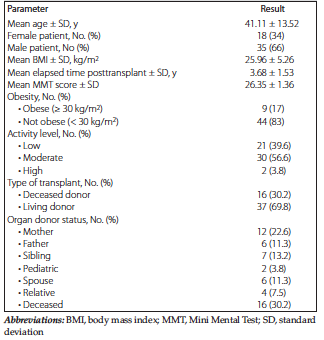
Table 1. Descriptive and Clinical Characteristics of Patients (N = 53)
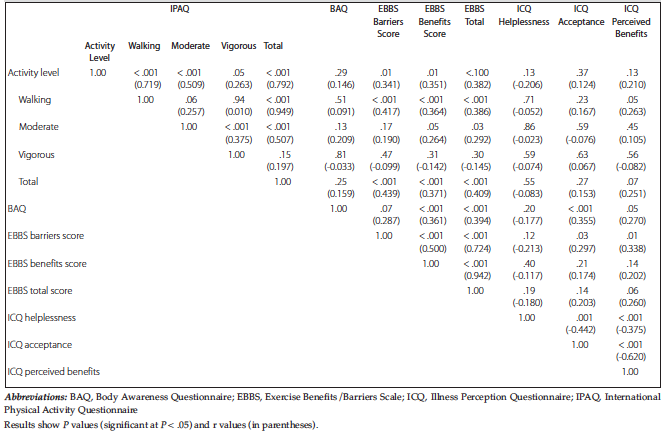
Table 2. Result of Correlation Analyses
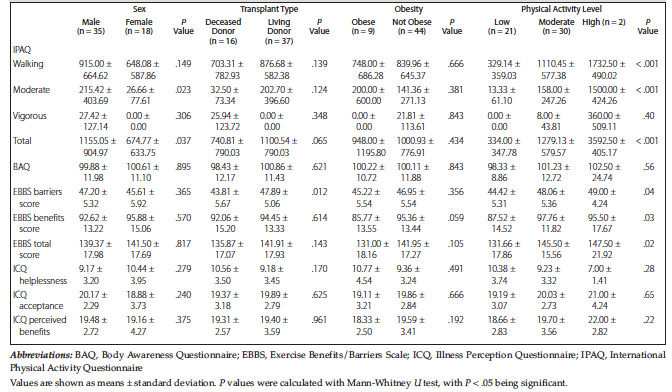
Table 3. Comparisons According to Male/Female Patient, Transplant Type, Obesity, and Physical Activity Level