Volume: 17 Issue: 1 January 2019 - Supplement - 1
FULL TEXT
Objectives: Our aim was to determine potentially adverse effects of immunosuppressive protocols after liver transplantation in children.
Materials and Methods: The medical records of 60 children who underwent liver transplant retrospectively analyzed. Corticosteroid, tacrolimus, and mycophenolate mofetil were the primary immunosuppressive agents used in our center.
Results: The mean age of children was 6.1 years, ranging from 3 months to 17 years (34 boys, 26 girls). The most common indication for liver transplant was biliary atresia (26.7%). Thirty-nine patients (65%) received livers from living donors, and 21 patients (35%) received from livers from deceased donors. The main complications of immunosuppressive therapy were diarrhea associated with mycophenolate mofetil, hyperglycemia and hypertension associated with corticosteroid, and seizures and tremors associated with tacrolimus. Two patients developed posttransplant lymphoproliferative disorder. The diagnosis was based on histologic findings of cervical lymphadenopathy and duodenal biopsy. One patient was diagnosed with acute lymphoblastic lymphoma. In addition to these predictable adverse effects, unusual adverse effects of immunosuppression were also observed. Hemolytic anemia (n = 3) (one was also diagnosed with Evans syndrome), eosinophilic gastroenteritis (n = 2), de novo food allergy (n = 2), posttransplant lymphoproliferative disorder (n = 2), Burkitt lymphoma (n = 1), and renal tubular acidosis (n = 1) were thought to be related to tacrolimus therapy.
Conclusions: Adverse effects of immunosuppression represent a major cause of postoperative morbidity. The common effects of immunosuppression are recognized easily by clinicians. It should be kept in mind that unexpected symptoms and signs may be related to immunosuppression in pediatric liver transplant patients.
Key words : Dose-related toxicity, Eosinophilic gastroenteritis, Hemolysis, Renal tubular acidosis, Tacrolimus
Introduction
The success of liver transplantation has improved after the discovery of potent immunosuppressive drugs, such as calcineurin inhibitors and purine synthesis inhibitors. The common adverse effects of these immunosuppressive are infections, neurotoxicity, nephrotoxicity, gastrointestinal toxicity, hypertension, diabetes, hyperlipidemia, and malignancy. Adverse effects can also occur when the blood concentration is normal because of the immeasurability of the unbound concentrations of the drugs. Our aim was to determine potentially rare and unusual adverse effects of immunosuppressive protocols after liver transplant in pediatric patients.
Materials and Methods
We retrospectively analyzed the medical records of 60 children who underwent liver transplant in our institute between February 2006 and January 2018. Both deceased-donor and living-donor liver transplant patients were included in the study. The immunosuppressive protocol used at our institute includes tacrolimus, mycophenolate mofetil, and steroids. Tacrolimus was given at 0.15 mg/kg/day and started on posttransplant day 3. Mycophenolate mofetil was started preoperatively at 20 mg/kg/day and was continued for 1 year. Steroids were started intraoperatively and were continued for 3 months with a lower dose. If an adverse effect occurred, the drug therapy was changed to another immunosuppressant.
Results
The mean age of children was 6.1 years and ranged from 3 months to 17 years. In total, 60 children received liver transplant, which included 34 boys (60%) and 26 girls (40%). Thirty-nine patients (65%) had living-donor and 21 patients (35%) had deceased-donor liver transplant. The most common causes of liver diseases were biliary atresia (25%), progressive familial intrahepatic cholestasis (16%), cryptogenic cirrhosis (14%), Wilson disease (10%), tyrosinemia (5%), autoimmune hepatitis (5%), and other causes (for example, hyperoxaluria type 1 and fulminant hepatitis A) (25%).
The main complications of immunosuppressive therapy were diarrhea associated with mycophenolate mofetil, hyperglycemia and hypertension associated with corticosteroids, and seizures and tremors associated with tacrolimus. In addition to these predictable adverse effects, unusual adverse effects of immunosuppression were also observed.
In our patient group, 9 of 60 patients had unusual adverse effects: 3 patients (5%) were diagnosed with hemolysis, 2 patients (3.3%) had eosinophilic gastroenteritis, 2 patients (3.3%) had posttransplant lymphoproliferative disorder (PTLD), 2 patients (3.3%) had de novo food allergy, 1 patient (1.6%) had renal tubular acidosis, and 1 patient (1.6%) had Burkitt lymphoma owing to the adverse effects of immunosuppressant therapy. Patient clinical characteristic are shown in Table 1.
Discussion
Hemolysis is a rare complication in liver transplant recipients associated with immunosuppressive drugs, especially tacrolimus and cyclosporine. In a previous review, there were only 59 patients with hemolysis after solid-organ transplant over a 10-year period.1 Hemolytic anemia can be seen with different mechanisms, including microangiopathic hemolytic anemia, alloimmune hemolytic anemia, and autoimmune hemolytic anemia. Microangiopathic hemolytic anemia is the most common type of hemolytic anemia in liver transplant recipients and is caused by endothelial cell injury and an impaired immune response. Alloimmune hemolytic anemia tends to occur with tacrolimus-related T-cell suppression and B-cell proliferation, which is also called passenger lymphocyte syndrome. Autoimmune hemolytic anemia is related to infections or immunosuppressive agents or is a manifestation of PTLD and is usually seen during year 1 after liver transplant. Thrombocytopenia, also called Evans syndrome,can coexist with autoimmune hemolytic anemia in 29% of patients.2 One of the 3 patients who were diagnosed with hemolytic anemia had Evans syndrome. Reducing or changing tacrolimus to sirolimus/cyclosporine, steroids, intravenous immunoglobulin, plasmapheresis, rituximab, and splenectomy are treatment options for hemolytic anemia.3 In our patients, tacrolimus was changed to another immunosuppressant (cyclosporine, sirolimus, and everolimus), with 1 patient also given steroids.
The frequency of de novo food allergies and eosinophilic gastrointestinal disease is known to increase in children after liver transplant at rates of 6% to 17% and 3% to 26%, respectively.4-7 The highest prevalence of allergic disease is reported in children under the age of 2 years.8 Similar to the literature, the age of patients with allergic diseases in our study was less than 1 year. The pathogenesis remains unclear, but a possible mechanism is passive transfer of immunoglobulin E from the allergic donor to naïve recipient. Another possibility is an impaired type 2 T-helper cell-mediated immune system response through tacrolimus. De novo allergic symptoms such asthma, rhinitis, and eczema can be observed after liver transplant. Peripheral eosinophilia can be an accompanying finding in these patients. In patients diagnosed with de novo food allergy who underwent endoscopy, 73% had eosinophilic infiltrates in their gastrointestinal system.9 Ceasing tacrolimus can be a more appropriate choice for these patients. Diet elimination is an effective treatment option if the trigger agent can be identified. Proton pump inhibitors and steroids are treatment options.10 In our study, diarrhea related to eosinophilic gastrointestinal disease was resolved with proton pump inhibitors and steroid treatment. Fortunately, we identified the allergens with prick tests, and symptoms did not reoccur after treatment.
Posttransplant lymphoproliferative disorder is a disease of abnormal proliferation of B cells in liver transplant recipients, which can range from polymorphic cellular expansion of lymphocytes to monomorphic large-cell non-Hodgkin lymphomas. The prevalence of PTLD in pediatric liver transplant recipients is as high as 20%.11 Liver transplant at younger ages is a risk factor for PTLD, which may be associated with these patients being Epstein-Barr virus (EBV) naïve. Liver transplant recipients should be monitored closely for EBV viral load. Autoimmune liver disease is another risk factor for PTLD because of the long exposure to steroids. Those with PTLD within the first year of liver transplant have early-onset and those with PTLD after the first year have late-onset PTLD. Kremers and associates reported that the incidence of PTLD was highest after the first 18 months posttransplant, with cumulative incidences of 0.5%, 0.9%, and 1.1% at 6, 12, and 18 months, respectively.12 There is no consensus on PTLD treatment. Treatment options include decreasing or stopping immunosuppression, rituximab, surgery, and chemotherapy.13 If immunosuppressant therapy continues, it is crucial to change immunosuppressants to mammalian target of rapamycin inhibitors, such as sirolimus, due to their antiproliferative effects. In addition to PTLD, other types of malignancies can develop, including lymphoma and colorectal, hepatocellular, and skin cancers. One of our patients, who was diagnosed with Burkitt lymphoma, was not EBV naïve. The patient showed 890 million copies/mL with EBV polymerase chain reaction at the time of diagnosis. Chemotherapy (rituximab, ifosfamide, carboplatin, etoposide) was started, and tacrolimus was changed to sirolimus. Unfortunately, the patient died from Burkitt lymphoma.
Nephrotoxicity is a common adverse effect of calcineurin inhibitors, seen as high as 28% in adult liver transplant recipients. It usually affects the renal glomeruli but rarely affects the renal tubules and causes a hyperkalemic type of renal tubular acidosis.14 There are only 2 reports of pediatric liver transplant patients with hyperkalemic renal tubular acidosis associated with tacrolimus in the literature.15,16 In our study, our patient presented with refractory acidosis, hyperkalemia, and hyperchloremia after tacrolimus treatment. Tacrolimus toxicity occurs after inhibition of basolateral sodium potassium-ATPases, which consequently leads to hyperkalemia. Metabolic acidosis occurs due to impaired hydrogen secretion. As seen in our case, tacrolimus discontinuation normalized potassium levels and the acid-base balance.
Liver transplant is a life-saving modality in patients with liver failure, but life-long immunosuppressant therapy can have a high risk of adverse effects. Some of these adverse effects are predictable and can be easily recognized; however, some require more suspiciousness from clinicians for diagnosis. Unexpected symptoms and signs should be considered as perhaps related to immunosuppressant therapy in pediatric liver transplant recipients.
References:
- Kanellopoulou T. Autoimmune hemolytic anemia in solid organ transplantation: The role of immunosuppression. Clin Transplant. 2017;31(9).
CrossRef - PubMed - Domenech C, Mialou V, Galambrun C, et al. Successful treatment of Evans syndrome post liver transplant with splenectomy and switch from tacrolimus to cyclosporine. Transpl Int. 2008;21(4):397-399.
CrossRef - PubMed - Botija G, Ybarra M, Ramos E, et al. Autoimmune cytopaenia after paediatric intestinal transplantation: a case series. Transpl Int. 2010;23(10):1033-1037.
CrossRef - PubMed - Sicherer SH, Sampson HA. Food allergy. J Allergy Clin Immunol. 2010;125(2 Suppl 2):S116-125.
CrossRef - PubMed - Colombani PM, Lau H, Prabhakaran K, et al. Cumulative experience with pediatric living related liver transplantation. J Pediatr Surg. 2000;35(1):9-12.
CrossRef - PubMed - Arikan C, Kilic M, Tokat Y, Aydogdu S. Allergic disease after pediatric liver transplantation with systemic tacrolimus and cyclosporine a therapy. Transplant Proc. 2003;35(8):3039-3041.
CrossRef - PubMed - Levy Y, Davidovits M, Cleper R, Shapiro R. New-onset post-transplantation food allergy in children--is it attributable only to the immunosuppressive protocol? Pediatr Transplant. 2009;13(1):63-69.
CrossRef - PubMed - Romero R, Abramowsky CR, Pillen T, Smallwood GA, Heffron TG. Peripheral eosinophilia and eosinophilic gastroenteritis after pediatric liver transplantation. Pediatr Transplant. 2003;7(6):484-488.
CrossRef - PubMed - Wisniewski J, Lieberman J, Nowak-Wegrzyn A, et al. De novo food sensitization and eosinophilic gastrointestinal disease in children post-liver transplantation. Clin Transplant. 2012;26(4):E365-371.
CrossRef - PubMed - Saeed SA, Integlia MJ, Pleskow RG, et al. Tacrolimus-associated eosinophilic gastroenterocolitis in pediatric liver transplant recipients: role of potential food allergies in pathogenesis. Pediatr Transplant. 2006;10(6):730-735.
CrossRef - PubMed - Khedmat H, Taheri S. Late onset post transplantation lymphoproliferative disorders: analysis of international data from 5 studies. Ann Transplant. 2009;14(4):80-85.
PubMed - Kremers WK, Devarbhavi HC, Wiesner RH, Krom RA, Macon WR, Habermann TM. Post-transplant lymphoproliferative disorders following liver transplantation: incidence, risk factors and survival. Am J Transplant. 2006;6(5 Pt 1):1017-1024.
CrossRef - PubMed - Baris Z, Ozcay F, Yilmaz Ozbek O, Haberal N, Sarialioglu F, Haberal M. A single-center experience of post-transplant lymphoproliferative disorder (PTLD) cases after pediatric liver transplantation: Incidence, outcomes, and association with food allergy. Turk J Gastroenterol. 2018;29(3):354-360.
CrossRef - PubMed - Varghese J, Reddy MS, Venugopal K, et al. Tacrolimus-related adverse effects in liver transplant recipients: its association with trough concentrations. Indian J Gastroenterol. 2014;33(3):219-225.
CrossRef - PubMed - Ogita K, Takada N, Taguchi T, et al. Renal tubular acidosis secondary to FK506 in living donor liver transplantation: a case report. Asian J Surg. 2003;26(4):218-220.
CrossRef - PubMed - Oishi M, Yagi T, Urushihara N, et al. A case of hyperkalemic distal renal tubular acidosis secondary to tacrolimus in living donor liver transplantation. Transplant Proc. 2000;32(7):2225-2226.
CrossRef - PubMed
Volume : 17
Issue : 1
Pages : 230 - 233
DOI : 10.6002/ect.MESOT2018.P81
From the 1Department of Pediatric Gastroenterology and the 2Transplantation
Center, Gazi University Faculty of Medicine, Ankara, Turkey; and the 3Department
of General Surgery, Numune Training and Research Hospital, Ankara, Turkey
Acknowledgements: The authors have no sources of funding for this study and have
no conflicts of interest to declare.
Corresponding author: Hakan Öztürk, Gazi Üniversitesi Sağlık Araştırma ve
Uygulama Merkezi Gazi Hastanesi Beşevler, Ankara, Turkey
Phone: +90 312 202 4148
E-mail: hakan.ozturk@gazi.edu.tr
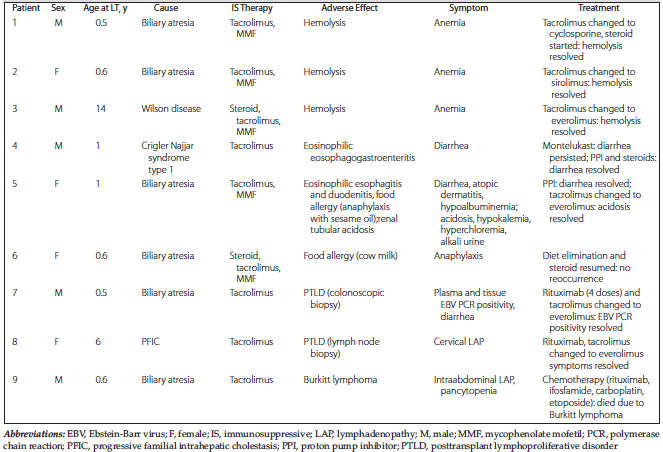
Table 1. Clinical Characteristics of Pediatric Liver Transplant Patients