Volume: 17 Issue: 1 January 2019 - Supplement - 1
FULL TEXT
Objectives: Hypertension is a common and important problem in kidney transplant recipients, directly affecting graft and patient survival. Here, we evaluated the relationship between renal-cardiac damage and peripheral and central aortic blood pressure levels in renal transplant recipients.
Materials and Methods: We measured peripheral blood pressure (office, daytime ambulatory, and central aortic) in 46 kidney transplant recipients. Biochemical parameters were simultaneously measured. Electro-cardiography and echocardiography were performed. Patients with office blood pressure > 140/90 mm Hg or who were treated with antihypertensive drugs were accepted as hypertensive.
Results: Ambulatory blood pressure measurements were higher than office blood pressure measurements (at 135.6/85.6 mm Hg vs 121.8/77.5 mm Hg in hypertensive and at 118.8/77.6 mm Hg vs 101.6/62.5 mm Hg in normotensive patients) (P < .05). There were 40 hypertensive and 6 normotensive kidney transplant recipients according to ambulatory blood pressure measurement and 33 hypertensive and 13 normo-tensive according to office blood pressure measure-ments. Central aortic pressure measurements were significantly higher in hypertensive patients versus office or ambulatory blood pressure (P = .045 and .048, respectively). Left ventricle mass index and proteinuria were significantly correlated with central aortic pres-sure (P = .015, r = 0.358 and P = .022, r = 0.499, respectively) and nonsignificantly correlated with peripheral blood pressure measurements (P > .05). Left ventricle hyper-trophy was found to be less common in patients using angiotensin-converting enzyme, although not significantly (P > .05).
Conclusions: In kidney transplant recipients, blood pressure should be monitored with ambulatory blood pressure measurements, even when normal office pressure levels are shown. The aim of antihypertensive therapy is not only to decrease brachial artery pressure but also to keep central aortic systolic blood pressure in the proper interval, adjusted according to age.
This may more effectively prevent the development of renal cardiac damage versus peripheral blood pressure measurement monitoring.
Key words : Central aortic blood pressure, Left ventricular hypertrophy, Proteinuria, Renal transplantation
Introduction
Hypertension is an important problem in kidney transplant recipients (KTRs) and directly affects graft and patient survival. As in the general population, hypertension is also a major risk factor for cardio-vascular diseases in KTRs. Systolic blood pressure has been found to be strongly correlated with graft survival.1 Most KTRs have previous hypertension and target organ damage. In some KTRs, blood pressure can return to normal levels after kidney transplant, although this rarely occurs. In one single-center study, blood pressure was within the normal limits in only 5% of KTRs. After kidney transplant, the risk of hypertension is closely related to recipients, donors, and immunosuppressive drugs. Hypertension prevalence has been shown to increase from 40% to 50% and from 50% to 90% in KTRs who use calcineurin inhibitors.2 Steroid use also causes high blood pressure in these patients. The Kidney Disease Outcomes Quality Initiative has advised ensuring blood pressure under 130/80 mm Hg.3
There have been questions with regard to the accuracy of noninvasive blood pressure measurement methods (mercury sphygmomanometer, aneroid sphygmomanometer ambulatory blood pressure measurement [ABPM]). Recently, studies have shown that central aortic blood pressure meas-urement (CAPM) has advantages for accuracy versus classic measurements.4,5 The measurement of blood pressure via a catheter is the criterion standard, but it is invasive and it is hard to perform in daily practice. Therefore, noninvasive methods are preferred. Some studies have shown that different antihypertensive drugs had different effects on central aortic blood pressure (CAP).6,7 In this study, we aimed to compare the effects of peripheral blood pressure (PBP) (office and daytime ABPM) and CAP on cardiovascular and renal damage in KTRs.
Materials and Methods
Our study included 46 KTRs. Inclusion criteria were posttransplant period > 3 months and serum creatinine level < 2 mg/dL, without any change in renal function or drug regimen, including immuno-sup-pressive or antihypertensive drugs, for 1 month. Recipients with rejection, acute or overt infections, congestive heart failure, and diabetes mellitus were excluded from the study.
Office blood pressure (OBP) was measured on the brachial artery via aneroid sphygmomanometer (ERKA D-83646, Kallmeyer Medizintechnik, Bad Tolz, Germany). Ambulatory blood pressure (ABP) was measured via a Spacelab oscillometric blood pressure monitor (Redmond, WA) in all patients. Measurements of ABP were performed between 7 AM and 5 PM with 15-minute intervals, with consideration of accurate measurements (exceeding 85%). Central aortic pressure and hemodynamic parameters were measured with an arteriograph (TensioMed, Budapest, Hungary) according to the instructions.
All blood pressure measurements were per-formed during the day after patients rested for 30 minutes in a supine position in a quiet and low-light room. We defined normal blood pressure levels as less than 135/85 mm Hg in daytime (with ABP)8 and less than 130/80 mm Hg (with OBP).3
Echocardiographic and electrocardiographic examinations were performed via the GE Vivid S-5 model machine (GE Healthcare, Anaheim, CA, USA) and 3.5-MHz probes and Schiller Cardiovit 102 Plus (Schiller, Baar, Switzerland) in all patients. Left ventricular hypertrophy (LVH) was determined as left ventricular mass index greater than 125 g/m2 for men and greater than 110 g/m2 for women.9
Complete blood count, blood urea nitrogen, creatinine, sodium, potassium, calcium, phosphorus, uric acid, total protein, serum albumin, total cholesterol, low-density lipoprotein-cholesterol, high-density lipoprotein-cholesterol, triglyceride, C-reactive protein, sedimentation, aspartate amino-transferase, and alanine aminotransferase levels were also measured. Albumin-to-creatinine ratio and protein-to-creatinine ratio were measured in spot urine samples. Microalbuminuria was defined as urinary albumin excretion of 30 to 300 mg/day and urinary protein excretion > 500 mg/day. Glomerular filtration rate (GFR) was calculated with the Modification of Diet in Renal Disease formula.10
Statistical analyses were performed with SPSS software (SPSS: An IBM Company, version 22, IBM Corporation, Armonk, NY, USA) P< .05 was accepted as statistically significant. To compare groups, chi-square test was used, with correlations between groups evaluated with Pearson or Spearman tests.
Results
Of the 46 KTRs, 28 were male. Demographic characteristics and laboratory measurements are shown in Table 1.
Blood pressure measurements
There were 13 normotensive patients who did not have hypertension history and
also were normo-tensive according to the OBP measurement (OBPM). Of these, 7
patients (15%) were hypertensive according to the daytime ABPM. Mean levels of
systolic and diastolic OBP were lower than mean levels of daytime ABP. Blood
pressure measurements of patients are shown in Table 2.
Antihypertensive agents
Patients used monotherapy (60.6%, n = 20) or multidrug therapy (39.6%, n = 13)
for hypertension therapy. Monotherapy drugs included calcium channel blockers
(33.3%), angiotensin-converting-enzyme inhibitors (15,1%), and beta blockers
(12.1%). Hypertensive and normotensive patients according to OBP were similar
with regard to use of calcineurin inhibitors and steroid doses.
Office blood pressure measurements
We observed no significant differences for age, primary renal disease, type of
previous renal replacement therapy, duration of dialysis, age at time of
transplant, posttransplant period, donor type, and body mass index (BMI) in
hypertensive versus normotensive groups according to the OBP. However, there
were significantly more male patients who were hypertensive.
Ambulatory blood pressure measurements
According to the daytime ABPM, 87% (n = 40) of the patients were hypertensive
and 13% (n = 6) were normotensive. There were no significant differences
regarding hemodynamic characteristics between male and female patients and with
regard to smoking and nonsmoking patients. In addition, tacrolimus or
cyclosporine use, BMI, donor type, primary renal disease, and dialysis type were
not significantly different with regard to hemodynamic charac-teristics.
Central aortic blood pressure measurements
According to CAPM, 30 patients (65.2%) were hypertensive and 16 patients (34.8%)
were normo-tensive (these included patients who were currently using
antihypertensive drugs). The CAP levels and hemodynamic findings are shown in
Table 3.
Central aortic blood pressure was found to be significantly higher in patients with hypertension according to OBPM and ABPM (P = .045 and P = .048, respectively). In addition, hypertensive patients, according to OBPM and ABPM, demonstrated higher central pulse pressure than normotensive patients (P = .007 and P = .008, respectively). Other central aortic hemodynamic characteristics, including CAP, pulse-wave velocity (PWV), augmentation index, ejection duration, and rotation time, were similar in hypertensive and normotensive patients as deter-mined by OBPM or ABPM. Pulse wave velocity was not significantly higher in hypertensive versus normotensive patients (Table 4).
Hypertensive renal damage markers
Mean GFR was 84.7 ± 30 mL/min in female patients and 73.0 ± 24 mL/min in male
patients. Microalbuminuria and proteinuria were detected in 21 patients (45.7%)
and 8 patients (17.4%), res-pectively. We observed a significant relationship
between primary renal disease and GFR (P = .01), and GFR was higher in patients
with hypertension-related renal failure than in those with renal failure from
other causes. Renal damage markers were not different between men and women or
with regard to smoking status, BMI, donor type, dialysis type, and dialysis
duration. Immuno-suppressive and antihy-pertensive drugs had no effects on renal
damage markers and GFR. Patients who were hypertensive according to OBPM had
lower GFR than normo-tensive patients (P = .011), and these hypertensive
patients also had significant incidence of albuminuria versus normotensive
patients (P = .042).
Patients who were hypertensive according to ABPM had lower GFR than normotensive patients (P = .018) and also higher incidences of microalbu-minuria and proteinuria (P = .047 and P = .039, respectively).
Glomerular filtration rate was not significantly different in patients who were hypertensive ac-cording to CAPM versus normotensive patients. Incidence of proteinuria was also significantly higher in these hypertensive patients than in normotensive patients (P = .022); however, no asso-ciations were shown for albuminuria. Associations between normotensive and hypertensive patients according to PBP measurements and CAPM and renal damage markers are shown in Table 5.
Associations between PBP measurements and CAPM and GFR, microalbuminuria levels, and proteinuria levels are shown in Table 6. Although we observed significant associations between systolic CAP and both albuminuria and proteinuria (P = .027, r = 0.409 and P = .22, r = 0.499, respectively), we observed no significant relationship between systolic OBP and proteinuria (P = .049). A weak association was shown between PWV and albuminuria (P = .05, r = 0.309). Associations between levels of mean systolic ABP and systolic CAP and albuminuria are shown in Figure 1.
Hypertensive cardiac damage markers
The Sokolow-Lyon index was significantly higher in male patients than in female
patients (P = .002). Cardiovascular indexes were similar for different
immunosuppressive drugs (P > .05). All patients with higher CAP had LVH on
echocardiographic examination. Levels of PBP and CAP were similar with regard to
determination of LVH whether or not Sokolow-Lyon index was considered (P > .05).
Mean CAP was 150 ± 38.1 mm Hg in patients with LVH according to echocardiography
and 119.0 ± 17.2 mm Hg in patients without LVH (P = .03; Figure 2). However, we
did not observe significant differences between patients with or without LVH
according to echocardiography and PBP measurements (OBPM and daytime ABPM) (P >
.05; Table 7).
Although no relationship was shown between central hemodynamic findings and GFR (P > .05), there was a relationship between central hemody-namic findings and both albuminuria and pro-teinuria (P = .005, r = 0.710 and P < .001, r = . 770, respectively). Also, we observed a significant relationship between central pulse pressure and proteinuria (P = .01). Left ventricle mass index showed a significant association with CAP (P = .015, r = 0.358).
Discussion
Hypertension is common in KTRs and causes significant morbidity and mortality. Hypertension treatment is essential to prevent graft dysfunction and cardiovascular mortality. In this study, we investigated relationships between PBP-CAP and renal and cardiovascular organ damage. Our literature search showed no studies that investigated the relationships among 3 different blood pressure measurement methods (OBPM, ABPM, and CAPM) and target organ damage. In this study, we did not find statistical significance between demographic characteristics and target organ damage.
In KTRs, calcineurin inhibitors are the main drugs for immunosuppression; cyclosporine has been shown to cause more hypertension than other immunosuppressive drugs.11 Steroids are other important reasons for hypertension in KTRs; however, we did not find any differences with regard to steroid use. This may have been related to the number of patients in our study.
Antihypertensive drugs have different types of effects on proteinuria. Angiotensin-converting-enzyme inhibitors and angiotensin II receptor blockers are the more potent drugs for antipro-teinuric and renoprotective effects.12 We did not observe any associations between antihypertensive drugs and proteinuria, but it is important to highlight that albuminuria was not shown in patients who used angiotensin-converting-enzyme inhibitors in our study.
We measured blood pressure by sphygmomano-meter and ABP machine to evaluate PBP levels and also to exclude “white coat” hypertension. Mean ABPM results were higher than mean OBPM results. Systolic and diastolic ABP were 12 mm Hg and 9 mm Hg higher than systolic and diastolic OBP. In another study, systolic ABP was 3.6 mm Hg higher than systolic OBP and 7.5 mm Hg higher than diastolic ABP according to reported diastolic OBP.13 In our study, differences in blood pressure measurements were greater than in other studies, which may have been related to the fact that we only used daytime ABPM.
According to OBPM, hypertension was shown in 70% to 90% of KTRs, with diagnosis as high as 95% according to the ABPM.14 In our study, hypertension was diagnosed in 71% and 87% of KTRs according to OBPM and ABPM, respectively.
Hypertension diagnosis and monitoring were usually made by brachial arterial blood pressure measurements. However, blood pressure levels vary in different parts of the arterial tree. There is a significant difference between blood pressure in the brachial artery and the central aorta, which can reach 10 to 15 mm Hg.15 Differences in aortic-brachial artery blood pressure can reach 30 mm Hg in young people and during exercise.16 In our study, mean aortic-brachial artery blood pressure difference was 8.6 mm Hg (maximum of 33 mm Hg).
Atherosclerotic aortas loose elasticity; after cardiac ejection, pulse wave returns to the aortic valve during the early systole, causing diminished blood flow in a coronary artery.17 Low PWV allows blood flow to coronary arteries. In one study, high PWV caused a decline in graft function and resulted in cardiac damage in KTRs.18 Similarly, in our study, the mean PWV was 8.9 ± 1.7 m/s, and we did not detect a relationship between PWV and demographic characteristics. However, hypertensive patients had higher PWV, and patients with higher PWV had albuminuria and lower GFR in our study.
LVH is an important risk factor for cardiac failure and coronary artery disease. Due to regression of ventricular hypertrophy with blood pressure control, antihypertensive agents are the best treatment option. Decreased augmentation index and PWV have been shown to be accompanied by regression of cardiac hypertrophy with antihypertensive treatment.19
Ambulatory blood pressure measurements are more likely to show cardiac hypertrophy than OBPM.20 In another study, CAPM was more likely to show cardiac hypertrophy than OBPM.21 Abnormal central hemodynamic parameters were not only related to LVH but were related to increased pre-valence of coronary artery disease.22 In some studies, CAP and augmentation index were better deter-minants than brachial artery pressure for mortality in patients with cardiovascular diseases.22-25 In our study, LVH was closely related to CAP, but not ABP and OBP, and PWV results were high in patients with LVH.
Glomeruli are sensitive to central hemodynamic changes. In rats, intraglomerular pressure was shown to be 60/40 mm Hg.26 Glomerular capillaries are exposed to more pulsatile pressure than other capillaries. Hashimoto and associates demonstrated that increased CAP causes increased intraglomerular pressure and albuminuria.27 In addition, increased PWV and augmentation index caused increased albuminuria.28 Increased CAP has been shown to be more related to proteinuria and increased serum creatinine levels than OBP in patients with coronary artery disease.29 In our study, both OBP and systolic ABP were correlated with albuminuria. Patients with proteinuria had high ABP and CAP, although more significantly with CAP.
In conclusion, OBPM in KTRs may be less sensitive for diagnosis of severity and frequency of hypertension. In our KTRs, we observed significant correlations between renal and cardiac damage severity versus blood pressure levels according to ABPM and CAPM. Because OBPM can cause misdiagnosis of hypertension, KTRs should be monitored with ABPM, even if they have normal OBP levels. In hypertensive KTRs, the aim of antihypertensive therapy is not only to decrease the brachial artery pressure but also to keep systolic CAP in the proper interval, adjusted according to age, which may more effectively prevent development of cardiac and renal damage than use of PBP meas-urements.
References:
- Opelz G, Wujciak T, Ritz E. Association of chronic kidney graft failure with recipient blood pressure. Collaborative Transplant Study. Kidney Int. 1998;53(1):217-222.
CrossRef - PubMed - Paoletti E, Gherzi M, Amidone M, Massarino F, Cannella G. Association of arterial hypertension with renal target organ damage in kidney transplant recipients: the predictive role of ambulatory blood pressure monitoring. Transplantation. 2009;87(12):1864-1869.
CrossRef - PubMed - Taler SJ, Agarwal R, Bakris GL, et al. KDOQI US commentary on the 2012 KDIGO clinical practice guideline for management of blood pressure in CKD. Am J Kidney Dis. 2013;62(2):201-213.
CrossRef - PubMed - Williams B, Lacy PS, Thom SM, et al. Differential impact of blood pressure-lowering drugs on central aortic pressure and clinical outcomes: principal results of the Conduit Artery Function Evaluation (CAFE) study. Circulation. 2006;113(9):1213-1225.
CrossRef - PubMed - Safar ME, Smulyan H. The blood pressure measurement--revisited. Am Heart J. 2006;152(3):417-419.
CrossRef - PubMed - Matsui Y, Eguchi K, O'Rourke MF, et al. Differential effects between a calcium channel blocker and a diuretic when used in combination with angiotensin II receptor blocker on central aortic pressure in hypertensive patients. Hypertension. 2009;54(4):716-723.
CrossRef - PubMed - McEniery CM, Cockcroft JR, Roman MJ, Franklin SS, Wilkinson IB. Central blood pressure: current evidence and clinical importance. Eur Heart J. 2014;35(26):1719-1725.
CrossRef - PubMed - Chobanian AV, Bakris GL, Black HR, et al. The Seventh Report of the Joint National Committee on Prevention, Detection, Evaluation, and Treatment of High Blood Pressure: the JNC 7 report. JAMA. 2003;289(19):2560-2572.
CrossRef - PubMed - Devereux RB, Reichek N. Echocardiographic determination of left ventricular mass in man. Anatomic validation of the method. Circulation. 1977;55(4):613-618.
CrossRef - PubMed - Levey AS, Bosch JP, Lewis JB, Greene T, Rogers N, Roth D. A more accurate method to estimate glomerular filtration rate from serum creatinine: a new prediction equation. Modification of Diet in Renal Disease Study Group. Ann Intern Med. 1999;130(6):461-470.
CrossRef - PubMed - Margreiter R, European Tacrolimus vs Ciclosporin Microemulsion Renal Transplantation Study Group. Efficacy and safety of tacrolimus compared with ciclosporin microemulsion in renal transplantation: a randomised multicentre study. Lancet. 2002;359(9308):741-746.
CrossRef - PubMed - Sarafidis PA, Khosla N, Bakris GL. Antihypertensive therapy in the presence of proteinuria. Am J Kidney Dis. 2007;49(1):12-26.
CrossRef - PubMed - Ahmed J, Ozorio V, Farrant M, Van Der Merwe W. Ambulatory vs office blood pressure monitoring in renal transplant recipients. J Clin Hypertens (Greenwich). 2015;17(1):46-50.
CrossRef - PubMed - First MR, Neylan JF, Rocher LL, Tejani A. Hypertension after renal transplantation. J Am Soc Nephrol. 1994;4(8 Suppl):S30-36.
PubMed - McEniery CM, Wilkinson IB, Avolio AP. Age, hypertension and arterial function. Clin Exp Pharmacol Physiol. 2007;34(7):665-671.
CrossRef - PubMed - O'Rourke MF, Vlachopoulos C, Graham RM. Spurious systolic hypertension in youth. Vasc Med. 2000;5(3):141-145.
CrossRef - PubMed - O'Rourke MF, Hashimoto J. Mechanical factors in arterial aging: a clinical perspective. J Am Coll Cardiol. 2007;50(1):1-13.
CrossRef - PubMed - Bahous SA, Stephan A, Barakat W, Blacher J, Asmar R, Safar ME. Aortic pulse wave velocity in renal transplant patients. Kidney Int. 2004;66(4):1486-1492.
CrossRef - PubMed - de Luca N, Asmar RG, London GM, O'Rourke MF, Safar ME, Investigators RP. Selective reduction of cardiac mass and central blood pressure on low-dose combination perindopril/indapamide in hypertensive subjects. J Hypertens. 2004;22(8):1623-1630.
CrossRef - PubMed - Perez-Lahiguera FJ, Rodilla E, Costa JA, Gonzalez C, Martin J, Pascual JM. Relationship of central and peripheral blood pressure to left ventricular mass in hypertensive patients. Rev Esp Cardiol (Engl Ed). 2012;65(12):1094-1100.
CrossRef - PubMed - Roman MJ, Devereux RB, Kizer JR, et al. Central pressure more strongly relates to vascular disease and outcome than does brachial pressure: the Strong Heart Study. Hypertension. 2007;50(1):197-203.
CrossRef - PubMed - Weber T, Auer J, O'Rourke MF, et al. Arterial stiffness, wave reflections, and the risk of coronary artery disease. Circulation. 2004;109(2):184-189.
CrossRef - PubMed - Chirinos JA, Zambrano JP, Chakko S, et al. Aortic pressure augmentation predicts adverse cardiovascular events in patients with established coronary artery disease. Hypertension. 2005;45(5):980-985.
CrossRef - PubMed - Weber T, O'Rourke MF, Lassnig E, et al. Pulse waveform characteristics predict cardiovascular events and mortality in patients undergoing coronary angiography. J Hypertens. 2010;28(4):797-805.
CrossRef - PubMed - Jankowski P, Kawecka-Jaszcz K, Czarnecka D, et al. Pulsatile but not steady component of blood pressure predicts cardiovascular events in coronary patients. Hypertension. 2008;51(4):848-855.
CrossRef - PubMed - Drumond MC, Deen WM. Analysis of pulsatile pressures and flows in glomerular filtration. Am J Physiol. 1991;261(3 Pt 2):F409-419.
CrossRef - PubMed - Hashimoto J, Ito S. Central pulse pressure and aortic stiffness determine renal hemodynamics: pathophysiological implication for microalbuminuria in hypertension. Hypertension. 2011;58(5):839-846.
CrossRef - PubMed - Tsioufis C, Tzioumis C, Marinakis N, et al. Microalbuminuria is closely related to impaired arterial elasticity in untreated patients with essential hypertension. Nephron Clin Pract. 2003;93(3):c106-111.
CrossRef - PubMed - Temmar M, Jankowski P, Peltier M, et al. Intraaortic pulse pressure amplification in subjects at high coronary risk. Hypertension. 2010;55(2):327-332.
CrossRef - PubMed

Volume : 17
Issue : 1
Pages : 188 - 194
DOI : 10.6002/ect.MESOT2018.P59
From the Departments of 1Internal Medicine, 2Nephrology, and
3Cardiology,
Cukurova University Faculty of Medicine, Adana, Turkey
Acknowledgements: The authors did not receive any funding for the present study,
and they have no conflicts of interest to declare.
Corresponding author: Bulent Kaya, Cukurova University Faculty of Medicine,
Department of Nephrology, Adana, Turkey
Phone: +90 553 7492065
E-mail: bulentkaya32@gmail.com
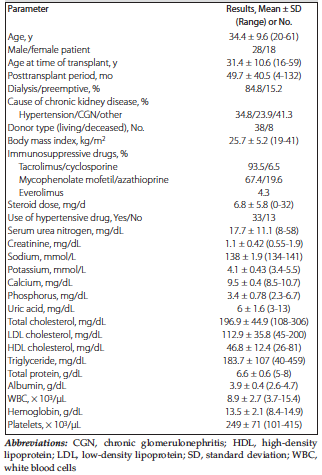
Table 1. Demographic Characteristics and Laboratory Measurements of Patients
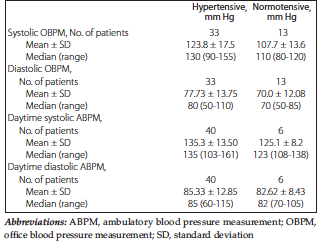
Table 2. Blood Pressure Levels of Hypertensive and Normotensive Patients According to the Office and Ambulatory Blood Pressure Measurements
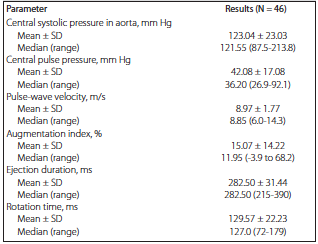
Table 3. Central Aortic Blood Pressure and Hemodynamic Findings of the Aorta
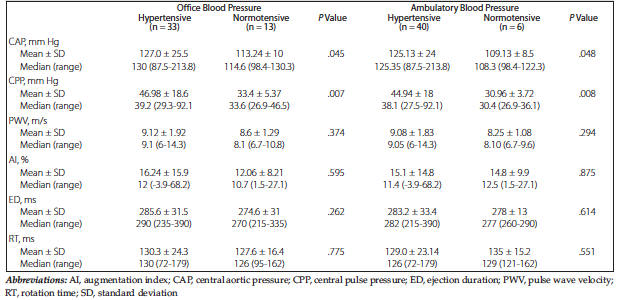
Table 4. Relationship Between Central Aortic Hemodynamic Characteristics and Blood Pressure Levels
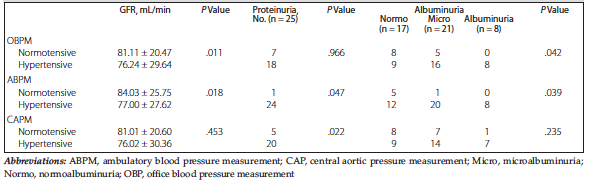
Table 5. Relationship Between Determination of Normotensive Versus Hypertensive According to Blood Pressure Measurements and Renal Damage Markers
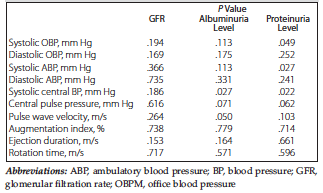
Table 6. Relationships Between Blood Pressure Levels and Central Hemodynamic Characteristics, Glomerular Filtration Rate, and Proteinuria and Albuminuria Levels

Table 7. Peripheral and Central Aortic Blood Pressure According to Left Ventricular Hypertrophy
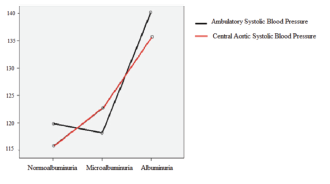
Figure 1. Relationship Between Albuminuria and Levels of Ambulatory and Aortic Systolic Blood Pressures
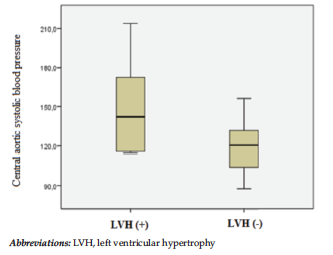
Figure 2. Central Aortic Systolic Blood Pressure Based on Left Ventricular Hypertrophy Status