Volume: 16 Issue: 1 March 2018 - Supplement - 1
FULL TEXT
Hydrothorax occurs frequently in patients with end-stage liver disease and usually requires drainage of pulmonary effusion during the hepatectomy phase of liver transplant. Reexpansion pulmonary edema is a rare but potentially fatal complication seen after rapid reexpansion of the collapsed lung following thoracentesis of pleural fluid or tube drainage of pneumothorax. This condition, which manifests with various degrees of clinical severity, is rarely reported following liver transplantation. Herein, we present a 62-year-old male patient who developed reexpansion pulmonary edema after drainage of massive pleural effusion, which caused a total collapse in the right hemithorax during liver transplant. Six hours after pleural fluid drainage, the patient developed a nonproductive cough, mild tachypnea, shortness of breath, and low oxygen saturation (88%). His chest radiograph showed diffuse heterogeneous opacities in the right hemithorax. Computed tomography of the thorax revealed consolidations containing air bronchograms and ground glass opacities in the parenchyma of the right lung; these findings did not extend to the periphery and were observed less frequently in the inferoposterior left lung. These symptoms and radiologic findings were diagnosed as reexpansion pulmonary edema. Complete clinical and radiologic improvements were achieved within 72 hours of mechanical ventilatory support.
Key words : Collapsed lung, Mechanical ventilatory support, Pleural effusion, Thoracentesis
Introduction
Reexpansion pulmonary edema (RPE) is an uncommon but potentially fatal condition that occurs due to immediate reexpansion of a collapsed lung following thoracentesis or tube drainage performed to remove fluid (pleural effusion) or air (pneumothorax) from the pleural space.1 Its incidence ranges from 1% to 14%.2,3 Hepatic hydrothorax is a complication of cirrhosis, and the fluid is usually drained before liver transplant or during the procedure.4 When RPE occurs after rapid and excessive fluid drainage from the pleural space, clinical manifestation varies from radiologic alterations alone to rapidly progressive respiratory failure requiring mechanical ventilation.5 The pathophysiology of RPE remains unclear. The mechanisms suggested include mechanical stress-induced free radical increases secondary to capillary injury during pulmonary reexpansion or to reperfusion-induced increases in pulmonary capillary permeability that result in pulmonary edema.6
Case Report
Herein, we present a 62-year-old male patient with RPE. Reexpansion pulmonary edema occurred after the removal of massive pleural effusion from the right hemithorax via a drainage catheter during liver transplant performed for Child class B cirrhosis and hepatocellular carcinoma. His medical history revealed glottic laryngeal carcinoma in remission, diabetes mellitus, and no smoking or alcohol consumption.
On his physical examination before surgery, he was mildly icteric and his oxygen saturation was 95% to 96%. Auscultation of the respiratory system was unremarkable, except for the absence of breath sounds in the right hemithorax. Laboratory analysis revealed total serum bilirubin of 2.6 mg/dL, an albumin level of 2.6 g/dL, and a blood glucose level of 161 mg/dL; other biochemical, electrolyte, and coagulation parameters were within the normal limits. Posteroanterior lung radiography demonstrated homogenously increased parenchymal density secondary to massive pleural effusion in the right lung (Figure 1).
Nearly 2.5 L of pleural fluid was drained during liver transplant via an F8 drainage catheter inserted into the right hemithorax. The patient's hemodynamic parameters were within the normal limits throughout the surgical procedure, and his general status was stable. The patient, who was monitored in the intensive care unit after transplant and had no respiratory complaints, developed a nonproductive cough, mild tachypnea, and shortness of breath with low oxygen saturation 6 hours after surgery. The patient's vital signs were as follows: body temperature, 36.4°C; blood pressure, 130/80 mm Hg; respiratory rate, 26 breaths/min; and pulse rate,100 beats/min. His blood gases were pH 7.40, partial pressure of oxygen of 54 mm Hg, partial pressure of carbon dioxide of 38.8 mm Hg, and oxygen saturation of 88%. Chest examination revealed rales in the bilateral inferior zones and in the entire right lung.
Posteroanterior lung radiography showed diffuse heterogeneous opacities in the right hemithorax (Figure 2). Computed tomography of the thorax revealed extensive consolidation and ground glass densities in the lung parenchyma; the periphery was partially preserved, and less extensive consolidation was observed in the inferoposterior zone of the left lung (Figure 3). Echocardiography was unremarkable, and there were no signs of fluid overload. These clinical and radiologic findings were consistent with RPE. His shortness of breath worsened, and mechanical ventilation and hemodynamic support were started. Monitoring of blood gases revealed improvements, showing pH 7.40, partial pressure of oxygen of 80 mm Hg, partial pressure of carbon dioxide of 36.4 mm Hg, and oxygen saturation of 95%. The patient was extubated after 3 days, and complete clinical and radiologic remission was achieved.
Discussion
Noncardiogenic acute pulmonary edema (PE) occurs frequently following liver transplant and makes perioperative progress difficult.7,8 Whereas 25% of patients undergoing lung transplant develop sudden and relatively benign PE that improves within the first 24 hours, 18% develop persistent permeability-type PE that lasts longer than 16 hours. This diffuse edema may be associated with numerous causes, including acute fluid overload, transfusion-associated acute lung injury (TRALI), acute respiratory distress syndrome, and fulminant hepatic failure. The underlying pathology is associated with impaired balance of transcapillary hydrostatic pressure (hydrostatic-type PE) or an impaired permeability barrier (permeability-type PE).8
Reexpansion pulmonary edema is the non-diffuse permeability-type PE of noncardiogenic edema that occurs after acute drainage of air or fluid from the pleural space, which allows rapid expansion of a collapsed lung. During liver transplant, acute drainage is required for large amounts of pleural effusion, and subsequent RPE may be a factor that contributes to early postoperative respiratory distress. The collapsed lung is typically affected; the contralateral lung may also be affected. Reexpansion pulmonary edema may overlap with other perioperative pulmonary complications, such as pleural effusion, atelectasis, TRALI, and hydrostatic PE due to nonspecific radiologic findings because of the clinical course, which is normally benign and temporary. The process usually lasts less than 72 hours, but a mortality rate as high as 20% has been reported.9 Reexpansion pulmonary edema occurs within the first hour or subsequent 24 hours in 64% of patients.1,10 In the present case, RPE occurred 6 hours postoperatively and improved within 72 hours. The right lung, of which a substantial portion was collapsed, was affected as was the contralateral lung, albeit less extensively.
Although the pathophysiology of RPE is unclear, risk factors include young age, female sex, large or long-lasting lung collapse, reexpansion of the lung in < 10 minutes, use of negative pressure while draining air or fluid from the pleural space, and a drained fluid volume > 2000 mL.1 In the present case, the large amount of pleural fluid resulted in recurrent total collapse in the right hemithorax 3 months previous, and the drainage of 2500 mL of fluid in a short time might have played a role in the development of RPE.
In our case, the findings were considered to be consistent with RPE because of the history of pleural fluid drainage, relatively benign initial symptoms, normal hemodynamic parameters, radiologic patchy consolidations more remarkable in 1 hemithorax, and absence of typical signs of cardiogenic PE, TRALI, or acute respiratory distress syndrome, which cause PE.
Treatment of RPE includes ventilatory and hemodynamic support. The primary treatment is positive-pressure mechanical ventilation. End-expiratory positive pressure helps reexpansion of the collapsed alveoli, resulting in increased functional residual capacity and decreased shunting. Moreover, diuresis and vasopressor support may be included in the treatment, but the role of medications remains unclear.11 In addition, some measures are recommended to lower the risk of developing RPE, such as limiting the amount of drainage (< 1.5 L) and avoiding extremely negative pleural pressure.12 In our patient, clinical and radiologic improvements were achieved after 72 hours with mechanical ventilatory support.
A case of early perioperative death secondary to RPE during liver transplant13 and a single case of RPE with benign progress despite severe hypoxia14 were reported. Herein, we presented a case of RPE with benign progress.
In conclusion, RPE is a rare but serious complication seen after thoracentesis. This complication may occur after fluid drainage from the pleural space, which is a common procedure during liver transplant, and is among the causes of PE likely to occur in the early period. Early diagnosis and treatment are important to prevent death due to this life-threatening complication.
References:
- Mahfood S, Hix WR, Aaron BL, Blaes P, Watson DC. Reexpansion pulmonary edema. Ann Thorac Surg. 1988;45(3):340-345.
CrossRef - PubMed - Matsuura Y, Nomimura T, Murakami H, Matsushima T, Kakehashi M, Kajihara H. Clinical analysis of reexpansion pulmonary edema. Chest. 1991;100(6):1562-1566.
CrossRef - PubMed - Rozenman J, Yellin A, Simansky DA, Shiner RJ. Re-expansion pulmonary oedema following spontaneous pneumothorax. Respir Med. 1996;90(4):235-238.
CrossRef - PubMed - Sersté T, Moreno C, Francoz C, et al. The impact of preoperative hepatic hydrothorax on the outcome of adult liver transplantation. Eur J Gastroenterol Hepatol. 2010;22(2):207-212.
CrossRef - PubMed - Meeker JW, Jaeger AL, Tillis WP. An uncommon complication of a common clinical scenario: exploring reexpansion pulmonary edema with a case report and literature review. J Community Hosp Intern Med Perspect. 2016;6(3):32257.
CrossRef - PubMed - Sue RD, Matthay MA, Ware LB. Hydrostatic mechanisms may contribute to the pathogenesis of human re-expansion pulmonary edema. Intensive Care Med. 2004;30(10):1921-1926.
CrossRef - PubMed - Afessa B, Gay PC, Plevak DJ, Swensen SJ, Patel HG, Krowka MJ. Pulmonary complications of orthotopic liver transplantation. Mayo Clin Proc. 1993;68(5):427-434.
CrossRef - PubMed - Yost CS, Matthay MA, Gropper MA. Etiology of acute pulmonary edema during liver transplantation: a series of cases with analysis of the edema fluid. Chest. 2001;119(1):219-223.
CrossRef - PubMed - Sherman SC. Reexpansion pulmonary edema: a case report and review of the current literature. J Emerg Med. 2003;24(1):23-27.
CrossRef - PubMed - Jackson RM, Veal CF, Alexander CB, Brannen AL, Fulmer JD. Re-expansion pulmonary edema: a potential role for free radicals in its pathogenesis. Am Rev Respir Dis. 1988;137(5):1165-1171.
CrossRef - PubMed - Alqadi R, Fonseca-Valencia C, Viscusi M, Latif SR. Reexpansion pulmonary edema following thoracentesis. R I Med J (2013). 2013;96(9):38-40.
PubMed - Villena V, López-Encuentra A, Pozo F, De-Pablo A, Martín-Escribano P. Measurement of pleural pressure during therapeutic thoracentesis. Am J Respir Crit Care Med. 2000;162(4):1534-1538.
CrossRef - PubMed - Marujo WC, Takaoka F, Moura RMA, et al. Early perioperative death associated with reexpansion pulmonary edema during liver transplantation. Liver Transpl. 2005; 11(11):1439-1443.
CrossRef - PubMed - Jaber S, Perrigault P-F, Souche B, Pouzeratte Y. Re-expansion pulmonary edema with normal pulmonary artery occlusion pressure during liver transplantation. Intensive Care Med. 2002;28(3):376.
CrossRef - PubMed
Volume : 16
Issue : 1
Pages : 154 - 157
DOI : 10.6002/ect.TOND-TDTD2017.P43
From the Departments of 1,2Chest Diseases and 5General Surgery, Baskent
University Adana Dr. Turgut Noyan Teaching and Medical Research Center, Adana,
Turkey; and the Departments of 3Chest Diseases and 4General Surgery, Baskent
University Faculty of Medicine, Ankara, Turkey
Acknowledgements: The authors have no sources of funding for this study and have
no conflicts of interest to declare.
Corresponding author: Sibel Kara, Baskent University Adana Dr. Turgut Noyan
Teaching and Medical Research Center, Department of Chest Diseases, Dadaloglu
Mah 2591 Sok 4/A, 01250, Yüregir/Adana, Turkey
Phone: +90 322 3272727
E-mail: sibelkarasb@hotmail.com
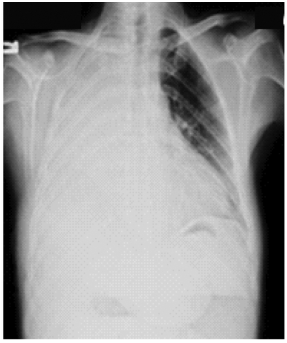
Figure 1. Posteroanterior Lung Radiograph Showing Homogenously Increased Parenchymal Density Secondary to Massive Pleural Effusion in the Right Lung
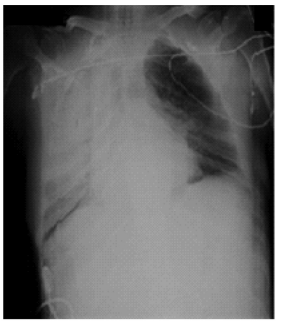
Figure 2. Anteroposterior Lung Radiograph Showing Diffuse Heterogeneous Opacities in the Right Hemithorax
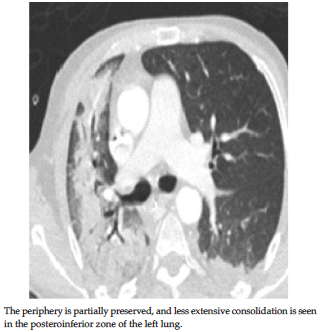
Figure 3. Computed Tomography of the Thorax Showing Extensive Consolidation and Ground Glass Opacities in the Right Lung Parenchyma