Volume: 16 Issue: 1 March 2018 - Supplement - 1
FULL TEXT
Objectives: Thrombotic microangiopathy is a form of renal capillary injury possibly associated with calcineurin inhibitor toxicity, acute humoral rejection, infections, and recurrent diseases. Here, we examined its incidence in patients diagnosed with acute and chronic active humoral rejection, polyomavirus nephropathy, acute cellular rejection, and im-munoglobulin A recurrence.
Materials and Methods: In total, 272 renal allograft recipients who met the inclusion criteria were reevaluated for presence of renal thrombotic microangiopathy. Thrombotic microangiopathy diagnosis was established by clinical, laboratory, and histologic features. C4d expression in peritubular capillaries was determined. Clinical data were collected from medical records.
Results: Of 272 patients (mean age of 42.8 ± 12.7 years), only 74 patients (27.2%) had de novo thrombotic microangiopathy, which was found in 30/90 patients (33.3%) with acute humoral rejection, 9/51 (17.6%) with acute cellular rejection, 22/53 (41.5%) with chronic active humoral rejection, 10/55 (18.2%) with polyomavirus nephropathy, and 3/23 (13%) with immunoglobulin A nephropathy. Significant differences were shown between therapy type and thrombotic microangiopathy development (P = .02). Patients who received cyclosporine (38.5%) tended to show higher incidence of thrombotic microangiopathy than patients who received tacrolimus (20.7%) or sirolimus (7.7%). Patients with C4d-positive acute humoral (97.6% vs 2.4%) and chronic active humoral rejection (68.2% vs 31.8%) had greater incidence of thrombotic microangiopathy versus those who were C4d-negative. Graft loss was significantly higher in C4d-positive than in C4d-negative thrombotic microangiopathy groups (P < .001). Overall 1-, 3-, and 5-year graft survival was 94%, 85%, and 85% versus 83%, 51%, and 51% in thrombotic microangiopathy-negative versus thrombotic microangiopathy-positive patients (P < .001).
Conclusions: Acute humoral rejection and chronic active humoral rejection were the most common and therefore most important causes of de novo thrombotic microangiopathy in renal transplant patients. Its presence in the renal allograft biopsy should arouse suspicion for underlying acute or chronic active humoral rejection.
Key words : Acute cellular rejection, Acute humoral rejection, C4d expression, Chronic active humoral rejection, IgA nephropathy, Polyomavirus nephropathy, Renal allograft biopsy
Introduction
Thrombotic microangiopathy (TMA) describes a pathologic lesion in which abnormalities in the vessel wall of arterioles and capillaries lead to microvascular thrombosis. The clinical features of TMA result from the obstruction of the microcirculation and ultimately depend on the distribution of involved vascular beds. Microangiopathic hemolysis is the hallmark feature of this obstructed microcirculation. Thrombotic micro-angiopathy is a pathologic diagnosis, but its presence is commonly inferred from observations of throm-bocytopenia and microangiopathic hemolysis in the appropriate clinical setting.1-4
Posttransplant TMA has shown incidence ranging from 3% to 14%.1-4 Several TMA syndromes have been described, of which transplant-associated TMA differed from other TMA syndromes with its mech-anism, clinical presentation, and management.1-3 The accurate diagnosis of TMA in solid-organ transplant is often difficult to establish. Patients with this disease frequently have multiple potential causes for renal dysfunction and fever. Persistent anemia or thrombocytopenia may be mistakenly ascribed to underlying disease rather than to consumption.
Thrombotic microangiopathy in the transplanted kidney is a form of renal vascular injury that may be associated with many disorders, including calcineurin inhibitor toxicity, antibody-mediated rejection (AMR), viral infections, ischemia-reperfusion injury, and recurrent diseases.1-7 The presentation of TMA is highly heterogeneous, ranging from asymptomatic, low-level red blood cell fragmentation to systematic signs of hemolytic uremic syndrome.1,2,7 The histopathologic features of TMA in the transplanted kidney include occlusion or narrowing of the capillaries, subendothelial amorphous material accumulation in glomeruli, and fibrinoid changes in the intima of small arteries.2,4,8
The risk for development of TMA is highest in the first 3 months after transplant, and presence of de novo TMA is much less common than recurrent hemolytic uremic syndrome.1-3,7,9,10 Because of its distinct characteristics and clinical courses, it has been suggested to classify posttransplant TMA into localized and systemic forms. Systemic-form TMA is associated with thrombocytopenia and microan-giopathic hemolysis. Patients with systemic TMA have a higher rate of graft loss.3-6,11,12 A subgroup of TMA (approximately 30%-40%) is localized only to the graft, and patients do not show the classic signs of a hemolytic uremic syndrome, such as hemolytic anemia, peripheral schistocytes, thrombocytopenia, and rapid deterioration of renal function.3,6,11,12
Detection of C4d expression in renal allograft biopsies is an essential tool, particularly for diagnosis of AMR.13,14 The incidence of TMA in recipients with AMR has been reported to range from 4% to 46%, with the highest frequency shown in the early posttransplant period.1-6,7,10,15 Glomerular and arteriolar thrombi in renal transplant biopsies with the diagnosis of AMR and chronic antibody-mediated rejection are frequently reported, whereas reports of presence of peritubular capillary (PTC) thrombi are scarce.2,6,8,15,16
This study examined the incidence of renal TMA in patients with acute humoral rejection (AHR), chronic active humoral rejection (CAHR), polyomavirus nephropathy (PVN), acute cellular rejection (ACR), and immunoglobulin A (IgA) recurrence.
Materials and Methods
Our retrospective analysis showed 272 renal allograft recipients with the diagnosis of PVN, IgA nephropathy, ACR, AHR, and CAHR. These patients were reevaluated for final diagnosis and presence of renal TMA. The study was approved by the Ethical Review Committee of the Institute. All of the protocols conformed to the ethical guidelines of the 1975 Helsinki Declaration. Diagnosis of TMA was established by clinical, laboratory, and histologic features. The histologic diagnosis of TMA was given if patients had occlusive fibrin thrombi in at least one glomerulus or one arteriole with or without other TMA findings. Other TMA findings included endothelial swelling and detachment, glomerular basement membrane double contour formation, mesangiolysis with microhemorrhage, luminal occlusion with mural myxoid or fibrinoid change with or without erythrocytolysis, and mucointimal proliferation of small-caliber arteries in the absence of C4d deposits along PTCs.6
All renal allograft biopsies were routinely stained for C4d. C4d staining status was defined as extent of the involvement of PTC by linear deposition of C4d. Focal expression of C4d was defined as < 50% staining of the PTC network of cortex and medulla. Diffuse expression of C4d was defined as ≥ 50% staining of the PTC network of cortex and medulla. The most common immunosuppressive maintenance regimen consisted of tacrolimus (150 patients) or cyclosporine (109 patients), mycophenolate mofetil, and prednisone. A few patients (n = 13) received sirolimus. Clinical data were collected from medical records of all patients. Clinical records were evaluated to exclude other possible causes of allograft TMA, including malignant hypertension, hepatitis C infection, lupus anticoagulants, and primary or recurrent hemolytic uremic syndrome or thrombotic thrombocytopenic purpura.
Statistical analyses
Descriptive data are expressed as mean ± standard deviation. The chi-square test
was used to analyze categorical variables. We used t test or the Mann-Whitney
test to compare between 2 groups of patients. Comparisons between multiple
groups were handled by analysis of variance or the Kruskal-Wallis test. We used
the Kaplan-Meier method with the log-rank comparison for survival analyses.
Statistical significance was assumed for P values of .05 or less.
Results
Renal allograft biopsies of 272 patients (mean age of 42.8 ± 12.7 years) were reevaluated for presence of TMA. Of 272 patients 90 patients had pure AHR, 51 had pure ACR, 55 had PVN, 53 had CAHR, and 23 had IgA nephropathy. As shown in Table 1, 15 patients with other pathologies also had AHR; therefore, the total number of both pure and mixed AHR was 105 patients. Similarly, in addition to 51 patients with pure ACR, 47 patients also showed other pathologies accompanying ACR (Table 1); therefore, the total number of both pure and mixed ACR was 98 patients.
Among 90 patients with diagnosis of pure AHR, 35 (38.9%) showed focally and 38 (42.2%) showed diffuse C4d-positive staining, whereas 17 patients (18.9%) did not show C4d expression on PTCs (Table 2). Of 105 patients with mixed or pure AHR, 89 patients (84.8%) showed positive C4d expression and 16 patients (15.2%) showed negative C4d expression on PTCs. In 53 patients with CAHR, positive C4d expression on PTCs was found in 28 patients (52.8%). Table 2 shows the distribution of the PTC C4d expression among patients with pure AHR, CAHR, PVN, and IgA nephropathy. The incidence of diffuse C4d expression on PTC was 42.2%, 24.5%, 16.4%, and 8.7% in patients diagnosed with pure AHR, CAHR, PVN, and IgA nephropathy, respectively. Incidence of focal C4d expression on PTCs was 38.9%, 28.3%, 7.2%, and 0% in patients diagnosed with pure AHR, CAHR, PVN, and IgA nephropathy, respectively.
Only 74 of 272 patients (27.2%) had de novo TMA: 30/90 patients (33.3%) with pure AHR, 9/51 patients (17.6%) with ACR, 22/53 patients (41.5%) with CAHR, 10/55 patients (18.2%) with PVN, and 3/23 patients (13%) with IgA nephropathy recurrence (Table 2). The rate of TMA was higher in C4d-positive AHR (97.6%) and CAHR (68.2%) patients than in C4d-negative AHR (2.4%) and CAHR (31.8%) patients (P = .002 for AHR and P < .05 for CAHR; data not shown).
All PVN and IgA nephropathy patients who demonstrated C4d-positive expression on PTCs had AHR at the same time (Table 1). Patients with PVN and IgA nephropathy who also had AHR at biopsy tended to show a higher incidence of TMA than patients with PVN and IgA nephropathy alone (P < .001). In addition, the rate of TMA was higher in PVN and IgA nephropathy patients who also had AHR than in patients with pure AHR (P < .01; Table 1 and Table 2).
As shown in Table 1, in 98 patients with ACR, 17 patients (17.3%) also had AHR, 20 patients (20.4%) also had CAHR, 4 patients (4.2%) also had PVN, and 6 patients (6.1%) also had IgA nephropathy at biopsy. Patients who had other pathologies accompanying ACR had the highest rates of TMA development in the renal allograft biopsy (Table 1). The type of the ACR also had a significant impact on the development of TMA; patients with type III and type II ACR (vascular rejection) tended to show a higher incidence of TMA development than patients with type I rejection (P = .007; Table 3).
As shown in Table 3, the incidence of TMA was higher in patients with focal and diffuse positive C4d expression on PTCs than in patients with negative C4d expression on PTCs (P < .001). In 109 patients who received cyclosporine, 150 who received tacrolimus, and 13 patients who received sirolimus (Table 3), significant differences were found between type of immunosuppressive therapy and devel-opment of TMA (P = .02). Patients who received cyclosporine (38.5%) tended to show a higher incidence of TMA than patients who received tacrolimus (20.7%) or sirolimus (7.7%) (Table 3).
Graft loss was found to be significantly higher in C4d-positive and TMA-positive patients (P < .001; Table 3). Rate of graft loss was also significantly higher in C4d-positive TMA patients (30/54 patients, 55.6%) than in C4d-negative TMA patients (6/20 patients, 30%; P = .04). Overall 1-, 3-, and 5-year graft survival rates were 94%, 85%, and 85% for TMA-negative patients and 83%, 51%, and 51% for TMA-positive patients (P < .001).
Discussion
Thrombotic microangiopathy is a well-recognized complication after renal transplant.17 However, there are important differences between TMA in native and transplanted kidneys. In a renal allograft, TMA can either be recurrent or de novo.3,7,12,17 Recurrent TMA is mostly related to genetic abnormalities and autoimmune diseases. However, de novo TMA is commonly related as a result of immunosuppression, renal allograft rejection, infections like cytomegalovirus, and other causes such as recurrent glomerulonephritis.6,7,10,17-19 The reported rates of de novo TMA vary from 1.1% to 14%.4-15
As we observed, the incidence of Escherichia coli-associated typical hemolytic uremic syndrome is significantly low in renal transplant patients.3,7 Renal transplant patients with TMA usually do not have systemic signs of hemolytic uremic syndrome. The diagnosis of TMA in renal allografts is made with renal allograft biopsy analyses.2,7,10 De novo TMA often occurs in the early posttransplant period (first 6 months), but it may also develop later.8,10,17
It has been well documented that chronic administration of cyclosporine or tacrolimus is associated with microvascular disease, with calcineurin inhibitor toxicity reported to be the most common cause of posttransplant de novo TMA.5,7,10,12 A recent experimental study showed that cyclosporine induces increased endothelial release of complement-activating microparticles, suggesting that blocking complement activation may help to alleviate the condition.20 Carmona and associates found that cyclosporine alone and the combination of tacrolimus and sirolimus had an increased proinflammatory effect on endothelial cells; however, only cyclosporine showed additional prothrombotic effects.21
The incidence of de novo TMA was recently shown to be 3% in renal allografts without evidence of AHR; however, all of the study patients were receiving tacrolimus and none were using mammalian target of rapamycin inhibitors.12 In another study of patients receiving a combination of sirolimus and cyclosporine with steroid avoidance, the incidence of de novo TMA was 3.6% in biopsies without evidence of AHR.17 In our study, we found that patients who were under cyclosporine therapy (38.5%) tended to show a higher incidence of TMA than patients receiving tacrolimus (20.7%) or sirolimus (7.7%).
Donor-specific antibody-mediated endothelial injury has been shown to be associated with TMA.6,17 Supporting these previous reports, we also demonstrated the importance of AHR-associated de novo TMA in renal transplant patients. We found that the rate of TMA was higher in patients with AHR and CAHR. We also found that presence of TMA in renal allografts was significantly higher in patients with AHR and CAHR who had C4d-positive biopsies versus AHR and CAHR patients with C4d-negative biopsies. Satoskar and associates reported results similar to ours, finding that presence of TMA among patients with C4d-positive biopsies was 4 times higher than patients with C4d-negative biopsies.17
We also observed that recipients with pathologies combined with AHR or CAHR had higher incidences of TMA than patients with only one pathologic diagnosis, such as PVN, IgA nephropathy, or ACR. Patients with PVN and IgA who also had AHR at the same biopsy tended to show a higher incidence of TMA.
The rate of TMA was also higher in patients with PVN and IgA nephropathy who also had AHR versus patients who only had pure AHR. Of note, patients who had other pathologies combined with ACR had the highest rates of TMA in the renal allograft biopsy, with type of ACR having a significant impact on the development of TMA. Patients with type III and II ACR (vascular rejection) tended to show a higher incidence of TMA development than patients with type I rejection. All patients with type II and type III ACR who had TMA were C4d positive, indicating the possible influence of AHR on the development of TMA.
We suggest that AHR and CAHR are the most common and therefore important causes of de novo TMA in renal transplant patients. Therefore, the presence of TMA in the renal allograft biopsy should arouse suspicion for an underlying AHR or CAHR.
References:
- Ponticelli C, Banfi G. Thrombotic microangiopathy after kidney transplantation. Transpl Int. 2006;19(10):789-794.
CrossRef - PubMed - Nickeleit V. Thrombotic Microangiopathy in Renal Allografts. Chapel Hill, NC: University of North Carolina at Chapel Hill, Department of Pathology.
- Noris M, Remuzzi G. Thrombotic microangiopathy after kidney transplantation. Am J Transplant. 2010;10(7):1517-1523.
CrossRef - PubMed - Laskin BL, Goebel J, Davies SM, Jodele S. Small vessels, big trouble in the kidneys and beyond: hematopoietic stem cell transplantation-associated thrombotic microangiopathy. Blood. 2011;118(6):1452-1462.
CrossRef - PubMed - Bolin P, Jr., Jennette JC, Mandel SR. Cyclosporin-associated thrombotic microangiopathy: successful retreatment with cyclosporin. Ren Fail. 1991;13(4):275-278.
CrossRef - PubMed - Meehan SM, Kremer J, Ali FN, et al. Thrombotic microangiopathy and peritubular capillary C4d expression in renal allograft biopsies. Clin J Am Soc Nephrol. 2011;6(2):395-403.
CrossRef - PubMed - Nadasdy T. Thrombotic microangiopathy in renal allografts: the diagnostic challenge. Curr Opin Organ Transplant. 2014;19(3):283-292.
CrossRef - PubMed - Caires RA, Marques ID, Repizo LP, et al. De novo thrombotic microangiopathy after kidney transplantation: clinical features, treatment, and long-term patient and graft survival. Transplant Proc. 2012;44(8):2388-2390.
CrossRef - PubMed - Ardalan MR, Shoja MM, Tubbs RS, Etemadi J, Esmaili H, Khosroshahi HT. Thrombotic microangiopathy in the early post-renal transplant period. Ren Fail. 2008;30(2):199-203.
CrossRef - PubMed - Reynolds JC, Agodoa LY, Yuan CM, Abbott KC. Thrombotic microangiopathy after renal transplantation in the United States. Am J Kidney Dis. 2003;42(5):1058-1068.
CrossRef - PubMed - Barbour T, Johnson S, Cohney S, Hughes P. Thrombotic microangiopathy and associated renal disorders. Nephrol Dial Transplant. 2012;27(7):2673-2685.
CrossRef - PubMed - Schwimmer J, Nadasdy TA, Spitalnik PF, Kaplan KL, Zand MS. De novo thrombotic microangiopathy in renal transplant recipients: a comparison of hemolytic uremic syndrome with localized renal thrombotic microangiopathy. Am J Kidney Dis. 2003;41(2):471-479.
CrossRef - PubMed - Takeda A, Otsuka Y, Horike K, et al. Significance of C4d deposition in antibody-mediated rejection. Clin Transplant. 2012;26 Suppl 24:43-48.
CrossRef - PubMed - Loupy A, Haas M, Solez K, et al. The Banff 2015 Kidney Meeting Report: Current Challenges in Rejection Classification and Prospects for Adopting Molecular Pathology. Am J Transplant. 2017;17(1):28-41.
CrossRef - PubMed - Sreedharanunni S, Joshi K, Duggal R, Nada R, Minz M, Sakhuja V. An analysis of transplant glomerulopathy and thrombotic microangiopathy in kidney transplant biopsies. Transpl Int. 2014;27(8):784-792.
CrossRef - PubMed - Rolla D, Fontana I, Ravetti JL, et al. De novo post-transplant thrombotic microangiopathy localized only to the graft in autosomal dominant polycystic kidney disease with thrombophilia. J Renal Inj Prev. 2015;4(4):135-138.
PubMed - Satoskar AA, Pelletier R, Adams P, et al. De novo thrombotic microangiopathy in renal allograft biopsies-role of antibody-mediated rejection. Am J Transplant. 2010;10(8):1804-1811.
CrossRef - PubMed - De Keyzer K, Van Laecke S, Peeters P, Vanholder R. De novo thrombotic microangiopathy induced by cytomegalovirus infection leading to renal allograft loss. Am J Nephrol. 2010;32(5):491-496.
CrossRef - PubMed - El Karoui K, Hill GS, Karras A, et al. A clinicopathologic study of thrombotic microangiopathy in IgA nephropathy. J Am Soc Nephrol. 2012;23(1):137-148.
CrossRef - PubMed - Renner B, Klawitter J, Goldberg R, et al. Cyclosporine induces endothelial cell release of complement-activating microparticles. J Am Soc Nephrol. 2013;24(11):1849-1862.
CrossRef - PubMed - Carmona A, Diaz-Ricart M, Palomo M, et al. Distinct deleterious effects of cyclosporine and tacrolimus and combined tacrolimus-sirolimus on endothelial cells: protective effect of defibrotide. Biol Blood Marrow Transplant. 2013;19(10):1439-1445.
CrossRef - PubMed
Volume : 16
Issue : 1
Pages : 131 - 135
DOI : 10.6002/ect.TOND-TDTD2017.P27
From the 1Department of Pathology and the 2Department of Transplant Surgery,
Baskent University, Ankara, Turkey
Acknowledgements: The authors have no sources of funding for this study and have
no conflicts of interest to declare.
Corresponding author: B. Handan Özdemir, Department of Pathology, Baskent
University, Ankara, Turkey
Phone: +90 532 224 3858
E-mail: handan27@hotmail.com
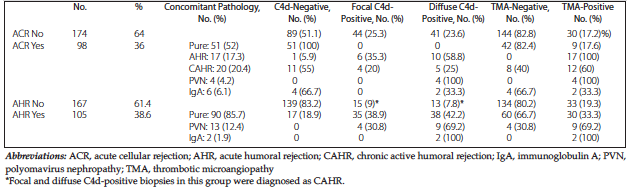
Table 1. Distribution of Second Pathology in Patients with Acute Cellular and Acute Humoral Rejection: Correlation With C4d Expression and Thrombotic Microangiopathy

Table 2. Summary of Results of Thrombotic Microangiopathy and C4d Expression
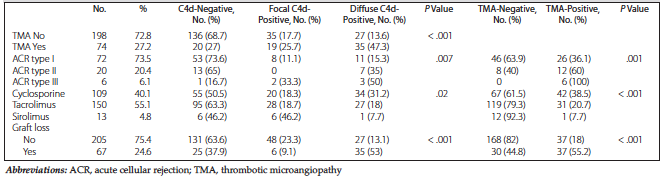
Table 3. Correlation of C4d and Thrombotic Microangiopathy With Clinicopathologic Parameters