Volume: 16 Issue: 1 March 2018 - Supplement - 1
FULL TEXT
Objectives: The interaction between calcium oxalate deposition and urinary tract infection is not well established. We aimed to identify the association between these and to determine the role of calcium oxalate deposition on interstitial fibrosis development.
Materials and Methods: Renal allograft biopsies of 967 patients were reviewed to identify those with calcium oxalate deposition in the renal allograft, with 27 (2.8%) identified. Follow-up biopsies were conducted to reevaluate for calcium oxalate presence and interstitial fibrosis development. At time of biopsy, presence of urinary tract infection and oxaluria was also examined from medical records.
Results: Mean time for development of calcium oxalate deposition in renal allografts was 1.7 ± 0.4 and 32.7 ± 21.6 months in patients with primary and secondary oxalosis, respectively (P < .001). Of 27 patients with calcium oxalate deposition, 7 (25.9%) showed tubulointerstitial nephritis, with 2 also having urinary tract infection. Four patients (14.8%) had only urinary tract infection. Causes of tubulointerstitial nephritis were secondary to bacterial infection in 2 and secondary to viral infection in 5 patients (2 polyomaviruses, 2 cytomegaloviruses, 1 adenovirus). Time until development of interstitial fibrosis after calcium oxalate deposition was 3.5 ± 2.1 and 10.3 ± 4.1 months in patients with primary and secondary oxalosis, respectively (P = .01). Time until graft loss after calcium oxalate deposition was 9.3 ± 7.8 and 21.8 ± 12 months in those with primary and secondary oxalosis (P < .001), with 1-, 3-, and 5-year kidney graft survival of 43%, 28%, and 0% and 100%, 100%, and 67% in those with primary and secondary oxalosis, respectively.
Conclusions: Calcium oxalate deposits increased the risk of urinary tract infection and tubulointerstitial nephritis, with bacteria inducing increased presence of calcium oxalate deposition in a renal allograft. Calcium oxalate deposition had a significant influence on interstitial fibrosis development, therefore negatively affecting graft survival.
Key words : Calcium oxalate crystal, Cytomegalovirus, Escherichia coli, Polyomavirus, Tubulointerstitial nephritis
Introduction
Previous studies reported that nonacute rejection events can affect graft survival. Because oxalosis is one cause of rapid renal allograft failure immediately after transplant, it is essential to find possible preventative parameters in recipients who have the potential risk of developing calcium oxalate (CaOx) deposits.
Primary oxalosis is a genetic disorder of glyoxylate metabolism that leads to systemic overproduction of oxalate. However, the origins of CaOx deposits in renal transplant are unclear. Both primary oxalosis (PO) and secondary oxalosis (SO) are significant causes of renal failure.1-4 Greater than 50% of renal allograft biopsies performed within 3 months after transplant can show CaOx crystals in renal tubules.5 Although their presence can be benign, when present in moderate to high intensity, these crystals contribute to increased incidence of acute tubular necrosis and poor allograft survival.1,5
Studies regarding the presence of CaOx deposition in renal allografts of recipients after transplant without primary hyperoxaluria are scarce. Secondary oxalosis affecting the renal allograft is an uncommon cause of acute kidney injury. To the best of our knowledge, only a few case reports mention CaOx deposition in renal allografts with post-transplant acute renal failure and consider CaOx as an additional cause for tubular cell injury.1-3,6,7 The correlation of CaOx deposits with acute renal failure and renal allograft survival is a matter of interest.
Recently, it was reported that children with idiopathic hypercalciuria have increased rates of urinary tract infections (UTIs).8-10 Balestracci and associates10 reported that idiopathic hypercalciuria prevalence in children with UTIs was high (20%), with no differences observed between patients with and without vesicoureteral reflux. On the other hand, the identification of bacteria in CaOx kidney stones raises the possibility of a close association between UTI and CaOx deposition. Recently, it was shown that 4 of 5 (80%) kidney stones were positive for Enterobacteriaceae family by sequencing. The authors suggested that Escherichia coli, a major member of Enterobacteriaceae, may be associated with pediatric kidney stones.8
With this in mind, it is possible that the presence of CaOx deposits in tubules of the kidney is a sign of the UTI and/or tubulointerstitial nephritis (TIN) in renal allograft recipients. The interaction between CaOx deposition both with UTI and TIN has not been established in renal allografts. Here, we aimed to understand whether there was a relation between CaOx deposits and UTI and/or TIN. We evaluated all follow-up allograft biopsies to analyze the effects of CaOx deposits on development of renal fibrosis and on graft survival.
Materials and Methods
Renal allograft biopsies of 967 patients were retrospectively reviewed to identify those with CaOx deposition. Calcium oxalate deposits were identified under polarized light, and only cases with significant tubular or interstitial CaOx deposits were included in the study. Biopsies with isolated tubular CaOx deposits were not included in the study. After the reevaluation of all biopsies, only 27 recipients (2.8%) showed moderate to severe CaOx deposition in renal allografts. These 27 recipients (21 men and 6 women; mean age of 27.2 ± 13.2 years; range, 2-52 years) were enrolled in this study. Seven of 27 patients (26%) were under 18 years old. Regarding donor type, 14 patients (52%) received grafts from living related donors and 13 (48%) received grafts from deceased donors. The maintenance immunosuppressive medications in all recipients with CaOx deposition were cyclosporine or tacrolimus, mycophenolate mofetil (MMF), and prednisone.
The distribution of primary disease and the clinicopathologic history of recipients are presented in Table 1. Of 27 patients, 7 had PO and 20 had SO or idiopathic oxalosis. Five patients with PO underwent renal transplant without knowledge of the primary disease.
Medical records of study patients were reviewed, with particular attention to conditions that could be associated with UTI. An infection was confirmed if the single microorganism had a count > 105 colony-forming units/mL with urinary tract inflammatory reaction (> 10 leukocytes/field) in a midstream urine sample collection. Follow-up and further indication biopsies for presence of CaOx deposition were reevaluated for development of interstitial fibrosis in all patients.
Statistical analyses
Descriptive data are expressed as mean ± standard deviation. Comparisons of
continuous variables were performed with t test or the Mann-Whitney U test where
appropriate, and the chi-square or Fisher exact tests were used to compare
categorical variables. Kaplan-Meier analysis was used to calculate allograft and
patient survival rates, and the log-rank test was used to compare allograft
survival curves. Statistical significance was assumed for P values of
less than .05.
Results
Mean follow-up time was 89.2 ± 33.7 months for the 27 patients with CaOx deposition. All patients had oxaluria. As shown in Table 1, significant differences were found between patients with PO and SO with regard to recipient age and time on dialysis. Recipients with PO were younger than those with SO (P = .03). Time on dialysis was longer in recipients with PO than in patients with SO (P = .025). Patients with PO showed no episodes of acute rejection, whereas patients with SO had a mean number of 0.7 ± 04 episodes of acute rejection.
The mean time to development of CaOx deposits in renal allografts was 1.7 ± 0.4 months and 32.7 ± 21.6 months in patients with PO and SO, respectively (Table 1), with significant differences found between the groups (P < .001). Seven of the 27 patients with CaOx deposits (25.9%) also showed TIN at the same biopsy (Table 2). Two of these patients also had UTI at the same period. Four patients (14.8%) had only UTI. None of the patients with PO had UTIs, with UTIs only observed in recipients with SO (Table 2).
The cause of TIN was secondary to bacterial infection in 2 cases and secondary to viral infection in 5 cases. Among 5 patients with viral TIN, 2 patients had polyomavirus nephropathy, 2 had cyto-megalovirus (CMV), and 1 had an adenoviral infection (Table 2). Escherichia coli was identified in urine culture of all recipients with UTIs. Patients with UTI tended to show an increasing amount of CaOx depositions in their follow-up biopsies compared with initial biopsies.
The time to development of interstitial fibrosis after CaOx deposition in renal allograft was 3.5 ± 2.1 months and 10.3 ± 4.1 months in patients with PO and SO, respectively (P = .01). Graft loss after CaOx deposition was 9.3 ± 7.8 months in those with PO and 21.8 ± 12 months in those with SO (P < .001). Among patients with PO, 1-, 3-, and 5-year kidney graft survival rates were 43%, 28%, and 0%. In patients with SO, 1-, 3-, and 5-year kidney graft survival rates were 100%, 100%, and 67%.
Discussion
Oxalate is a simple dicarboxylic acid produced as a by-product of some metabolic pathways and is excreted by the kidney.11,12 Oxalate is freely filtered at the glomerulus and undergoes both reabsorption and secretion in the proximal tubules.11 Removal of oxalate in the kidney is facilitated by a variety of transport systems at the apical and basolateral surfaces of both proximal and distal tubular cells. Although oxalate accumulation in tubular cells is usually benign, oxalate can alter the activity of some enzymes. Oxalate exposure has been shown to increase the production of free radicals in tubular cells, with this increase in free radical production suggested to be responsible for oxalate toxicity.11-14 Calcium oxalate can directly injure tubular cells by causing obstructive damage as a result of luminal deposition. Calcium oxalate seems to have a biphasic effect on tubular cells, which is toxic at high levels but acts as a mitogen at lower concentrations.11,12,15
Recipients with CaOx deposition in renal allografts are generally asymptomatic; however, the accumulation of CaOx in renal allografts can be associated with various clinical and laboratory findings such as hematuria, suprapubic tenderness, urolithiasis, and UTI. Increased creatinine levels may be found in recipients with CaOx accumulation in renal allografts. The cause of these urinary symptoms is attributed to the toxic effects of microcrystals to the urinary epithelium.9,10,14
Nevertheless, the association between UTI and/or TIN and renal CaOx deposition or hyperoxaluria has been rarely reported in the literature.8-10 Because UTI and TIN can lead to increased morbidity and mortality in renal allograft recipients, identification of CaOx deposition and hyperoxaluria is of great importance.
The underlying mechanism leading to UTI and TIN in recipients with hyperoxaluria and/or renal CaOx deposition may be explained by the impairment mechanisms of the tubular and bladder epithelium with CaOx microcrystals. Both the uroepithelium and tubular epithelium have significant roles in the host defense, such as bactericidal activity and the continuity of the inflammatory response.9 To initiate the antibacterial response, close contact is required between the bacteria and epithelial cell surface. Calcium oxalate crystals slow down the defense mechanism by blocking bacteria and epithelial cell surface contact, disrupting the continuity of the barrier that prevents infection.16,17
Previous reports have shown that patients with hyperoxaluria tended to show a higher incidence of recurrent and persistent UTIs.9,10,18 In one study of 124 children with idiopathic hyperoxaluria, 50 patients (40%) showed UTI, with 39 (78%) having recurrent UTI. After treatment of idiopathic hyperoxaluria, no recurrence of UTI was observed in 24 of 29 patients (83%) with follow-up of 6 years.18In the present study, we found that 7 of 27 patients (25.9%) with renal CaOx deposition showed TIN at the same biopsy, with 2 of these 7 patients also having UTI during the same period. Among 27 recipients, four patients (14.8%) had only UTI. The cause of TIN was secondary to bacterial infection in 2 patients and secondary to viral infection in 5 patients. The most interesting finding in our study was that viral TIN among the 5 patients was secondary to polyomavirus (n = 2), CMV (n = 2), and adenovirus (n = 1). Although previous studies have reported a close association between bacterial infection and oxalosis, no association between viral infection and oxalosis has beeen shown.
Escherichia coli was identified in urine culture of all of our recipients with UTI. Patients who had UTI tended to show an increasing amount of CaOx deposits in their follow-up biopsies compared with initial biopsies. The high incidence of bacterial and viral TIN in these cases may be explained by the mechanisms discussed above that CaOx crystals slow down the defense mechanism by blocking microorganism and tubular cell surface contact, disrupting the continuity of the barrier that prevents infection.16,17
It has been shown that CaOx crystals induce an inflammatory response through dendritic cell secretion of interleukin 1β, inflammasomes involved in kidney stone pathogenesis, and increased urine interleukin 6 levels in patients with kidney stones.19,20 From this point of view, we hypothesized that the increased secretion of inflammatory cytokines, such as interleukin 1β and interleukin 6, contributes to CaOx-induced tissue inflammation in both UTI and TIN.
Reports have suggested that increases in growth factors, including mitogen-activated protein kinases and extracellular matrix regulators, involve CaOx in the pathogenesis of interstitial fibrosis in the kidney.12,21,22 In this sense, the presence of intraluminal CaOx crystals may induce tubular cells to secrete profibrotic factors and promote renal interstitial fibrosis. Confirming this suggestion, we showed that patients with CaOx deposition in renal allografts tended to show early development of interstitial fibrosis after CaOx deposition appeared in the allograft.
Isolated tubular deposits of CaOx crystals are not an uncommon finding in renal allografts. Although it was proposed that isolated CaOx crystals do not imply renal damage, we suggest that CaOx crystals in renal allografts have a negative influence on long-term renal function. In addition, moderate or severe tubular or interstitial deposits of CaOx are highly suggestive of a hyperoxaluric condition in the kidney.
The most common cause of SO is enteric dysfunction. In a typical situation, enteric calcium binds to oxalates and is excreted as CaOx in the stool, thereby limiting the absorption of the enteric oxalates. In situations that affect the absorption physiology of the bowel, such as with malabsorption and steatorrhea, the enteric calcium chelates with fatty acids and is not biochemically available to bind with oxalates, thereby increasing systemic absorption.23 Immunosuppressed patients, including renal transplant recipients, tend to show a higher incidence of bacterial or viral enteric infections (eg, Escherichia coli, CMV) and bacterial overgrowth syndromes.23 Confirming these findings, our 2 patients with CMV TIN and 1 patient with adenovirus TIN also had diarrhea during the same period. Furthermore, most renal allograft recipients were taking MMF therapy. It has been reported that intestinal epithelial cells are partially dependent on the de novo purine synthesis pathway for replication and regeneration, which is inhibited by MMF.24 Therefore, MMF can lead to malabsorption and diarrhea, which could be a precipitating factor for SO. Our results also support this suggestion, as recipients with renal CaOx deposition were on MMF as part of their immunosuppressive regimen.
In conclusion, we demonstrated a significant association between CaOx deposition and graft loss, mainly due to the susceptibility of the renal allograft to infection and/or due to the early development of interstitial fibrosis.
References:
- Truong LD, Yakupoglu U, Feig D, et al. Calcium oxalate deposition in renal allografts: morphologic spectrum and clinical implications. Am J Transplant. 2004;4(8):1338-1344.
CrossRef - PubMed - Parasuraman R, P LZ, Samarapungavan D, et al. Primary nonfunction of renal allograft secondary to acute oxalate nephropathy. Case Rep Transplant. 2011;2011:876906.
CrossRef - PubMed - Suneja M, Kumar AB. Secondary oxalosis induced acute kidney injury in allograft kidneys. Clin Kidney J. 2013;6(1):84-86.
CrossRef - PubMed - Roberts RA, Sketris IS, MacDonald AS, Belitsky P. Renal transplantation in secondary oxalosis. Transplantation. 1988;45(5):985-986.
CrossRef - PubMed - Pinheiro HS, Camara NO, Osaki KS, De Moura LA, Pacheco-Silva A. Early presence of calcium oxalate deposition in kidney graft biopsies is associated with poor long-term graft survival. Am J Transplant. 2005;5(2):323-329.
CrossRef - PubMed - Farris AB, Colvin RB. Renal interstitial fibrosis: mechanisms and evaluation. Curr Opin Nephrol Hypertens. 2012;21(3):289-300.
CrossRef - PubMed - Olsen S, Burdick JF, Keown PA, Wallace AC, Racusen LC, Solez K. Primary acute renal failure ("acute tubular necrosis") in the transplanted kidney: morphology and pathogenesis. Medicine (Baltimore). 1989;68(3):173-187.
CrossRef - PubMed - Barr-Beare E, Saxena V, Hilt EE, et al. The interaction between Enterobacteriaceae and calcium oxalate deposits. PLoS One. 2015;10(10):e0139575.
CrossRef - PubMed - Nacaroglu HT, Demircin G, Bulbul M, Erdogan O, Akyuz SG, Caltik A. The association between urinary tract infection and idiopathic hypercalciuria in children. Ren Fail. 2013;35(3):327-332.
CrossRef - PubMed - Balestracci A, Meni Battaglia L, Toledo I, Martin SM, Wainsztein RE. Idiopathic hypercalciuria in children with urinary tract infection. Arch Argent Pediatr. 2014;112(5):428-433.
PubMed - Dardamanis M. Pathomechanisms of nephrolithiasis. Hippokratia. 2013;17(2):100-107.
PubMed - Koul HK, Menon M, Chaturvedi LS, et al. COM crystals activate the p38 mitogen-activated protein kinase signal transduction pathway in renal epithelial cells. J Biol Chem. 2002;277(39):36845-36852.
CrossRef - PubMed - Scheid C, Koul H, Hill WA, et al. Oxalate toxicity in LLC-PK1 cells: role of free radicals. Kidney Int. 1996;49(2):413-419.
CrossRef - PubMed - Khan SR, Shevock PN, Hackett RL. Acute hyperoxaluria, renal injury and calcium oxalate urolithiasis. J Urol. 1992;147(1):226-230.
CrossRef - PubMed - Lieske JC, Walsh-Reitz MM, Toback FG. Calcium oxalate monohydrate crystals are endocytosed by renal epithelial cells and induce proliferation. Am J Physiol. 1992;262(4 Pt 2):F622-630.
CrossRef - PubMed - Heiliczer JD, Canonigo BB, Bishof NA, Moore ES. Noncalculi urinary tract disorders secondary to idiopathic hypercalciuria in children. Pediatr Clin North Am. 1987;34(3):711-718.
CrossRef - PubMed - Stojanovic VD, Milosevic BO, Djapic MB, Bubalo JD. Idiopathic hypercalciuria associated with urinary tract infection in children. Pediatr Nephrol. 2007;22(9):1291-1295.
CrossRef - PubMed - Vachvanichsanong P, Malagon M, Moore ES. Urinary tract infection in children associated with idiopathic hypercalciuria. Scand J Urol Nephrol. 2001;35(2):112-116.
CrossRef - PubMed - Mulay SR, Kulkarni OP, Rupanagudi KV, et al. Calcium oxalate crystals induce renal inflammation by NLRP3-mediated IL-1beta secretion. J Clin Invest. 2013;123(1):236-246.
CrossRef - PubMed - Rhee E, Santiago L, Park E, Lad P, Bellman GC. Urinary IL-6 is elevated in patients with urolithiasis. J Urol. 1998;160(6 Pt 1):2284-2288.
CrossRef - PubMed - Hammes MS, Lieske JC, Pawar S, Spargo BH, Toback FG. Calcium oxalate monohydrate crystals stimulate gene expression in renal epithelial cells. Kidney Int. 1995;48(2):501-509.
CrossRef - PubMed - Cao LC, Honeyman T, Jonassen J, Scheid C. Oxalate-induced ceramide accumulation in Madin-Darby canine kidney and LLC-PK1 cells. Kidney Int. 2000;57(6):2403-2411.
CrossRef - PubMed - Maes B, Hadaya K, de Moor B, et al. Severe diarrhea in renal transplant patients: results of the DIDACT study. Am J Transplant. 2006;6(6):1466-1472.
CrossRef - PubMed - Davies NM, Grinyo J, Heading R, Maes B, Meier-Kriesche HU, Oellerich M. Gastrointestinal side effects of mycophenolic acid in renal transplant patients: a reappraisal. Nephrol Dial Transplant. 2007;22(9):2440-2448.
CrossRef - PubMed
Volume : 16
Issue : 1
Pages : 126 - 130
DOI : 10.6002/ect.TOND-TDTD2017.P26
From the Departments of 1Pathology and 2Transplant
Surgery, Ba?kent University Faculty of Medicine, Ankara, Turkey
Acknowledgements: The authors have no sources of funding for this study
and have no conflicts of interest to declare.
Corresponding author: B. Handan Ozdemir, Baskent University Faculty of
Medicine, Head of Pathology Department, Ankara, Turkey
Phone: +90 532 224 38 58
E-mail: handan27@hotmail.com
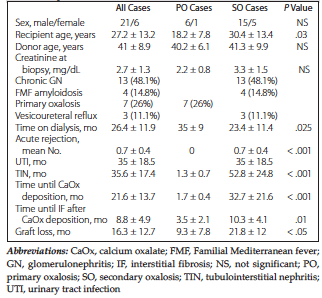
Table 1. Clinicopathologic Characteristics of 27 Patients with Calcium Oxalate Deposition
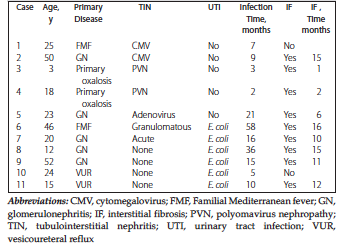
Table 2. Distribution of Patients With Tubulointerstitial Nephritis and Urinary Tract Infection