Volume: 15 Issue: 2 March 2017 - Supplement - 2
FULL TEXT
Propranolol was first used in 2008 to treat hemangioma; its efficacy and safety have since changed the classical treatment indications. Infantile hepatic hemangioma presents as a spectrum of clinical conditions varying from simple asymptomatic lesions to lethal complications. Tufted hemangioma and Kaposiform hemangioendothelioma are congenital vascular tumors that lead to Kasabach-Merritt syndrome. Hemangiomas, like pure arteriovenous malformations, can cause hyperdynamic heart failure, and diffuse nodular-type hemangiomas can present with hypothyroidism. Respiratory problems and hepatic failure can be associated with diffuse nodular-type liver hemangiomas. There is a spectrum of approaches to management, varying from "watchful waiting" to liver transplant. In the age of propranolol, there has been a prominent change in the infantile hepatic hemangioma treatment algorithm. Our suggestion is early treatment with 3 mg/kg/day propranolol plus 1.0 to1.5 mg/kg/day prednisolone in all patients. This protocol is the most effective strategy for type 3 infantile hepatic hemangioma. Approximately one-third of patients with abdominal compartment syndrome in the era before propranolol treatment required liver transplant; this new treatment obviates transplant for many of these patients.
Key words : Infantile hepatic hemangioma, Liver transplantation, Prednisolone, Propranolol
Introduction
Vascular tumors are the most common benign tumors of childhood; the majority are hemangiomas.1 Hemangiomas that are present at birth are called congenital hemangioendotheliomas. In contrast, infantile hemangiomas are not present at birth. They usually begin as a slight color change in the skin, like a minor traumatic lesion, but begin to protrude from the surface of the skin after a few months. The growth stage of infantile hemangiomas is complete after around 1 year of growth. At that time, regression or involution begins, continuing for nearly 10 years.2 Benign vascular tumors may involve many organs and systems; various specialists and subspecialists may therefore have a role in diagnosis and treatment. Some infantile hemangiomas lead to functional problems with vision, hearing, or feeding or create risk of infection according to their site and growth period. In these circumstances, pediatric oncologists are part of the medical team.
The most common drug used in the treatment of infantile hemangiomas is an oral steroid.3 Previously, intralesional steroids were used for hemangiomas located around the eye. In addition, interferons, vincristine, embolization, and surgical procedures, including liver transplant, have been used to treat severe congenital hemangioendotheliomas. Severe conditions requiring such treatment include liver lesions complicated by hyperdynamic heart failure from intravascular shunts, coagulopathy caused by consumption of thrombocytes and coagulation factors in the vascular lesions, mass effects causing diaphragmatic compression, and abdominal compartment syndrome.3
In July 2008, a case report in the New England Journal of Medicine described the efficacy of the beta blocker propranolol for treating a dermal hemangioma.4 A year later, we had a good treatment result with propranolol plus low-dose prednisolone therapy in a patient who had previously received methylprednisolone, interferon, and vincristine.5 Since this experience, we have been using propranolol and short-course prednisolone therapy for infantile hemangiomas. In 2015 alone, we used this regimen in 146 patients. We have previously presented our results at national and international congresses and in medical journals.6-8
Liver hemangiomas in infancy
It is important to mention that vascular lesions of the pediatric liver are different from vascular lesions in adults. In adults, hemangioendothelioma of the liver is a borderline malignant tumor. In children, the term "infantile hepatic hemangioma" (IHH) is recommended instead of hemangioendothelioma, to distinguish this from the adult lesion.9 Most of these vascular lesions are present at birth, having completed their growth in utero. These are the lesions that lead to severe complications in the postnatal period.
The clinical features of liver hemangiomas are different from those of pediatric dermal lesions. At the time of diagnosis, they may consist of a solitary lesion or multiple masses.9-12 It is unclear whether they are present at birth, when exactly they manifest, or how they change over time.11 They are classified according to the number of lesions present and the nodularity of multiple masses. The most common classification is that of the International Society for the Study of Vascular Anomalies (ISSVA), and we have used this classification here. According to the ISSVA criteria, infantile liver hemangiomas are sorted into 3 groups: focal lesions, multifocal lesions, and diffuse lesions.9
Focal lesions are, by definition, solitary. Rapid blood flow in the hemangioma is detected by Doppler ultrasonography. Usually there are arteriovenous shunts present on angiography. Hyperdynamic heart failure may be seen. Focal lesions are usually present at birth and can be detected in the antenatal period using fetal ultrasonography. These lesions are accepted as equivalent to congenital hemangioendotheliomas (CHEs) of the skin. Dermal CHEs are grouped into rapidly involuting congenital hemangioendotheliomas and noninvoluting congenital hemangioendotheliomas, according to their clinical behavior.9 Focal infantile hemangiomas of the liver are assumed to be similar to the rapidly involuting type and undergo involution at 12 to 18 months of age. Tufted hemangioendotheliomas and Kaposiform hemangioendotheliomas are focal lesions of infancy and are grouped together with IHH as types of CHE. Consumption coagulopathy is seen in both tufted CHE and Kaposiform hemangioendothelioma; the latter is a malignant vascular tumor with an aggressive course.
Multifocal lesions usually demonstrate arteriovenous shunts on angiography, but the lesions themselves are typically asymptomatic. High-output cardiac failure can be seen in some patients. These lesions usually present with dermal hemangiomas, and they are not present during the antenatal and neonatal periods. Their features resemble those of dermal infantile hemangiomas.
Diffuse lesions are numerous multiple lesions with a nodular shape that cause hepatomegaly. They compress the inferior vena cava, the diaphragm, and surrounding tissues, and this is known as abdominal compartment syndrome. Without treatment, multiorgan failure develops. Mortality at this stage is high. For patients who do not respond to high-dose steroid therapy, the last resort is liver transplant. Another issue sometimes seen with diffuse hemangioendothelioma is hypothyroidism,11 which occurs because of overproduction of type 3 iodothyronine deiodinase. Hypothyroidism, if not treated, leads to ineffective myocardial contractility and heart failure in the early stages and may later lead to mental retardation and developmental delays.
Liver hemangiomas: management algorithm before propranolol
Classic-pattern hemangiomas are classified as focal, multifocal, and diffuse-type after excluding other entities using biopsy and other diagnostic procedures. The classic treatment algorithm has been previously presented.9 For focal and multifocal lesions with congestive heart failure (CHF), steroid treatment is recommended. After the CHF improves, steroids are discontinued, and the patient is followed. If CHF does not improve, embolization of the arteriovenous shunts should be performed. All patients with IHH should be followed closely using periodic ultrasonography until the lesion resolves. Patients with diffuse lesions of the liver must be evaluated for hypothyroidism and should be treated with hormone replacement and steroids. In abdominal compartment syndrome, the patient should be referred early to transplant surgeons, with transplant performed if necessary.
Materials and Methods
We conducted a retrospective analysis of all patients with IHH at our institution treated with propranolol. Our treatment strategy for propranolol is depicted in Figure 1 and described, step by step below. Written informed consent was obtained from all patients.
The diagnosis of IHH was made using abdominal ultrasonography, performed by an experienced radiologist. This was usually adequate for diagnosis; Doppler ultrasonography was considered helpful but not routinely necessary. If there was a dermal lesion present, it was usually easy to diagnose liver hemangioma. Dynamic magnetic resonance imaging (MRI) or computed tomography was necessary in selected patients. If no heart failure was present, the patients did not undergo magnetic resonance angiography for detection of shunts.
The differential diagnosis for IHH included metastatic neuroblastoma, multifocal epithelial tumors, and germ cell tumors. Metastatic neuroblastoma, in particular, can appear very similar to the diffuse nodular type of IHH (type 3). Patients with neuroblastomas were evaluated for mass lesions of the adrenal and paraspinal sympathetic ganglia regions. For germ cell tumors and epithelial liver tumors, serum alpha-fetoprotein levels were obtained. Neuron-specific enolase and vanillylmandelic acid were evaluated in patients with neuroblastoma. If the diagnosis was not possible using dynamic MRI in atypical patients, tru-cut biopsy was performed to exclude other types of lesions.
Because the expected complications are different in each group, IHH was classified as focal, multifocal, and diffuse-type, according to the ISSVA criteria, before treatment.9 Patients undergoing treatment with propranolol plus low-dose, short-course prednisolone were evaluated with complete blood count and serum biochemistry, including basic liver and kidney function tests (aspartate transaminase, alanine transaminase, alkaline phosphatase, blood urea nitrogen, and creatinine) and serum glucose levels. We used electrocardiography for routine cardiac testing.
Determination of complications
In patients with prominent heart failure, echocardiography was performed to evaluate for arteriovenous shunting. This modality detected ventricular overload in the early stages of arteriovenous shunting. If echocardiography was normal, there was no indication for magnetic resonance angiography. Consumption coagulopathy was evaluated initially using platelet levels, activated partial thromboplastin time, and prothrombin time. If these tests were prolonged, patients were further evaluated using d-dimer and fibrin degradation product levels. Patients with type 3 IHH were evaluated for hypothyroidism using free triiodothyronine, free thyroxine, and thyroid-stimulating hormone levels.
Treatment
Oral propranolol at 3 mg/kg/day for 2 doses, plus oral prednisolone at 1.0 to 1.5 mg/kg/day for 2 doses, was started in all patients, regardless of the type of vascular lesion. In patients with heart failure, hypothyroidism, consumptive coagulopathy, or abdominal compartment syndrome, specific therapeutic regimens were added from the beginning of treatment. In patients with heart failure, propranolol was started at a dose of 1 mg/kg/day, and patients followed up with a cardiologist. Propranolol was not contraindicated in patients with heart failure; rather, it was considered therapeutic.13
Follow-up
In patients with complications, the treatment response to specific supportive therapy was closely followed. In patients with arteriovenous shunts, earlier embolization was indicated if the severity of the heart failure increased. If embolization was not adequate, lobectomy or partial resection of the liver was sometimes indicated. If the clinical situation was stable, propranolol plus low-dose, short-course steroids were continued.
Reevaluation
Treatment results were evaluated every month in clinically stable patients. A detailed clinical examination and ultrasonography were done routinely to assess for hemangioma regression. In patients without a treatment response, biopsy was performed to confirm the diagnosis. Biopsy was performed in 2 patients in this stage: the histopathologic diagnosis was idiopathic sinusoidal dilation. We excluded these patients from analysis because of misdiagnosis.
Termination of therapy
In patients who show a treatment response, the duration of therapy remains controversial. In patients whose lesions disappeared, we discontinued treatment. Otherwise, it seemed logical to end treatment around 1 year of age in all patients. The treatment period was typically 6 to 8 months for dermal hemangiomas.
Results
We evaluated 13 patients with IHH between July 1, 2009, and June 30, 2016. The important clinical features are outlined in Table 1. Only 38.5% of patients were girls. For comparison, of the patients we saw with dermal hemangioma during the same time period, 78% were girls. The age range was 1.1 to 7.2 months, with a median age of 2.0 months. The hemangioma was type 1 in 3 patients, type 2 in 2 patients, and type 3 in 8 patients.9 In 9 patients (69%), dermal hemangiomas were present. To make the diagnosis of IHH, we used ultrasonography in 4 patients, ultrasonography plus MRI in 8 patients, and ultrasonography plus MRI and biopsy in 1 patient. One patient had abdominal compartment syndrome and 1 had hypothyroidism. There were no patients with heart failure or consumptive coagulopathy in this series.
The treatment duration ranged from 2 to 22 months (median, 7 months).There was a complete response in 9 patients (69%). In 1 patient, treatment was terminated at 4 months with a partial response. This patient was followed for 8 months, with stable type 3 lesions. The other 3 patients were treated for 9, 16, and 22 months, with follow-up periods of 15, 34, and 25 months. The patient who was treated for 16 months had treatment for hypothyroidism started at another center; the hypothyroidism was permanent after cessation of treatment for IHH. In the patient who was treated for 22 months, the histopathologic diagnosis was focal-type IHH. Figure 2 shows pre- and posttreatment MRIs in a patient with type 3 IHH who had a good response to therapy.
Discussion
In the age of propranolol, there has been a prominent change in the IHH treatment algorithm. Our suggestion is early treatment with 3 mg/kg/day propranolol plus 1.0 to 1.5 mg/kg/day prednisolone in all patients. Steroids might increase the activity of propranolol. In addition to propranolol, we have given a single 7-day course of prednisolone to all patients with infantile hemangioma since January 2012. Since that time, the superiority of propranolol plus prednisolone treatment has been reported in the literature.14
Treatment duration changes according to the observed response. Treatment is considered complete if lesions are absent on follow-up ultrasonography. There was no recurrence in our 5 patients who were in complete remission after 2 to 4 months of therapy. This lack of recurrence distinguishes IHH from dermal infantile hemangiomas, where 20% to 25% of patients experience recurrence.15
Our opinion is that propranolol plus low-dose, short-course prednisolone therapy is the most effective strategy for type 3 IHH. Approximately one-third of patients with abdominal compartment syndrome in the era before propranolol treatment have required liver transplant; this new treatment obviates transplant for many of these patients.
References:
- Cordisco MR. Hemangiomas of infancy: epidemiology. In: Mattasi R, Loose DA, Vaghi M, eds. Hemangiomas and Vascular Malformations: An Atlas of Diagnosis and Treatment. 2nd ed. Milan: Springer-Verlag; 2015:55-58.
CrossRef - Cordisco MR. Hemangiomas: clinical picture. In: Mattasi R, Loose DA, Vaghi M, eds. Hemangiomas and Vascular Malformations: An Atlas of Diagnosis and Treatment. 2nd ed. Milan: Springer-Verlag; 2015:67-76.
CrossRef - Berlien HP, Philipp C. Principles of treatment of hemangiomas. In: Mattasi R, Loose DA, Vaghi M, eds. Hemangiomas and Vascular Malformations: An Atlas of Diagnosis and Treatment. 2nd ed. Milan: Springer-Verlag; 2015:89-96.
CrossRef - Léauté-Labrèze C, Dumas de la Roque E, Hubiche T, Boralevi F, Thambo JB, Taïeb A. Propranolol for severe hemangiomas of infancy. N Engl J Med. 2008;358(24):2649-2651.
CrossRef - PubMed - Sarıalioğlu F, Erbay A, Demir S. Response of infantile hepatic hemangioma to propranolol resistant to high-dose methylprednisolone and interferon-α therapy. Pediatr Blood Cancer. 2010;55(7):1433-1434.
CrossRef - PubMed - Erbay A, Sarialioglu F, Malbora B, et al. Propranolol for infantile hemangiomas: a preliminary report on efficacy and safety in very low birth weight infants. Turk J Pediatr. 2010;52(5):450-456.
PubMed - Yazici N, Erbay A, Sarialioglu F, Gumus A, Demir D, Avcı S. Propranolol in hemangiomas: growing experience in 31 cases in a single institute [abstract O087]. 43rd Conference of the International Society of Pediatric Oncology (SIOP), Auckland, New Zealand, 28th-30th October, 2011. SIOP Abstracts. Pediatr Blood Cancer. 2011;57(5):729.
- Yazici N, Sarialioglu F, Erbay A, Erdogan I, Misirlioglu PK. Beta blocker treatment in hemangiomas: experience in 344 cases in a single institute. 46th Congress of the International Society of Pediatric Oncology (SIOP), Toronto, Canada, 22nd-25th October, 2014. SIOP abstracts. Pediatric Blood Cancer 2014;61(S2):356.
- Christison-Lagay E, Burrowa PE, Alomari A, et al. Hepatic hemangiomas: subtype classification and development of a clinical practice algorithm and registry. J Pediatr Surg. 2007;42(1):62-67; discussion 67-68.
CrossRef - PubMed - Kim EH, Koh KM, Park M, Kim BE, Im HJ, Seo JJ. Clinical features of infantile hepatic hemangioendothelioma. Korean J Pediatr. 2011;54(6):260-266.
CrossRef - PubMed - Moon SB, Kwon HJ, Park KW, Yun WJ, Jung SE. Clinical experience with infantile hepatic hemangioendothelioma. World J Surg. 2009;33(3):597-602.
CrossRef - PubMed - Kassarjian A, Zurakowski D, Dubois J, Paltiel HJ, Fishman S, Burrows PE. Infantile hepatic hemangiomas: clinical and imaging findings and their correlation with therapy. AJR Am J Roentgenol. 2004;182(3):785-795.
CrossRef - PubMed - Doi M, Yano M, Kobayashi S, et al. Propranolol prevents the development of heart failure by restoring FKBP12.6-mediated stabilization of ryanodine receptor. Circulation. 2002;105(11):1374-1379.
CrossRef - PubMed - Aly MM, Hamza AF, Abdel Kader HM, Saafan H, Ghazy MS, Ragab IA. Therapeutic superiority of combined propranolol with short steroids course over propranolol monotherapy in infantile hemangioma. Eur J Pediatr. 2015;174(11):1503-1509.
CrossRef - PubMed - Shah SD, Baselga E, McCuaig C, et al. Rebound growth of infantile hemangiomas after propranolol therapy. Pediatrics. 2016;137(4). doi: 10.1542/peds.2015-1754.
CrossRef

Volume : 15
Issue : 2
Pages : 74 - 78
DOI : 10.6002/ect.TOND16.L19
From the 1Department of Pediatric Oncology-Hematology, the 2Department of Interventional Radiology, the 3Department of Radiology, and the 4Department of Pediatric Gastroenterology-Hepatology and Nutrition, Baskent University Faculty of Medicine, Ankara, Turkey
Acknowledgements: The authors have no financial disclosures and have no conflicts of interest to disclose.
Corresponding author: Faik Sarıalioğlu, Baskent University Faculty of Medicine, Department of Pediatric Hematology-Oncology, 06490-Bahcelievler, Ankara, Turkey
Phone: +90 312 321 0003
E-mail: faik.sarialioglu@hotmail.com
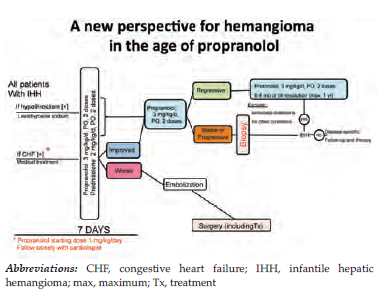
Figure 1. A New Perspective for Infantile Hepatic Hemangioma in the Age of Propranolol
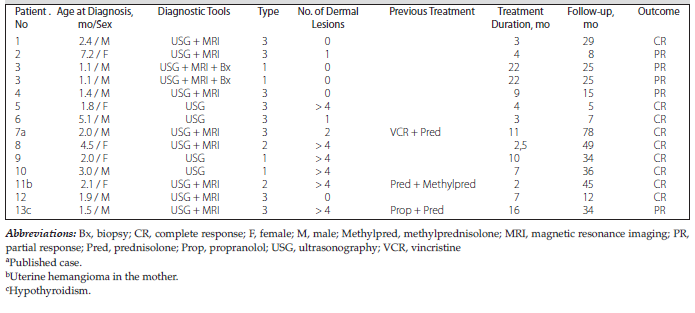
Table 1. Patient Characteristics
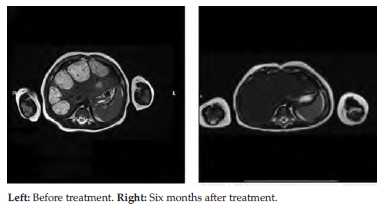
Figure 2. Results of Propranolol Plus Low-Dose, Short-Course Prednisolone Therapy for Infantile Hepatic Hemangioma