Volume: 15 Issue: 2 March 2017 - Supplement - 2
FULL TEXT
Objectives: Liver transplant is a high-risk surgery for cardiac events. The risk of 30-day major cardiac adverse events is estimated at more than 5%. In this retrospective study, we evaluated our preoperative cardiac risk assessment approach.
Materials and Methods: We evaluated 58 adult patients who underwent liver transplant between May 2011 and May 2015. Preoperative cardiac risk factors and results of diagnostic tests were noted. Patients were divided into 2 groups: patients with or without hepatocellular carcinoma. Electrocardiogram, echocardiogram, and treadmill tests were performed for preoperative cardiac evaluation in all candidates for liver transplant. Results of these tests showed our preference for myocardial perfusion scintigraphy and/or coronary angiography and heart catheterization.
Results: Mean age of patients was 46.5 ± 14.5 years. The most common cardiovascular risk factor was family history of coronary artery disease (24.1%) in all patients. Diabetes mellitus (15.5%) was the most common risk factor in the patient group without hepatocellular carcinoma. Three patients had already known coronary artery disease (5.2%). Of 16 patients (27.6%) who underwent coronary angiography, 4 were in the hepatocellular carcinoma group. Coronary revascularization by stent implantation was necessary for 1 patient in the hepatocellular carcinoma group; 1 patient in the group without hepatocellular carcinoma underwent preoperative coronary bypass surgery.
Conclusions: No consensus exists for cardiovascular risk stratification and preoperative cardiovascular evaluation of liver transplant candidates. Noninvasive stress tests are not always feasible for all liver transplant candidates because of poor mobility and poor exercise capacity. With early diagnoses of cardiovascular conditions and preventive recommendations, liver transplant can be performed safely before spread of the disease, which is essential for carcinoma patients. Angiographic evaluation of liver transplant candidates for hepatocellular carcinoma is strongly recommended.
Key words : Hepatic transplantation, Hepatocellular cancer, Preoperative procedures
Introduction
Cardiac events account for 40% of perioperative mortality in noncardiac surgery. However, with preventive procedures, the overall perioperative cardiac event rate may be lower than1%. Liver transplant (LT) is the definitive treatment for patients with decompensated end-stage liver disease (ESLD). Liver transplant candidates usually have multiple comorbidities, and one of these comorbidities is cardiovascular disease.1 Presence of cardiovascular disease is associated with poor prognosis.2
Increased cardiac output, compromised ventricular response to stress, reduced systemic vascular resistance, and bradycardia are the main pathophysiologic changes in all ESLD patients. The cardiovascular disease in ESLD patients may vary from minimal electrocardiogram (ECG) changes to heart failure.3 The most common cardiovascular conditions in ESLD are QT interval prolongation, hypertension, ischemic heart disease, cardiomyopathies (systolic and/or diastolic dysfunction), heart failure, hepatopulmonary syndrome, and portopulmonary hypertension.3
Corrected QT interval prolongation is the most common ECG abnormality among LT candidates (45% of cirrhotic patients).4 Prolonged corrected QT may lead to electromechanical uncoupling and lead to sudden cardiac death after a stressful condition such as LT.4 Over the long term, LT improves or normalizes corrected QT prolongation in 50% of patients.5
The prevalence of coronary artery disease (CAD) in LT candidates varies, reported to range from 2% to 28%.6 The prevalence rate increases especially among patients over 50 years old.6 Prevalence of CAD risk factors are also prevalent in LT candidates.7 Age > 50 years, male gender, hypertension, dyslipidemia, diabetes, and obesity are the most common clinical conditions. Presence of more than 1 risk factor (other than age) places LT candidates at a moderate to severe risk of CAD.7 In addition, nonalcoholic steatohepatitis independently increases the risk of CAD. Significant CAD is seen in approximately 23% of these patients.8
Systolic dysfunction in patients with cirrhosis is diagnosed as the inability of the heart to increase ejection fraction under stress.4 Systolic dysfunction is associated with a high incidence of pulmonary edema (18%) after LT.9 Diastolic dysfunction is more severe in patients with ascites. It is important to diagnose diastolic dysfunction because it may result in acute heart failure and pulmonary edema after LT and transjugular intrahepatic portosystemic shunt, thus contributing to high morbidity and mortality.10
There are no specific guidelines for cardiovascular evaluation in LT candidates. After a detailed history and physical examination are obtained, generally, 12-lead ECG and 2-dimensional echocardiography are performed as baseline tests. Advanced investigations are done per patient characteristics and local protocols. An ECG is recommended to evaluate QT interval and also rhythm abnormalities. An echocardiogram examination is a noninvasive, accessible, and reproducible test and helpful in detecting structural and functional heart abnormalities. Both systolic and diastolic dysfunction can easily be evaluated. Presence of hepatopulmonary syndrome may also be evaluated with the use of echocardiogram with bubble contrast.11
Pharmacologic stress echocardiography is a widely used screening tool for risk stratification. Dobutamine is mainly used, which mimics hemodynamic conditions encountered during LT. During dobutamine stress echocardiography (DSE), left ventricular wall motion abnormalities can be evaluated with increasing doses of continues dobutamine infusion. The sensitivity and specificity of DSE in patients with chronic liver disease vary between series.12 According to Williams and associates, DSE positivity is not correlated with intraoperative cardiac events.13 However, a normal stress test has a high negative predictive value (> 90%) in patients who are undergoing LT.14
Nuclear myocardial perfusion scintigraphy (MPS) is also used for determining cardiac risk and eligibility for LT. Coronary vasodilating agents (dipyridamole or adenosine) are used during this test. Nuclear cardiac involvement during rest and maximal exercise are compared to evaluate ischemia. Aydinalp and associates found the specificity and sensitivity of MPS to be 61% and 90% among LT candidates with severe CAD (stenosis > 70%). Coronary angiography (CAG) showed severe CAD in only 9.4% of patients with abnormal MPS results.15 As a result, MPS may be helpful in identifying only patients who are at low risk for poor cardiac outcomes.
Coronary angiography is the criterion standard diagnostic test to evaluate CAD. Routine CAG carries more risk than benefit in LT candidates and is contraindicated.16 However, coronary angiography must be done in patients with known CAD, more than 1 cardiovascular risk factor (other than age), and a positive stress test. Coagulopathy and renal insufficiency are the main reasons for procedural complications and must be corrected before the coronary angiography. A transradial approach may also lower coagulopathy-associated complications.17 Heart catheterization also allows evaluation of intracardiac pressures and pulmonary artery and wedging pressures. Catheterization not only gives anatomic information but also gives much functional information about the conditions of the heart.
There are many other noninvasive tests to evaluate preoperative cardiovascular status, but their roles are still unclear. Cardiopulmonary exercise testing simultaneously evaluates the cardiovascular and respiratory system during exercise. Prentis and associates investigated the role of cardiopulmonary exercise testing among LT candidates and found that submaximal testing predicts 90-day survival after LT.18 However, the role of cardiopulmonary exercise testing in evaluation of LT candidates is still not clear and requires further investigation. A 6-minute walk test also has been found to have significantly lower sensitivity in ESLD patients.19 This test has been evaluated in few studies with small patient numbers,3 and its predictive role for posttransplant outcomes is still unclear. Coronary calcium scoring is an acceptable tool to identify early atherosclerotic disease in asymptomatic LT candidates.20 However, its usefulness to predict preoperative and postoperative cardiovascular events requires further prospective evaluation. Cardiac magnetic resonance imaging is useful, especially in the setting of diseases affecting both the heart and liver (such as hemochromatosis), to show severity of iron load. Greenwood and associates demonstrated that stress cardiac magnetic resonance imaging has high diagnostic accuracy and is superior to nuclear stress testing in detecting significant CAD.21
In this study, we evaluated our local preoperative cardiac risk assessment approach.
Materials and Methods
This study was approved by the Baskent University Local Ethics Committee. We evaluated 58 adult patients (37 men). Patients included 47 with chronic hepatic failure and 11 with hepatocellular carcinoma (HCC) who underwent LT between May 2011 and May 2015. Preoperative cardiac risk factors, cardiac tests, and results of the tests were noted. Patients were divided into 2 groups: patients with HCC and patients without HCC (non-HCC). Echocardiogram, ECG, and treadmill exercise tests are routinely performed for preoperative cardiac evaluation in all LT candidates.
Results
Mean age was 46.5 ± 14.5 years. Preoperative distributions of cardiovascular risk factors are presented in Table 1. The most common cardiovascular risk factor was family history of CAD (24.1%) in all patients. Diabetes mellitus (15.5%) was the most common risk factor in the non-HCC group. The main difference between groups was age. Patients with HCC were significantly older than those without HCC (P = .034). Three patients had already known CAD (5.2%). Distributions of preoperative stress tests and results of these tests are presented in Table 2. Of 58 patients, 16 (27.6%) underwent CAG. Four of these patients were in the HCC group (36.4%), and 12 were in the non-HCC group (25.5%). Coronary revascularization by stent implantation was necessary in 1 patient in the HCC group. In the non-HCC group, 1 patient underwent preoperative coronary bypass surgery. No patient needed coronary bypass surgery in the HCC group.
Discussion
Our study was retrospective, and the sample size was too small to make overall recommendations. We found that risk factors for CAD were similar between patients with and without HCC. The HCC group was older, but this was an expected result. Echocardiograms and ECGs were performed for all LT candidates. Our study showed that DSE was never used to evaluate preoperative cardiovascular status for LT candidates in our center. This may be explained by our local experience during the study period, as we started to use DSE more regularly after 2015. Our results also showed that we commonly use CAG and heart catheterization. This situation may also be explained by our local experience, as we perform many CAG procedures with high success and low complication rates. An emphasis to decrease wait time, especially in HCC patients, may be another explanation for frequent use of CAG and heart catheterization, as CAG and heart catheterizations are the fastest and most accurate ways for cardiovascular evaluation.
Conclusions
A significant scientific gap still exists concerning preoperative evaluations of LT candidates. Further large multicenter randomized prospective studies are required to close this gap. Echocardiograms and ECGs must be conducted in all LT candidates. Noninvasive stress testing protocols differ according to local settings and experiences of transplant centers. It is reasonable to follow a protocol that goes from noninvasive tests to invasive tests for preoperative evaluation. Routine CAG is contraindicated but must be performed to evaluate CAD after correcting coagulopathy, especially in patients with known CAD, more than 1 cardiovascular risk factor (other than age), and a positive stress test. However, decisions must be individualized. Skipping noninvasive stress tests and performing CAG and heart catheterization early may be preferred to save time, which could be lifesaving in LT candidates with HCC.
References:
- Plotkin JS, Scott VL, Pinna A, Dobsch BP, De Wolf AM, Kang Y. Morbidity and mortality in patients with coronary artery disease undergoing orthotopic liver transplantation. Liver Transpl Surg. 1996;2(6):426-430.
CrossRef - PubMed - Xia VW, Taniguchi M, Steadman RH. The changing face of patients presenting for liver transplantation. Curr Opin Organ Transplant. 2008;13(3):280-284.
CrossRef - PubMed - Sehgal L, Srivastava P, Pandey CK, Jha A. Preoperative cardiovascular investigations in liver transplant candidate: an update. Indian J Anaesth. 2016;60(1):12-18.
CrossRef - PubMed - Wong F. Cirrhotic cardiomyopathy. Hepatol Int. 2009;3(1):294-304.
CrossRef - PubMed - Møller S, Henriksen JH. Cirrhotic cardiomyopathy: a pathophysiological review of circulatory dysfunction in liver disease. Heart. 2002;87(1):9-15.
CrossRef - PubMed - Plotkin JS, Benitez RM, Kuo PC, et al. Dobutamine stress echocardiography for preoperative cardiac risk stratification in patients undergoing orthotopic liver transplantation. Liver Transpl Surg. 1998;4(4):253-257.
CrossRef - PubMed - Tiukinhoy-Laing SD, Rossi JS, Bayram M, et al. Cardiac hemodynamic and coronary angiographic characteristics of patients being evaluated for liver transplantation. Am J Cardiol. 2006;98(2):178-181.
CrossRef - PubMed - Targher G, Arcaro G. Non-alcoholic fatty liver disease and increased risk of cardiovascular disease. Atherosclerosis. 2007;191(2):235-240.
CrossRef - PubMed - Fouad TR, Abdel-Razek WM, Burak KW, Bain VG, Lee SS. Prediction of cardiac complications after liver transplantation. Transplantation. 2009;87(5):763-770.
CrossRef - PubMed - Rabie RN, Cazzaniga M, Salerno F, Wong F. The use of E/A ratio as a predictor of outcome in cirrhotic patients treated with transjugular intrahepatic portosystemic shunt. Am J Gastroenterol. 2009;104(10):2458-2466.
CrossRef - PubMed - Rodriguez-Roisin R, Krowka MJ, Hervé P, Fallon MB; ERS Task Force Pulmonary-Hepatic Vascular Disorders (PHD) Scientific Committee. Pulmonary-hepatic vascular disorders (PHD). Eur Respir J. 2004;24(5):861-880.
CrossRef - PubMed - Ehtisham J, Altieri M, Salamé E, Saloux E, Ollivier I, Hamon M. Coronary artery disease in orthotopic liver transplantation: pretransplant assessment and management. Liver Transpl. 2010;16(5):550-557.
CrossRef - PubMed - Williams K, Lewis JF, Davis G, Geiser EA. Dobutamine stress echocardiography in patients undergoing liver transplantation evaluation. Transplantation. 2000;69(11):2354-2356.
CrossRef - PubMed - Safadi A, Homsi M, Maskoun W, et al. Perioperative risk predictors of cardiac outcomes in patients undergoing liver transplantation surgery. Circulation. 2009;120(13):1189-1194.
CrossRef - PubMed - Aydinalp A, Bal U, Atar I, et al. Value of stress myocardial perfusion scanning in diagnosis of severe coronary artery disease in liver transplantation candidates. Transplant Proc. 2009;41(9):3757-3760.
CrossRef - PubMed - Fleisher LA, Beckman JA, Brown KA, et al. ACC/AHA 2007 Guidelines on perioperative cardiovascular evaluation and care for noncardiac surgery: a report of the American College of Cardiology/American Heart Association Task Force on practice guidelines. J Am Coll Cardiol. 2007;50(17):e159-241.
CrossRef - PubMed - Jolly SS, Amlani S, Hamon M, Yusuf S, Mehta SR. Radial versus femoral access for coronary angiography or intervention and the impact on major bleeding and ischemic events: A systematic review and meta-analysis of randomized trials. Am Heart J. 2009;157(1):132-140.
CrossRef - PubMed - Prentis JM, Manas DM, Trenell MI, Hudson M, Jones DJ, Snowden CP. Submaximal cardiopulmonary exercise testing predicts 90-day survival after liver transplantation. Liver Transpl. 2012;18(2):152-159.
CrossRef - PubMed - Enright PL, Sherrill DL. Reference equations for the six-minute walk in healthy adults. Am J Respir Crit Care Med, 1998;158(5 Pt 1):1384-1387.
CrossRef - PubMed - Budoff MJ. Screening for ischemic heart disease with cardiac CT: Current recommendations. Scientifica (Cairo). 2012;2012:812046.
CrossRef - Greenwood JP, Maredia N, Younger JF, et al. Cardiovascular magnetic resonance and single-photon emission computed tomography for diagnosis of coronary heart disease (CE‑MARC): a prospective trial. Lancet. 2012;379(9814):453-460.
CrossRef - PubMed

Volume : 15
Issue : 2
Pages : 65 - 68
DOI : 10.6002/ect.TOND16.L17
From the 1Cardiology Department and the 2General Surgery Department, Baskent University Faculty of Medicine, Ankara, Turkey
Acknowledgements: The authors declare that they have no sources of funding for this study, and they have no conflicts of interest to declare.
Corresponding author: Emir Karacaglar, Fevzi Cakmak Blvd. 10, St. No:45, Bahcelievler, Ankara, Turkey
Phone: +90 535 344 15 23
E-mail: dremirkaracaglar@hotmail.com
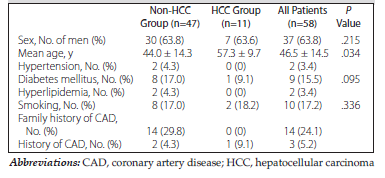
Table 1. Distributions of Cardiovascular Risk Factors
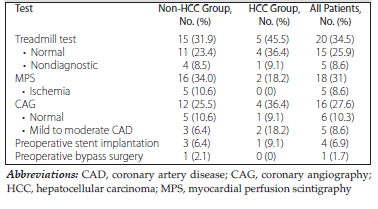
Table 2. Distributions of Preoperative Stress Tests