Volume: 15 Issue: 2 March 2017 - Supplement - 2
FULL TEXT
Objectives: Hepatocellular carcinoma is the sixth most common cancer worldwide and is the third highest cause of malignancy-related death. Because of its typically late diagnosis, median survival is approximately 6 to 20 months, with 5-year survival of < 12%. Hepatocellular carcinoma typically arises in the background of cirrhosis, with liver transplant regarded as the optimal therapy for selected patients. Initially, orthotopic liver transplant was limited to patients with extensive unresectable tumors, resulting in uniformly dismal outcomes due to high tumor recurrence rates. Here, we evaluated our long-term results with expanded-criteria liver transplant.
Materials and Methods: From December 1988 to January 2017, we performed 552 liver transplants at Baskent University. In candidates with hepatocellular carcinoma, our expanded criteria for liver transplant is applied regardless of tumor size and number, includes those without major vascular invasion and without distant metastasis, and those with negative cytology (if the patient has ascites). Since 1994, of 61 liver transplants for hepatocellular carcinoma, 36 patients received transplants according to our expanded criteria.
Results: Of 36 expanded-criteria patients, 11 were children and 25 were adults. Sixteen patients (4 pediatric, 12 adult) were within our expanded criteria both radiologically and pathologically before transplant. The other 20 patients (7 pediatric, 13 adult) were within Milan criteria radiologically before transplant; however, after liver transplant, when pathologic specimens were evaluated, patients were found to be within our center’s expanded criteria. During follow-up, 9/36 patients (25%) had hepatocellular carcinoma recurrence. In pediatric patients, 5-year and 10-year survival rates were 90%; in adults, 5-year survival was 58.7% and 10-year survival was 49.7%. Overall 5-year and 10-year survival rates were 71.7% and 62.7%.
Conclusions: Liver transplant is safe and effective in patients with hepatocellular carcinoma in combination with interventional radiology procedures, regardless of tumor size and number, without major vascular invasion and distant metastasis.
Key words : Deceased donor transplant, Living donor transplant, Pediatric transplant
Introduction
Hepatocellular carcinoma (HCC) is a common cancer with a dismal prognosis. It is the sixth most common cancer worldwide and the third highest cause of death related to malignancy. Because of its typically late diagnosis, the median survival following HCC diagnosis is approximately 6 to 20 months, and 5-year survival rate is less than 12%. Hepatocellular carcinoma typically arises in the background of cirrhosis. Liver transplant is regarded as an optimal radical therapy for selected patients with HCC.1,2 This treatment modality can be offered to patients with unresectable HCC regardless of the patient’s liver function. It can also treat the underlying liver disease and consequently decrease the risk of de novo HCC.3
The Milan criteria are often used to determine which patients will benefit from liver transplant. However, Milan criteria are normally applied to those with early-stage tumors, with many centers having center-based criteria for transplant for advanced-stage patients. In this study, we describe our expanded criteria for patients with unresectable HCC and evaluate the long-term results of liver transplant in these patients.
Materials and Methods
Between December 8, 1988, and January 1, 2017, we performed 552 liver transplants at our center. For this study, we retrospectively reviewed our liver transplant results in patients with HCC. At our center, our expanded criteria for liver transplant in HCC candidates includes patients regardless of tumor size and number, those without major vascular invasion and without distant metastasis, and those with negative cytology (if the patient has ascites) (Table 1). We found that 61 liver transplant procedures were performed for HCC (52 male and 9 female patients; 50 adults and 11 children), and 36 patients were transplanted according to the Baskent University expanded criteria.
Before transplant, all patients were evaluated radiologically (computed tomography, magnetic resonance imaging, or positron emission tomography-computed tomography) for tumor metastasis. Biopsies of suspicious lesions were performed. In addition to liver transplant, patients also received interventional radiology for down-staging. If possible, transcatheter arterial chemoembolization and radiofrequency ablation are performed prior to liver resection or transplantation. Liver transplant was considered for patients with HCC if the tumor was determined unresectable because of its location or concomitant liver disease. Tumor staging was determined according to the American Liver Tumor Study Group Modified tumor-node-metastasis staging system for HCC. During follow-up, in addition to routine laboratory tests, patients had alpha-fetoprotein tests and ultrasonography examinations every 3 months and computed tomography or magnetic resonance scans done every 6 months.
Results
Sixty-one patients had liver transplants for HCC (52 male and 9 female patients). Of these patients, 11 were children and 50 were adults. Forty-one patients had living-donor liver transplants (10 pediatric and 31 adult patients), and 20 patients had deceased-donor liver transplants (1 pediatric and 19 adult patients). Eighteen patients received down-staging therapy before liver transplant. We diagnosed HCC incidentally at pathologic examination in 6 patients (10.1%; 4 children and 2 adults). All 6 patients with incidental HCC diagnosis were still alive without HCC recurrence at 75 to 140 months.
Thirty-six patients received transplants according to the Baskent University expanded criteria, which included 11 children (30.5%)and 25 adults (69.5%). In the adult group, the most common cause of the liver disease was hepatitis B virus (HBV) infection (n = 16; 64%) (Table 2); in the pediatric group, the most common cause of liver disease was tyrosinemia type 1 (n = 5; 45.4%) (Table 3).
We found that 16 patients (4 pediatric and 12 adult patients) were within the Baskent University expanded criteria both radiologically and pathologically before transplant. The other 20 patients (7 pediatric and 13 adult patients) were within Milan criteria radiologically before transplant; however, after liver transplant, when pathologic specimens were evaluated, they were found to be within the Baskent University expanded criteria.
During follow-up, 9/36 patients (25%) had HCC recurrence (7 adult and 2 pediatric patients) (Tables 2 and 3). In 2 patients, we performed surgical resection for recurrence; the other patients were treated with interventional radiologic techniques.
In the pediatric group, 1 patient died due to HCC recurrence and liver failure (Table 3). In the adult group, 12 patients died, with 4 because of HCC recurrence and liver failure. The causes of death in the other patients included sepsis in 5 patient, cranial hemorrhage in 1 patient, and acute myocardial infarction in 2 patients (Table 2).
In the pediatric group, 5-year and 10-year survival rates of patients were 90%; in the adult group, the 5-year survival rate was 58.7% and the 10-year survival rate was 49.7% (Figure 1). The overall 5-year survival was 71.7%, and the overall 10-year survival rate was 62.7% (Figure 2).
Discussion
The first surgical treatment choice for HCC is resection. Because of the underlying liver disease, only 10% to 30% of patients have curative liver resection, although their 5-year survival rates range from 25% to 30%.1 Liver transplant, which is a treatment option for cirrhosis and HCC, is now an established surgical treatment for patients with HCC.4
Liver transplant for HCC according to the Milan criteria has been performed for many recipients with adjustments according to center-based selection methods. Since the landmark report of the Milan criteria by Mazzaferro and associates, which demonstrated comparable outcomes of patients with HCC having a single tumor smaller than 5 cm in diameter or up to 3 tumors smaller than 3 cm in diameter with no vascular invasion or extrahepatic disease determined by preoperative imaging studies, deceased-donor liver transplant has become an established treatment for cirrhotic patients with HCC.5 We published our early report about expanded criteria in 2006.6 In that study, we showed that expanded-criteria liver transplant in patients with HCC, especially when donation from a living related donor is possible, appears to inhibit disease recurrence and improve outcomes.
The annual incidence of HCC in the United States is 0.8 per 1 million children between the ages of 0 and 14 years and 1.5 per 1 million adolescents from 15 to 19 years old.7 The 5-year overall survival rate is 42% for children and adolescents with HCC.8 In pediatric patients, the most common cause of HCC is congenital or metabolic liver disease.9 Similar to the literature, in our pediatric patients, only 1 had HBV and the others had metabolic disease. In our series, pediatric patients had 5-year and 10-year survival rates of 90%, which were better than those shown in adults (5-year survival rate of 58.7% and 10-year survival rate of 49.7%).
In Turkey, most HCC develops in patients with cirrhosis. Turkey also has high rates of HBV and HCV seropositivity (HBV, 10%-40%; HCV, 7%-10%).10 In our adult group, the most common cause of liver failure was HBV. Patients with HBV infection received antiviral prophylaxis with 6 doses of anti-HBs antibody (Hepatect, Biotest AG, Dreieich, Germany) and lamivudine (100 mg/d). Anti-HBs antibody levels were maintained at greater than 100 IU by means of periodic antibody bolus infusions.
In Turkey, as in many other countries, family members of patients with HCC are often willing to serve as donors for liver transplant. The availability of living donors allows surgeons to perform liver transplant with more liberal criteria for tumor staging. Whenever possible, living related donors who can provide a segmental liver graft, freely and without social pressure or obligation, are preferred for recipient with large and/or numerous tumors of the liver, poor hepatic function, and no other chance for treatment.
In conclusion, careful evaluation of recipients before transplant plays a critical step in curative treatment. We carefully expanded the Milan criteria in our center. We believe that patients with HCC and a cirrhotic liver but without extrahepatic disease should be candidates for liver transplant whenever possible and that living-donor liver transplant must be considered as an alternative rescue therapy for many of these individuals. Interventional radiology also plays an important role in both pre-and post transplant in many HCC patients.
References:
- Haberal M, Emiroglu R, Karakayali H, et al. Expandedcriteriaforhepatocellularcarcinomaandlivertransplantation. Int Surg. 2007;92(2):110-115.
PubMed - Ma KW, Cheung TT. Surgical resection of localized hepatocellular carcinoma: patient selection and special consideration. J Hepatocell Carcinoma. 2016;4:1-9.
CrossRef - PubMed - Lee HW, Suh KS. Liver transplantation for advanced hepatocellular carcinoma. Clin Mol Hepatol. 2016;22(3):309-318.
CrossRef - PubMed - Akamatsu N, Cillo U, Cucchetti A, et al. Surgery and hepatocellular carcinoma. Liver Cancer. 2016;6(1):44-50.
CrossRef - PubMed - Mazzaferro V, Regalia E, Doci R, et al. Liver transplantation for the treatment of small hepatocellular carcinomas in patients with cirrhosis. N Engl J Med. 1996;334(11):693-699.
CrossRef - PubMed - Karakayali H, Moray G, Sozen H, Dalgic A, Emiroglu R, Haberal M. Expanded criteria for liver transplantation in patients with hepatocellular carcinoma. Transplant Proc. 2006;38(2):575-578.
CrossRef - PubMed - Howlader N, Noone AM, Krapcho M, et al(Eds.). Childhood cancer by the ICCC. In: SEER Cancer Statistics Review, 1975-2009 (Vintage 2009 Populations). Bethesda, MD: National Cancer Institute; 2012, section 29.
- PDQ Pediatric Treatment Editorial Board Web site. Childhood Liver Cancer Treatment (PDQ): Health Professional Version(2016 Sep 30). Bethesda, MD: National Cancer Institute; 2002. http://www.ncbi.nlm.nih.gov/books/NBK65790/. Accessed 28 February, 2017.
- Palaniappan K, Borkar VV, Safwan M, et al. Pediatric hepatocellular carcinoma in a developing country: Is the etiology changing? Pediatr Transplant. 2016;20(7):898-903.
CrossRef - PubMed - Haberal M, Dalgic A. New concepts in organ transplantation. Transplant Proc. 2004; 36(5):1219-1224.
CrossRef - PubMed

Volume : 15
Issue : 2
Pages : 55 - 58
DOI : 10.6002/ect.TOND16.L14
From the Departments of 1General Surgery, 2Anesthesiology, 3Pediatric Gastroenterology, 4Gastroenterology, and 5Pathology, Baskent University, Ankara, Turkey
Acknowledgements: The authors declare that they have no sources of funding for this study, and they have no conflicts of interest to declare.
Corresponding author: Mehmet Haberal, Baskent University, Taskent Caddesi No: 77, Bahcelievler 06490, Ankara, Turkey
Phone: +90 312 212 7393
E-mail: rectorate@baskent.edu.tr
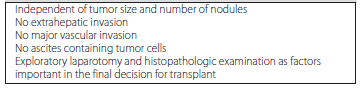
Table 1. Baskent University Expanded Criteria for Liver Transplant for Hepatocellular Carcinoma
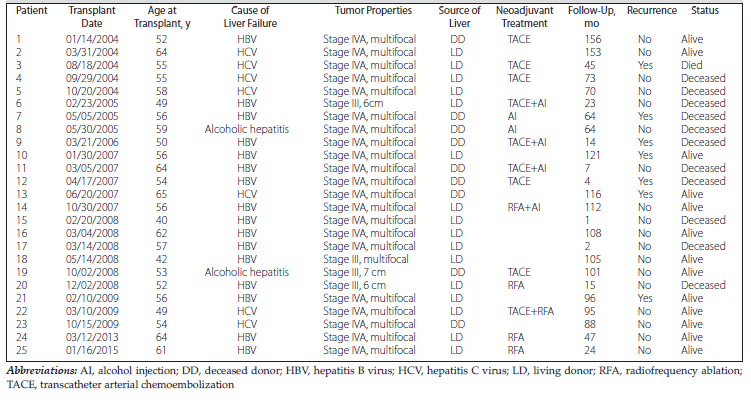
Table 2. Adult Patients
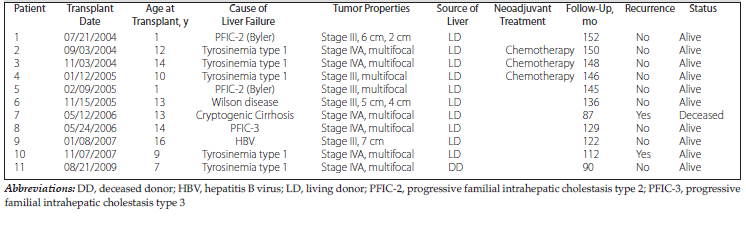
Table 3. Pediatric Patients
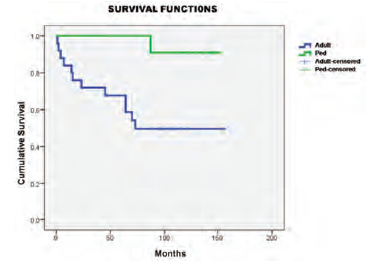
Figure 1. Survival Rates of Pediatric and Adult Patients
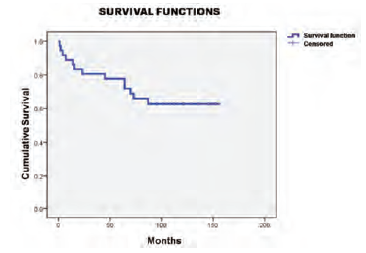
Figure 2. Survival Rates of All Patients