Volume: 15 Issue: 2 March 2017 - Supplement - 2
FULL TEXT
Objectives: Transarterial chemoembolization is a potential risk factor for hepatic artery damage, which may lead to severe consequences. We aimed to investigate this controversial issue in our population of liver transplant patients with hepatocellular carcinoma.
Materials and Methods: Between March 2006 and December 2016, a total of 262 patients with hepatocellular carcinoma underwent liver transplant at our institution. Of these, 22 (8.4%) had preoperative transarterial chemoembolization. We retrospectively reviewed the data of all patients, comparing those who did and did not undergo transarterial chemoembolization.
Results: The groups were similar in terms of patient sex, mean age, mean alpha-fetoprotein levels, and Milan criteria. The nontransarterial chemoembolization group had a significantly higher mean Model for End-Stage Liver Disease score. Hepatic artery thrombosis after liver transplantation was diagnosed in 6 of 22 patients (27%) in the transarterial chemoembolization group and in 12 of 240 patients (5%) in the nontransarterial chemoembolization group (P = .002). Retransplant was performed in 5 of the 6 patients with hepatic artery thrombosis in the transarterial chemoembolization group and 3 of the 12 patients in the nontransarterial chemoembolization group (P = .04).
Conclusions: In patients who undergo transarterial chemoembolization before liver transplantation, the incidence of hepatic artery thrombosis and retransplantation is significantly higher than in those who do not undergo this intervention. The tissues should be carefully handled at the time of transplantation to prevent trauma that may cause intimal dissection in the fragile vessels.
Key words : Intimal dissection, Retransplantation
Introduction
Transarterial chemoembolization (TACE) is among the locoregional treatment options for hepatocellular carcinoma (HCC). It is also a commonly used procedure for reducing dropout from the liver transplantation wait list, gaining time on the wait list, and downstaging HCC that exceeds the Milan criteria. The procedure involves inserting a catheter directly into the hepatic artery and infusing a chemotherapeutic agent directly into the tumor via the arterial branch that feeds the tumor. The branch is thus embolized, causing tumor necrosis. There is a risk of damage to the hepatic artery while placing the catheter, either from mechanical injury or from the chemotherapeutic agents administered (eg, doxorubicin hydrochloride, mitomycin C).1,2
The literature reflects the ongoing controversy over the effects of TACE administration before liver transplantation on postoperative hepatic artery complications. We aimed to investigate the relation of preoperative TACE and hepatic artery thrombosis (HAT) after liver transplantation.
Materials and Methods
Between March 2006 and December 2016, a total of 262 patients with HCC underwent liver transplantation at our institution. Of these, 22 (8.4%) underwent TACE before liver transplantation. We retrospectively reviewed the data of all patients, comparing those who did and did not undergo TACE. The study was approved by the Ethical Review Committee of the Institute. All of the protocols conformed to the ethical guidelines of the 1975 Helsinki Declaration. Written informed consent was obtained from all participants. We collected demographic data and information on tumor characteristics and the occurrence of HAT after liver transplantation; we also noted which patients underwent retransplantation. We used t test to compare the groups and Fisher exact test to determine statistical significance; a P value of < .05 was considered significant. Statistical analyses were performed using software (SPSS version 20.0, SPSS Inc., Chicago, IL, USA).
TACE procedure
At our center, a multidisciplinary team of radiologists, hepatologists, pathologists, infectious disease specialists, oncologists, and transplant surgeons made patient-based TACE decisions at weekly meetings. All TACE procedures were performed by a single experienced interventional radiologist. The patients underwent multiphasic multiple-detector computed tomography (CT) before the procedure and were made nil per os for about 8 hours prior to the TACE procedure. After referring physicians were consulted, routine medications were allowed the day of the procedure. All patients were monitored and provided with intravenous hydration throughout the procedure. Antibiotics covering gram-negative enteric organisms were routinely administered, and antiemetics were given as needed. After arterial access was established, selective celiac- and superior mesenteric angiography was performed. Cone-beam CT guidance was used for especially hypovascular lesions. Microcatheters were routinely used for superselective catheterization of the feeding arteries of the tumor, and a mixture of doxorubicin (50 mg/m2) and ethiodized oil (Lipiodol, Guerbet, Paris, France) was administered under continuous fluoroscopy. The amount of ethiodized oil was calculated as a volume equal to 2 to 3 times the tumor diameter (2-3 mL/cm) in highly vascularized tumors and 1 mL/cm for lesions with poor arterial supply.3 Embolization was then performed using a gelatin sponge (Spongostan, Ethicon, Somerville, NJ, USA). Devascularization of the tumor artery was the angiographic endpoint. All patients were closely monitored for postembolization syndrome, and symptomatic medication was administered as needed. Antibiotics were continued for 3 days after TACE.
Follow-up imaging consisted of contrast-enhanced CT or magnetic resonance imaging of the liver and was performed 4 to 6 weeks after TACE to assess the effect of embolization on the tumor. In patients with a residual arterially enhancing tumor, TACE was repeated. In patients with complete tumor necrosis, CT or magnetic resonance imaging was repeated every 3 months. In patients with recurrence who still fulfilled the University of California, San Francisco criteria, TACE was repeated again, a maximum of 3 times for this study.
Results
The groups were similar in terms of patient sex, mean age, mean alpha-fetoprotein level, and Milan criteria. The group without TACE had a significantly higher mean Model for End-Stage Liver Disease score. Detailed demographic data are given in Table 1. Two patients in the TACE group underwent TACE before transplantation for an indication other than HCC (one had a hepatoblastoma and the other had a neuroendocrine tumor metastasis).
Six of the 22 patients (27%) in the TACE group were diagnosed with HAT after liver transplantation; the diagnosis was made in 12 of the 240 patients (5%) in the group without TACE (P = .002). Retransplantation was performed in 5 of the 6 patients with HAT in the TACE group and 3 of the 12 patients with HAT in the non-TACE group (P = .04) (Table 1). Three of the 5 retransplanted patients in the TACE group were still alive at last follow-up (median follow-up, 380 days). Two of the 3 patients who underwent retransplantation in the non-TACE group died in the early period (< 1 month); the other patient died during long-term follow-up (2 years after retransplantation). Histopathologic examination of the explanted grafts of 3 patients in TACE group revealed intimal dissection in the hepatic artery (Figure 1).
Discussion
Histopathologic examination of hepatic artery complications after TACE can reveal arterial wall injuries, including edema, fibrosis, intimal thickening, necrosis, thrombosis, and intimal dissection.2,4 One of the most important factors involved in HAT is intimal dissection. This complication in the recipient hepatic artery may be recognized at the time of transplant surgery, and it results in occlusion of the artery. In patients who undergo TACE, the rate of intimal dissection at transplant is 58%; in patients who do not undergo TACE, the rate of intimal dissection is 29%. These changes are probably limited to the distal hepatic arterial branches. The proximal hepatic artery is unlikely to be affected to a considerable degree.4 In our series, the rate of HAT was significantly higher in the TACE group, and histopathologic examination of the explanted grafts revealed intimal dissection in the hepatic artery.
Another risk factor for HAT is a diameter mismatch between the graft and recipient arteries. Arteries with a large diameter are used for anastomosis in deceased-donor liver transplantation, where the incidence of HAT is about 3% to 5% in adult patients and 7% to 10% in pediatric patients.5 Our institution performs mostly living-donor liver transplantation, using arteries with a narrow diameter for anastomosis. Preoperative arterial injuries from TACE can directly preclude creating an anastomosis between donor- and recipient hepatic arteries in living-donor liver transplantation. The rate of HAT was 6.5% in our series. The reported incidence of HAT after living-donor liver transplantation is 3.3%, and it is 7.2% in patients who are less than 3 years of age.6
Patients who undergo chemoembolization develop hepatic arterial complications at a rate of 13% to 22%, at a time of 1 to 2 months after liver transplant. These patients have a shorter interval between chemoembolization and transplant. Presumably, there may not have been adequate recovery of the vascular endothelium after TACE, the hepatic vasculature typically requires 3 months to recover from chemoembolization.1,7 In our series, the rate of HAT was 27% in the TACE group, and HAT developed at a median of 3 days (range, 1-140 days) after liver transplantation. The median interval between the last TACE session and liver transplantation was 3 months (range, 2 days-3 years), and the rate of HAT was significantly higher in the TACE group. Our goal for early TACE administration (< 7 days) before liver transplantation is to reduce tumor spread from intraoperative manipulation.8,9 The rate of retransplantation is significantly higher in our TACE group, as the intimal injury is more severe and extends to the celiac trunk. Therefore, the need for retransplantation is greater than in patients without this intervention.
Conclusions
In patients who undergo TACE before liver transplantation, the incidences of postoperative HAT and retransplantation are significantly higher than in those without this intervention. In addition, pretransplant TACE for HCC is associated with a higher incidence of intimal dissection in the recipient hepatic artery. Tissues must be carefully handled at the time of transplantation to prevent trauma that may cause further intimal dissection in these fragile vessels. If possible, liver transplantation should be postponed for at least 3 months to allow for recovery from chemoembolization. Alternative arterial sources (other than native recipient hepatic arteries) should be used. During surgery, the vessels should not be grasped or roughly clamped and should only be held by the adventitia.
References:
- Richard HM 3rd, Silberzweig JE, Mitty HA, Lou WY, Ahn J, Cooper JM. Hepatic arterial complications in liver transplant recipients treated with pretransplantation chemoembolization for hepatocellular carcinoma. Radiology. 2000;214(3):775-779.
CrossRef - PubMed - Li H, Li B, Wei Y, et al. Preoperative transarterial chemoembolization does not increase hepatic artery complications after liver transplantation: a single center 12-year experience. Clin Res Hepatol Gastroenterol. 2015;39(4):451-457.
CrossRef - PubMed - Basile A, Carrafiello G, Ierardi AM, Tsetis D, Brountzos E. Quality-improvement guidelines for hepatic transarterial chemoembolization. Cardiovasc Intervent Radiol. 2012;35(4):765-774.
CrossRef - PubMed - Lin TS, Chiang YC, Chen CL, et al. Intimal dissection of the hepatic artery following transarterial embolization for hepatocellular carcinoma: an intraoperative problem in adult living donor liver transplantation. Liver Transpl. 2009;15(11):1553-1556.
CrossRef - PubMed - Yang Y, Yan LN, Zhao JC, et al. Microsurgical reconstruction of hepatic artery in A-A LDLT: 124 consecutive cases without HAT. World J Gastroenterol. 2010;16(21):2682-2688.
CrossRef - PubMed - Unal B, Gonultas F, Aydin C, Otan E, Kayaalp C, Yilmaz S. Hepatic artery thrombosis-related risk factors after living donor liver transplantation: single-center experience from Turkey. Transplant Proc. 2013;45(3):974-977.
CrossRef - PubMed - Panaro F, Ramos J, Gallix B, et al. Hepatic artery complications following liver transplantation. Does preoperative chemoembolization impact the postoperative course? Clin Transplant. 2014;28(5):598-605.
CrossRef - PubMed - Goel A, Mehta N, Guy J, et al. Hepatic artery and biliary complications in liver transplant recipients undergoing pretransplant transarterial chemoembolization. Liver Transpl. 2014;20(10):1221-1228.
CrossRef - PubMed - Stockland AH, Walser EM, Paz-Fumagalli R, McKinney JM, May GR. Preoperative chemoembolization in patients with hepatocellular carcinoma undergoing liver transplantation: influence of emergent versus elective procedures on patient survival and tumor recurrence rate. Cardiovasc Intervent Radiol. 2007;30(5):888-893.
CrossRef - PubMed

Volume : 15
Issue : 2
Pages : 21 - 24
DOI : 10.6002/ect.TOND16.L7
From Inonu University Liver Transplantation Institute, Malatya, Turkey
Acknowledgements: The authors have no financial disclosures, received no financial support, and have no conflicts of interest to disclose.
Corresponding author: Sezai Yilmaz, Inonu University Liver Transplantation Institute, 44280, Battalgazi, Malatya, Turkey
Phone: +90 422 341 0660 ext. 6444
E-mail: sezai.yilmaz@inonu.edu.tr
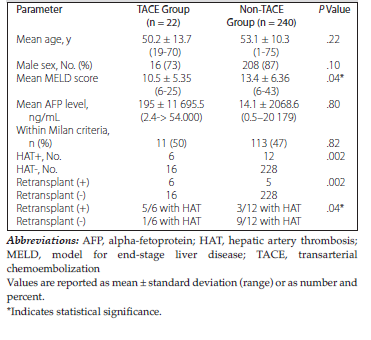
Table 1. Demographic and Outcome Data
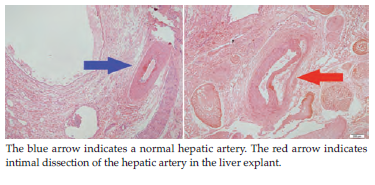
Figure 1. Microscopy of the Hepatic Artery