Volume: 14 Issue: 3 November 2016 - Supplement - 3
FULL TEXT
Objectives: Pulmonary hypertension has been reported to occur in a considerable proportion of patients with end-stage renal disease. End-stage renal disease affects the health-related quality of life of patients. There is a lack of specific information on the relation between pulmonary hypertension and health-related quality of life in patients with end-stage renal disease in the literature. We aimed to evaluate this relation in patients undergoing hemodialysis.
Materials and Methods: This prospective case-control study included 68 patients treated with hemodialysis and 30 healthy participants as controls. Group 1 comprised hemodialysis patients with pulmonary hypertension, group 2 comprised patients without pulmonary hypertension, and group 3 were healthy subjects. Each patient’s health-related quality of life was measured with the Medical Outcomes Study 36-Item Short Form health survey. Doppler echocardiography was performed to determine pulmonary artery pressure in all patients. The groups were compared with respect to health-related quality of life.
Results: Pulmonary hypertension was found in 47.1% of patients (mean systolic pulmonary artery pressure of 48.9 ± 11.8 mmHg). Significant differences were observed among the 3 groups regarding the physical function, physical role, bodily pain, general health, vitality, social function, emotional role, mental health, and physical component summary (P = .001). There was no significant correlation between pulmonary artery pressure and health survey scores.
Conclusions: Hemodialysis patients had significantly lower quality of life scores than healthy subjects. There were no significant differences in terms of health survey domains between the hemodialysis patients with and without pulmonary hypertension. This may be due to the severe adverse effects of end-stage renal disease on health-related quality of life. We conclude that, because end-stage renal disease has so many adverse effects on health-related quality of life, the additional effects of pulmonary hypertension on health-related quality of life could not be revealed.
Key words : Chronic kidney failure, End-stage renal disease, Renal dialysis
Introduction
End-stage renal disease (ESRD) is a major health problem worldwide. It is projected that by 2020 the number of patients with ESRD will increase by nearly 60% in comparison with that of 2005.1
Pulmonary hypertension is a well-known complication of heart, lung, or systemic disorders, with increased patient morbidity and mortality regardless of its cause. Accumulating data have indicated that pulmonary hypertension occurs among a considerable proportion of patients with ESRD, with studies showing rate of about 25% to 45% in ESRD patients.2,3
Studies investigating treatment outcomes of patients with ESRD usually focus on morbidity and mortality, with assessment of physiologic and functional performance.4 However, some authors have suggested that these variables may not be sufficient and that more attention must be focused on the health-related quality of life (HRQOL) of patients with ESRD.5 The assessment of HRQOL helps in evaluating the quality of care and efficacy of medical intervention, improving clinical decision-making and estimating health care needs of the community.6 Moreover, clinicians can use HRQOL scores to evaluate the effects of a specific disease on patients.7 End-stage renal disease and its treatment cause significant changes in the daily lives of patients, affecting HRQOL of patients.8
Some studies have evaluated the HRQOL of patients undergoing dialysis.8 However, there is a lack of specific information on the relation between pulmonary hypertension and HRQOL in patients undergoing hemodialysis in the literature. Therefore, we aimed to assess the relation between pulmonary hypertension and HRQOL in patients undergoing hemodialysis.
Materials and Methods
Patient selection
This prospective case-control study included 68 patients treated with
hemodialysis in the Department of Nephrology of Baskent University (Konya
Hospital, Konya, Turkey) and 30 healthy participants matched for age and sex.
The study sample was divided into 3 groups. Group 1 comprised hemodialysis
patients with pulmonary hypertension, group 2 comprised patients without
pulmonary hypertension, and group 3 comprised healthy participants. The study
was conducted between January and June 2013. Patients with duration of
hemodialysis of less than 3 months, psychiatric disorders, cognitive
deterioration, venous thromboembolism, hypoxemic lung disease (including chronic
obstructive pulmonary diseases, interstitial lung disease, and asthma), and
younger than 18 years of age were excluded.
Clinical and laboratory investigations
The patients’ general data (age, sex) and data regarding kidney disease
(duration of hemodialysis therapy) were recorded directly from the patients or
from their hospital files. Laboratory investigations included albumin and
high-sensitivity C-reactive protein (CRP) levels, which were measured and
analyzed using the Abbott Architect C 8000 auto analyzer (Abbott Diagnostics,
Lake Forest, IL, USA).
Doppler echocardiography was performed for all patients. It was done within 1 hour after completion of hemodialysis to avoid overestimation of systolic pulmonary artery pressure (PAP) due to volume overload. One experienced operator performed all echocardiography studies using an Acuson Sequoia C256 Echocardiography System equipped with a3V2c broadband transducer with second harmonic capability (Acuson, Mountain View, CA, USA). Two-dimensional and M-mode echocardiography was performed. A tricuspid systolic jet was recorded from the parasternal or apical window with the continuous-wave Doppler probe. Pulmonary artery pressure was calculated using the Bernoulli equation: PAP = 4 × (tricuspid systolic jet)2 + 10 mm Hg (estimated right atrial pressure).9 Pulmonary hypertension was defined as a mean systolic PAP ≥ 35 mm Hg.2
Quality of life
To evaluate HRQOL of patients, a short form of the Medical Outcomes Study
(SF-36), which had been adapted to the Turkish population, was used.10,11
The test consists of 36 items, which are assigned to 8 domains: physical
function (self-care, walking, climbing stairs, bending over, lifting weight,
etc.); physical role (work and daily activities); bodily pain (intensity of
pain, in which a lower score indicates more severe pain); general health
(personal evaluation of health); vitality (feelings of energy and vitality);
social function (normal social life); emotional role (emotional issues); and
mental health (depression, anxiety, control of behavior, and general
disposition). The test was self-administered.
Each scale is scored with a range from 0 to 100. The higher the score is, the better the patient’s health. This scale has been commonly used and validated in patients with ESRD.12 The scales of the SF-36 questionnaire are divided into 2 groups of 5 scales each (ie, 2 “dimensions”). The first 5 scales make up the physical health dimension and the last 5 are the mental health dimension. The parameters “vitality” and “general health” are in both dimensions.
The study protocol was approved by the local ethics committee of Baskent University, Faculty of Medicine (KA12/231) and was performed according to the Good Clinical Practice guidelines and the Declaration of Helsinki. All patients and control participants gave their informed consent before their inclusion in the study.
Statistical analyses
Statistical analysis was performed using the statistical package SPSS version
15.0 (SPSS Inc., Chicago, IL, USA). All results are expressed as means ± SD,
when appropriate. Mann-Whitney and ANOVA tests were used for assessment of the
comparisons between groups, and correlations between parameters were calculated
with Pearson’s correlation coefficient. P < .05 was considered
significant.
Results
Demographic data of the study groups and mean duration of hemodialysis are shown in Table 1. Pulmonary hypertension was found in 47.1% of patients with a mean systolic PAP of 48.9 ± 11.8 mm Hg.
There were significant differences among the 3 groups regarding the physical function, physical role, bodily pain, general health, vitality, social function, emotional role, mental health, and physical component summary (P = .001) (Table 2).
We also found significant differences in terms of physical function, physical role, bodily pain, general health, vitality, social function, emotional role, mental health, and physical component summary when we compared group 3 versus groups 1 and 2 (P < .05).
There were no significant differences in the SF-36 scores between groups 1 and 2 (P > .05) (Table 3).
A Pearson bivariate correlation analysis for groups 1 and 2 revealed no significant correlation between PAP and SF-36 scores. Physical function (r = -0.449; P = .001), bodily pain (r = - 0.394; P = .001), general health (r = -0.239; P = .05), social function (r = -0.243; P = .046), mental health (r = - 0.301; P = .013), and physical component summary (r = -0.361; P = .002) were negatively correlated with age. Bodily pain (r = 0.297; P = .014) and mental health (r = -0.271; P = .026) were also negatively correlated with high-sensitivity CRP. A positive correlation was shown between bodily pain (r = 0.304; P = .012), emotional role (r = 0.310; P = .01), physical component summary (r = 0.271; P = .025), and albumin level. It was also observed that bodily pain (r = 0.268; P = .02), general health (r = 0.422; P = .001), vitality (r = 0.314; P = .009), mental health (r = .364; P = .002), and physical component summary (r = 0.259; P = .033) were significantly correlated with gender (Table 4).
Discussion
Pulmonary hypertension comprises a group of clinical and pathophysiological entities with similar features but a variety of underlying causes. The many causes of pulmonary hypertension have been reported, with 1 background disease being ESRD. Yigla and associates reported that PAP ≥35 mm Hg was found in 39.7% of patients with ESRD receiving long-term hemodialysis and pulmonary hypertension significantly increased mortality and morbidity among ESRD patients.2,13 Havlucu and associates found that 56% of patients receiving hemodialysis have pulmonary hypertension with a mean systolic PAP of 36.8 ± 10.7 mm Hg.14 In our study, pulmonary hypertension was found in 47.1% of patients with a mean systolic PAP of 48.9 ± 11.8 mm Hg.
SF-36 is widely used to measure health status or quality of life in both healthy and sick populations.10 Fiþek (personal communications) has translated the original US version of the standard SF-36 into a Turkish version using a forward-backward translation method. Some revisions were made in the Turkish adaptations of the SF-36, including the changing of miles to kilometers. This Turkish version of SF-36 was approved by the Medical Outcomes Trust (unpublished observations). Numerous articles exploring the use of Turkish versions of SF-36 with different disease groups, including ESRD, have been published.15-17 Because of its wide range of uses and acceptable construct validity we also decided to use the Turkish version of SF-36 in our study.
Cruz and associates observed a negative effect on QOL in patients at early stages of chronic kidney disease, although they were not able to detect a significant association between the stages of the disease and the SF-36 domains.18
Recent studies have also suggested that a poor HRQOL was strongly related to increased risk of mortality in patients on dialysis.19,20 Güney and associates reported that poor HRQOL, especially its physical component, increased the risk of mortality in HD patients.21 Thus, measurement of HRQOL should be included in the general clinical work-up and follow-up of patients on dialysis.22,23
In this study, we assessed the relation between pulmonary hypertension and HRQOL in patients undergoing hemodialysis. Significant differences were observed among our study groups regarding the physical function, physical role, bodily pain, general health, vitality, social function, emotional role, mental health, and physical component summary. Quality of life scores in the hemodialysis patients with and without pulmonary hypertension (groups 1 and 2) were statistically lower than the scores of healthy participants (group 3). The scores of groups 1 and 2 were below 70 in all dimensions. Healthy populations usually have scores above 70.10 We also found SF-36 scores in our healthy population ranging from 60 to 80 in our study. Significant differences were observed in terms of physical function, physical role, bodily pain, general health, vitality, social function, emotional role, mental health, and physical component summary when we compared group 3 with group 1 and 2 separately. However, we did not find significant differences in the SF-36 scores between groups 1 and 2. There was also no significant correlation between PAP and SF-36 scores in groups 1 and 2. It was thought that ESRD has so many adverse effects on HRQOL that the effect of pulmonary hypertension alone on HRQOL could not be revealed.
It is known, however, that the subjective assessment of HRQOL is multifactorial; therefore, PAP may not be the only determinant in its deterioration. Sociodemographic factors like age and sex may be more associated with decreased HRQOL than physical factors. In addition, it is possible that subjective factors such as adaptation to disease and treatment satisfaction with the medical staff and social support may interfere directly in the assessment of HRQOL; however, these were not evaluated in this study. We found that physical function, bodily pain, general health, social function, mental health, and physical component summary were negatively correlated with age. We also observed that bodily pain, general health, vitality, mental health, and physical component summary were significantly correlated with sex. The influence of these different factors on the assessment of HRQOL may explain the difficulty in establishing a linear relation with PAP.
Some limitations of the present study are the relatively small sample size to detect the relation between PAP and HRQOL and PAP was determined noninvasively by Doppler echocardiography. If it had been obtained by catheterization, it might have been more accurate. However, in most trials, PAP measurements are obtained by Doppler echocardiography due to its noninvasive nature.2,22,23
In conclusion, the present study indicated that pulmonary hypertension was a common condition in ESRD patients undergoing hemodialysis. However, we were not able to detect a significant association between PAP and the SF-36 domains. It was possible to establish sociodemographic (age, sex) and clinical (CRP, albumin) factors associated with HRQOL in this population. Although several of the variables that were associated with alterations in the HRQOL cannot be changed (eg, age, sex), efforts should be made to decrease the effects of those factors that can be changed, such as improving albumin and CRP levels. We conclude that ESRD has so many adverse effects on HRQOL that the additional effect of pulmonary hypertension on HRQOL could not be revealed. SF-36 is not a measure of dyspnea-related impairment; therefore, we also believe that the SF-36 health survey may not be sufficient to detect the association between pulmonary hypertension and quality of life in patients with ESRD. Further prospective studies using cardiac- or respiratory-specific questionnaires that can measure dyspnea-related impairment are needed to investigate the effects of PAP on HRQOL and to highlight which questionnaire is the best option to assess the effect of pulmonary hypertension on quality of life in patients undergoing hemodialysis.
References:
- Shaheen F. Saudi Center for Organ Transplantation; 2008. 4th Annual International Conference of Saudi Society of Nephrology, 2009.
- Yigla M, Nakhoul F, Sabag A, et al. Pulmonary hypertension in patients
with end-stage renal disease. Chest. 2003;123(5):1577-1582.
CrossRef - PubMed - Yigla M, Keidar Z, Safadi I, Tov N, Reisnar SA, Nakhoul F. Pulmonary
calcification in hemodialysis patients: Correlation with pulmonary artery
pressure values. Kidney Int. 2004;66(2):806-810.
CrossRef - PubMed - Steele TE, Baltimore D, Finkelstein SH, Juergensen P, Kliger AS,
Finkelstein FO. Quality of life in peritoneal dialysis patients. J Nerv Ment
Dis. 1996;184(6):368-374.
CrossRef - PubMed - Kalender B, Özdemir AC, Derviþoðlu E, Ozdemir O. Quality of life in
chronic kidney disease: effects of treatment modality, depression,
malnutrition and inflammation. Int J Clin Pract. 2007;61(4):569-576.
CrossRef - PubMed - Ware JE, Brook RH, Davies AR, Lohr KN. Choosing measures of health
status for individuals in general populations. Am Public Health.
1981;71(6):620-625.
CrossRef - PubMed - Patrick DL. Prologue. In: Badia X, Salamero M, Alonso J (eds.). Measurement of Health. Measurement of Scales Guide in Spanish. Barcelona, Spain: Edimax; 2002:11-12.
- Valderrabano F, Jofre R, Lopez-Gomez JM. Quality of life in end-stage
renal disease patients. Am J Kidney Dis. 2001;38(3):443-464.
CrossRef - PubMed - Ware JE, Sherbourne CD. The MOS 36-item short-form health survey
(SF-36). I: Conceptual frame work and item selection. Med
Care.1992;30(6):473-483.
CrossRef - PubMed - Koçyiðit H, Aydemir Ö, Ölmez N, Memiþ A. Reliability and validation of Turkish version of Short Form -36 (SF-36). Ýlaç ve Tedavi Dergisi. 1999;12:102-106.
- Johansen KL, Painter P, Kent-Braun JA, et al. Validation of
questionnaires to estimate physical activity and functioning in end-stage
renal disease. Kidney Int. 2001;59(3):1121-1127.
CrossRef - PubMed - Berger M, Haimowitz A, Van Tosh A, Berdoff RL, Goldberg E. Quantitative
assessment of pulmonary hypertension in patients with tricuspid
regurgitation using continous wave Doppler ultrasound. J Am Coll Cardiol.
1985;6(2):359-365.
CrossRef - PubMed - Yigla M, Abassi Z, Reisner SA, Nakhoul F. Pulmonary hypertension in
hemodialysis patients: an unrecognized threat. Semin Dial.
2006;19(5):353-357.
CrossRef - PubMed - Havlucu Y, Kursat S, Ekmekci C, Çelik P, Serter S, Bayturan O. Pulmonary
Hypertension in Patients with Chronic Renal Failure. Respiration.
2007;74(5):503-510.
CrossRef - PubMed - Aydýn S, Yavuz T, Duven H. Effects of coronary by-pass operations on quality of life in patients who over 65 years old. Turkish J Geriatr. 2002;5:64-67.
- Pinar R. Reliability and construct validity of the SF-36 in Turkish
cancer patients. Qual Life Res. 2005;14(1):259-264.
CrossRef - PubMed - Pinar R, Cinar S, Issever M, Albayrak M, Ilhan S. Quality of life in ESRD: Influence of hemodialysis and renal transplantation. Cinar Hemsire Derg. 1995;1:1-5.
- Cruz MC, Andrade C, Urrutia M, et al. Quality of life in patients with
chronic kidney disease. Clinics. 2011;66(6):991-995.
CrossRef - PubMed - Knight EL, Ofsthun N, Teng M, Lazarus JM, Curhan GC, The association
between mental health, physical function, and hemodialysis mortality. Kidney
Int. 2003;63(5):1843-1851.
CrossRef - PubMed - Lopez Revuelta K, Garcia Lopez FJ, de Alvaro Moreno F, Alonso J.
Perceived mental health at the start of the dialysis as a predictor of
morbidity and mortality in patients with end-stage renal disease (CALVIDIA
Study). Nephrol Dial Transplant. 2004;19(9):2347-2353.
CrossRef - PubMed - Guney I, Atalay H, Solak Y, Altýntepe L, Tonbul HZ, Turk S. Poor quality
of life is associated with increased mortality in maintenance hemodialysis
patients: a prospective cohort study. Saudi J Kidney Dis Transpl. 2012;
23(3):493-499.
PubMed - Oygar DD, Zekican G. Pulmonary Hypertension in dialysis patients. Ren
Fail. 2012;34(7):840-844.
CrossRef - PubMed - Ramasubbu K, Deswal A, Herdejurgen C, Aquilar D, Frost EA. A prospective
echocardiographic evaluation of pulmonary hypertension in chronic
hemodialysis patients in the United States: prevalence and clinical
significance. Int J Gen Med.2010;3:279-286.
PubMed

Volume : 14
Issue : 3
Pages : 59 - 63
DOI : 10.6002/ect.tondtdtd2016.P10
From the 1Department of Pulmonary Medicine, the 2Department
of Nephrology, the 3Department of Cardiology, Faculty of Medicine,
Baskent University, Konya, Turkey; and the 4Department of Pulmonary
Medicine, Faculty of Medicine, Baskent University, Ankara, Turkey
Acknowledgements: The authors declare that they have no sources of
funding for this study, and they have no conflicts of interest to declare.
Corresponding author: Tülay Kývanç, Baþkent Üniversitesi Konya Uygulama
ve Araþtýrma Hastanesi, Hocacihan Mah. Saray Cad. No: 1, Selçuklu, 42080, Konya,
Turkey
Phone: +90 505 629 0356
E-mail:
drtulaybakirci@yahoo.com
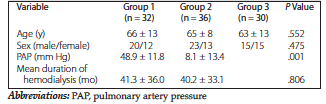
Table 1. Demographic Data of the Study Groups
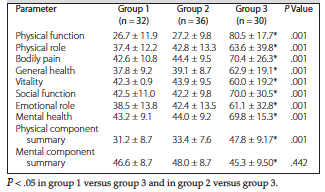
Table 2. Comparison of SF-36 Scores of the Study Groups
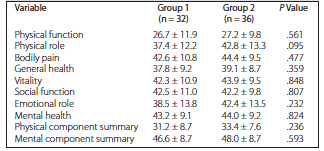
Table 3. Comparison of SF-36 Scores of Groups 1 and 2
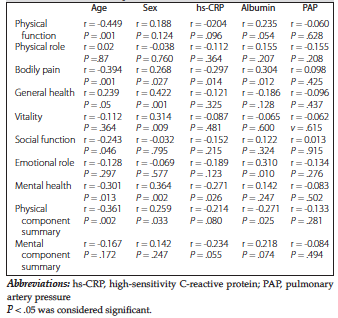
Table 4. Correlation Between SF-36 Scores and Age, Sex, C-Reactive Protein, Albumin, and PAP in Groups 1 and 2